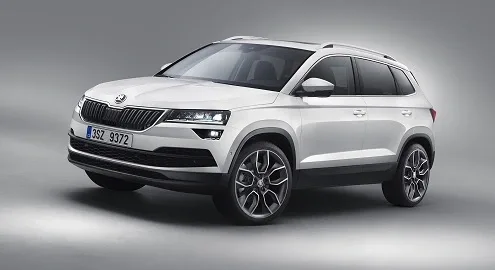
As previously expected, the Karoq is built on the modular MQB platform and is technically very close to the Volkswagen Tiguan and Seat Ateca models. In terms of its dimensions (4382x1841x1605 mm), the Karoq turned out to be slightly longer than the Ateca, but significantly shorter than the Tiguan.
The Karoq significantly surpasses its predecessor in terms of trunk volume – 521 liters versus 405. In addition, the newcomer has a much more impressive list of optional equipment.
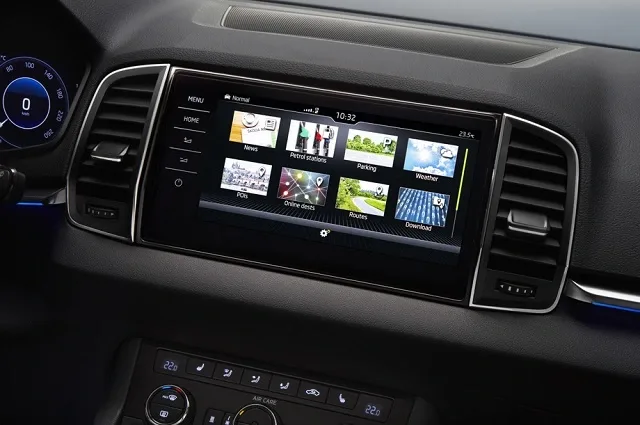
First of all, one can note the appearance of LED optics, a fully digital instrument panel, and a new multimedia system with a 9-inch screen. Also, the list of options now includes active cruise control, automatic braking function, and electric tailgate drive.
Among the technical innovations, we note the ability to configure the crossover for one of four driving modes: Normal, Sport, Eco, Individual. For all-wheel-drive versions, Snow and Off-Road modes are additionally available. The Karoq can also be ordered with adaptive DCC suspension.
The Karoq's engine lineup includes five engines. The base one is a 115-horsepower TSI with a displacement of 1 liter and an average consumption of 5.2 l/100 km. The more powerful 1.5-liter turbo engine develops 150 hp and 250 Nm, while consuming approximately the same amount of gasoline.
The diesel range opens with a 1.6-liter engine producing 115 hp and requiring only 4.5 liters of fuel per 100 km. Also available for the model is a two-liter power unit in two tuning variants – 150 and 190 hp.
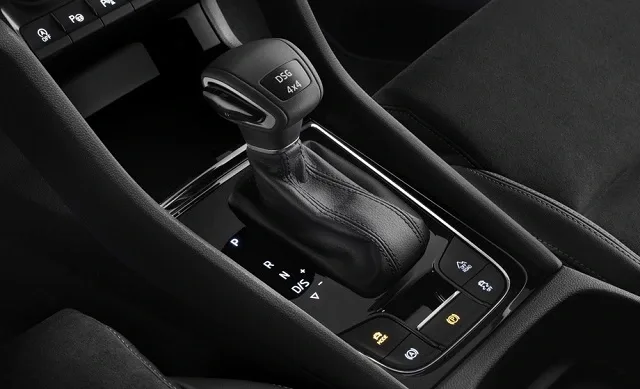
As transmissions, a six-speed manual or a seven-speed DSG robot is offered.
The Skoda Karoq will go on sale closer to autumn.