
Yes, as officially announced by the country's Prime Minister Justin Trudeau, the ban on the sale of fossil fuel vehicles will be adopted in 2035. The corresponding decision will apply to the segment of passenger cars and light commercial vehicles. For other transport, an exception will be made for now.
According to Reuters, the state plans to simplify the transition to electricity for its citizens as much as possible, primarily through investments and the adoption of legislative acts. The transition should begin in 2025, accelerate in 2030, and be fully completed by 2050 – by this time Canada intends to reach zero CO2 emissions.
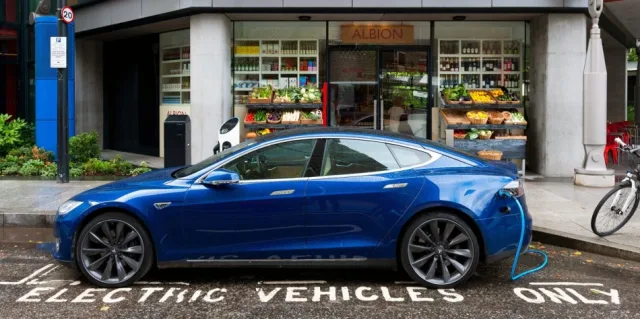
For Canada, the direction of electric vehicles is not so simple. The fact is that this North American country is huge in scale, therefore, driving range is a decisive factor for many citizens when choosing cars. Currently, the share of electric vehicles in sales is about 3.5%, but in 14 years it should be 100% (for understanding, Europe currently leads with a share of 10%, followed by China with 5.7%). This should be facilitated not only by state policy, but also by the development of technologies – in particular, the emergence of electric vehicles with a range of 500 or more kilometers.
Note that in the 2030-2040s, the following countries intend to introduce a ban on the sale of fuel cars: France, Great Britain, Germany, Norway, the Netherlands, Denmark, Iceland, Sweden, Slovenia, Singapore, Japan. Also included in this list is the American state of California. China and India will also partially impose an embargo.