Hyundai Santa Fe: prices and specifications
7 generations Country of origin: South Korea

History
Hyundai Santa Fe is a mid-size crossover that became the first model of this type for the Korean brand. The car was named after the city of Santa Fe (New Mexico).
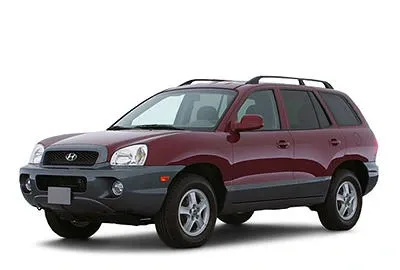
Leading engineers were involved in the development and production of the model. The car was built on the updated platform of the Sonata sedan. Prototype testing began in 2000 and took place in the USA. The official debut took place in 2001. With this model, the Koreans aimed to conquer the North American market, where Japanese brands were already firmly established. The calculation paid off: despite the unusual design for America and a modest choice of two gasoline engines (2.4 and 2.6), the crossover was in such demand that in the first two years the company could not keep up with all orders. In 2005, the first-generation Santa Fe was updated. Production of the model was organized in South Korea, the USA, and Russia.
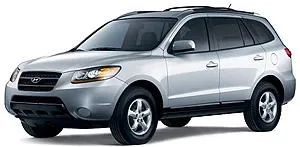
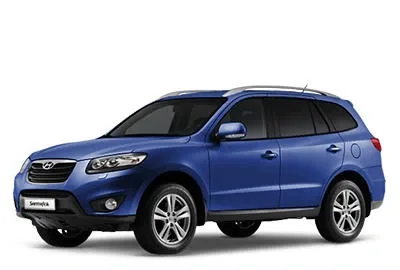
The world premiere of the second generation took place in 2007 at the Detroit Auto Show. The car was still based on the modernized Sonata platform, but received a modern appearance and a new interior. The range of engines and transmissions became wider. In addition to the USA and South Korea, the second generation was produced in Turkey and Malaysia.
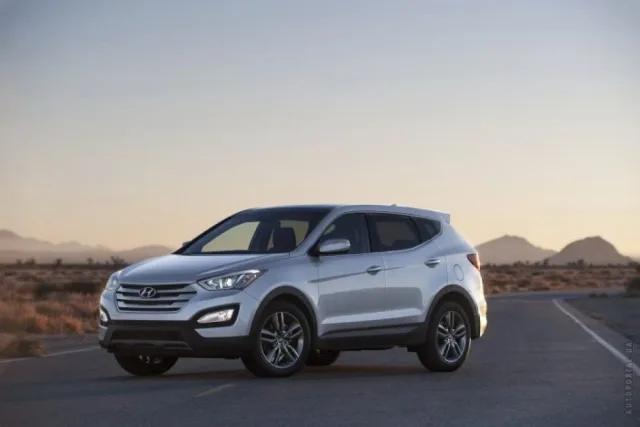
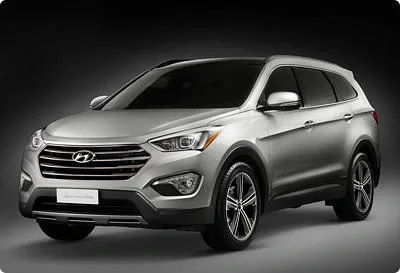
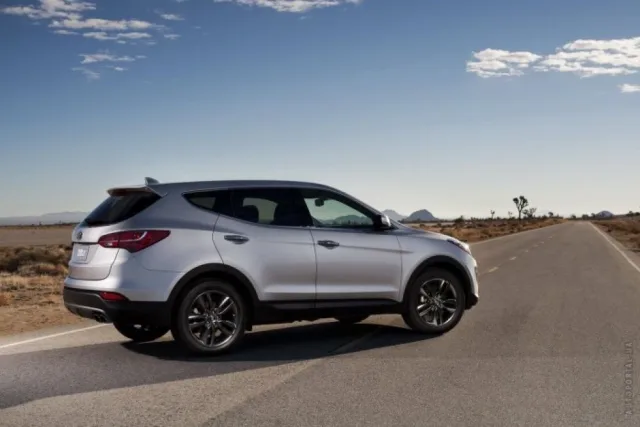
The third generation Santa Fe was introduced in February 2012. The crossover is offered in five- and seven-seat versions.
At the time of writing, two generations were sold in Ukraine — the second and third. The second generation was supplied in five- and seven-seat versions. It was equipped with a 2.4 L gasoline engine and a 2.2 L diesel engine, which worked in conjunction with six-speed manual or automatic transmissions. Deliveries of the third generation to Ukraine started in November 2012. It was also equipped with 2.4 L (gasoline) and 2.2 L (diesel) engines, but they were modernized: power increased, efficiency and environmental friendliness improved. The cars were equipped with improved six-speed manual and automatic transmissions. Drive — plug-in all-wheel drive.
First Generation
Initially, the Santa Fe was offered with two engines and a manual or automatic transmission. For North America, the standard was a 2.4-liter four-cylinder engine, which was paired with a 5-speed manual or 4-speed automatic. The more powerful 2.7-liter V6 (Delta) came only with an automatic transmission. Front-wheel drive was standard, all-wheel drive was an option. Outside the US, a 2.0-liter Common-Rail Turbo Diesel (CRTD) was offered. In Australia, sales began in 2000 with one trim: 2.7 L V6 engine, four-speed automatic, all-wheel drive. Later, more affordable versions with a 2.4 L engine and manual transmission appeared.
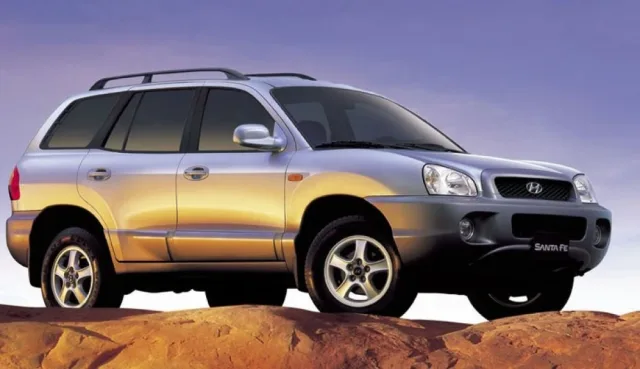
All-wheel drive on the first generation was implemented through an asymmetric center differential with a viscous coupling, which distributed torque in a 60:40 ratio. For an additional cost, a rear limited-slip differential could be installed.
Second Generation
The second generation Santa Fe debuted in 2006 at the North American International Auto Show. Production began on April 18, 2006, in Montgomery, Alabama, USA, where it was assembled on the same line as the Hyundai Sonata of that generation. The car acquired a more modern look.
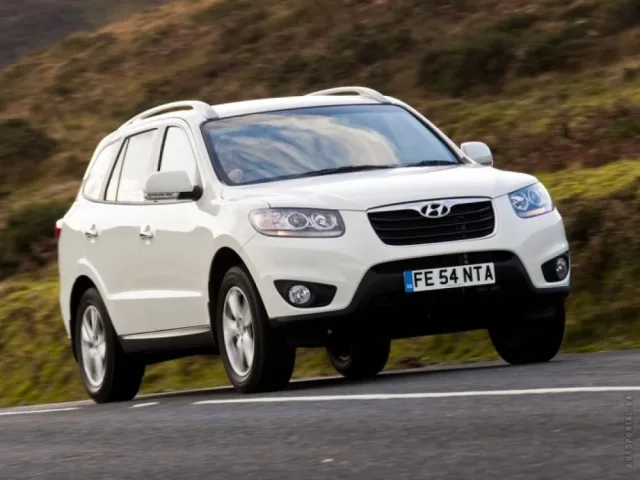
In the new generation, a manual transmission appeared, but only with the 2.7 L V6 engine. The 3.4 L V6 engine was standard equipment for the SE and Limited trims and came only with a 5-speed automatic. Both engines could be with either front-wheel or all-wheel drive. The 2.2 L diesel engine (not offered for the US) produced 186 hp and was characterized by modest fuel consumption. The Borg-Warner Torque Management all-wheel drive was considered more advanced, as it allowed torque to be transferred to wheels with better traction. The new suspension reduced body roll in corners, and body sound insulation was improved.
The equipment list included: electronic stability control (ESC), additional side airbags, tire pressure sensors, active front head restraints, ABS as standard. A child seat attachment system appeared.
The all-wheel drive system uses simple symmetrical (conical) differentials. Locking is simulated by braking the spinning wheels.
Third Generation
The third generation Santa Fe was introduced at the 2012 New York Auto Show.
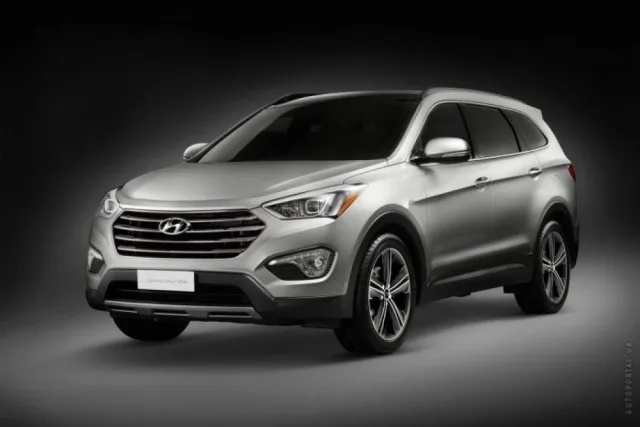
Exterior
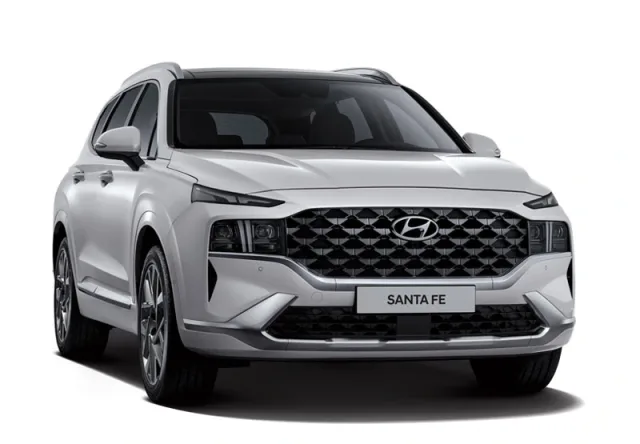
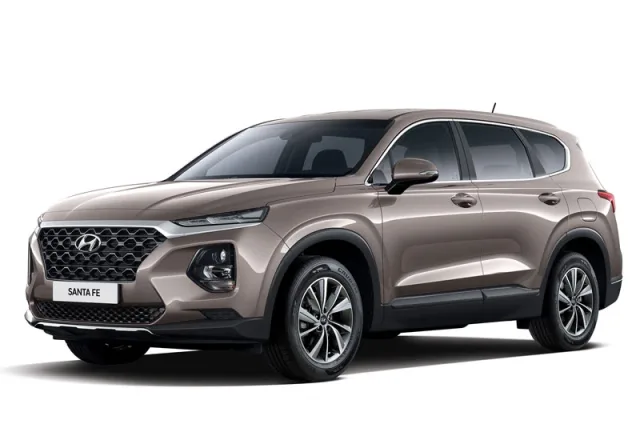
The design of the first-generation Santa Fe was criticized for being awkward, the second looked better, and the third, according to the authors, looks magnificent. The car is made in a single style, characteristic of all recent Hyundai models.
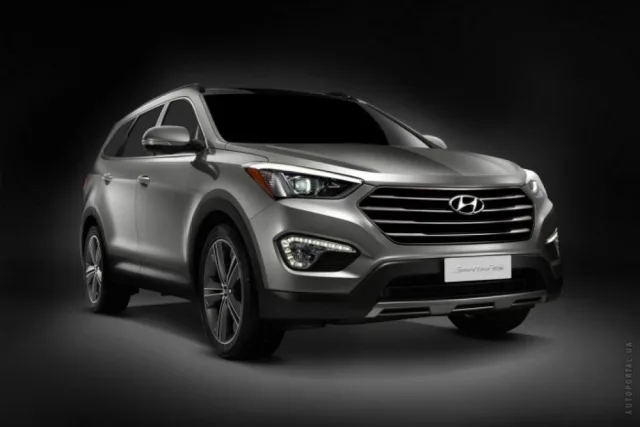
Clear lines create a swift, fast, and somewhat sporty silhouette. Thanks to the new design, the Santa Fe gained new fans.
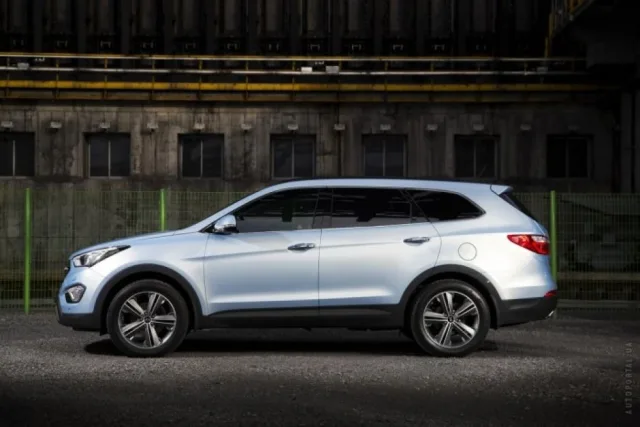
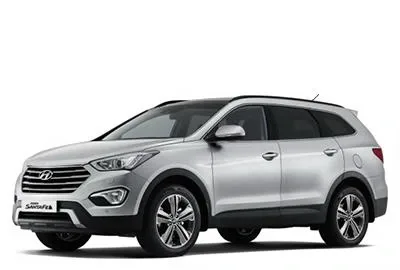
In Ukraine, the Grand Santa Fe version was available, which featured increased length and accommodated more passengers.
Interior
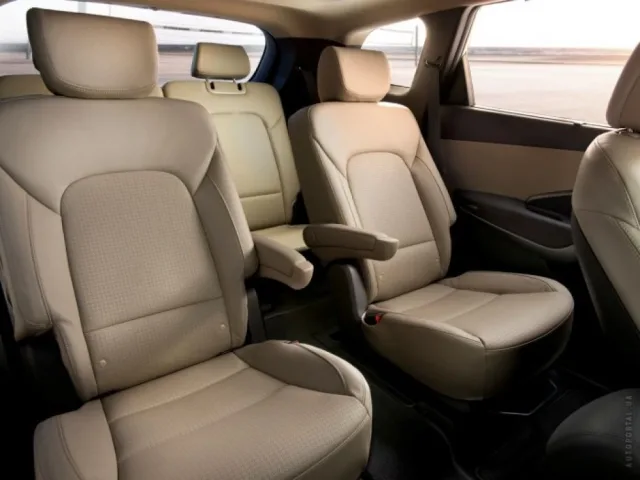
The interior design harmonizes with the exterior. The trim materials do not look cheap. Ergonomics are also excellent. Moving into a Santa Fe from any other car, you will most likely be satisfied.
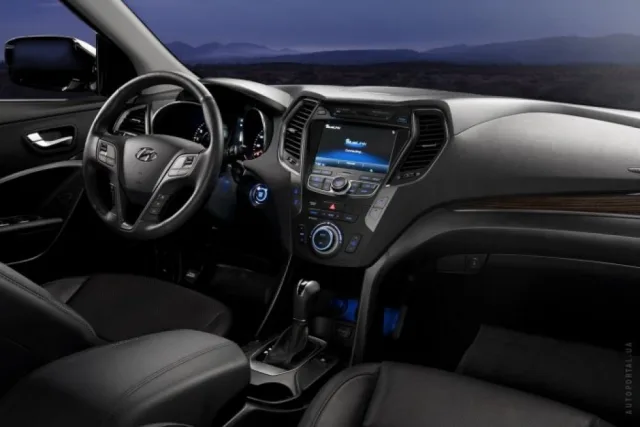
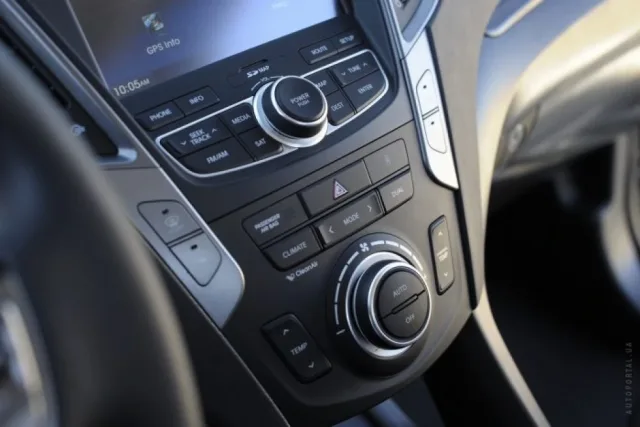
The layout and control algorithms are standardized with other Korean or Japanese cars. The cabin is very spacious and gives the feeling of a large car.
The seats in terms of volume and firmness are close to European counterparts. A person of any build can sit comfortably.
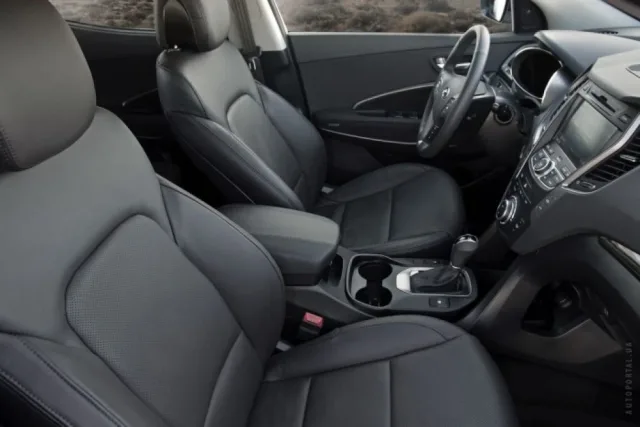
In the third row of the Grand Santa Fe, children or people of average height can sit comfortably, although tall passengers can also fit if necessary.
Engine and Transmission
For the European market, including Ukraine, the following engines were offered: a 2.4 L gasoline engine (192 hp) and diesel engines with a volume of 2.0 L (150 hp) and 2.2 L (197 hp).
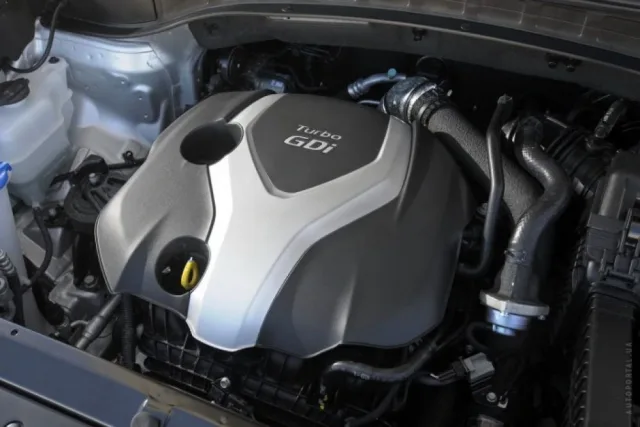
In the USA, the car was equipped with gasoline engines 2.4 L (190 hp) and 2.0 L Turbo (264 hp).
The settings of the automatic transmission do not cause complaints. There are no jerks or noises during movement, shifts are almost imperceptible. With sharp acceleration, a slight delay is felt, but it is not critical, although it should be considered when overtaking on the highway.
Good sound insulation of the car is noted.
Safety
Safety is in order with the Santa Fe. Energy-absorbing body made of high-strength steel, six airbags (in higher trims), ESP and ABS stability system.
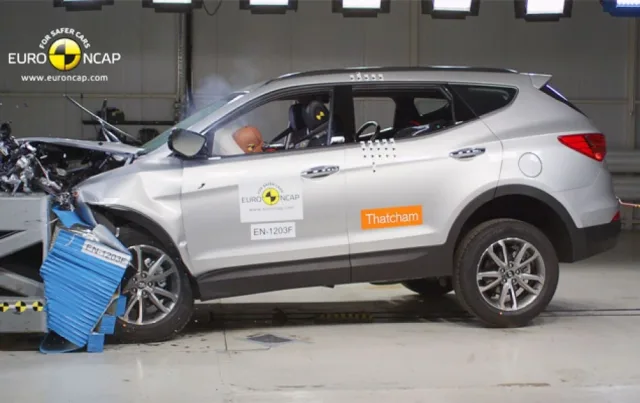
In 2012, the car passed the Euro NCAP test and received five stars out of five. Results by category: adult occupant protection — 98%, child — 89%, pedestrian — 71%, active safety — 86%.
Features
The handling of the Santa Fe is at a good level. During sharp maneuvers, despite noticeable body roll, the car obediently follows the steering wheel.
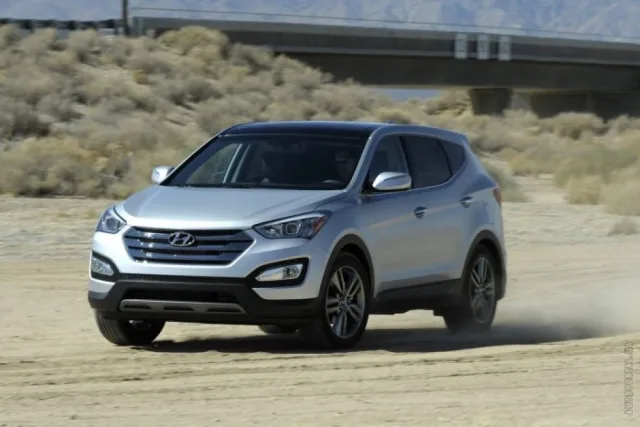
It is worth remembering that the Santa Fe is primarily a crossover, not an SUV, although it can be either five- or seven-seat. It is better not to drive it on serious off-road. All-wheel drive will help on slippery or snowy roads, get out of a snowdrift or drive on a dirt road, but it is unlikely to help on loose sand or clay.
Popularity in Ukraine
The car is among the best-selling on the Ukrainian market.
According to the autoportal.ua sales rating, it is in the TOP-30. In its class, the Hyundai Santa Fe consistently ranks in the top ten.
Our Verdict
Attractive appearance makes the Hyundai Santa Fe one of the most beautiful and presentable crossovers in its class. The car features good equipment even in the base version. A potential buyer will be pleased with the possibility of choosing a diesel modification and a variety of transmission types.