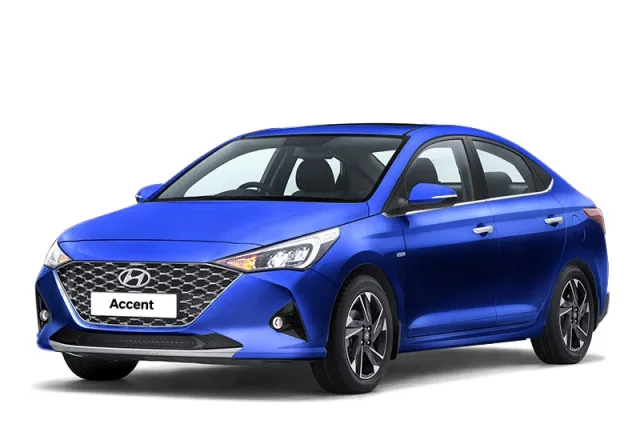
Advertising
Hyundai Accent: prices and specifications
9 generations Country of origin: South Korea

The Hyundai Accent appeared in 1994, replacing the first front-wheel-drive model of the South Korean brand, the Excel. The model's name, which translates as "accent" or "emphasis," was chosen for a reason: the company's marketing strategy was built on attracting buyers' attention to a new practical family car with an affordable price on global markets.
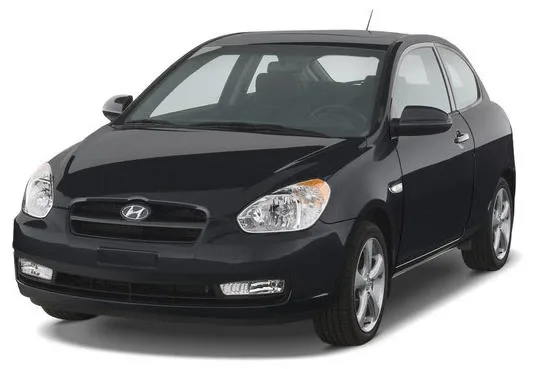
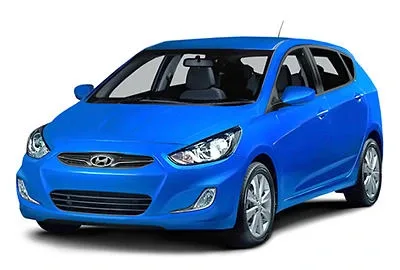
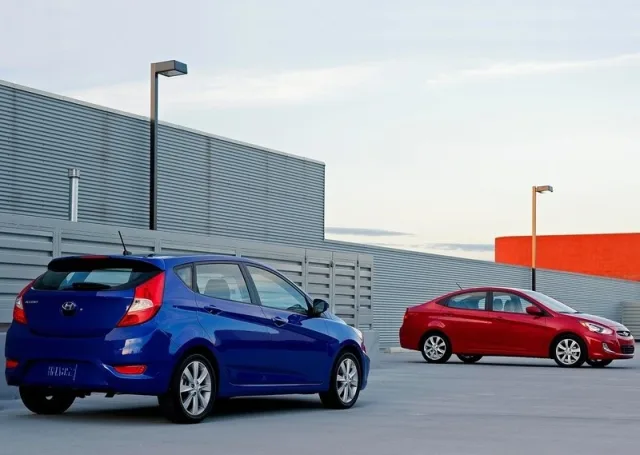
Work on the successor to the Excel began in 1992, and testing of the pre-production prototype started the following year. The first generation of the model was based on the front-wheel-drive X3 platform and was offered in four body styles: sedan, three-door hatchback, five-door hatchback, and coupe. The second generation, released in 2000 on the LC platform, lost the coupe. With the arrival of the third generation in 2006, the five-door hatchback also disappeared from the lineup. The fourth generation, which is current today, is again available in two body styles — sedan and five-door hatchback. In Ukraine, this version began to be supplied in 2011 from Russia, where the model is sold under the name Solaris (from the Latin for "solar") and is produced exclusively for the markets of CIS countries.
On the Ukrainian market, the car is offered with two petrol engines of 1.4 and 1.6 liters. On other markets, diesel engines of the same displacement are also available. The engines are paired with a five-speed manual or four-speed automatic gearbox. Drive — front only.
History
The Hyundai Accent was first shown to the public in 1995. In Australia, New Zealand, and Holland, the model could be called Excel, in France — Pony, and in Russia — Solaris.
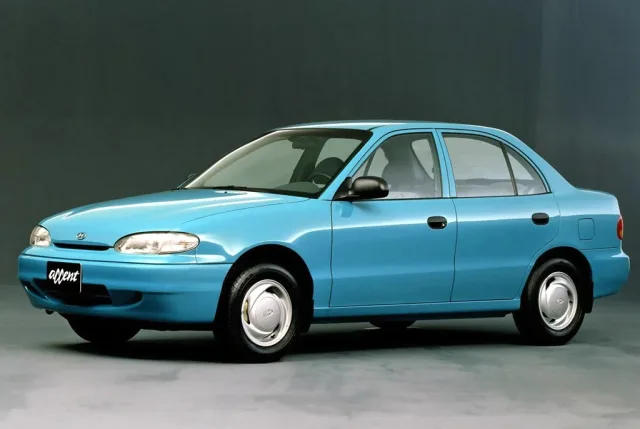
From the very beginning of production, the model was offered in three body styles: sedan, three-door and five-door hatchbacks. Buyers were offered a choice of two petrol engines — 1.3 and 1.5 liters.
The Accent became the first fully independently developed Hyundai model. The simple design and low cost ensured the car's popularity in many markets, including Ukraine.
The range of trim levels was quite wide — from basic inexpensive versions to versions with a full electric package and automatic transmission.
Already in 1997, despite good demand, the model underwent a facelift. The updates affected the front bumper with air intake and the rear lights.
In 1999, the first generation was replaced by the second generation, which was known as the Verna on the Korean market.
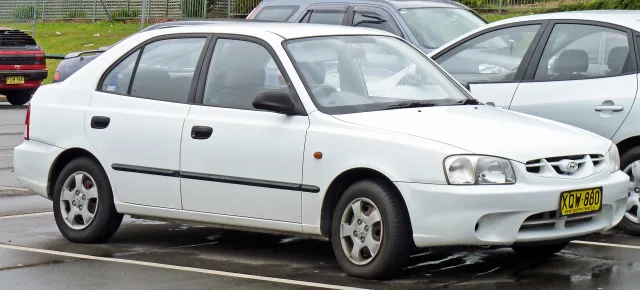
The car received new petrol engines: a 1.3-liter 12-valve SOHC and a 1.5-liter 16-valve DOHC, as well as a 1.5-liter three-cylinder turbodiesel CRDi. For the European market, three trim levels were offered — GSi, CDX, and MVi. In India, this model is still produced today.
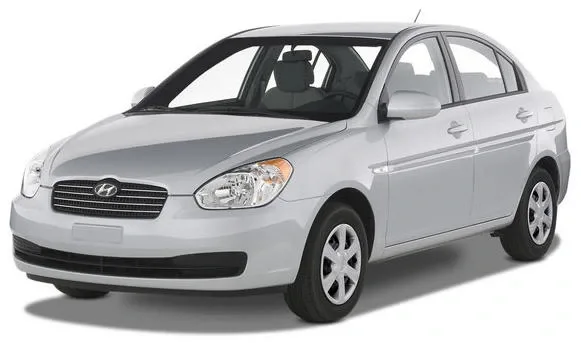
The third generation of the Accent appeared in 2006. The car shared a platform with the Kia Rio. The interior, exterior, and engine lineup were updated, which now consisted of 1.4 and 1.6-liter engines.
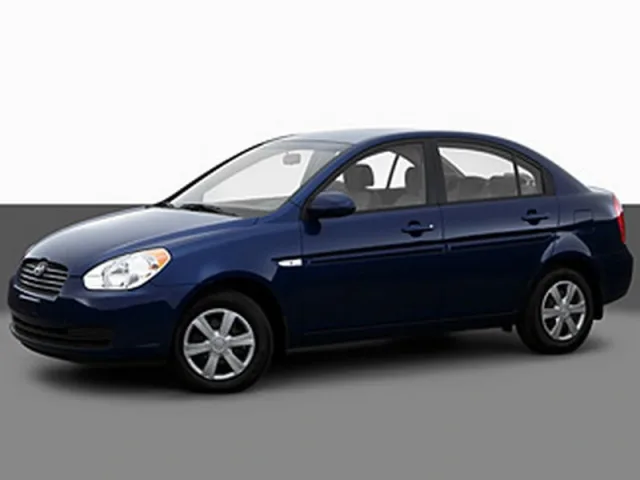
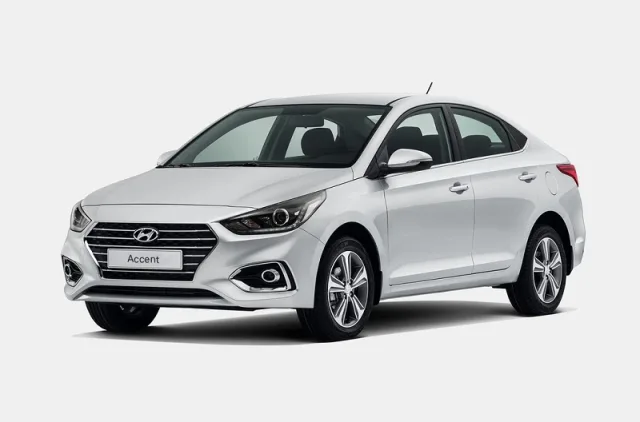
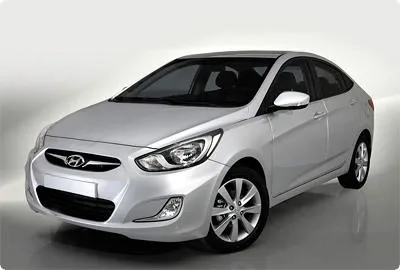
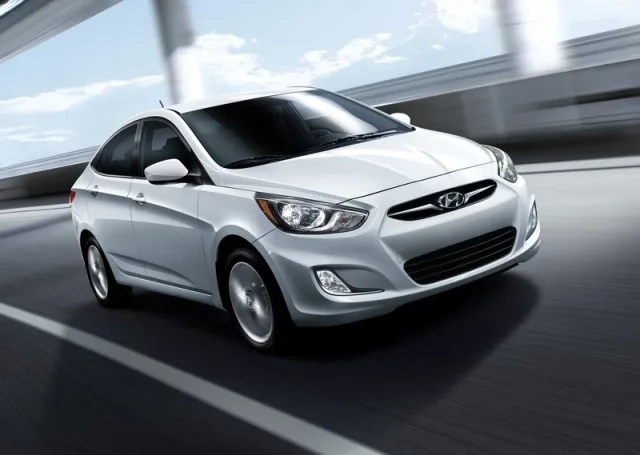
The fourth generation of the Hyundai Accent was presented in 2010 at the Beijing Auto Show. In addition to a completely new design, the platform was also fully reworked. The car became 60 mm longer (to 4340 mm), 5 mm wider (to 1700 mm), and 10 mm lower (to 1460 mm). The wheelbase grew to 2570 mm, which is 70 mm more than its predecessor.
Exterior
The current Hyundai Accent looks significantly more modern and original than its predecessors. To an unprepared buyer, it may seem like a reduced copy of the Hyundai Sonata.
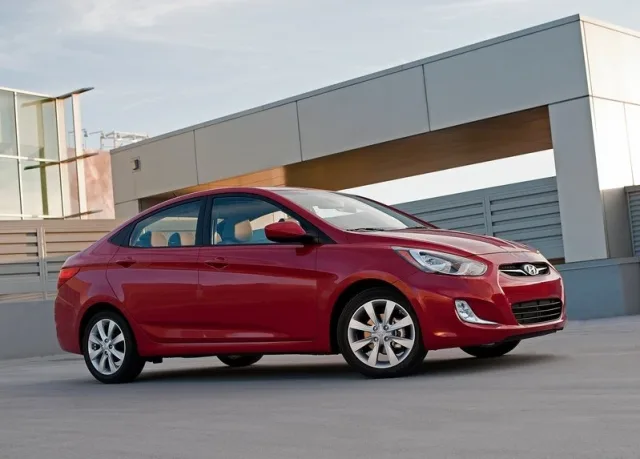
From the older model, it inherited a smooth wave-like silhouette, emphasized by expressive lines.
It is the fresh design that often became the decisive argument when choosing the Hyundai Accent.
Interior
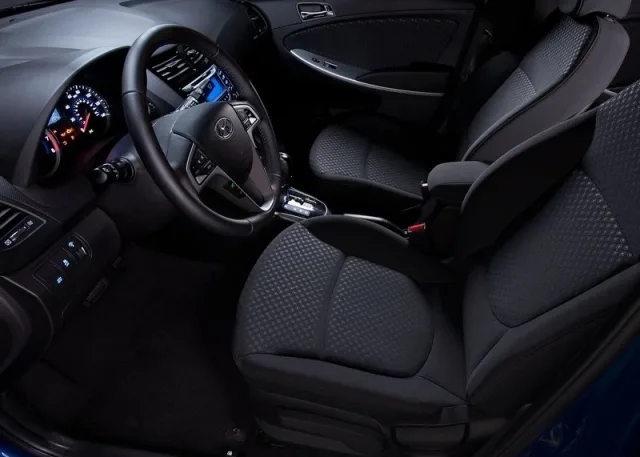
The interior design echoes the exterior. The Y-shaped console is made with smooth lines. Elements with a "metallic" coating and glossy inserts emphasize the modernity of the interior.
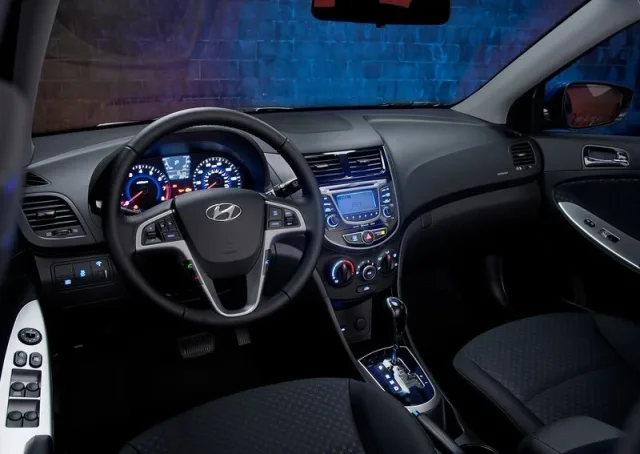
The trim materials do not create a feeling of cheapness. Ergonomics are also in order — moving into the Accent from any other car, the driver will quickly feel comfortable.
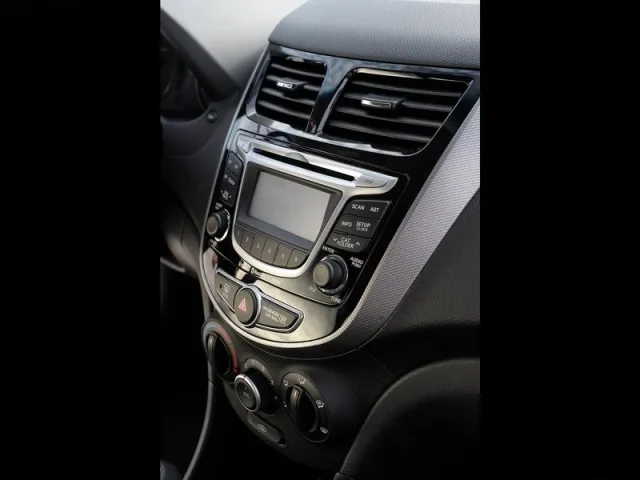
The location of controls and the logic of their operation are standardized with other models from Korean and Japanese manufacturers.
The seats, in terms of their characteristics — volume and firmness — are closer to European ones. A person of almost any build will be able to find a comfortable position and will not experience discomfort.
Engine and transmission
For the Ukrainian market, the latest generation of the Accent is offered with two petrol engines of 1.4 and 1.6 liters, developing 107 hp and 123 hp respectively. Both engines can be paired with a five-speed manual or a four-speed automatic.
The 1.4-liter engine, even with an automatic gearbox, provides acceptable dynamics — acceleration to 100 km/h takes 13.4 seconds. Fuel consumption rarely exceeds 8.5 liters per 100 km. With a manual gearbox, the car is more responsive, and fuel consumption is lower — 7.6 liters. Versions with the 1.6-liter engine are noticeably more dynamic, while consumption increases slightly: 8.6–8.7 liters with automatic and 7.8–7.9 liters on manual.
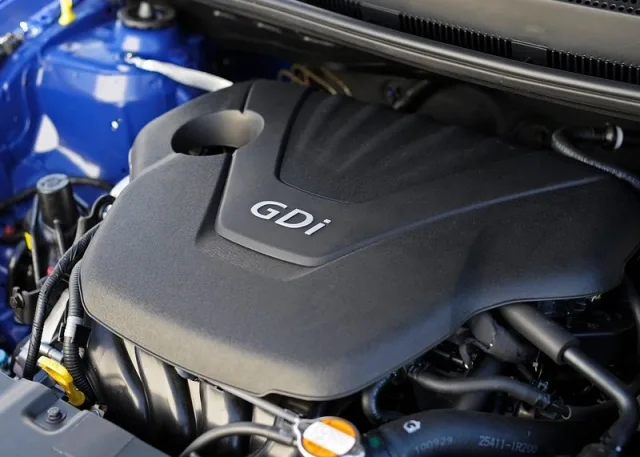
The automatic gearbox is tuned correctly: there are no jerks or noises during movement. With sharp acceleration, a slight delay is noticeable, but it is not critical. However, when overtaking on the highway, this feature should be taken into account. With a manual transmission, such problems do not arise.
The engine compartment is well insulated from noise, which cannot be said about the sound insulation of the wheel arches, especially the rear ones.
Safety
The safety level of the Hyundai Accent can be assessed as high. An energy-absorbing body made of high-strength steel, six airbags in higher trim levels, ESP stability control, ABS, as well as a reminder function for unfastened seat belts and a warning about the rear fog light being left on.
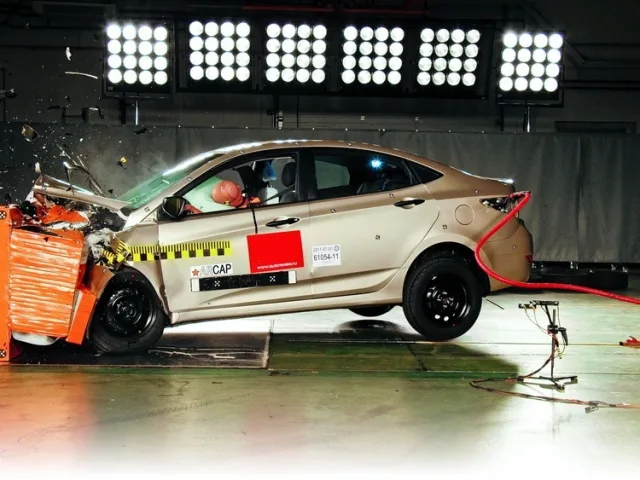
In 2011, the magazine "Autoreview" conducted a crash test of the Russian Accent (there it is known as the Solaris). Based on the test results, the car was recognized as safe: a strong body, injury-safe interior, and excellent airbag performance were noted. The testers' comments concerned the pedal assembly and the characteristics of the pretensioners and force limiters of the belts — Korean engineers promised to refine these elements.
Features
The car's handling is at a high level for its class. The Accent demonstrates behavior typical of front-wheel-drive cars. During sharp maneuvers, the car accurately follows the steering wheel, and feedback allows the driver to feel the position of the wheels and understand the limits of grip.
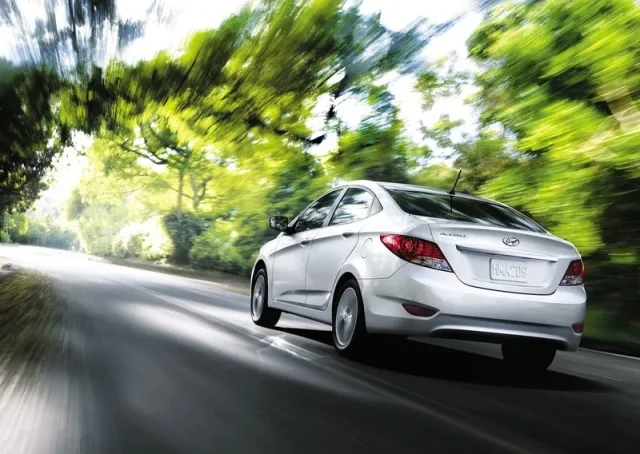
On the highway, the Accent confidently holds a straight line, and in long turns there are no complaints either. Only on roads broken by trucks does the rear semi-independent suspension make itself known, pulling the car off course. However, Korean engineers are unlikely to have encountered such roads in their homeland.
Otherwise, no special features have been noticed during operation. Most often, owners complain about insufficient overall sound insulation.
Popularity in Ukraine
The Hyundai Accent is among the best-selling cars on the Ukrainian market and, according to our rating, is in the TOP-5.
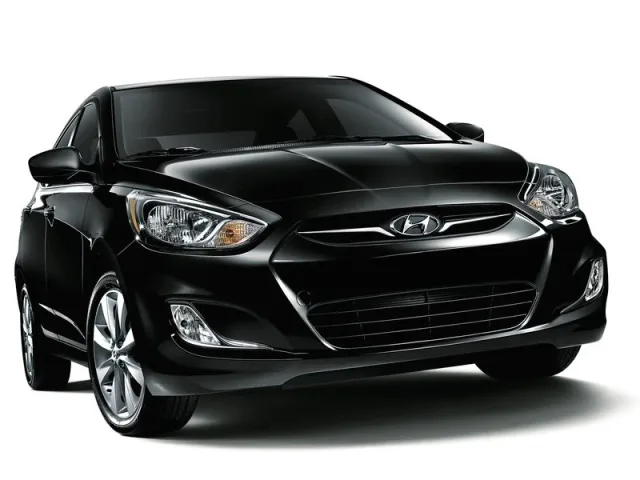
The model's success in Ukraine is explained by its successful design, affordable price, and increased trust in the Hyundai brand.
Our verdict
The Hyundai Accent is a good choice for a buyer who wants to get a modern car for moderate money. The model is one of the best in its class in terms of price-quality ratio. Among the advantages are a wide network of dealerships and service stations, availability of spare parts, and moderate maintenance costs. Low fuel costs also speak in favor of this model.
Despite the absence of serious complaints about the quality of Korean cars, for many, the warranty remains important. For the Hyundai Accent, it is 7 years: 5 years of warranty and 2 years of free elimination of factory defects, or 100 thousand kilometers of mileage, whichever comes first.