Advertising
Honda CR-V: prices and specifications
5 generations Country of origin: Japan

Honda CR-V is a mid-size crossover built on a modified Civic platform. The name stands for Comfortable Runabout Vehicle, that is, a "comfortable compact crossover."
The model became the first crossover in the brand's history. Development began in 1993, and prototypes appeared as early as 1994. The premiere of the first generation took place in 1995 in Tokyo. The car was offered in a single LX trim and had a unibody construction. In 1999, the car was updated: a new two-liter engine appeared under the hood — more powerful than before, but at the same time more economical and environmentally friendly.
The second generation debuted in 2002. It was again based on the Civic platform, but now the seventh generation. The crossover became larger, and its exterior and interior changed. Notable changes occurred in the technical side: MacPherson struts were installed at the front, and double wishbones at the rear. Thanks to the compact rear suspension, the trunk volume with the rear seatbacks folded grew to 2000 liters. The engine lineup expanded: the 2.0 gasoline engine was joined by a 2.4-liter gasoline and a 2.2-liter turbodiesel. In 2005, the car underwent a facelift that affected the exterior and interior.
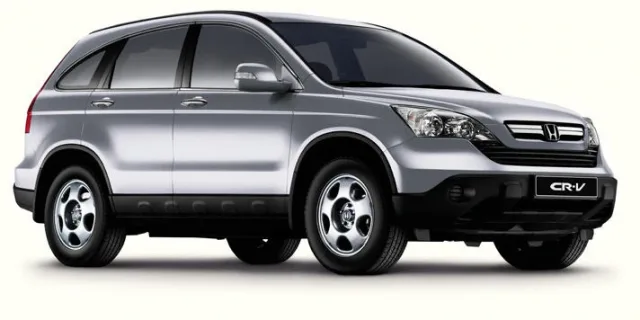
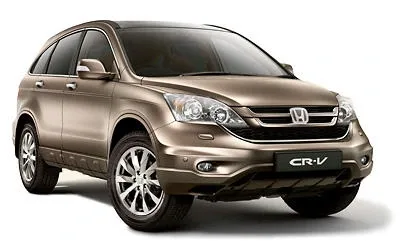
The third generation was shown in 2007. Compared to its predecessor, the car became smaller. The rear door now opened upward instead of sideways, and the spare wheel moved under the trunk floor. The 2010 restyling changed the radiator grille, bumpers, and rear lights, and also made the engines more powerful and economical.
The fourth generation was presented in 2011 in Detroit, and a year later the European version was shown. In Ukraine, such a CR-V appeared in December 2012. The car was equipped with a two-liter gasoline engine paired with a five-speed automatic and all-wheel drive.
History
The first generation was released in 1995 and was produced until 2001. It received an adapted Civic platform. The 1995 model was available only in the LX version. In 1999, the engine was replaced with a new two-liter one producing 148 hp instead of the previous 129 hp. Among the features of the first CR-V are a flat floor and a folding table hidden under the trunk floor.
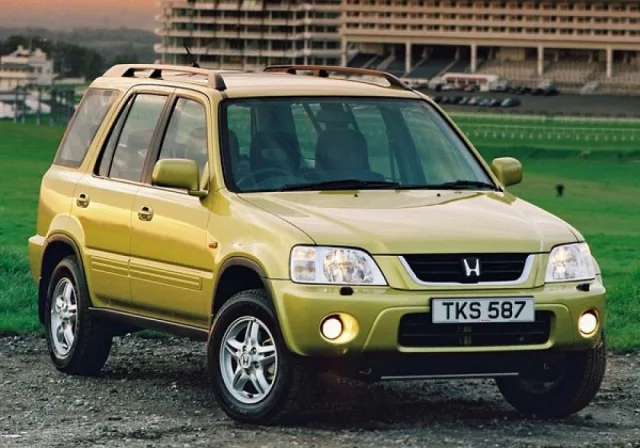
The second generation debuted in 2002 on the basis of the seventh-generation Civic. The car became larger and changed significantly externally and internally. MacPherson struts appeared at the front, and double wishbones at the rear. This design made it possible to increase the trunk to 2000 liters with the seats folded, and 525 liters in the travel position. True, the table under the floor disappeared.

The 2.0 gasoline engine was joined by a 2.4-liter gasoline engine and a 2.2-liter turbodiesel. In 2005, the car was updated: changes affected the exterior and interior. Also, the second generation got a viscous coupling that connects the rear wheels faster than the first generation.
The third generation was released in 2007. The crossover became more compact than its predecessor. The chassis and all-wheel drive were not touched, but the body rigidity was increased by 58%, which improved handling. The number of electronic safety systems also increased. In 2010, a restyling was carried out: the radiator grille, bumpers, and rear lights were changed, and the engines became more powerful and economical.
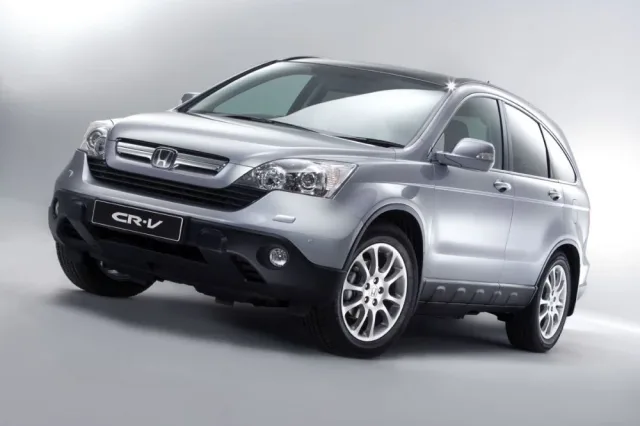
The 2007–2011 model still had a flat floor. The table with cup holders that was in the second generation disappeared — instead, an ordinary niche appeared. The trunk grew to 556 liters. The trunk door opens upward together with the glass, whereas previously the glass could be raised separately.
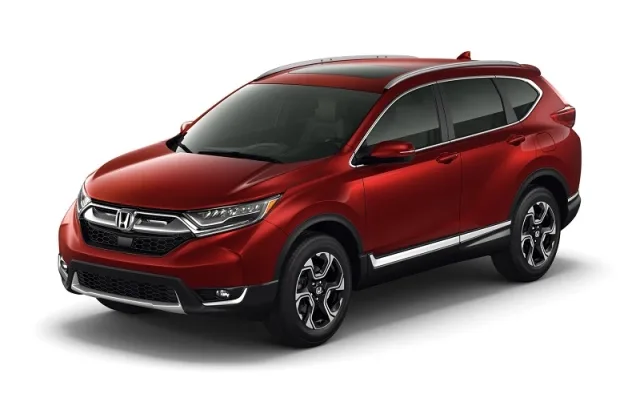
The fourth generation was shown in 2011 in Detroit, and the European version in 2012. The car became smaller and lower, but more spacious inside.
Exterior
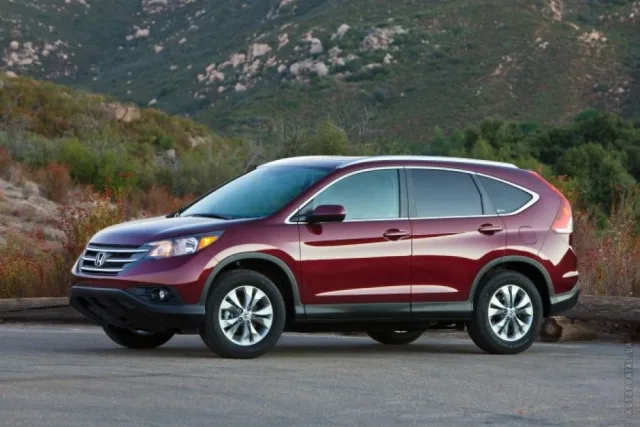
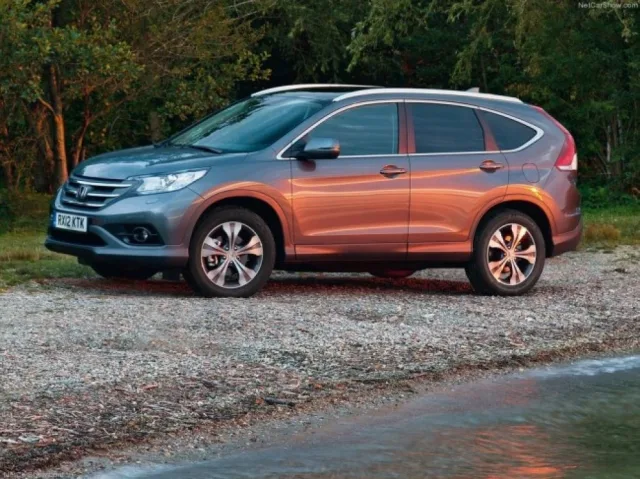
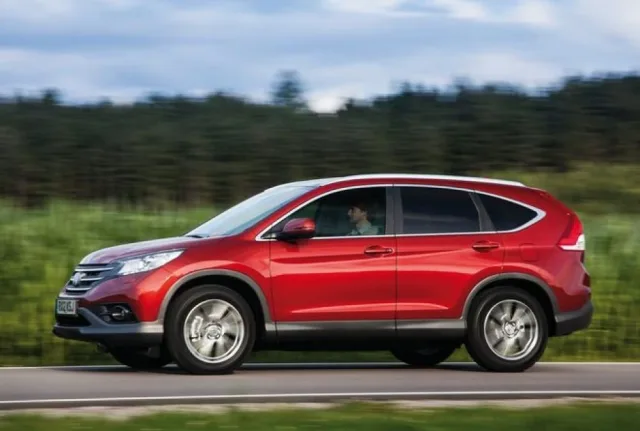
The fourth CR-V externally is almost unlike its predecessors. It looks distinctive and may seem larger than the first three generations, although in fact it is inferior to the third in length and height.
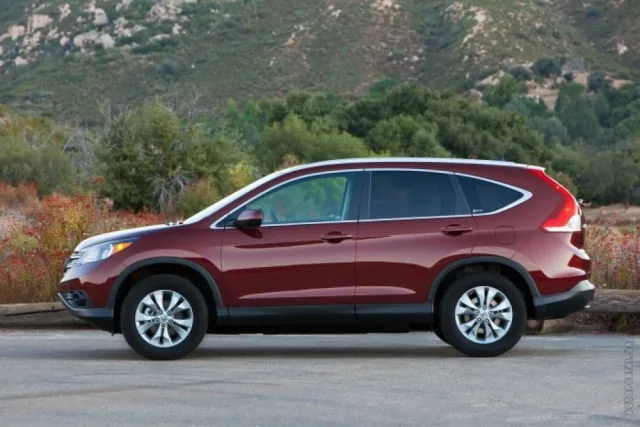
The ground clearance was also reduced. The 2012 model has the smallest ground clearance among all generations — 170 mm without load. Due to this, handling on the highway and aerodynamics improved.
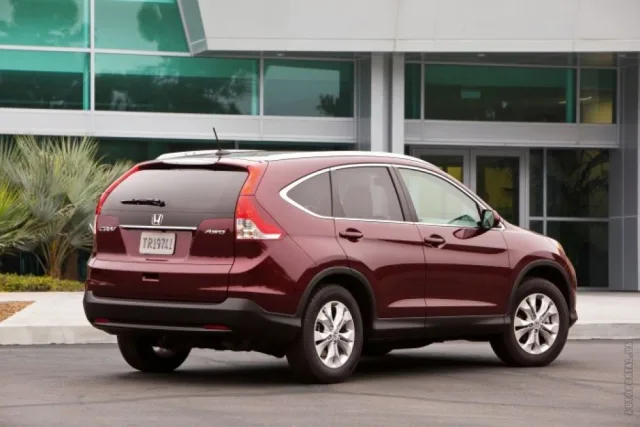
Overall, the car looks presentable and like a full-size crossover.
Interior
The interior of the fourth generation looks modern and largely echoes other Honda models.
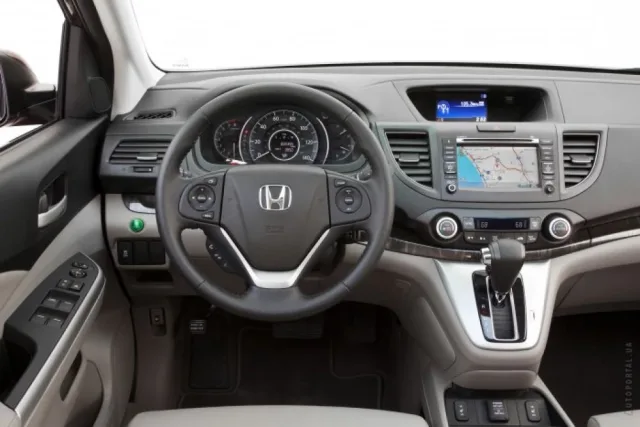
Inside, everything is simple, modern, and quite restrained. The quality of materials is decent, and the trunk reached a record 589 liters.
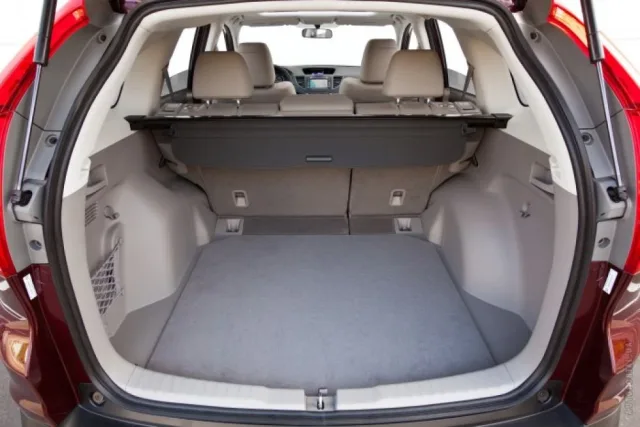
When developing the car, Honda surveyed owners of the third generation. It turned out that almost half of CR-V buyers are women. They spoke out against tables, so in the fourth generation there are none either between the front seats or in the trunk.
There is enough space in the cabin, and the seats fold down in a matter of seconds.
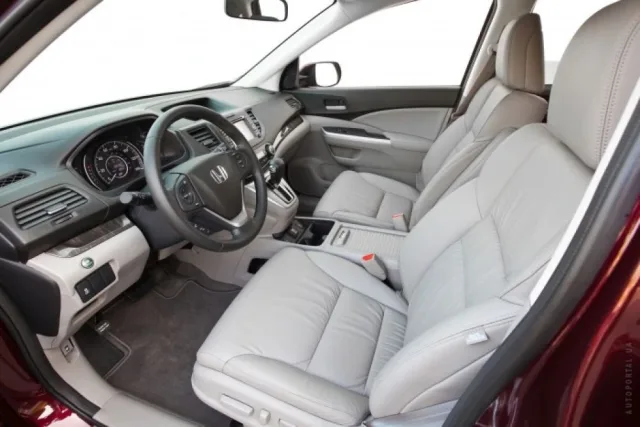
It is also worth noting the good sound insulation — the fourth CR-V is the quietest in motion.
Engine and transmission
At the start of sales, the fourth generation was offered only with a two-liter gasoline engine and a five-speed automatic. Acceleration dynamics are not impressive, but sufficient for calm driving. Real consumption in the city is about 10 liters.
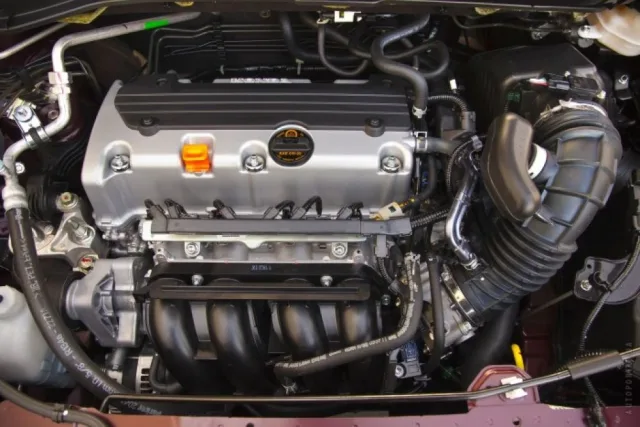
Later, a 2.4-liter engine officially appeared (initially it was offered only by unofficial dealers). The more powerful engine with similar consumption displaced the two-liter one and took the main share of sales.
The 2012–2016 CR-V has a new all-wheel drive system that reacts to the difference in wheel rotation speed faster than previous generations. This helps prevent wheelspin. The drive is activated using an electric motor and pump, and the intelligent control system itself distributes power between the front and rear wheels.
Safety
In terms of safety, the CR-V is one of the best in its class. The car can have airbags throughout the cabin, including side curtains. Also worth noting are the many electronic assistants that reduce the risk of skids and slides even in difficult weather conditions.

According to Euro NCAP crash test results, the fourth generation received the maximum five stars and showed a high degree of protection for the driver, adults, and children.
Features
One of the features of the fourth generation is an almost flat bottom. Thanks to it, the car feels confident off-road despite its modest ground clearance.
The model has an economical ECON mode that limits engine operation to reduce consumption. It also changes the sensitivity of the gas pedal and the operation algorithm of the gearbox. The instrument panel changes color: the more economical the driving, the greener the glow around the speedometer becomes.
Popularity in Ukraine
The Honda CR-V has always enjoyed a good reputation and demand in Ukraine, regardless of generation.
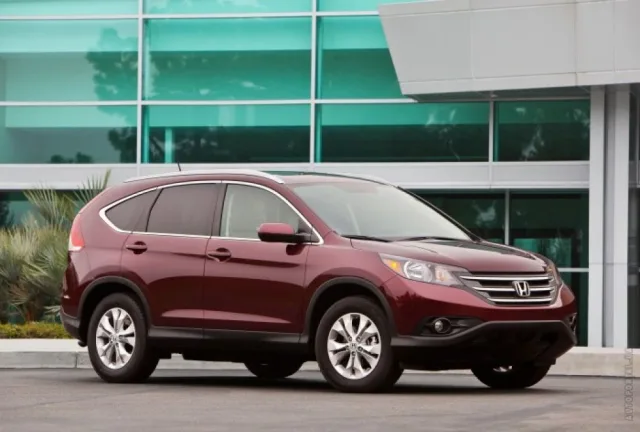
The fourth generation cemented the model's success, becoming one of the most popular in its class. Unlike its main competitor, the Nissan X-Trail, the CR-V managed to attract a female audience as well.
Our verdict
The Honda CR-V is a spacious and comfortable crossover that suits men, women, and families. It handles like a passenger car, but at the same time has an off-road seating position and can go further than an ordinary passenger car.
If you live outside the city or want to feel confident on snowy and slippery roads, the CR-V is worth considering as a purchase option.