Advertising
Ford Tourneo: prices and specifications
4 generations Country of origin: United States

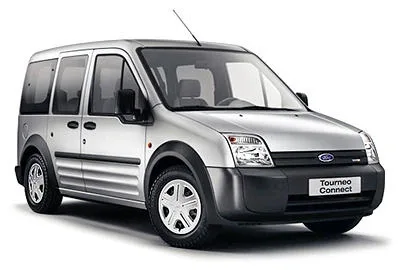
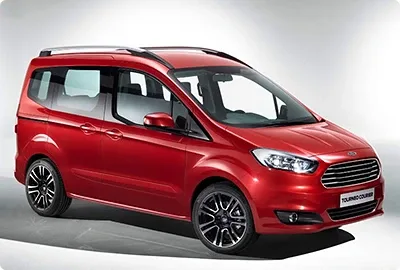
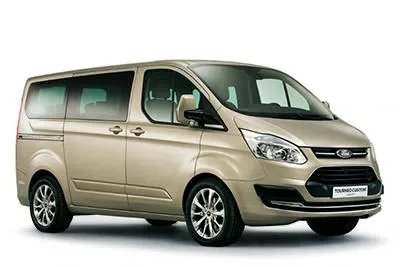
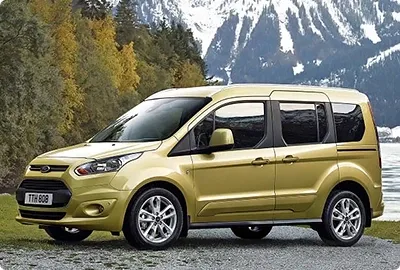
Ford Tourneo Connect is a multi-purpose vehicle that combines the functions of commercial transport and a leisure vehicle. Essentially, it is a smaller version of the Transit Connect model, which replaced the passenger version of the Escort. The model name translates from English as "intended for travel."
Seeing the success of similar vehicles from Fiat, Citroen, Peugeot, Opel, and Volkswagen, the American manufacturer decided to add a car suitable for both business and active family recreation to its lineup.
Development began in 2000 at Ford's European division in Germany, where production was subsequently launched. The design was created by Peter Horbury. The first prototypes were ready by 2001, and their road tests took place in Spain and Germany. The world premiere of the Ford Tourneo Connect took place in 2002 in Madrid.
The key advantage over competitors was the rear row of seats, which folded in a 40/60 ratio. If necessary, they could be easily removed, turning the passenger car into a cargo-passenger vehicle. Another feature was the side sliding doors, simplifying loading and passenger entry. The rear cargo doors had two opening mechanisms — swing-out and lift-up (optional), which competitors did not offer at the time. The vehicle is built on the Ford C170 platform, which also underpinned the first-generation Focus family. In addition to Germany, the minivan is assembled in Turkey.
In Ukraine, the Ford Tourneo Connect appeared in 2004. Currently, it is available on the local market in two versions — with standard and extended wheelbase.
The minivan is equipped with a 1.8-liter turbocharged diesel engine. It is paired with a five-speed manual transmission. Drive is front-wheel.