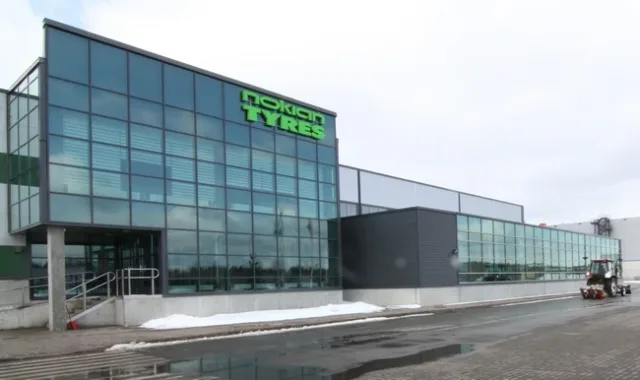
In the first days of April, Autoportal correspondents visited the second enterprise of the Finnish company Nokian Tyres in Russia, which opened in 2012. The plant is located in Vsevolozhsk, a suburb of St. Petersburg. This brand is well known in the post-Soviet space: back in 1964, it was from its conveyor that the first imported tires began to be supplied to the Soviet Union. If previously the brand was firmly associated with winter tires, now it also produces summer tires. Moreover, the company's Russian plants produce not only tires for passenger cars, but also for trucks, buses, and special equipment.
This aroma cannot be confused
Immediately after getting off the bus in Vsevolozhsk, a somewhat sharp sweetish smell is felt. "This is how natural rubber smells," explain the plant's workers, whose territory covers more than 30 hectares on drained peat bogs.
The smell is indeed unusual, and in the workshops it is almost unbearable for an unaccustomed person. However, local employees are used to it and jokingly call it the "smell of money."
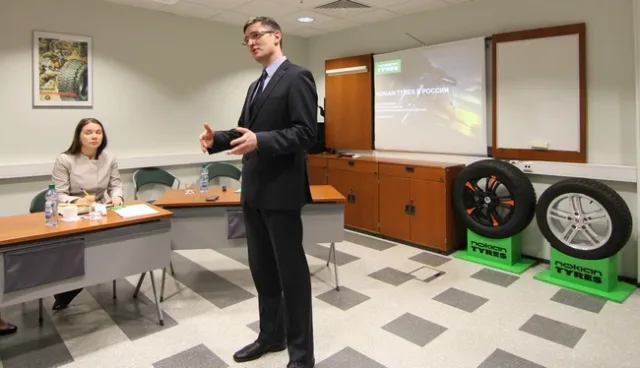
And this is not just a joke: as Andrey Pantyukhov, General Director and Vice President of Nokian Tyres Russia, said, over eight years (the first plant in Russia was opened in 2005), tire production has increased from one to fourteen million units annually. Revenue in 2012 in Russia reached 563 million euros, and in the CIS countries — 43.7 million euros. This year, it is planned to launch two more production lines, which will increase volumes to seventeen million tires per year.
Through a bright and spacious checkpoint, we head to the workshops. In the lobby, a large LED screen hangs on the wall, displaying information about which employees have a holiday today or in the coming days. It is immediately clear that the employees, of whom there are 1,100 here, are taken care of.
At the entrance to the production area, we are met by Alexander Ustavshchikov, Director of Production and Technical Support, who gives us a tour.
Rubber "cocktail"
The first on our way is the mixing workshop — a huge five-story structure where rubber compounds for all tire components are prepared. There are fifteen such elements.
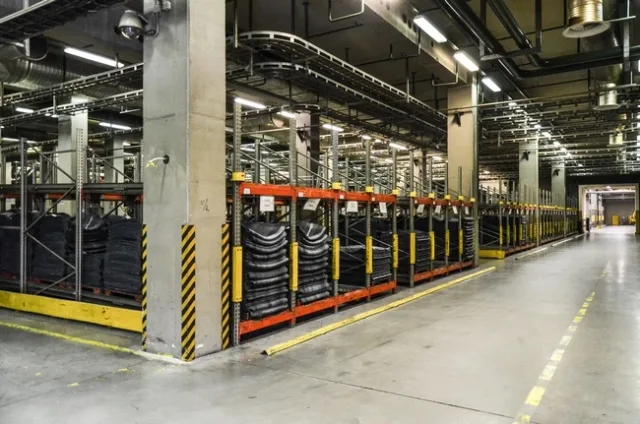
To create a rubber compound, several types of raw materials are used: natural rubber (supplied from South Asia), synthetic rubber (Russian-made), as well as fillers, plasticizers, and vulcanizing agents. The composition of the compounds is the same for plants in Russia and Finland, but the cost of one Russian Nokian tire is 10 euros lower than the Finnish one. The secret is in more affordable labor and energy resources.
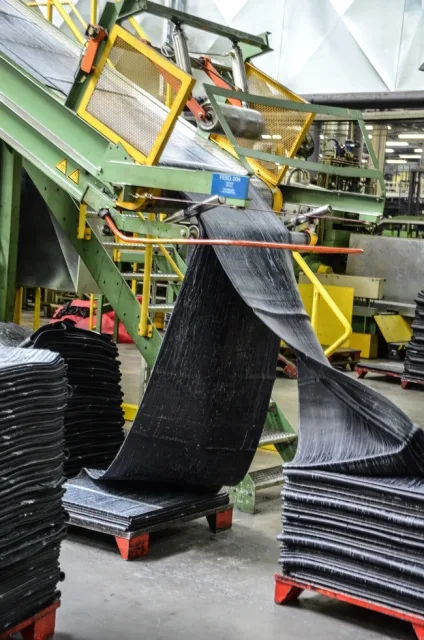
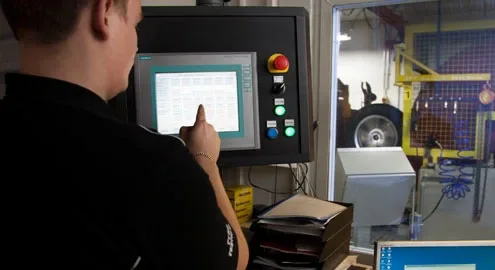
People are not allowed near the mixing machines: the process is fully automated and controlled by computers, mixing occurs mechanically, with minimal use of "chemistry" — this is how they care about the environment here. Each compound is prepared according to its own recipe, which the operator selects depending on which tires are being produced at the moment (the plant produces more than 1,000 tire sizes in total). Loading and mixing of materials are controlled by automation.
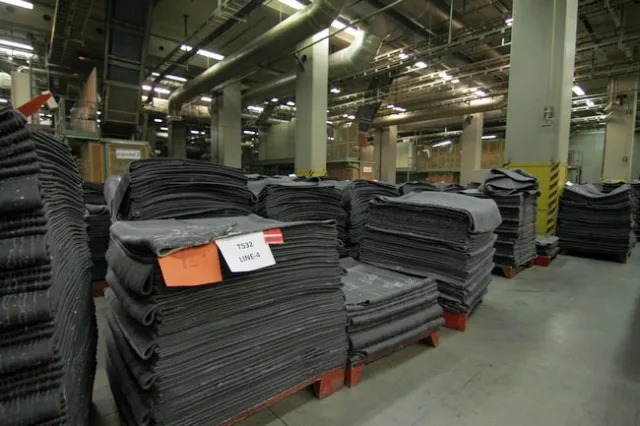
The finished rubber compound is rolled into pallets, which are marked with a white label and sent for laboratory control, where they are thoroughly checked according to many parameters. If the control is passed, a red label is hung on the pallet; if not, it is rejected.
Each tire component has its own line
The finished pallets go to the next workshop, where tire components are made. Here, a separate line is provided for each of the fifteen elements of the future tire.
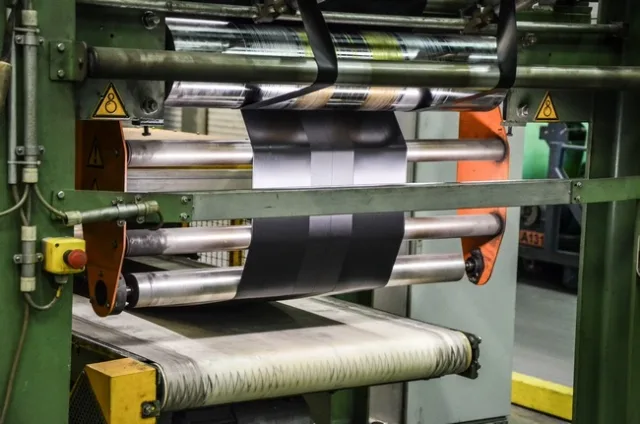
On the "short" lines, textile cords (rubberized viscose or polyester material that takes on internal pressure), bead rings (reinforce the bead in the disc area), and other parts are produced. On the "long" lines — treads and inner liners (replacements for the tube). For example, on each tread, which is "mixed" on a machine from four different rubber compounds, colored stripes (for model identification) and digital size designations are applied.
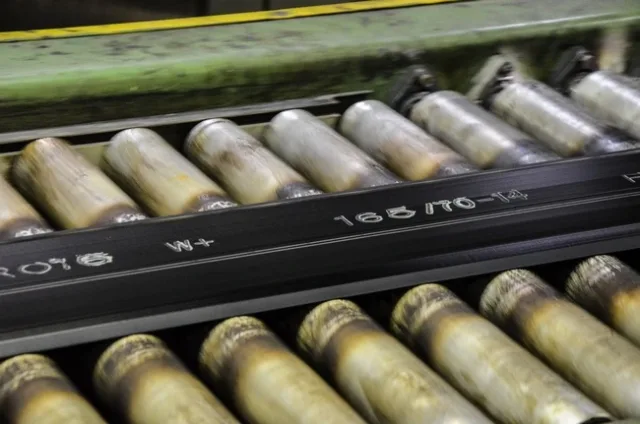
The tread strips are cooled, wound onto spools, and sent to the assembly workshop.
Assembling a tire is a delicate matter
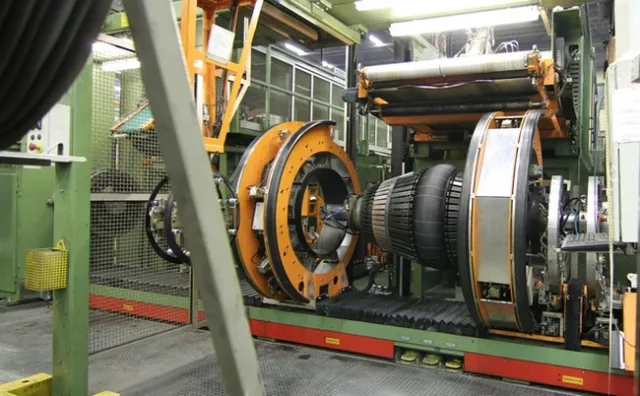
After all parts are made, they are transferred to the tire assembly workshop. Here, assembly machines from the Dutch company VMI-MAXX are installed in rows, on which individual elements are turned into a blank — the so-called "green tire."
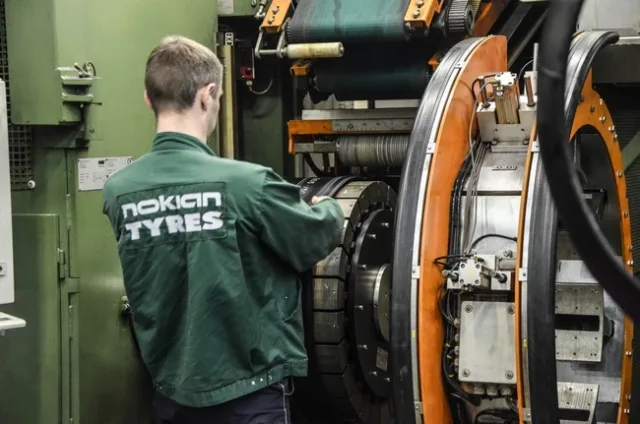
The process looks like this: all components are fed to the machine from the rear side. The automation sequentially, with laser control of placement, mounts the layers one on top of another: on one side, a steel breaker is fed onto the drum, then a nylon bandage and tread. On the other side — the inner liner and textile cord. At the right moment, both parts are joined, and the inner surface of the raw tire is treated with a special solution so that the diaphragm of the vulcanizing press does not stick to the inner liner.
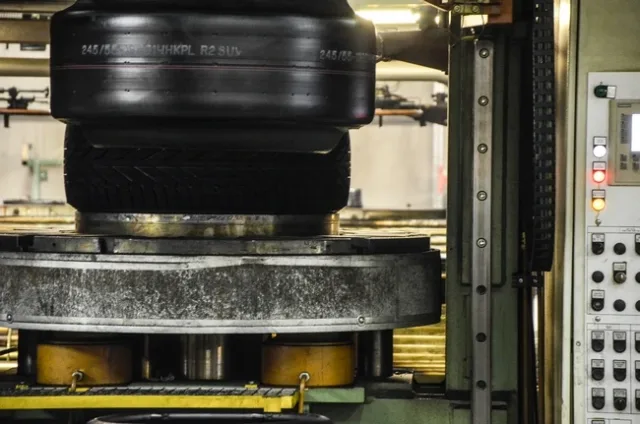
This blank is already similar in shape to a finished tire, but it will become a full-fledged tire only after vulcanization.
Tires hot off the press
In the vulcanization workshop, it is hot like in a sauna. Not surprising: this process requires high pressure (15 bar) and a temperature of about 200 ºC.
Superheated steam fills the press diaphragm, which presses the blank against the segments of the mold (which form the tread pattern) and against the sidewalls (creating the markings). After vulcanization, the tire acquires all its final properties (except for studs). The process takes, depending on the size and model, no more than 10–13 minutes.
Currently, the Nokian Tyres plant has ten vulcanization lines (each with 16 devices); this year, two more will be added. In one shift, which lasts 12 hours, a line produces about 1,500 tires.
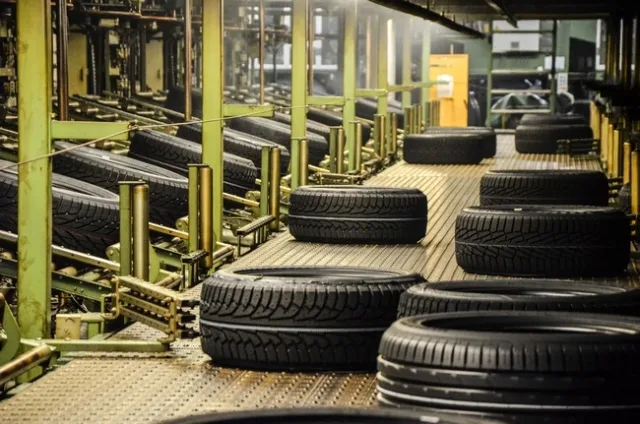
Winter tires that require stud installation are sent to the studding workshop. Everything is automated here too: a laser device determines the place for the stud (the program contains the location for all sizes of each model), then a manipulator feeds the studs and installs them into prepared sockets. The studs are developed by Nokian Tyres engineers and produced at partner factories in Finland.
Triple quality control
The finished products undergo strict control in three stages. The first is visual: a specially trained inspector examines the tire for defects (there are more than a hundred in total). There are two such posts on each line.
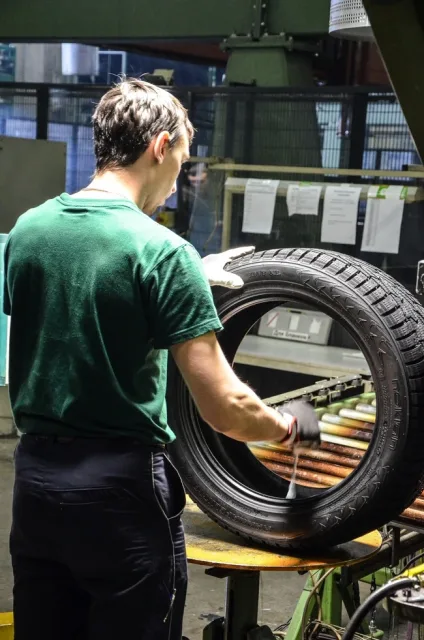
Right before our eyes, the inspector takes a still warm tire (the check is carried out in a hot state, since after cooling many defects become invisible), rotates it on the table in a vertical position, and carefully examines the outer and inner sides for bubbles, cracks, and checks the quality of the seams. If the tire is "correct," the operator puts a personal stamp on it with the name, surname, and shift number.
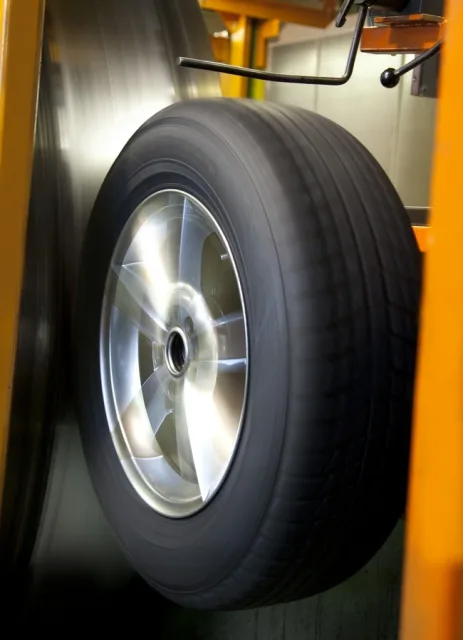
The second stage is automatic computer check, which detects defects invisible to the eye: weight, diameter, lateral and radial forces, conicity.
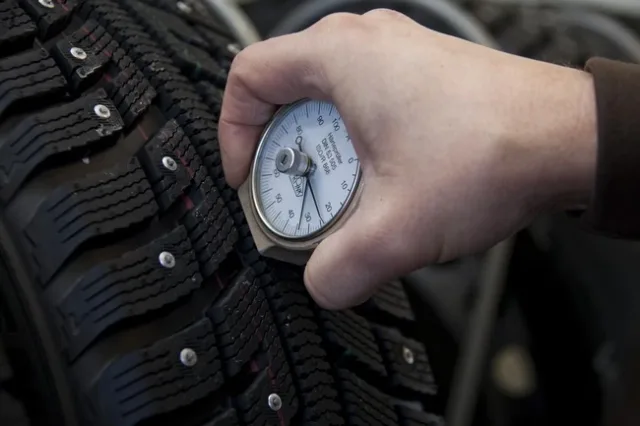
The third stage is selective: at the finished goods warehouse, a commission selects tires intended for shipment to dealers and once again checks all possible defects. Only after this do the tires get the "green light." Defective tires are destroyed by cutting them into small pieces in specially designated rooms of the plant.
According to Andrey Pantyukhov, Russian and Finnish tires do not differ in quality — the products of the Vsevolozhsk plant are supplied not only to the CIS, but also to Finland, European countries, and North America. All models are tested at test sites in Ivalo (winter) and Nokia (summer). Only about 10% of tires are imported to Ukraine from Finland, and these are tires of special construction, for example, RunFlat for BMW. The rest is supplied from Vsevolozhsk.
The human factor
Getting a job at the Nokian Tyres plant in Vsevolozhsk is not easy: out of a hundred applicants for one position, one person is hired. A contract is concluded with him for several years (from four to seven, depending on specialization), medical insurance and a full social package are provided.
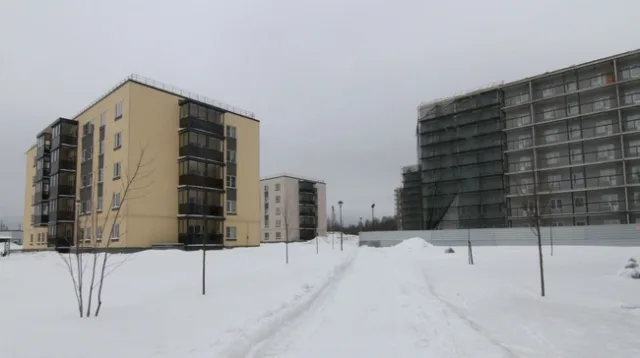
In 2009, ten kilometers from the plant, according to the design of Finnish architect Jukka Tikkanen, a village for workers was built — Hakkapeliitta Village. The first stage of four five-story buildings (167 apartments) is already occupied; now the second stage is being built — three seven-story buildings. The village is located on a fenced and landscaped area, has its own boiler house, transformer substation, security and video surveillance system, thoughtful lighting, children's and sports grounds, and parking for each apartment. In the spring of 2013, a kindergarten will open here. Employees can buy apartments with a mortgage (up to 20 years, with a 5% down payment and an annual rate of 7.5% in rubles). One of the main conditions is that the buyer must work at the enterprise for at least seven years. In short, they care not only about organizing labor according to European standards, but also about the housing conditions of their workers.