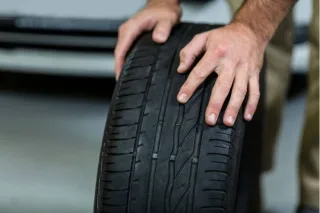
Прокол колеса на большой скорости может привести к ДТП, а на малой - к непредвиденной и неприятной задержке в пути. Избежать этого позволяют так называемые «беспрокольные» шины, иное название которых - RunFlat («движение на спущенной шине»).
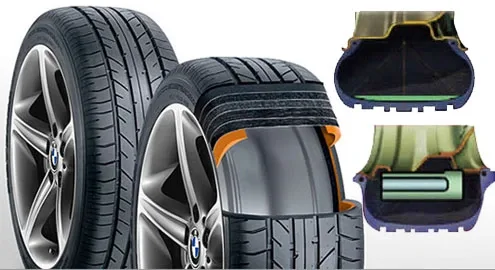
«Беспрокольные» шины есть в линейке шин многих производителей:
- BF Goodrich - серия SSS (Self-Supporting Structure),
- Bridgestone - серия RFT (RunFlatTire),
- Continental - SSR (Self Supporting Runflat), CSR (Conti Support Ring),
- Dunlop - DSST (Dunlop Self-Supporting Technology),
- Firestone - RFT (Run Flat Tire),
- Goodyear - ROF,
- Kumho - XRP,
- Michelin - ZP (Zero Pressure),
- Nokian - RF (Run Flat),
- Pirelli - RFT (Run Flat Technology),
- Yokohama - RF (Run Flat).
«Беспрокольные» шины позволят вам добраться до ближайшего шиномонтажа (если он находится не далее 80 км) на скорости до 80 км/ч. На сегодняшний день существует три типа технологий, позволяющих автомобилю двигаться после прокола покрышки:
- самогерметизирующиеся шины,
- шины с усиленными боковинами,
- системы дополнительной поддержки.
Самогерметизирующиеся шины
Наиболее простая защита от прокола. В таких шинах внутри протектора помещен дополнительный слой герметика, который «затягивает» образовавшееся при проколе отверстие.
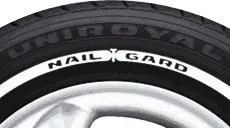
Концерн Continental предлагает системы самогерметизации NailGard и GenSeal. При этом стоимость покрышки с герметиком может быть только на 100-150 грн. дороже аналогичной шины без системы герметизации.
Плюсы самогерметизирующихся шин
- Низкая стоимость (на 10-20% дороже «обычной» покрышки).
- Ремонтопригодность.
- Монтируются на обычный колесный диск.
Минусы самогерметизирующихся шин
- Самогерметизация невозможна при повреждении боковины или при больших порезах.
- На мокрой дороге или в мороз герметизация менее эффективна.
Шины с усиленными боковинами
Усиленные боковины позволяют шине сохранить форму даже при отсутствии внутреннего давления. Нагрузка в этом случае будет приходиться на боковины покрышки, которые выполнены из нескольких слоев специального корда и резины.
Возможный пробег на «пробитой» покрышке составляет 80-250 км в зависимости от производителя резины и загрузки автомобиля. Наличие прокола в таких шинах может пройти незаметно, поэтому обязательным является наличие системы контроля давления в шинах.
Впервые такие шины появились в 1992 г. (серия Run-Flat от Goodyear). Сегодня шины с усиленными боковинами предлагают большинство известных производителей: BF Goodrich, Bridgestone, Dunlop, Michelin, Pirelli.
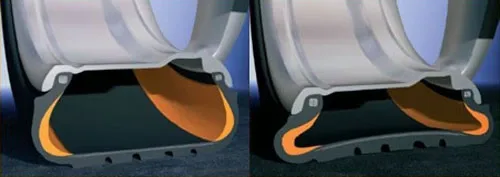
Шины с усиленными боковинами устанавливают на автомобили премиум-класса и на бронированные модели. Стоимость таких шин на 30-100% выше стоимости «обычных» покрышек. К примеру, Goodyear Eagle F1 GS-D3 run flat обойдется в 2200 грн. Шина BRIDGESTONE DUELER HL 400 обойдется в 1624 грн., а с беспрокольная BRIDGESTONE DUELER HL 400 Run Flat будет стоить уже 2860 грн.
Плюсы шин с усиленными боковинами
- Не боятся серьезных повреждений (в том числе и повреждений боковины).
- Монтируются на обычный колесный диск.
Минусы шин с усиленными боковинами
- Требуется наличие системы контроля давления воздуха в шине и адаптированной подвески.
- Неремонтопригодны. Ремонт протекторной части таких шин допускают только Goodyear (серии шин ROF и EMT) и Dunlop (серия DSST).
- Более тяжелые и менее комфортны.
Системы дополнительной поддержки
Принцип функционирования таких систем заключается в установке внутри самих шин элемента жесткости, который принимает на себя нагрузку при падении давления в шине. В качестве элемента жесткости применяется металлический или пластиковый обруч. Кроме того, для монтажа таких шин требуются специфические колесные диски.
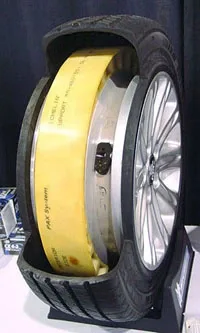
На сегодняшний день шины с кольцом-вставкой производят Michelin (серия PAX) и Continental (серия CSR). Такие шины устанавливают в основном на бронированные автомобили.
К примеру, Michelin Pilot Alpin (pax) обойдется в 2673 грн.
Плюсы шин с системами дополнительной поддержки
- Не боятся серьезных повреждений (в том числе и повреждений боковины).
- Способны выдержать большую нагрузку.
- Позволяют сохранить все показатели шины.
- Дальность передвижения после прокола - до 200 км.
Минусы шин с системами дополнительной поддержки
- Требуется установка специфических колесных дисков.
- Более тяжелые и менее комфортны.
- Устанавливают только на специализированных станциях.
- Высокая стоимость (в 2 и более раз дороже "обычных" шин).
- Требуется наличие системы контроля давления воздуха в шине и адаптированной подвески.