Nissan Qashqai: prices and specifications
7 generations Country of origin: Japan

Model Overview
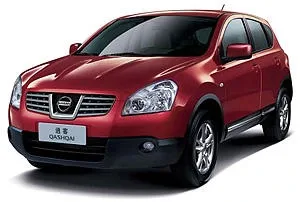
The Nissan Qashqai is the first mid-size crossover in the history of the Japanese brand, which laid the foundations for this class. The model combines the features of a familiar family hatchback and the capabilities of a compact SUV. The car got its name in honor of the semi-nomadic Qashqai tribe living in the mountains in the southwest of Iran. In the markets of Japan and Australia, the car is known as the Dualis.
The Qashqai became the first Nissan model whose design was entirely created at the brand's London European design studio. The technical part was developed by specialists from the Nissan Europe Technical Centre in British Cranfield. The prototype, built by 2005, was tested in Africa and Scandinavia.
The main assembly of the model was organized at the Nissan plant in Sunderland (UK), and production was also carried out in Japan and Iran. Since 2014, a plant in St. Petersburg was added to them.
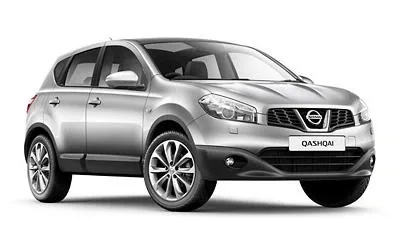
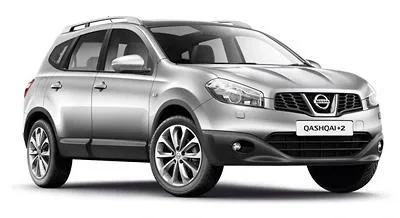
The public debut took place at the Paris Motor Show in 2006. Three years later, the seven-seat Qashqai +2 modification appeared. Both versions are built on the global Nissan C platform, but the body of the extended version is 211 mm longer than the standard one, and the wheelbase is 135 mm longer. The ground clearance for both options is the same — 200 mm. In 2010, both modifications underwent a facelift.
The five-seat Qashqai began to be supplied to Ukraine in 2007, the seven-seat one in 2009. Only petrol engines with a volume of 1.6 and 2.0 liters were offered for the Ukrainian market, while three diesels — 1.5, 1.6, and 2.0 liters — were available in other markets. The engines were paired with a five- or six-speed manual or a continuously variable transmission. Drive — front or plug-in all-wheel drive.
History
The Qashqai is the first Nissan car created in Europe and for Europe. It was worked on by designers from Nissan Design Europe in London and engineers from the Technical Centre Europe in Cranfield (Bedfordshire). The premiere took place in 2006 at the Paris Motor Show.
European sales started in 2007.
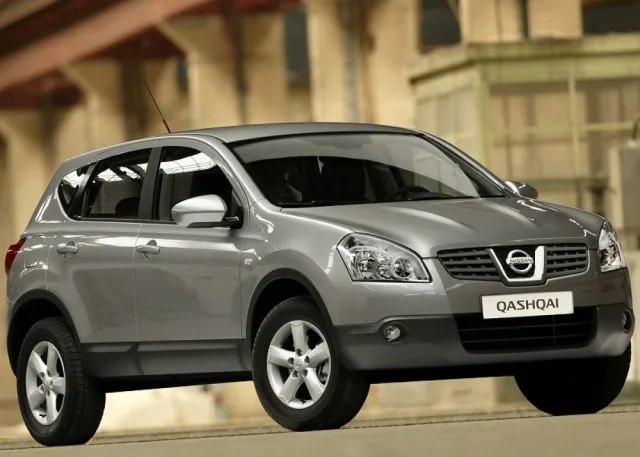
At the start of sales, buyers were offered two petrol and two diesel engines (in Ukraine — only petrol), a manual gearbox or CVT, front or all-wheel drive.
Safety was given special attention even at the design stage. As a result, the Qashqai earned five stars in Euro NCAP crash tests.
In 2008, production of the seven-seat Qashqai+2 version started. Its main differences are an extended wheelbase, changes in body geometry, and a new radiator grille. The car became 211 mm longer and 38 mm taller. However, the two additional seats are more of a marketing ploy than full-fledged passenger seats.
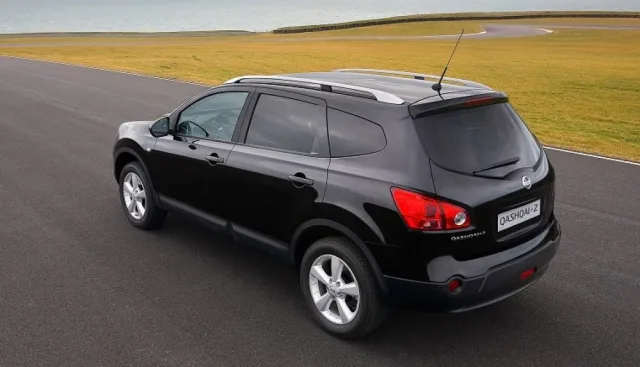
In 2010, the model was updated. The exterior changes were reduced to new optics at the front and rear and a front bumper. The cabin sound insulation was also improved, and the suspension was recalibrated.
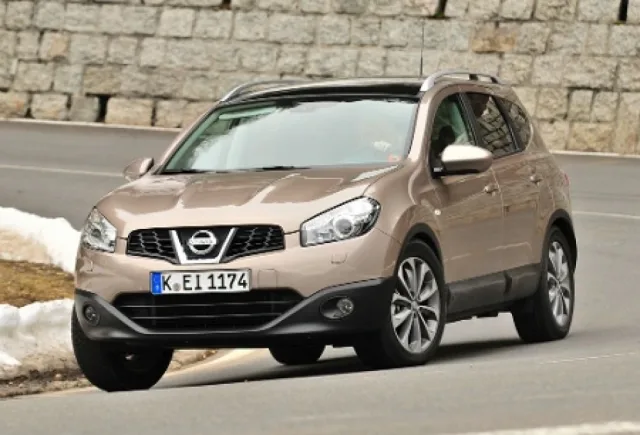
In 2011, on the European market, the two-liter diesel was replaced by a turbocharged 1.6 engine.
Demand for the Qashqai since its release was so high that queues stretched for a year and a half. In Ukraine, places in such a queue were even sold.
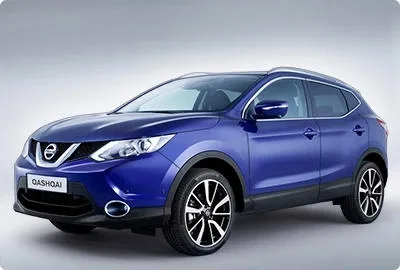
In November 2013, the second-generation Qashqai was presented in London. The new model is built on the Common Modular Family platform, shared with the third-generation Nissan X-Trail. Front-wheel-drive versions received a semi-independent rear suspension, all-wheel-drive versions — an independent multi-link one.
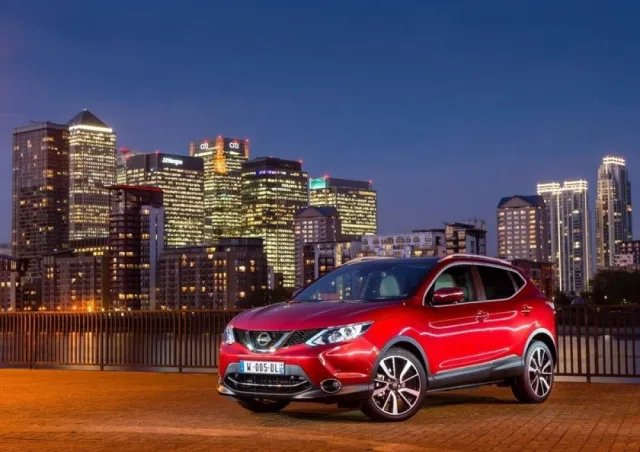
The engine range changed: a 1.2-liter petrol and 1.5-liter and 1.6-liter diesels appeared. All-wheel drive — only in combination with the 1.6-liter diesel.
Exterior
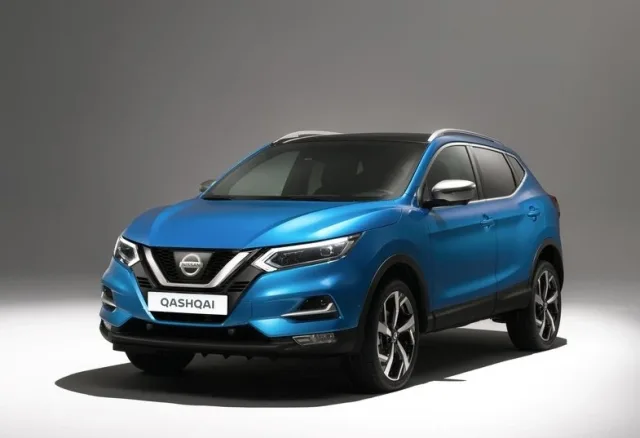
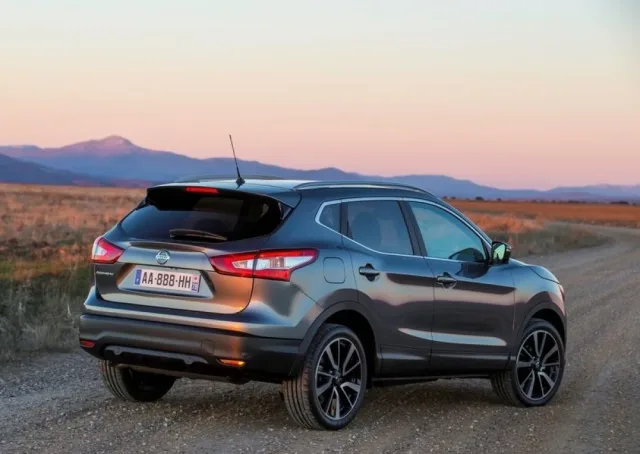
The new Qashqai has become longer, wider, and lower than its predecessor, but at the same time remains a compact crossover with a high seating position. The appearance looks swift, combining smooth lines and sharp edges. More "inflated" shapes added masculinity to the model.
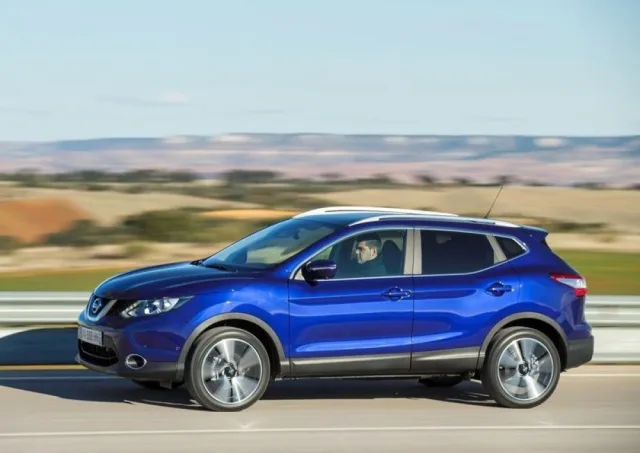
The front bumper has become more aggressive thanks to large openings in the lower false radiator grille. At the same time, the model retained its recognizability. The second generation is equipped with LED daytime running lights, and in expensive trim levels — fully LED headlights.
Interior
As before, the interior design cannot be called flashy. The front panel smoothly flows from one pillar to another. The large multimedia system display is installed in its usual place and is organically integrated into the design.
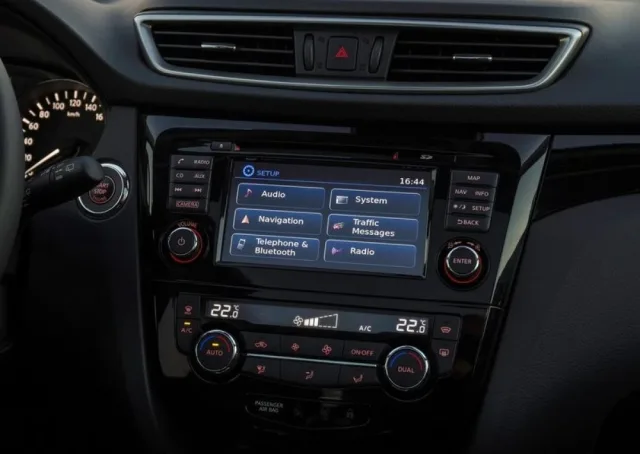
Inside — modern biodesign: smooth lines combine with clear angles. The tactile sensations from the materials do not inspire confidence in their reliability, but the ergonomics are top-notch. Moving into the Qashqai from any car, you will not feel discomfort: the controls are located and work according to the logic standard for Japanese brands.
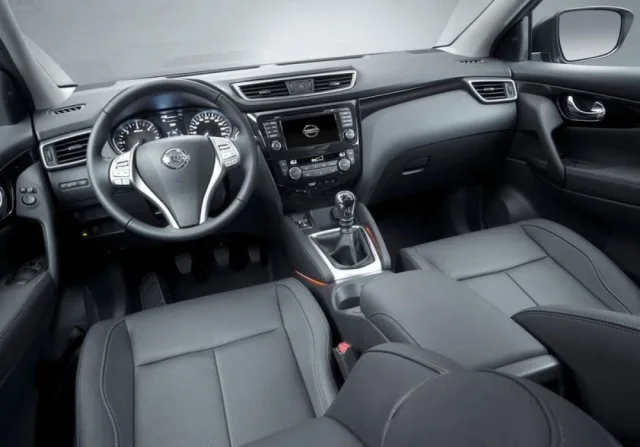
The seats deserve a special mention — they are very comfortable, and a person of any build will be able to find a comfortable position. According to the manufacturer, NASA developments were used in the design of the seats. Whether this is true or not is unknown, but the result is really good.
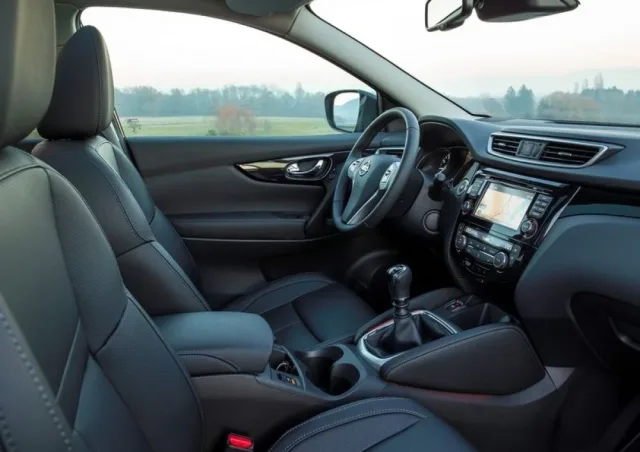
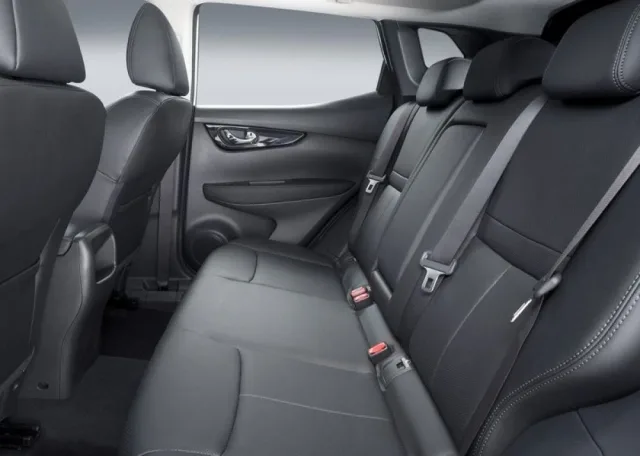
The rear row has become more spacious, and long trips are easier to endure than in the previous generation car.
Engine and Transmission
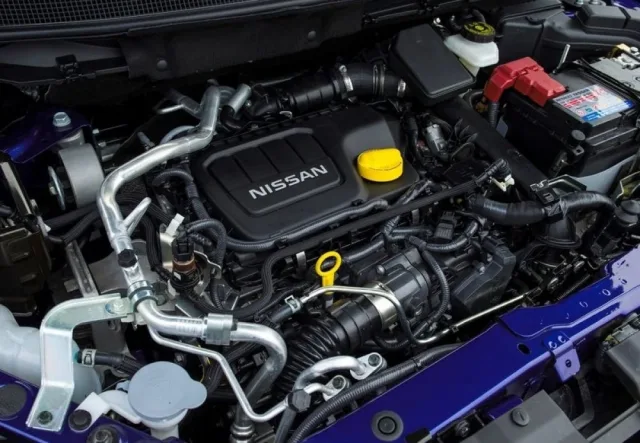
The update of the powertrain range shifted the emphasis towards diesels. If earlier diesel Qashqais were not officially sold in Ukraine, now the buyer has access to two turbo diesels with a volume of 1.5 liters (110 hp) and 1.6 liters (130 hp) with a CommonRail system. There is only one petrol engine — 1.2 liters with a capacity of 115 hp.
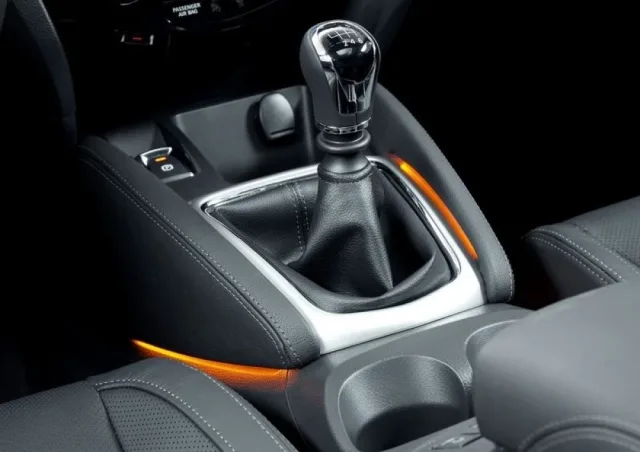
Any engine can be combined with a six-speed manual or the XTronic CVT, which has undergone a major modernization.
On the Ukrainian market, diesel versions are only front-wheel drive, as is the petrol 1.2-liter. All-wheel drive is available only with the 1.6-liter petrol engine with a capacity of 150 hp.
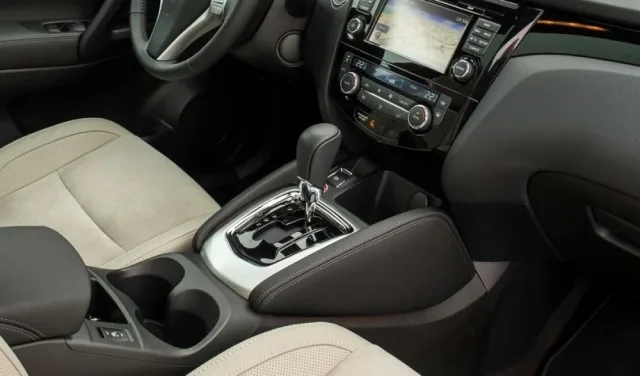
The most comfortable transmission option is the XTronic CVT. It saves fuel and provides smooth acceleration without jerks and noise. With sharp acceleration, no delays are felt — this is convenient when overtaking on the highway. With a manual gearbox, everything is standard and depends on the driver's skill.
The sound insulation of the engine compartment and wheel arches is at a good level: almost no tire noise or impacts of pebbles on the bottom are heard.
Safety
The Euro NCAP crash test awarded the new generation Qashqai five stars.
Adult passenger safety is rated at 88%, children — at 83%, pedestrians — at 69%. For electronic assistants, the car received 79%.
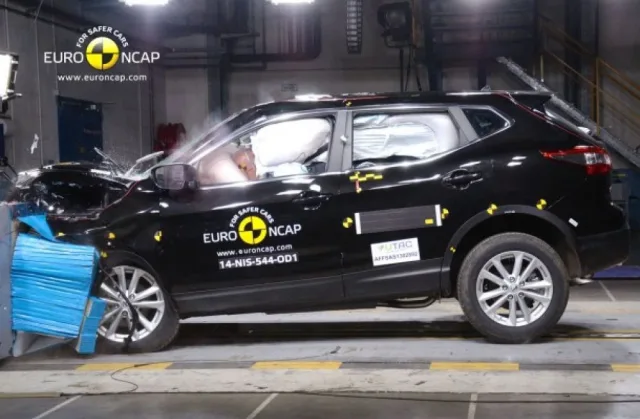
Additional points were brought by the basic stability control system, seat belt sensors, as well as optional automatic braking, lane keeping, and sign recognition systems.
Points were reduced only for weak protection against whiplash injuries in a rear-end collision.
Features
The new crossover has become noticeably stiffer than its predecessor. On smooth asphalt, this is not felt, but on joints, bumps, and cobblestones, vibrations make themselves known. On broken roads, sounds of impacts penetrate into the cabin. But in corners, the car almost does not roll, and handling has become more precise.
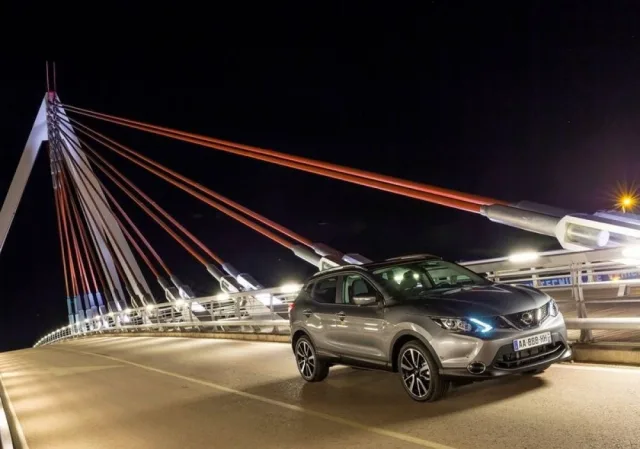
The impression is spoiled by the feedback on the steering wheel — it is not the most informative, which makes it seem that you are driving a larger car. If you overdo the speed in a corner, the front axle tends to understeer.
The brakes have improved and become more informative than those of the predecessor.
On the highway, the Qashqai does not tire: it does not require constant steering correction, confidently holds the trajectory both on straights and in long corners. It practically does not notice ruts.
Popularity in Ukraine
The Qashqai has always sold steadily in Ukraine. According to the autoportal.ua rating, it is in the TOP-20 among all cars and in the TOP-5 among crossovers.
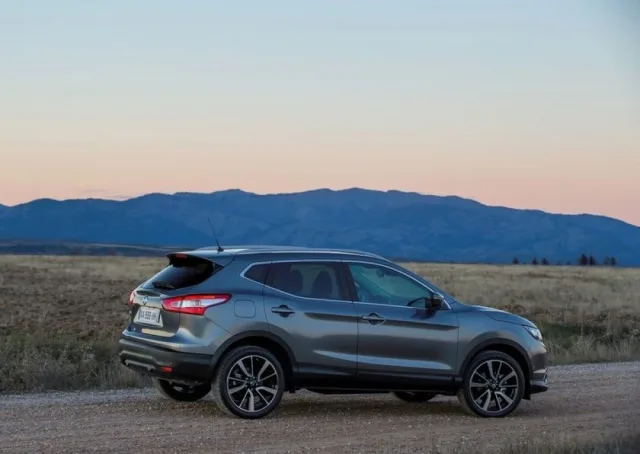
The new generation is more expensive than the previous one, but the level of equipment has also grown noticeably. Thanks to this, the 2014 model will surely gather an equally numerous audience.
Our Verdict
The Nissan Qashqai is one of the best offers in the compact crossover class. Its advantages include a wide network of dealerships and service stations, the availability of spare parts, and reasonable maintenance costs.
Economical engines and low operating costs tip the scales in favor of this model. The warranty on the Qashqai is three years or 100,000 kilometers — whichever comes first.