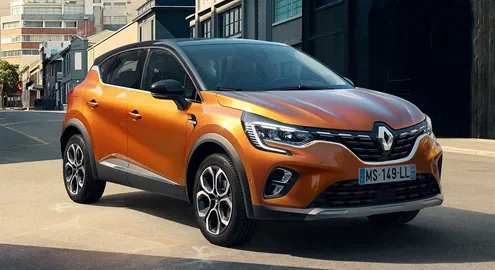
The new Captur is built on the scalable CMF-B platform of the Renault–Nissan–Mitsubishi alliance. Compared to the previous generation crossover, up to 85% of new parts and components were used in the construction of the current vehicle. The wheelbase has increased by 2 cm, while the overall length has grown by 11 centimeters. The trunk volume is 536 liters.
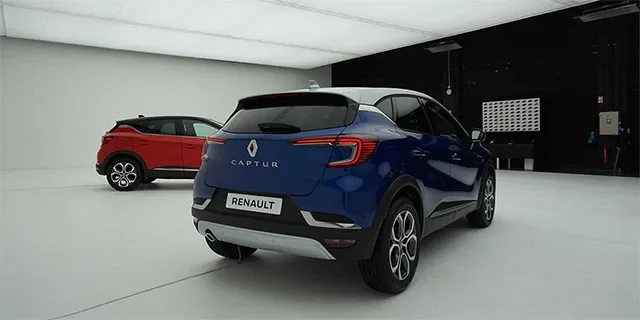
The crossover's exterior shows similarities with the new generation small hatchback Clio, which was presented in spring at the Geneva Motor Show. At the same time, the car retains the signature C-shaped LED daytime running lights.
The company noted that at the launch of the model, customers will be offered a choice of 11 body colors, 4 contrasting roof shades, and 3 personalization sets. Thus, up to 90 different vehicle design options will be available. As an option, a tinted opening panoramic roof and roof rails will be offered.
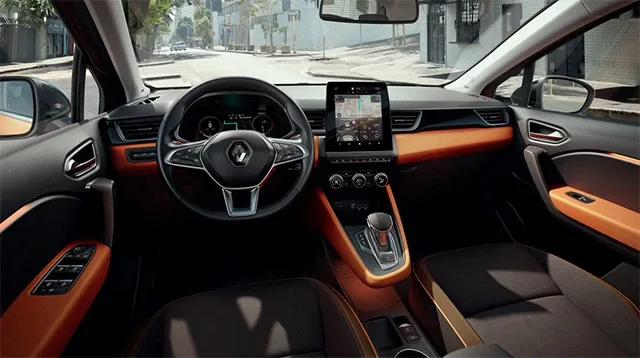
The most significant change in the cabin is the 9.3-inch vertical touchscreen multimedia display, under which a row of buttons responsible for various functions is located. The infotainment system supports Apple CarPlay and Android Auto interfaces. For an additional fee, a fully digital instrument panel with a diagonal of 10.2 inches is available.
The base engine is a three-cylinder turbo unit with a displacement of one liter and a power of 100 hp, paired with a five-speed manual gearbox. In addition, two 1.3-liter four-cylinder engines are available, producing 131 or 155 horsepower. The diesel lineup is represented by 1.5-liter engines with 95 and 115 hp. Transmissions are a six-speed manual or a seven-speed dual-clutch automatic.
From 2020, the Renault Captur will be offered with a hybrid powertrain that will allow driving up to 45 km exclusively on electric traction.