Відмінність у рівні якості між різними стандартами була величезною, і цим активно користувалися невеликі міні-НПЗ та численні ділки, що займалися фальсифікацією. У підсумку головний фінансовий тягар лягав на водіїв, адже ремонт після використання неякісного пального — задоволення досить затратне. То чи справді для шахраїв настали важкі часи? Спеціалісти Інституту споживчих експертиз провели експеримент, щоб визначити, чи стало пальне А-95 на вітчизняних заправках добротнішим. Лабораторні дослідження охопили всі регіони країни, включно з обласними центрами та автошляхами. Результати засвідчили: загалом якість пального суттєво зросла, проте виробники сурогату не поспішають здавати позиції.
Зразки бензину А-95 закупили на заправках найбільших загальнонаціональних операторів (WOG, SOCAR, УКРНАФТА, AMIC, ANP, MARSHALL, SHELL, UPG, БРСМ-Нафта, U.GO), а також у вагомих регіональних гравців (київська мережа KLO, PARALLEL, що працює на південному сході, ФАКТОР, харківські SVR та OVIS). Не оминули експерти й дрібніші мережі, присутні у райцентрах і невеликих населених пунктах (VST, LUXWEN, DNIPRO OIL GROUP, BARREL, NPG, ЕНЕРГО-ЕКСПОРТ).
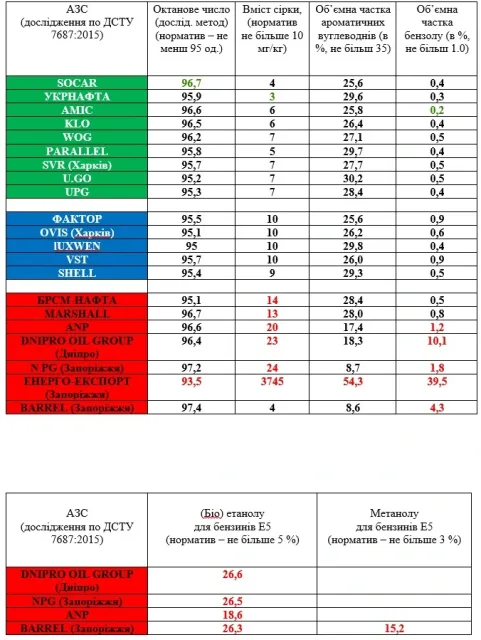
Отримані в лабораторії дані фахівці, як і раніше, розподілили за трьома категоріями — «зеленою», «синьою» та «червоною». У першу групу увійшли мережі, чия продукція відповідала вимогам Євро-5. До «синьої» зарахували зразки, що не мали порушень, проте й не вирізнялися «запасом міцності» — їхні показники балансували на межі допустимих значень. «Червона» ж категорія об'єднала заправки, пальне яких не відповідало чинному ДСТУ. Проби перевіряли за ключовими характеристиками: октановим числом, концентрацією сірки, об'ємними частками ароматичних вуглеводнів і бензолу. Окремо досліджували вміст біоетанолу та метанолу.
Зелена зона
Представники Інституту відзначають, що вперше за тривалий час кількість учасників у «зеленій» зоні перевищила число тих, хто опинився в «червоній». Змінився й склад лідерів. Окрім великих приватних мереж (WOG, SOCAR, AMIC, UPG), до топ-категорії вперше потрапили державні компанії — УКРНАФТА та U.GO. Це ще раз демонструє: за наявності бажання державні підприємства здатні працювати відкрито, ефективно та з прибутком. Також у «зеленій» зоні опинилися дві мережі з прифронтових територій — PARALLEL, що діє на південному сході України, та зовсім нова (!) харківська мережа SVR. Сам факт ведення бізнесу в таких умовах гідний поваги, а чесне ставлення до клієнтів при цьому — взагалі виняткове явище.
Загалом пальне із зазначених мереж суттєво перевершувало мінімальні вимоги ДСТУ. Спершу оцінили головний для роботи мотора параметр — октанове число, норма якого становить щонайменше 95 одиниць. Найбільший запас виявився у SOCAR — фактично це 97-й бензин. Чудові показники також продемонстрували AMIC (96,6) і KLO (96,5). За таких значень октанового числа двигун функціонує стабільно, видає повну потужність, а витрата палива зменшується. Другим перевіреним параметром стала кількість сірки, яка найбільше шкодить і двигуну, і довкіллю. Що більше її у пальному, то менший ресурс мотора та вища ймовірність поломок. Це критично й для мешканців міст, адже оксид сірки у вихлопах здатен спричиняти серйозні проблеми зі здоров'ям. Стандарт Євро-5 обмежує цей показник на рівні 10 мг/кг.
Майже повністю позбутися сірки вдалося у бензині А-95 від УКРНАФТИ — лише 3 мг/кг. У SOCAR, AMIC та PARALLEL цей показник також виявився значно нижчим за норму. Щодо ароматичних вуглеводнів, то всі учасники групи вклалися в допустимі межі, а найменший їхній вміст зафіксували у SOCAR — усього 25%. Наступним етапом перевірили концентрацію бензолу. Цієї токсичної речовини в пальному має бути якомога менше, оскільки її надлишок знищує каталізатор і може скоротити ресурс двигуна аж у десять разів. Найчистішим виявився бензин AMIC — 0,20% при нормі до 1%. Низькі показники також зафіксовано в УКРНАФТИ та KLO. Висновок експертів однозначний: це пальне європейського виробництва із закордонних заводів, яке транспортували та зберігали з дотриманням усіх вимог.
Синя зона
До «синьої» категорії потрапили здебільшого регіональні мережі, єдиним винятком став SHELL. Бензин А-95 на станціях ФАКТОР, OVIS, VST і LUXWEN відповідав нормам Євро-5, однак показники були близькими до граничних значень. Для невеликих мереж, які не можуть похвалитися розкрученим брендом, це цілком прийнятний результат.
Червона зона
Попри позитивну динаміку та посилення відповідальності за продаж неякісного пального, третина всіх відібраних зразків мала серйозні порушення. У «червоній» зоні опинилися великі мережі БРСМ-Нафта, ANP, MARSHALL, а також регіональні гравці DNIPRO OIL GROUP, BARREL, NPG та ЕНЕРГО-ЕКСПОРТ. Практично в усіх пробах виявили проблеми з концентрацією сірки, яку неможливо усунути поза заводськими умовами. Якщо в більшості зразків перевищення були суттєвими, але не критичними — у 1,5–2 рази, то «пальне» від ЕНЕРГО-ЕКСПОРТ показало просто неймовірний рівень: вміст сірки перевищував норму у 380 разів! Неважко передбачити, що проблеми з паливною системою та мотором після заправки такою рідиною виникнуть неминуче й дуже швидко.
Із вмістом отруйного бензолу ситуація також плачевна. ЕНЕРГО-ЕКСПОРТ знову б'є рекорди — це пальне майже на 40% складається з бензолу! У бензині з АЗС DNIPRO OIL GROUP перевищення десятикратне, у BARREL — чотирикратне. Нагадаємо, що ця небезпечна сполука спричиняє утворення нагару та перегрів двигуна. Питання про те, як агрегат авто «перетравить» таку кількість бензолу, вочевидь, риторичне. Окремо фахівці проаналізували зразки на наявність кисневмісних сполук, зокрема біоетанолу та метанолу. Виявилося, що «дев'яносто п'ятий» із запорізької мережі BARREL на 40% складається зі спиртів, тоді як сумарна норма — не більше 8%. Чотирикратне і більше перевищення вмісту спиртів також зафіксовано у зразках DNIPRO OIL GROUP, ANP та NPG. Експерти попереджають, що за таких показників витрата пального стане для водіїв вельми неприємним відкриттям.
Підбиваючи підсумки, в Інституті споживчих експертиз усе ж налаштовані оптимістично щодо покращення якості пального на українському ринку. По-перше, із поверненням жорстких нормативів фальсифікувати та збувати неякісну продукцію стане значно складніше. По-друге, тон тепер задають державні мережі, які зазвичай працюють у дискаунтерному сегменті, тож конкуренція в нижній ціновій категорії загостриться, що, ймовірно, стимулюватиме дрібні мережі підвищувати якість.
Результати перевірки бензину на відповідність Євро 5
Олександр Бабенко