Advertising
Fiat Doblo: prices and specifications
2 generations Country of origin: Italy

Fiat Doblo
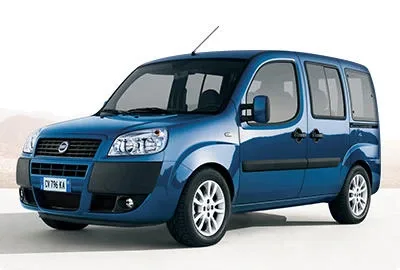
Fiat Doblo is a minivan that replaced the Fiorino model. Following the tradition of naming commercial vehicles after ancient coins (Ducato — ducat, Fiorino — florin), the Italians named the new model after another monetary unit — the doubloon (Doblo).
First generation
Work on the successor to the Fiorino began in 1997. Initially, only a cargo van was planned, but considering the experience of other manufacturers who had already created passenger versions of vans, the Italians also developed a passenger version of the Doblo. Test trials began in 1999, primarily in Turkey — it was at the Fiat plant there that mass production of the model was planned.
The official premiere of the Fiat Doblo took place in 2000 in the Netherlands. The passenger version was offered in five- and seven-seat configurations. Main production was concentrated in Turkey, and from 2002, production also began at the Brazilian Fiat plant. In 2005, the model underwent a facelift, and from the same year, Doblo assembly was established in two more countries — Russia and Vietnam. In October 2007, a prototype of an electric van based on the Doblo was presented.
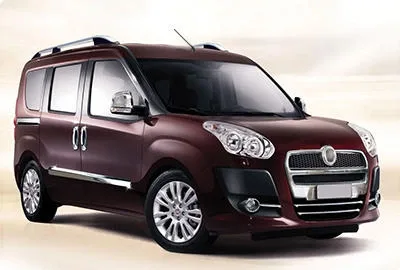
Second generation
The second generation of the Fiat Doblo was introduced in 2010. The car was built on the new Fiat Small Wide platform. The model became more spacious, received a modern exterior and interior, as well as new engines with improved characteristics. In the same year, the updated electric version — Doblo EV — debuted.
Deliveries of the second-generation Fiat Doblo to Ukraine began at the end of 2010. On the local market, the model is available in three body modifications: cargo (Cargo), crew cab (Combi), and passenger (Panorama). For cargo and crew cab versions, there are many options, while the passenger Doblo is offered in five- and seven-seat configurations.
The car is equipped with a 1.4-liter petrol engine or one of four diesel engines with a displacement of 1.3 and 1.9 liters. They are paired with a 5-speed manual transmission. Drive — front.