ЗАЗ Vida: prices and specifications
2 generations Country of origin: Ukraine

ZAZ Vida: Model Overview
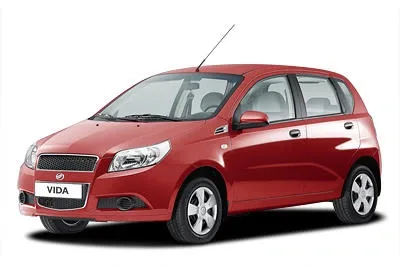
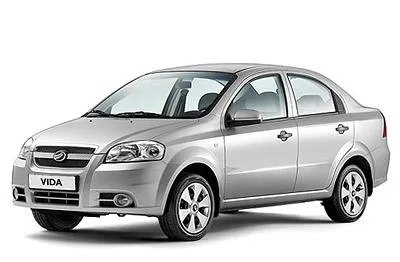
ZAZ Vida (from Latin — "life") is a compact B-class car available in sedan and hatchback body styles. Its production began in 2012 at the Zaporizhia Automobile Building Plant. Essentially, it is a reworked version of the first-generation Chevrolet Aveo. The donor car differs with a modified radiator grille featuring the ZAZ badge and a different front bumper shape. The public debut for Russia took place in August 2012 at the Moscow International Auto Show. Technically, the car replicates the familiar Aveo. In Ukraine, three trim levels are offered. Engines are gasoline: a 1.4-liter 16-valve (only with a 4-speed automatic) and a 1.5-liter 8-valve (with a 5-speed manual). The front suspension is independent, the rear is semi-independent. The plant planned to increase localization to 50% or more for export under its own brand. On the Russian market, the model was to be sold as the ZAZ Point with a new 1.5-liter engine assembled under license from Chery at the Melitopol Motor Plant. A commercial pickup based on the Vida with a payload of 750 kg was expected in late 2012.
History
The fate of the ZAZ Vida is closely tied to the Chevrolet Aveo. Serial production at ZAZ began in early 2012. Technically, the car almost completely corresponds to the second-generation Aveo, except for minor details. The Vida started using the Ukrainian MEMZ 307 engine, familiar from the "Sens" model. The key difference is 51% localization, which allowed for a lower price. The plant claims that the level of quality and reliability has not changed. Since the start of sales, the Vida has completely replaced the second-generation Chevrolet Aveo. The main audience is budget-conscious buyers, as the car is noticeably cheaper than the new Aveo. The replacement of badges and name has practically not affected assembly quality or reliability.
Exterior
The body of the ZAZ Vida is identical to the second-generation Chevrolet Aveo. An inexperienced buyer can easily confuse them — differences are only in badges, as well as a modified front bumper shape and false radiator grille. The unchanged design attracts some buyers: the car is cheaper than the "parent" but looks the same. Even after time, the Vida's design cannot be called outdated. On the road, it does not seem anachronistic. The quality of body panel assembly, gaps, door operation, and seals is at the level of the Chevrolet Aveo. There are no complaints about the paintwork; visually, it is the same as on the Aveo.
Interior
Inside, changes are minimal. Silver inserts have disappeared, a new three-spoke steering wheel with the ZAZ emblem has appeared, and reflective elements have been added to the door panels. The steering wheel is slippery, without leather wrapping, but the horn button has returned to its usual place. There is no reach adjustment. The plastic of the dashboard and doors is hard but does not produce noise even with mileage. The trunk volume of 320 liters is convenient, and the rear seats fold separately in a 3:2 ratio, increasing volume to 725 liters. The driver's seat is comfortable for drivers of any height; tall people will appreciate the large door openings — one of the best in its class. There is enough space in the back row. Cabin sound insulation is at the level of modern European cars, but noise from the wheel arches is slightly higher than in the predecessor.
Engine and Transmission
The main differences between the Vida and the Aveo are the powertrain and transmission. It features a 1.5-liter 16-valve gasoline engine similar to that in the ZAZ Forza (the Ukrainian equivalent of the Chery). This engine was developed by Chinese engineers together with the Austrian company AVL. Power is 109 hp. When starting off, there is a lack of torque, but after 1500–1800 rpm, the engine runs briskly. Compared to the Aveo, the Vida with this engine is even more responsive. Disadvantage: at speeds of 110–120 km/h, the engine becomes noisy, with a whining sound. The 5-speed manual transmission operates imprecisely during quick shifts — the lever seems to stumble. If shifting slowly, the problem disappears.
The 1.5-liter 8-valve engine with 84 hp is familiar from the second-generation Aveo. The 1.4-liter 16-valve engine with 94 hp is also similar to the Aveo's. The automatic transmission is only available with this engine. Installation of the 1.3-liter MEMZ 307 engine, known from the ZAZ "Sens", was planned.
Safety
The safety level of the ZAZ Vida is similar to the second-generation Chevrolet Aveo. The Euro NCAP crash test results are disappointing: only one and a half stars out of five. For frontal impact — three points out of 15 due to severe body deformation. The steering wheel shifts significantly backward, creating a danger for the driver. During impact, the loads on the dummy's chest were close to maximum. The breakage and displacement of the dashboard threaten knee and thigh injuries. Given that the design was developed in 2005, such indicators are expected. However, compared to Soviet-era cars and a number of Chinese vehicles, the Vida's safety is significantly higher.
Features
The handling of the ZAZ Vida cannot be called exemplary, but it is acceptable. Classic front-wheel-drive reactions to steering inputs and adequate feedback place the car a step above Chinese counterparts (except for the latest developments). At moderate speeds, the Vida does not frighten with unexpected understeer or oversteer — this is only possible at the limit of tire grip. During sharp maneuvers, the car responds with some delay. Steering feedback could be better. In corners, the car holds confidently, but on uneven surfaces, it may deviate from its course. In asphalt ruts, slight wandering is noticeable, requiring steering corrections. The car is not for extreme driving but rather for calm, unhurried travel.
Popularity in Ukraine
During operation on Ukrainian roads, the ZAZ Vida has not received serious complaints, which has earned it a good reputation. Despite a short sales period, the model shows decent results and is in the TOP-30 according to AUTOPORTAL.UA. The growth in popularity is facilitated by clubs for Chevrolet Aveo and ZAZ Vida enthusiasts. The secondary market also confirms demand: cars aged one and a half to two years almost do not lose value.
Our Verdict
The ZAZ Vida is likely chosen by buyers who do not trust Chinese and Russian cars. They might buy a Chevrolet Aveo, but a limited budget forces them to consider the Vida. In essence, they get the same reliable, time-tested car for less money. One of the main advantages is the absence of problems with service and spare parts: in any locality, auto shop, or service station, there is a wide selection of parts and services. Operating costs are among the lowest on the market. The warranty is three years or 100,000 km (whichever comes first).