
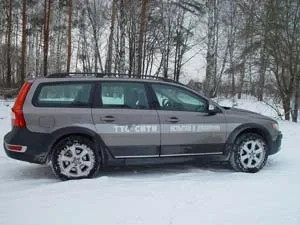
Volvo XC70 NEW

New Volvo XC70
Engine: 3.2 B6324S petrol
Max power
kW/hp/rpm 175/238/6200
Max torque
Nm/rpm 300/1500-4500
Max speed: 250 km/h
Transmission: 6-speed automatic
Drive: all-wheel drive
Fuel consumption:
Urban cycle 16.8
Extra-urban cycle 8.7
Combined cycle 11.4
Suspension:
front independent multi-link with torsion bar
rear leaf spring
Length 4838
Width 1861
Height 1604
Ground clearance 210
Tires 215/65 R16
Load capacity: 1300 kg on any type of road
Maximum weight 2400


Pages of history
The birth of Volvo took place on July 25, 1924. It was then, in the Stockholm restaurant Sturehof, on Jacob's Day according to the Swedish calendar, that Assar Gabrielsson and Gustav Larson agreed to create an automobile company. The first car, assembled on the basis of the maximum possible number of Swedish components, was named "Jacob" in honor of this date. The business went well, and already in 1927 a company appeared whose name translates from Latin as "I roll." By 1935, ten thousand such cars had been sold in Sweden.
In the early forties, the company introduced relatively affordable models PV36 and PV51, which in Sweden received the status of "people's cars." European sales were hampered by the war, but in the early postwar years, active advertising made the brand known in Europe and overseas. The PV44 model remained the sales leader in Sweden until 1953 and served as the basis for the famous PV 444 and PV 544. The premiere of the PV 444, the first truly mass-produced Volvo, took place in 1944 at an exhibition in Stockholm's Royal Tennis Hall.
In 1953, the world saw the first real Volvo station wagon — the Duett model. It was more oriented toward small business, but it was from this that the company's turn towards family cars began.
1958 brought Volvo a victory in the European Rally Championship — Gunnar Andersson took first place behind the wheel of a PV 544. And in 1965, the brand already won the World Rally Championship.
Volvo was also a pioneer in safety: in 1959, it was the first in the world to install three-point seat belts on production cars. Their creator, Nils Bohlin, received many awards, but most importantly, these belts saved millions of lives.
In 1976, the Volvo 343 was produced in Holland — an important new product with an unusual "Rem-Johan" transmission. At first, the model had shortcomings, but over time they were eliminated, and the car gained popularity.
In the same 1976, Volvo was the first among automakers to introduce a catalytic converter and lambda sensor.
In 1996, the C70 Coupe was presented to the public, and then a convertible version — the C70 Cab. Both were assembled at the Uddevalla plant, which Volvo shared with Tom Walkinshaw Racing.
A year later, in 1997, the V70 Cross Country station wagon appeared. In 2000, the second generation V70 was released on a large platform, and along with it — the Cross Country.
In 2002, the Volvo XC90 SUV debuted in Detroit.
Volvo's reputation as a manufacturer of expensive, prestigious, reliable and safe cars has long been established — the company has repeatedly received international awards for safety developments.
Once, the modification of the V70 station wagon under the name V70XC (Cross Country) received excellent reviews from customers. To consolidate the success, Volvo separated it into a separate family with the XC index.
Thus, in 2002, the hardy and dynamic Volvo XC70 was born. This model differs from the all-wheel drive V70 in its emphasized off-road character.

Turning the V70 station wagon into the passable XC70, the designers focused mainly on the exterior: they changed the bumpers, side moldings and wheel arch liners, and left all this plastic black. This approach is more practical than body-colored parts — black plastic is not afraid of scratches from branches, gravel and pebbles that so often fly from under the wheels on country roads.
The changes also affected the design. In the XC70, instead of a viscous coupling, a multi-disc electro-mechanical Haldex coupling was installed, which almost instantly connects the rear axle when the front wheels slip. The ground clearance increased from 166 to 210 mm, and the engineers made the suspension more reinforced.
The interior deserves the most flattering words. The restrained but expressive design of the signature front panel, light upholstery, pleasant-to-the-touch plastics with an interesting texture, unobtrusive wooden decor — all this looks stylish and solid.
Leather and plastic are successfully combined in the interior trim. The seats and door armrests with large stitching look especially impressive.
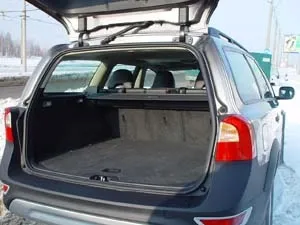
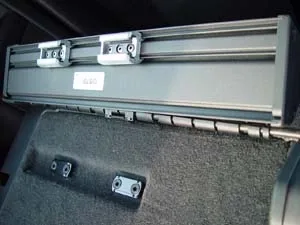
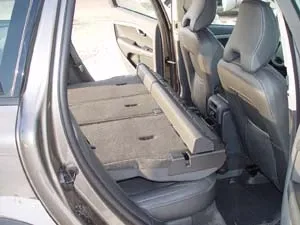
The trunk is perhaps the main trump card of the XC70. It impresses not so much with its volume as with its thoughtfulness. Under the false floor there are many niches for small items, including the spare tire. Plus nets for securing cargo and pockets in the sidewalls.
Many owners of the Volvo V70 XC appreciate it for its spaciousness, comfort and the brand's reputation as a safe car.

Ildar, director of the auto shop "Zhiguli"
Volvo has always attracted me with its deliberate masculine roughness of the body, which exudes Scandinavian reliability. The all-wheel drive XC70 station wagon looks the same — without the fashionable excesses inherent in some other brands' models, but with that very emblem on the radiator grille, which already says a lot. And the test drive only strengthened my respect for the brand. The XC70 seemed to me almost ideal in handling and movement — friendly to the driver and comfortable for passengers.

I won't list all the electronic systems and airbags — there are plenty of them, and you can read about it in advertising brochures. I'd rather tell you about my impressions of the combination of a powerful 3.2-liter engine, a modern 6-speed automatic and all-wheel drive. Acceleration, overtaking, sharp accelerations, any maneuvers — pure pleasure, even despite the summer tires on the test car. The XC70 holds equally confidently and predictably on icy asphalt and on a snowy road, and in combination with brakes that are adequate in effort, this gives a lot of positive emotions.

Alfred Mardanov
We were well acquainted with the previous XC70. Then it gave us a lot of pleasant emotions and... bouts of seasickness. The thing is, it was too soft and soothingly comfortable. On our wavy roads, this resulted in motion sickness. The new XC70 is completely different in this sense, although it is similar to the old one. It has not lost its charm in terms of softness and comfort, but it no longer rocks as much as its predecessor. It's unlikely that the roads have become better since then. It's the car itself, or rather, the suspension settings. They are excellent — exactly what is needed for such a car. Let me explain in more detail. The car is not prone to lateral rocking, but at the same time it does not handle bumps harshly. True, if you hit a deep pothole, the impact that breaks the silence is unpleasant. I assume that this XC70 holds its trajectory noticeably better than the previous one, which, by the way, required clear control in corners. The current XC70, on the other hand, relaxes you with its imperturbability and calmness. It easily holds a turn — I won't say it goes like on rails, but still well.

I also want to say something about acoustic comfort. Here, without exaggeration, the level is premium! The engine is practically inaudible; it reminds of itself only when the gas pedal is fully pressed, and even then in manual mode. You can forget about street noise: the outside world seems to float past the windows, even though the speedometer needle has long passed a hundred. The cabin seems isolated from the surrounding bustle by an impenetrable barrier. Only in the back seat can you sometimes hear muffled tire slaps on road joints.
When the material was already being prepared, a conversation about this car started in one of the dealerships, and the question stumped me. I was asked about the shortcomings, and I didn't immediately find an answer. No, they certainly exist — as with any car — but they don't frankly come to the surface. Perhaps someone will be confused by the price (our car costs 1,617,900 rubles), but it consists of options that can be chosen independently, that is, the amount can be reduced or an optimal configuration can be selected. Moreover, as I already noted, Volvo is still a premium brand, and such, as they say, is worth a lot. In general, I didn't find any obvious drawbacks. The interior is decent, though not luxurious, very cozy and comfortable. Everything is done evenly, without obvious gaps or protruding details.
Personally, I also like the very concept of such cars (Audi Quattro, Subaru Outback) — they don't suffer from "SUV-ness," don't stand out in traffic, but at the same time they are almost as capable off-road as many. They have a lower center of gravity, which means they handle better. An ideal city car for those who don't seek to stand out (if that can be said about Volvo owners at all), but value comfort, quality, a special chic, and Nordic calm.

Vadim Sadykov
The day before the test, we recalled the previous XC-70 (the material is on our website), and also compared crossovers and all-wheel-drive station wagons. But I'll tell you about that comparison a bit later, and for now — about the Volvo. The previous XC-70 was decent (we tested the 2.5 turbo version). Its only drawback was the overly soft suspension: on our wavy roads, passengers got motion sickness. And the driver had to be careful when entering a turn — any deviation from the trajectory threatened noticeable body roll.
Now the engine lineup has changed: they dropped the 2.5 turbo (the same unit is installed on the new Ford Mondeo), leaving the naturally aspirated 3.2 and the 2.4 turbodiesel. But that interested us secondarily; the main focus was on the suspension. I'll put it this way: it has become noticeably more elastic (the word "stiffness" hardly fits here). The best comfort is achieved on the highway and at low speed on broken roads. Highway driving is pure pleasure for both driver and passengers. Bumps are taken at high speed smoothly, without rocking. On bad roads at low speeds, it's also beyond praise: smooth and comfortable.
Since the car had not winter tires but only all-season ones (many mistakenly call them all-season), we didn't risk fully testing cornering behavior — safety first. True, I couldn't resist and on the sharpest turn of the Northern Bypass Road, I overtook a VAZ at 110 km/h.


The dealership manager immediately reminded me in a low voice that "there are no studs here." And he was absolutely right. But when driving on the correct trajectory, the car behaved impeccably. Then our path lay on an empty road: an asphalt rut, and outside it — ice and loose snow. Each of us (Ildar, Alfred, and I) tested the car's behavior at city speeds: exiting the rut, driving on uneven surfaces (ice on the left, loose snow on the right). Oh, if only we had winter tires here! And specifically non-studded ones. However, even without them, everything was predictably reliable.
But we felt the drawbacks of the soft suspension already in the city: if you hit a larger pothole, you get a noticeable impact. However, that was to be expected. A stiff suspension unpleasantly handles even small bumps, but on large potholes/bumps it has enough energy to absorb the entire impact without transferring it to the body. A soft one, on the contrary: it smooths out minor road imperfections, but it lacks elasticity for a strong impact. As you can see, each suspension has its pros and cons. Personally, I liked the soft suspension of the XC-70.

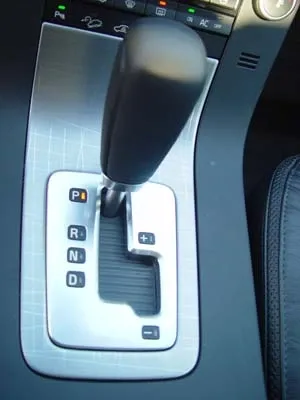
Now about the engine and the 6-speed automatic. The naturally aspirated 3.2-liter engine, in my deep conviction, is not made for speed or acceleration records. Its main advantage is excellent torque across the entire rev range. Especially impressive is the torque reserve at low revs. As usual, I conducted several tests overtaking trucks going at 80–100 km/h. It turned out that overtaking can be done in three scenarios: increasing revs without shifting; downshifting; and step-by-step shifting down several gears. I'll emphasize again: the main plus of the 3.2 is good low-end torque.
At first, we doubted a quick overtake at low revs, so we floored it: the automatic clearly and quickly downshifted, and then down again. The acceleration is impressive. The smoothness and speed of shifts are also impressive. For the next truck, I decided to overtake without such a sharp press: the automatic dropped only one gear, but the overtake was just as quick and safe. If you're going to do it, do it big! I catch up with another slowpoke and set the task of overtaking it in the same gear (initial revs under 3000). I won't say the overtake was hurricane-fast, but it was quite safe. I like this naturally aspirated 3.2! However, the newest 6-speed automatic deserves no less praise — for the speed and adequacy of shifts (read about other automatics in "Autoclub-Kazan" No. 24, 2007, or on our website).
Now let's return to the comparison from the beginning: crossovers or all-wheel-drive station wagons? We don't impose our opinion, but crossovers with a 2.0 engine are a huge compromise. In dynamics and fuel consumption, they lose to sedans with 1.8, and in off-road capability, they are quite mediocre, losing to 4x4 wagons. On the other hand, the XC-70 (4x4 wagon) is unlikely to outdo a body-on-frame SUV. "Different cars are important, different cars are needed." The Volvo XC-70 is an ideal choice for both the city and country trips.



Maintenance costs:
Service 1 - 12-$ 473 (3 781 UAH)
Service 2 - 14-$ 541 (4 320 UAH)
Service 3 - 12-$ 473 (3 781 UAH)
Service 4 - 14-$ 541 (4 320 UAH)
Service 5 -$ 1 182 (9 450 UAH)
Service interval
20 000 km