
Volvo XC70. Jack of all trades
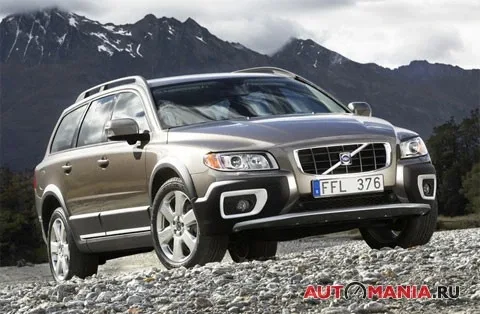
Cars that in Soviet times would have been called all-terrain station wagons are a niche product. They don't fit into any of the usual categories, staying away from the mainstream. These are not typical crossovers, but vehicles built on the principle of "best of both worlds." From SUVs they got spaciousness, off-road confidence, and comfort; from regular cars, a lively character and a presentable look. Combining such different qualities in one body is no easy task, so only a few manufacturers dare to take it on. That's why this class of cars remains extremely narrow: even today, as a decade ago, it has only three representatives — the once favorite of domestic rich and car thieves Audi Allroad, the cult Subaru Legacy Outback, and the less flashy but no less respected Volvo XC70, which is still habitually called Cross Country.
By the way, it is popular opinion that plays a cruel joke on this car. It is still perceived as transport for an exemplary family man who storms broken country roads every weekend on the way to the dacha. Perhaps the first Cross Country, which debuted back in 1997, really was like that. But the Swedes consistently and persistently fought this stereotype, and they already positioned the current XC70 as a premium car with all the technical and stylistic solutions that come with it. The new generation of the model only confirmed these intentions.
Volvo never liked to radically change the appearance of its models. Except perhaps during the period when the brand came under the wing of Ford, which pulled the then-unprofitable manufacturer out and turned it into a serious player capable of competing not only with direct rivals but also with luxury brands. So the current update of the model range from a design point of view is more of a formality, another confirmation of the conservatism inherent in the brand. And this is understandable: why change what already works, especially since in the friendly European family, the Swedes always tried to maintain their individuality, including in the automotive industry.
In general, there is no point in describing the appearance of the new XC70 in detail. Firstly, it strongly resembles its predecessor, and secondly, it is almost identical to the V70 wagon. The main thing that distinguishes it from the "seventy" is its emphasized off-road nature. And although the company rightly does not call the XC70 a full-fledged SUV, they did everything to bring the model as close as possible to this class. The body received massive plastic cladding on the bumper, wheel arches, and sills — they added solidity and ruggedness to the appearance.
The technical content has also changed. Like the V70, the Cross Country is now built on the platform of the flagship S80 sedan. Compared to its predecessor, the dimensions and wheelbase have increased. The transmission has also been updated — though calling it a revolution would be a stretch. The work on the chassis came down to installing electronic assistants designed to make the trip more comfortable for the driver and passengers. The driver, by the way, has been even more removed from the driving process. The base version now has a hill descent control system that keeps the car at a speed of 10 km/h. Optionally, the active chassis already familiar from previous generations of Volvo sedans is offered, which changes the stiffness of the shock absorbers — automatically or at the driver's request. The distribution of traction between the axles, as before, is handled by the electronically controlled Haldex coupling. Another nice touch is the ground clearance, which has grown to 210 mm (previous versions had 209 mm).
When you get into the cabin, the similarity with the flagship becomes quite obvious. The cars are virtually identical: the same pleasant-to-look-at and touch trim, the same two-tier front panel, and the curved center console extending toward the rear. But this is hardly a drawback — all the strengths of previous generations have been preserved, and some have even been enhanced. The interior of the "seventy" literally envelops its occupants — it's that cozy. The seats, adjustment ranges, auxiliary systems... There are no problems with passenger accommodation and there can't be. In the second row, as before, there are proprietary child seats, which are rising cushions on the rear bench. Buyers will surely also appreciate the automatic cabin ventilation system, which activates when the temperature rises above 10