
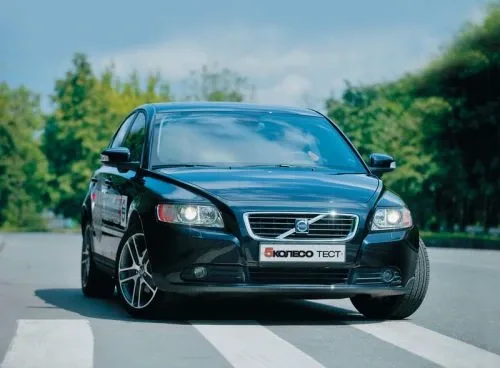
Until recently, transmissions without torque interruption were the domain of Formula 1 cars. Now they are increasingly being installed on regular cars, and Volkswagen has even made its DSG almost mass-market. In spring, Volvo joined this movement, presenting the Powershift gearbox for the C30, S40, and V50 models.
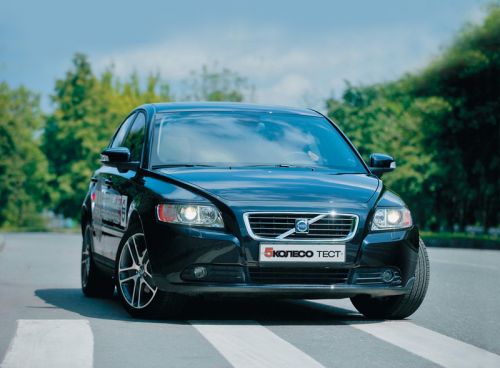
2008 Volvo S40
© Photo: Sergey Krestov, 5 Koleso
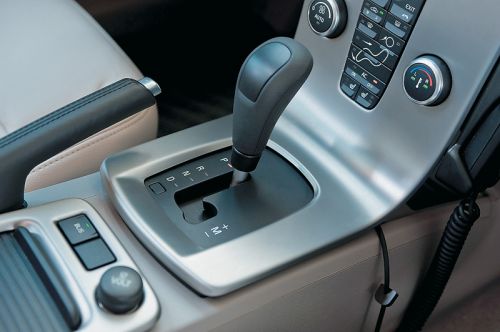
Unlike VW, when creating their first such gearbox, the Swedes did not use the trendy dry-sump system, but preferred a cheaper and proven scheme with an oil bath. The six-speed Powershift essentially combines two parallel transmissions: one clutch is responsible for odd gears and reverse, the other for even gears. While one clutch is working, the second, like a substitute player on the bench, is already ready to enter the field. Electronics decide in fractions of a second which gear to prepare: during acceleration - an upshift, during braking - a downshift. All that remains is to transfer torque from one clutch to the other, and the spent clutch goes into idle. Thus, the electro-hydraulics alternately engages both clutches, ensuring continuous transmission of traction without any dips. Shifts are smooth and almost imperceptible, even when it comes to substantial torque - for Volvo this figure reaches 450 Nm.
Initially, Powershift was created for a diesel engine with high torque. But for Russia, where diesel Volvos of the middle class are not supplied, the gearbox was adapted for two-liter petrol engines. Compared to a conventional automatic, fuel consumption is reduced by 8%. In terms of shift smoothness, Powershift is only slightly inferior to VW's DSG.
POWERSHIFT vs DSG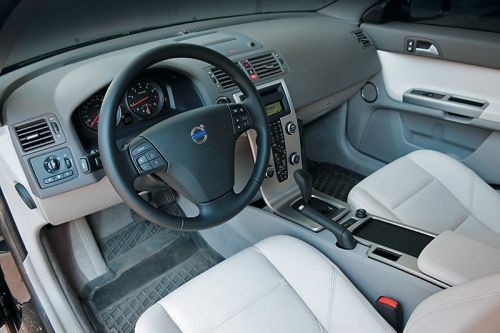
2008 Volvo S40
© Photo: Sergey Krestov, 5 Koleso
For the first time, a dual-clutch gearbox operating without interrupting traction was installed on a production Volkswagen Golf R32 in 2003. And at the end of 2007, the German concern launched production of the seven-speed DSG. Compared to a classic automatic with a torque converter, it allows saving up to 20% of fuel - this is higher than the Swedish development. However, the torque ceiling of Powershift is noticeably higher: 450 Nm versus 350 Nm for the six-speed DSG and 250 Nm for the seven-speed. Such a reserve opens up wide possibilities for installing the gearbox on powerful diesels.
DrivingContinuous traction without dips and power losses only benefits the car.
Interior
Familiar Scandinavian minimalism with soft lines. The new gearbox, of course, did not affect the interior.
2008 Volvo S40
© Photo: Sergey Krestov, 5 Koleso
Soft, almost imperceptible shifts added a bit more comfort to the Volvo with Powershift. Safety
As always, for Volvo this is the main priority. Price
A car with Powershift is $1,351 (UAH 10,800) cheaper than the 140-horsepower S40 with a 2.4-liter engine and a traditional automatic. Advantages and disadvantages
- + Fuel economy, smooth shifts.
- - When engaging reverse gear, noticeable jolts are felt in the gearbox, which is a bit annoying.
2008 Volvo S40
© Photo: Sergey Krestov, 5 Koleso
Dimensions - 4476x1806x1454 mm
Engine - petrol, 1999 cm³, 145 hp/6000 rpm
Transmission - automatic, 6-speed
Dynamics - max 205 km/h
Competitors - VW Golf, Seat Leon
August 21, 2009
Author: Vladimir Makkaveev
© 5 Koleso