
Alexander DIVAKOV, Yuri VETROV | Photo by Stepan SHUMAKHER
Kia cee’d — a name that baffles. There is no such word in English. There is seed, and there is the verb to cede — “to yield, to surrender.”
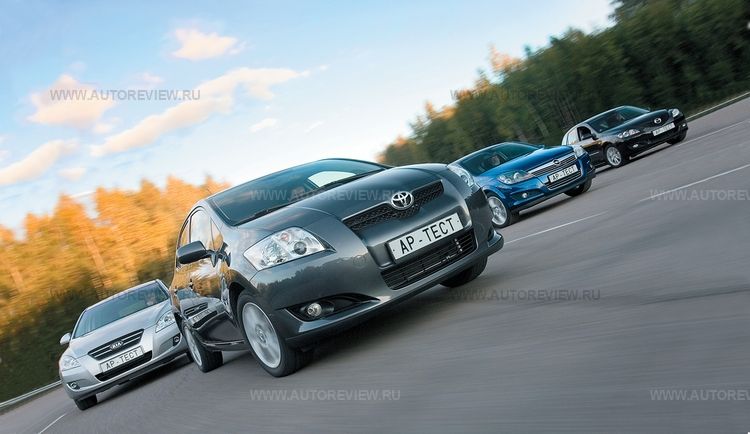
Will the Kia cee’d 1.6 hatchback with an automatic transmission be able to take on more titled rivals — Toyota Auris, Mazda 3, and Opel Astra? Or, on the contrary, will it plant a doubt in us that Koreans are too early to measure strength with Japanese and European brands?
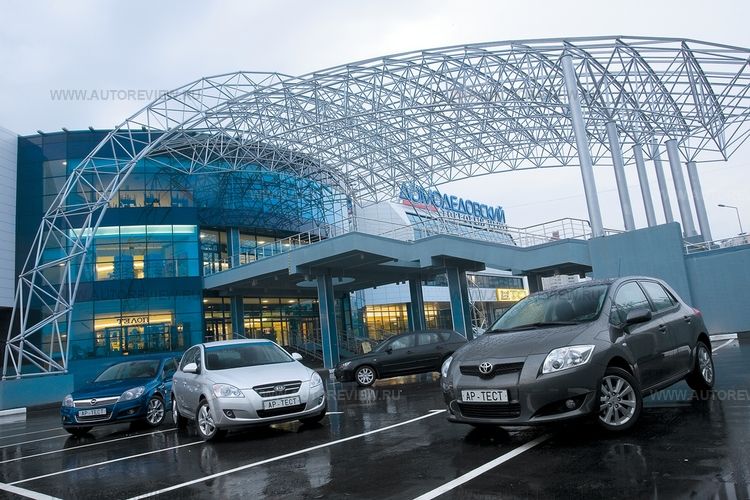
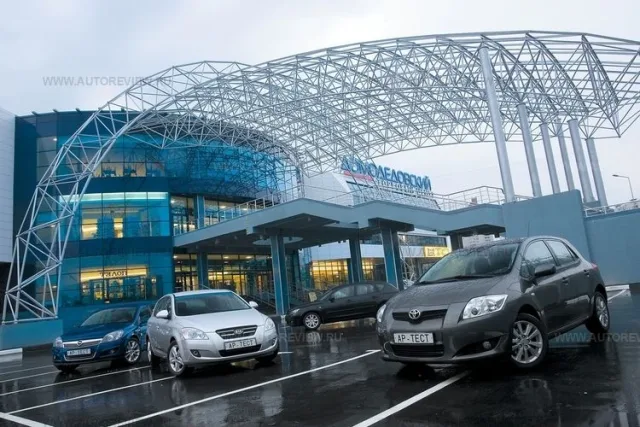
Let us recall how Kia greeted us before: faceless Avella and Sephia, drab Spectra, flashy Cerato. But cee’d is a completely different level. Sharp edges, a superbly sculpted swift profile, an aggressive “face” with narrow, predatorily squinted headlights.
Next to the Kia, even the Mazda 3 looks modest. And if you park a Toyota Auris nearby… It is more unusual than attractive.
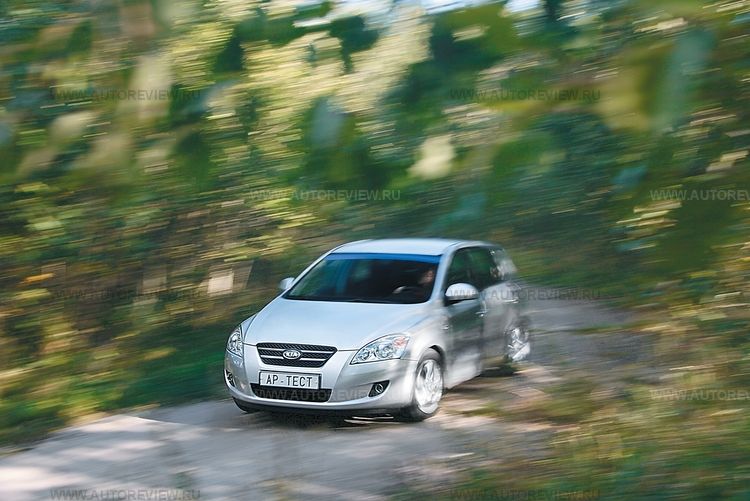
The Kia’s chassis is decent — the suspension is taut, the steering is informative, reactions are precise. The only thing there is a bit too much of is understeer
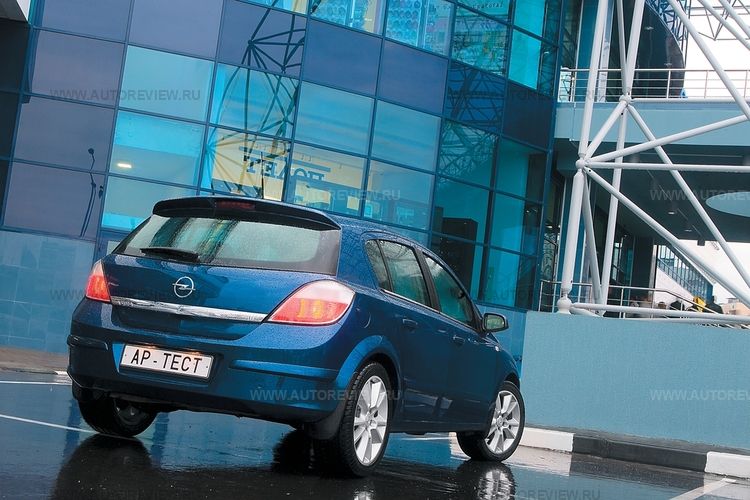
But put the Opel Astra next to the Korean and the two Japanese cars — and the radiance of a flawlessly cut German diamond will overshadow all Eastern attempts at design glory. Europe is Europe!
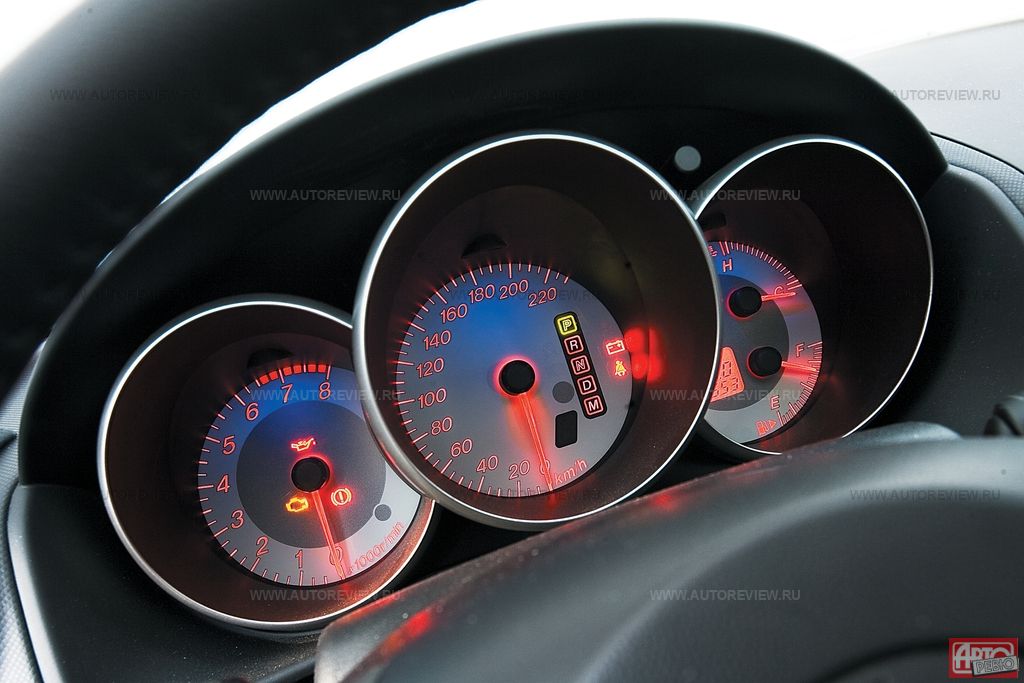
Inside, the Opel is also good: solid, imposing. Pleasant-to-the-touch soft plastic, the center console polished “like a piano.” The Mazda does not yield, although the plastic here is mostly hard — but a sporting spirit reigns, and the eye is pleased by three striking instrument pods. The Toyota Auris also aims for the same niche — the Japanese are haunted by the laurels of Alfa Romeo! Two amber “saucers” of the speedometer and tachometer with displays in the center (just like in a Mercedes), “Formula-style” shift paddles on a neat steering wheel, a massive console-partition with a high-mounted selector.
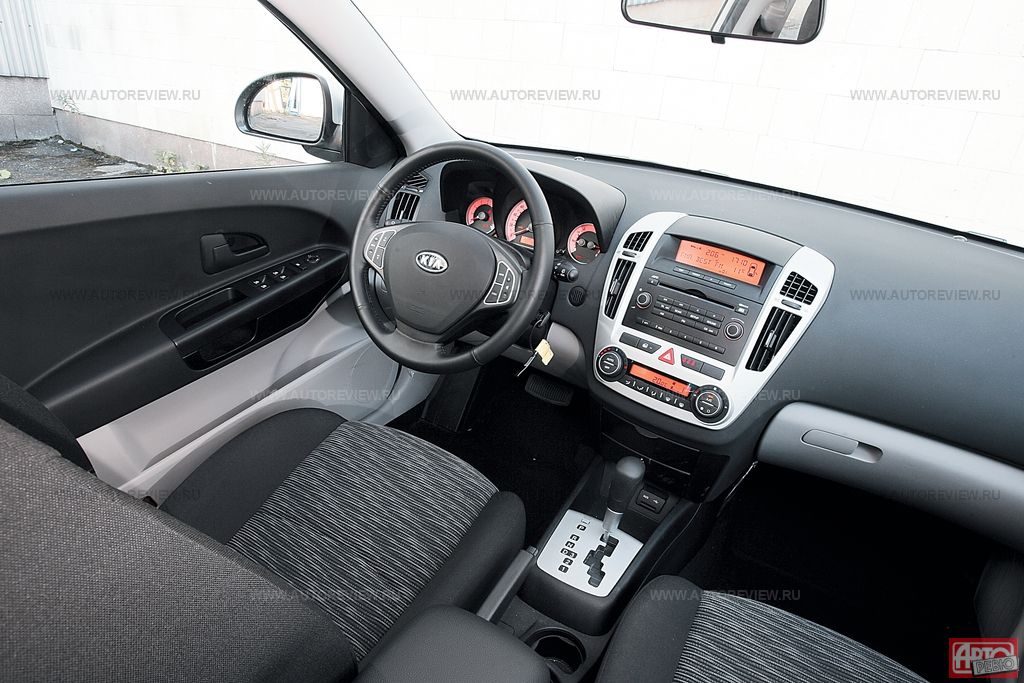 | 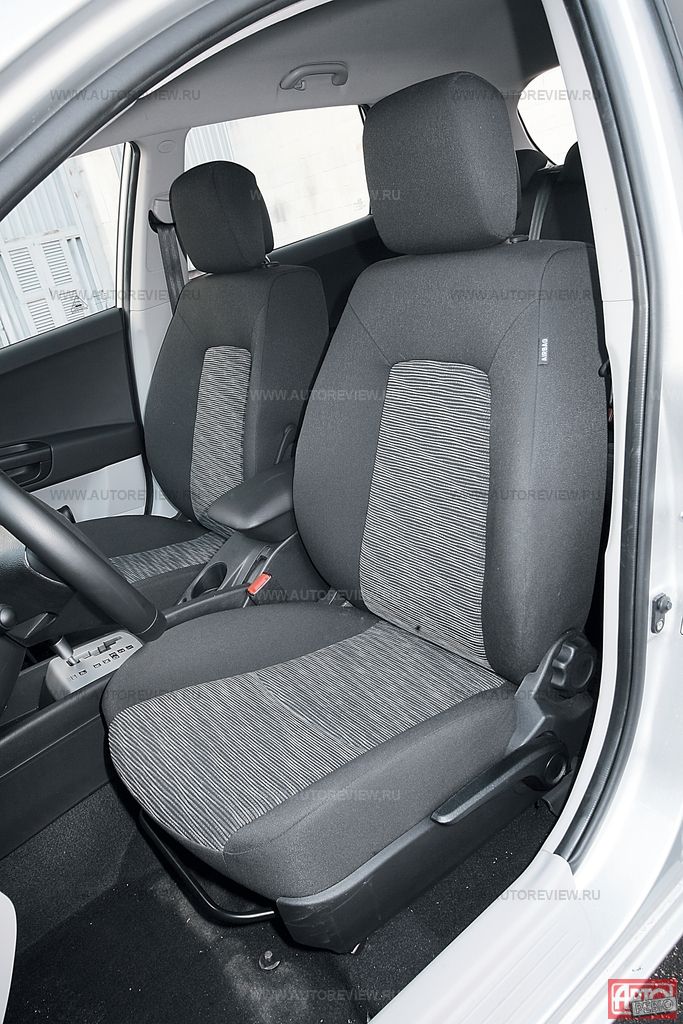 |
| Inside, the Kia is more modest than outside, but the lines and proportions are cleaner than in other Korean models | The profile of the Kia’s firm seats is simply magnificent |
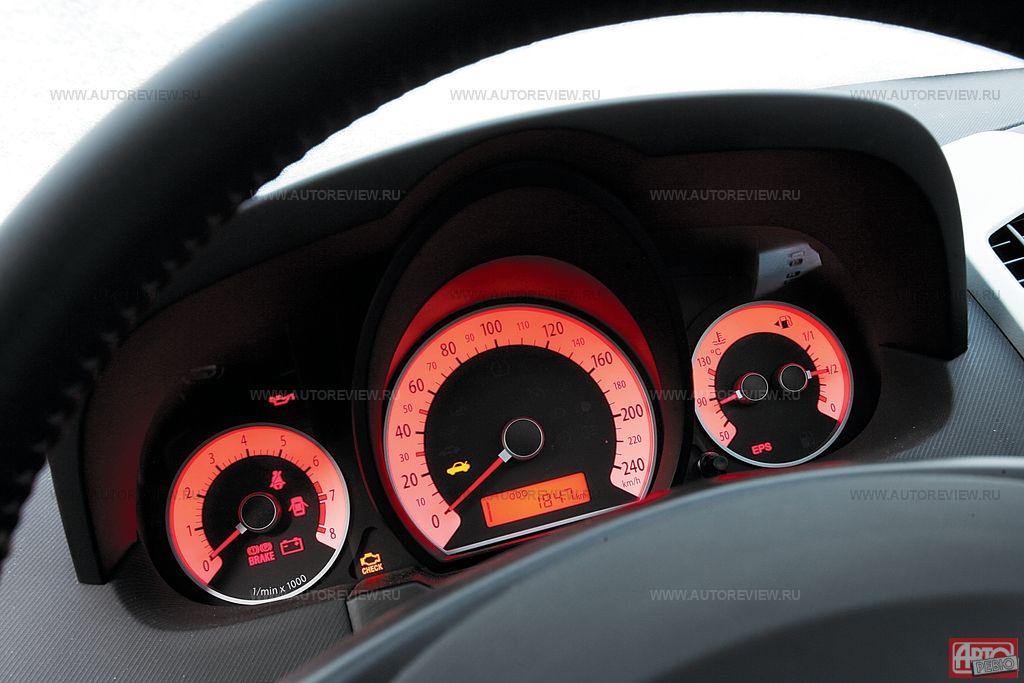
And what about the cee’d? Against the background of the others, its interior looks plain and ordinary — a rounded hunk of the front panel, a silver “screen” of the center console, a boring steering wheel with a disproportionately large hub, and unpretentious instruments. But the textured plastic here is soft, and the build quality is almost Japanese.
Ergonomics are almost European. A German-style firm seat with widely spaced side bolsters distributes the load competently. Pedals, levers, buttons — everything is at hand, and the steering wheel adjusts in two planes.
| Kia cee'd | Mazda 3 |
 |  |
| Opel Astra | Toyota Auris |
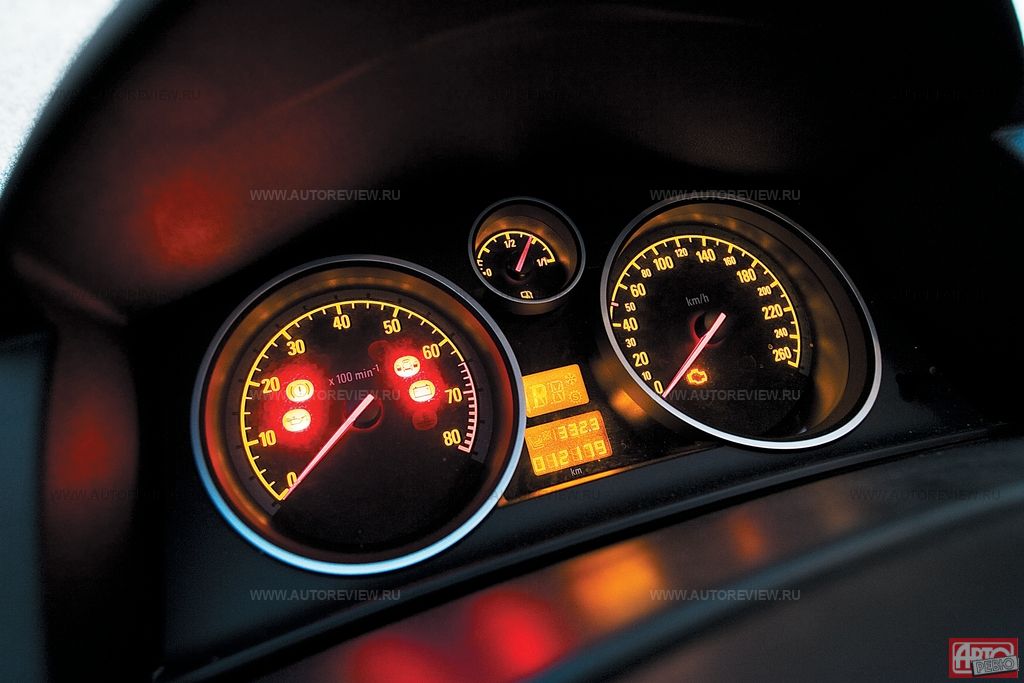 | 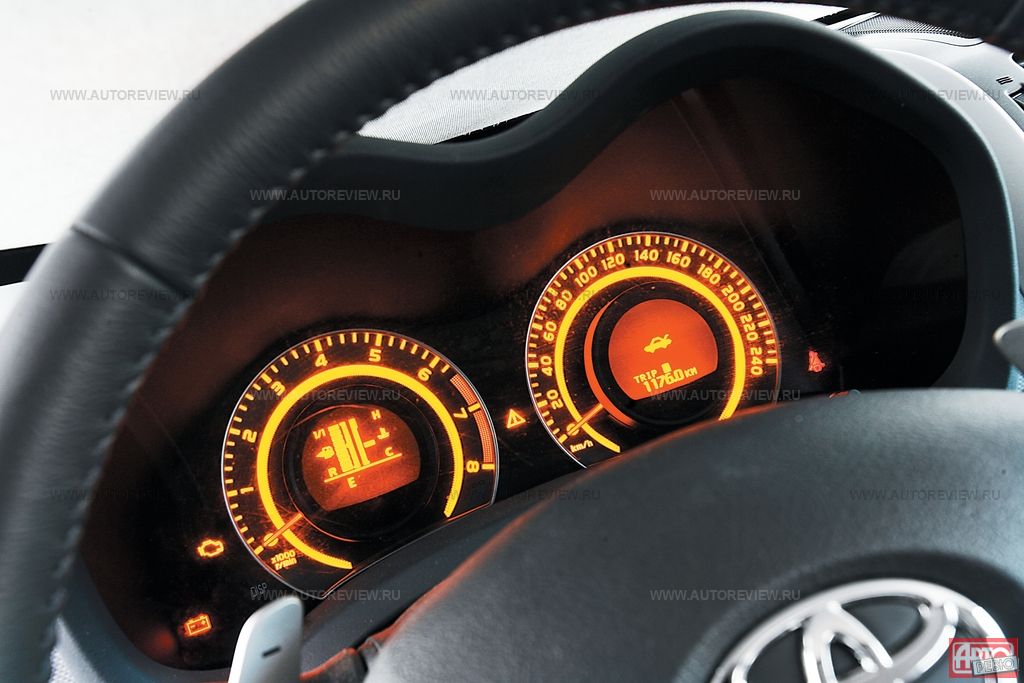 |
| The instruments are striking in all except the Kia. There are no issues with informativeness, but in the dark the white scales of the Mazda are poisonously backlit in violet-red, and the bright illumination of the Toyota hurts the eyes | |
Still, it is more comfortable to sit in the Mazda: the fabric seat is simply a song, the steering wheel — you could put it on a Ferrari. In the Astra, not everything is smooth: the steering wheel rim is overly thick, the non-locking steering-column stalks for turns and wipers provoke mistakes, and the accelerator pedal has too long a travel. But the seat is excellent — it gently embraces with bolsters and its profile imperceptibly straightens your back.
In the Toyota, there are even more flaws: the seats have a convex backrest, and ladies risk ruining their manicure when pressing the unlock button of the fashionable “handbrake.” At night, the stepped instrument lighting is annoying: it either blinds or is completely dim. Only the steering wheel, the selector of the robotic gearbox, and the best footrest for the left foot in this company are good.
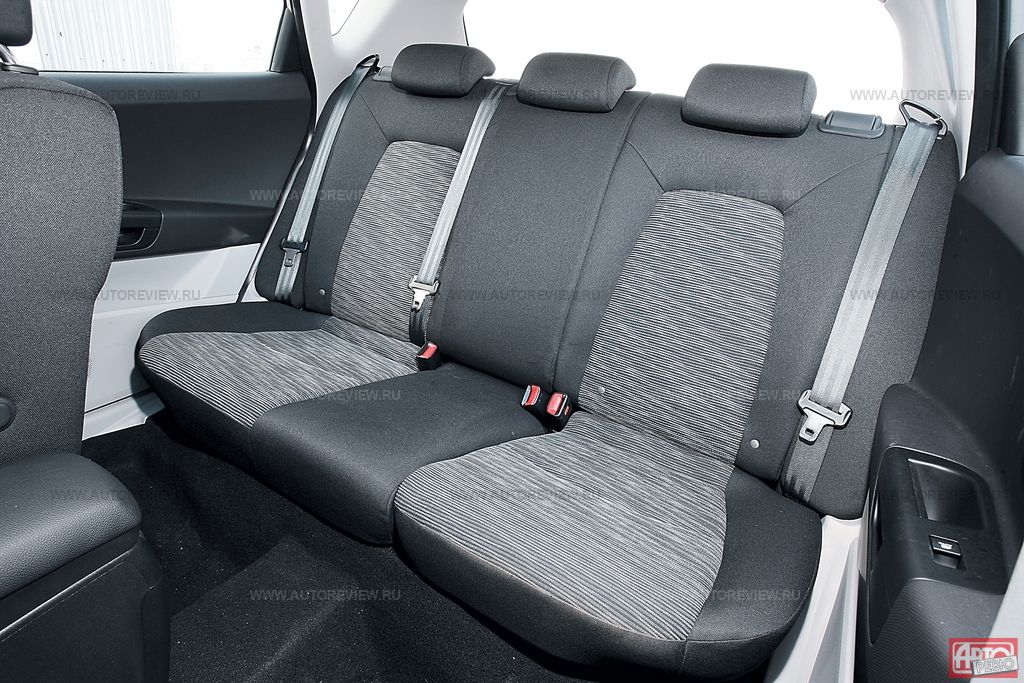 | 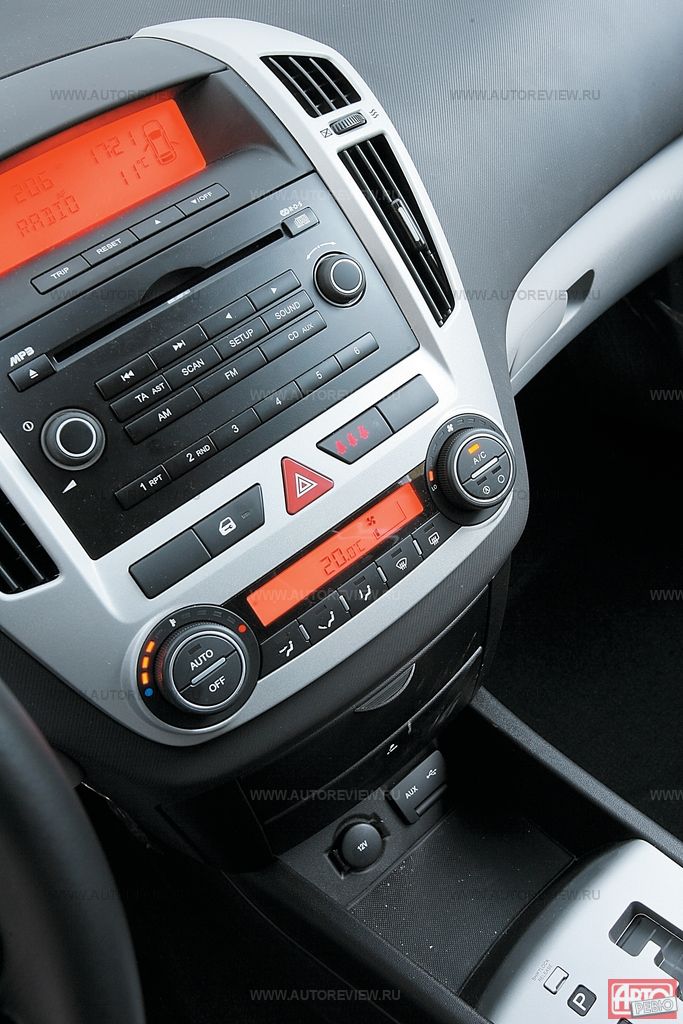 | |
| The Kia has a USB port, an audio player connector, and a 12-volt outlet | The cee’d is ready to offer comfort and coziness to only two rear passengers | Turning the convenient knobs for temperature and airflow intensity responds not only with a glowing garland of LEDs around them, but also with symbols on a large, high-mounted display |
But in the back of the Auris, you sit as if in a business-class car — that is how much space there is. In the Kia, it is tighter: less knee room, and sitting three across is simply unrealistic — the side bolsters bend the backs of the outer passengers. But the Mazda and Opel are even worse: knees press into the front seats, and squeezing into the rear row is difficult — legs get stuck between the cushion and the center pillar.
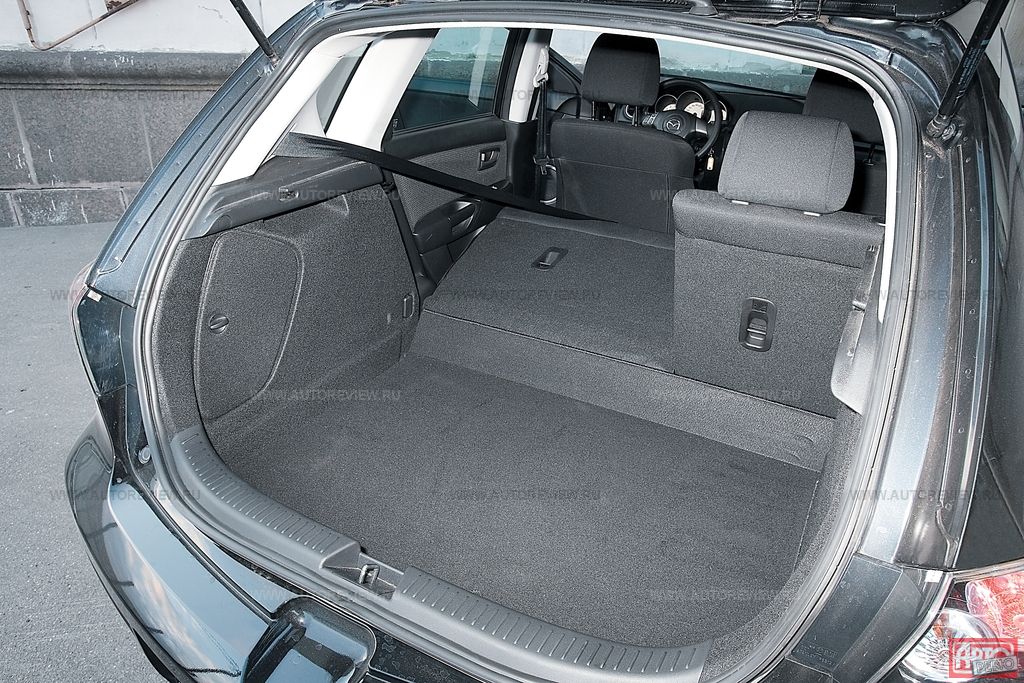
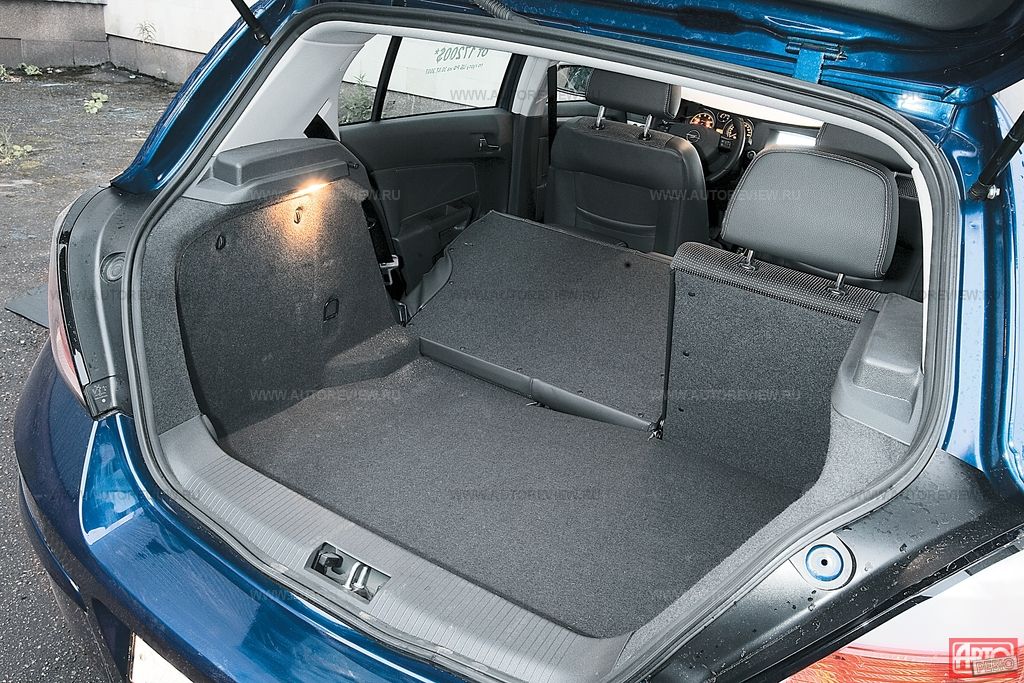
However, the Mazda is the best choice for shopping trips: the trunk is the most convenient and spacious. The Kia has a smaller compartment, and the loading height is higher. The Toyota has the same drawbacks, and the volume is even more modest. The Opel, meanwhile, is the outsider: a small trunk, the lowest and most inconvenient opening, and the maximum loading height, and for folding seatbacks they ask for an extra 5,750 rubles…
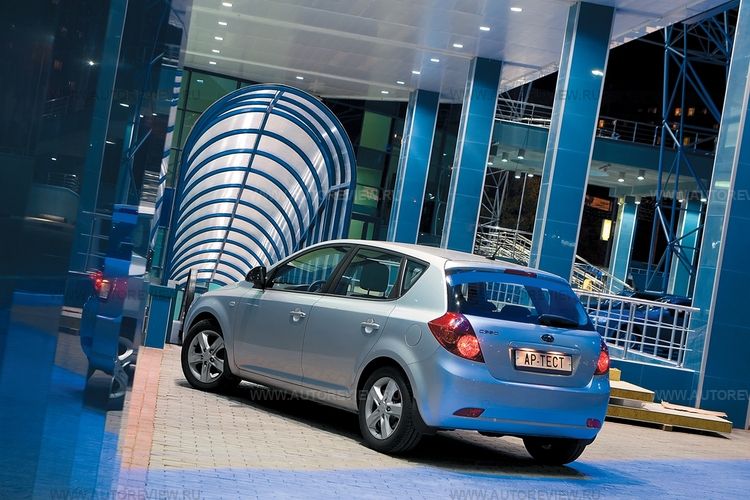
Under the hoods of the three Eastern cars are 1600-cc engines, while the Astra came to us only with a 1.8-liter engine. At that, the Kia, Mazda, and Opel are equipped with conventional hydromechanical “automatics,” whereas the Toyota is fitted with a robotic manual gearbox that nearly caused an accident!
Here is what happened. We pull away from a traffic light, at the wheel of the Auris is the highly experienced Alexander Nikolaevich Divakov. We briskly gain speed in first gear — and suddenly... the Toyota strongly dips its nose: the “robot” abruptly interrupted the acceleration and began unhurriedly engaging second. This was unexpected not only for Divakov, but also for a dacha owner in a battered Zhiguli driving behind. The screech of brakes — and… Only by a miracle did the Toyota’s rear remain intact.
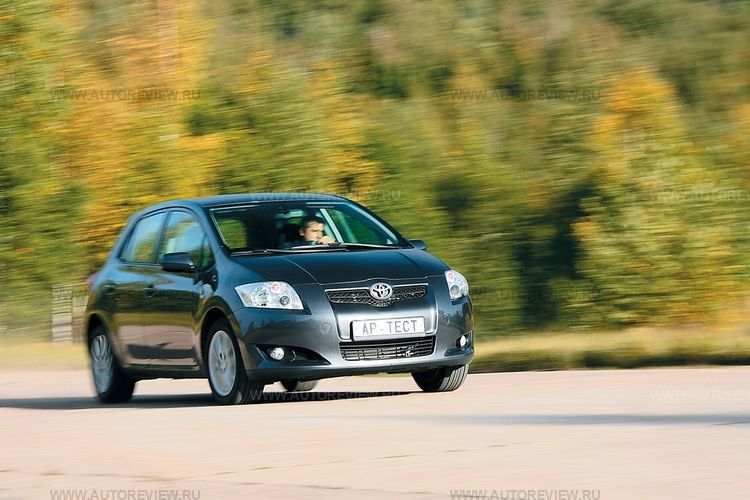
The Toyota Auris was conceived as a car for young people. The chassis and engine here are indeed fighting, but all the impression is spoiled by the jerky “robot” and a greater tendency to oversteer
In city traffic, the “robot” is simply awful: it shifts inappropriately, with jerks, and also manages the clutch carelessly — the synchronizers engage with a distinct grunt. Maybe the gearbox is already “killed”? The “sport” mode Es partially helps: shifts become less frequent and more predictable. Plus, even in mode E, you can downshift with the paddle — if you do not jerk the accelerator pedal, which is viscous like honey, the “robot” will not skip back for eight seconds.
But what is the point of a “robot” that constantly requires driver intervention? If only the Auris cost less than cars with conventional “automatics” — no, it is more expensive!
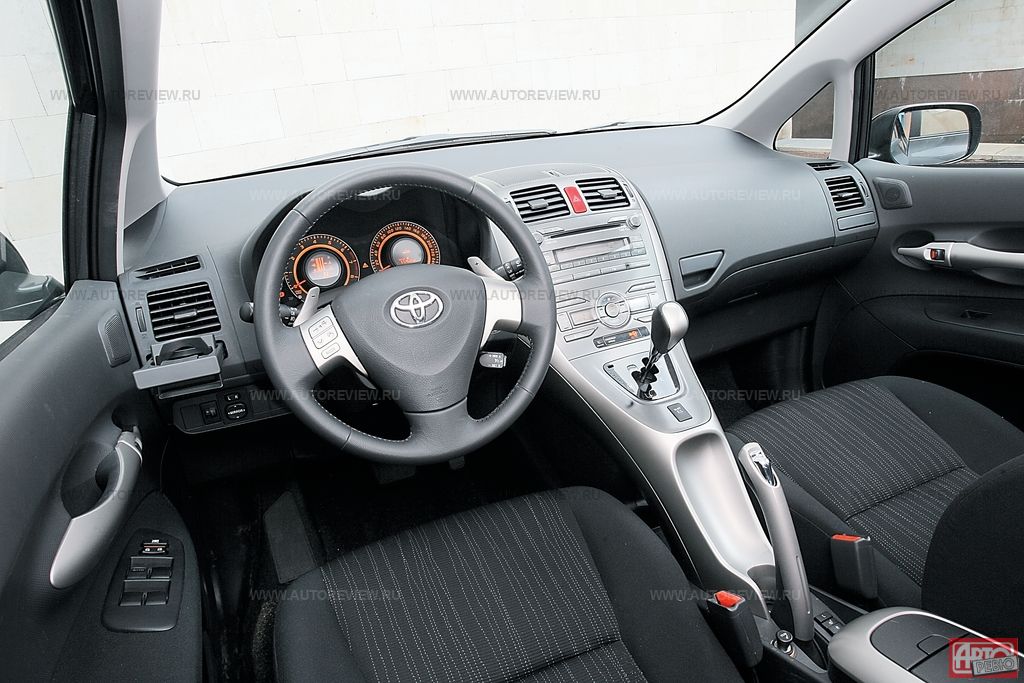 | 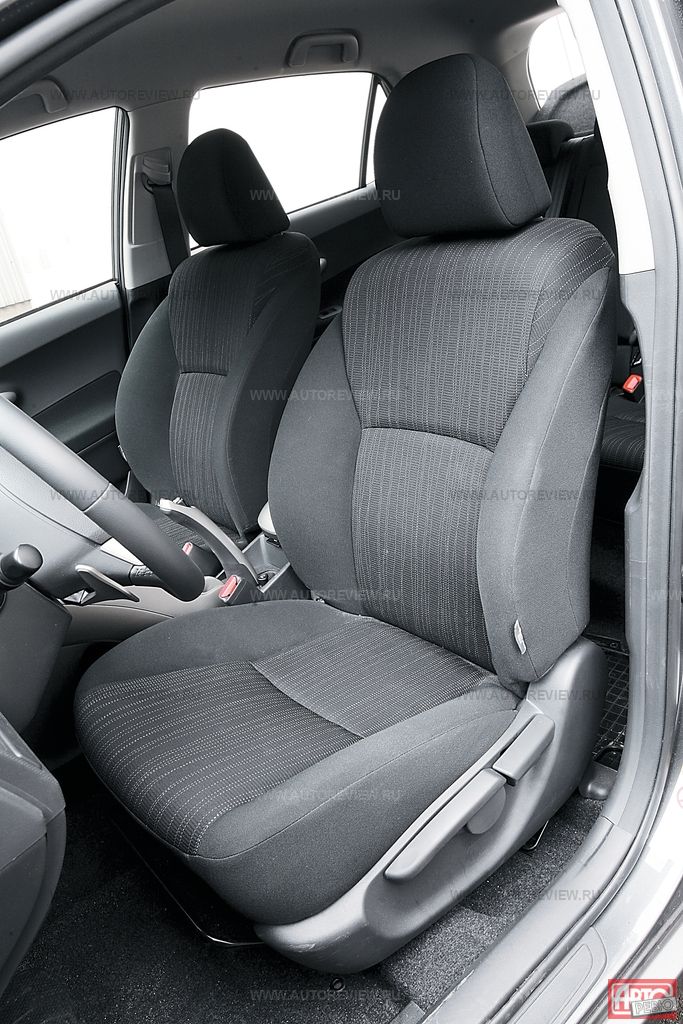 |
| The Toyota’s cockpit is a little design masterpiece | The Toyota’s seat has a high position and a convex backrest, and it cannot be set vertically |
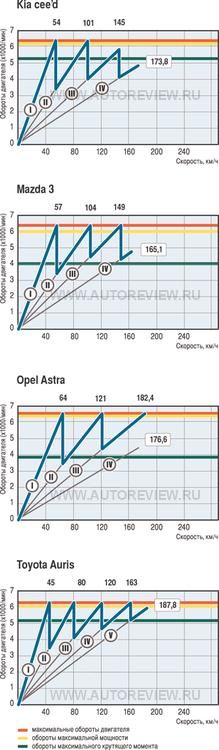
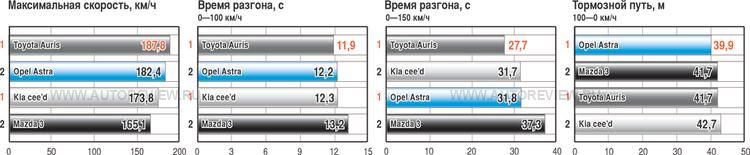
The Toyota’s only trump card is its “official” acceleration dynamics: on the proving ground’s dynamometer road, the Auris showed 187.8 km/h of “top speed” and hit 100 km/h in 11.9 seconds. But it received the lowest expert rating — for the extremely inconvenient control of acceleration.
The Kia and Opel go nose to nose — although the Astra 1.8 is more powerful by 18 “horses.” But they drowned in the overly “stretched” gears of the Opel’s “automatic”: in second gear, the Astra accelerates to 130 km/h, and in third — to 190 km/h by the speedometer! Even the hard lockup of the torque converter in Sport mode does not give a gain in dynamics.
But the Kia’s transmission is “shorter,” and this bears fruit: when accelerating to 100 km/h, the cee’d yields to the Astra by only 0.1 s (12.3 s versus 12.2 s). Except that the Kia’s top speed is a bit lower — 173.8 km/h versus 182.4 km/h.
And what about the Mazda 3? Its engine is the most modest in the company, only 105 hp. Given that Kia and Toyota engineers manage to squeeze 122–124 horses from the same 1600 “cubes”…
| Kia cee'd | Mazda 3 |
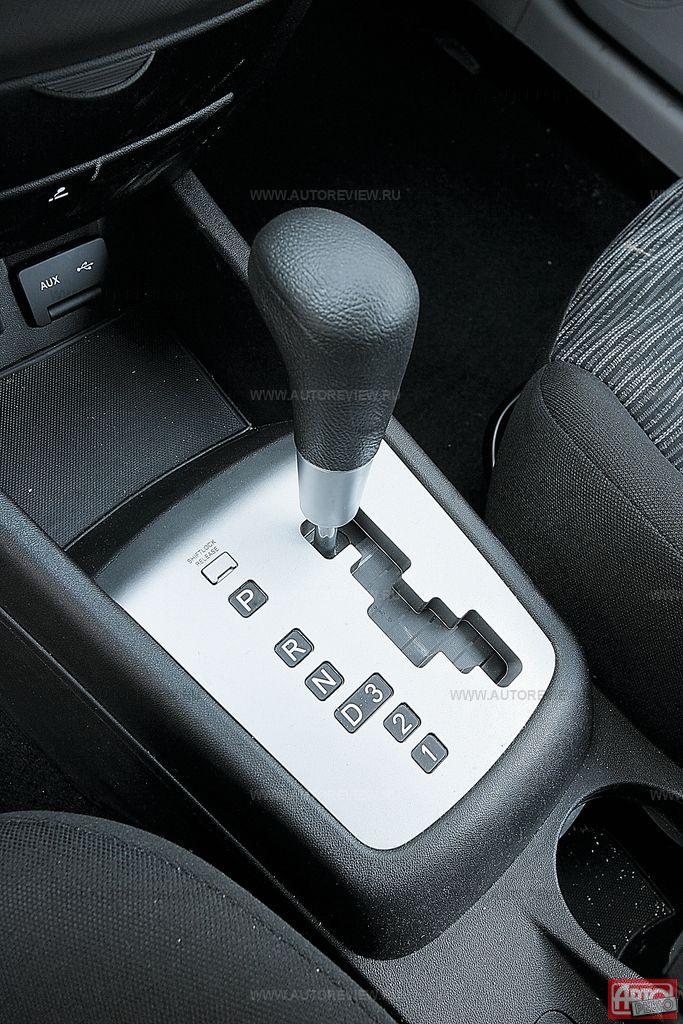 | 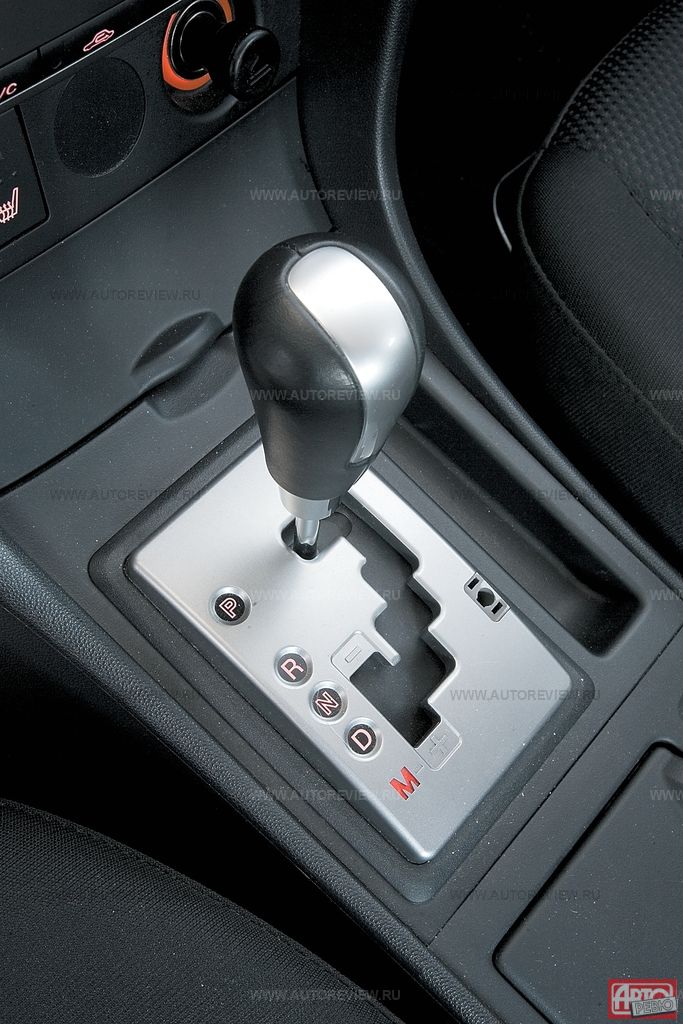 |
| In the Kia's automatic, only the winding groove with sharp corners, which the lever constantly "stumbles" over, is annoying | The most successful automatic gearbox in this quartet is Mazda's |
| Opel Astra | Toyota Auris |
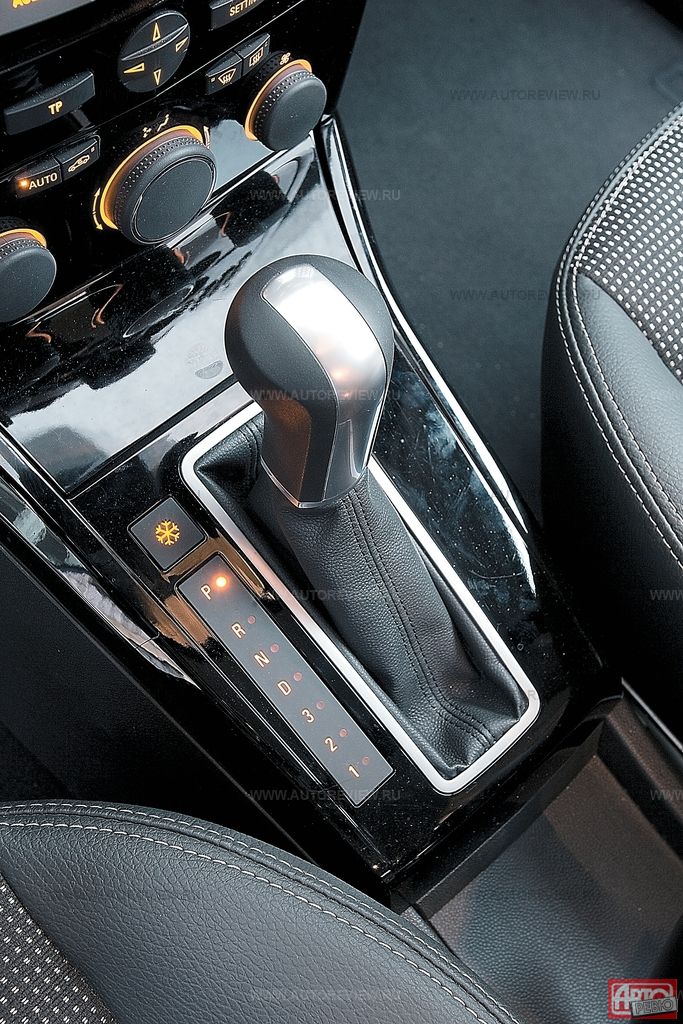 | 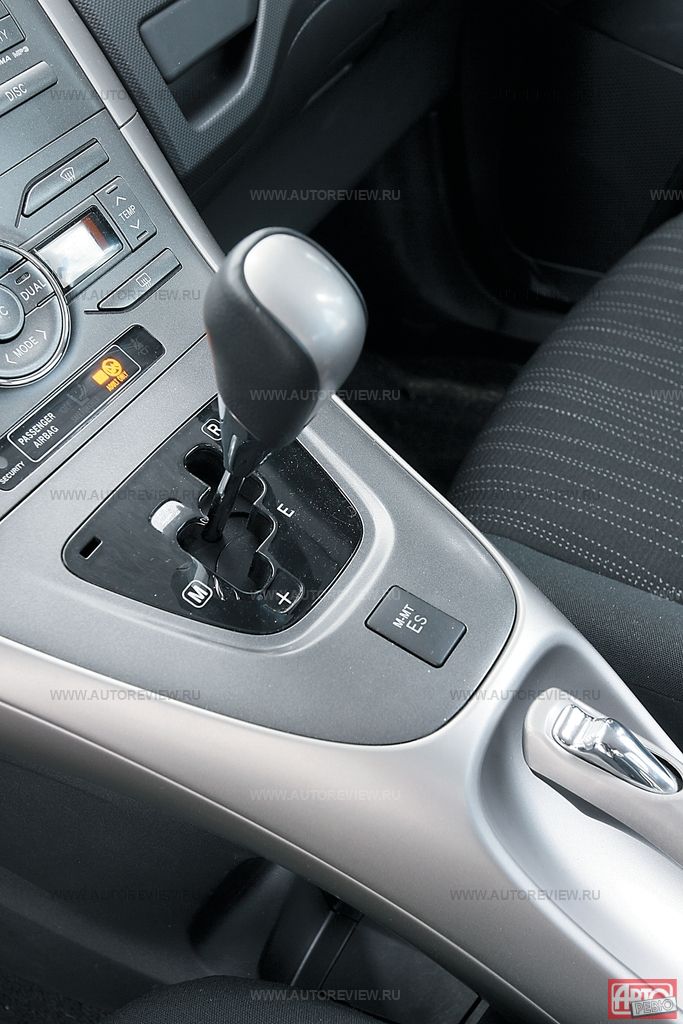 |
| Opel's gearbox offers many modes, including "winter", but its gears are too "stretched" | Toyota's "robot" unpredictably jumps from gear to gear — normal driving is only possible in manual mode. The "Es" button activates the "sport" shifting algorithm |
Because of this, on the dynamometer track during acceleration to 100 km/h, Mazda loses more than a second to its rivals. But its "automatic" is the best of all. Shifts are more logical and noticeably smoother, the moment of gear change is "smeared" by slight torque converter slip. And since 1600cc hatchbacks with automatic transmissions are more often bought not by avid racers but by lovely ladies, for them the ease of managing torque is more important than tenths of a second. Therefore, the expert rating of acceleration dynamics for Mazda is even higher than for the more agile Toyota.
The brakes turned out to be best in the Opel: stopping from 100 km/h requires less than 40 meters, ABS works flawlessly, the pedal is informative. The only thing that spoiled the impression was a slight pull during braking on "mixed" surfaces and a hill-start assist that jerks the Astra when trying to brake smoothly.
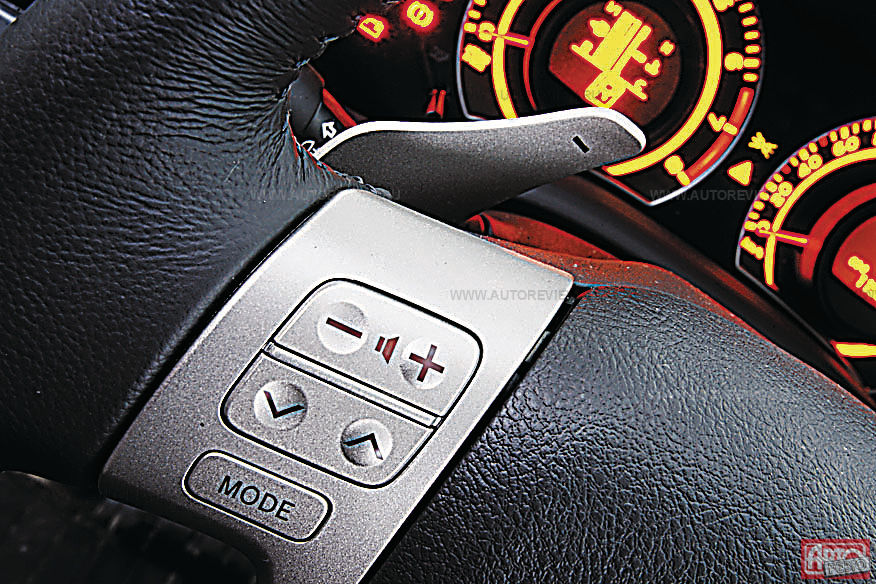 | 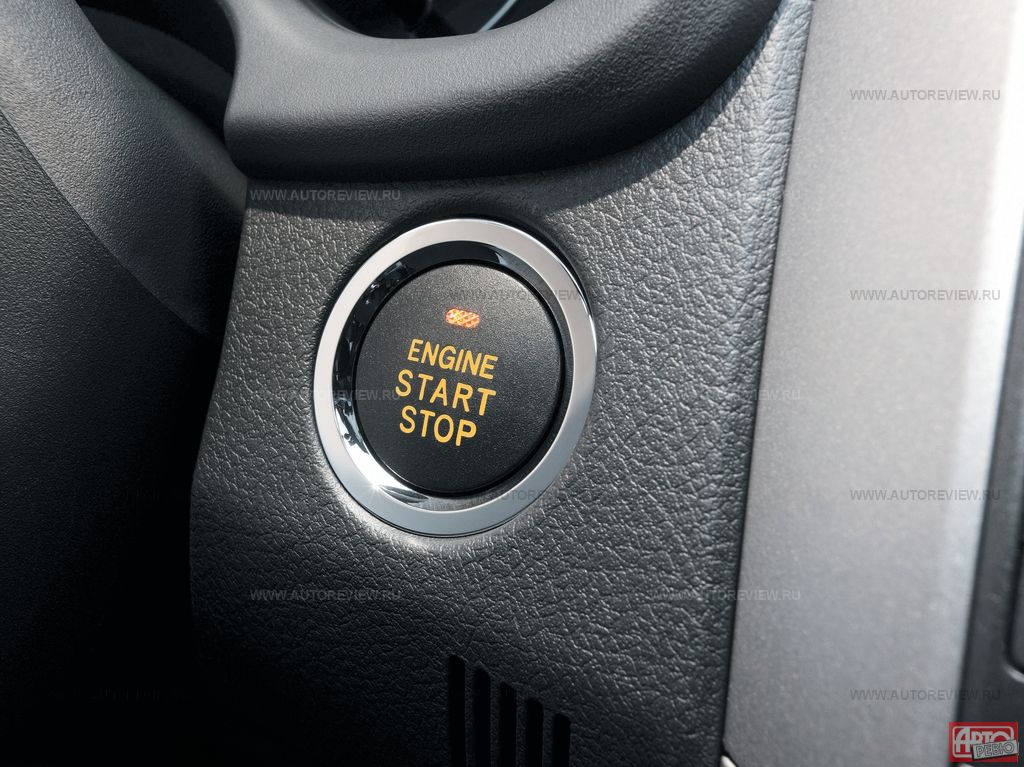 |
| In the Auris, everything is at hand: music control buttons on the steering wheel and convenient paddle shifters | Toyota in top trim — with engine start button |
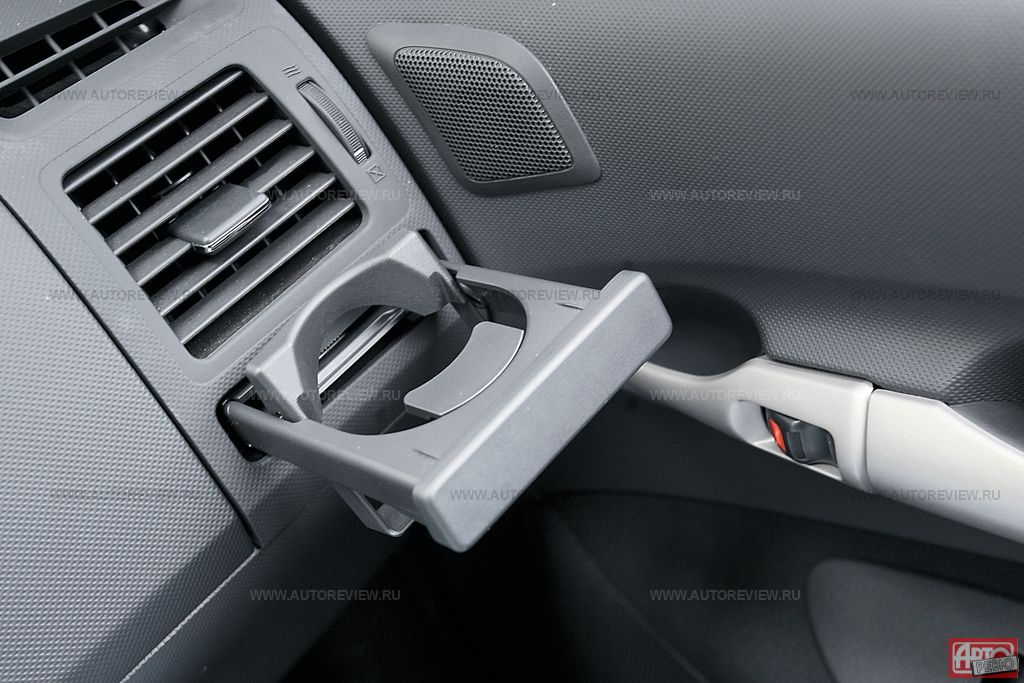 | 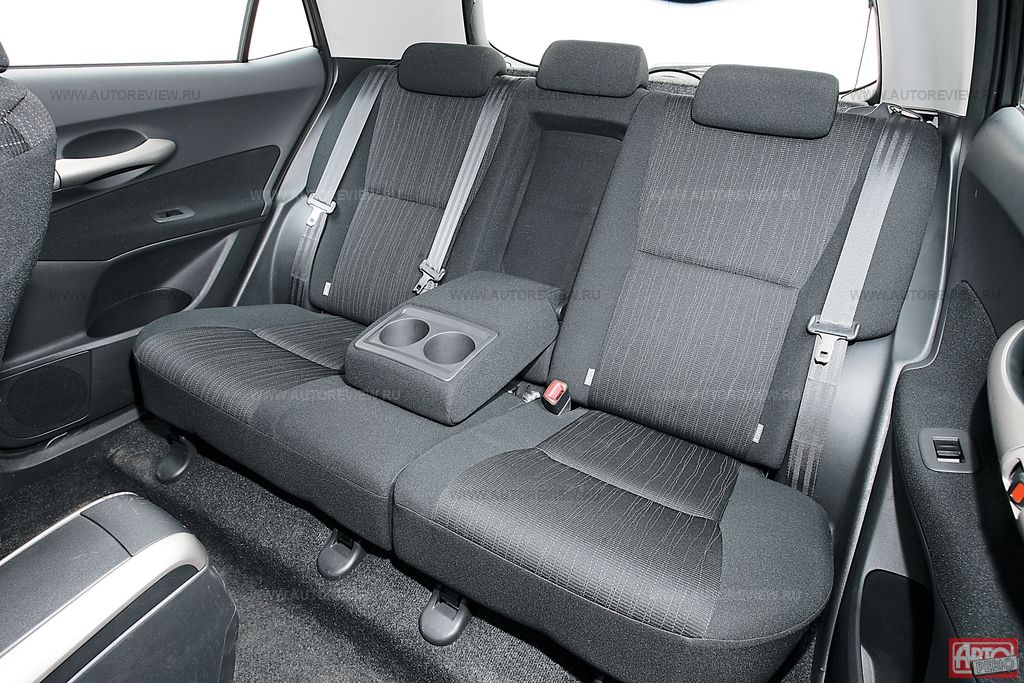 |
| The Auris's pull-out cup holders are located at the corners of the front panel | In terms of space, the Auris can give some business sedans a run for their money |
Mazda, which lost to Opel by only 1.8 meters, has simply fabulous brakes: from the very first press, you can smoothly brake in traffic jams without any nose dive, and with filigree precision, you can firmly reduce speed at high speeds. In the Toyota, the pedal is "cottony", braking turns into a guessing game, and the Auris's nose dives more than all others. The Kia cee'd pleased with a "firm" pedal but confused with excessive sensitivity of the drive and the longest braking distance.
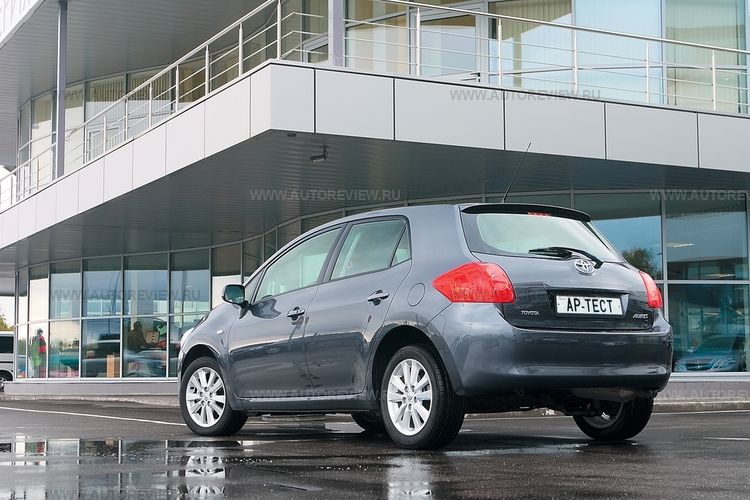
And here's the most interesting part — the handling assessment. Did Kia's engineers manage to bring the "cee'd" chassis up to European standards?
Kia's character is calm, matching the interior. Excellent stability on high-speed straights, juicy steering feedback (only slightly hindered by the artificial tightness of the steering wheel in the zero zone, which you feel even at 50 km/h), and low sensitivity to steering wheel turns. The cee'd enters sharp corners clearly, despite noticeable body roll and perceptible diagonal rocking. And at the limit, the cee'd carefully drifts outward with understeer, barely responding to additional steering input or throttle lift-off. For a beginner, it's a real lifesaver, especially considering the lack of a stability control system. This was confirmed by the "moose test": four out of five volunteers completed the maneuver without problems.
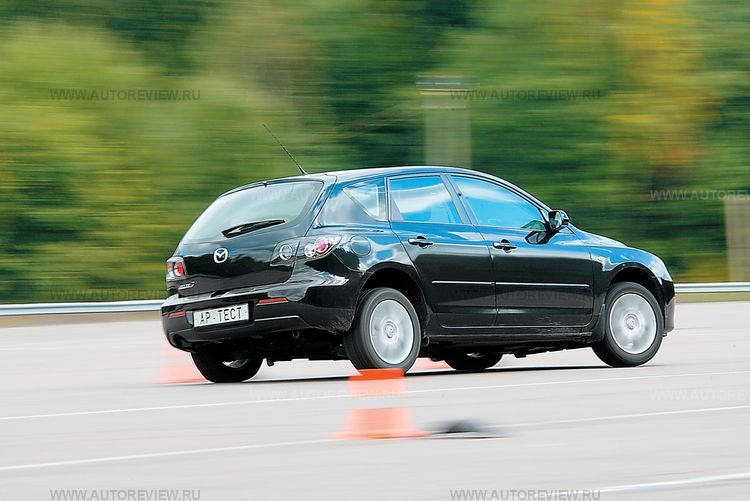
Mazda's chassis is an amazing blend of excitement, reliability, and comfort
Opel also confidently holds the straight, and makes sharp lane changes much more willingly — it reacts faster to the steering wheel and enters sharp corners with less understeer. In response to outright provocation — a gentle oversteer that the optional stability control system clearly corrects in response to counter-steering. I'd like a more natural steering feel...
| Toyota Auris | Kia cee'd |
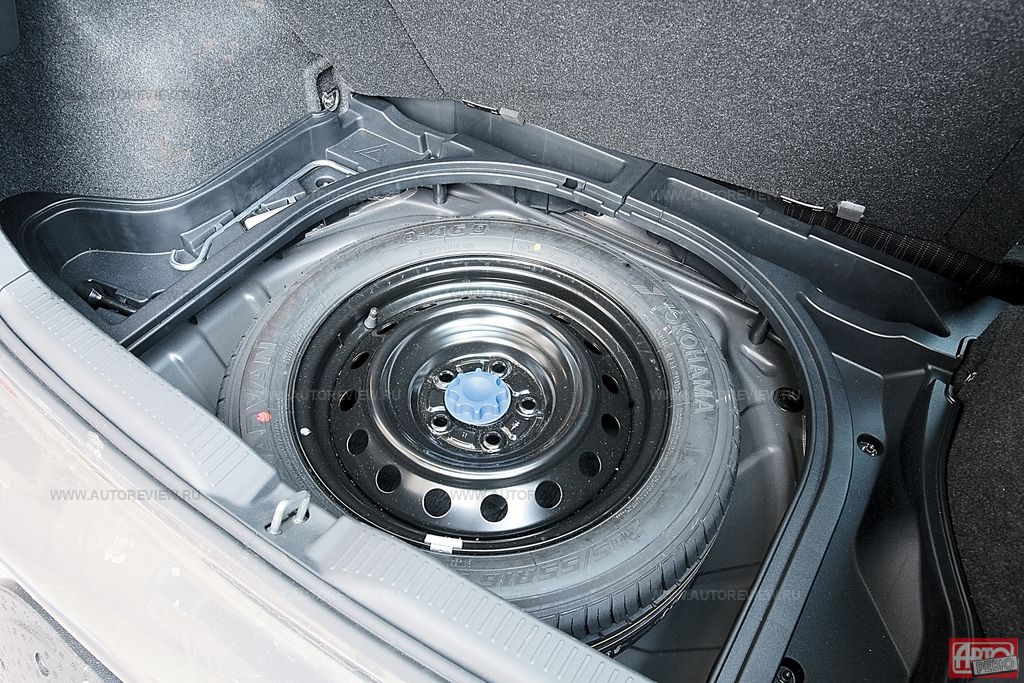 | 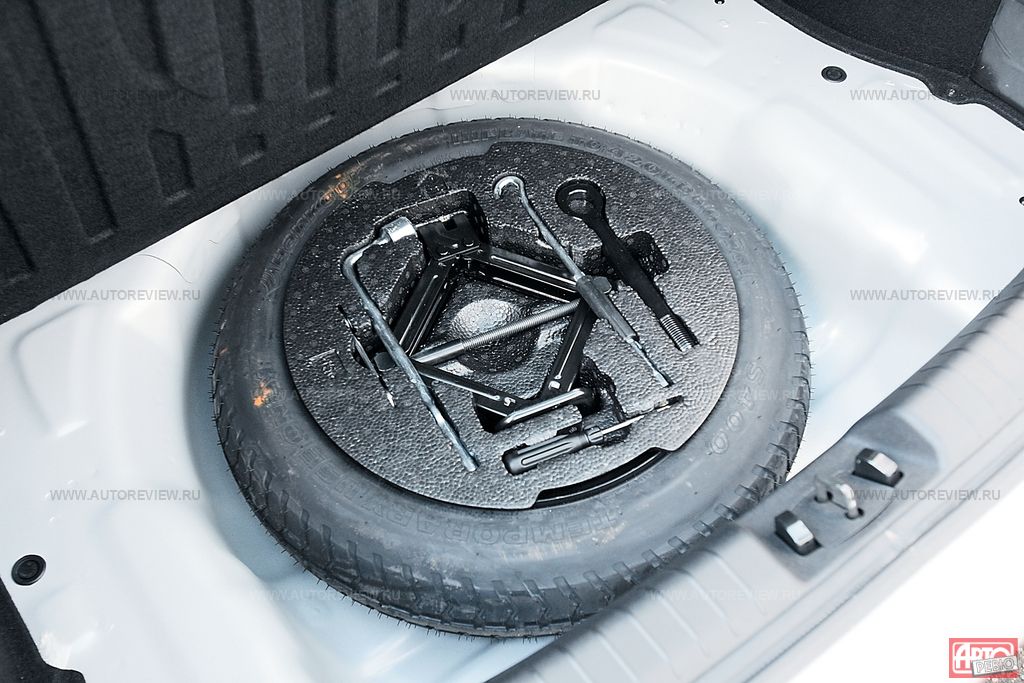 |
| Auris and Astra can boast full-size spare wheels | But Kia and Mazda have more spacious trunks — thanks to the space-saver spare |
| Toyota Auris | Kia cee'd |
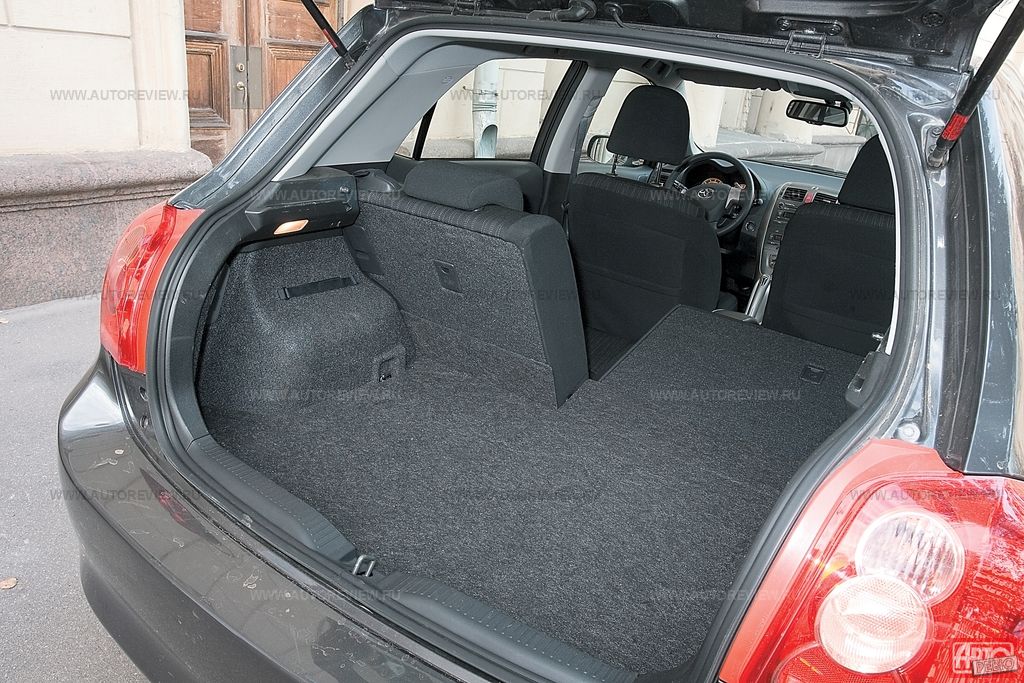 | 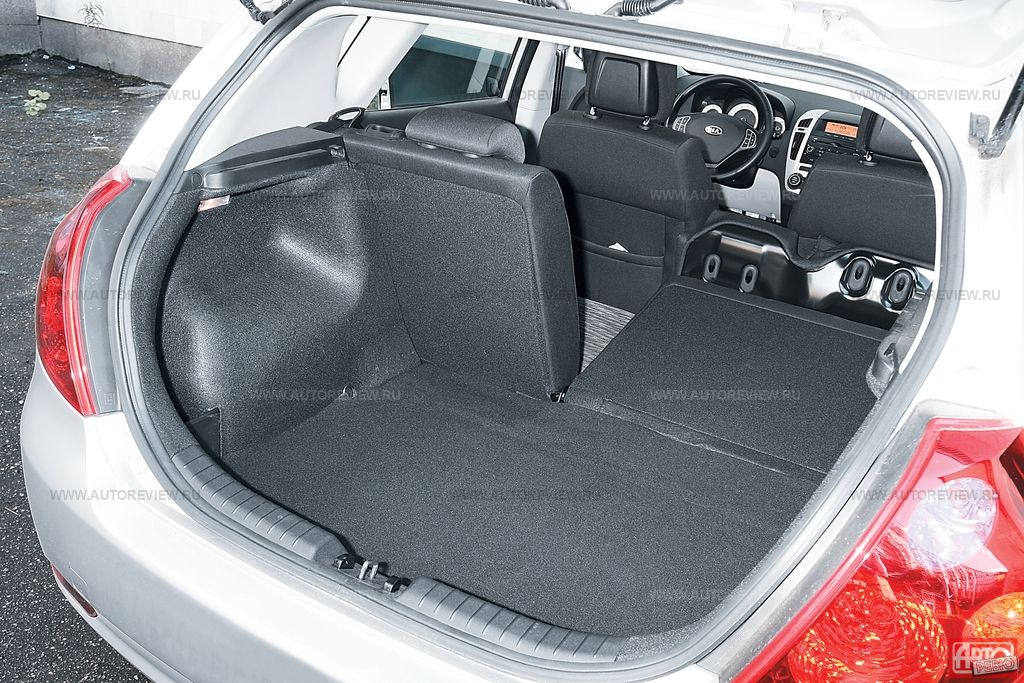 |
| Kia and Toyota delight with flat cargo areas, while Opel has a 5 cm step, and Mazda has a 15 cm step | |
 |  |
| Mazda 3 | Opel Astra |
But the Mazda 3 is even more exciting. A "transparent" steering wheel, precise and quick responses, amazing trajectory accuracy even on uneven corners... It's just a pity that at parking speeds the steering wheel feels too heavy, and with sharp movements, on the contrary, it "empties". However, the stability control system works very intelligently: if you let the oversteer develop, it will gently correct it. But if the driver decides to stop the slide, just a hint of "counter" steering movement is enough — and the electronics will firmly rein in the Mazda.
But the Auris...
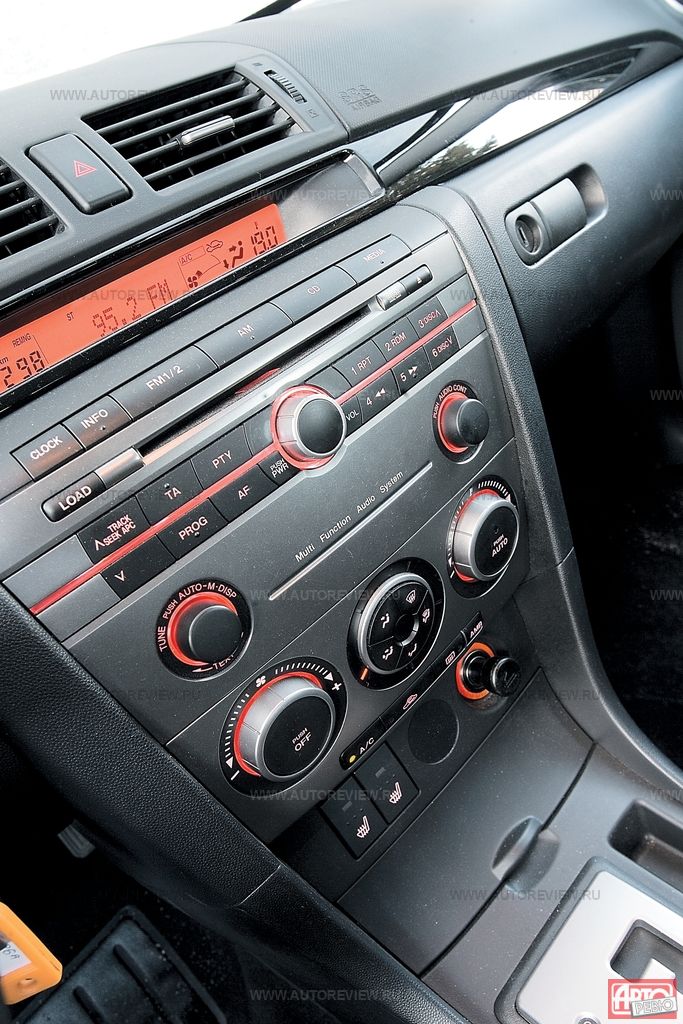 | 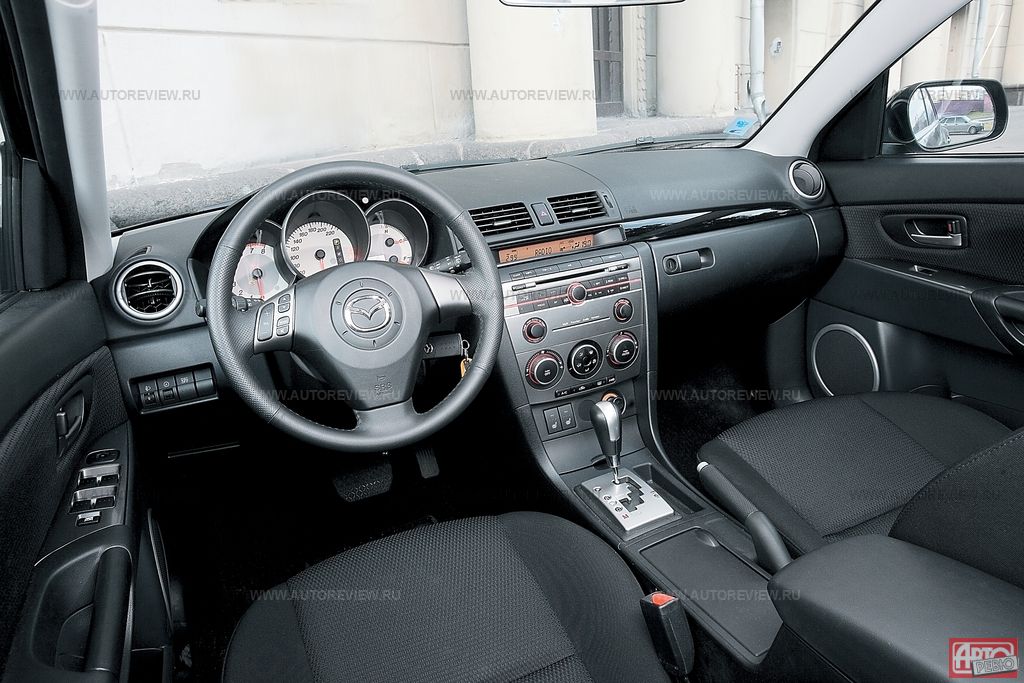 |
| Mazda's heater is easy to control, but in automatic mode it "climates" poorly: it alternates between bursts of hot and cold air | The stylish interior of the "three" still invigorates |
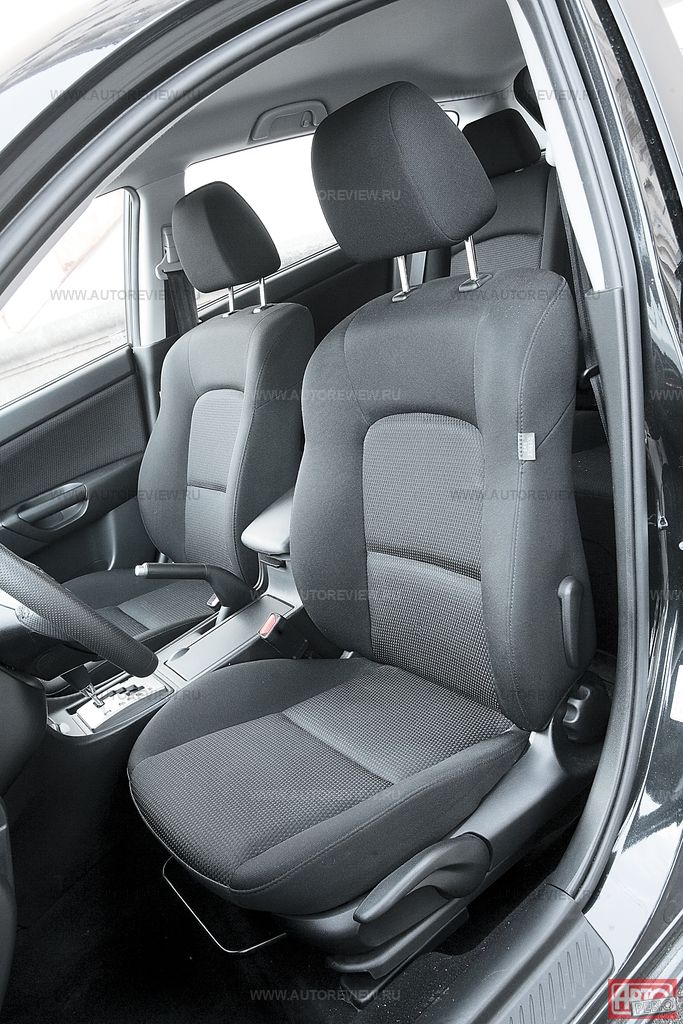 | 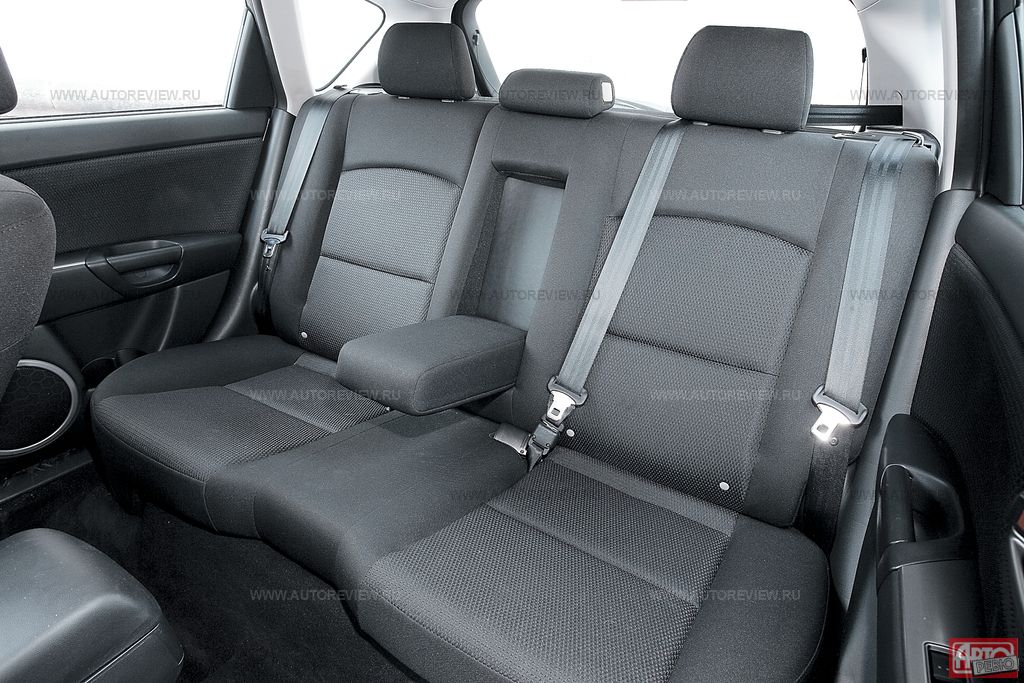 |
| The fabric seat with an amazing shape holds you well in corners and doesn't annoy with an overly sporty contour | In the back of the Mazda it's a bit cramped, but thanks to the almost flat backrest, sitting three abreast is more comfortable than in the more spacious Kia |
The stability control system cannot be ordered on the Toyota at all. Therefore, the neutral chassis setup may backfire for most drivers in both a literal and figurative sense — in the "moose test", three out of five volunteers couldn't cope with the oversteer. Yes, the Auris is good in fast and smooth corners. It enters the arc without hesitation, responds lively to throttle lift-off, and informs you of everything happening with the front wheels through juicy steering feedback. But as soon as you drive onto a typical Moscow-region road, all the charm disappears. On uneven surfaces, the rear semi-independent suspension starts to steer on its own — the car "dances" on the arc. And there's no ESP.
It just goes to show: the Mazda "three", which usually boasts of its handling, turned out to be the most comfortable in smoothing out bumps. The only thing that might disturb rear passengers is noticeable rocking on wavy roads. The secret is that the suspension on the 1.6-liter version has a longer travel than on the two-liter modification — the springs and shock absorbers are noticeably softer here.
As long as the Toyota Auris's wheels don't hit small surface defects, it behaves very similarly to the Mazda. But as soon as cracks and potholes begin, much more vibration penetrates into the Toyota's cabin. Moreover, its suspension is quite noisy — every joint or bump is voiced with enviable diligence.
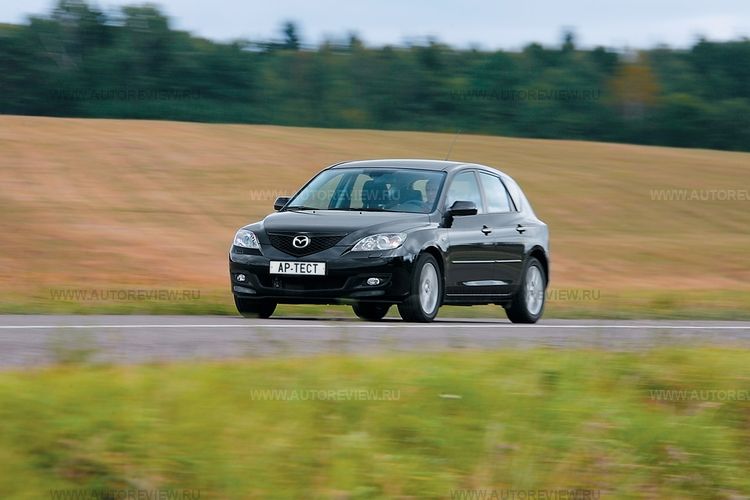
But the Kia cee'd demonstrates a completely different character — the suspension here is well-tuned and works surprisingly quietly. Energy intensity is excellent, the ride is very smooth on minor irregularities, and there is no pitching on waves at all. A very decent result!
The stiffer Opel Astra evokes completely different emotions. Any seam, joint, or even a small pebble on the asphalt responds with a fine tremor, which is complemented by the most noticeable vibration from the engine in this quartet. And if you hit a large pothole, the short-travel suspension goes into a knockdown.
These impressions were fully confirmed when driving over a rubber speed bump. The Opel literally jumps over it like a little frog, even at 20 km/h. At the same time, the Mazda, Toyota, and Kia calmly swallow the obstacle at 60 km/h. Moreover, if at 80 km/h the "three" and the Auris give up, the Kia cee'd passes the bump without any consequences even at 100 km/h!
In addition, the Korean hatchback turned out to be the quietest in the test. The engine sings with a pleasant baritone, the tires hum moderately, and aerodynamic whistle is almost inaudible. The only thing that slightly spoils the picture is the ringing sound of small pebbles: apparently, they decided to save on wheel arch sound insulation.
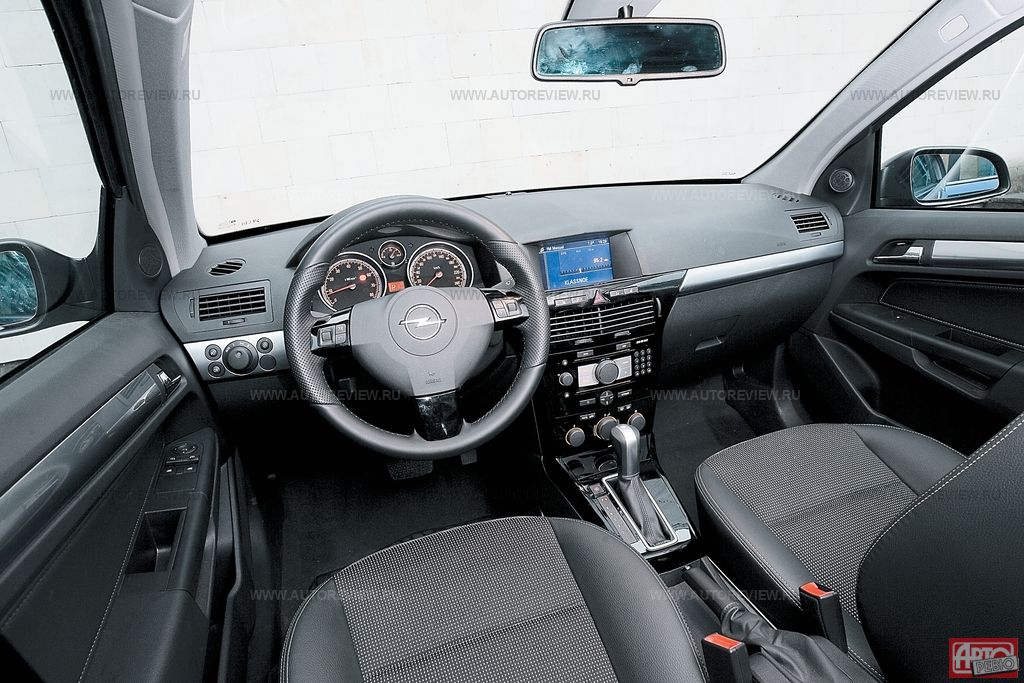 | 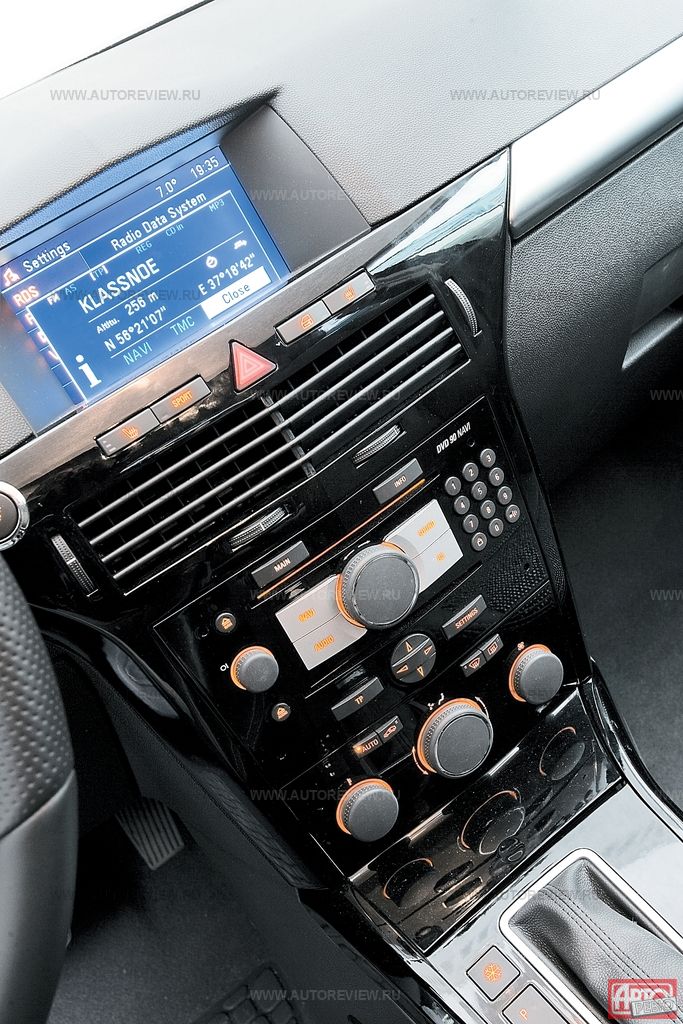 |
| The faceted interior of the Astra matches its exterior | Manipulating the three low-mounted climate control knobs is reflected on the large screen |
But for the sake of fairness, it is worth noting that in the Mazda and Toyota, things are no better with the "drum roll." The engine of the "three," which will surely delight music lovers with its sound, works even louder in tandem with the tires. In the Auris, the engine is silent, but there is another problem — wind whistle is already audible at 80 km/h, and the suspension is noisier too. The Opel is also not among the quiet ones: the mournful hum of the engine and tires cancels out the decent wheel arch insulation.
And here is the conclusion that suggests itself in the end: the Mazda 3 wins this test unconditionally. Excellent ergonomics, wonderful road behavior, a spacious trunk, a comfortable suspension... And the not-so-powerful engine is quite successfully compensated by the well-tuned "automatic." By the way, in Russia, 86% of all sold "threes" are cars with a 1.6 engine, and 62% of them have an automatic transmission.
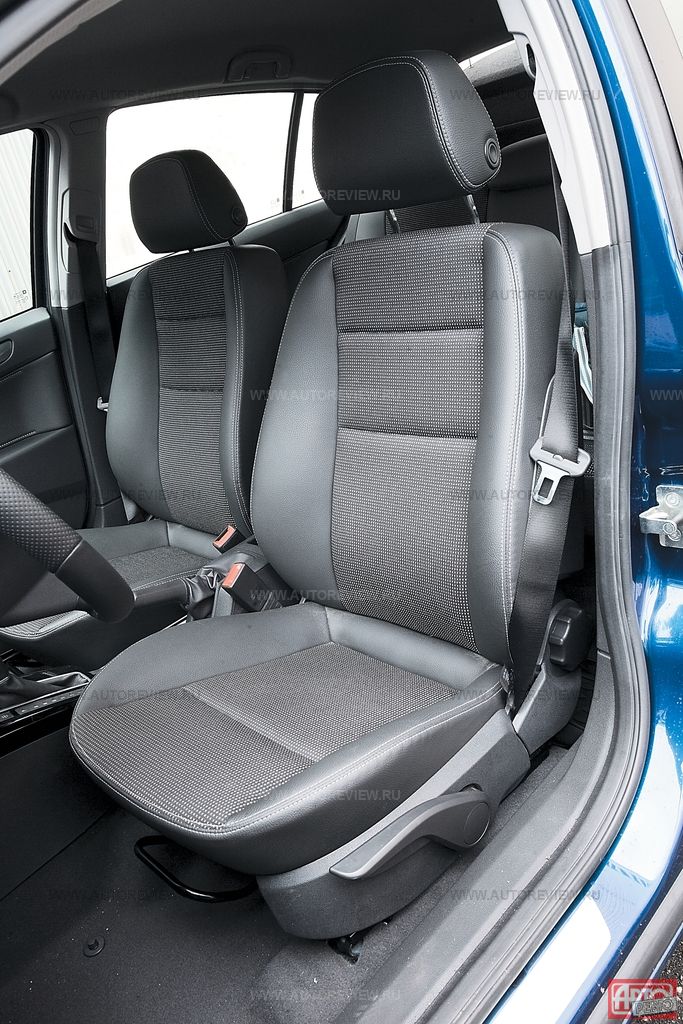 | 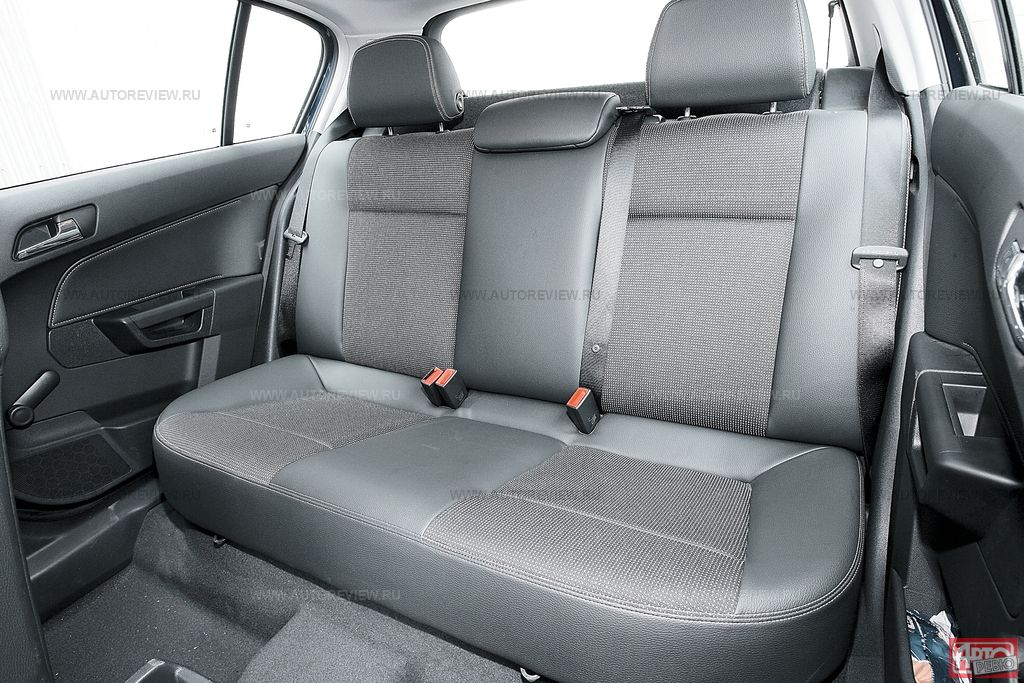 |
| The hard German seat is ergonomically flawless | When sitting on the cramped Opel rear bench, you have to show remarkable flexibility — your legs get stuck in the narrow opening |
But the Kia cee'd also lost to the winner by very little — this is a confident second place. Perhaps this is the most Europeanized Korean car: quiet, with a comfortable interior, a dense suspension, and predictable handling. Moreover, in a similar trim, the cee'd is 24,700 rubles ($996) cheaper than the Mazda 3 without a stability control system, which costs 580,000 rubles ($23,387). So the seeding was successful: if other new Kia models turn out to be the same, then... Beware, Japan and Europe! After all, both the Astra and the Auris lost to the "seed," and by a noticeable margin.
Yes, the Astra is good in style, quality, and confident handling, but it has the most inconvenient trunk, a noisy engine, and an uncomfortable suspension. Nevertheless, after the Vsevolozhsk Focus, the Astra is the best-selling foreign hatchback in Russia.
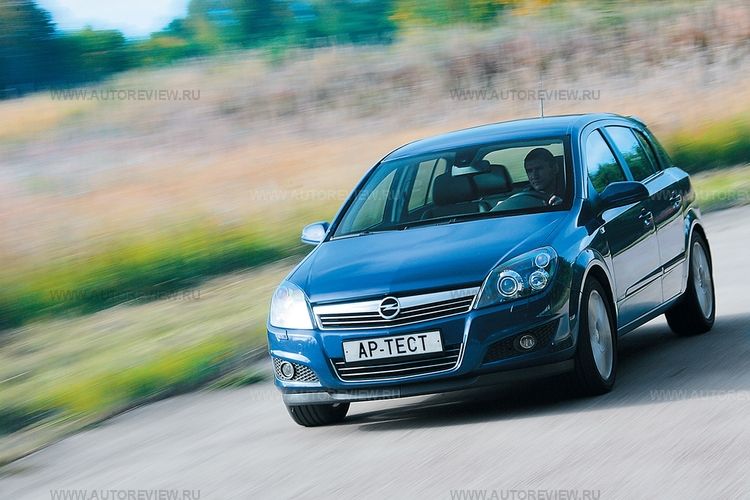
The well-tuned chassis of the Astra lacks "steering feel"
The Auris lagged behind the Astra just a little — only five points. The Toyota's strengths are the futuristic cockpit, a spacious rear bench, the most peppy engine in this quartet, and a lively chassis. But the lack of a stability control system can make the Auris dangerous, and the jerky "robot," mediocre ride smoothness, and rather high noise level do not fit with the highest price — almost $26,000.
| Equipment of the cars participating in the test | ||||
| Equipment | Cars | |||
| Kia cee’d | Mazda 3 | Opel Astra | Toyota Auris | |
| Price of the base version, RUB/$* | 488500/19700 | 465000/18750 | 543000/21900 | 568500/22920 |
| Front airbags | + | + | + | + |
| Front side airbags | + | + | + | + |
| Driver's knee airbag | – | – | – | + |
| Inflatable curtains | + | + | – | + |
| ABS | + | + | + | + |
| Traction control system | – | O | O | – |
| Dynamic stability control system | – | O | O | – |
| Power steering | + | + | + | + |
| Automatic transmission | O | O | O | O** |
| Automatic transmission shift paddles on the steering wheel | – | – | – | O |
| Multifunction steering wheel | + | O | + | + |
| Adjustable steering column for height and reach | + | + | + | + |
| Leather-wrapped steering wheel | O | O | O | + |
| Heated front seats | – | + | + | + |
| Auto-dimming interior rearview mirror | – | – | O | O |
| Central locking (remote) | + | + | + | + |
| Keyless entry system | – | – | O | O |
| Air conditioning | + | O | + | + |
| Single-zone climate control | O | O | + | – |
| Dual-zone climate control | – | – | – | + |
| Power-adjustable and heated exterior mirrors | + | + | + | + |
| Front power windows | + | + | + | + |
| Rear power windows | O | O | – | + |
| Split-folding rear seat | + | + | O | + |
| Adjustable rear seat backrest angle | – | – | – | + |
| Rear armrest | – | + | O | + |
| CD audio system | + | O | + | + |
| CD changer | – | O | – | – |
| Engine start button | – | – | O | O |
| Light sensor | – | – | O | O |
| Rain sensor | – | – | O | O |
| Trip computer | + | O | + | + |
| Recessed rear headrests | + | – | – | + |
| Remote fuel filler flap lock | + | + | – | + |
| Bi-xenon headlights | – | – | O | – |
| Front fog lights | O | O | O | + |
| Headlight washers | – | O | + | – |
| Alloy wheels | O | O | O | O |
| Full-size spare wheel | – | – | + | + |
| Metal engine compartment protection | – | – | + | – |
| Metallic paint | + | + | O | + |
| Price of the tested car, RUB/$ | 555300/22391 | 608500/24536 | 718000/28952 | 642500/25910 |
| * At the exchange rate of $1=24.8 RUB. | ||||
| ** Robotic "manual" | ||||
| (+) Included in the base version | ||||
| (–) Not available in the base version | ||||
| (O) Options installed on the cars participating in the test | ||||
Before this comparative test, we conducted a poll on the website www.autoreview.ru, asking visitors which of the four hatchbacks they would choose for themselves.
The votes were distributed as follows:
Kia cee'd 16.55%
Mazda 3 40.19%
Opel Astra 23.47%
Toyota Auris 19.79%
A total of 17,779 people took part in the survey.
| Autoreview expert ratings | |||||
| Parameters assessed | Max. score | Cars | |||
| Kia cee’d | Mazda 3 | Opel Astra | Toyota Auris | ||
| Design | 180 | 150 | 150 | 160 | 150 |
| Exterior | 90 | 75 | 70 | 80 | 65 |
| Interior | 90 | 75 | 80 | 80 | 85 |
| Ergonomics | 180 | 155 | 160 | 140 | 140 |
| Driver's workplace | 90 | 75 | 80 | 70 | 65 |
| Visibility | 90 | 80 | 80 | 70 | 75 |
| Dynamics | 280 | 220 | 235 | 235 | 205 |
| Acceleration dynamics | 90 | 70 | 65 | 70 | 60 |
| Braking dynamics | 100 | 80 | 90 | 90 | 80 |
| Handling | 90 | 70 | 80 | 75 | 65 |
| Ride comfort | 190 | 150 | 145 | 135 | 145 |
| Ride smoothness, vibration protection | 70 | 55 | 60 | 50 | 55 |
| Acoustic comfort | 60 | 50 | 45 | 40 | 40 |
| Climate control | 60 | 45 | 40 | 45 | 50 |
| Cabin comfort | 170 | 130 | 125 | 110 | 135 |
| Rear seats | 60 | 50 | 45 | 40 | 55 |
| Trunk | 60 | 45 | 50 | 40 | 40 |
| Cabin transformation | 50 | 35 | 30 | 30 | 40 |
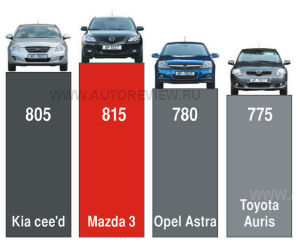
| Total score | 1000 | 805 | 815 | 780 | 775 |
| In this table, we slightly changed the weight coefficients compared to sedans, because hatchback buyers, choosing a car with a dynamic appearance, are more often willing to sacrifice ride smoothness and capacity in favor of a bright exterior and driving sensations. Therefore, we transferred ten points from ride smoothness and acoustic comfort to design, as well as from passenger seats and handling to ergonomics and visibility. | |||||
Autoreview final ratings
Luminous intensity
| Kia cee'd | |
| Mazda 3 | |
| Opel Astra | |
| Toyota Auris | |
| Low beam. A pedestrian stands on the roadside 80 m from the car | High beam. A pedestrian stands in the middle of the road 160 m from the car |
Night photography of all cars from one point showed how differently their headlights work. In this exercise, the Opel Astra, equipped with bi-xenon optics, is the undisputed leader: a person on the roadside is clearly visible both in low beam from a distance of 80 meters and in high beam from 160 meters. The other three cars, equipped with halogen lamps, shine noticeably worse: in the Kia and Mazda, the low beam picks out only the pedestrian's legs from the darkness, while the Toyota illuminates the road like a pocket flashlight — no further than 48 meters. The high beam of conventional lamps in all three cars turned out to be quite decent.
During the shooting, only the driver was in the cabin, the xenon headlight adjusters worked in automatic mode, and the manual adjusters of the halogen ones were in the zero position.
Moose test
We split the experiment, which reproduces a sharp avoidance of a suddenly appearing obstacle, into two phases. First, five drivers, who had already become accustomed to the cars in normal driving rhythm, tried to dodge the "moose" with a single attempt, accelerating to 65 km/h. This exercise had a surprise: traffic lights indicated which side the obstacle would have to be bypassed from — right or left. After that, the tester used a series of runs to determine the maximum speed at which this maneuver could still be performed.
The Opel proved to be the most reliable in a critical situation — all five testers successfully avoided the "moose"! And the limit shown by the expert is impressive — 79.5 km/h. The Astra responded to steering inputs instantly, and the well-tuned electronic stability control neatly suppressed incipient skids without limiting the driver's choice of the desired line of movement. Even the noticeable change in steering effort during sharp rotations was not a hindrance.
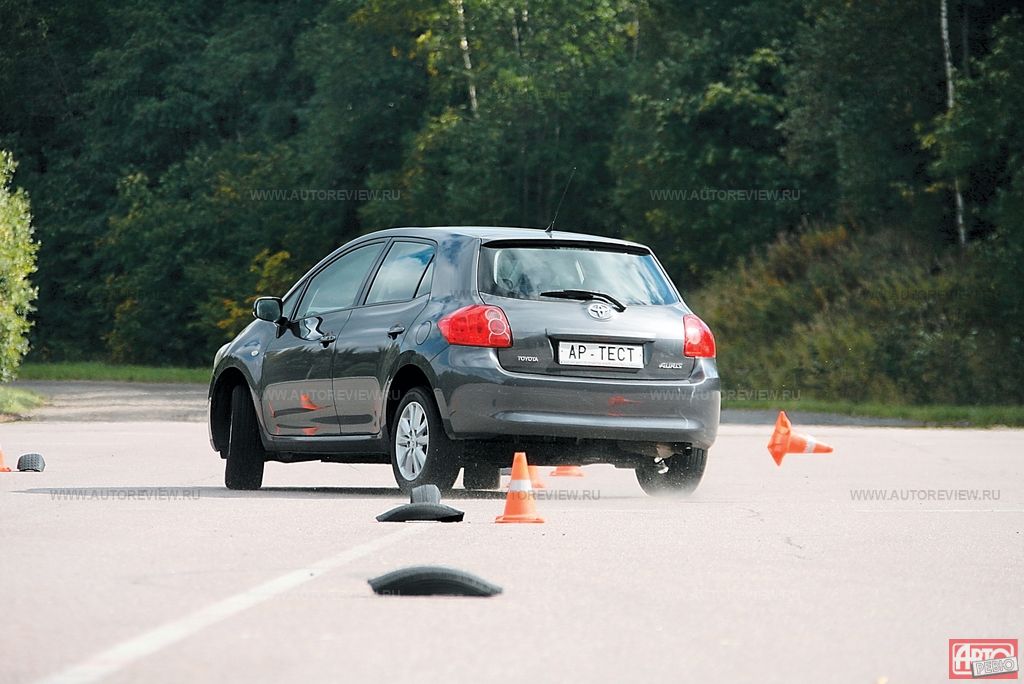 | 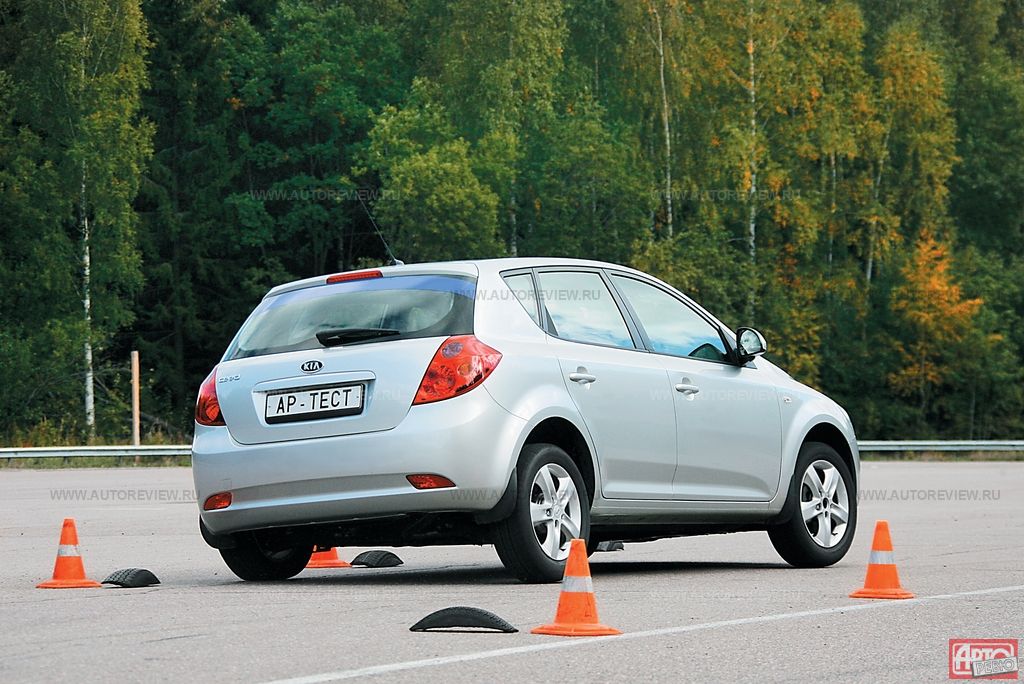 |
| Even the seasoned expert failed to keep the Auris on the "moose test". Continuous skids! And there is no ESP even in the most expensive version... | Thanks to the predictable nature of the Kia cee’d, four out of five "moose" were successfully avoided |
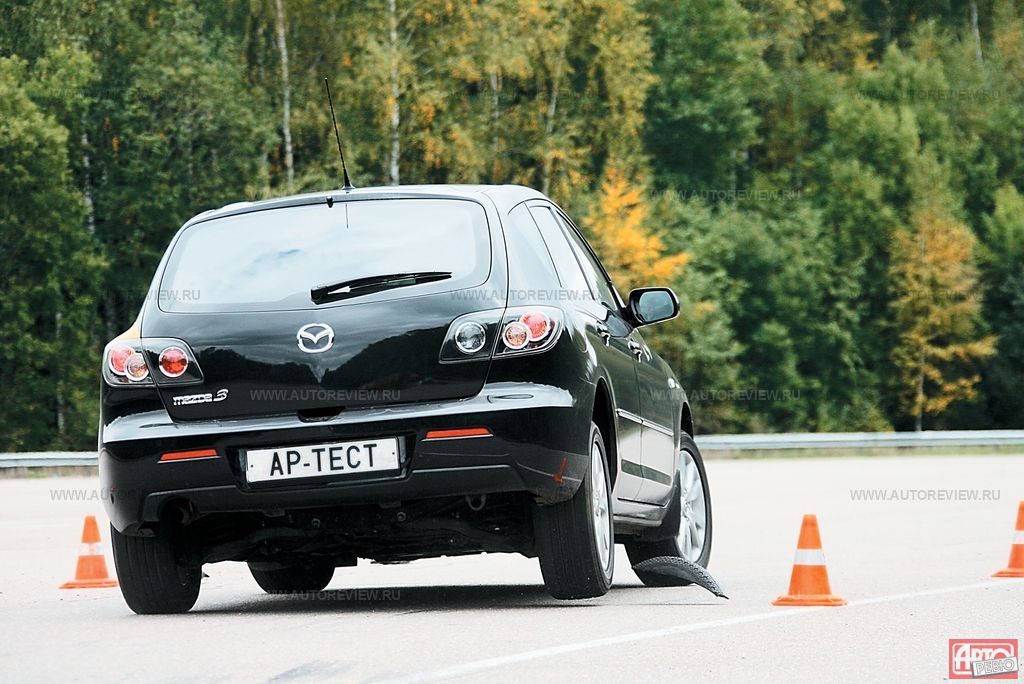 | 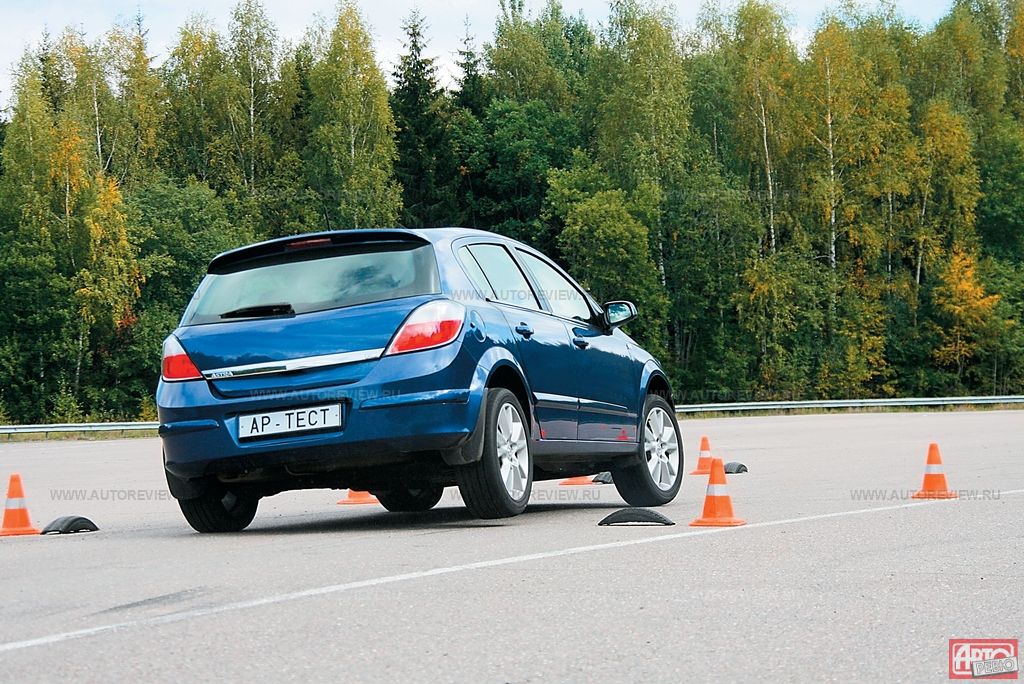 |
| The spirited Mazda dodges the "moose" with ease — thanks to the supporting stability control | The Opel is the safest car in this exercise |
The Mazda did not have such difficulties — the steering wheel did not lose a bit of informativeness. The only one who failed complained about the excessive sharpness of the "three" — it dodged the "moose" with a jerk he did not expect! The maximum speed at which the maneuver could be repeated is even higher — 80.6 km/h. As with the Opel, skids became the limiter. But the stability control worked not so delicately, sometimes pulling the car off the chosen trajectory.
The Kia cee’d allowed four of the five participants to come out unscathed. An excellent result for a car that does not have ESP! And the explanation is pronounced understeer. No skids! The Kia driver is intuitively prepared for the fact that the steering wheel will have to be turned actively — because even in normal driving, the car reacts very slowly. The tester, however, complained about the too "slow" steering and extremely weak feedback to its turns. The speed limit for the Kia is not high — 75.5 km/h.
True, this is as much as 1.3 km/h more than the Toyota. By the manufacturer's decision, the Auris for the Russian market, like the cee’d, does not have a stability control system. Even the most experienced expert barely coped with strong yawing — the car is very "skittish". And what about simpler drivers: three of the five volunteers failed to cope with the skids. ESP for the Auris is a vital necessity!
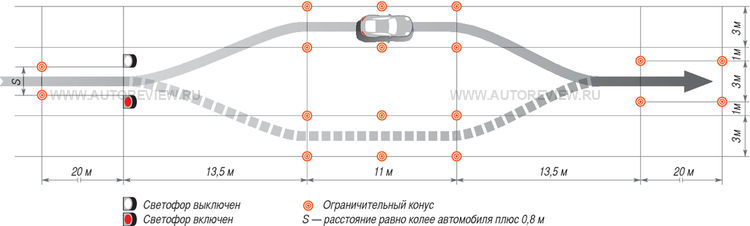
| Moose test from the first attempt at 65 km/h | |
| Cars | Maneuver completed |
| Kia cee'd | 4 drivers out of 5 |
| Mazda 3 | 4 drivers out of 5 |
| Opel Astra | 5 drivers out of 5 |
| Toyota Auris | 2 drivers out of 5 |
| Maximum speed of the moose test, km/h | |
| Car | Speed |
| Kia cee'd | 75.5 |
| Mazda 3 | 80.6 |
| Opel Astra | 79.5 |
| Toyota Auris | 74.2 |
| Speedometer reading accuracy | ||||||||
| Cars | Speedometer readings, km/h | |||||||
| 40 | 60 | 80 | 100 | 120 | 140 | 160 | 180 | |
| True speed, km/h | ||||||||
| Kia cee’d | 39 | 58 | 77 | 97 | 115 | 135 | 154 | 174 |
| Mazda 3 | 36 | 56 | 76 | 95 | 114 | 133 | 152 | — |
| Opel Astra | 39 | 57 | 76 | 96 | 115 | 134 | 152 | 170 |
| Toyota Auris | 38 | 58 | 77 | 96 | 115 | 135 | 154 | 173 |
| Some Autoreview measurement results | |||||
| Parameters | Cars | ||||
| Kia cee’d | Mazda 3 | Opel Astra | Toyota Auris | ||
| Maximum speed, km/h | 173.8 | 165.1 | 182.4 | 187.8 | |
| Acceleration time, s | 0—50 km/h | 3.8 | 4.0 | 4.0 | 3.6 |
| 0—100 km/h | 12.3 | 13.2 | 12.2 | 11.9 | |
| 0—150 km/h | 31.7 | 37.3 | 31.8 | 27.7 | |
| over 400 m | 18.4 | 18.8 | 18.3 | 18.1 | |
| over 1000 m | 33.9 | 35.0 | 33.5 | 33.1 | |
| 60—100 km/h (III) | — | 11.6 | — | — | |
| 80—120 km/h (III) | — | 13.1 | — | — | |
| 60—100 km/h (IV) | — | 16.9 | — | — | |
| 80—120 km/h (IV) | — | 21.6 | — | — | |
| 60—100 km/h (D) | 7.6 | 8.3 | 7.2 | 7.1 | |
| 80—120 km/h (D) | 10.7 | 11.6 | 7.8 | 8.1 | |
| Coast-down, m | from 50 km/h | 563 | 545 | 574 | 710 |
| 130—80 km/h | 851 | 832 | 878 | 931 | |
| Braking from 100 km/h | distance, m | 42.7 | 41.7 | 39.9 | 41.7 |
| deceleration, m/s² | 9.0 | 9.3 | 9.7 | 9.2 | |
| Braking from 150 km/h | distance, m | 95.6 | 89.1 | 88.4 | 90.8 |
| deceleration, m/s² | 9.1 | 9.7 | 9.8 | 9.6 | |

Visibility
| Kia cee'd | Mazda 3 |
| Opel Astra | Toyota Auris |
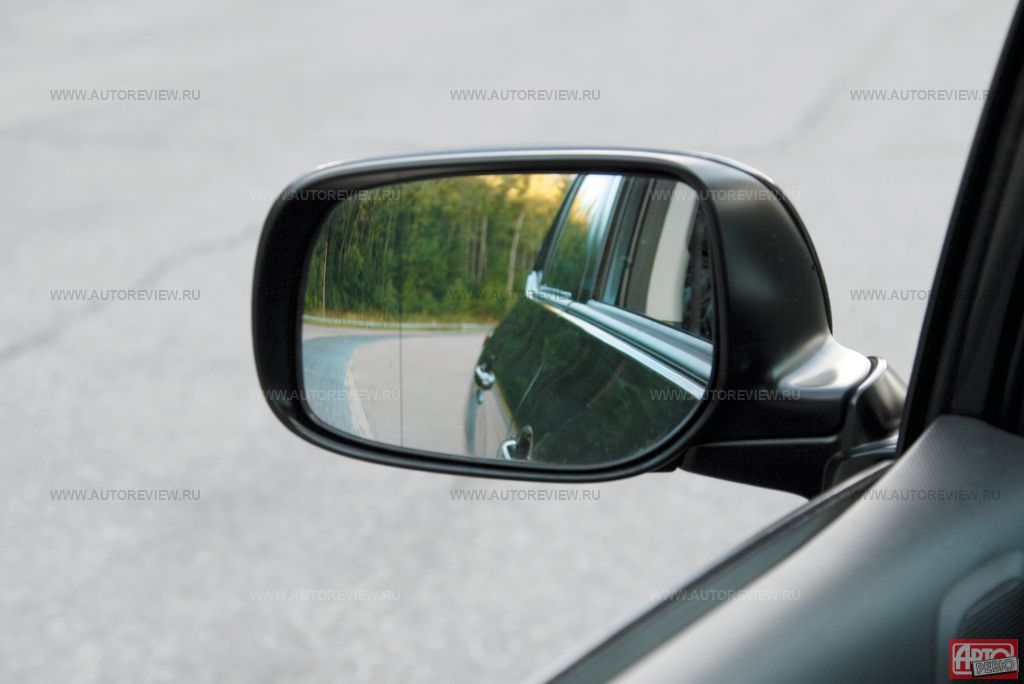 |
The best all-round visibility is in the Mazda: slim body pillars, a wide viewing angle of 277 degrees, and large mirrors. The only annoyance is the bulky headrests on the rear bench. The Kia's visibility is no worse, although its pillars are more massive, and the front headrests are set so high that for drivers under 180 cm they block half of the rear window. As a result, the total angle of "blind" zones reaches 124.5 degrees. Excellent exterior mirrors save the day. On the Toyota they are even better, but the forward view is spoiled by triangular windows, like those on a minivan, and the rear window opening, while tall, is narrow.
The Opel cannot boast of visibility, although it has the largest viewing angle (279.5 degrees). The culprit is the low edge of the rear window, bulky headrests, and small mirrors.
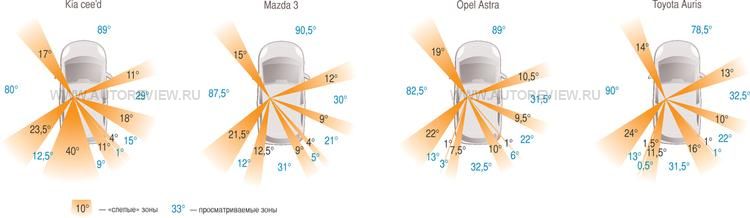
| Car | Total viewing angle, deg. | Total angle of "blind" zones, deg. |
| Kia cee’d | 235.5 | 124.5 |
| Mazda 3 | 277.0 | 83.0 |
| Opel Astra | 279.5 | 80.5 |
| Toyota Auris | 269.0 | 91.0 |
Safety
In the base trim, the Opel Astra has ABS with electronic brake-force distribution, pretensioner seatbelts, Isofix anchors, and four airbags — front and side. EuroNCAP crash tests were conducted on the Astra with side curtain airbags and stability control, which are only offered as options in Russia. The result is the maximum five stars. In a frontal impact, loads on the head, neck, and chest are insignificant, and the injury-safe dashboard and pedals protect the legs from damage. Protection for child passengers is well thought out — four stars out of five, but the Astra is not too friendly to pedestrians — only one star out of four.
The Kia cee'd already gets six airbags in the base trim, but stability control is not available even as an option. At the same time, the cee'd became the first Korean car to be awarded the maximum five stars by EuroNCAP. True, there were some criticisms: in a frontal impact, the clutch pedal moved more than 100 mm, and the front panel was deemed injury-prone. Protection for child passengers is rated four stars out of five, but pedestrians fare worse — only two stars out of four possible.
The Mazda 3 in the base version also has six airbags, and stability control can be ordered as an option. Based on EuroNCAP crash test results, the hatchback received four stars: it fell short of a "five" due to expert complaints about the injury risk of the front panel and steering column. Child protection is a weak "three," and pedestrian safety is 15 points out of 36 possible.
The Toyota Auris in the "base" can even boast a driver's "knee" airbag, but stability control is not available in Russia at all, even for an extra charge. EuroNCAP crash tests were passed brilliantly — the body proved strong, and all seven airbags worked flawlessly. Child passengers are well protected: four stars out of five. The "pedestrian" rating is above average, three stars out of four.
| Kia cee'd* | ★★★★★ | 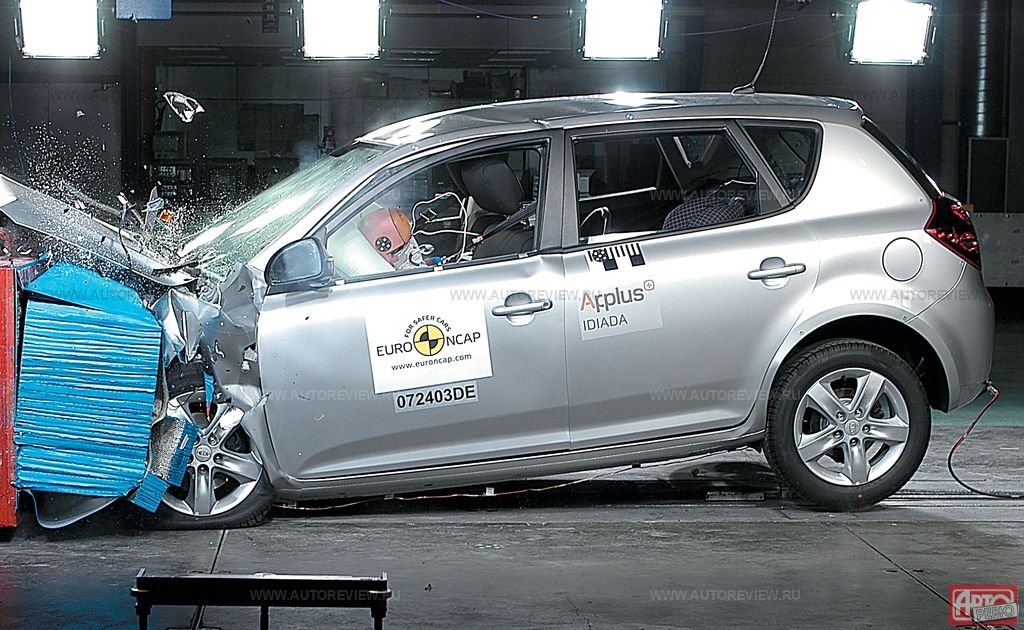 |
| Overall rating | 34 points | |
| Frontal crash test | 13 (81%) | |
| Side crash tests | 18 (100%) | |
| SBR** | 3 | |
| Child passenger protection | 37 (76%) | |
| Pedestrian protection | 11 (31%) | |
| Curb weight | 1234 kg | |
| * Tests conducted according to EuroNCAP methodology | ||
| ** SBR — seatbelt reminder availability | ||
| Mazda 3* | ★★★★☆ | 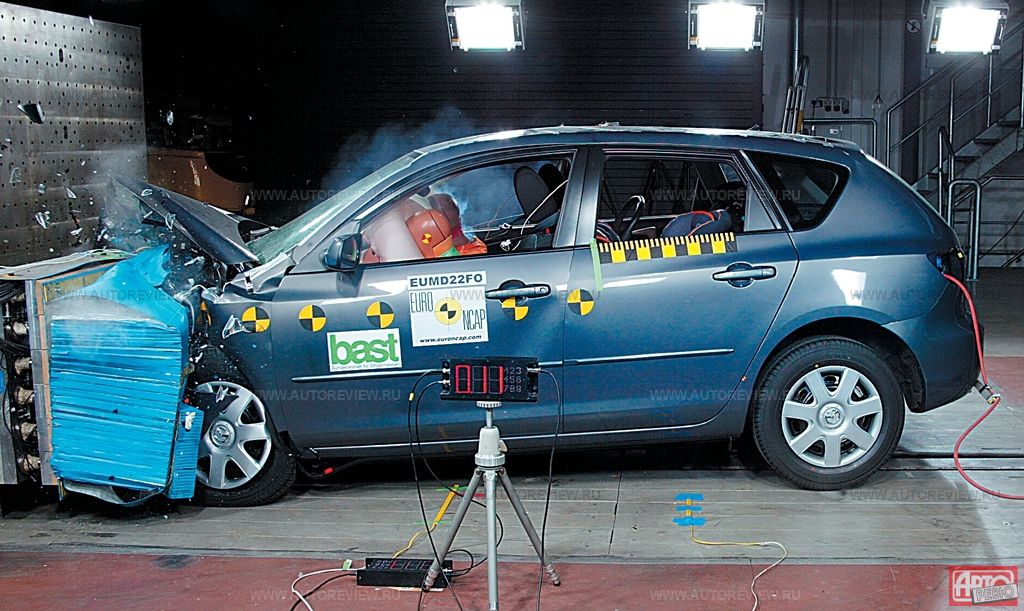 |
| Overall rating | 33 points | |
| Frontal crash test | 12 (75%) | |
| Side crash tests | 18 (100%) | |
| SBR** | 3 | |
| Child passenger protection | 32 (65%) | |
| Pedestrian protection | 15 (42%) | |
| Curb weight | 1190 kg | |
| * Tests conducted according to EuroNCAP methodology | ||
| ** SBR — seatbelt reminder availability | ||
| Opel Astra* | ★★★★★ | 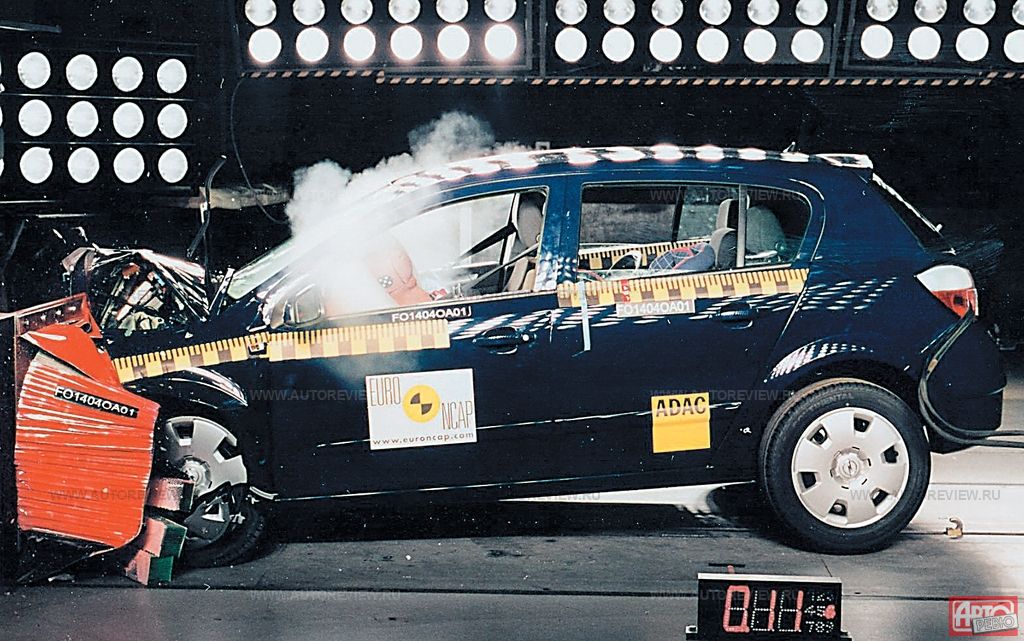 |
| Overall rating | 34 points | |
| Frontal crash test | 14 (88%) | |
| Side crash tests | 18 (100%) | |
| SBR** | 2 | |
| Child passenger protection | 39 (80%) | |
| Pedestrian protection | 3 (8%) | |
| Curb weight | 1240 kg | |
| * Tests conducted according to EuroNCAP methodology | ||
| ** SBR — seatbelt reminder availability | ||
| Toyota Auris* | ★★★★★ | 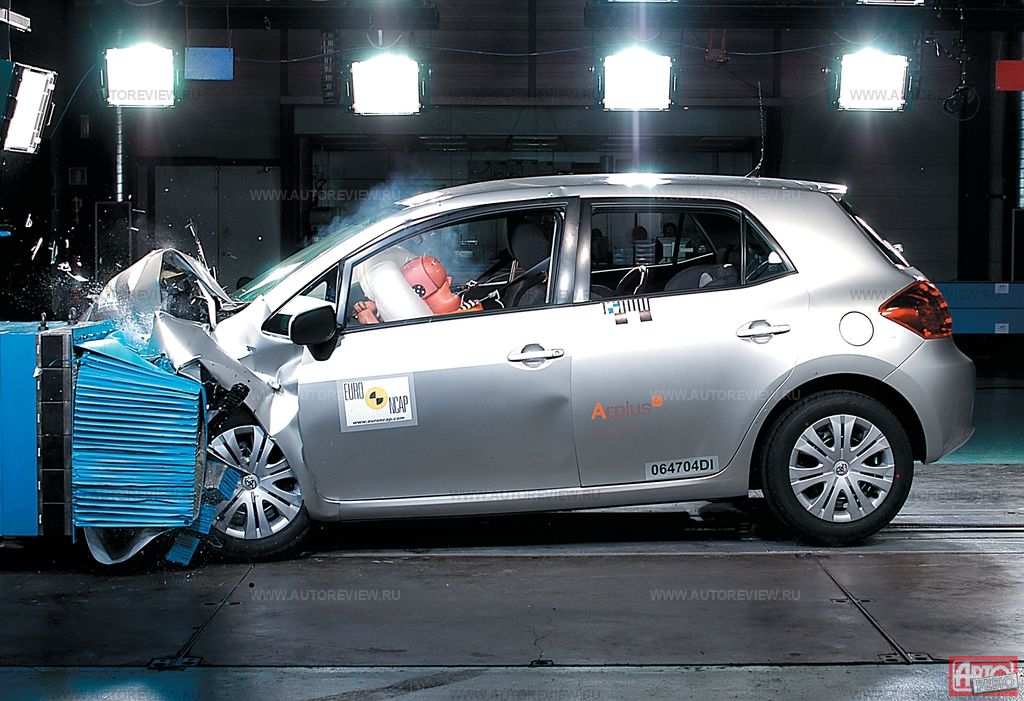 |
| Overall rating | 35 points | |
| Frontal crash test | 15 (94%) | |
| Side crash tests | 18 (100%) | |
| SBR** | 2 | |
| Child passenger protection | 37 (76%) | |
| Pedestrian protection | 21 (58%) | |
| Curb weight | 1260 kg | |
| * Tests conducted according to EuroNCAP methodology | ||
| ** SBR — seat belt reminder | ||
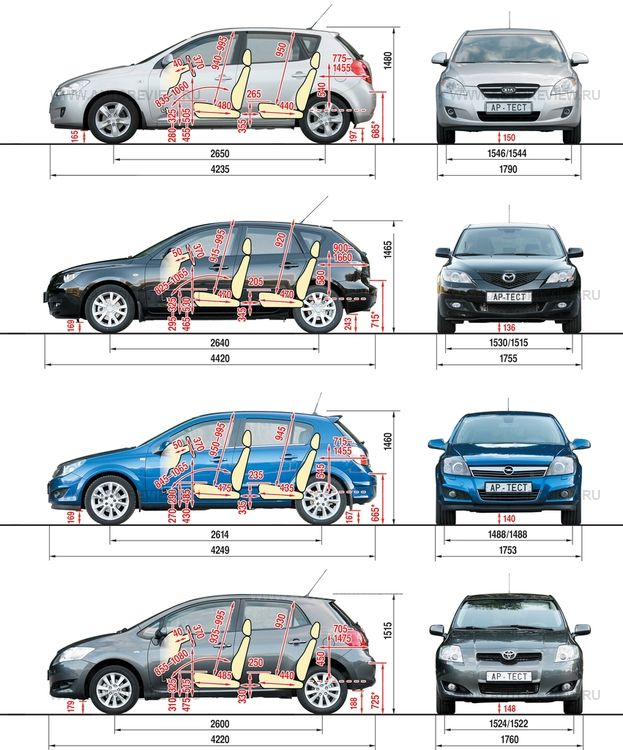
| Turning circle of cars | |||||
| Car | Kia cee'd | Mazda 3 | Opel Astra | Toyota Auris | |
| By track of outer front wheel, m | 10.59 | 10.30 | 10.63 | 10.60 | |
| By outer front overhang, m | 11.27 | 11.00 | 11.30 | 11.28 | |
| Number of steering wheel turns from lock to lock | 2.7 | 2.9 | 2.5 | 2.9 | |
Some measurement results from Autoreview
What's the price?
Opel Astra 1.4 (90 hp) in the base Essentia trim will cost 447 thousand rubles ($18020). The base includes air conditioning, ABS, power steering, front electric windows. But there are only four airbags, and no radio at all. The 1.6 (115 hp) version with climate control, heated front seats, CD/mp3 radio and electrically adjustable and heated mirrors costs 513 thousand rubles ($20690). The modification with a 1.8 L engine (140 hp) is 543 thousand rubles ($21900). The top version with a two-liter turbo engine (200 hp) and six-speed manual in Cosmo trim (plus alloy wheels and fog lights) is 717 thousand rubles ($28910). The list of options is very wide. For example, the stability control system is 13 thousand rubles ($524), and curtain airbags are 22 thousand rubles ($887).
Those wishing to get an automatic transmission can choose the Easytronic robot for 20 thousand rubles ($806) with 1.4 and 1.6 engines, or a classic automatic (surcharge of 40 thousand rubles, or $1613) with a 1.8 engine. Our test Astra 1.8 AT with all options was valued at 718 thousand rubles ($28952).
Ordering a car will take up to four months.
Warranty — 2 years without mileage limit. Opel is sold by 86 dealers in 52 Russian cities.
Kia cee'd is more expensive than the Astra: the starting price is 468730 rubles ($18900)* for the LX version with a 1.4 L engine (109 hp). There is no air conditioning, but there are six airbags and a CD/mp3 radio. More powerful versions already have air conditioning and electrically adjustable and heated mirrors in the base. However, the stability control system is not available even for an extra charge. The choice of engines is large: petrol 1.6 L (122 hp), 2.0 L (143 hp), and even a 1.6-liter turbodiesel (115 hp). The diesel cee'd costs at least 532500 rubles ($21472). Petrol ones: from 488500 rubles ($19700) for the cee'd 1.6 to 568100 rubles ($22907) for the two-liter version. The automatic is available only for them for an extra 24120 rubles ($970). Our Kia cee'd 1.6 EX with automatic, climate control, fog lights and full electric package was valued at 555300 rubles ($22391). Dealers have any modifications in stock, and an order will arrive in two months.
Warranty — 5 years or 120000 km. Kia is sold by 91 dealers in 46 Russian cities.
Mazda 3 with a 1.6 L engine (105 hp) costs 465 thousand rubles ($18750) for the Base version. There is no air conditioning, as in the base Kia: six airbags, ABS, power steering, electrically adjustable and heated mirrors, front electric windows and a radio. But the Mazda 3 1.6 Touring with air conditioning, heated front seats, rear electric windows and CD radio is already 515 thousand rubles ($20770). The surcharge for the automatic is 39 thousand rubles ($1570), for the stability control system, climate control and alloy wheels — another 43940 rubles ($1770). The tested car was valued at 608500 rubles ($24536).
The powerful Mazda 3 2.0 (150 hp) with the same equipment — only with a manual for 608 thousand rubles ($24520). The top Sport version for 647 thousand rubles ($26090) differs in an aerodynamic body kit, xenon headlights, light and rain sensors. The most expensive option package (90 thousand rubles, or $3630) includes a CD changer, Bose audio system, leather interior trim, sunroof, cruise control and tinted windows. The queue for the "threes" is from two to six months.
Warranty — 3 years or 100000 km. Mazda is sold by 30 dealers in 19 Russian cities.
Toyota Auris 1.4 (97 hp) costs 523 thousand rubles ($21090) — more expensive than rivals, but it is also richer equipped: seven airbags, ABS, air conditioning, power steering, electric windows, heated seats and mirrors, CD/mp3 radio and fog lights. True, even in the top trim you won't find a stability control system. For the version with climate control and a 1.6 engine (124 hp) they ask 568500 rubles ($22920). The MultiMode robotic transmission adds 27 thousand rubles ($1090) to the bill. The Auris 1.6 Prestige we tested with cruise control, light and rain sensors, alloy wheels and push-button engine start is valued at 642500 rubles ($25910). It's better to go for the car in advance — dealers have queues from four months to a year.
Warranty — 3 years or 100000 km. The Toyota official dealer network has 52 dealers in 36 Russian cities.
* At the exchange rate of $1=24.8 rubles.
| Approximate prices for original spare parts at Moscow dealers, rub. | ||||
| Spare parts | Cars | |||
| Kia cee’d | Mazda 3 | Opel Astra | Toyota Auris | |
| Oil filter | 160 | 346 | 170 | 296 |
| Fuel filter | — | 8460* | 256 | — |
| Air filter | 420 | 1260 | 430 | 533 |
| Cabin filter | 800 | 980 | 1213 | 1332 |
| Spark plug | 130 | 970 | 180 | 681 |
| Front brake pads | 2100 | 3573 | 3150 | 3168 |
| Rear brake pads | 1700 | 3153 | 2118 | 1865 |
| Front shock absorber | 2570 | 4846 | 3300 | 3676 |
| Rear shock absorber | 2570 | 4578 | 2600 | 1756 |
| Front headlight | 6500 | 10086 | 6727 | 8297 |
| Rear light | 2100 | 5179 | 3865 | 2954 |
| Front fender | 5200 | 3850 | 4262 | 6602 |
| Front bumper | 8200 | 10100 | 12800 | 8721 |
| Hood | 6670 | 9700 | 12136 | 7076 |
| Windshield | 6740 | 10898 | 7875 | 15000 |
| * Complete with fuel pump | ||||
| Cost of scheduled maintenance with consumables and spare parts, rub. | |||||
| Scheduled maintenance | Cars | ||||
| Kia cee’d | Mazda 3 | Opel Astra | Toyota Auris | ||
| Cost of standard hour | 950 | 1450 | 1250 | 1600 | |
| Mileage, km | 1000 | 2700 | — | — | — |
| 5000 | — | 2930 | — | — | |
| 10000 | — | — | — | 5000 | |
| 15000 | 5340 | — | 4130 | — | |
| 20000 | — | 4990 | — | 8100 | |
| 30000 | 7790 | — | 6060 | 5000 | |
| 40000 | — | 8200 | — | 14200 | |
| 45000 | 5340 | — | 4130 | — | |
| 50000 | — | — | — | 5000 | |
| 60000 | 9300 | 4990 | 8630 | 8100 | |
| 70000 | — | — | — | 5000 | |
| 75000 | 5340 | — | 4130 | — | |
| 80000 | — | 8200 | — | 19000 | |
| 90000 | 13120 | — | 6060 | 5000 | |
| Total | 48930 | 29310 | 33140 | 74400 | |
What else?
In the golf class with an automatic transmission, the choice on our market is quite large. The cheapest option is the Ford Focus, assembled in Vsevolozhsk, with a 1.6 engine (100 hp) and a classic four-speed automatic for 441 thousand rubles ($17,780)*. The two-liter version (145 hp) costs 479 thousand rubles ($19,310). The Focus pleases with its well-tuned ergonomics and spacious rear row, and the transmission works smoothly and unobtrusively. More details in AR No. 13–14, 2005.
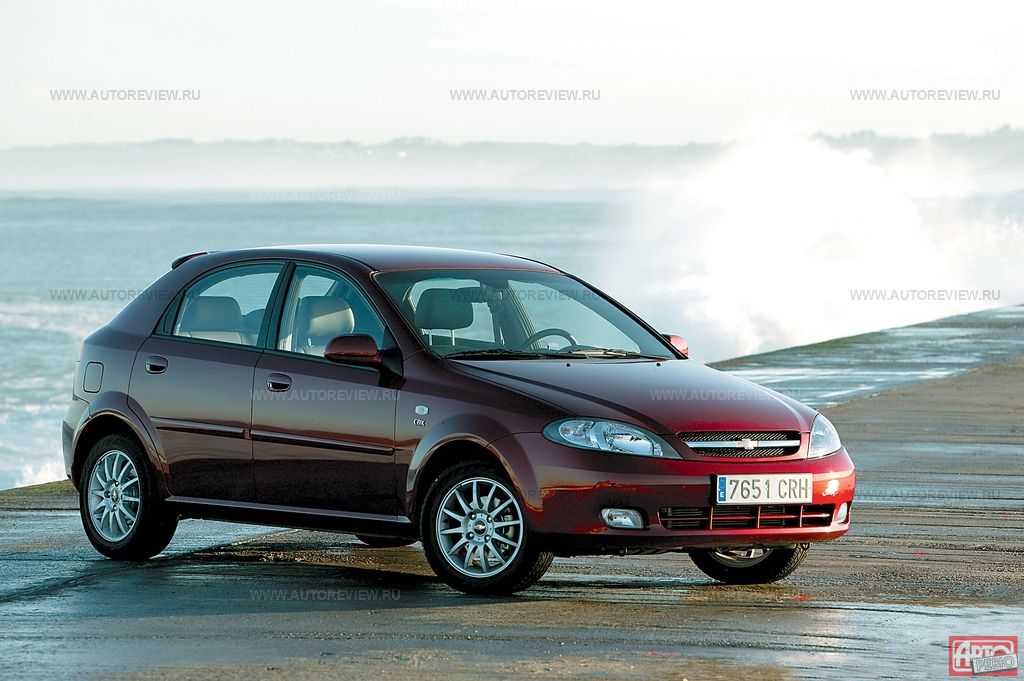
Chevrolet Lacetti with a 1.6-liter engine (109 hp) and a four-speed automatic will cost 457,500 rubles ($18,450), and the modification with 1.8 (122 hp) is already 530,700 rubles ($21,400).
Renault Megane 1.6 (115 hp) with an automatic gearbox costs 505,150 rubles ($20,370). With the 2.0 engine (135 hp), the French car is noticeably more expensive — 737 thousand rubles ($29,720). The hatchback charms with its bold design, but the rear seat is not too spacious. Details in AR No. 9, 2004.
| Chevrolet Lacetti | Peugeot 307 |
 |  |
| Renault Megane | Skoda Octavia |
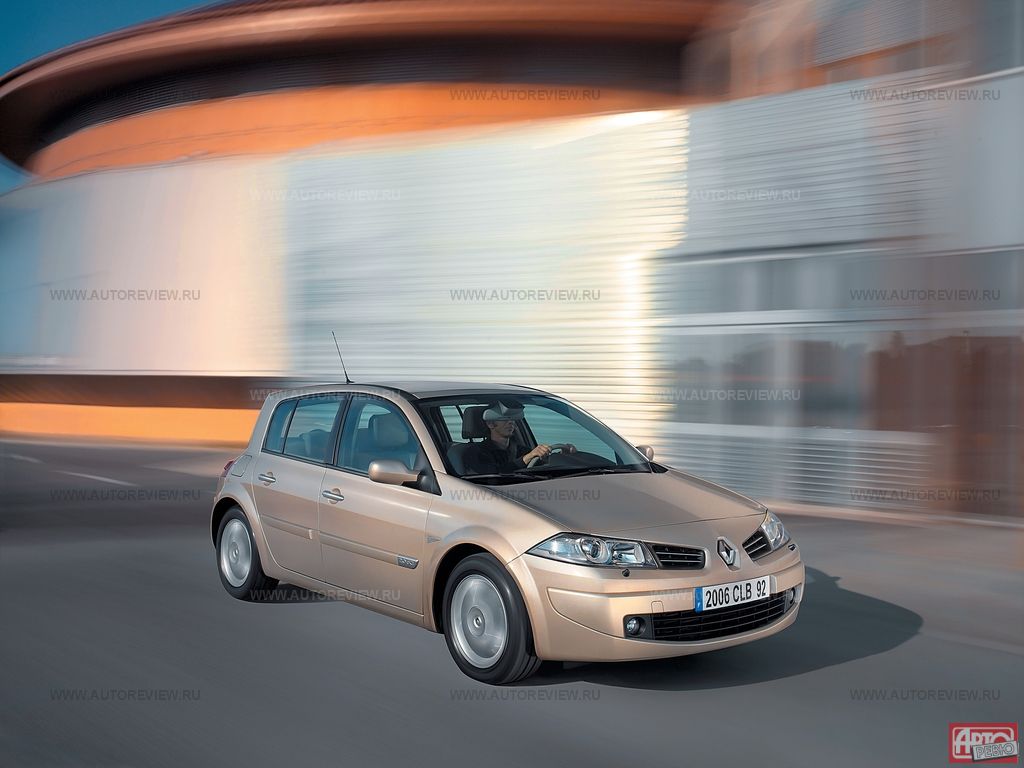 | 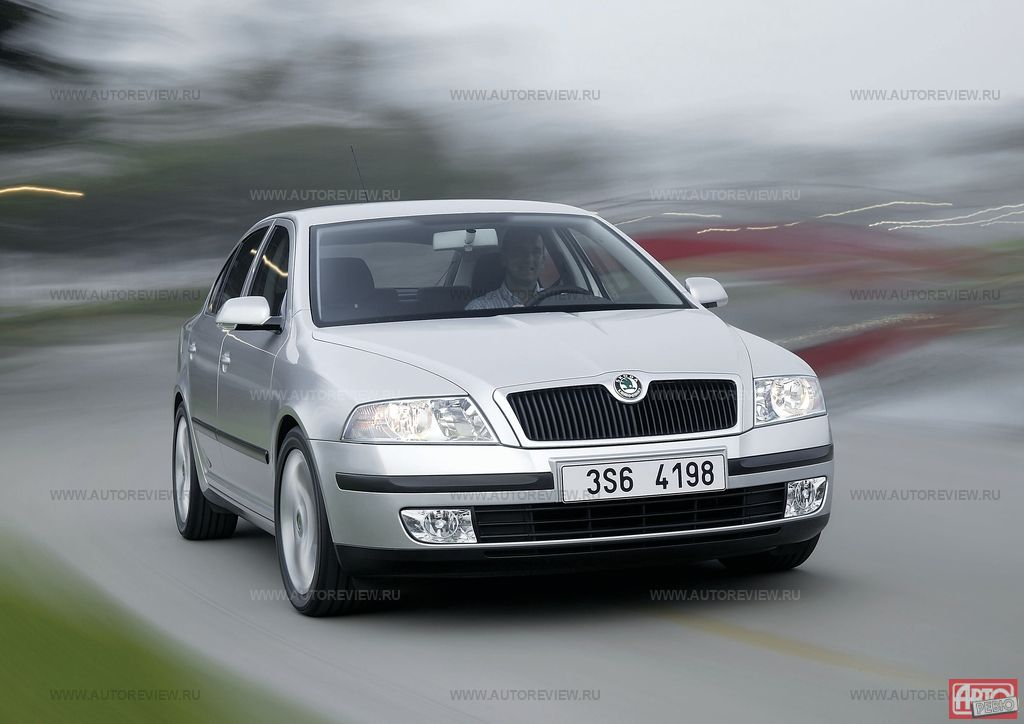 |
For the Nissan Tiida hatchback, the automatic is only paired with the 1.6 engine (110 hp), with prices starting from 539,500 rubles ($21,750). The Tiida's interior is very spacious, and it drives "calmly" and predictably. More details in AR No. 10, 2007.
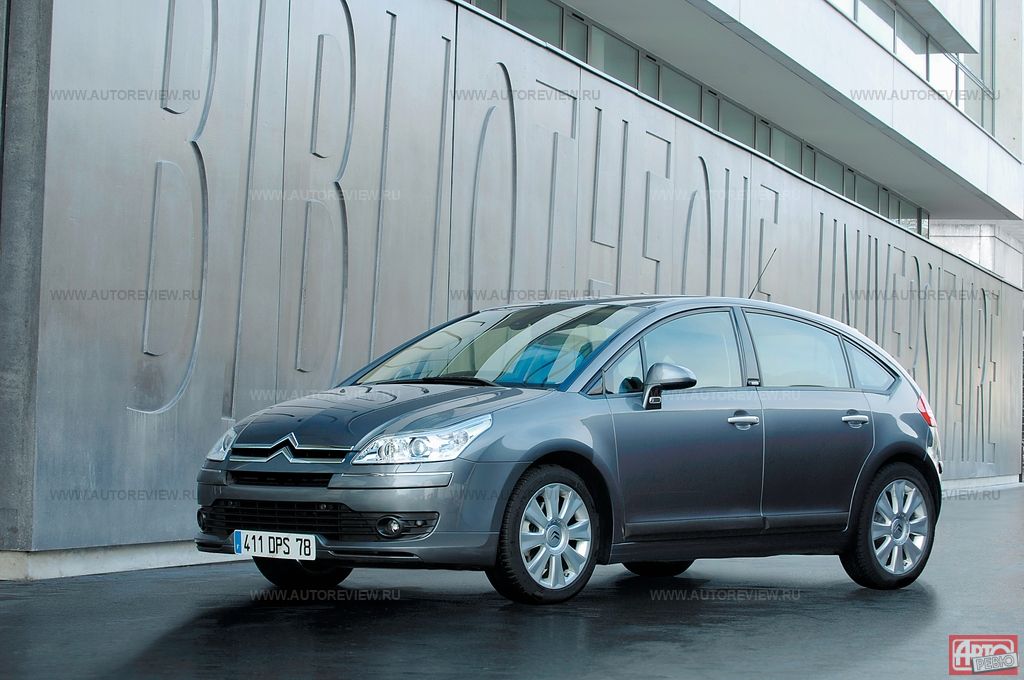
The five-door Citroen C4 with a 1.6 engine (110 hp) and automatic is offered from 546 thousand rubles ($22,020), and the two-liter version (138 hp) costs 701,750 rubles ($28,300). The design catches the eye, but ergonomics suffer, and the rear is also a bit cramped. Details in AR No. 3, 2005.
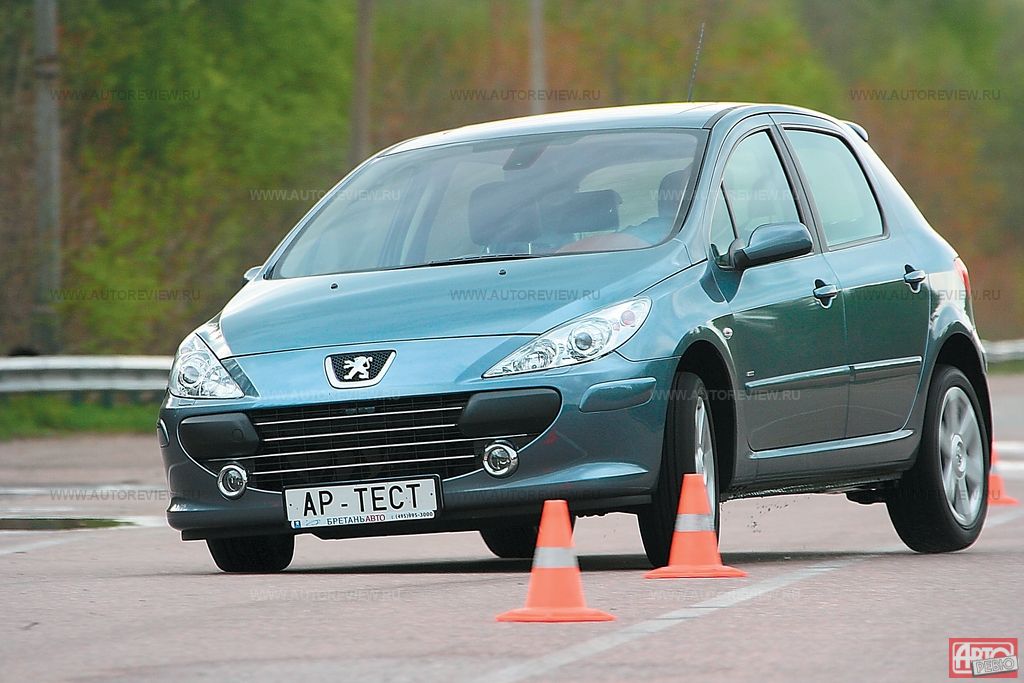
The outgoing Peugeot 307 with a 1.6 engine (110 hp) and four-speed automatic costs 547 thousand rubles ($22,060). With the two-liter unit (143 hp) — from 657,500 rubles ($26,510). More details in AR No. 9, 2004 and AR No. 12, 2006. Next year, the 307 will be replaced by the larger Peugeot 308, with prices not yet announced.
The class benchmark Volkswagen Golf with a six-speed automatic gearbox starts from 582,910 rubles ($23,500) — this is the version with the old 1.6-liter unit (102 hp). The Golf with the two-liter 2.0 FSI engine (150 hp) will cost 802,560 rubles ($32,360). There is also a Golf 1.4 TSI (140 hp) with DSG for 761,400 rubles ($30,700). The strict interior is made with refined ergonomics and quality materials, and the rear seat is welcoming. More details in AR No. 13–14, 2005.
The Skoda Octavia 1.6 (102 hp) built on the Golf platform with an automatic is more expensive than the "German" — from 649 thousand rubles ($26,170)! For the 1.6 FSI modification (115 hp), you will have to pay an extra 24 thousand rubles ($970), and the Octavia 2.0 FSI (150 hp) costs at least 779 thousand rubles ($31,410). The "Czech Volkswagen" is no worse than the German one (see AR No. 9, 2006), especially pleasing with its spacious trunk. But the price bites…
| Nissan Tiida | Subaru Impreza |
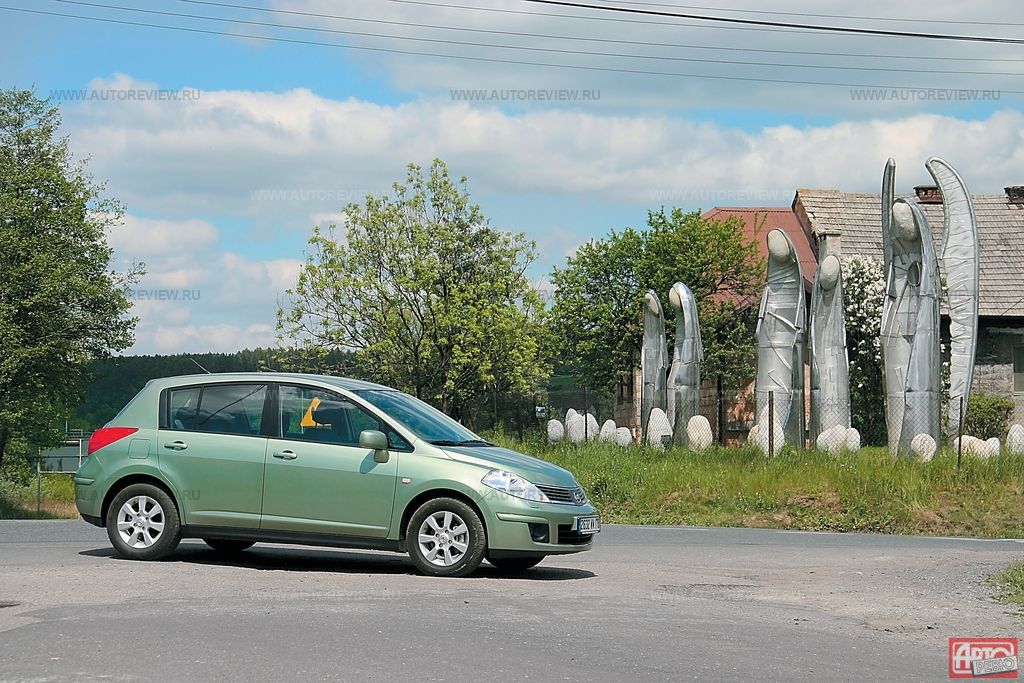 | 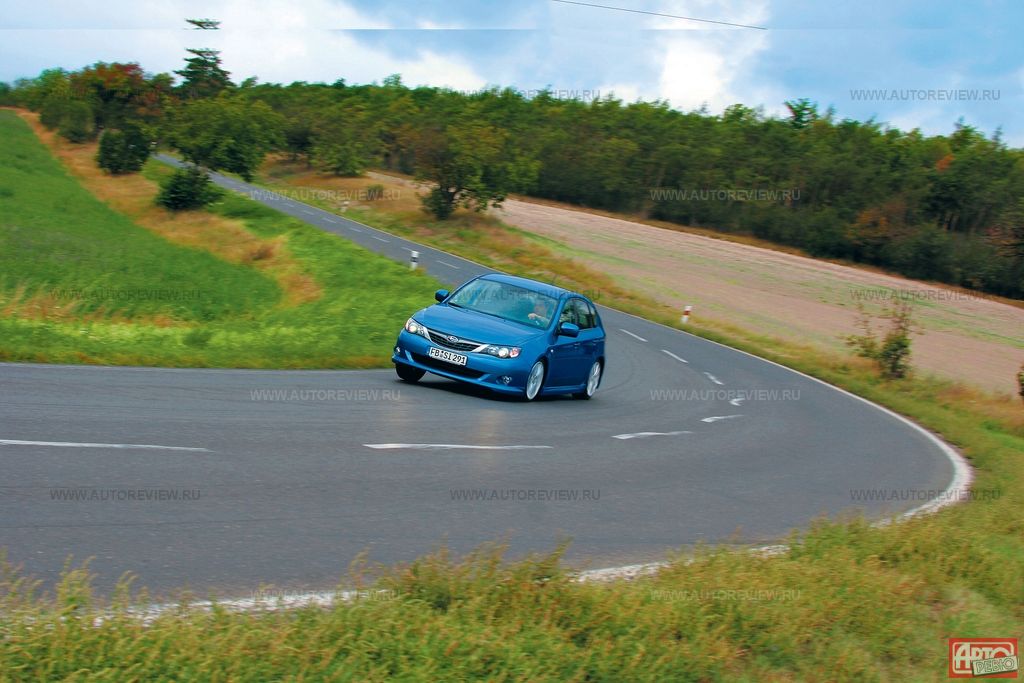 |
| Citroen C4 | Honda Civic |
 |  |
Much more affordable is the "old" Skoda Octavia Tour 1.6 (102 hp) with a four-speed automatic — it is based on the fourth-generation Golf and costs from 569 thousand rubles ($22,940). Its interior is simple, the rear is a bit cramped, but the trunk is huge. Details in AR No. 23, 1997.
The new all-wheel-drive hatchback Subaru Impreza with a 1.5 engine (107 hp) and four-speed automatic costs 618,500 rubles ($24,940). The version with the two-liter unit (150 hp) — 771,600 rubles ($31,110). The former rally legend has gained a spacious rear row, becoming soft, quiet, and comfortable. More details in AR No. 18, 2007.
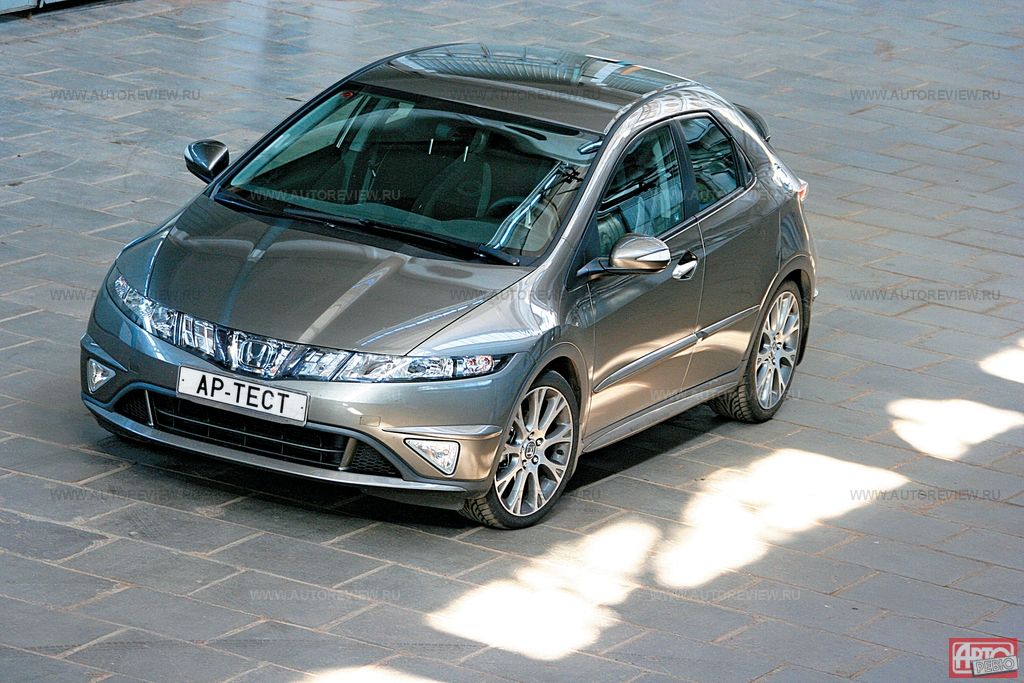
The Honda Civic hatchback is sold with a single 1.8-liter engine (140 hp), and instead of an automatic, there is a robotic gearbox. The price is from 683 thousand rubles ($27,540). The interior is futuristic and functional, the rear seat is spacious, but the low ceiling with "slanted" roof pillars gets in the way. More details in AR No. 12, 2006.
* At the exchange rate of $1 = 24.8 rubles.