
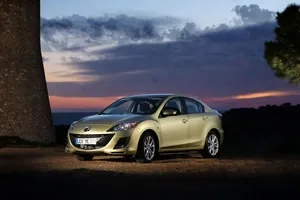
 The second generation Mazda3 has changed its appearance. While retaining its own character, the "matryoshka" has become like a smaller Mazda6. Compared to its predecessor, the new model looks brighter and more dynamic.Comments (6)
Can you guess which country is the westernmost in continental Europe? I'll give you a hint: it occupies the southwest of the Iberian Peninsula, borders Spain to the north and east, and is washed by the Atlantic to the south and west. The answer is obvious — it's Portugal, whose name comes from the city of Porto (Latin: Portus Cale — "warm port").
 |
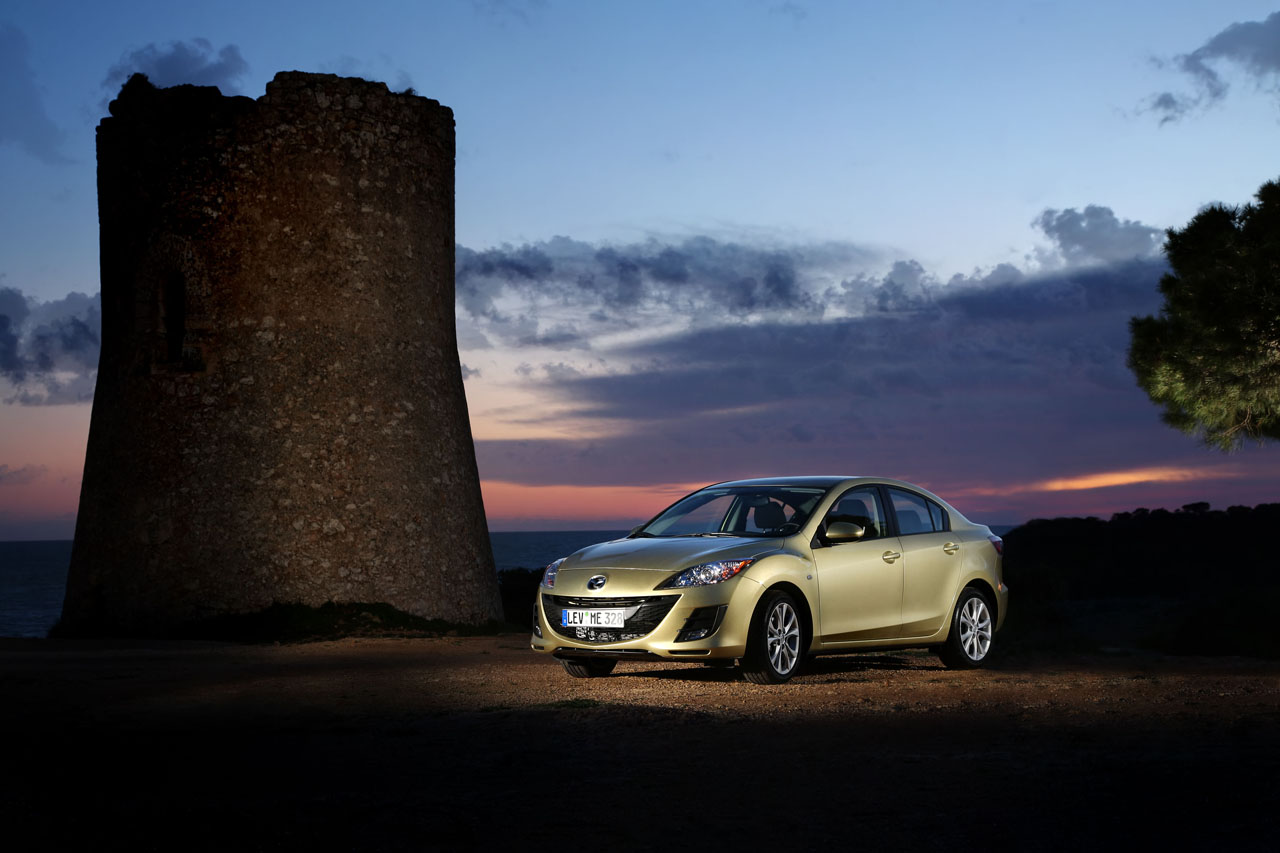
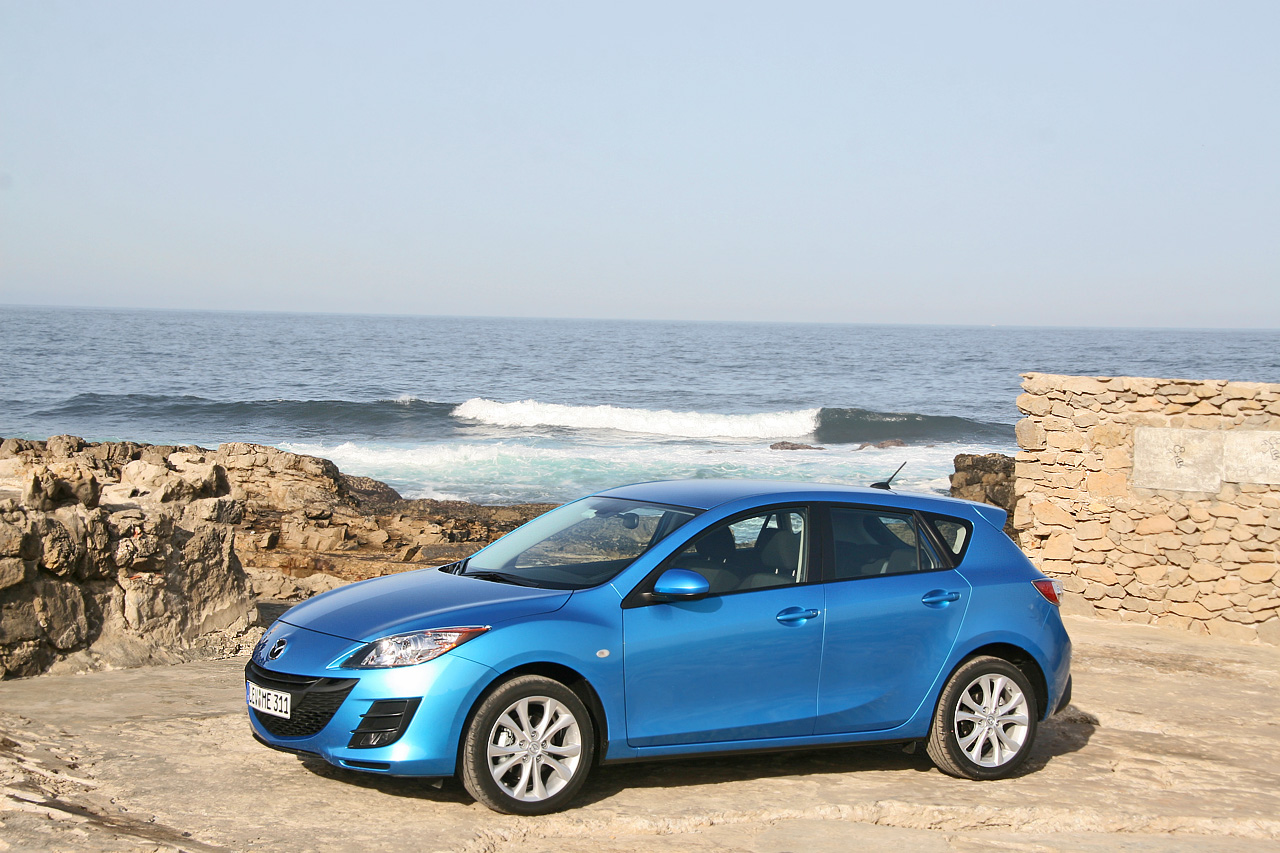
| The exterior of the new Mazda3 has freshened up. Clearly defined wheel arches are a familiar technique seen on the sporty Mazda RX-8, the CX-7 crossover, and the compact Mazda2. |
It was in this very country that the driving premiere of the new generation Mazda3 took place. I was looking forward to both Portugal and meeting the updated "matryoshka." The capital, Lisbon, greeted us with unusually hot weather — thermometers showed about thirty degrees in the shade. Everything promised a successful event and a good mood. And that's exactly how it turned out…
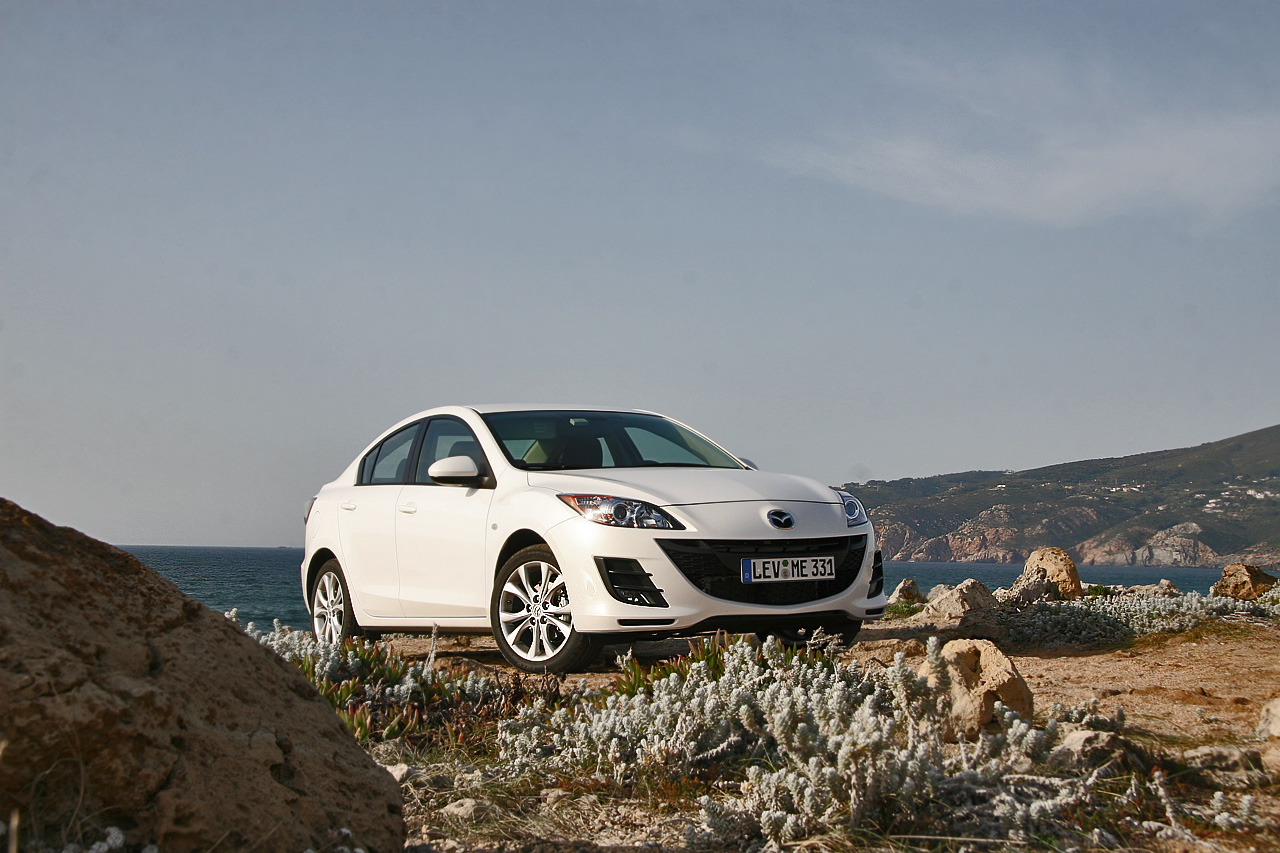 |
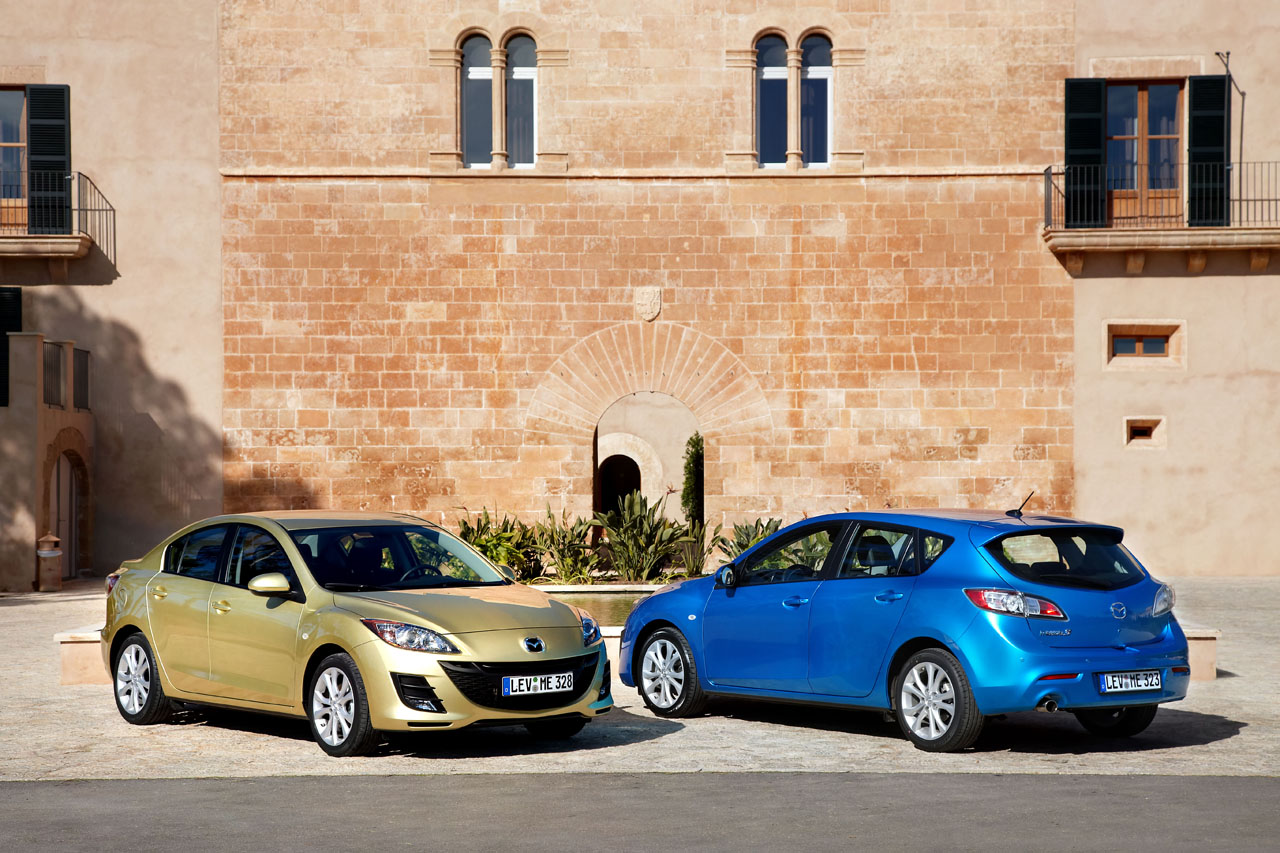
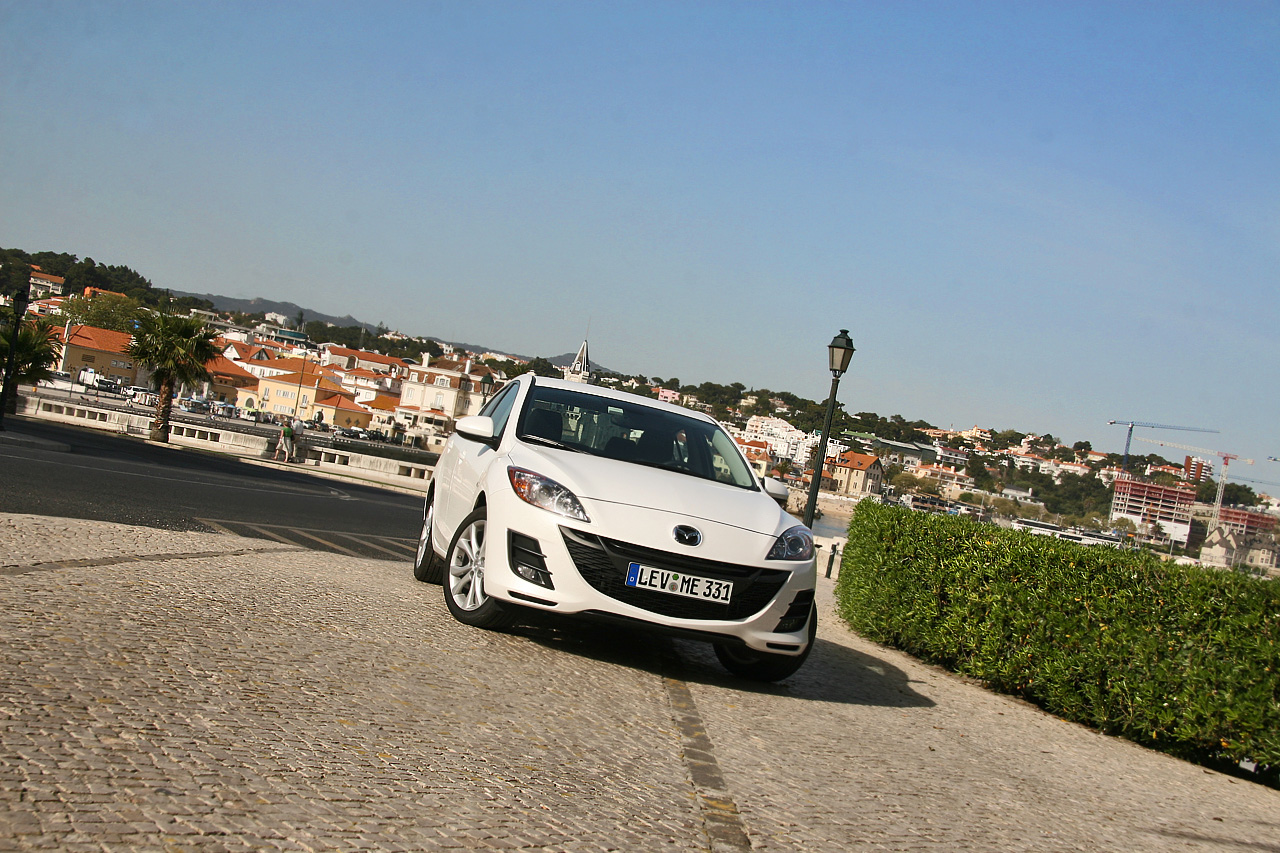
| Compared to the previous version, the new "three" has become noticeably more expressive. The front bumper is combined with the radiator grille, which has a black predatory air intake mouth, and fog lights are installed on either side of it. |
The first Mazda3 debuted in 2003 and, thanks to its memorable appearance and daring character, quickly became the best-selling model of the Japanese brand. Global sales have already exceeded two million units, with 460,000 of them in Europe. It's nice that in the European sales ranking, Russia leads in Mazda3 sales, ahead of Germany and the UK, and in our country, the sedan with a 1.6-liter engine is most often bought.
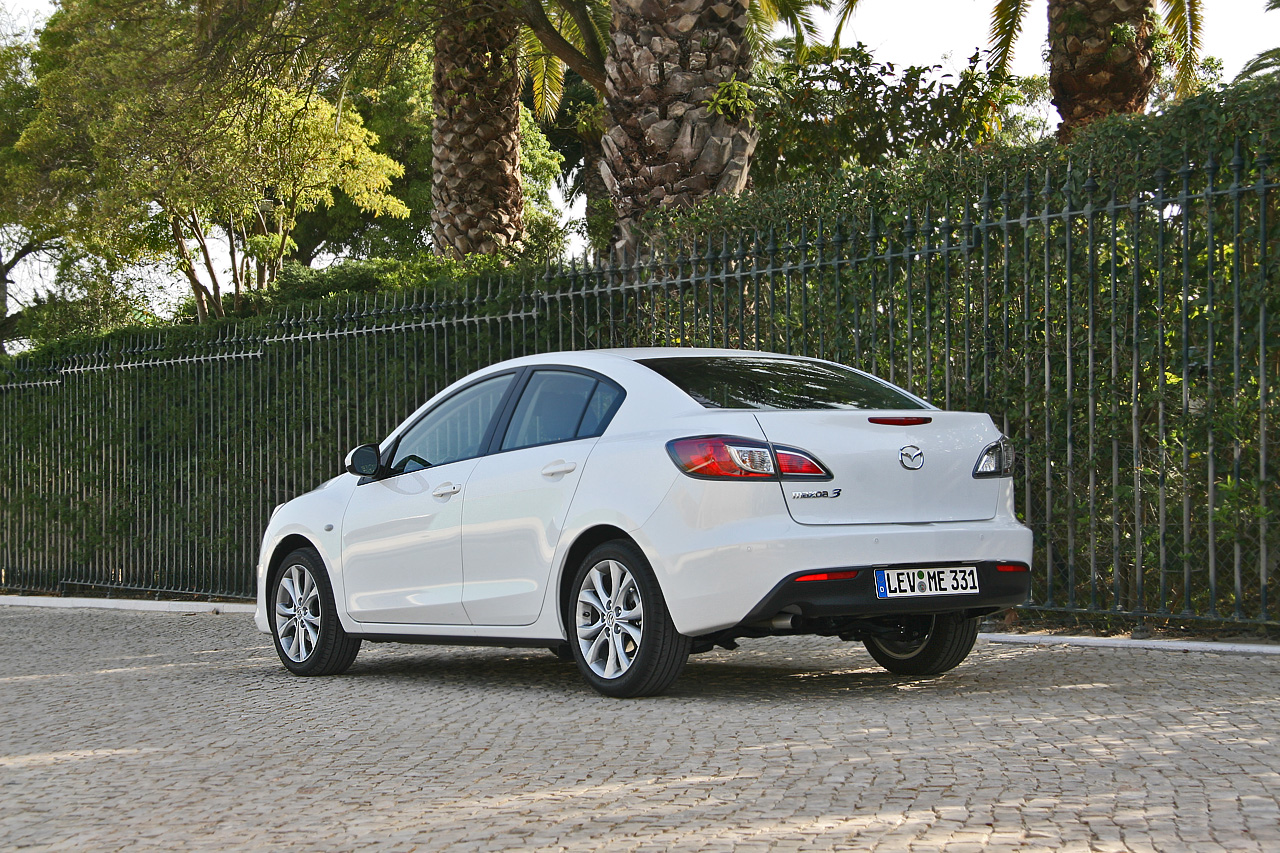 |
| The rear lights of the sedan echo the older Mazda6 model. |
The second generation Mazda3 has changed its design. Without losing its individuality, the "matryoshka" has become a mini-copy of the Mazda6. Compared to the previous version, the new model looks more stylish and expressive. The front bumper transitions into the grille, where a black air intake mouth with fog lights on the edges is displayed, and the slanting headlights extending onto the fenders also reference the "six." The fenders with sculpted wheel arches are a fresh Zoom-Zoom signature, familiar from the Mazda RX-8, CX-7, and Mazda2. Plus, the car has grown: the hatchback has lengthened by 45 mm, and the sedan by twice as much, although the wheelbase remains unchanged.
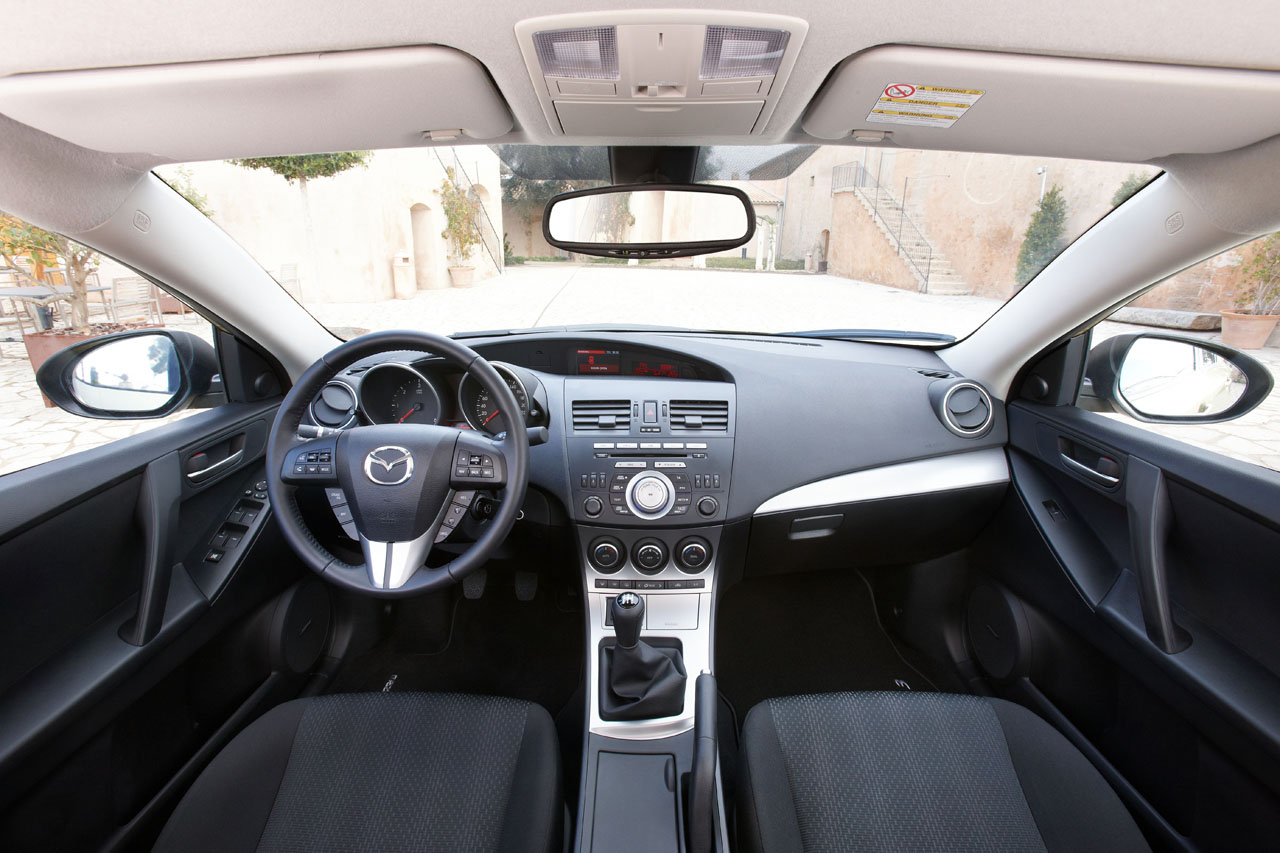 |
| The main plus of the updated "matryoshka" is the interior. And it's not so much about the design as about the quality of assembly and trim materials. Perhaps no Japanese competitor can now compare with the Mazda3. |
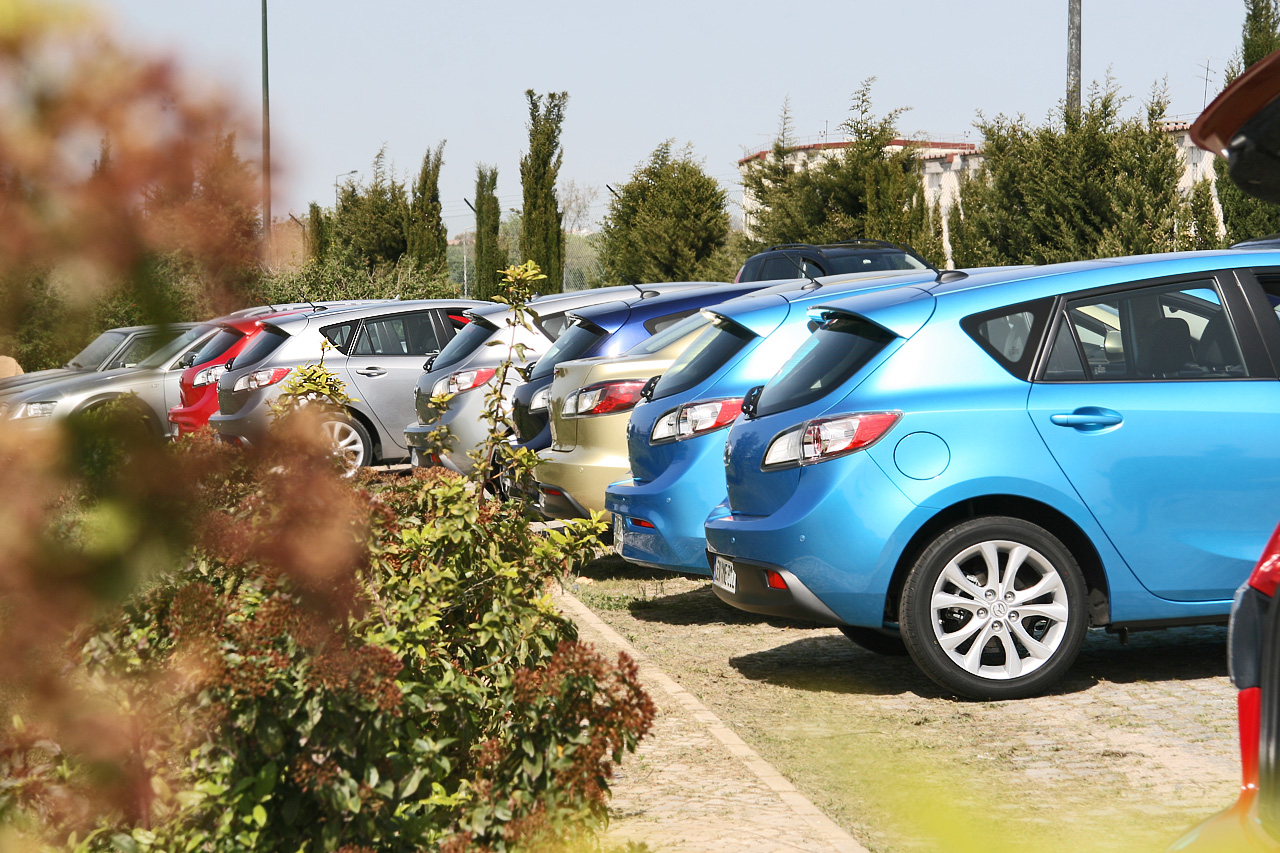
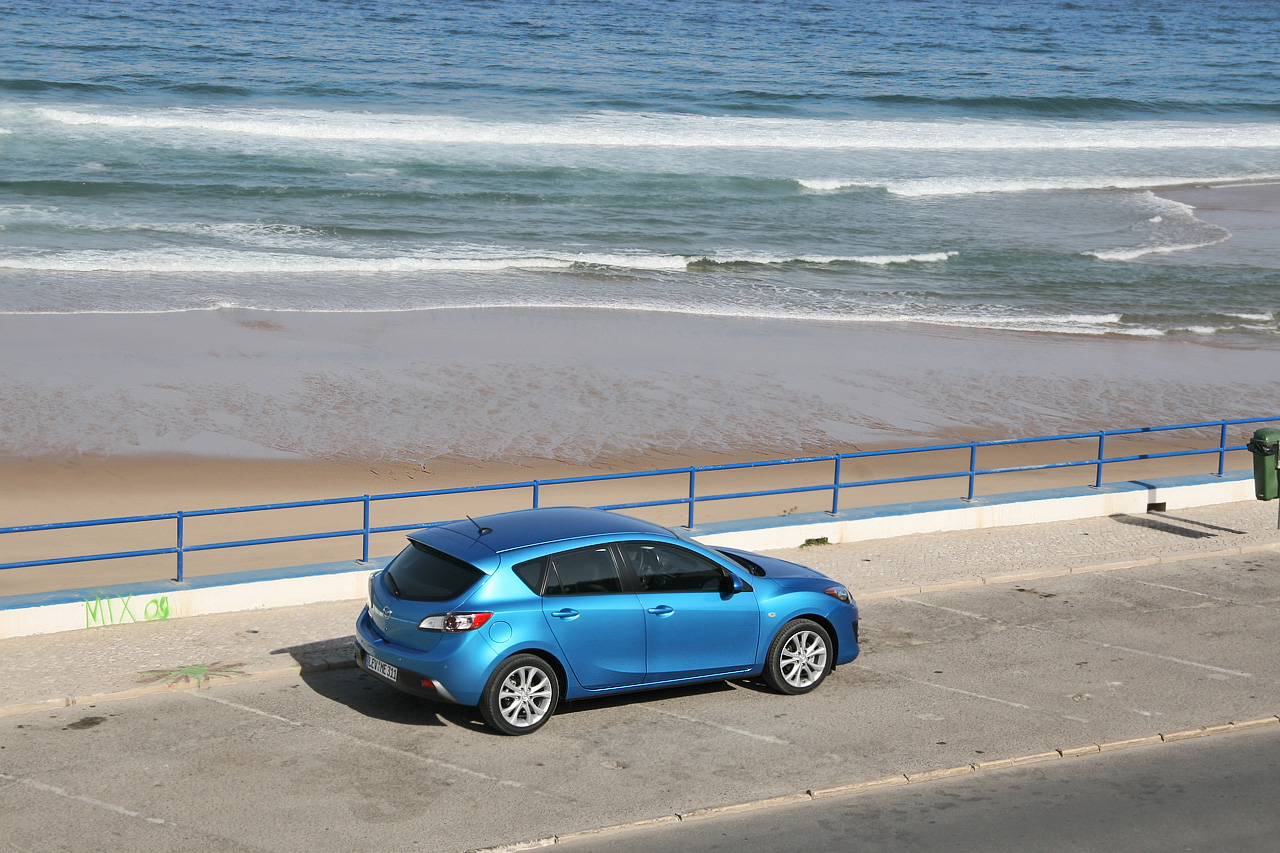
The concave side panels, high beltline, differently styled rear pillars, flat roof, and spoiler at the rear make the hatchback look energetic. The sedan looks calmer: the massive rear, spoiler on the trunk lid, and smooth roof line emphasize compactness and coupe-like styling, adding charm and sportiness. The Mazda3 also gained five new colors, among which the luxurious Olympic Gold Metallic stands out.
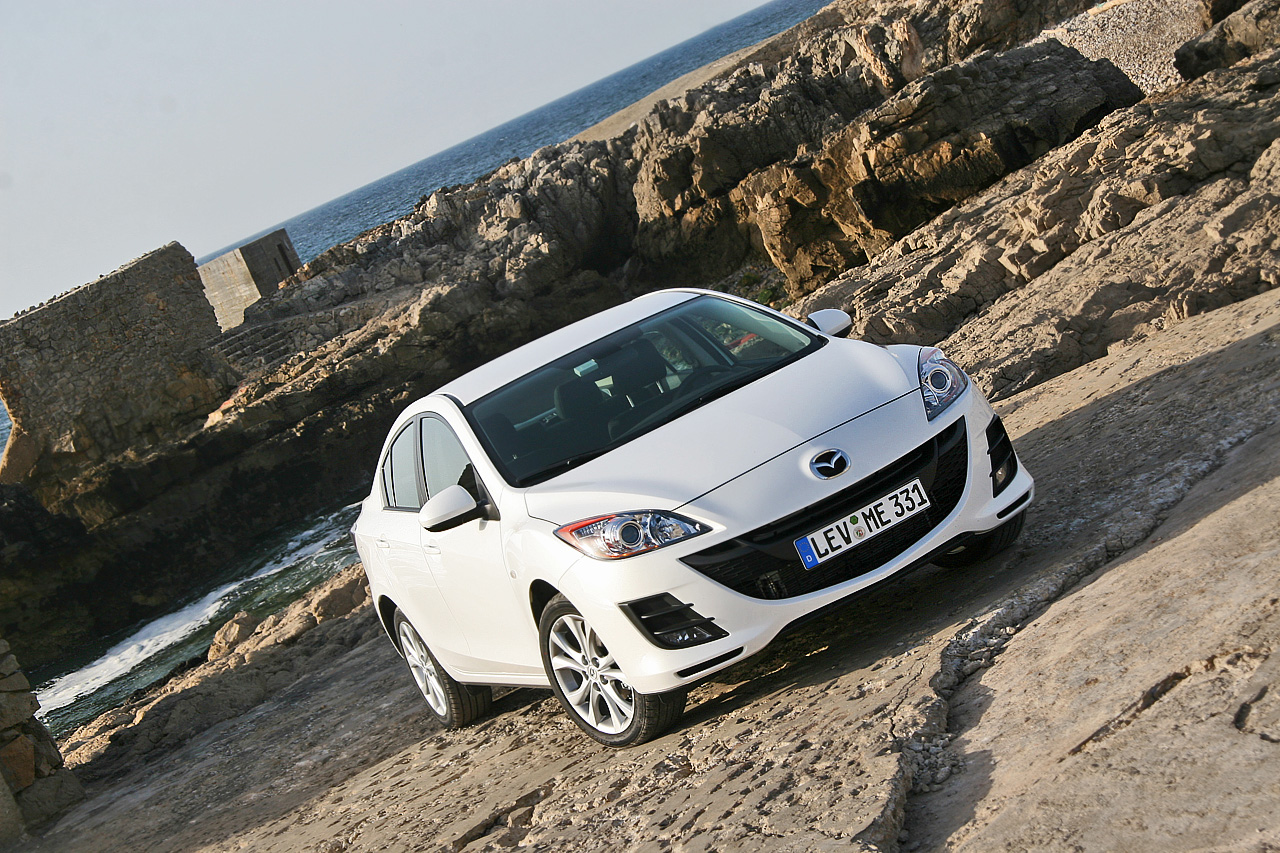 |
| The car has grown: the hatchback's length increased by 45 mm, the sedan by twice as much, while the wheelbase remains unchanged. |
For driving enthusiasts, Mazda offers a new Sports Appearance Package (SAP). It includes a lowered front bumper, black metallic grille, sporty fog lights, adaptive bi-xenon headlights with a swivel mechanism and boomerang-shaped daytime running lights (optional), LED rear lights, side sills, and 17-inch alloy wheels. The SAP trim may vary across different markets, so the Russian version is still in question.
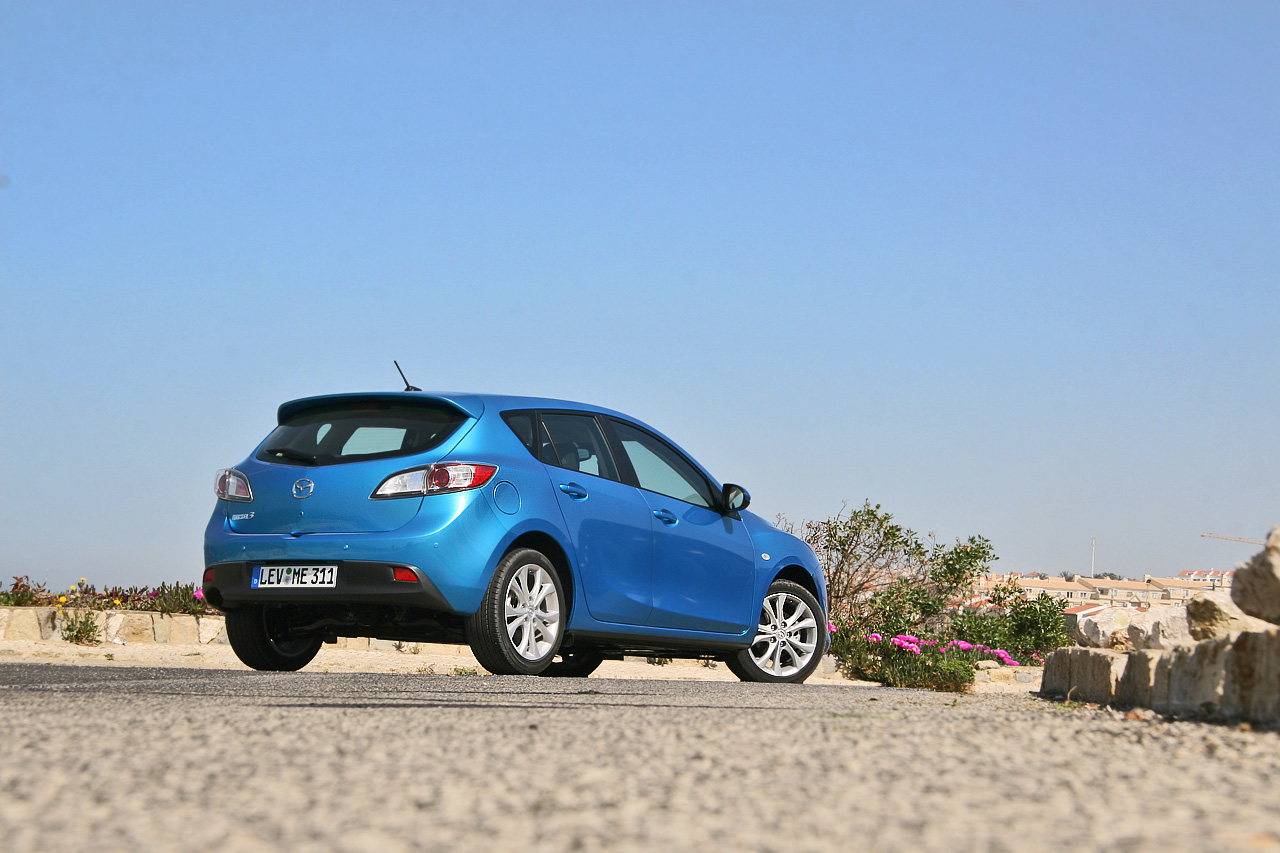 |
| Concave side panels, raised beltline, new design of rear pillars, flat roof, and spoiler give the new hatchback an energetic look. |
The most pleasant thing in the new "matryoshka" is the interior. And here, it's not the design that matters more (with the previous version, it was fine), but the quality of execution and trim materials. Perhaps no Japanese rival can now compete with the Mazda3. The plastic in the cabin is almost everywhere soft and pleasant to the touch. The steering wheel is stylish, with convenient buttons for controlling audio and navigation, and fits perfectly in your hands. The instruments with two deep wells and red backlighting are perfectly readable at any time. The only inconvenience is the armrest, which is too far from the gear lever. Otherwise, the ergonomics of the new Mazda3 are top-notch. Although Mazda officials say they've lengthened the seat cushion and backrest, the cushion seemed a bit short, especially for tall drivers. However, the front seats have a good profile and good lateral support — you won't get tired on a long journey.
 |
| Deliveries of the new generation Mazda3 to Russia will start in August this year. Prices have not yet been announced; most likely, they will be announced at the Russian premiere of the "three," which should be expected closer to summer. |
The manual gearbox lever has been lengthened and slightly tilted toward the driver — it's now more convenient to use. Under the stylish S-shaped visor of the front panel, there's a small color navigation screen and a monochrome display with information about radio stations and climate settings. Below on the center console is the audio system and climate control unit. There's more space in the back, but if tall passengers sit in front, then in the back, knees will press against the front seatbacks.
 |
| For European journalists, diesel "threes" were prepared with a new 2.2-liter MZR-CD diesel engine, which, depending on the version, produces 150 or 185 hp. But cars on heavy fuel will not be supplied to Russia. |
Finally, the second generation Mazda3 has gotten rid of its main drawback — weak sound insulation. The cabin of the "matryoshka" has become noticeably quieter. Mazda representatives say the figure has improved by 11%, although by feel, the difference is many times greater. The doors close with a noble "Germanic thud," and the horn now sounds European.
 |
| All cars presented in Portugal met Euro-5 environmental standards, while Russia will receive the previous engines with Euro-4. |
To get acquainted with the new model, we were provided with sedans and hatchbacks with two types of gasoline engines: a 1.6-liter unit with 105 hp paired with a five-speed manual and a two-liter engine with 150 hp, which works in conjunction with a new five-speed automatic. European journalists also got diesel versions with a completely fresh 2.2-liter MZR-CD engine, producing 150 or 185 hp depending on the version. But, alas, such modifications will not reach our market — due to the terrible quality of Russian fuel. It's a pity, because the traction and torque of 400 Nm of this diesel are simply fantastic, and in many ways it surpasses the gasoline versions.
 |
| Finally, the new generation Mazda3 has gotten rid of its main drawback – poor sound insulation. Now the cabin of the "matryoshka" has become much quieter. The doors now close with a noble "German thud", and even the horn now sounds European. |
All cars brought to Portugal meet Euro-5 standards, but Russia will receive the previous powertrains of Euro-4 standard. The younger 1.6-liter engine with 105 horsepower does not show much enthusiasm. On every incline, you have to shift to a lower gear. Liveliness appears only after 3500–4000 rpm. If you constantly keep the engine in this range, the "matryoshka" becomes quite nimble and handles overtaking and mountain serpentines without problems. Apparently, low-end torque has been sacrificed to European environmental standards, which are getting stricter every year. The manual gearbox pleases with precise gear selection, short throw, and optimal effort. By the way, in Russia, the 1.6-liter engine can also be ordered with the old four-speed automatic transmission.
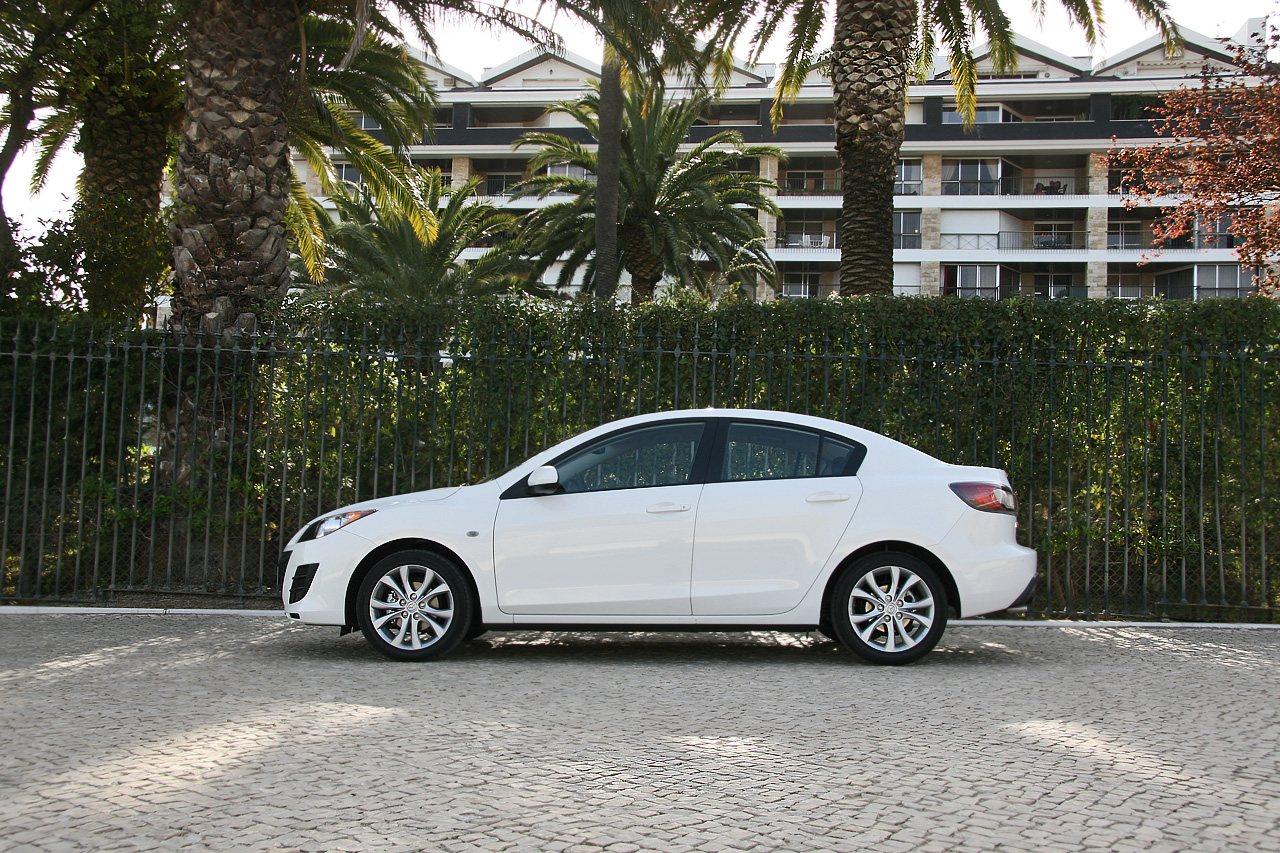 |
| The sedan's silhouette is more restrained: a high rear end, a spoiler on the trunk lid, and a rounded roofline emphasize the car's compactness and its resemblance to a coupe, while simultaneously giving it sophistication and sportiness. |
The two-liter MZR with variable valve timing, developing 150 hp, feels more spirited, but here's the problem: there were no cars with a manual transmission in the test, and the new "automatic" clearly holds the engine back. Therefore, impressions of this version remained mixed. The engine clearly has great potential, but the gearbox does not allow it to be fully realized — hence the delays in downshifting and dips in acceleration dynamics. The previous generation car with the same engine and six-speed manual was significantly more responsive.
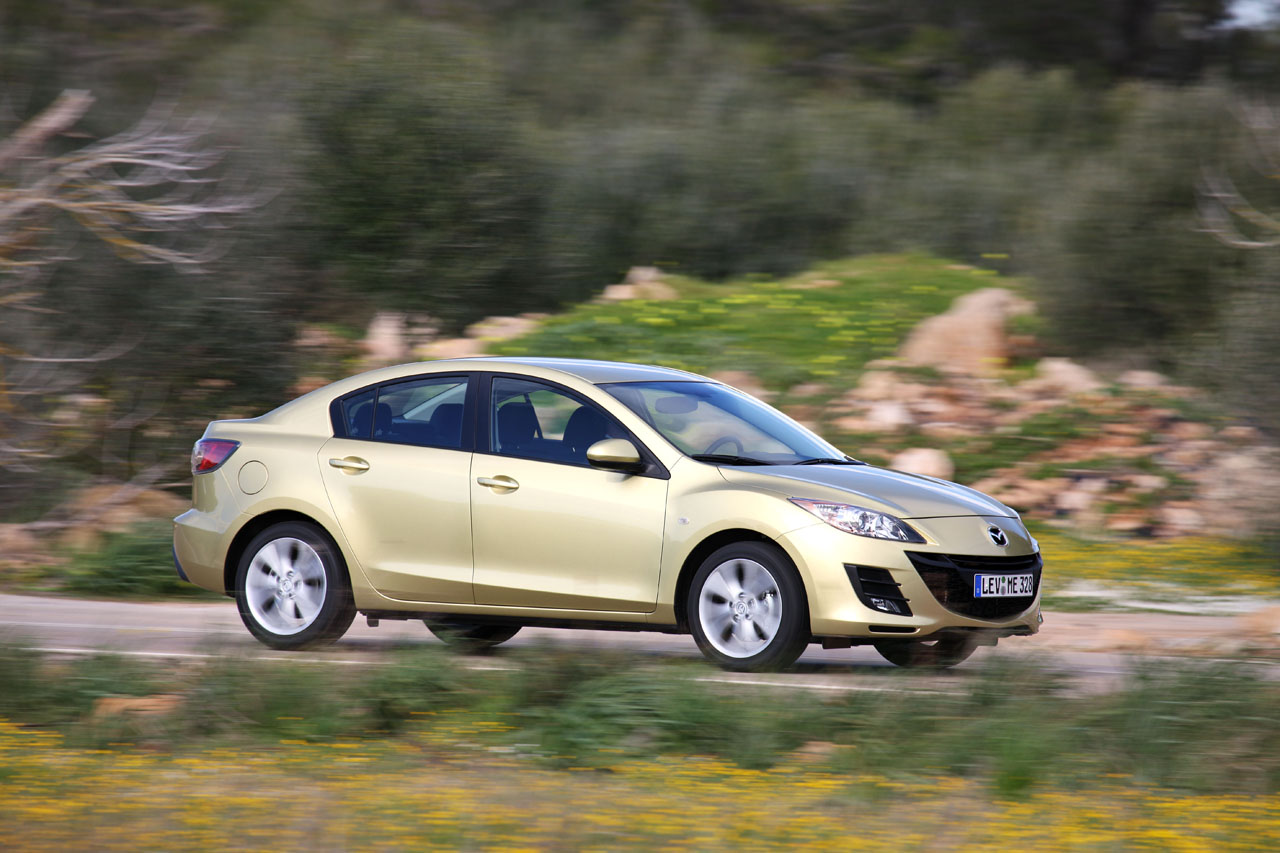 |
| The Mazda3 received five new colors, including the stunning Olympic Gold Metallic. |
The front suspension was reinforced by engineers with a more massive subframe and arms, and the stabilizer mounting points were also slightly spread apart. As a result, the Mazda3 has become even more composed in corners. At the same time, the "matryoshka" has noticeably gained in comfort, and the handling has become more solid and mature. In a word, the model has grown up and become more serious. Otherwise, the previous virtues remain: confident behavior on a straight line, minimal body roll, and almost exemplary trajectory in a turn. The steering is sharp, with a clear center and moderate weight, and feedback is excellent. The brakes on the version with the 1.6-liter engine caused no complaints. But on the more powerful gasoline modification, the brake pedal seemed a bit mushy, which loses informativeness.
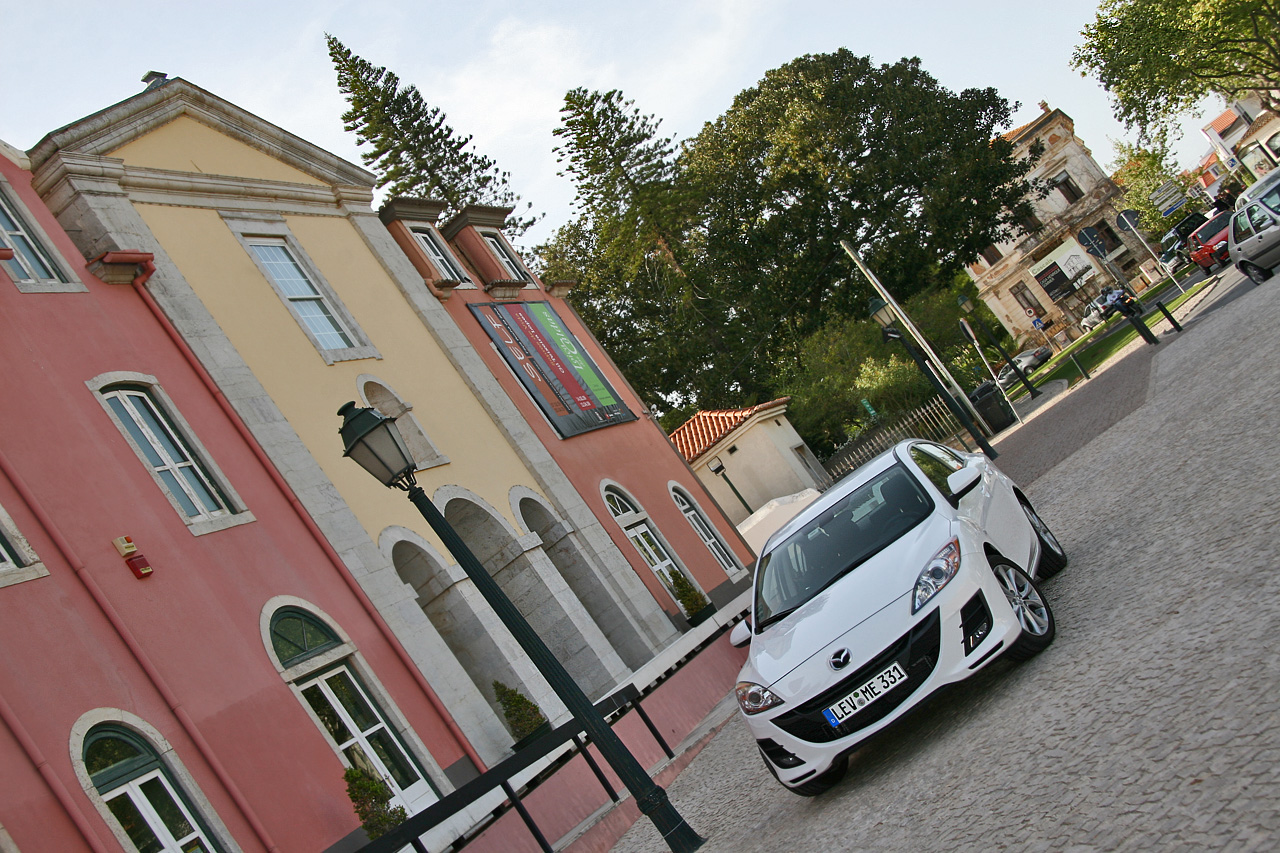 |
| The handling of the new Mazda3 is still the same stability on a straight line, minimal body roll, and almost ideal behavior in a turn. The steering wheel with a clear center is sharp and moderately heavy, and feedback is top-notch. |
Sales of the new generation Mazda3 in Russia are scheduled to start in August this year. Prices are still kept secret — most likely, they will be announced closer to summer, during the Russian premiere of the model.
Now the "three" has four trim levels. The base Direct trim was created specifically for our market and is anti-crisis in nature: it includes ABS, brake force distribution system, stability control system, and six airbags. Plus — front electric windows, central locking, and a multifunction display. Air conditioning will be offered for an additional cost.
 |
| There are now four trim levels: Direct (only for the Russian market), Touring, Touring+, and Sport. The first of them, according to representatives of Mazda Motor Rus, is anti-crisis. |
The Touring trim already boasts air conditioning, heated seats, full power accessories, and a leather steering wheel. The Touring+ version adds dual-zone climate control, rear parking sensors, and 16-inch alloy wheels.
The top Sport trim stands out with the SAP aerodynamic body kit, heated windshield, tinted rear windows, adaptive bi-xenon headlights, rain sensor, and leather interior. For Sport and Touring+, a navigation system and a blind spot monitoring system similar to Volvo's BLIS are available as options. Navigation will be available on the Russian market, and it will be Russified. As for the appearance of blind spot monitoring, it is still in question.
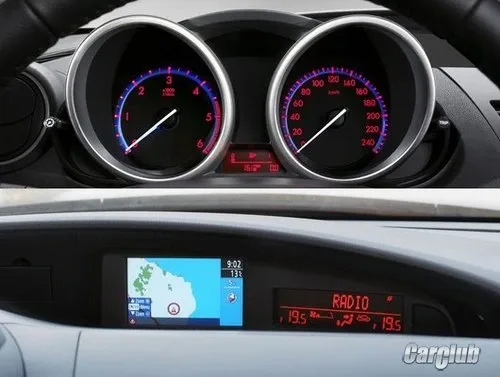 |
| The readings of the instrument panel with two deep wells and scarlet backlighting are perfectly readable at any time of day. As for navigation, it will be available on the Russian market, and it will be Russified. The appearance of blind spot monitoring is in question. |
The developers of the new Mazda3 managed to achieve a rare result that not every automaker can pull off. They managed to clean out all the obvious flaws of the previous "matryoshka" while preserving the brand's character and enhancing the car's strengths. For me, the new "three" has become the embodiment of true progress.
Ruslan Galimov