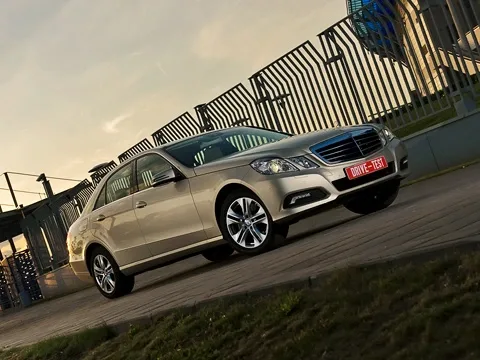
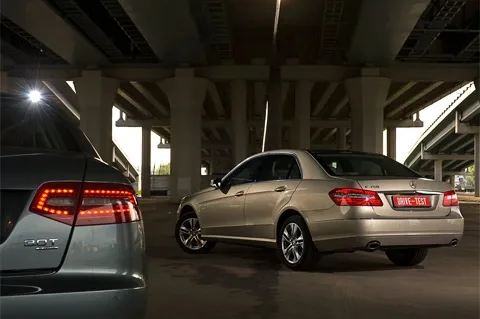
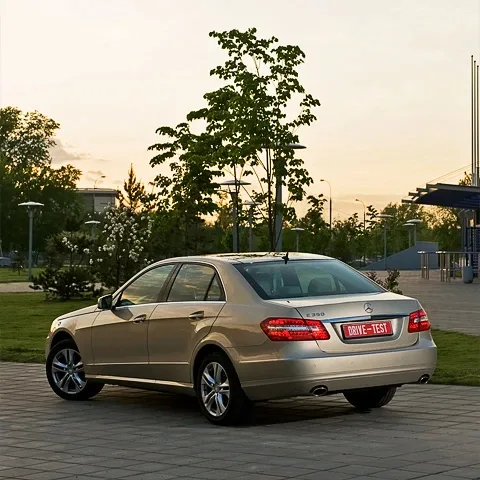
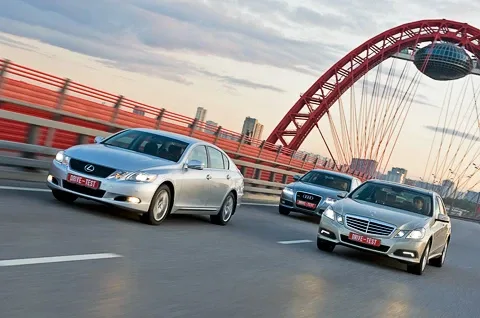
Mercedes representatives assure that the main demand among Russian buyers will not be for the six-cylinder versions of the E-Class, but for more affordable modifications with a new turbocharged 1.8-liter engine. However, our choice fell on the E 350 (3.5 L, 272 hp, 350 N•m) with the seven-speed automatic transmission 7G-Tronic. Firstly, this option occupies an optimal position in the line of gasoline engines. And secondly, sales of four-cylinder cars have not even started yet.
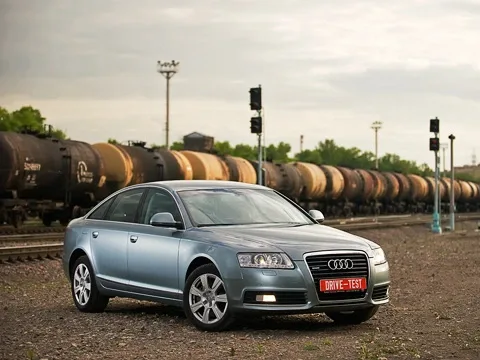
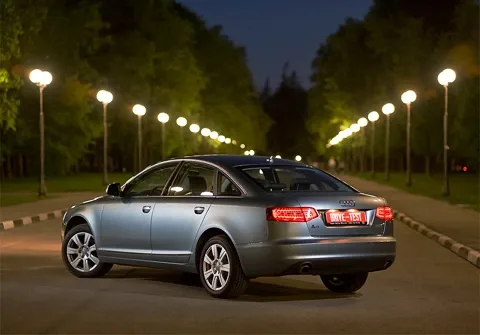
The Audi A6 sedan recently underwent a facelift... hmm, not exactly a face-lift, but rather a rear-end lift (although the front also received a dose of stylish LED daytime running lights and a fresh bumper). But far more significant was the replacement of the "heart." We're talking about the 3.0 TFSI engine (290 hp, 420 N•m) with direct injection and a supercharger. With such an engine, this "six" can outplay any rival!
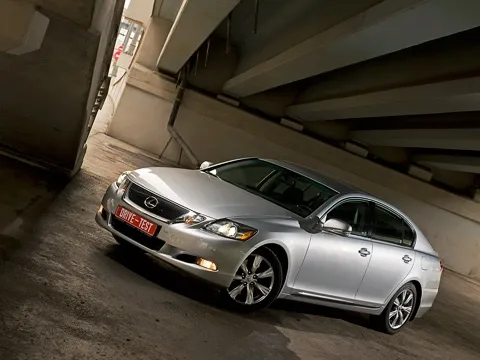
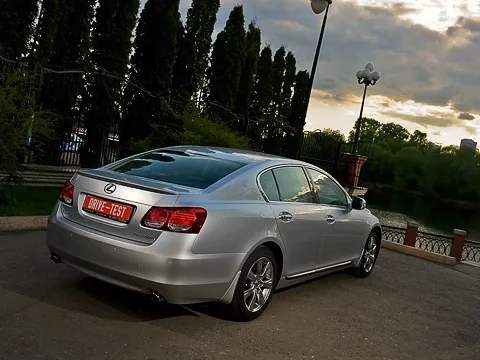
The Lexus GS 300 has also undergone an update, but externally it is almost impossible to distinguish it from the pre-restyling version. Perhaps only with spectral analysis. And Lexus did not acquire a new six-cylinder engine either. In the US, the GS got a 3.5-liter engine paired with an eight-speed automatic. We got the old three-liter engine (249 hp, 310 N•m) and the old six-speed gearbox. Although six is also a good number.
Just a couple of years ago, the interior of the Audi A6 was considered unsurpassed in design, ergonomics, and build quality. Today the situation is no longer so clear-cut — Mercedes has set a new benchmark. The MMI interface, for example, already lags behind the Mercedes Comand system in graphics, speed, and usability. Why do you have to rotate the perforated knob clockwise and then counterclockwise to scroll down the menu? Finding a comfortable driving position in the Audi is also harder than in the Mercedes. The adjustment ranges are more modest, and the seats are less comfortable. Although the difference is only in details.
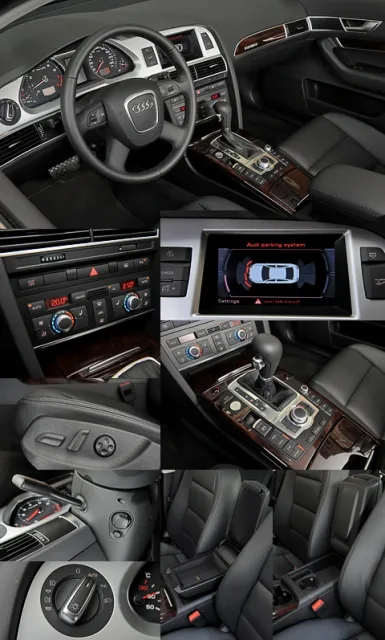
- The Audi interior "by de Silva" has already become the benchmark in the class. Sitting behind the wheel is comfortable, but the steering wheel itself is a bit large.
- The climate control works perfectly, as in the other cars.
- The MMI system is no longer a leader against the backdrop of modern competitor interfaces.
- Visibility is the best among the test participants.
Lexus does not participate in this debate in principle. No, no, not because it is weak: after all, it is not an Infiniti with 80s-style buttons and auto mode only for one window regulator. There are no serious complaints about the materials, buttons, knobs, or seating position in the GS 300. At the same time, everything is significantly simpler and somehow more Japanese. But nitpicking about the inconvenient retractable remote control to the left of the steering wheel or the intricate multimedia system with a touchscreen is like criticizing Citroen's digital speedometers. It's a "feature"...
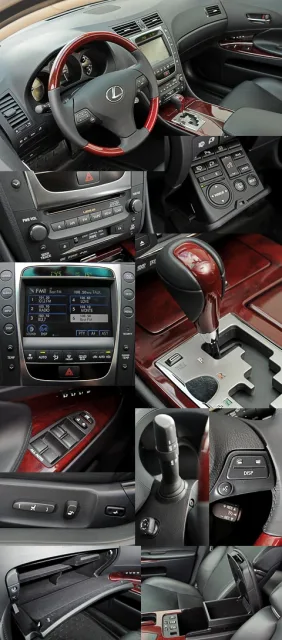
- The Lexus GS 300 is the simplest and at the same time the most richly equipped. But the seating position is not optimal, and the wooden steering wheel is an acquired taste.
- The onboard multimedia system is completely unlike the MMI in the Audi or the Mercedes Comand APS. The menu is confusing, but you can get used to it.
- Visibility is almost at the level of the Audi, but through the interior mirror you can see a little.
Lexus is still the leader in the number of gadgets per gram of curb weight: it has adaptive suspension, ventilated front seats, navigation, and a Mark Levinson audio system with five thousand speakers. A rear-view camera and electric steering column adjustment are self-evident things. Yes, all this can also be in the E-Class and the A6, but the Lexus price tag, even in the "all-inclusive" trim, will not cause a heart attack.
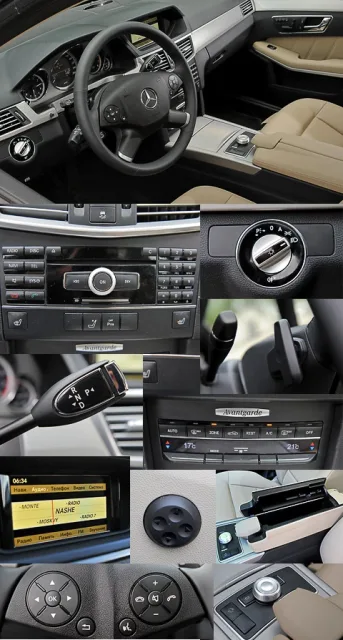
- The E-Class is good both in material quality and seating comfort. The floor-mounted accelerator pedal with a long travel deserves special praise, allowing very precise acceleration dosing. But the steering wheel, like in the Audi, is a bit large.
- Our E-Class has optional advanced climate control with several "visibility" modes for airflow.
- The Comand APS display is brighter and more contrasty than in the other cars, although there is no force limitation on the knob as in the S-Class. And it is not aluminum but plastic.
- Visibility could be called good if not for the too-small side mirrors.
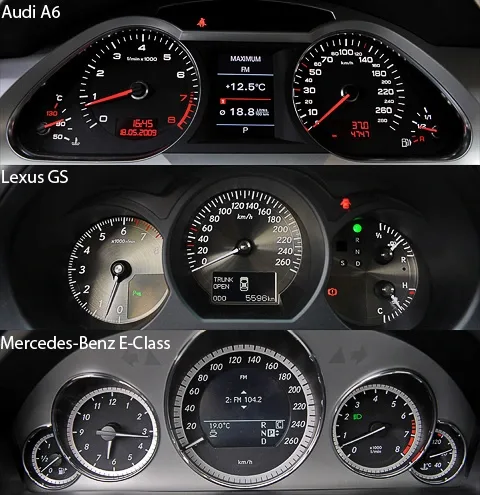
All the instruments are both beautiful and perfectly readable.
Let's evaluate the Audi first. I press the gas, and all that remains for the other test participants is to watch the rapidly receding rear of the "six." What an angry engine! From a standstill, the A6 lunges even more lively than the "supermodel" RS6. And although the subsequent acceleration is not so impressive, the speedometer needle moves around the dial with such pressure as if the Holy Grail awaits it at the end of the path. The "automatic" quickly shifts gears, as if a piece of the Grail will also go to it. An excellent gearbox, especially since in calm driving mode it works adequately, only occasionally stumbling and allowing minor jerks.
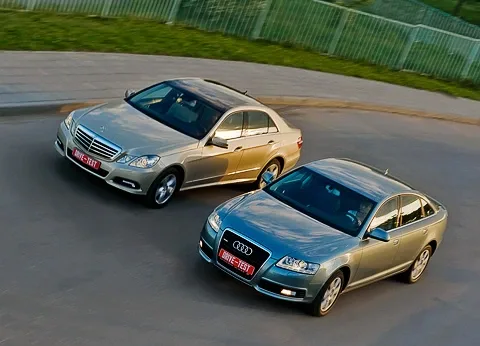
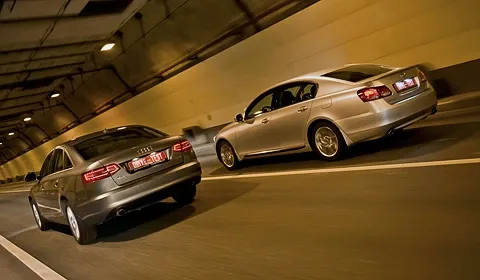
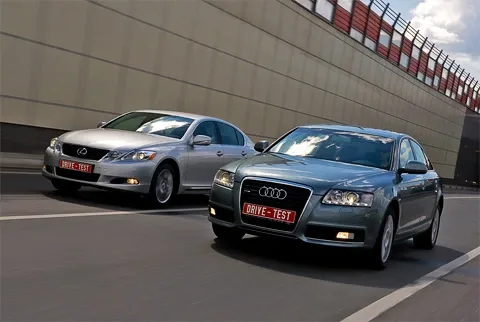
The Audi's powerful engine helps it easily overtake the Mercedes...
The less powerful E-Class loses to the Audi in dynamics. But it loses with dignity. The gap from the A6 is quite small. From the driver's seat, it seems that the acceleration intensity is about one and a half times slower — the sensations are so muted. There are no jerks when shifting gears even with "pedal to the metal." And for ordinary driving without antics, the 7G-Tronic gearbox is the ideal of smoothness.
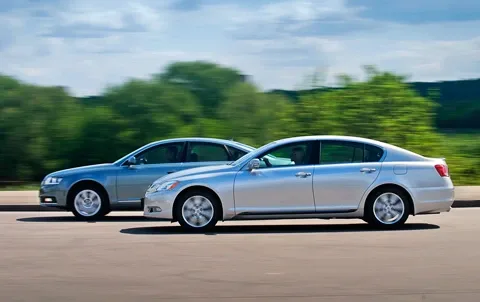
...and the Lexus — to tear it to pieces.
If the Mercedes accelerates smoothly, then in the Lexus, when starting from a traffic light, you feel like you forgot to move the gear selector to "drive." You press the gas, the Mercedes and Audi sail off to the horizon to sort things out, while the Lexus just starts moving. Slowly.
However, it is the Lexus with its relatively weak engine and thoughtful gearbox that is the main teleporter. Not because it is fast, but because you don't remember the road. Only how you got into the car, how you got out of it, and perhaps what music was playing remain in memory: the sound quality of the "Mark Levinson" in the Lexus puts the Audi and Mercedes audio systems on both shoulder blades. Although Lexus and the E-Class are both sounded by the same corporation, Harman International.
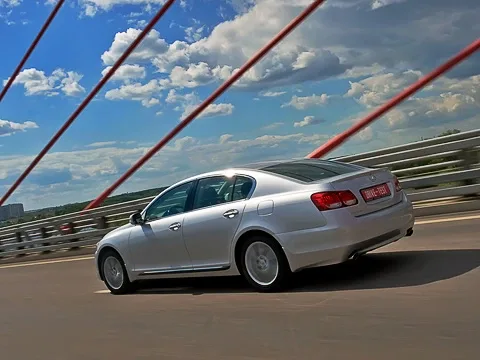
The Lexus GS 300, like the other test participants, holds a high-speed straight line perfectly, but its suspension, perhaps, absorbs impacts worse than anyone. It gets broken through from time to time. By the way, the shock absorber modes practically do not change the character of the car. It is very quiet in it!
The Lexus is gentle and friendly. The gearbox works almost as smoothly as the Mercedes one. The ride smoothness is good, although not flawless: for example, when driving over joints, the suspension allows small repeated oscillations. The sound of the engine can only be discerned with a hearing aid. The Lexus is the quietest in the city. However, on the highway, the Mercedes-Benz is no worse, but the Audi is noisier in all modes.
However, the steering wheel in the Lexus is noticeably heavier than in the Mercedes and especially in the Audi. At the same time, the background effort is absolutely useless: for leisurely driving, sensitivity and information are enough, but you enter a corner faster and lose confidence. The "Japanese" reacts to the driver's actions with noticeable delays, and in corners it rolls considerably. Although the car can turn, the chassis has nowhere to unfold. Any attempts to take corners in a sharp manner will be harshly suppressed by the stability control system. The Lexus is a dictator, and it imposes calm driving.
Under the driver's right hand is a handful of buttons responsible for the modes of the stability control system, transmission, and suspension, but there is no use from them. The car will remain femininely smooth in any case. Therefore, the Japanese did the right thing by covering all this heresy with a sliding central armrest. It is unnecessary.
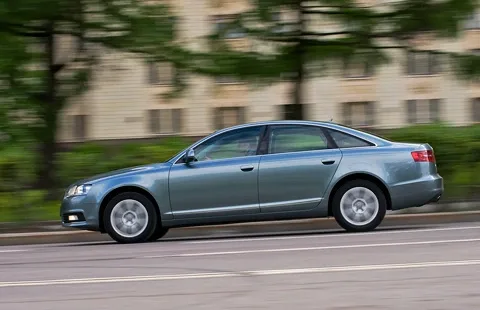
On the highway and on fast bends, the A6 confidently holds the asphalt, but passengers may get motion sickness. And it is a bit noisy here.
The character of the Audi is completely different. Here the steering wheel is the lightest and at the same time the most responsive and informative. The A6 dives into corners eagerly, probably thinking it's half a ton lighter than the Lexus! And even in full combat readiness, the stability control allows slight slides, intervening only when necessary. But the handling is still tuned for safety: you can't call it thrilling.
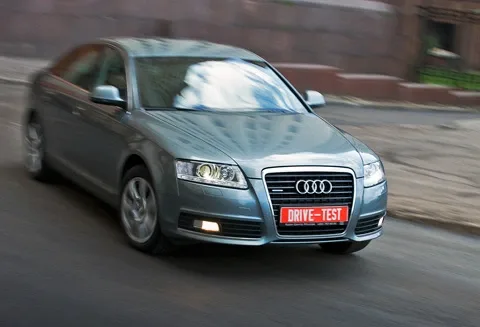
The Audi obeys the steering wheel like a regular golf-class hatchback — easily and effortlessly. Moreover, understeer here is much less pronounced than, say, in the RS6.
The biggest complaint about the Audi is ride comfort. On asphalt waves, the body noticeably rocks, and in corners there are noticeable rolls and diagonal pitching. The suspension certainly elastically swallows any road imperfections, but I wouldn't go on a long trip in this car: such shaking can exhaust passengers. It's a pity, because the engine here is magnificent, and the automatic transmission is simply a firecracker.
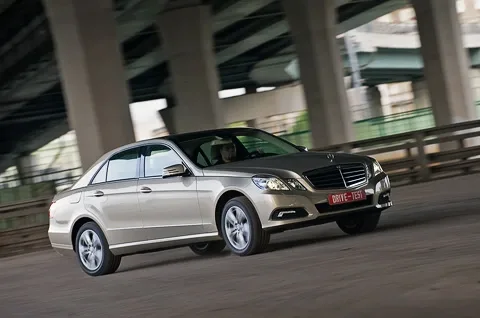
The Mercedes is a true champion of long-distance travel. It's quiet enough, holds its course perfectly, and is forgiving of road surface conditions.
But the stiffest, surprisingly, turned out to be the Mercedes-Benz, which we again got in the top Avantgarde version with 17-inch wheels instead of the standard 16-inch ones. However, its stiffness is not annoying at all. Small bumps could be absorbed a bit softer, but larger imperfections the E-Class skips over as if they don't exist: you can feel the work of the "two-mode" shock absorbers. Moreover, the Mercedes has the highest energy capacity of the suspension and minimal pitching — both on straights and in corners.
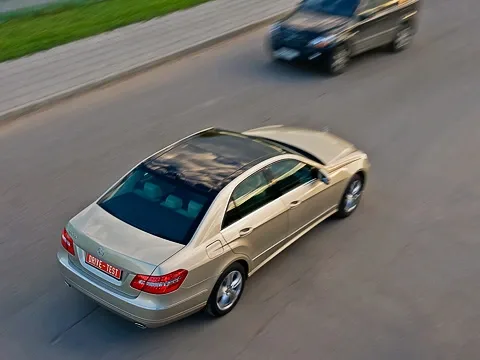
In calm mode, the E-Class may seem stately, but it actually has the most thrilling handling: just lift off the throttle — the car smoothly goes into a slide, and the stability control intervenes only when you start steering actively. By the way, the Mercedes also has the widest tires: 245/45 R17 versus 225/50 R17 for the Audi and Lexus.
It's also the most sporty. The Mercedes-Benz itself doesn't provoke speed, rather the opposite. The accelerator pedal with a long travel is pressed to the floor only when necessary. But do that a couple of times — and the E-Class hooks you: every second corner you take in a controlled drift! The handling of the Mercedes is almost neutral, and if you want sharpness (just turn off the safety electronics) — it appears immediately. If someone had told me a year ago that I'd be driving a regular E-Class like this, I'd have twirled my finger at my temple. But now everything has changed!
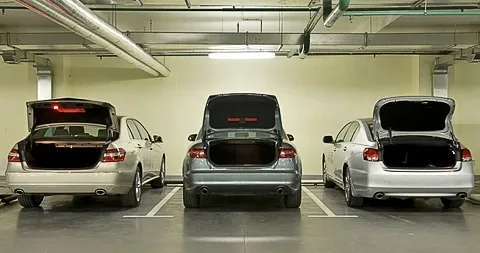
With such emotions, I don't want to tediously describe the trunks and legroom for rear passengers. See for yourself! We'll only note that the Mercedes, although not the largest in our trio, seemed to us to have the most versatile cargo and passenger capabilities. Especially since the comfort of rear passengers in the E-Class is taken care of by adaptive three-zone climate control, available for an extra charge. But in terms of fuel efficiency, the Audi's "supercharged" engine couldn't compete with the "E" and "GS".
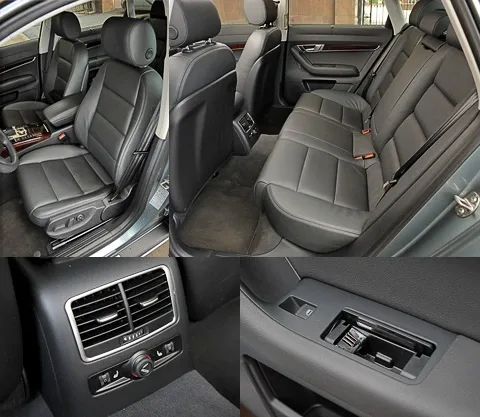
The base Audi seats are upholstered in slippery leather and are a bit flat. In the back, it's quite spacious: only the Mercedes-Benz can offer more room. There's also heating. But the central tunnel is quite high. In the doors — small pockets and an ashtray, and in the armrest there's a first-aid kit.
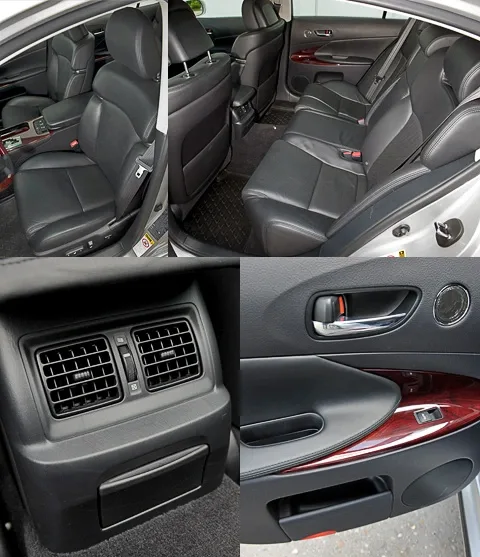
The Lexus has the softest front seats, and the backrest can't be adjusted almost vertically — you ride half-reclined. But there is ventilation. In the back, it's the tightest, especially the low ceiling. No climate control or heating for the rear seats.
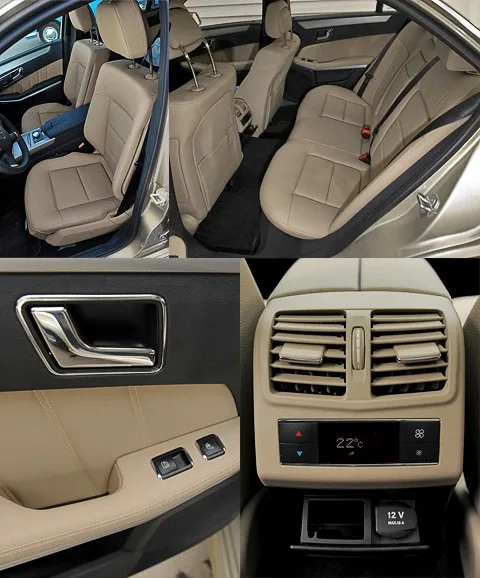
The Mercedes has the most comfortable front seats: moderately firm, quite grippy. For an extra charge, they get not only ventilation but also active side support with massage. In the back, it's the most spacious, and three people can sit quite comfortably — the central tunnel is low. Amenities for rear passengers include separate climate control, pockets, and an ashtray.
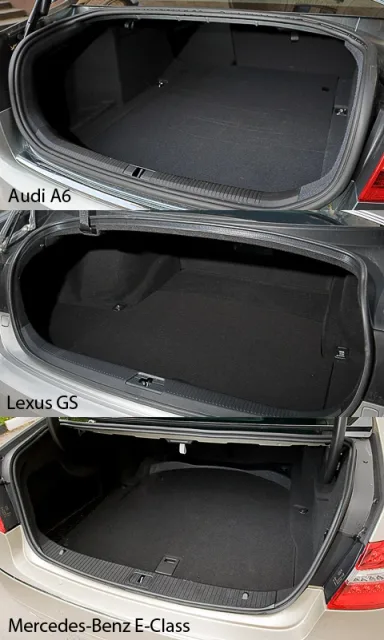
- The Audi's trunk is excellent: large and with the ability to fold the rear seatbacks. The only downside is the narrow opening.
- The Lexus has the most modest trunk with a small opening. The seatbacks don't fold, only a hatch for long items.
- The Mercedes's trunk is the leader in loading convenience (wide opening and the lowest loading height), but transformation is only for an extra charge.
Let's sum up. The Audi A6 sedan, although not young, is still in great shape. Its interior doesn't fade even next to the new E-Class (though it no longer makes such a vivid impression). The choice of equipment is the widest, and all the latest systems like active cruise control or lane-change assist, unlike the Mercedes, are available here as well. Practicality is in perfect order, and the new engine is simply delightful. But the chassis settings cause slight bewilderment. They would suit the base version with the 2.4 engine, but not this one.
The Lexus GS 300 is a coherent character. Even controlling the climate via the touchscreen doesn't annoy. And the interior with "grandmother's dresser" decor is more than appropriate here. The Lexus is pleasant and cozy, with a smooth ride and safe handling, excellent sound system, and the quietest engine. That's the main thing. As for everything else... In the GS 300, there are things to nitpick, but there are no contradictions. By the way, this also applies to its lower price compared to the others.
The Mercedes-Benz surprised us. It has the most spacious cabin and a convenient trunk, a smooth automatic transmission, and excellent directional stability. You can drive it relaxed, or you can push it hard without looking back, even though its engine isn't the liveliest. A worthy and the most balanced car. The winner? Yes.
However, the predictable victory of the Mercedes further fueled our desire to see the new BMW 5 Series as soon as possible. The points of contact between the previously non-intersecting lines, which were the E-Class and the 5 Series, have become too obvious. Previously, the balance of power in the duel of the two class leaders was clear. But the new "E" has invaded the Bavarians' territory — it's comfortable to live with in dynamics. In the fall, we'll find out what Munich will respond with. What if the "Five" also takes a step towards the Mercedes and becomes more comfortable? Then the "clone war," which ended in the executive class with the release of the new BMW 7 Series, will flare up in the E segment. For now, the Mercedes can relax — competitors have nothing to answer.
Specifications
Three business-class cars participated in the comparative test: Audi A6 3.0T, Lexus GS 300, and Mercedes E 350. All three have a four-door sedan body designed for five passengers. Dimensions differ noticeably: the Audi is the longest (4916 mm), the Mercedes is the tallest (1465 mm), and the Lexus is the most compact in all measurements (4850/1820/1430 mm). The curb weight of the Audi and Mercedes is almost the same — 1725 and 1735 kg respectively, while the Lexus is about 70 kg lighter. The trunk volume of the Audi and Mercedes is comparable — 546 and 540 liters, but the Lexus has a noticeably more modest 430 liters.
Under the hood, all have V-shaped six-cylinder engines with 24 valves, but the engines are structurally different. The Audi uses direct injection and a belt-driven Eaton TVS supercharger located in the V of the block with two intercoolers. This unit produces 290 hp at 4850–6800 rpm and 420 N•m in a wide range of 2500–4850 rpm. In a more powerful version, the same engine is installed in the Audi S4. The Lexus is content with an old naturally aspirated engine with port injection: 249 hp at 6200 rpm and 310 N•m at 3500 rpm. On other models of the company, this engine has already been replaced by a newer 3.5-liter unit. The Mercedes for Russia offers a well-known 3.5-liter engine with port injection — 272 hp and 350 N•m. In Europe, the E-Class is equipped with a new direct-injection CGI engine that is 20 hp more powerful.
All three cars are equipped with automatic transmissions, but only the Audi has all-wheel drive — the Lexus and Mercedes are rear-wheel drive. The Audi and Lexus have six-speed automatics, the Mercedes has a seven-speed one. The front suspension of the Audi and Lexus is double-wishbone, the Mercedes has McPherson. The rear multi-link schemes are the same for all, and the brakes are ventilated discs all around.
In terms of dynamics, the clear leader is Audi: acceleration to 100 km/h in 5.9 seconds and a top speed of 250 km/h. Mercedes is slightly slower — 6.5 seconds to 100 km/h, while Lexus noticeably lags with a result of 7.2 seconds and a limit of 240 km/h. Fuel consumption in the urban cycle is the most modest for Audi — 13.2 liters, for Mercedes — 13.8, for Lexus — 14.4. Outside the city, the figures are almost equal (7.1–7.3 l/100 km), and in the combined cycle the difference is also minimal: 9.4–9.8 liters. The fuel tank for Audi and Lexus is 70 liters, for Mercedes — 80.
The trim levels of the test cars differ noticeably. The Lexus in the base version already has a full set: stability control, tire pressure sensors, knee airbags, xenon headlights with adaptive lighting, front and rear parking sensors, power-adjustable seats with ventilation, leather interior, cruise control, keyless entry, rearview camera, navigation, adaptive suspension, and even a power trunk closer. Audi and Mercedes require extra payments for many items — for example, for xenon, leather, power seats, or navigation. Mercedes, however, stands out with the presence of a preventive safety system, heated rear seats and steering wheel — none of which the competitors have.
The prices of the base versions are close: Audi — 2,192,900 rubles, Lexus — 2,212,200, Mercedes — 2,239,600 rubles. The cost of the tested units: Audi — 2,477,386, Lexus — 2,450,202, Mercedes — 2,591,600 rubles.
Safety
The pre-restyling Audi A6 successfully passed Euro NCAP crash tests. For the protection of front occupants, it received 33 points and five stars, for children — 39 points and four stars. But this car is not too friendly to pedestrians: only three points and one star out of four possible.
The Lexus GS is also an excellent student: the same 33 points for front passenger safety. Child protection tests were not conducted, and for pedestrians the result is slightly better than Audi's — 4 points and the same one star.
The new E-Class has not yet been tested by Euro NCAP, but given that its predecessor received five stars, it is unlikely that the new model will be worse. Especially since the crash test rules have become stricter.
Behind the scenes
We had a hard time finding cars for the test. We never found the BMW 5 Series — neither at the representative office nor at dealers. There was also a hiccup with Lexus: the test GS had just been sold. The dealer "SP Business Car" on Rublyovka helped us out, for which we give special thanks.