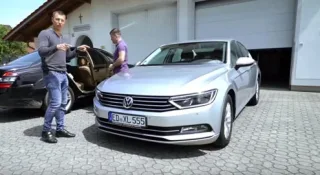
This material, like the previous one, was prepared with the assistance of a professional car selection consultant for orders from Germany, Denis Rem.
Having completed the stages of choosing and buying a car, we have to go through the not-so-simple customs clearance procedure. First of all, make a preliminary calculation of customs payments for your car. In this case, you will know in advance the almost exact amount that the chosen car will cost.
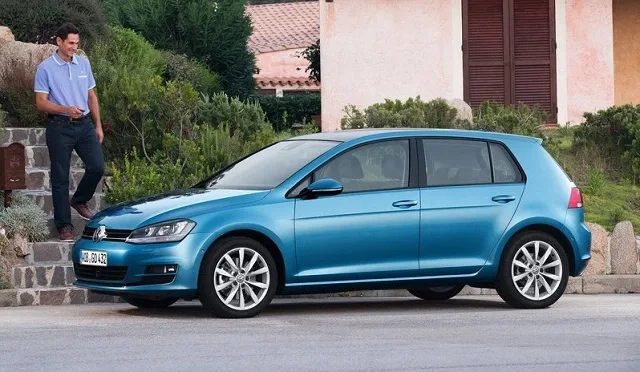
As an example, let's take a four-year-old Volkswagen Golf with a 1.6-liter diesel engine, worth 8 thousand euros.
The import duty of 10% of the price will be 800 euros. The reduced excise tax for a diesel engine with a volume of 1598 cc is approximately 523 euros (0.327 euros per 1 cc). To the resulting amount – 3,187 euros, you also need to add 20% VAT and 4% to the pension fund. Another about 100 euros will have to be paid for Ukrainian certification and brokerage services.
When filling out the customs declaration, do not forget to indicate in column 44 the code for the excise tax exemption – “172”. In addition, if the car was purchased from a legal entity, you can get the VAT back, but do not forget to agree on this with the seller in advance, otherwise it will be almost impossible to get a refund.
At customs, you may encounter a small “pitfall” of law No. 3251, namely the requirement to prove that the car was not manufactured in Russia. The catch is that almost all German automakers, starting this year, refuse to issue certificates of origin of goods, without which it is quite difficult to prove that the car is not Russian.

But if, when drawing up the purchase and sale agreement, you additionally indicate that the country of origin is Germany, then at many customs checkpoints this will be enough. If the customs officers turn out to be “uncooperative” and demand the notorious certificate, then Polish border offices can issue it for about 25 euros.
To simplify the customs clearance procedure, you can agree with the company from which you are buying the car to send you copies of the main documents for the right to own the car (Fahrzeugbrief and Fahrzeugschein), with which you can carry out preliminary customs clearance in your city in advance. After that, when you pick up your car in Germany, you will not need to waste time on customs clearance directly at the border; it will be enough to present the already prepared documents from your customs office.
You can avoid unnecessary problems when buying and clearing a car from Europe by contacting Denis Rem, who has 5 years of experience working with used cars and hundreds of carefully inspected models. To use Denis's services, call +4917623771650 or write to the email: [email protected]