

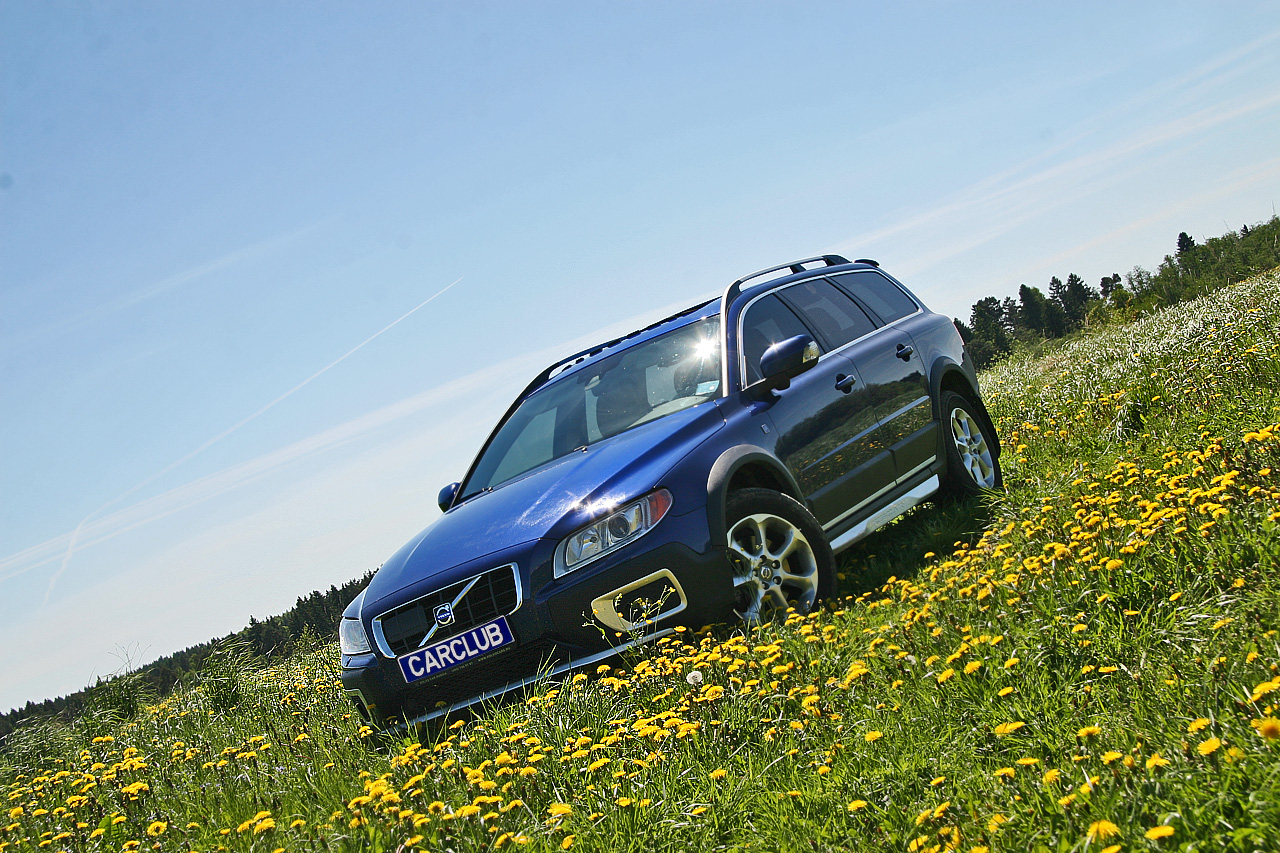
 A heavy station wagon with a 3.2-liter engine producing 238 horsepower reaches 100 km/h in 8.8 seconds. The six-speed automatic transmission shifts smoothly and timely, not allowing the engine to rev to the limit.Comments
 After a working day, I drive out of the city — tired but in high spirits. My thoughts revolve around the upcoming barbecue, fresh air, and pleasant company. My favorite music plays through the speakers, and in the huge trunk lies a just-bought chest of drawers that I'll need to assemble after the picnic. Everything seems great, but...
I catch myself feeling unusually relaxed in the evening: muscles are soft, reactions are dulled, as if the body is storing energy before a busy weekend. This calm is especially strange against the typical Friday bustle, when the whole city desperately tries to escape the ring road.
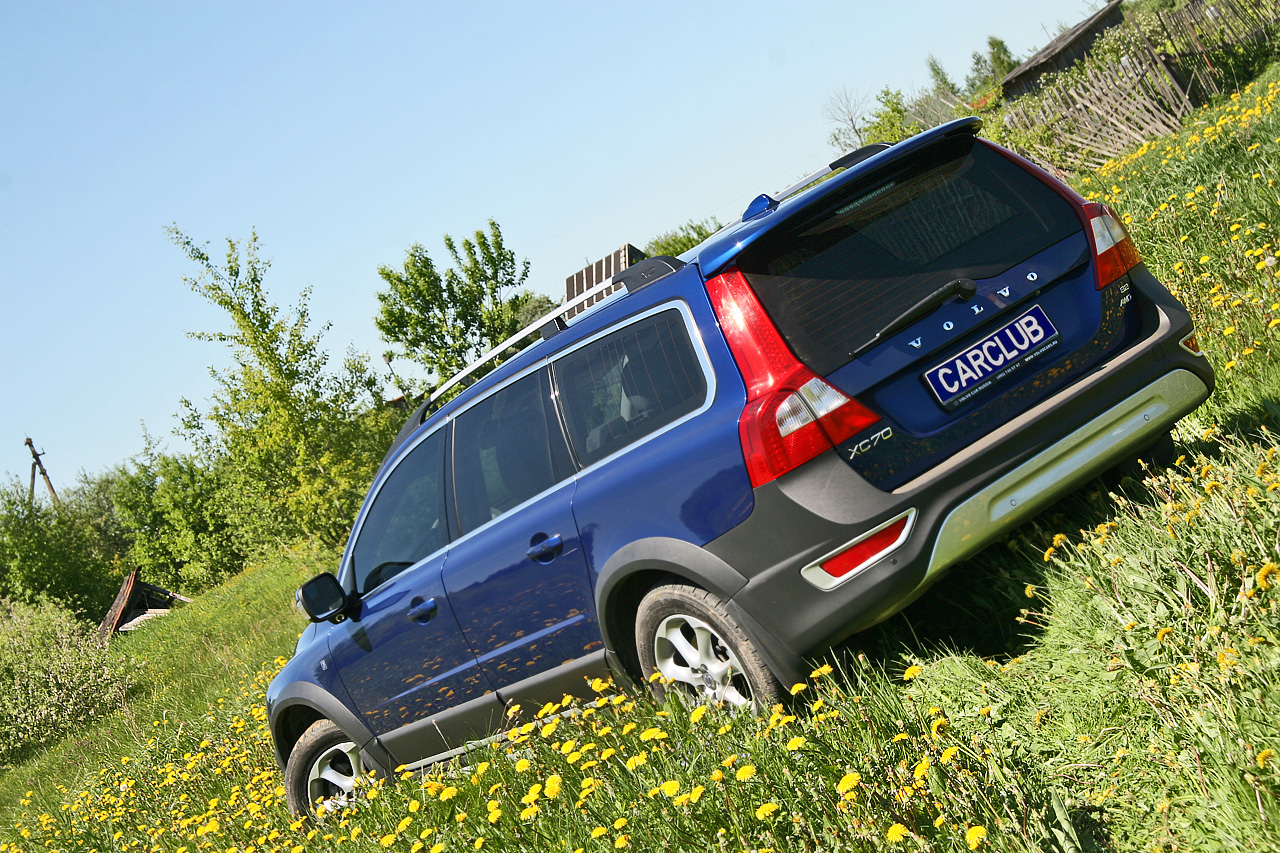 |
| The Volvo XC70 has excellent sound insulation, delivering only the noble rumble of the 3.2-liter inline six-cylinder engine with 238 horsepower to passengers' ears, and a great Premium Sound audio system with 650 watts and 12 Dynaudio speakers that will impress even a discerning audiophile. |
Perhaps the calm is explained by the fact that when a car appears in the blind spot, the car blinks an indicator in the mirror, hinting that it's better not to rush the maneuver? Or by the fact that when changing lanes without the turn signal on, a delicate, unobtrusive signal sounds in the cabin — like, sorry for the disturbance, but don't forget to turn on the indicator.
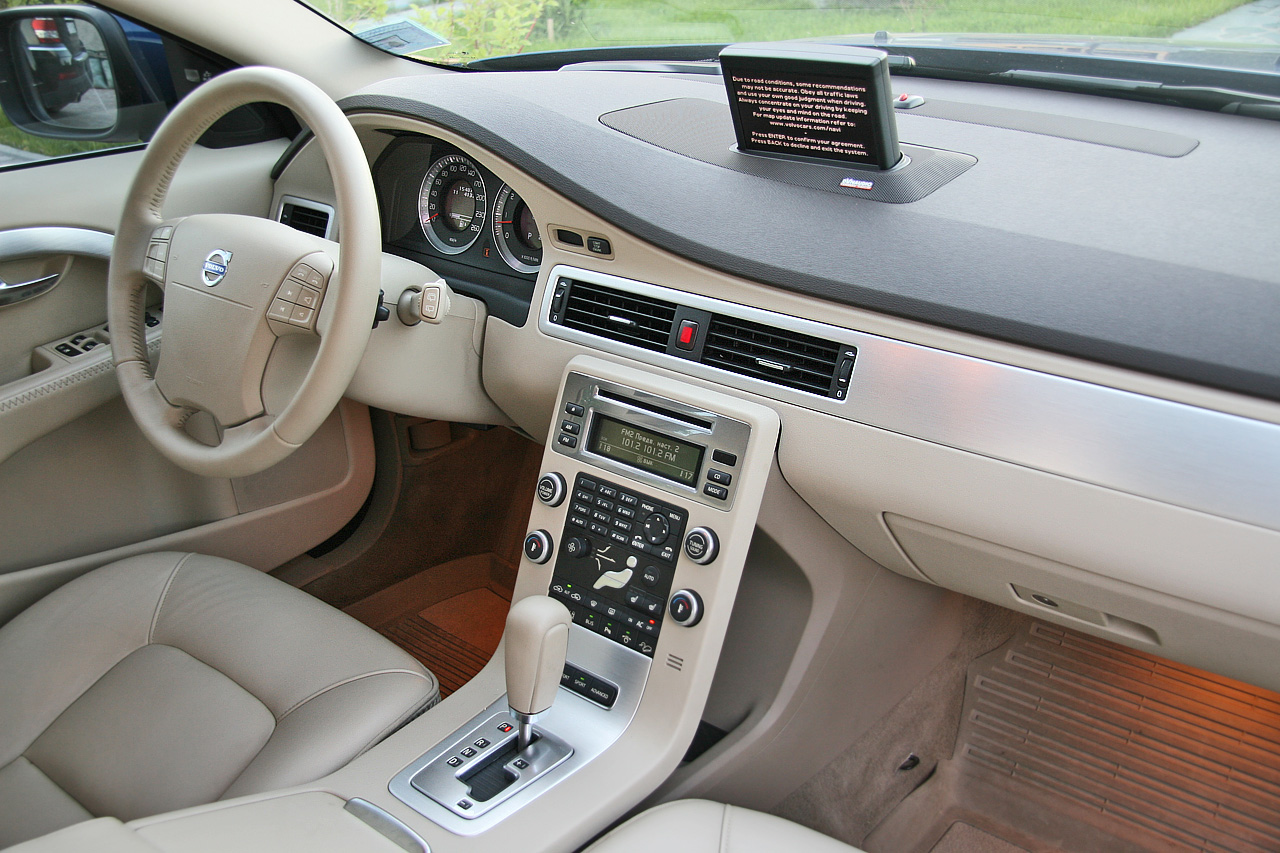 |
| The light leather interior hospitably invites you into the embrace of comfortable front seats with plenty of electric adjustments and memory, which, however, could use stronger lateral support. The steering wheel, trimmed in pleasant velvety leather, is as light as a feather when parking. |
Plus, the sound insulation here is excellent: only the noble rumble of the inline six-cylinder engine with a displacement of 3.2 liters and 238 horsepower reaches passengers' ears, as well as a luxurious Premium Sound audio system with 650 watts and 12 Dynaudio speakers, capable of impressing even a seasoned audiophile. If anyone hasn't figured out what car this is — it's a Volvo, namely the off-road station wagon Volvo XC70.
 |
| As speed increases, reactions sharpen, but even when setting the highest sensitivity level in the menu, there remains a void. With such settings, you want to glide over the road, detached from the world outside, rather than "plow" into corners at extreme speed with tires squealing. |
The light leather interior warmly invites you into comfortable front seats with many electric adjustments and a memory function, although they could use more pronounced lateral support. The steering wheel with pleasant velvety leather turns literally with one finger when parking. As speed builds, the response becomes sharper, but even at maximum sensitivity in the menu, a certain emptiness is felt. With such settings, you want to leisurely glide over the asphalt, detached from the outside world, rather than aggressively screw into corners at the limit of grip.
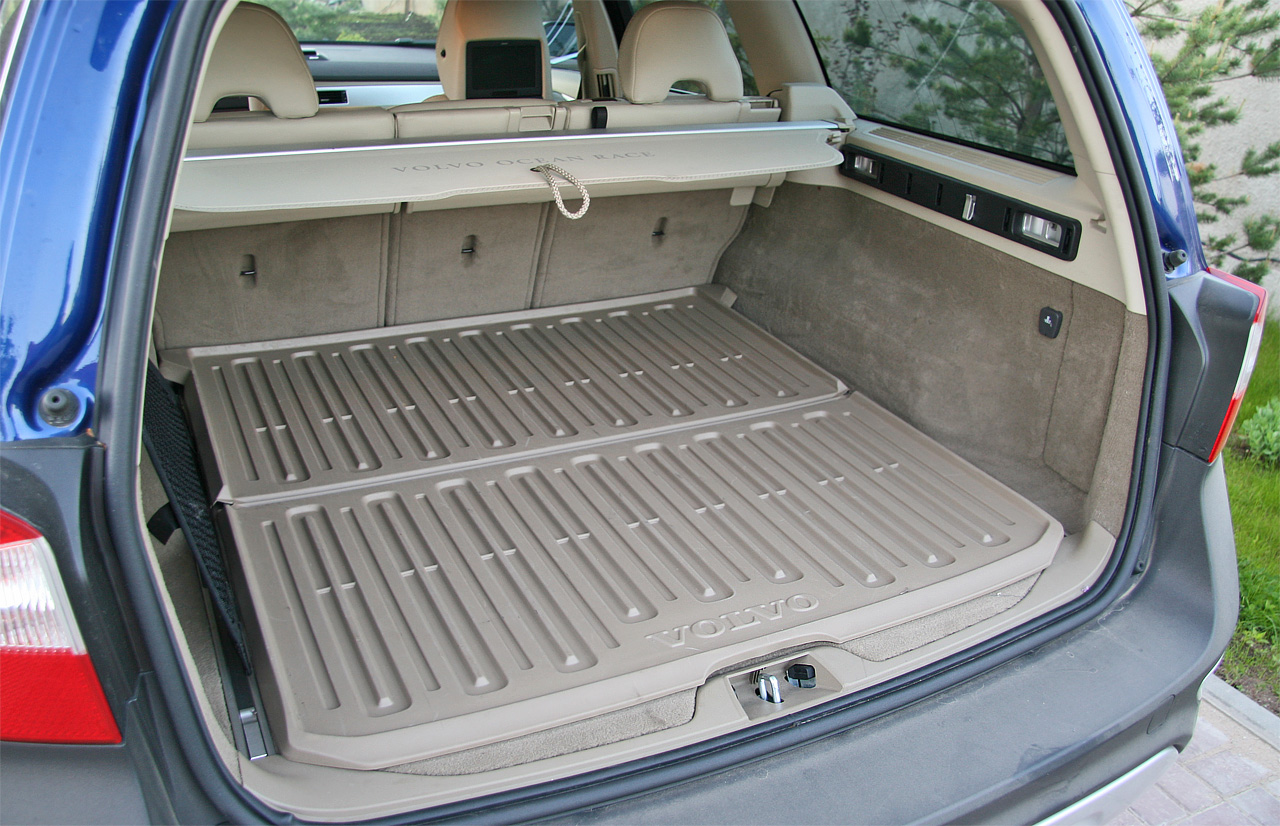 |
| The trunk of the Volvo XC70 is a separate story. A full 575 liters with the rear sofa up! The tailgate is power-operated. In the trunk floor, several additional compartments are hidden, and the floor cover is equipped with a damper that holds it in the raised position. The rear seats fold in a 20/40/20 ratio, forming a flat floor, while the usable space increases to 1600 liters. |
So, leisurely and almost imperceptibly, I overcame the annoying traffic jam on the ring road, and 40 minutes of congestion flew by like a moment. How well the inner world of Volvo can relax you! On the highway, I activate adaptive cruise control, set the desired speed — and then the XC70 acts on its own. It brakes when necessary, and when traffic moves, it accelerates again.
 |
| Despite the fact that the Volvo XC70 is no longer new, this station wagon still remains a good offer in its segment. The Skoda Octavia Scout and Subaru Outback are clearly simpler, while the Audi Allroad is an order of magnitude more expensive. Moreover, such a list of options as on the XC70 is not available even on many executive sedans, let alone others. |
Here there is also navigation, controlled either by a joystick on the steering wheel or from a remote control. The map is displayed on a retractable screen, which also shows the image from the rearview camera. True, the Volvo navigation system, in my opinion, is a bit raw. The pleasant female voice kept trying to turn us across a double solid line, called to drive under a "no entry" sign, or even teleport through a wall. Therefore, I would advise spending 103 thousand rubles on other options — especially since the choice for the XC70 is the richest. In this sense, Volvo can be compared to a transatlantic liner.
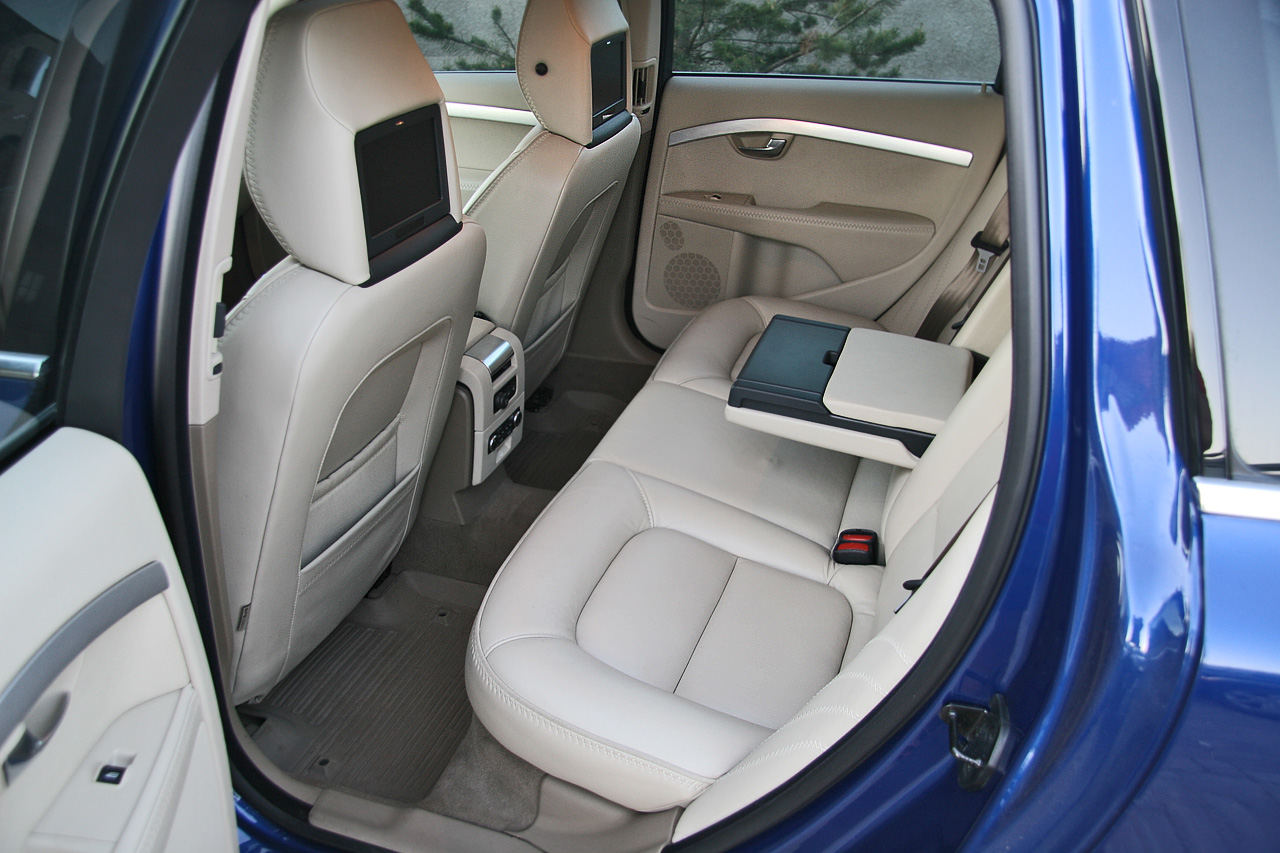 |
| On the rear sofa, it will be comfortable even for three. An optional entertainment DVD system with screens built into the headrests of the front seats will help pass the time on a long journey. This entertainment is not cheap - 77,300 rubles. |
The trunk of the Volvo XC70 deserves a separate discussion. A full 575 liters with the rear sofa up! The tailgate opens with an electric drive. Additional compartments are hidden in the floor, and the floor cover is fixed by a damper in the raised position. The rear seat backs fold in a 20/40/20 ratio, forming a flat area, and the volume increases to 1600 liters.
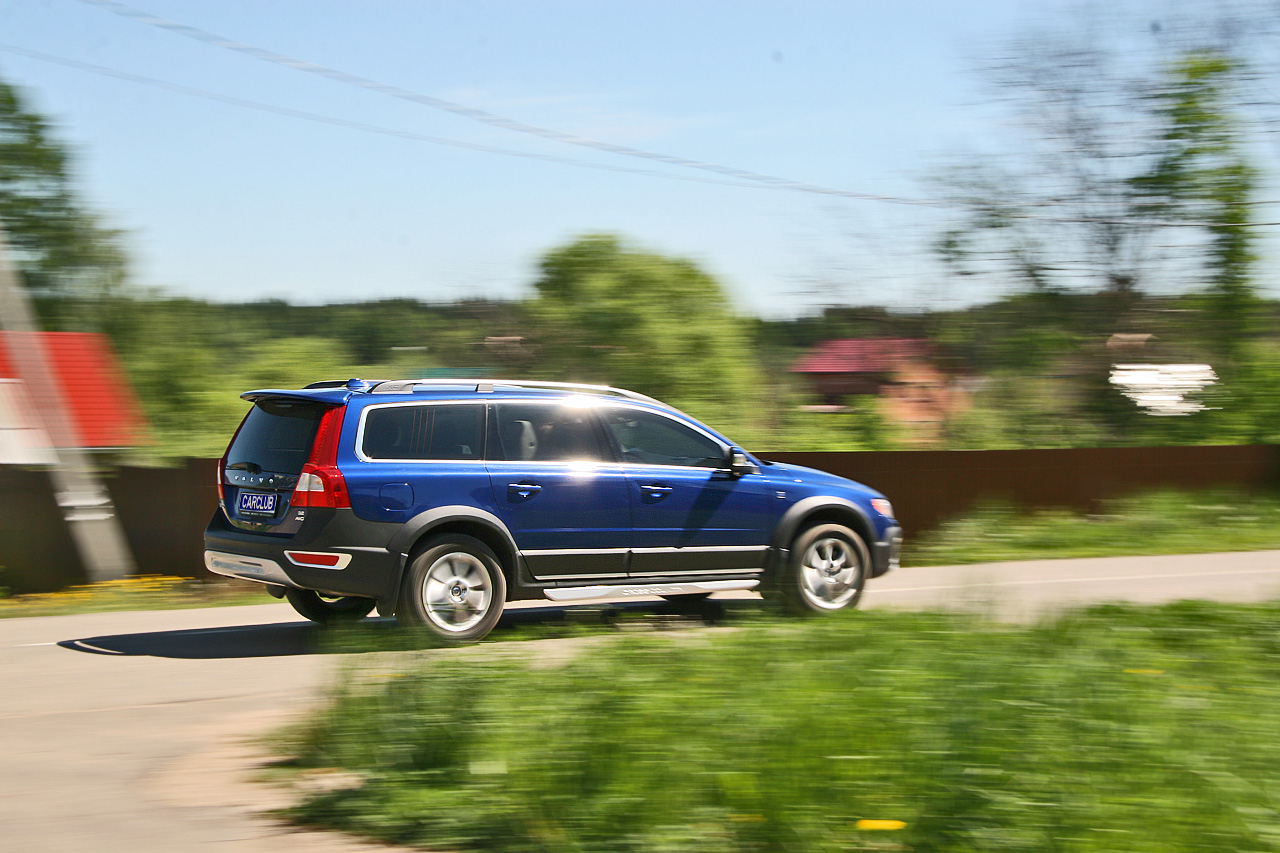 |
| The suspension was clearly designed with comfort in mind. The ride smoothness is simply excellent! All small road joints and potholes dissolve in the depths of the suspension, not having time to "jump" onto the body and disturb relaxed passengers. At speed, lateral rocking appears, and body rolls in corners sometimes reach frightening proportions. |
The suspension was clearly tuned for comfort, and the ride smoothness is simply magnificent. Small joints and potholes sink into the depths of the suspension, not having time to transfer to the body and disturb relaxed passengers. However, at speed, lateral rocking appears, and body rolls in corners sometimes impress with their scale. But we are in no hurry, so we take corners in a Swedish, sedate manner, without exceeding the speed. However, rolls can be reduced by ordering the optional FOUR-C system for 64,600 rubles — it allows changing the stiffness of the shock absorbers. In "Sport" mode, the car becomes more composed, but vibrations from bumps begin to penetrate the cabin.
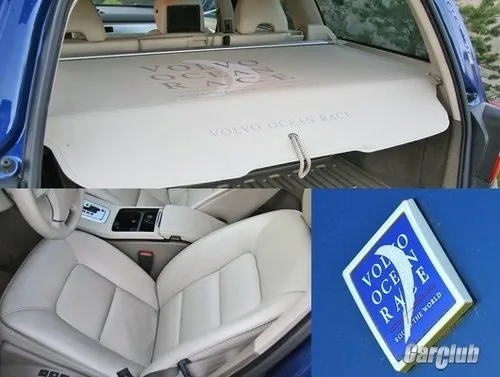 |
| The test Volvo XC70 was made in a special "Ocean Race" trim in honor of the eponymous sailing regatta held with the support of the Swedish concern. The differences of this version are a special blue body color, different seat stitching, badges on the front fenders, a new design of alloy wheels, and a trunk curtain with the Volvo Ocean Race logo. That seems to be all, but the cost of the special version is a whole 175,400 rubles more expensive than the regular XC70. |
The three-liter-plus engine, producing 238 horsepower, can accelerate this massive station wagon to 100 km/h in 8.8 seconds. The six-speed automatic transmission works smoothly and at the right moment, not allowing the engine to reach peak revs. With such equipment, the XC70 behaves quite briskly and even eagerly if the situation demands it. In a measured rhythm of city and highway driving, about 17 liters of fuel per 100 kilometers went under the hood. With a more active driving style, consumption easily exceeded twenty liters, so personally I would choose the diesel version — a five-cylinder unit with 185 horsepower with direct injection and a variable-geometry turbo. Moreover, such a modification is lighter by half a centner, and there's no need to mention the difference in appetite.
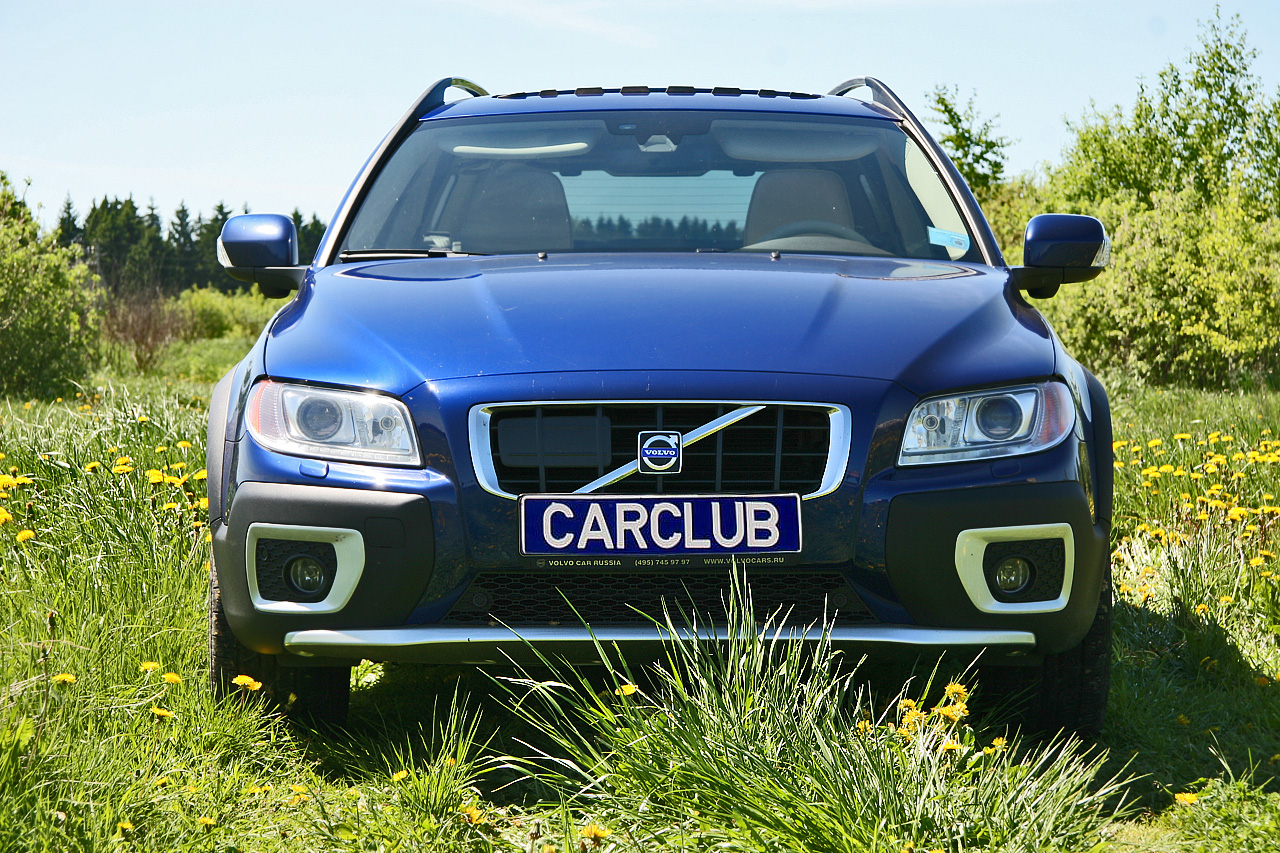 |
| The 238-horsepower 3.2-liter engine accelerates the heavy station wagon to 100 km/h in 8.8 seconds. The six-speed automatic transmission shifts smoothly and timely, not allowing the engine to rev up to maximum. As an alternative, a five-cylinder diesel with direct injection and variable-geometry turbo with 185 hp is offered. It is much more economical, and in acceleration to 100 km/h it loses only 1.1 seconds. |
Although the model is not the freshest, this station wagon still remains a quite worthy option in its niche. Competitors like the Skoda Octavia Scout or Subaru Outback look noticeably more modest, while the Audi Allroad will cost much more. And the list of available equipment for the XC70 is such that some executive sedans would envy. Do not forget about the signature Scandinavian safety, which has always been the hallmark of these cars.
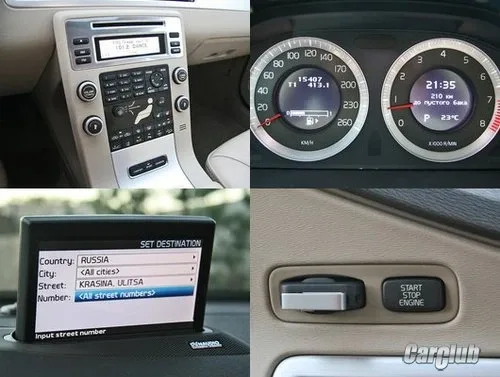 |
| In the cabin, there is the signature "floating" center console that has become Volvo's hallmark, a laconic instrument panel with pleasant backlighting, a retractable navigation system screen that also displays the image from the rear-view camera, and an optional Start/Stop engine start system. |
When you get behind the wheel of a Volvo — any model — the very perception of reality changes. Like a traveler who finds himself in a foreign country and gradually becomes imbued with local color, you begin to look at things differently. And, frankly, I like this feeling. But only one day a week — when after a long work week I roll along a country highway, favorite music plays from the speakers, and thoughts float somewhere far away…
Ruslan Galimov