

Volvo XC70. Price: $52,000. On sale: since September 2007.
The Volvo XC70 has been in our garage for 4 months. During this time, we've put 5,000 km on it, but the lack of snow and frost didn't allow us to conduct real tests. We decided to look for snow and cold where there's plenty of it — at the pole
2007 Volvo XC70
© Photo: Igor Kuznetsov, 5 Koleso
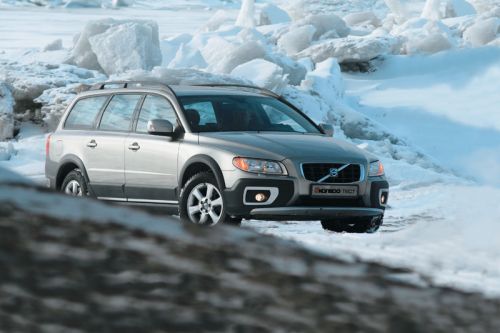
2007 Volvo XC70
© Photo: Igor Kuznetsov, 5 Koleso
The first, civilized leg of the journey, 1,359 km from St. Petersburg to Murmansk, took us about a day. Nothing particularly noteworthy happened on the M18 highway. Except that a couple of times we overtook vacationers who had been partying. Their Ladas and Volgas were hauling trailers, from under the worn covers of which frozen melons, watermelons, and other fruits from the south stuck out. Through the frost-matted windows, it was clear that minus 20 degrees (that's what the thermometer in our car showed) was a serious test for them, unaccustomed to cold after long travels through Central Russia. We, on the other hand, were quite comfortable and cozy. The climate control maintained the set temperature, which we had adjusted back in St. Petersburg.
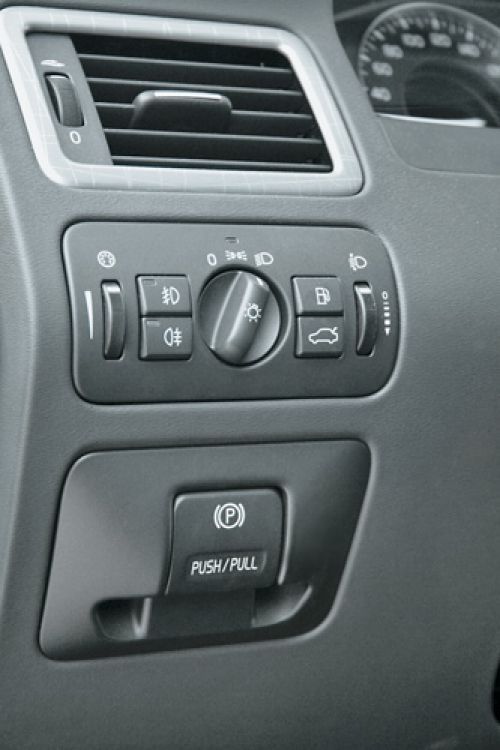
2007 Volvo XC70
© Photo: Igor Kuznetsov, 5 Koleso
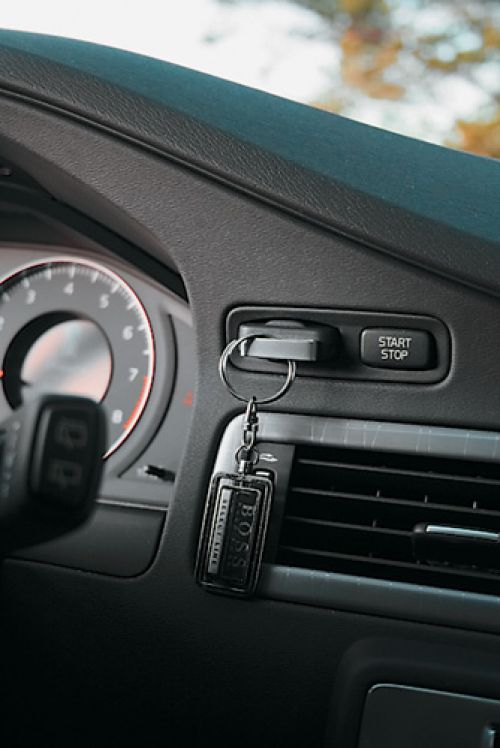
2007 Volvo XC70
© Photo: Igor Kuznetsov, 5 Koleso
It must be said that unlike Moscow and St. Petersburg, which this year winter didn't spoil, in the North it was in full swing. Frosts of nearly 25 degrees even froze the Murmansk port. As a result, there was no need for our previously agreed loading onto one of the icebreakers. According to locals, this year, as in many previous years, there was a decent winter road to the North Pole, used by border guards for their noble purposes. There's no infrastructure, of course, on this 2,400 km route, but the road is straight as an arrow and even fairly smooth. The decision was made by itself. It was decided to drive to the axis, which was practically polished to a shine by bears, polar explorers, and numerous tourists. Estimating that for the round trip at an average consumption of 10 liters, we'd need about 500 liters of fuel, we filled the tank to the brim and also 22 canisters, which easily fit into the 560-liter trunk. So, another day passed in preparation for the dash.
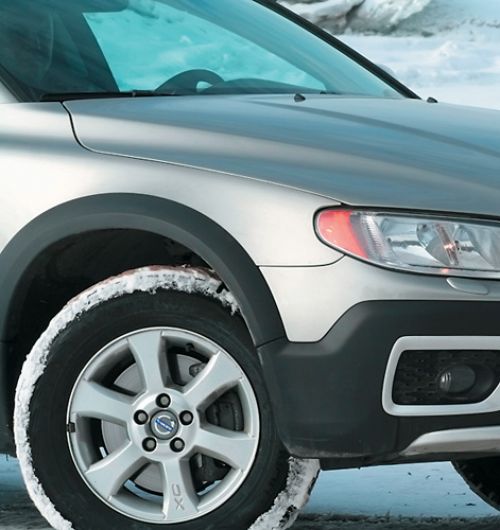
2007 Volvo XC70
© Photo: Igor Kuznetsov, 5 Koleso
2007 Volvo XC70
© Photo: Igor Kuznetsov, 5 Koleso
The winter road, praised by the natives as an "ideal highway," had in fact not been maintained by the local road service for a long time, so the speed on some sections differed greatly from what was planned. Only once did we come across a reindeer team, where they were boiling snow in a huge cauldron and then pouring hot water into huge potholes. In the -30 frost, the water quickly froze and leveled the damaged section. Good thing there weren't many such places, and the potholes we did encounter were swallowed without issue by our XC70's suspension. Cracks in the ice seriously slowed our pace. Some reached up to 3 meters in width, and across them were thrown ramps with rather steep entry angles, clearly designed for military vehicles. Some of them were in such a state that at first they seemed impassable. But our "Volvo-mobile" handled them easily, thanks to the front and rear overhang angles. So passed another day on the road. About 700 km remained to the pole.
2007 Volvo XC70
© Photo: Igor Kuznetsov, 5 Koleso
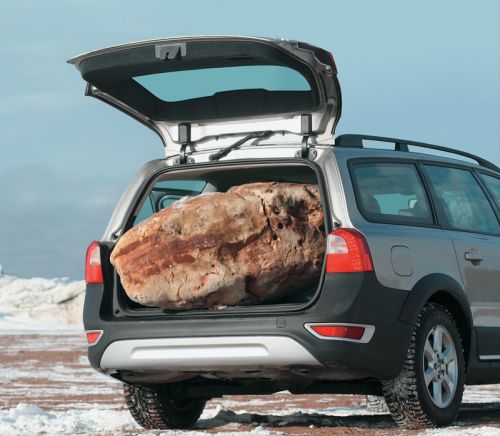
The return trip took a bit longer, because on the advice of locals, we stopped at a place where paleontologists had excavated another mammoth. After wandering around the fossilized skeleton, we bargained with the guard for the prehistoric animal's tailbone for a reasonable sum, and with the same guard's help, we hauled the bone into the trunk. The rarity was delivered to St. Petersburg to the amazement of our colleagues and as a memory for us of an interesting journey. Yes, we returned home on April 1st.
Driving
Equally good on asphalt and off it. Particularly pleasing was the ability to maintain a high pace on icy sections, of which there were plenty on our route this time.
Interior
Solid and comfortable, conducive to a long and fascinating journey.
Comfort
At a high level even in a base-trim car.
Safety
High.
Price
Oh, if only it were lower...
Pros and Cons
+ Versatility, comfort, excellent road performance, decent off-road capability
- Freezing of the windshield washer nozzles.
Specifications
Make and model - Volvo XC70
Dimensions - 4838/1861/1604 mm
Engine - petrol, 3192 cm3, 2381 hp/6200 rpm
Transmission - automatic, 5-speed
Performance - max 215 km/h; 8.6 s to 100 km/h
Competitors - Subaru Outback, Audi Allroad
Our Verdict
The long trip allowed us to fully appreciate the car in both normal and extreme conditions. The VOLVO XC70 is equally comfortable for both the driver and passengers. But what impressed us most was the cargo capacity. A souvenir from the north fit in without any trouble.
© 5 Koleso