
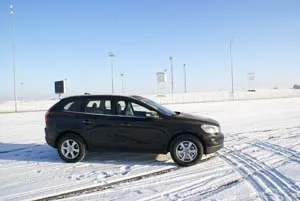
Volvo XC60


NEW XC60
Engine - 3.0 L Turbo
Max power - 285 hp/5600 rpm
Max torque - 400 Nm/1500-4800 rpm
Max speed (km/h) - 230
Acceleration 0-100 km/h - 7.5
6-speed automatic transmission
Length - 4628 mm
Width - 1891 mm
Height - 1713 mm
Ground clearance - 230 mm
Tires 235/65R17
Price $ 73,002 (584,010 UAH), minimum - D5 1,400,100, T6 1,697,000
Equipment:
Nivomat system - automatic body leveling, rain sensor, light sensor, fine air filtration system, adaptive cruise control, collision warning system with auto braking, BLIS - blind spot information system, tire pressure monitoring system, front and rear parking sensors, integrated child seats, hands-free, subwoofer and 6 CD-changer
Service interval:
20,000 km
Warranty 2 years without mileage limit
Service 1 - 20,000 km - $473 (3,781 UAH)
Service 2 - 40,000 km - $473 (3,781 UAH)
Service 3 - 60,000 km - $676 (5,400 UAH)
Service 4 - 80,000 km - $473 (3,781 UAH)
Service 5 - 100,000 km - $473 (3,781 UAH)
Service 6 - 120,000 km - $844 (6,750 UAH)
Competitors:
Land Rover Freelander 2
BMW X3
Audi Q5
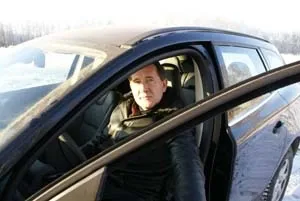
Marat Makhmutov, «Kazan School of Higher Driving Skills»
Finally, a compact crossover from Volvo has appeared on sale, and it made it to our test drive. Previously, the Swedish brand's lineup had no such car at all: the XC family, that is, Cross Country, consisted of the XC 70 and XC 90. The first is an all-wheel-drive wagon based on the S80, the second is a large SUV that can be placed in the same league as the BMW X5 in terms of dimensions. The XC 90 has remained the flagship for many years, so an update for it was long overdue. But while the older model waits its turn, we got a newcomer in the premium segment, where the BMW X3 reigns supreme. True, now the Bavarian has another rival — the Audi Q5, which in 2008 was recognized as the best debut among crossovers. However, today we're not talking about the Germans, but about our test subject — the XC 60.
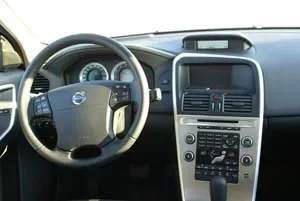
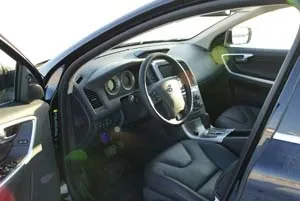
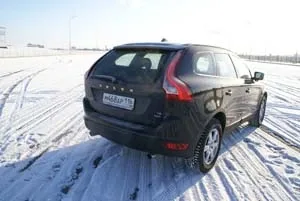
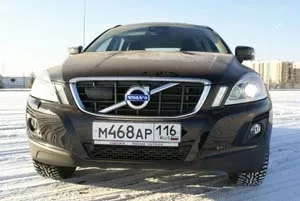
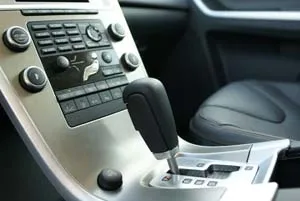
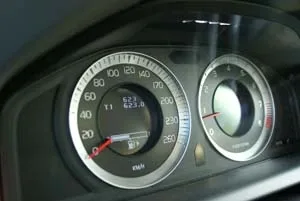
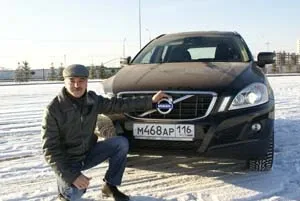
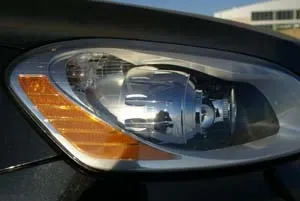
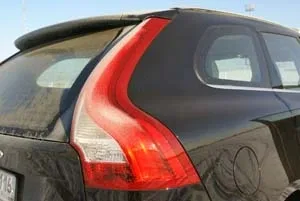
I'll start, of course, with an exterior inspection. The car looks modern and stylish, and the eye catches it immediately. It seems to me this is a purely masculine car, and the large emblem on the radiator grille only emphasizes that. The recognizable «Volvo» shoulder line hasn't gone anywhere — generational continuity is maintained. The rear lights rise up even more steeply than on the older model. But the XC 60 is noticeably younger, so it's supposed to be fresher. Inside, the front is almost a copy of the S80: the same quality materials, leather interior, the same architecture of the front panel with two round «saucers» of instruments, which hide pictograms, including the fuel gauge. The famous «floating console» is also in place, and it's convenient to hide something behind it. The only thing I can find fault with is the strange design of the middle of the panel above the onboard computer display: either a plug or just a monolithic molding. It looks like there should have been a place for standard navigation for Europe or America, but for Russia they decided not to bring this option, leaving us with such a dubious simplification.
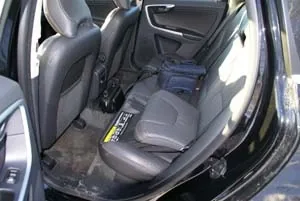
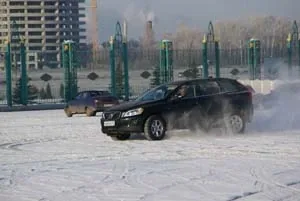
In the back, three adults can easily fit, and there's enough space for legs and width. The rear sofa is interestingly folded: it's divided into three parts in a 40:20:40 ratio. The trunk is spacious, though not a record holder, but it will carry all passengers' luggage without problems. Our test vehicle is richly equipped, including a bunch of electronic safety systems. It has almost everything from the modern arsenal, including City Safe — a system on a laser rangefinder that, when the speed difference with the car ahead is up to 30 km/h, monitors the distance itself and can automatically brake to a complete stop if necessary. When the danger of closing in is real, four bright red rectangles are projected onto the windshield in front of the driver, and they're not visible from the passenger seat — apparently so as not to scare the neighbor. But I'm getting ahead of myself: first, it would be worth telling how the newcomer drives, because these assistants greatly affect impressions. So, let's go. We start from the snowy area of the autodrome, having first spun the car around its axis with constant throttle. For the driver, it's just a holiday! True, it wasn't without incidents: some passengers were scared by such entertainment, and some got motion sickness — an effect like astronauts on a centrifuge. And the blame lies with the excellent engine and all-wheel drive with the fourth-generation Haldex coupling.
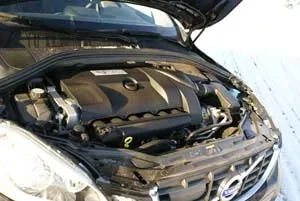
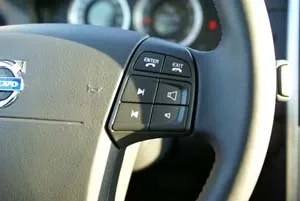
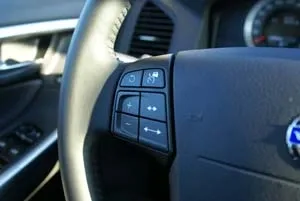
The three-liter turbo engine, which was made on the basis of the naturally aspirated 3.2-liter, works in tandem with a six-speed adaptive automatic transmission Geartronic. With such a tandem, the crossover hits the first hundred in 7.5 seconds. Figures are figures, but in real life it feels much more convincing. The acceleration is so brisk and confident that sometimes you catch yourself thinking you're sitting in an airplane on the runway. We head out onto the usual route, checking the BLIS option along the way: video cameras in the mirror housings light up a lamp if someone is in the «blind spot», so you can change lanes almost without looking. And Vadim finally allowed turning on the standard audio system, and it sounds excellent. The steering wheel is adjustable to the driver: through the Russian-language menu, you can choose one of three sensitivity modes. We didn't overcomplicate and left the factory setting — it's optimal for an ordinary person. The suspension — McPherson in front, multi-link in the rear — conquered everyone. It swallows bumps perfectly, approaching business sedans in comfort, but at the same time allows brisk cornering without scaring with rolls or hinting at tipping over. This is also the merit of the RSC system. As for DSTC, that is, dynamic stability and traction control, in light of the presence of adaptive cruise control, it's even awkward to write: it just works, and that's it. Although there's a nuance: it works together with the trailer stability control system TSA, if, of course, a trailer is attached behind. We tested the adaptive cruise in dense traffic. You set the distance to the car ahead with buttons on the steering wheel (the degree varies), set the speed — and you can take your feet off the pedals, the steering wheel itself maintains the distance thanks to the radar. And it really works! A useful thing, except that with a large distance, someone will definitely cut into the empty niche — mentality. This cruise has another feature: if you drive behind a leader, you can set even 150 km/h, but the car will still maintain the speed of the car ahead. But when you turn on the turn signal and turn the steering wheel to overtake, the radar gives a command to accelerate to the set mark, and the car smoothly picks up those same 150 km/h.
True, in this mode, acceleration is not as intense as with direct throttle press, so on a country road with two lanes, such an algorithm is unlikely to suit if you need to overtake quickly. Another new Volvo function — the LDW system, which tracks road markings and prevents crossing them without the turn signal on — remained untested for us: over the entire route, we didn't encounter a single (!) clear line that could serve as a reference. Everywhere, the markings were either almost erased or hidden under a layer of dust and dirt. But, judging by the information we have, it works like this: if the driver without a turn signal directs the car across a solid line into oncoming traffic (say, dozed off), an unpleasant buzzer sounds. That's how many electronic safety assistants the newcomer offers! Perhaps some of them won't find use in our realities yet, but progress can't be stopped. Someday we'll have roads with clear markings, readable in any weather and at any time, drivers will become more polite, and gasoline — better quality. In the meantime, the laurels for the striking appearance, excellent driving characteristics, successful engine and transmission, as well as the abundance of electronic systems can safely, albeit in advance, be given to the younger brother of the big XC90. The car is a success! It remains only for the price to be competitive with rivals like the Audi Q5, BMW X3, Land Rover Freelander II, at least in the base trim. And then Volvo's motto — «I roll» — in the face of the XC60 will get its fullest embodiment among the leaders of premium compact crossovers.
Vadim Sadykov, «Autoclub-Kazan».
Unlike Marat and Alfred, I'm not an artist, so I won't discuss the «shoulder line» and other body details. I'll say it simpler — this is the most beautiful crossover. And it has another important advantage — optimal dimensions. Forgive me, SUV fans, but I equally don't understand either the love for small «jeeps» or the passion for huge cars. The XC60 has just the right size: slightly larger than an ordinary crossover like the CR-V or RAV4.
Suspension. An ideal balance between firmness and softness. If we recall the competitors, the picture is as follows: the RAV4 is too stiff for everyday driving; the Forester, on the contrary, is too soft — it bottoms out on potholes and rolls in corners; the Kuga tries to find a compromise but gives up on washboard roads. The XC60 works as it should and predictably: on smooth surfaces, no rolls; on minor irregularities, it absorbs smoothly; and on large potholes and bumps, it doesn't bottom out or deliver harsh rebounds. It's no wonder there's an automatic system constantly monitoring damper stiffness. The car handles excellently. By the way, even with the stability control system switched off, it still operates — just more gently than in normal mode. The suspension is optimal.
Engine. An ordinary crossover with a 2.0 engine is always heavier than a front-wheel-drive sedan with the same unit. This means two unpleasant things: worse acceleration and higher fuel consumption. Therefore, larger-displacement engines are desirable for crossovers. On the other hand, the previous XC70 2.5 turbo, by feel, is much lighter "on the rise" than the current XC70 3.2. On the XC60, in my opinion, the optimal engine is the 3.0 turbo. If I'm not mistaken, after trips on the highway, light off-road, and in the city, the consumption was only 16.5 l/100 km. And that's with 285 hp. For comparison, in an SUV with a 3.5 engine, it's hard to stay within 20 liters, especially in winter. A pleasant feature of this 3.0 turbo is the maximum torque of 400 Nm across a wide range: from 1500 to 4800 rpm (and power, as we know, is simply torque multiplied by rpm). During calm driving, the 6-speed automatic keeps revs minimal, ensuring good fuel economy. My personal opinion: a CVT pairs best with a turbo engine. But the 6-speed automatic also works very well. True, during sharp overtaking of trucks on the highway, fleeting delays in shifts are felt, but that's unavoidable. The engine's elasticity and gear ratio settings are confirmed by another indicator: in 6th gear at 1000 rpm, the speed is 52.5 km/h.
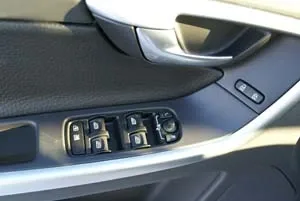
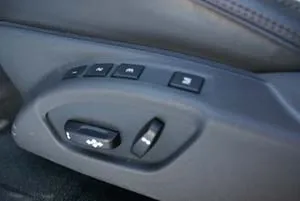
Interior. Everything here is solid and clear. Only two things raised concerns: an incomprehensible niche in the center of the dashboard and the firmness of the rear seat. The niche seems intended for a navigation system, but the rear seat is more interesting. It turns out that in the back row, behind the driver, a child seat is already built in. That's where the firmness comes from! After all, there are no complaints about the seat behind the front passenger. It seems to me this is an unnecessary feature: not everyone has small children, and buying a child seat now is not a problem; it's not that expensive.
Price. This is where things get much more complicated. I liked everything about the car except the price. On the other hand, even the base trim can be considered very rich. We tried to virtually forgo such "bells and whistles" as "automatic speed and distance control," or "lane keeping assist," or... And we asked the dealership manager: how much could we save? Alas, to all our questions, he replied: that's already in the base. And since Volvo has a European approach to trims — when assembling individual options, the car's price can become astronomical. Perhaps this is the only non-optimal trait of the new XC60, which, I'm sure, will become a very strong competitor in the crossover class.

Alfred Mardanov, "Autoclub-Kazan"
Good, very good!!! I mean the exterior appearance. There's no expected brutality, yet the developed signature muscularity in the shoulder belt combined with swiftness harmoniously creates the image of the new XC60. On one hand — traditional Swedish restraint, on the other — dynamic forms: these are two mutually exclusive concepts, or rather, complementary ones, like yin and yang, which the developers managed to virtuously unite into a single whole in the Volvo XC60. This isn't just knocking together furniture. There are few cars in the world capable of communicating with you on some subconscious level and asking to hit the road. I still remember the feeling I had when I first entered the XC60's cabin at a Moscow auto show. Very comfortable and somehow everything suits me. I don't like those huge cars like the 90-series, Pilot, Cruiser, etc. I prefer exactly this size! Thank God, no financial turmoil prevented this car from appearing at an official dealer last year, and we simply had no right not to pay attention to it. My first "test of the wheel" took place on a test site under conditions of almost complete ice. The car is obedient as... as... as, well, I don't know how to say it, in short, very obedient. In the back seat, someone occasionally let out frightened gasps, but in vain! The figures the XC60 traced were precise, calibrated, and predictable. A good power reserve allows you to "pull" the car out of any "spin" and put it on the desired trajectory. Moreover, the disabled stability control system still carefully, but not as intrusively as in "ON" mode, intervenes in the car's operation. And I think that's right: for a civilian car, for, so to speak, the reckless masses, a short leash is needed, otherwise they'll cause chaos!
Even in a relatively small space where you can't really speed up, the spirited nature of the engine and the car as a whole is felt, and it's all the more interesting to go on a "trip" along a familiar route — highway, off-road. As expected, I played the role of all passengers and the driver myself. I'll talk about the driver's sensations later, but as a passenger, I felt equally good both in the front seat and in the back. The reason is the built-in child seats in the rear bench. They don't allow you to sit comfortably and unpleasantly transmit vibrations while driving. In the pursuit of the image of the safest car, the designers made this move with built-in seats. I think it's unsuccessful. If I need them, I'll buy them separately, but at least rear passengers won't feel discomfort. The perfectly tuned suspension settings suit our roads better than ever. Solid, I repeat, yin and yang even in this. If someone asked me which tuning option I would choose for my car, I would answer without hesitation: exactly the one on the new XC60. It behaves equally well on the highway, in the city, and, surprisingly, off-road. Here the car proved itself admirably, surprising the test-drive participants more than once. First, it never scraped its underbody anywhere, despite the heavily rutted road. This is the result of a large ground clearance, one of the largest in its class — 230 mm.
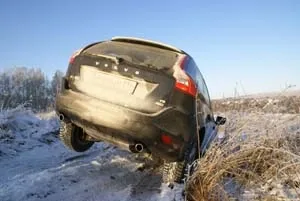
The car also has options common for modern SUVs, such as a descent assist. We tested it on a fairly steep slope, drove over bumps and ruts, and then climbed an equally serious incline — everything went perfectly. Although the car is marketed as a crossover, its off-road capabilities turned out to be surprisingly decent. But then one detail surfaced: when traversing irregularities, plastic elements here and there emit suspicious creaks. The thought arose that it was due to body rigidity. We decided to check this by diagonally hanging the car — and the concerns were confirmed. This is perhaps the only serious drawback, not counting one more thing. Overall, the car is wonderful, but all the charm is shattered by the price. Our test unit costs two million rubles, which, you'll agree, is a lot. And even the base version starts at 1,400,000 — also like a cold shower. But real emotions can't be cooled by such things. Honestly, I've simply fallen in love with this car.