
| When we arrived for the test drive in Moscow, the first heavy snowfall in a year began. The Volvo V50, as if remembering its Swedish roots, felt right at home and paid no attention to the bad weather. |
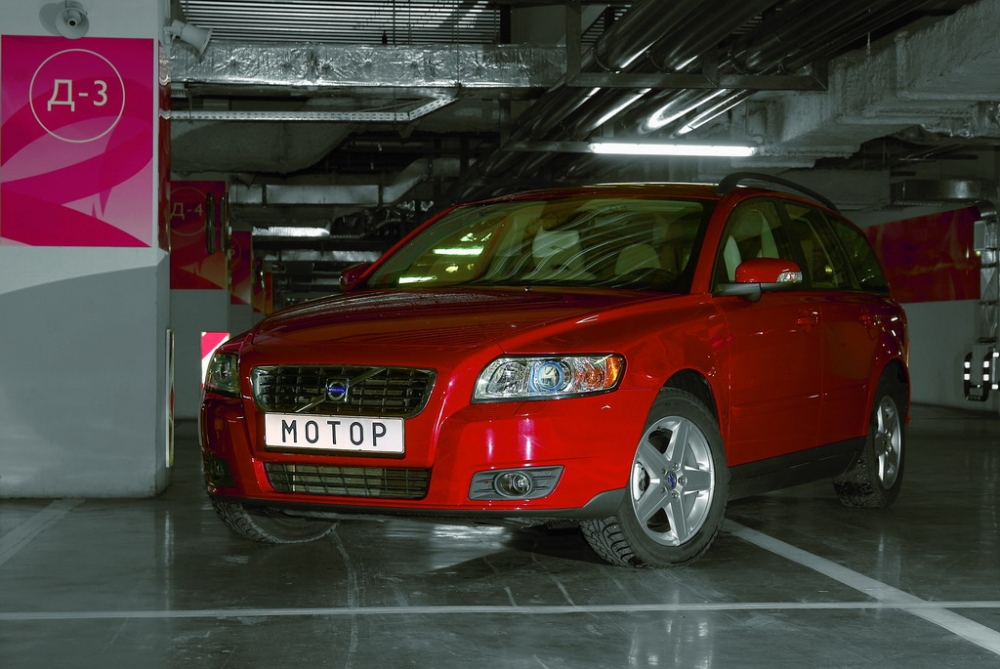
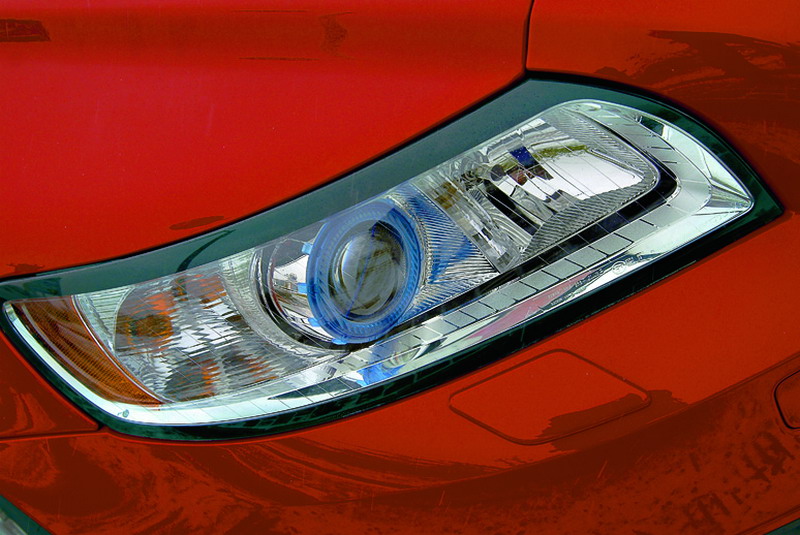
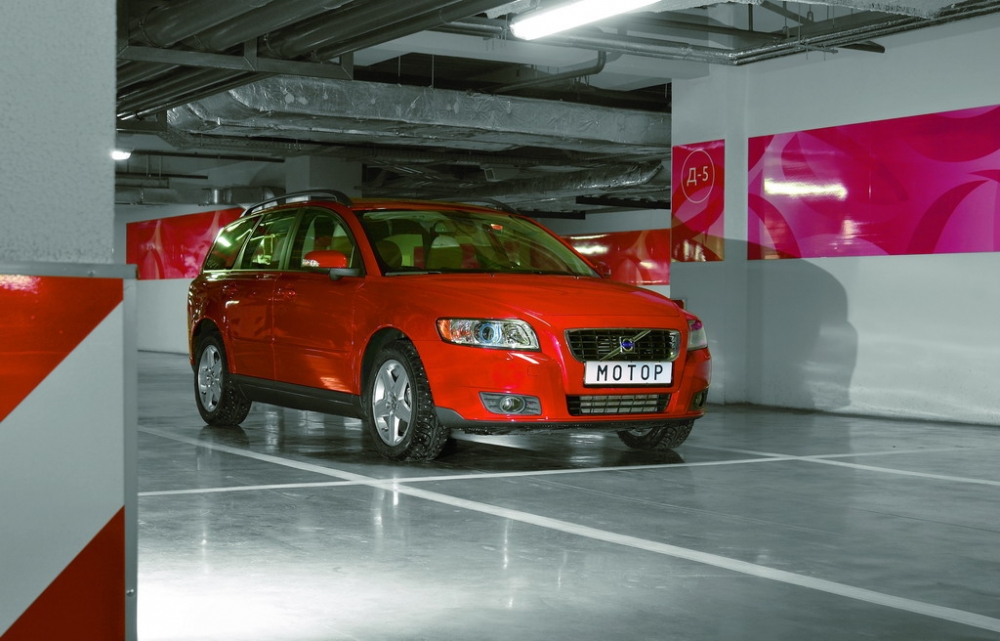 The update of the S40/V50 models, which have been produced since 2004, went without unnecessary noise and pomp. As the British say, nice and easy, and the Swedes would say I lugn och ro. The result of the restyling itself turned out to be just as restrained. At first glance, not everyone will guess how the new V50 wagon differs from its predecessor. But there are differences. The main one is the desire to become closer to the "older" V70. At the front, a new bumper, air intake, headlights, and a radiator grille with a larger Volvo badge are installed. The vertical front part should make the V50's appearance more assertive — the Swedes call this wagon sporty. The update of the S40/V50 models, which have been produced since 2004, went without unnecessary noise and pomp. As the British say, nice and easy, and the Swedes would say I lugn och ro. The result of the restyling itself turned out to be just as restrained. At first glance, not everyone will guess how the new V50 wagon differs from its predecessor. But there are differences. The main one is the desire to become closer to the "older" V70. At the front, a new bumper, air intake, headlights, and a radiator grille with a larger Volvo badge are installed. The vertical front part should make the V50's appearance more assertive — the Swedes call this wagon sporty. |
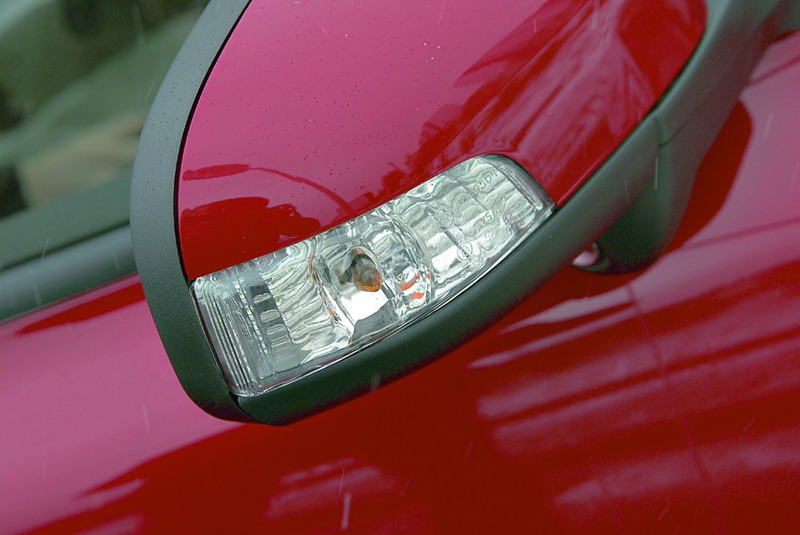
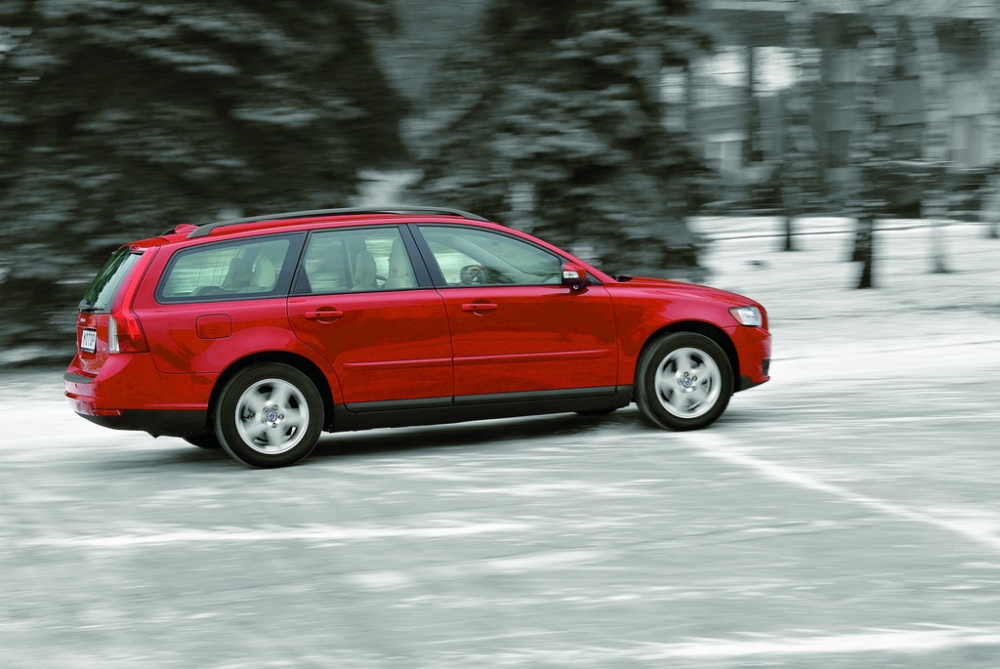 Let's return to the exterior changes. At the rear, to support the new look at the front, a different bumper also appeared. The taillights became thinner and rose 30 mm higher. The brake lights are now LED, with the EBL function — during hard braking, they flash five times per second. When the speed drops to 10 km/h, the hazard lights turn on automatically. The parking lights are moved to the very edges of the body, emphasizing the characteristic Volvo longitudinal line of the windowsill. On the lower corners of the bumper, there are elongated reflective strips. The horizontal composition of the rear part also determined the oval shape of the exhaust pipe tips. That, perhaps, is all the exterior changes. Let's return to the exterior changes. At the rear, to support the new look at the front, a different bumper also appeared. The taillights became thinner and rose 30 mm higher. The brake lights are now LED, with the EBL function — during hard braking, they flash five times per second. When the speed drops to 10 km/h, the hazard lights turn on automatically. The parking lights are moved to the very edges of the body, emphasizing the characteristic Volvo longitudinal line of the windowsill. On the lower corners of the bumper, there are elongated reflective strips. The horizontal composition of the rear part also determined the oval shape of the exhaust pipe tips. That, perhaps, is all the exterior changes. |
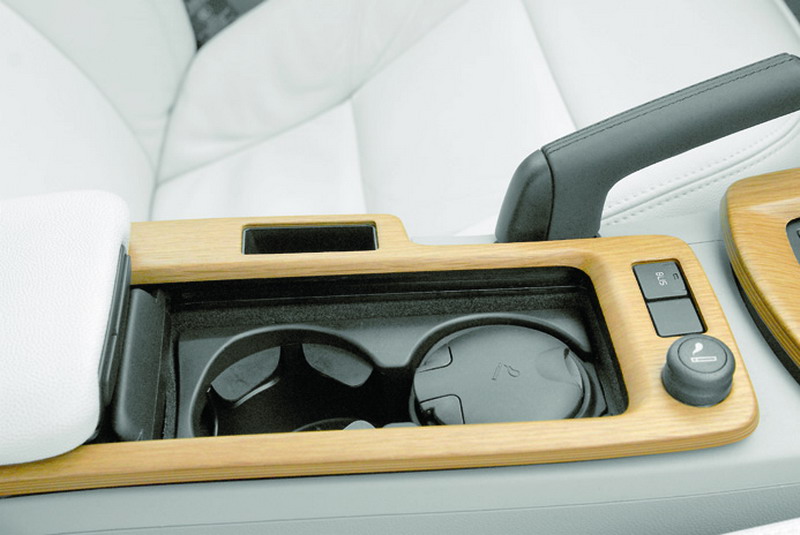
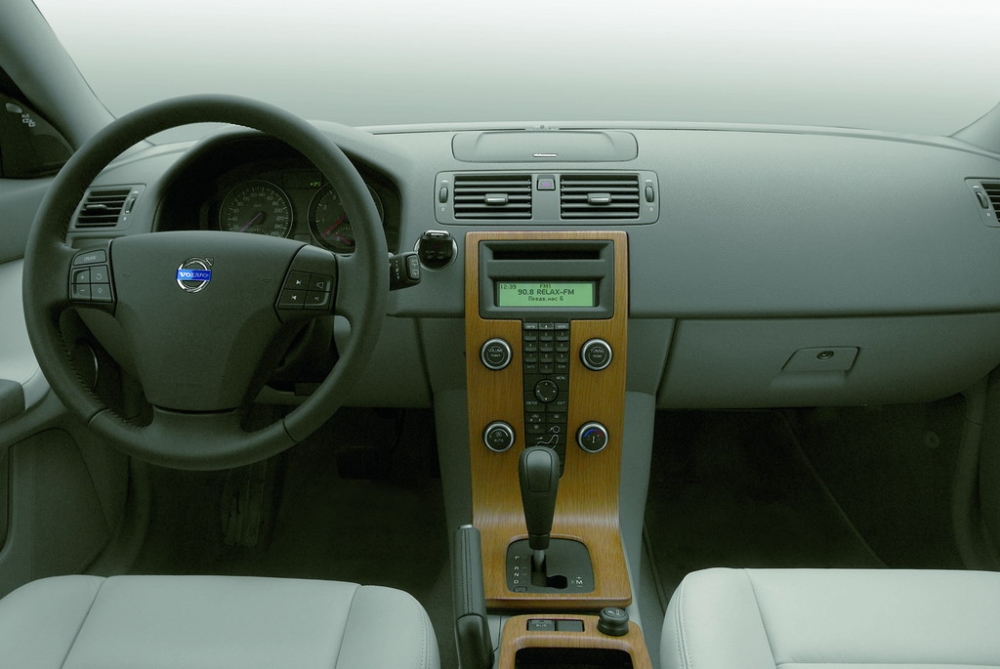 There is also little new in the interior. During the interior modernization, designers focused on better use of space — especially for small items, and for large things in the trunk, there is a net and hooks for securing. Thanks to the new shape of the stereo system speakers in the doors, useful space has been freed up. The lower part of the front doors is now organized differently: documents in A4 format and beverage containers fit there easily. On the central tunnel under a sliding curtain, there are two large cup holders. Between the seats, there is an armrest box, but it is a bit small: a CD case can only be placed diagonally. There is also little new in the interior. During the interior modernization, designers focused on better use of space — especially for small items, and for large things in the trunk, there is a net and hooks for securing. Thanks to the new shape of the stereo system speakers in the doors, useful space has been freed up. The lower part of the front doors is now organized differently: documents in A4 format and beverage containers fit there easily. On the central tunnel under a sliding curtain, there are two large cup holders. Between the seats, there is an armrest box, but it is a bit small: a CD case can only be placed diagonally. |
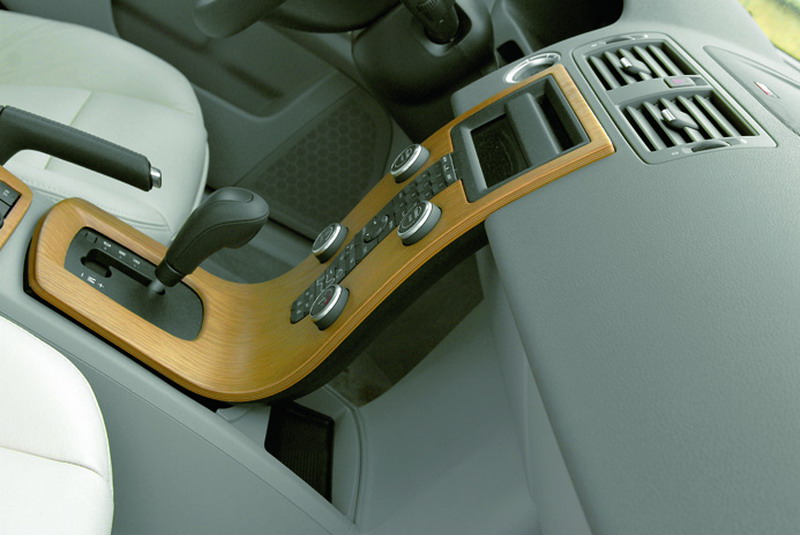 The central console, which seems to hang in the air, with climate control and audio system buttons, remains the same. Behind it, there is a shelf for small items. It is not very convenient to use, but it looks nice. Some interior details, including door handles, can be trimmed with light northern oak. This was exactly the interior of our test car. Combined with white leather seats and door panels, it looks magnificent! The seats were very pleasing. They have large ranges of electric adjustments and a successful profile. They are not too hard, do not tire on a long journey, and hold the body well. You find a comfortable seating position without difficulty. The central console, which seems to hang in the air, with climate control and audio system buttons, remains the same. Behind it, there is a shelf for small items. It is not very convenient to use, but it looks nice. Some interior details, including door handles, can be trimmed with light northern oak. This was exactly the interior of our test car. Combined with white leather seats and door panels, it looks magnificent! The seats were very pleasing. They have large ranges of electric adjustments and a successful profile. They are not too hard, do not tire on a long journey, and hold the body well. You find a comfortable seating position without difficulty. |
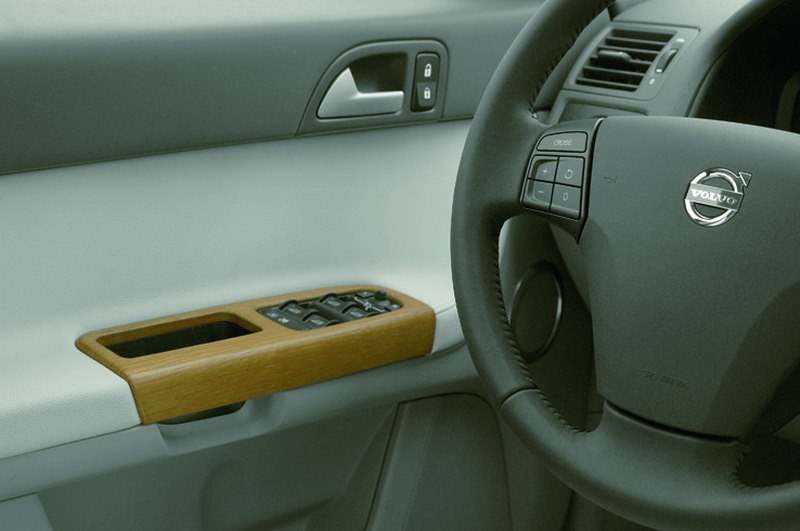 The steering column adjusts in two planes, and even in the lowest position, the rim of the three-spoke steering wheel does not block the instrument panel. Just what you need! I insert the transponder key into a special slot. By the way, the car is equipped with the Keyless Entry system, which unlocks the doors by itself. When turning the key, a transversely mounted inline 5-cylinder engine comes to life under the hood with a characteristic sound. But this sound barely penetrates the cabin — sound insulation has always been a strong point of Volvo. The steering column adjusts in two planes, and even in the lowest position, the rim of the three-spoke steering wheel does not block the instrument panel. Just what you need! I insert the transponder key into a special slot. By the way, the car is equipped with the Keyless Entry system, which unlocks the doors by itself. When turning the key, a transversely mounted inline 5-cylinder engine comes to life under the hood with a characteristic sound. But this sound barely penetrates the cabin — sound insulation has always been a strong point of Volvo. |
 Our test car with a 2.4-liter engine and 140 hp in the base trim is equipped with a 5-speed Geartronic automatic transmission. This gearbox, despite very smooth shifts, works quite briskly, and there are practically no complaints about it. In manual mode, gears are shifted by rocking the lever up and down. To move the selector, you need to apply noticeable effort, a pleasant elasticity is felt. The 2.4 engine is the golden mean. There are weaker engines, there is the same volume but with 170 hp, as well as the "top" 2.5-liter turbo engine with 230 hp for the T5 version. But even in this "average" configuration, the V50 accelerates briskly. According to the passport, 9.6 seconds to 100 km/h. Of course, this is not a racing temperament, but it is quite enough for ordinary city and highway driving. Our test car with a 2.4-liter engine and 140 hp in the base trim is equipped with a 5-speed Geartronic automatic transmission. This gearbox, despite very smooth shifts, works quite briskly, and there are practically no complaints about it. In manual mode, gears are shifted by rocking the lever up and down. To move the selector, you need to apply noticeable effort, a pleasant elasticity is felt. The 2.4 engine is the golden mean. There are weaker engines, there is the same volume but with 170 hp, as well as the "top" 2.5-liter turbo engine with 230 hp for the T5 version. But even in this "average" configuration, the V50 accelerates briskly. According to the passport, 9.6 seconds to 100 km/h. Of course, this is not a racing temperament, but it is quite enough for ordinary city and highway driving. |
 The word "sporty" best suits the suspension. It is collected, dense! And comfort is at a high level at the same time. The suspension perfectly handles bumps and road defects, smoothly smoothing them out, but at the same time holds the trajectory. We liked it much more than the stiff but loose and noisy suspension of the pre-restyling S40 T5 (MOTOR, September 2005). The car responds clearly to the steering wheel and happily dives into a turn. Even the Nokian Hakkapeliitta 5 winter tires could not spoil the impression of excellent handling on asphalt. The word "sporty" best suits the suspension. It is collected, dense! And comfort is at a high level at the same time. The suspension perfectly handles bumps and road defects, smoothly smoothing them out, but at the same time holds the trajectory. We liked it much more than the stiff but loose and noisy suspension of the pre-restyling S40 T5 (MOTOR, September 2005). The car responds clearly to the steering wheel and happily dives into a turn. Even the Nokian Hakkapeliitta 5 winter tires could not spoil the impression of excellent handling on asphalt. |
 And when it started snowing, I was very glad that the "Hakka" tires were installed. Volvo was glad along with me. It seemed to be in its native element! Stability and confidence on very slippery surfaces inspire respect. The handling character, of course, becomes a bit softer, but the wagon's behavior remains unambiguous. On turn entry, there is slight understeer, then the car begins to smoothly slide with all four wheels. At this moment, the DSTC stability system kicks in, which quite harshly cuts throttle and brakes the necessary wheel. If you turn off DSTC, then... little will change — only the traction control system will be completely disabled, but you can already have a bit of fun. And when it started snowing, I was very glad that the "Hakka" tires were installed. Volvo was glad along with me. It seemed to be in its native element! Stability and confidence on very slippery surfaces inspire respect. The handling character, of course, becomes a bit softer, but the wagon's behavior remains unambiguous. On turn entry, there is slight understeer, then the car begins to smoothly slide with all four wheels. At this moment, the DSTC stability system kicks in, which quite harshly cuts throttle and brakes the necessary wheel. If you turn off DSTC, then... little will change — only the traction control system will be completely disabled, but you can already have a bit of fun. |
 If you provoke the car (lift off the throttle in a turn or yank the handbrake), the V50 easily breaks into a drift and smoothly, calmly slides sideways along an arc. But only until you start correcting it yourself. There is plenty of time to "catch" the car — even a novice can handle it. But on turn exit, in my opinion, the stability system does a "disservice": you turn the wheels slightly in the direction opposite to the drift to straighten the car and begin accelerating in a straight line, and at that moment DSTC brazenly chokes the engine, practically stopping the car. If you provoke the car (lift off the throttle in a turn or yank the handbrake), the V50 easily breaks into a drift and smoothly, calmly slides sideways along an arc. But only until you start correcting it yourself. There is plenty of time to "catch" the car — even a novice can handle it. But on turn exit, in my opinion, the stability system does a "disservice": you turn the wheels slightly in the direction opposite to the drift to straighten the car and begin accelerating in a straight line, and at that moment DSTC brazenly chokes the engine, practically stopping the car. |
 Although... how many owners of a family wagon will want to drive it sideways? Hardly. They would rather want to deliver their family and luggage to their destination without adventures, and the V50 will help them do this with pleasure. And your passengers will think you are not driving fast at all: they will enjoy the silence, warmth, and comfort while you carve through corners or simply rush straight ahead. Rarely does a car have such quality, especially considering the moderate price of $35,000. Snow and rain are not a hindrance. The Volvo V50 keeps its face in any weather and conveys this confidence to its owner. Although... how many owners of a family wagon will want to drive it sideways? Hardly. They would rather want to deliver their family and luggage to their destination without adventures, and the V50 will help them do this with pleasure. And your passengers will think you are not driving fast at all: they will enjoy the silence, warmth, and comfort while you carve through corners or simply rush straight ahead. Rarely does a car have such quality, especially considering the moderate price of $35,000. Snow and rain are not a hindrance. The Volvo V50 keeps its face in any weather and conveys this confidence to its owner. |
 PRICES AND TRIM LEVELS PRICES AND TRIM LEVELS |
Nordic excitement
When we arrived for the test drive in Moscow, the first heavy snowfall in a year began. The Volvo V50, as if remembering its Swedish roots, felt right at home and paid no attention to the bad weather.The update of the S40/V50 models, which have been produced since 2004, went without unnecessary noise and pomp.
Test drive photos
Comments
No comments yet. Say the first word.