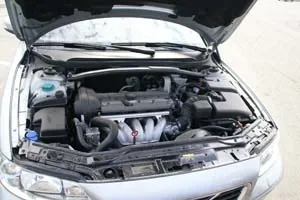
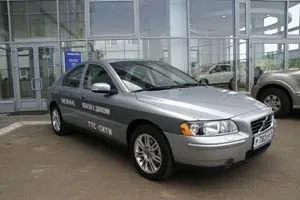
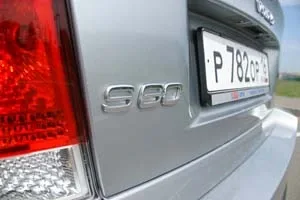
VOLVO S60
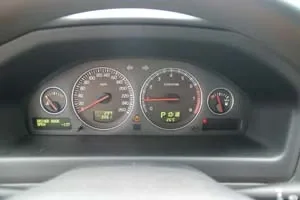
Powertrain — 2.4 L
Peak power — 140 hp/4500 rpm
Max torque — 220 Nm/3300 rpm
Top speed (km/h) — 210
Acceleration from standstill to 100 km/h — 11.1
Fuel consumption (L/100 km):
city — 9.5
highway — 8.8
Transmission — 5-speed automatic
Length — 4603 mm
Width — 1813 mm
Height — 1428 mm
Curb weight — 1428 kg
Tires 205/55R16
Dual-zone climate control, ABS+EBD, DSTC+EBA, 8 airbags, alloy wheels, full electric package, front fog lights, leather+fabric, aluminum inserts, integrated child seat, laminated side windows, water-repellent windshield coating
Price $32,590 (UAH 260,713), base trim price $30,895 (UAH 247,159)
Marat Makhmudov, Deputy Director of the Kazan School of Advanced Driving
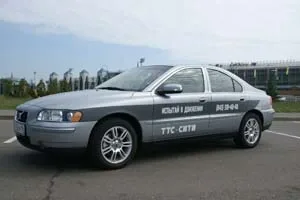
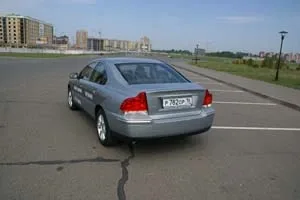
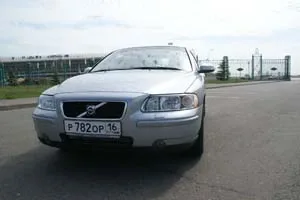
Fate had it that literally a day before I was to take my previous-generation Volvo XC70 to an official dealer for scheduled maintenance, I received a call from the commercial director of the Autoclub. He offered me to test the “family” sedan S60 and share my impressions. I thought it was a great coincidence: while my car was in service, I could drive a vehicle that serves as the technical base for my own — the difference is only in the body and gearbox. I was curious to study the car with a naturally aspirated 2.4-liter engine, an automatic, and in the “Optima” trim: interior with combined fabric and leather upholstery, audio system with CD player, dual-zone climate control, DSTC system, heated front seats, alloy wheels, and a number of other options. Willy-nilly, I will have to compare it with its factory siblings, especially since I had never sat behind the wheel of a “sixty” before. Outside, the silver sedan, despite the model’s respectable age, looks current and even, I dare say, elegantly classic — without excessive pretentiousness, but with the signature Volvo “shoulder belt” by which this car is unmistakably recognized in traffic from behind.
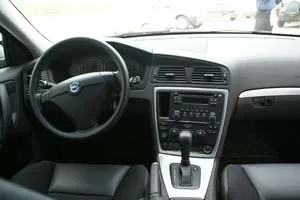
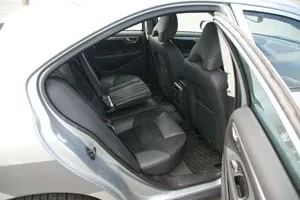
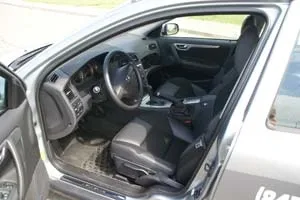
Inside, everything is painfully familiar: pleasant-to-touch soft plastics with perfect panel fit, familiar round instruments with excellent readability, the panel even has an indicator for the selected automatic transmission mode, and the console and doors are adorned with aluminum inserts. Air vents on the central pillars are also a familiar sight. In the back, two will sit comfortably; three will fit, of course, but only if they are not large in build. There is enough legroom, but without excess — as with most classmates. The trunk is spacious, almost perfectly rectangular, with neat niches hidden under the trim. The rear seats can be folded directly from the luggage compartment — just pull the levers on the sides. There is probably no need to elaborate on airbags and other passenger protection systems: for the whole world, Volvo and safety are synonymous, and 9 out of 10 people associate this brand with exactly that. But one detail is still worth mentioning — integrated headrests that protect against whiplash injuries.
The waybill is filled out, the exit barrier is raised — time to hit the road. Outside it’s real July heat, so first I set both temperature controls to 21 degrees, move the automatic selector to “D,” and drive out unhurriedly. To be honest, the modest 140 hp did not inspire me in advance — after all, my car has 210! — especially since the air conditioner would have to be kept on constantly. So I started without much enthusiasm. However, my fears quickly dissipated: the engine and automatic combination delivers the claimed power to the fullest. No hint of “underpowered” — the car accelerates smoothly and confidently when pressing the gas, and the five-speed gearbox shifts gears briskly, without hesitation, and when releasing the gas, it promptly downshifts. This is especially noticeable if you move the selector to positions below “D.” Applause to the engine and gearbox! And there are also turbocharged versions of the “sixty”: 2.4 with 170 hp, 2.5 with 210 hp, as well as all-wheel-drive modifications. I wonder what the dynamics are like in a car with the 2.5T engine — after all, the same one is in the heavier XC90, and there are no acceleration issues there. The ride smoothness also pleased: on our far from ideal roads, the S60 seems to hide all irregularities deep in the suspension, and only light tire slaps reach the passengers. At the same time, the sedan handles excellently — instantly responds to steering inputs, does not tend to slide into a skid on either axle. During the trip, no external or internal noises were heard in the cabin — this speaks to both good sound insulation and quality assembly. The climate control caused no complaints: the air conditioner reliably cooled the air to a comfortable temperature in recirculation mode, and the heat reminded of itself only when exiting the car. In the end, I liked the car — a rare case when initial skepticism turns into sympathy after close acquaintance. In my opinion, this is an excellent choice in the “family” segment in terms of price-quality-total consumer properties. And it’s not because I myself am a Volvo owner, because my car still differs in engine, transmission, suspension, and off-road capability. It’s just objective reality that cannot be ignored.
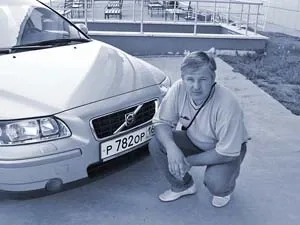
Oleg Shatov, Director of the Kazan School of Advanced Driving
I will skip the interior description — dozens of specialists have already done that, describing it in the most vivid colors. About the exterior, I will say briefly: “beautiful.” Truly beautiful. Like a well-built man with proper proportions. From the cabin, I will only recall the convenient pocket on the front seat cushion and the fact that sitting behind the wheel in a hat is impossible — the brim hits the tall headrest. But the neck is reliably protected from rear impact. And the hat, after all, can be placed on the rear shelf. Overall, the interior is calm, unobtrusive, and classic in style. However, my acquaintance with the Volvo began not from the driver’s seat, but from the rear passenger seat. As soon as I sat down, I immediately felt cool air from the climate system blowing into my face and feet — the air vent louvers are located under the front seat and on the central pillar. My head does not touch the ceiling, my knees do not reach the backrest — minimal comfort is ensured. But soon the first signs of seasickness began to overcome me — the soft suspension, mercilessly swallowing all defects of Russian roads, made itself known. Fortunately, the test of my vestibular apparatus quickly ended, and I moved to my usual place — behind the wheel.
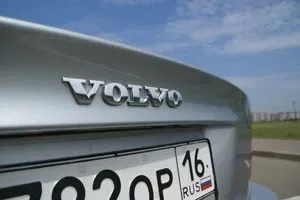
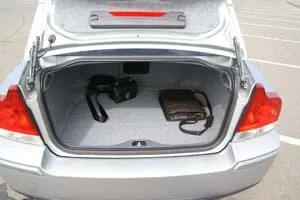
During measured driving, the seating position is quite comfortable, and the steering column adjusts both in height and reach. The 2.4-liter engine does not promise hurricane acceleration, but honestly delivers all 140… not percent, but horsepower. The S60’s automatic gearbox deserves a separate discussion. In normal modes, it is quite responsive, although shifts from gear to gear are felt. When driving on congested city streets, you can limit the number of available gears to four or three — then there is no need to constantly press the brake, and you can easily engine-brake. But I never found second gear. However, I discovered the “L” mode: at low speeds, it holds first gear, and as speed increases, it engages second and vice versa — downshifts to first when revs drop. And you know, it’s convenient! True, returning the selector back to “Drive” turned out to be not too simple — there is a risk of accidentally shifting into neutral. In general, with such a powertrain, you don’t feel inferior in traffic, but there is no particular desire to race either. Measured, sedate driving is the element of the S60. Especially since during steady movement, almost complete (of course, I exaggerate) silence reigns in the cabin.
However, on our roads, even with the calmest driving style, you won't be allowed to relax — some kid in a tinted 'Samara' will cut you off, or a pretty girl in a brand-new 'Lexus' will suddenly change lanes. Pedestrians also spring surprises. So you can only dream of measured driving, constantly dodging other road users. In emergency situations, the Volvo holds confidently and predictably — its Scandinavian origins are felt. There's no pronounced tendency to understeer or oversteer — the behavior is completely neutral. At first, the tires confused me, as they started squealing early, but after I drove the same 'slalom' in my own car, I realized: the issue is likely not the tires, but the thirty-degree heat and asphalt scorched by the July sun. With a slight squeal of the tires, the sedan conquered the 'slalom' at a decent speed, clearly fitting into all the turns, but the body rolls once again made it clear that this car is not inclined toward sporty driving. Additionally, the DSTC stability system doesn't fully disengage, and during a sharp obstacle avoidance maneuver, it intervenes as soon as the Volvo starts to 'wag its tail.' Whether non-switchable stabilization is needed here is debatable, but its presence once again underscores the Swedes' serious approach to safety.
Summing up my impressions of the Volvo S60, I recalled the hackneyed phrase: 'a car is not a luxury, but a means of transportation.' And it perfectly describes the essence of the tested car: a comfortable, safe, and, hopefully, reliable means of transportation.
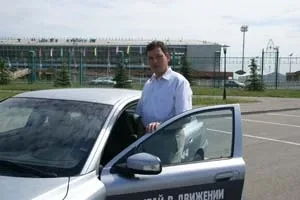
Oleg Sorokin, Deputy General Director for Development at ZAO 'Lint'
What comes to mind when Volvo is mentioned?
First and foremost — safety, and only that. This belief wasn't formed from advertising videos, but thanks to what I once saw with my own eyes. In 1994, at the traffic police impound lot in Moscow, I happened to see a Volvo S40 (or rather, what bore that name then) after a terrible head-on collision — the entire front of the car had turned into a shapeless piece of metal. But what truly amazed me was the driver's seat: the space around the driver remained untouched, giving the impression that the person simply got out of the car after the accident, albeit having broken the door...

The second association with the Volvo brand is a successful manager of a large company, a middle-aged person who values calmness, confidence, and maximum comfort in a car.
Therefore, when the opportunity arose to 'test' a bright representative of this brand — the Volvo S60 sedan — I took advantage of it with great pleasure.
The first thing that struck me when I got behind the wheel was the excellent ergonomics of the driver's seat. All controls are located exactly where they should be; you don't even need to think — your hands find the necessary levers and buttons by themselves. Your body naturally assumes that one correct posture in which you merge with the car into a single whole and enjoy driving. That's it — let's go...
From the very first meters, a feeling of confidence, comfort, and complete control over the car doesn't leave you. The 140 hp engine paired with a five-speed automatic accelerates the car smoothly but quite assertively, and you constantly feel that there's a power reserve if needed. The energy-intensive suspension 'swallows' most road irregularities, and the driver and passengers will be comfortable at any speed. The 'automatic' shifts quickly and timely, while the feeling of confidence and control over the car doesn't leave. The gear ratios are optimally selected. The result is an excellent tandem: engine — gearbox. The steering wheel is quite informative. The brakes are simply magnificent. Within ten minutes, I had become so 'attuned' to the car that I forgot I wasn't driving my own. Visibility from the driver's seat is decent, though the exterior mirrors seemed slightly small. Sound insulation is top-notch — all the road hustle stays outside, and you're left to simply enjoy the ride.
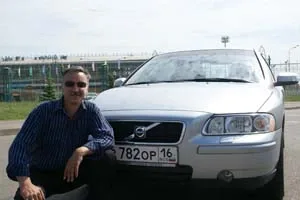
Vadim Sadykov, 'Avtoklub-Kazan'
I first saw this car in a dealership. It didn't make much of an impression. Nor did the 2.4 engine with 140 hp add any enthusiasm.
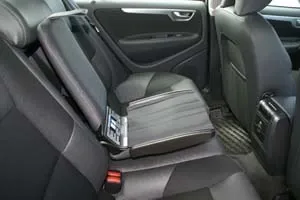
But then came the test drive. Outside, especially in gray, the car looked much better: you can feel the muscularity and signature style. The front panel looks somewhat plain, the design is outdated, but there's a certain charm to it: finding the right button is truly easy — sit down and go, no need to get used to anything. I liked the combined seat of leather and rough material: comfortable and practical. But in the back, there are noticeably fewer conveniences; three adults are unlikely to be comfortable here. The likely culprit is the excessive inward slope of the door openings. Moreover, the armrest on the rear door is too short. And there's not enough knee room. On the plus side: air vents on the pillars between the front and rear doors. In the front seat, you feel much better.

Before heading out onto the highway, we drove around a bit on the lot. Overall, it's expected for a D-class car: no excessive stiffness, and there's quite noticeable body roll in corners. However, a car's ability to maneuver well doesn't depend that much on suspension stiffness. We were convinced of this again on our favorite road with a series of turns. The car, with a properly chosen trajectory, covers this section at 130 km/h, having a good margin of handling. This is an excellent result. The Mazda 6 performed significantly worse here. I liked the suspension tuning: it's moderately soft (no strong kickback from potholes and bumps) and moderately elastic (good handling). Driving on the highway behind the wheel is a pleasure. The revs are low (2000-2100 rpm), and fuel efficiency is superb. If you release the gas pedal, the revs drop to 1500, but the car loses dynamics very, very slowly. Overtaking slow trucks is done quickly and safely.
Now let's pay attention to the engine characteristics. It seems that the 2.4 with 140 hp can't be called modern. After all, even the 2.0 from Kia, Ford, Nissan, Suzuki (power from 140 to 145 hp) are clearly outdated. Moreover, the current 1.8 from Opel or Honda delivers the same 140 hp! But that's only a superficial view. The fact is that maximum power in the 2.4 is achieved already at 4500 rpm, whereas in the 1.8 or 2.0 — at 6000! This can be clearly explained if we recall that P(power)=Mcr(torque)*N(rpm). It turns out that the torque value of the 2.4 (at 4500 rpm) is a third (!!!) greater than that of the 1.8 or 2.0 (at 6000 rpm). That's what good low-end traction means. By the way, the maximum torque of the 2.4 is 220 Nm at 3300 rpm! These are practically 'diesel' settings! Through experimentation, we found that sharply pressing the gas (with the needle in the red zone) is not as effective as smoothly and gradually adding gas, which truly delivers good acceleration and a large traction reserve. It's also worth noting the excellent operation of the 5-speed automatic, perfectly tuned for this specific engine. Everything happens smoothly, with no jerky downshifts (such haste is a favorite trick to mask outdated engines), and soft, quick shifting. You can feel that the final drive ratio here is small, because the main thing in this car is smoothness and traction reserve, not racing from traffic lights.
Now a few words about potential buyers. The S60's style is solidity in exterior design, interior trim, and a huge safety margin. In 2009, the 'Exclusive' series is planned for release. The S60 is a serious contender for purchase for those who don't chase fashion headlong. And finally — currently, packages of additional options are offered on the S60 at a special low price.

Alfred Mardanov, 'Avtoklub-Kazan'
This is already the second time during these long weekends that I get behind the wheel of a test car — we decided not to waste time and take a ride in the Volvo S60. The holidays knocked me out of my usual routine, so such a trip is a great way to regain tone. Usually, people come to Volvo already ready to buy, not just to look: these are those who value status and the level of comfort the brand gives its owners. There's no need to even mention the reputation of the safest car — it's a given, a self-evident fact.
What do we have this time? First of all, the signature style that you recognize instantly: the radiator grille with the logo (by the way, it's amusing that it resembles a symbol of the masculine principle) and the characteristic body lines won't let you confuse a Volvo with anything else. Although the test car was in a calm version, we still decided to do a bit of hooliganism on an empty lot. But it didn't work out: as they'd say in a flight control center, all systems are operating normally. The ABS engages exactly when you expect it, and the stability control system starts chattering on sharp turns, preventing the car from sliding into a skid. You immediately feel that the steering wheel is substantially loaded, and the 'zero' on it is very precise.
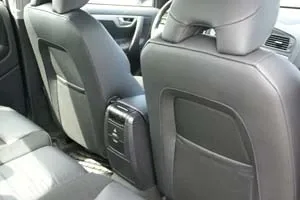
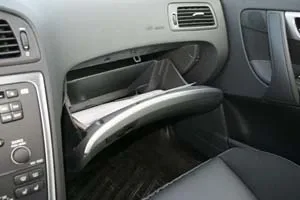
I noticed the comfortable seats, and that the mirrors have blind spots. On the highway you can put up with it, but in the city I clearly lacked their informativeness. Another point: rear passengers lack headroom — the manufacturer, for the sake of the sloping roof design, seems to have "stolen" space above the heads of those sitting in the back. But up front, everything is spacious and well-arranged; you can immediately see that the car is driver-oriented.
On the move, the S60 is just a song: I liked everything — the engine-automatic transmission pairing, and the suspension itself. This is the essence of Volvo: calmness, solidity, comfort, beauty without kitsch — almost a ready-made advertising slogan. The front panel and instrument cluster are made laconic, without an overload of buttons. I remembered how in some cars the abundance of keys frightens and forces you to study the manual before a trip. Here you just sit down and drive — everything is intuitively in its place. The mind rests: this is facilitated by the light handling, silence in the cabin, and an automatic transmission that works without delays and is quite economical. Before leaving, I reset the trip computer, and by the end of the test the average consumption was 10.9 liters per hundred. We didn't spare the gas pedal, so even if you add a couple of liters for city traffic jams, it's still a very decent result.
The gearbox, as I said, is lively and adequate: it lets the engine rev and almost never hesitates. When you release the gas, the revs immediately drop to 1500–2000 rpm. The suspension is elastic and imperturbable, carefully preserving silence in the cabin so as not to disturb the leisurely conversation of passengers. And this does not harm handling at all. A slight delay on corner entry is more than compensated by the ability to hold the line — the car goes like on rails. Honestly, I expected sluggishness and relaxed stateliness from Volvo, but got something completely different. Perhaps this is where the true essence of the brand lies.