
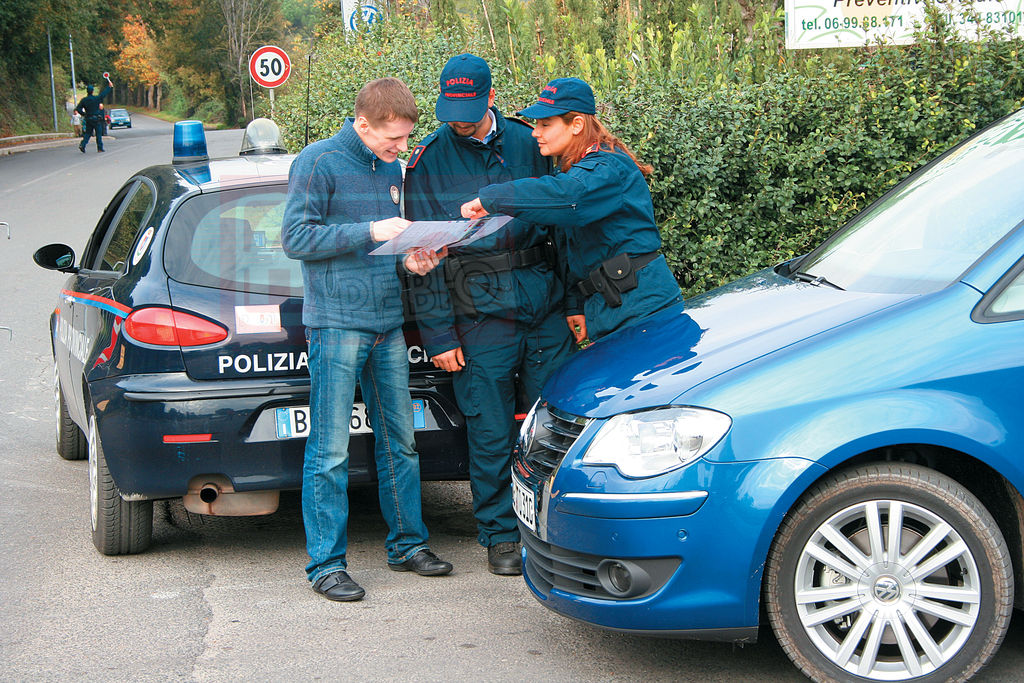
My introduction to the facelifted Volkswagen Touran compact MPV began with a curious incident. Instead of the gloomy zero outside the window, Rome greeted me with summer warmth — plus 21! I quickly found my car in the parking lot, loaded the cameras into the trunk, and set off along the planned route. However, after just ten kilometers, I noticed in the rearview mirrors a police Fiat that was clearly following me.
— What's the matter? — I asked my colleague in the passenger seat.
At that very second, the patrol car's flashing lights came on. I had to stop. And a couple of minutes later, a whole squad of law enforcement officers lined up in front of me. Looks like they've arrived. What have I done? I get out of the car…
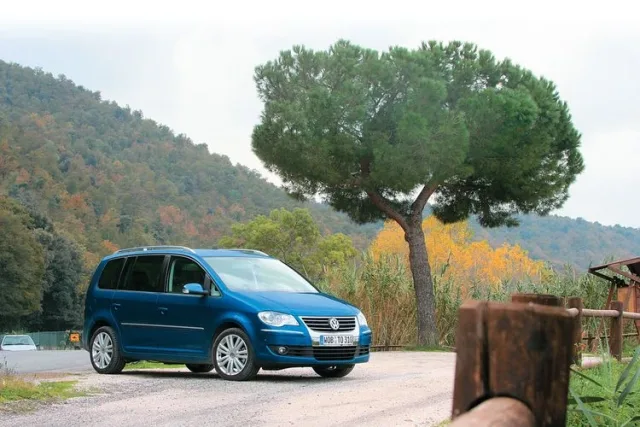
The first Touran appeared three years ago — noticeably late compared to its class competitors, whose annual sales in Europe had already exceeded 1.2 million units by then. But the newcomer, although immediately dubbed almost the most inconspicuous car on the continent, eagerly set about catching up — production surpassed 640 thousand. Now the updated Touran has taken the stage.
Although during the development of the first generation, Volkswagen marketers found that buyers primarily value practicality — space, interior transformation, equipment — while appearance ranked only sixth in the list of priorities, it is the exterior that catches the eye first. The Touran squinted its headlights in the style of the Eos coupe-cabriolet, and the radiator grille, following the latest brand fashion, stretched to the lower edge of the bumper. It looks brutal! But the matter was not limited to just a facelift.
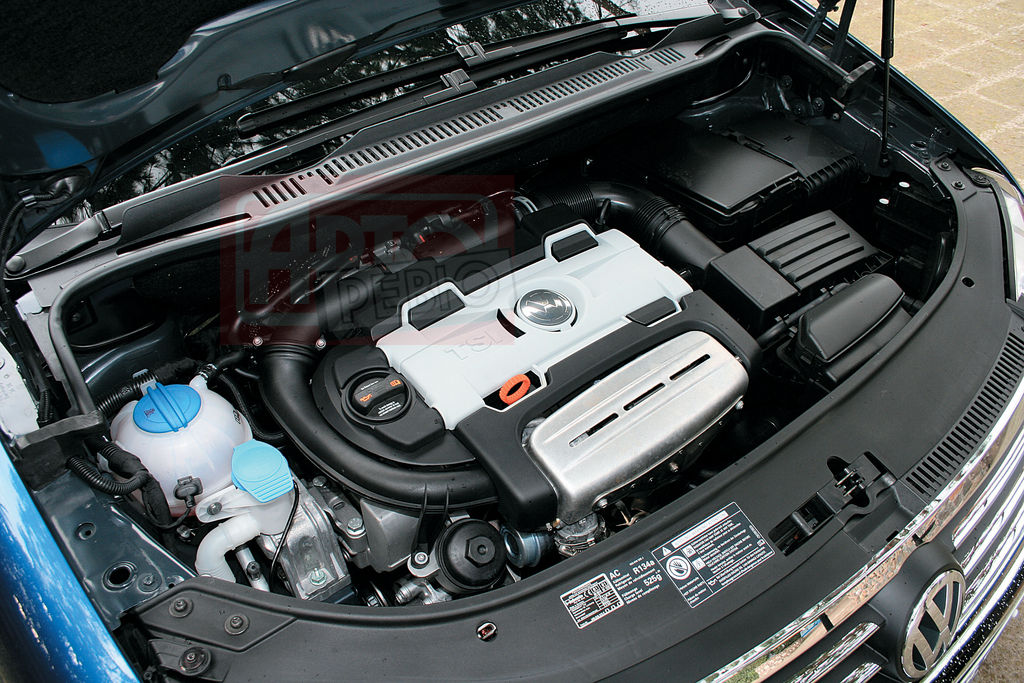 | 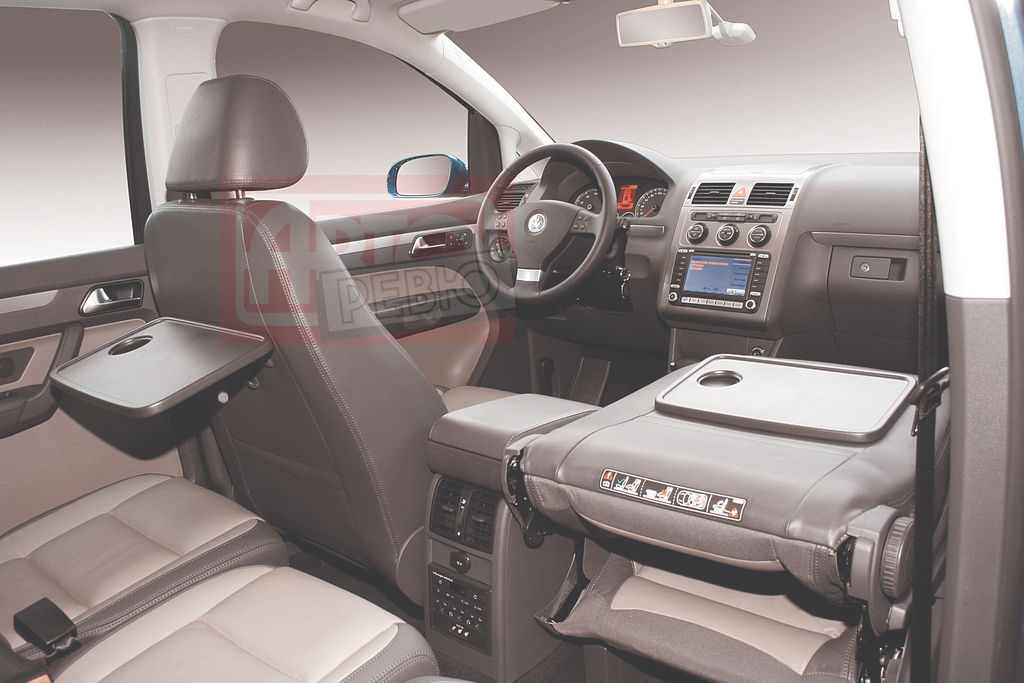 |
| The 1.4 TSI engine is available in two versions — 140 or 170 hp | The interior remains just as practical, and the steering wheel is now borrowed from the Golf |
The main changes are hidden under the hood, and they, as usual, both delight and disappoint. There is one disappointment: the newest 170-horsepower 2.0 TDI turbodiesel will not be supplied to Russia — domestic diesel fans will get two previous units: 1.9 TDI (105 hp) and 2.0 TDI (140 hp). The engines are not bad, but… When choosing a car for the test, I unhesitatingly took the version with the petrol 1.4 TSI. And I never regretted it — throughout the entire route in the vicinity of the town of Bracciano!
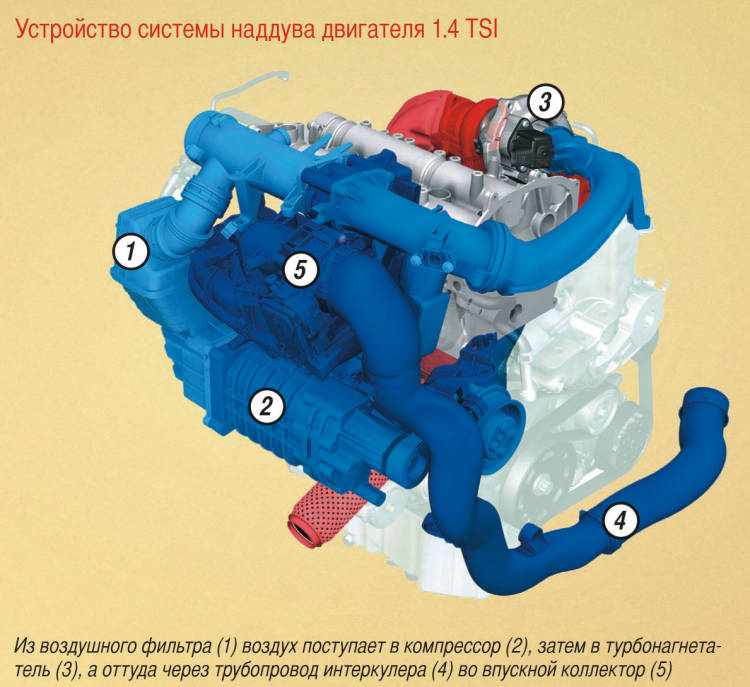
The secret is that the previous naturally aspirated 2.0-liter engine (150 hp) has given way to the very Twincharger that debuted on the "hot" Golf GT hatchback. This 1400-cc unit with direct injection has a mechanical supercharger and a turbocharger installed in series. Two versions are available — 140 or 170 hp. Notably, the official fuel consumption of the more powerful "twin-charged" version is five percent lower than that of the 2.0 FSI. And if you compare it with a naturally aspirated engine of similar output (that's a four-cylinder engine of about 2.3 liters), the "little one" will be more economical by as much as 20 percent! The most pleasant thing is that both modifications of the 1.4 TSI will also appear here. I got the more powerful one, and in combination with DSG.
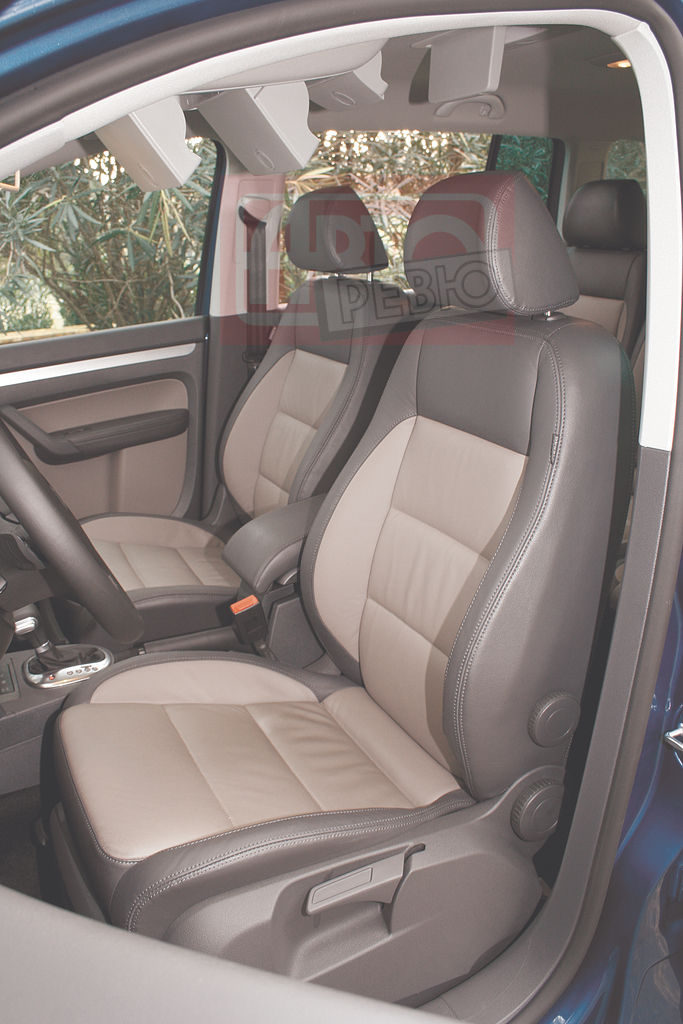 | 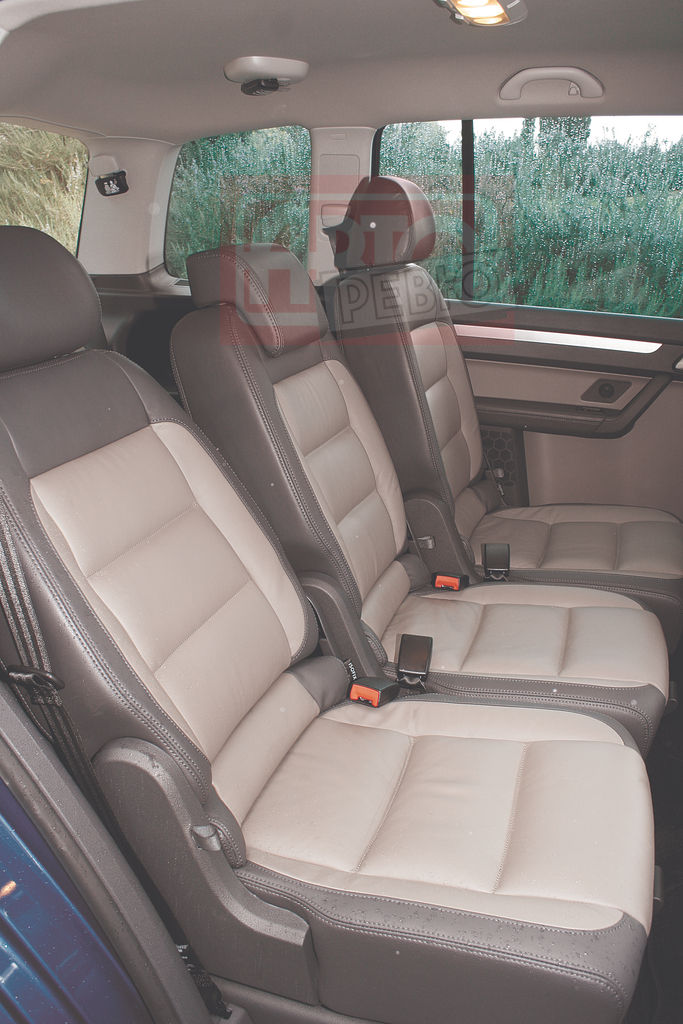 | 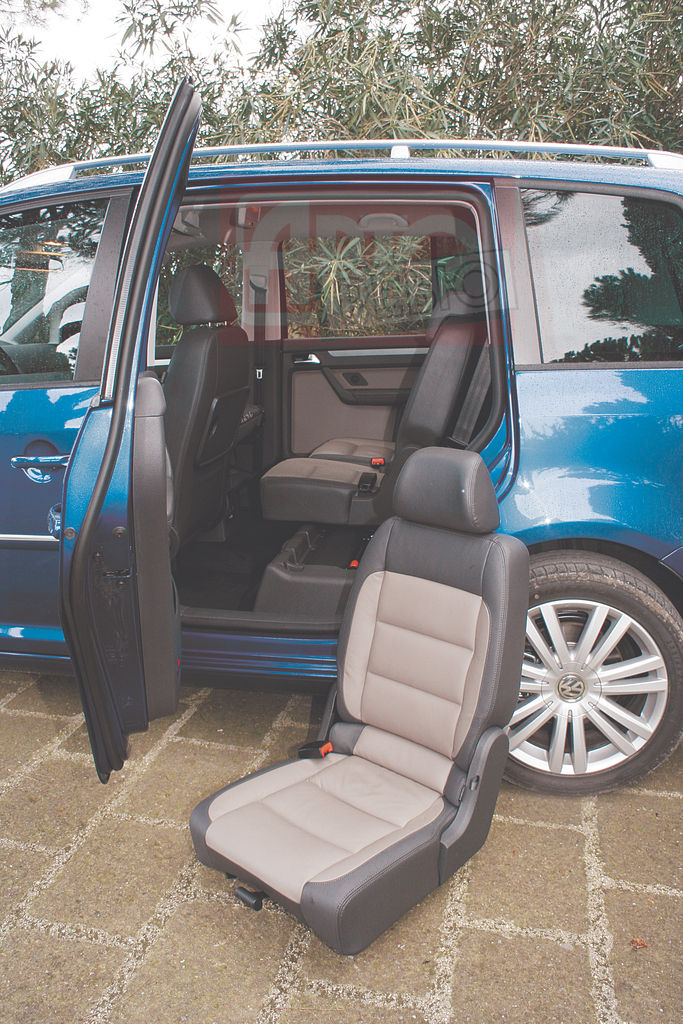 |
| Seats with height adjustment are very comfortable, on the ceiling there are folding compartments for small items and the display of the entertainment system | At the rear — folding, sliding, and removable in parts seats | Second-row seats can be removed in seconds |
Delight! Dense, ringing acceleration across the entire rev range — many two-liter engines, even turbocharged ones, would envy that. The huge torque for a working volume of 1390 cm³ (240 Nm) is available in the range from 1500 to 4750 rpm. There is always enough thrust, everywhere — whether it's a lightning-fast overtake or a long turn on a mountain road. With a colleague from St. Petersburg (who, by the way, is a participant in the Russian Rally Championship), we found a winding section and raced along it about fifteen times in both directions. Honestly, we weren't going to race a compact MPV, but the Touran provoked us: excellent chassis tuning, tenacious handling, minimal body roll, a "transparent" steering wheel, a gorgeous engine, and a "rapid-fire" gearbox. And the sound… Exactly like a "hot" hatch... compact MPV!
Among the downsides — perhaps only the "viscous" effort on the gas and brake pedals, which interferes with precise dosing, and the electric power steering that "brakes" during fast rotation. Moreover, the sportily firm suspension makes the body shudder on small irregularities. But there is no rocking at all.
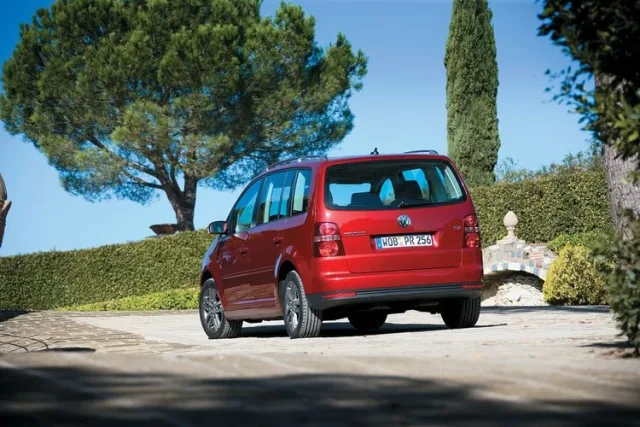
Why does a family compact MPV need so much drive? I don't know, but I liked it.
What about "family values"?
They haven't changed: three rows of seats (the third is an option ordered by 40% of buyers) move and fold in parts, there are many compartments for small items, and on the ceiling of our version (Highline) there's also a color display for rear passengers. Among the changes in the interior, the only thing that catches the eye is the steering wheel: now it's not from the Polo, but from the Golf. Otherwise, the interior, as before, feels very solid — both in materials and in the quality of panel fit. Perhaps only the second and third rows are a bit cramped — when traveling with a large company, you'll have to negotiate who sits where. And among the curious shortcomings is the "handbrake," which touches the armrest when it's extended forward.
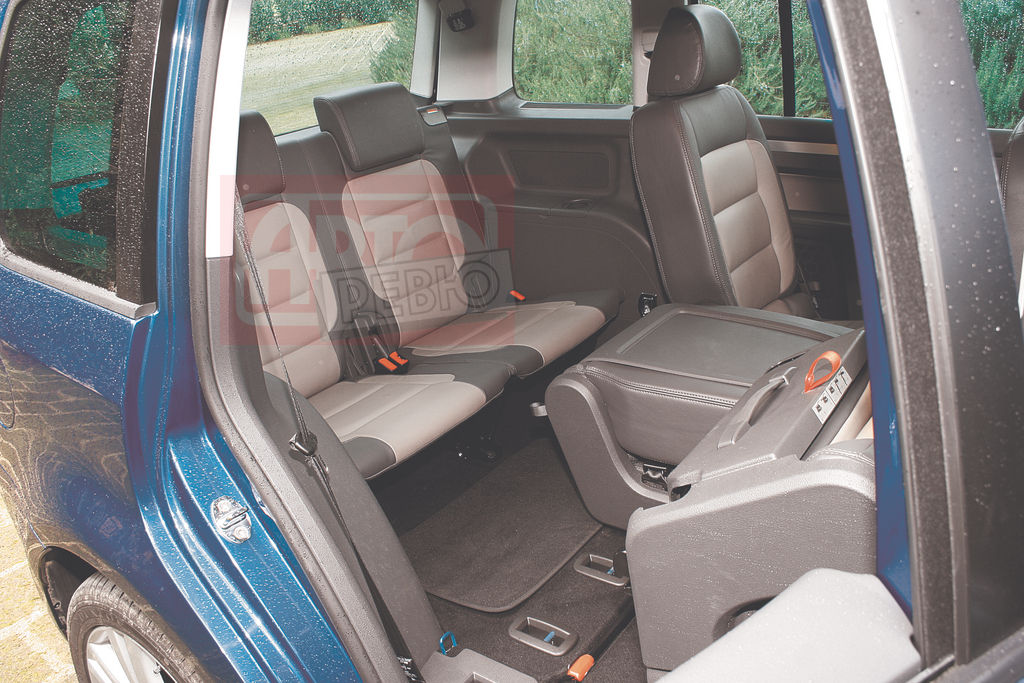 |  | 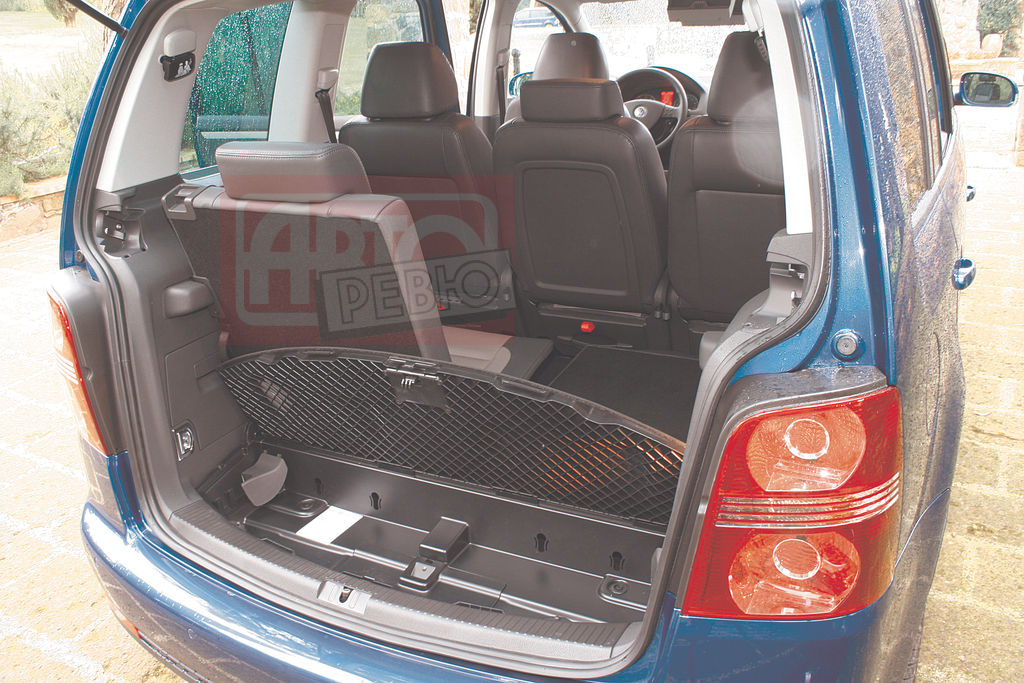 |
| To get to the third row, you need to fold the second-row seat. There's not much space in the gallery, but two people can fit | The police didn't let us into the city closed for the celebration. But we found a detour winding road where we had a blast! | The rear lights have become more expressive. In the "underground," as before, there are places for small items |
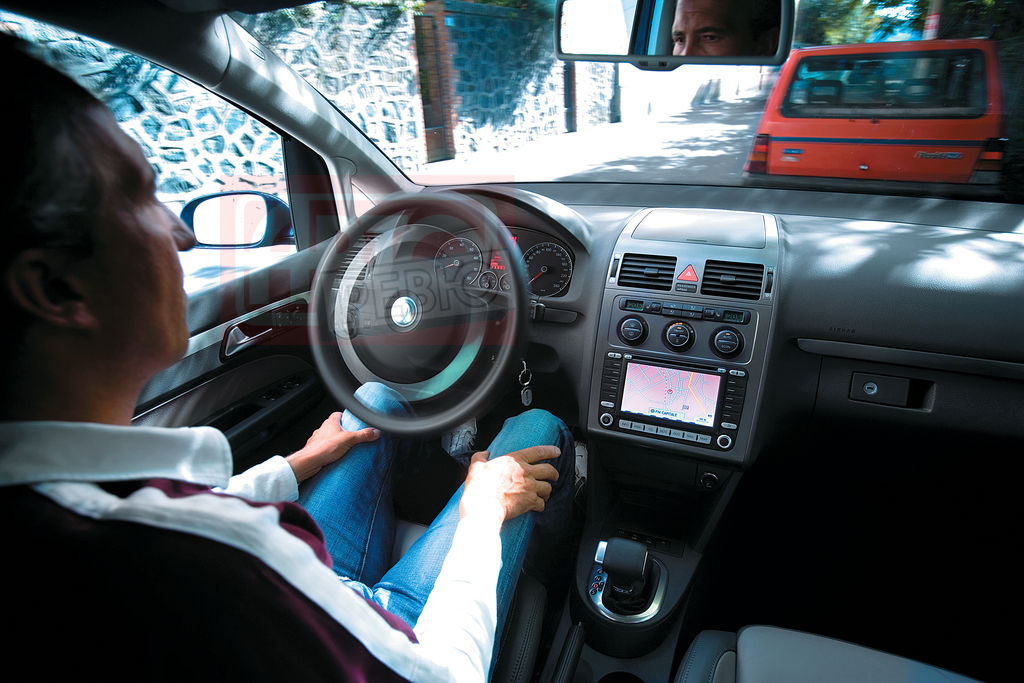
The Touran also surprised me by now being able to park itself. Almost by itself. In any case, doing it with it is noticeably easier than with the newest Mercedes CL coupe, also equipped with a "parking" assistant. If the Mercedes driver has to watch the picture on the dashboard and combine the actual "trajectory" with the desired one by turning the steering wheel, the Volkswagen Park Assist system turns the steering wheel itself! Having driven up to a parking spot, you need to press a button next to the gear lever, then, seeing the enabling signal on the display, engage reverse gear, and then… just let go of the steering wheel altogether! All that remains for the driver is to work the pedals "by ear": by the sound warning of dangerous proximity. The "self-sufficient" Touran takes its place in two moves and in a maximum of 15 seconds. Nothing in common with the fidgeting of the experimental Citroen C3 (see AR No. 15, 2005). It's a pity, of course, that there wasn't enough time to "mock" Park Assist to our heart's content: for example, to park cars at different angles or hide "invisible" obstacles between them… But even if the system turns out to be functional only in greenhouse conditions, it's an excellent aid.
We will still conduct a "parking" test — already in Moscow, where the updated Touran will arrive at the end of winter. Then the prices will finally become clear. For now, let's refer to representatives of the Volkswagen concern: they assure that prices for cars with "old" turbodiesels will change slightly (currently from $29,000 for the Touran 1.9 TDI), and the Touran with the 170-horsepower 1.4 TSI engine may turn out to be cheaper than the current version with the 2.0 FSI engine (that is, less than $33,000), and the robotic DSG gearbox will be available for it. In Germany, for example, the Touran 1.4 TSI in basic trim costs $29,300. And soon a Cross Touran styled as a crossover will appear, but only with front-wheel drive: the compact MPV will not be produced in the 4Motion version.
Well, how did the story with the police end? I didn't manage to break any rules. It turns out that on the route laid out by the organizers, Tom Cruise's wedding was singing and dancing that day, and the local police, to avoid trouble, sent mere mortals on a detour. Even a bit offensive.
Turbo — compressor
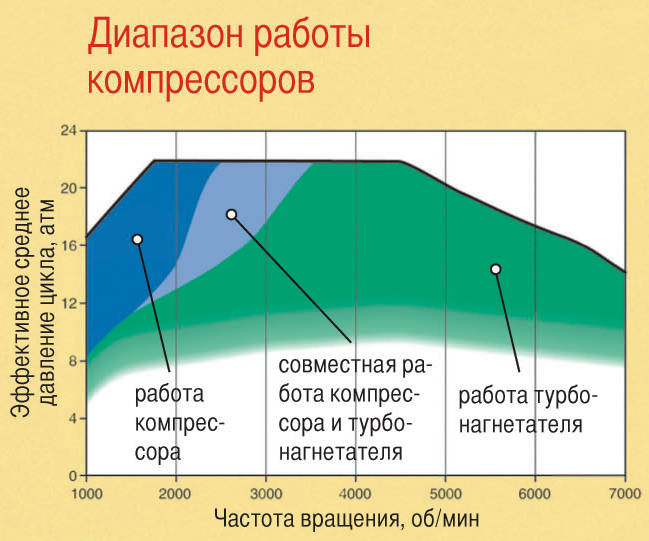
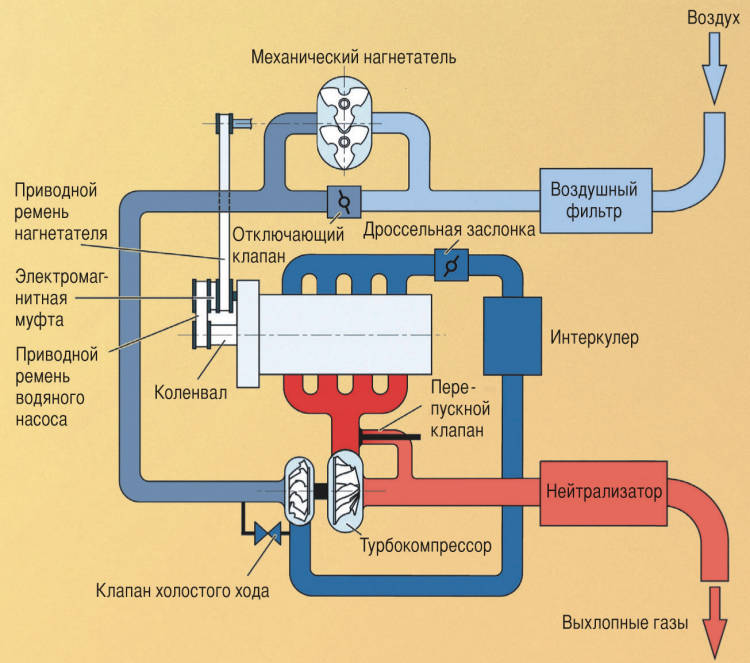
The scheme in which a turbocharger works in tandem with a mechanical supercharger is a great rarity for the automotive industry. The first to use such a unit was the factory Lancia team in the rally S4 model back in the mid-80s. Now, besides the Volkswagen concern, BMW uses double sequential supercharging in production, but only on diesel engines, and even there there are two turbochargers. Volkswagen's scheme is combined.
 |
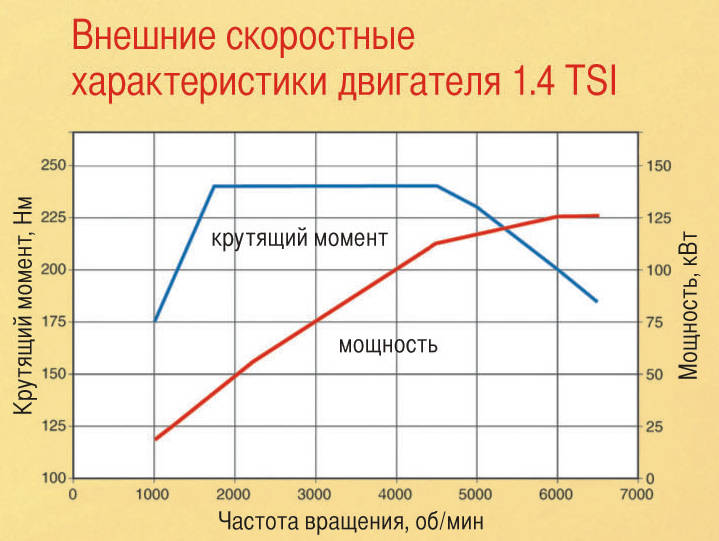 |
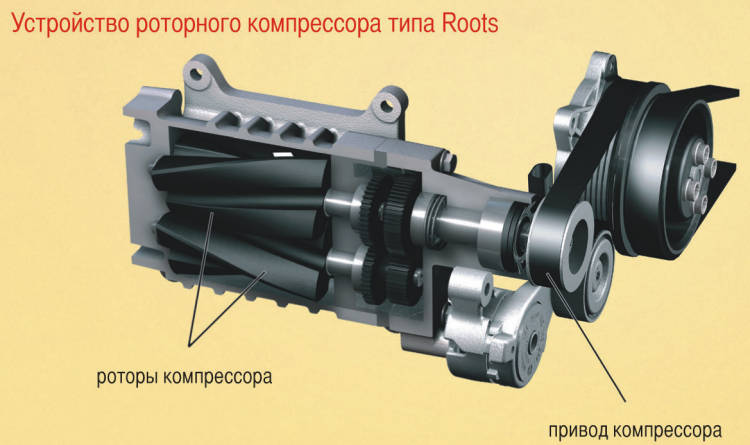
While the 1.4 TSI engine runs at low revs, excess pressure is created by a Roots-type supercharger driven by the crankshaft. This unit, developed jointly with specialists from Eaton, delivers a maximum of 2.5 atm already at 1500 rpm. Then, from 2400 rpm, the turbocharger kicks in, and after 3500 rpm it works on its own. As a result, the engine, with a displacement of just 1390 cubic centimeters, produces 170 horsepower and 240 Nm of torque — comparable to a naturally aspirated 2.3-liter engine!
 |
 |
 |
To ensure the small engine copes with serious loads due to high boost pressure and a considerable compression ratio (10:1), the cylinder block is cast from cast iron, and the crankshaft is reinforced. Fuel is injected into the cylinders at pressures up to 150 atmospheres. For the Touran, the claimed average fuel consumption is no more than 7.6 liters per 100 km. Currently, the 170-horsepower version is installed on the Golf GT and Touran, and for the minivan a less powerful 140-hp Twincharger is also available. Company engineers, pleased with the success of the 1.4 TSI (it has won the "Engine of the Year-2006" competition twice), intend to further reduce displacement: it is quite possible that a similar Twincharger system will appear on 1.2-liter engines.
Hands off!
The Park Assist system, developed at Volkswagen, is based on four ultrasonic sensors (two at the front and two at the rear) and a control module. In addition, it includes a conventional parking sensor and the Hill Hold Control system, which helps when starting on an incline.
The electronic assistant can park the car only parallel, in reverse, both on its own side of the road and on the oncoming side. It needs at least 1.4 meters of free space.
 |
|
| The steering wheel turns by itself — very unusual! |
This indication means that the Touran has found a free spot among parked cars and is ready to begin "self" parking |
When approaching a parking spot, you need to press the button on the center tunnel and drive along a row of parked cars at a speed no higher than 30 km/h and at a distance of no more than one and a half meters. When the sensors find a suitable gap, an instruction to engage reverse gear will appear on the display. Then you can let go of the steering wheel — it will turn itself with the electric power steering. The driver only needs to listen to the parking sensor signals and operate the accelerator and brake pedals. However, the system cannot bring the car to a complete stop, and it does not handle parking near trees, poles, or other non-standard obstacles. If the driver grabs the wheel or the speed exceeds 7 km/h, the parking assistant immediately disengages.
| Specifications | ||||
| Vehicle | Volkswagen Touran | |||
| Modification | 1.6 | 1.4 TSI | 1.9 TDI | 2.0 TDI |
| Body type | compact MPV | compact MPV | compact MPV | compact MPV |
| Number of seats | 5—7 | 5—7 | 5—7 | 5—7 |
| Length, mm | 4407 | 4407 | 4407 | 4407 |
| Width, mm | 1794 | 1794 | 1794 | 1794 |
| Height, mm | 1635 | 1635 | 1635 | 1635 |
| Wheelbase, mm | 2678 | 2678 | 2678 | 2678 |
| Trunk volume, l | 695—1989* | 695—1989* | 695—1989* | 695—1989* |
| Engine | petrol | petrol, with mechanical supercharger and turbocharger | turbodiesel | turbodiesel |
| Layout | front, transverse | front, transverse | front, transverse | front, transverse |
| Number and arrangement of cylinders | 4, in-line | 4, in-line | 4, in-line | 4, in-line |
| Displacement, cm³ | 1595 | 1390 | 1896 | 1968 |
| Cylinder bore/piston stroke, mm | 81.0/77.4 | 76.5/75.6 | 79.5/95.5 | 81.0/95.5 |
| Max. power, hp/kW/rpm | 102/75/5600 | 140/103/5600 (170/125/6000) | 90/66/4000 (105/77/4000) | 140/103/4000 (170/125/4200) |
| Max. torque, Nm/rpm | 148/3800 | 220/1500—4000 (240/1500—4750) | 210/1800—2500 (250/1900) | 320/1750—2500 (350/1750—2500) |
| Gearbox | manual, 6-speed | manual, 6-speed | manual, 6-speed | manual, 6-speed |
| Drive | front-wheel | front-wheel | front-wheel | front-wheel |
| Front suspension | independent, coil spring, McPherson | independent, coil spring, McPherson | independent, coil spring, McPherson | independent, coil spring, McPherson |
| Rear suspension | independent, coil spring, multi-link | independent, coil spring, multi-link | independent, coil spring, multi-link | independent, coil spring, multi-link |
| Front brakes | disc, ventilated | disc, ventilated | disc, ventilated | disc, ventilated |
| Rear brakes | disc | disc | disc | disc |
| Tires | 195/65 R15—205/55 R16 | 195/65 R15—205/55 R16 | 195/65 R15—205/55 R16 | 195/65 R15—205/55 R16 |
| Maximum speed, km/h | 179 | 200 (212) | 171 (179) | 200 (214) |
| Acceleration 0—100 km/h, s | 12.9 | 9.8 (8.5) | 14.9 (13.2) | 10.2 (9.0) |
| Fuel consumption, l/100 km | ||||
| urban cycle | 11.0 | 9.7 (10.3) | 7.5 (7.4) | 7.6 (8.5) |
| extra-urban cycle | 6.5 | 6.1 (6.2) | 5.3 (5.2) | 5.2 (5.6) |
| combined cycle | 8.1 | 7.4 (7.6) | 6.0 (5.9) | 6.0 (6.6) |
| Fuel tank capacity, l | 60 | 60 | 60 | 60 |
| Fuel | petrol AI-95 | AI-95 | diesel | diesel |
| * With rear seats folded | ||||
| Data in parentheses — for more powerful engine versions | ||||