
 At the very beginning of 1975, Volkswagen brought to the market the "little brother" of the Golf model — the three-door VW Polo with front-wheel drive, which in its design replicated the Audi-50 and was equipped with engines ranging from 895 to 1272 cubic centimeters.Comments (1)
The affordable and utilitarian VW Polo, repeating the success of the famous Golf, also gained enormous popularity and noticeably strengthened Volkswagen AG's position in the market. Over all the years of the model's existence, more than 11 million such cars have spread around the world.
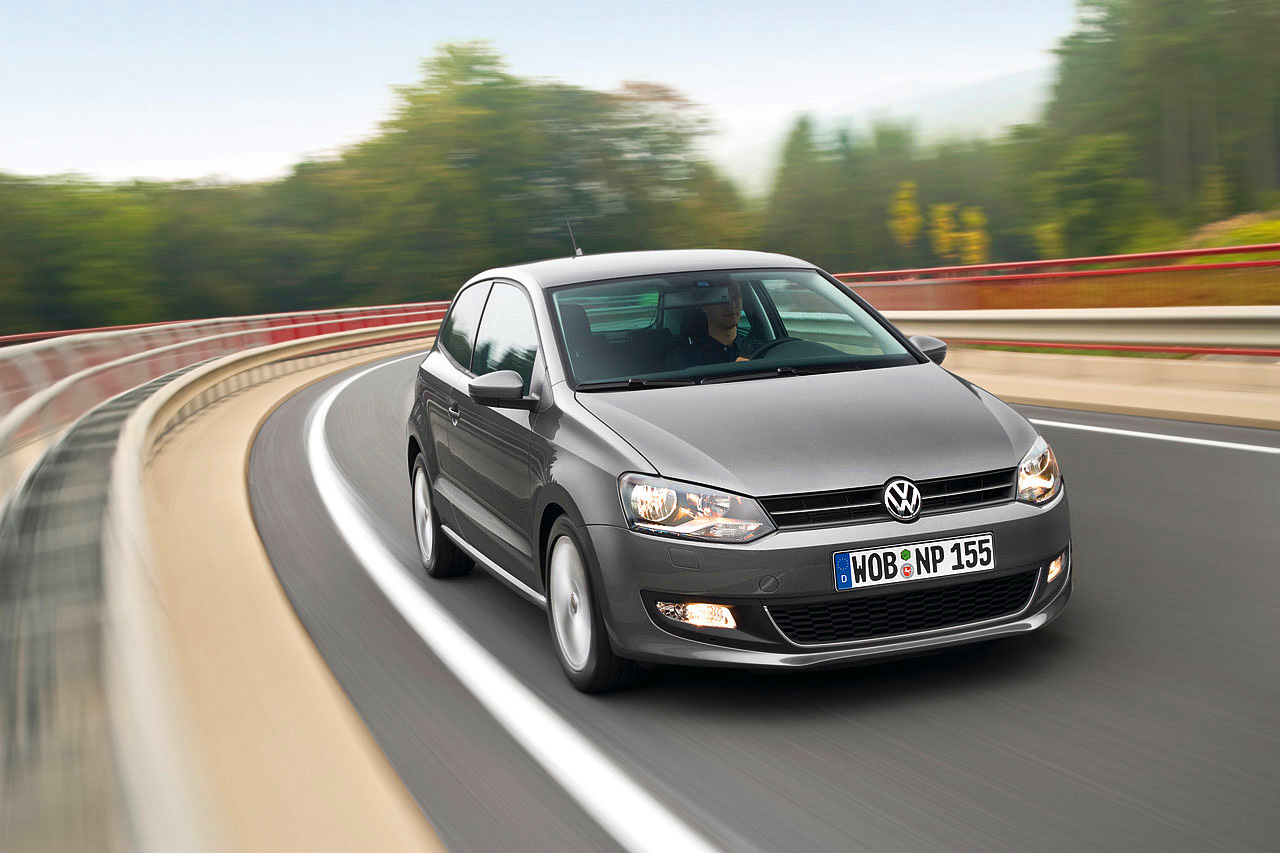
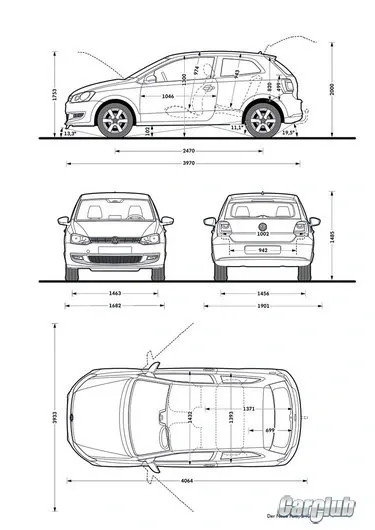
34 years later, Volkswagen decided to continue the history of the Polo line and released the fifth generation. As before, the new model was offered in three- and five-door bodies. Compared to its predecessor, the wheelbase grew by only 4 millimeters — to 2470 mm. The car gained 54 mm in length (now 3970 mm) and 32 mm in width (1682 mm). It seems like a little! But for a small car, the main trump card is precisely compactness. It is much more important to keep the external dimensions, but at the same time make the interior more spacious. Credit must be given — the Polo engineers succeeded. A tall passenger can easily sit behind themselves, though in the three-door the headroom is limited: from the top of the head to the ceiling, as they say, a palm's width.
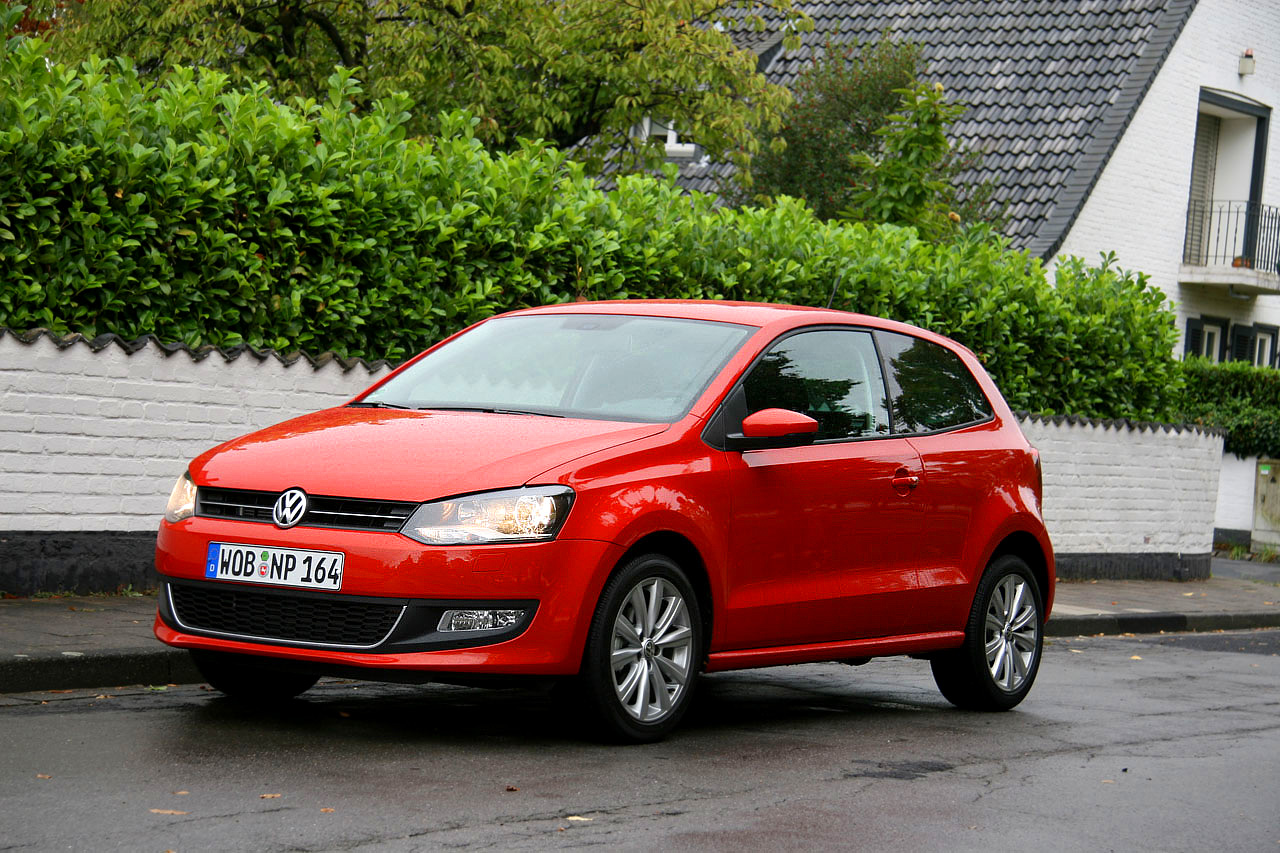 |
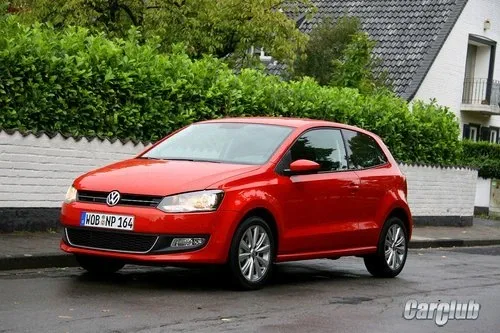
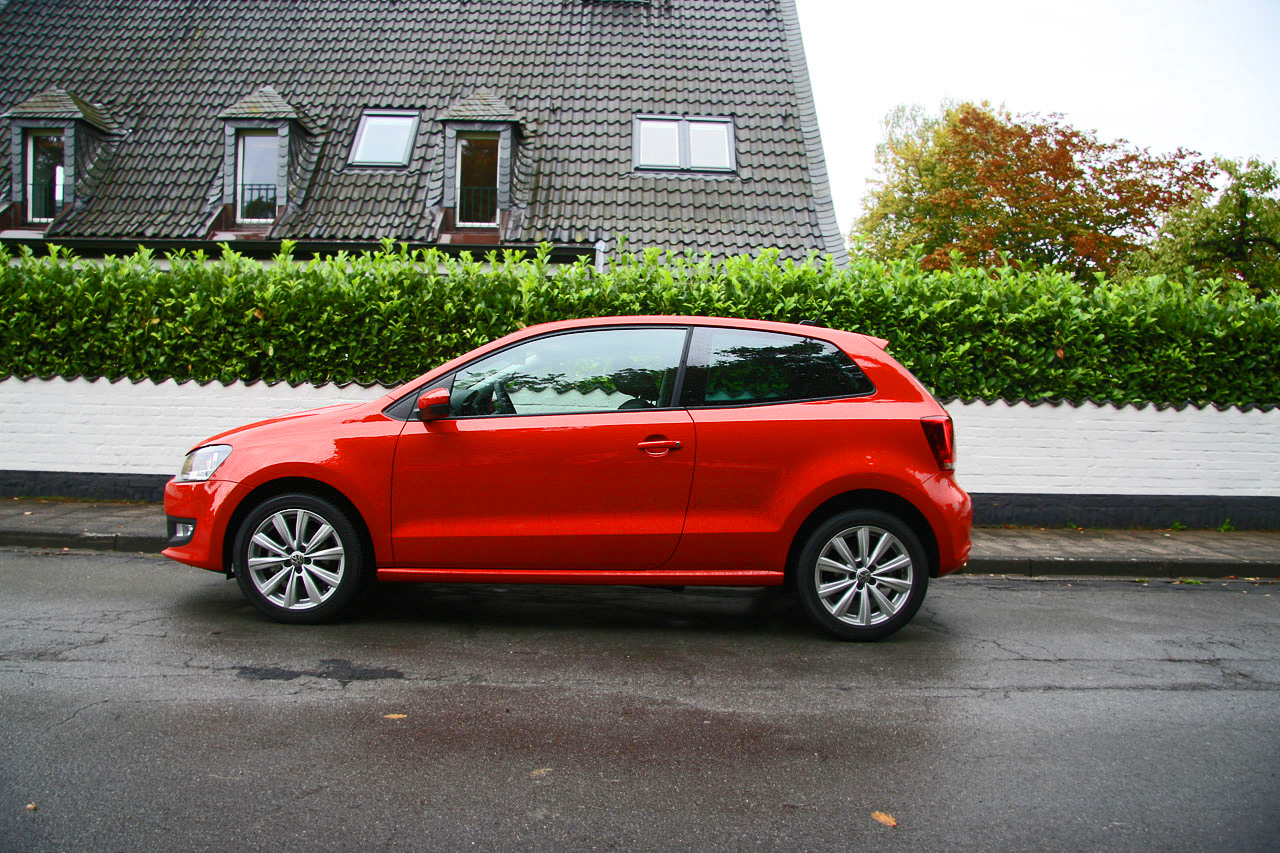
| The exterior of the carefree little one has become noticeably more solid and serious. Polo has donned a strict suit, gained more premium shine, and in essence has come closer to the VW Golf. |
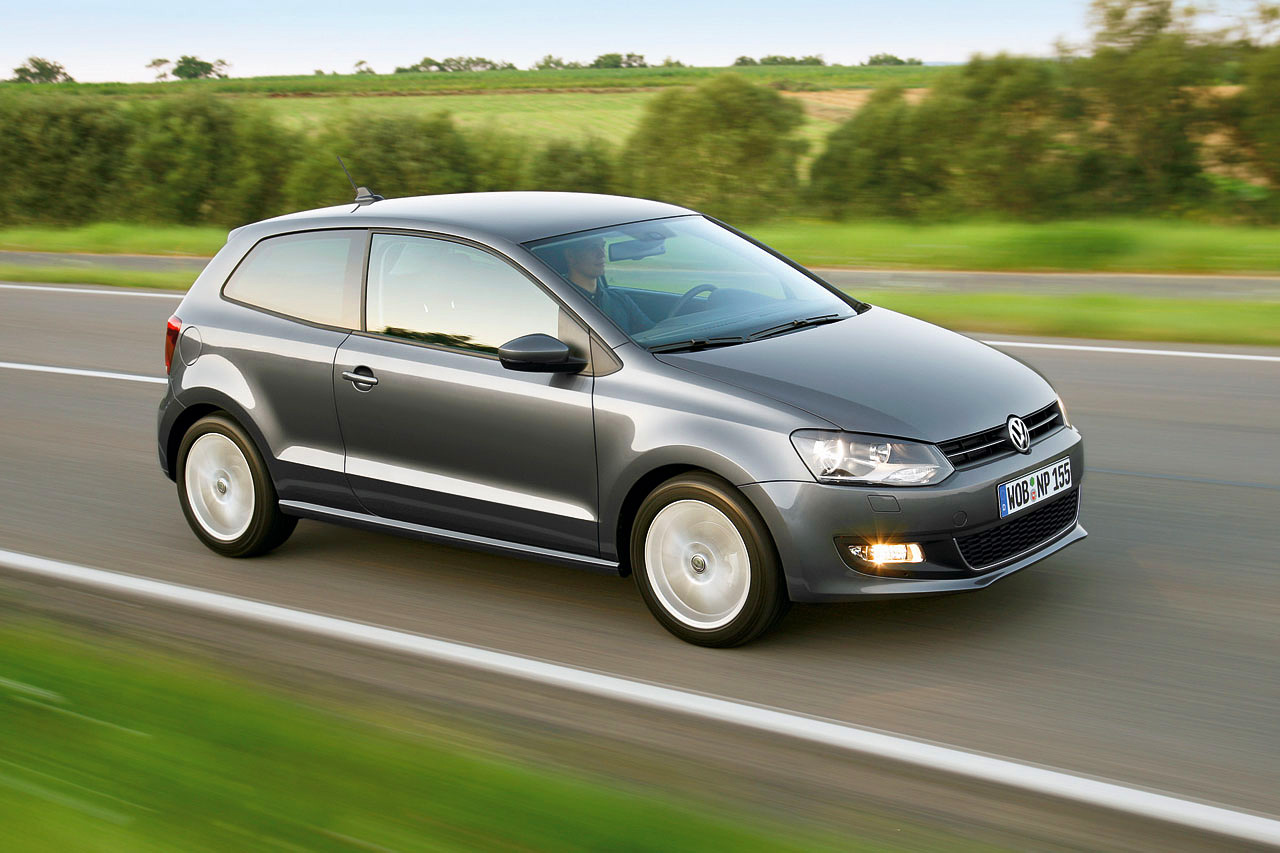
The appearance of the VW Polo has changed repeatedly over its long history: early generations were a reduced copy of the "Golf", then the "little one" acquired its own look, and with the arrival of the fifth generation, Volkswagen Polo again... began to resemble the Golf. Where did the round "eyes" of the headlights and the streamlined front bumper go — now there is a predatory squint in the spirit of the fresh Golf VI and a wide "grin" of the air intake in the aggressive bumper. The featureless sides have been replaced by expressive stampings emphasizing the strict German silhouette. And the cute rear lights with round inserts have given way to intricate optics with clear straight lines.
As a result, the small and carefree little car now looks more presentable and serious. Polo seems to have put on a business suit and acquired premium gloss, approaching the concept of the VW Golf. Alas, such is the current German fashion — the cheerful design with smooth lines, round details, and cute frills is a thing of the past. Now straight lines, strict proportions, and aggression in appearance are in trend.
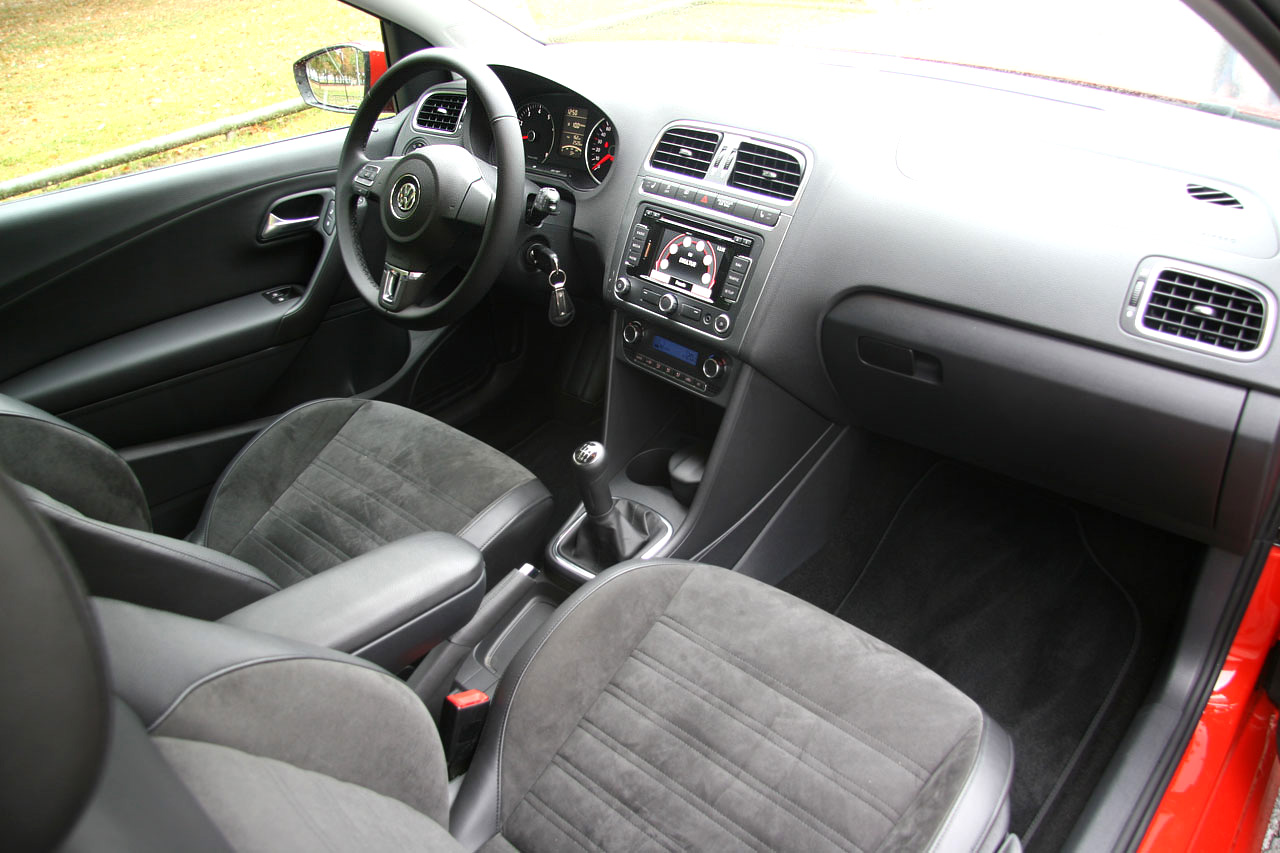 |
| Only high-quality materials are used in the interior trim. Soft-to-the-touch plastic, neat assembly, and laconic design create a premium atmosphere. Optionally, you can order seats upholstered in Alcantara, but this pleasure is not cheap — 58,264 rubles. |
The interior of the new model fully matches the exterior: strict laconic lines and solid trim materials. Everything is done excellently. The plastic is soft on all visible panels. Optionally available are seats with combined Alcantara and leather upholstery. The instrument panel pleases with a pleasant white backlight instead of the former poisonous blue. The readings of the speedometer, tachometer, and the small display in the center, where data from the trip computer and the electronic fuel level indicator are displayed, are read without any effort.
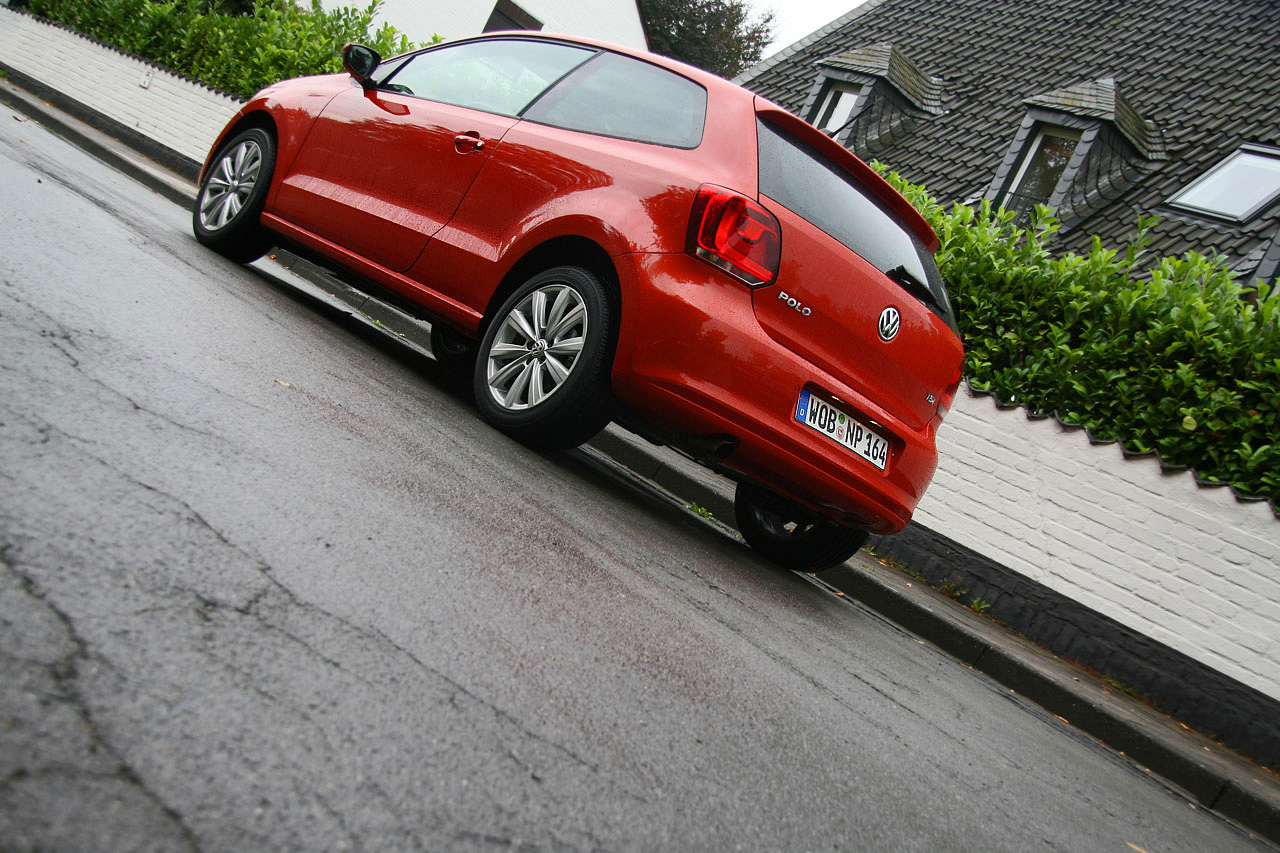 |
| The good-natured rear lights with round inserts have given way to intricate optics with straight lines. The cheerful design with smooth shapes and round details has sunk into oblivion. Now straight lines, strict proportions, and an aggressive appearance are valued. |
The trunk of the new model is 280 liters. If you fold the rear sofa, the useful volume grows to 952 liters. For comparison, for the Mazda2 these figures are 250/787 liters, and for the Ford Fiesta — 295/979. True, in the Polo trunk we found a "gift" — an additional compartment under the floor, but in Russian cars this place will be taken by a full-size spare wheel. And for our roads, this is perhaps the most valuable "bonus" of all possible.
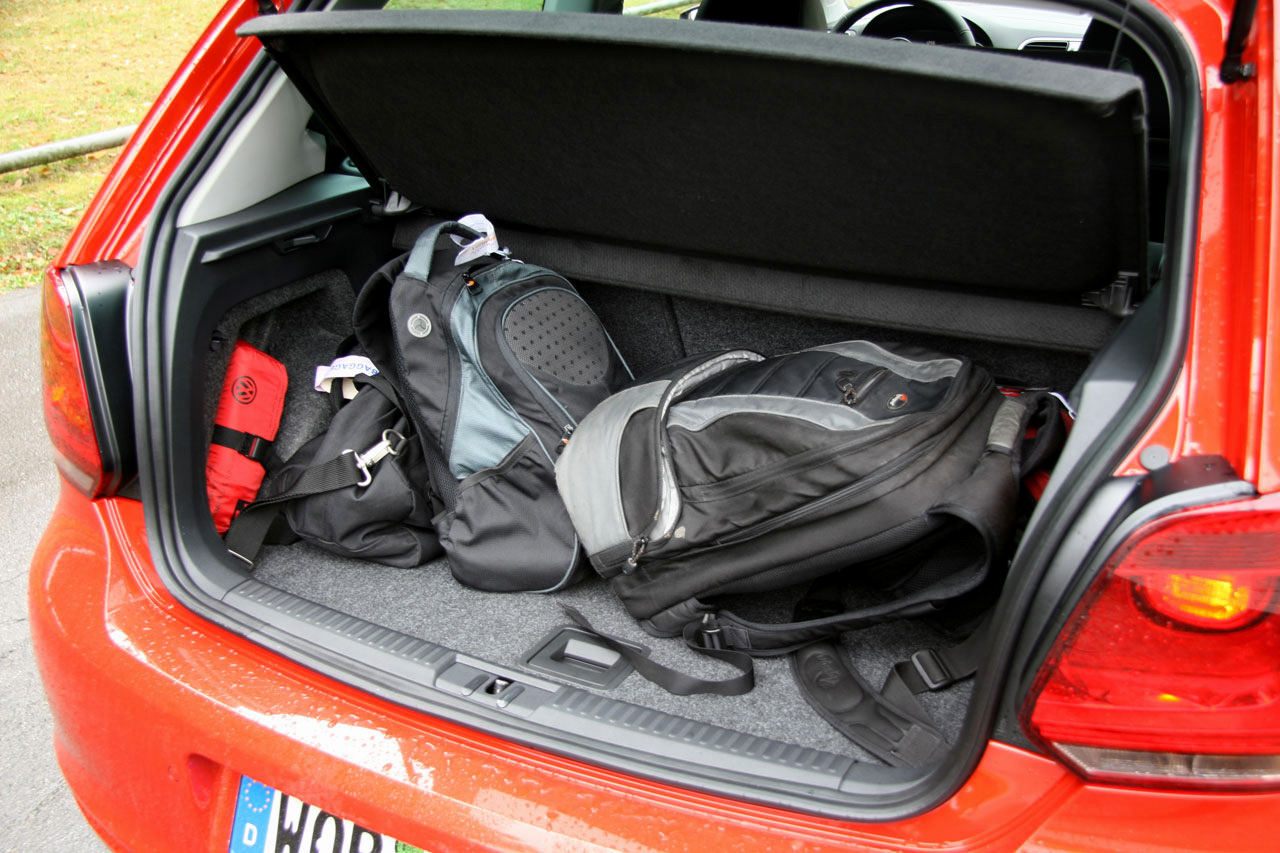 |
| The trunk with a volume of 280 liters is quite capable of holding a couple of suitcases or several small bags. If you need to transport something large, the rear sofa folds in parts, increasing the space to 787 liters. |
For the new Polo, Volkswagen prepared as many as seven engines, or rather, seven different versions. The diesel line is represented by only one power unit, which in different modifications produces 75, 90, and 105 hp. But, as has become customary, Russia is not spoiled with diesel cars. With the "Polo" it turned out exactly the same: there will be no diesels here. Nevertheless, I still could not resist and took a ride in the 90-horsepower VW Polo with a diesel engine equipped with the Start/Stop system. I honestly admit: it was this system that attracted my attention to the diesel version of the Polo.
 |
| For the new Polo, Volkswagen prepared seven engines, or rather, seven different modifications. There will be no diesels in Russia, of course, but the gasoline range is represented by three units. |
It works like this: when stopping — for example, at a traffic light or in a traffic jam — when the driver shifts the manual transmission into neutral, the engine stalls. But as soon as you press the clutch, the engine starts again. Thanks to this system, you can save up to 10% of fuel. For Russia, this is, of course, not an argument, but practical Europeans will surely appreciate such savings.
The gasoline engines are a 1.2-liter motor in two versions: 60 and 70 hp (in Russia only the more powerful one will be available), as well as a 1.4-liter "four" with 85 hp. At the beginning of 2010, the engine range will be supplemented by a turbocharged TSI unit with a volume of 1.2 liters and a power of 105 hp, which will work in tandem with a 7-speed DSG gearbox.
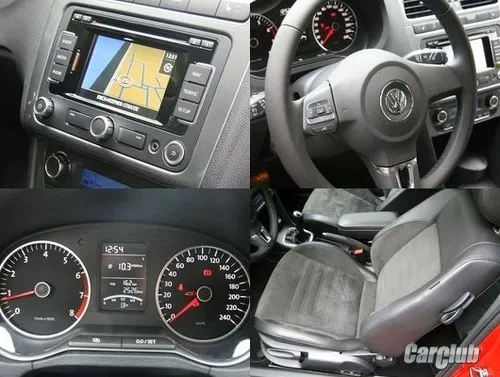 |
| Even in the base version, the VW Polo has a stylish three-spoke steering wheel. For 6,163 rubles, the "donut" can be upholstered in leather, and by paying twice as much, you get audio system control buttons on the steering wheel. |
First of all, we get into the Volkswagen Polo 1.2 TSI. Sales of this version in Russia will start only at the beginning of next year, and prices have not yet been announced. But I simply could not miss the chance to take a ride in it. After all, from the point of view of driving pleasure, this is undoubtedly the most interesting option in the entire Polo line — at least until the summer of 2010, when the "hot" version of the VW Polo GTi appears. By the way, already in the spring of 2010, sales of the VW Cross Polo with increased ground clearance and plastic body kit around the perimeter will start in Europe. However, this version will not be sold in Russia.
 |
| At the beginning of 2010, the VW Polo engine range will be supplemented by a turbocharged 1.2-liter TSI engine with 105 hp paired with a 7-speed DSG. The price for a Polo with such an engine will be announced later. |
But let's talk again about the 1.2 TSI version. When this 105-horsepower engine works in tandem with a six-speed manual, the Volkswagen Polo turns into a car with a quite serious character. Its sprint from standstill to a hundred takes 9.7 seconds, and the top speed is 190 km/h. The peak torque of 175 N·m is available from one and a half thousand revolutions and holds until 3500 rpm. It was not possible to completely get rid of the "turbo lag" typical of turbo engines — active acceleration begins only after the 2500 rpm mark. But then, up to 5000 rpm, where the liter unit reaches peak power, the Polo pleases with liveliness and instant response to pressing the accelerator. The gear lever of the manual gearbox shifts with enviable precision, as if sliding on oil. Only the lever travel is so long that when shifting from fifth to third, you have to lift your elbow off the armrest.
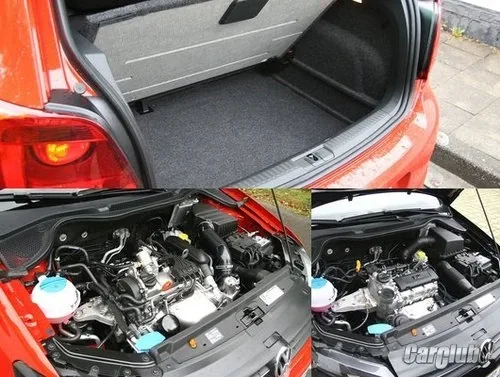 |
| In the niche under the trunk floor, a spacious box for small items is hidden, but it is not provided for Russia. Instead, for "our" Volkswagen Polo, a full-size spare wheel will be placed in the base configuration. On the left is a turbocharged TSI, on the right is a naturally aspirated 1.2-liter engine with 70 hp. |
In a fast pace, the Polo TSI pleases with responsiveness and precise reactions, while the level of comfort in the cabin remains high even on optional 16-inch wheels. The power steering wheel is informative with a transparent zone near zero. Perhaps this is the best combination of handling and quality in its class. Only the stylish Ford Fiesta hatchback feels more driving, but the Polo has more charm. As soon as the opportunity arises to test the Polo in Russia, we will definitely arrange a head-to-head comparison with the Fiesta.
Even with active driving, the Polo TSI pleases with modest appetite, and in economy mode, consumption drops to about 5 liters per 100 km.
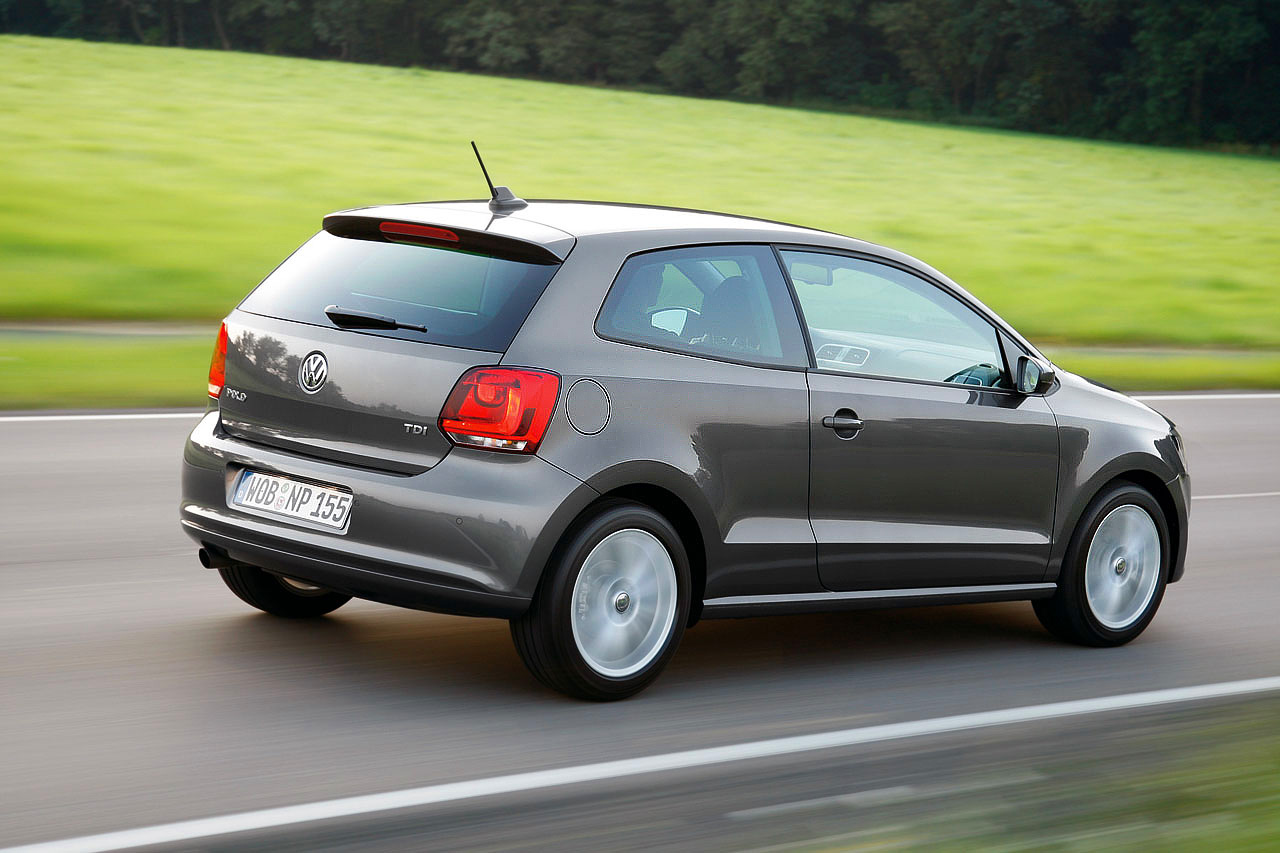 |
| At high speed, the Polo surprises with precise reactions, and comfort in the cabin is maintained even on 16-inch wheels. |
After the brisk Polo TSI, we switch to the base three-door with a naturally aspirated 1.2-liter three-cylinder engine. The first thing you notice is vibrations on the pedal assembly, which are even stronger than many diesels. There are no complaints about dynamics: the Polo 1.2 honestly reaches 100 km/h in 14.1 seconds and can accelerate to 165 km/h. For city bustle, 70 hp is more than enough, but on the highway there is not enough power reserve. And you don't want to rev this engine to the limit: three cylinders under the hood emit too plaintive wails.
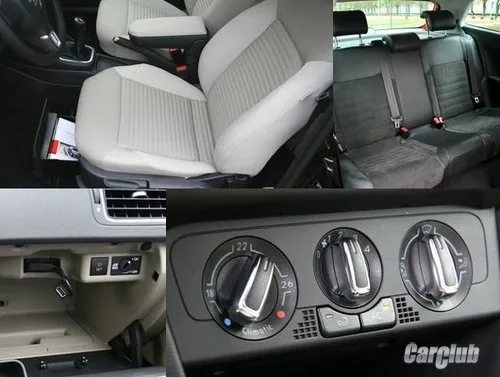 |
| In the Comfortline version, seats with combined Fonzie upholstery are installed, and under the front seats there are pull-out drawers. On the rear sofa of the three-door, it is quite spacious, but tall passengers may lack headroom. In the glove box, there are optional AUX, USB connectors and a passenger airbag deactivation button. The base Polo comes with a regular heater, and for the semi-automatic Climatic air conditioner (pictured) they ask 37 thousand. The dual-zone Climatronic system is 11 thousand more expensive. |
Thanks to 15-inch wheels with high-profile tires, the VW Polo 1.2 feels even more comfortable than the turbocharged version. The suspension mercilessly absorbs any irregularities, like a hungry lion after a drought. The five-speed gearbox shifts as clearly as the six-speed, but the long travel of the lever has not gone anywhere. The clutch pedal is too soft and gives almost no feedback, but such lightness will surely appeal to women, who will probably make up the bulk of new Polo buyers.
 |
| On 15-inch wheels with a high profile, the Polo 1.2 turns out to be more comfortable than the turbo version. The suspension swallows all irregularities like a hungry lion after the rainy season. |
I never got to try another engine — the 1.4-liter with 85 hp. Colleagues from Europe grabbed all the cars before our arrival. Well, that's better — there is a reason to meet this strongman again. Intuition suggests that this engine will become the most in demand in Russia. And the most interesting combination looks like the tandem of this engine with the new 7-speed DSG, which left me with pleasant impressions after getting acquainted with the VW Golf VI 1.4 TSI.
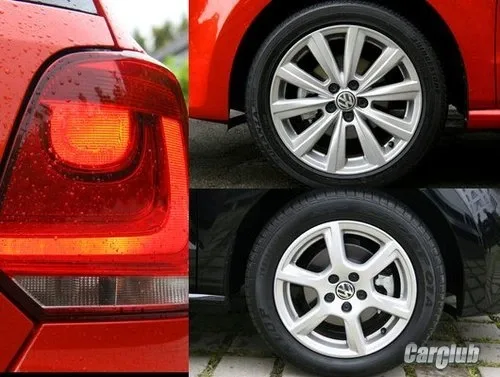 |
| In the base configuration, the Polo is equipped with steel 14-inch wheels. Alloy wheels of 15 or 16 inches are an option. |
Prices have already been announced. The most affordable VW Polo with a 1.2-liter engine with 70 hp in the Trendline version with 14-inch wheels, power package, two airbags, ABS and central locking costs 475,271 rubles. The same configuration, but with a 1.4 engine and manual transmission — 509,505 rubles. The Comfortline version is 22,209 rubles more expensive and adds mirrors with electric adjustment and heating, power windows on all doors, seat height adjustment, 15-inch steel wheels, chrome inserts in the interior, body-colored handles and mirrors, chrome trim of the radiator grille, pull-out drawers under the front seats, combined upholstery of doors and front panel, as well as two folding radio keys. For the 7-speed DSG, you will have to pay an additional $1,529 (12,232 UAH).
In addition, a wide list of options is available for the new Polo — from floor mats to ESP system and sports seats with Alcantara. The final price of a well-equipped Volkswagen Polo 1.4 DSG will easily exceed 800 thousand rubles.
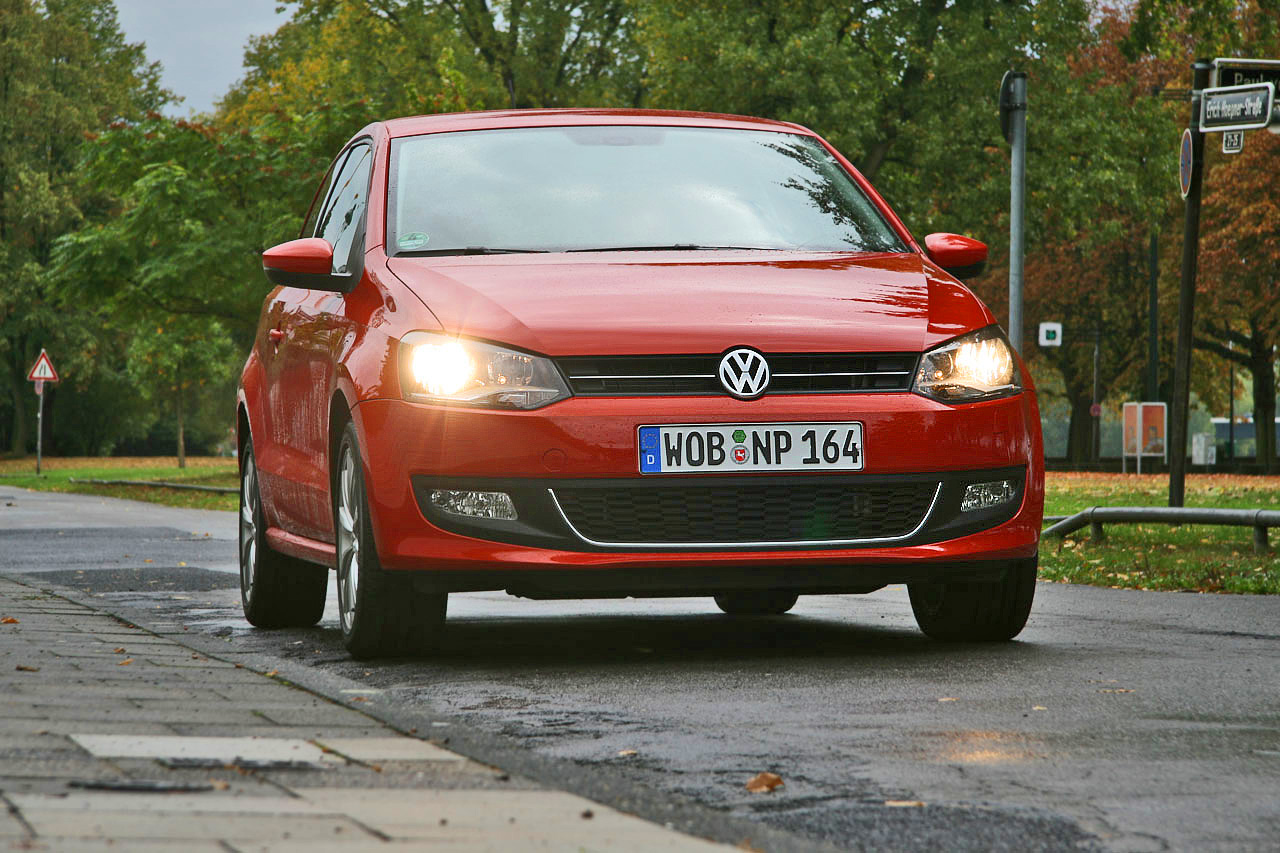 |
| More exciting than Volkswagen — only Ford's Fiesta, but the Polo has more polish. |
With such indicators, the success of the new VW Polo in Europe is beyond doubt. And what about Russia? Here, the main selection criterion is still the price-to-size ratio. The technological sophistication of engines, safety, build quality, fuel efficiency, and especially environmental friendliness, unfortunately, are not yet a priority.
Ruslan Galimov
 |