
Leonid GOLOVANOV, photo by the author
The engine is practically inaudible in the cabin, acceleration is smooth and quick. Ventilated seats with perforated leather exude a slight coolness... This is the facelifted Volkswagen Phaeton, one of the most luxurious and, perhaps, the most underrated cars in the world. After all, the root of its problems is not at all in the logo.
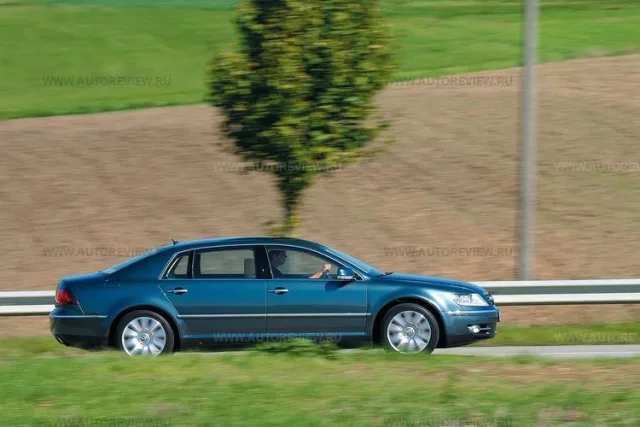
In Germany, the Phaeton is one of their own. Gerhard Schröder drove this model, and Angela Merkel currently uses it. For Germans, the round emblem with the letters V and W is almost like the 'boat' sign on a VAZ or the deer from GAZ for us.
If not for Germany, the Phaeton could be safely discontinued. The largest export market is South Korea, where 776 units were sold in all of 2006. In other countries, the numbers are much more modest: Spain — 226, Russia — 80, the Netherlands — 46, Finland and Denmark — 9 cars each.
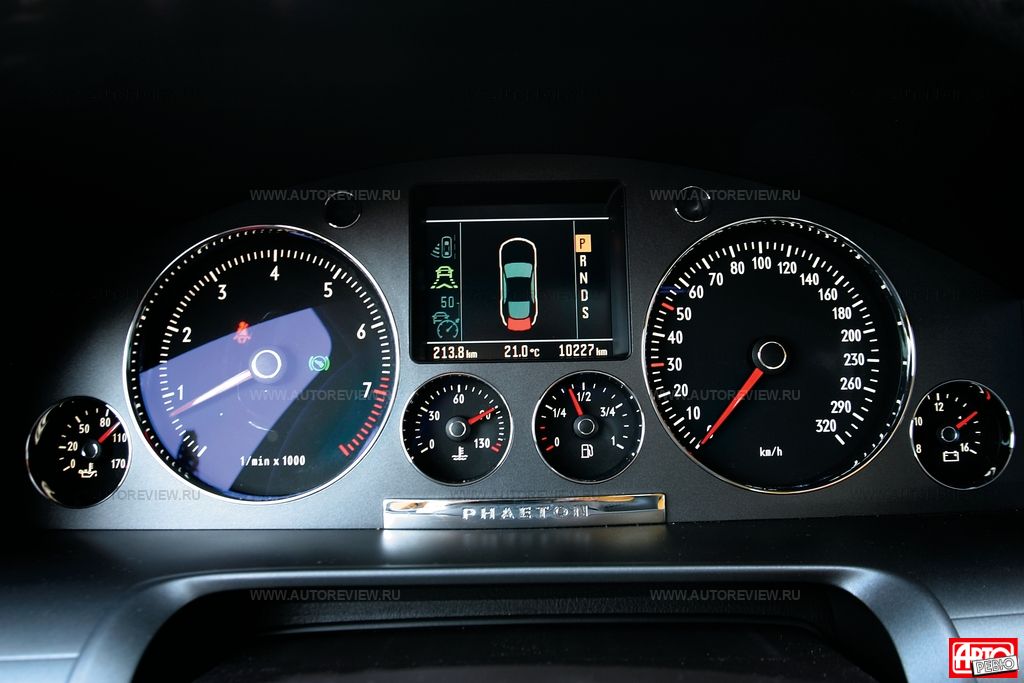 | 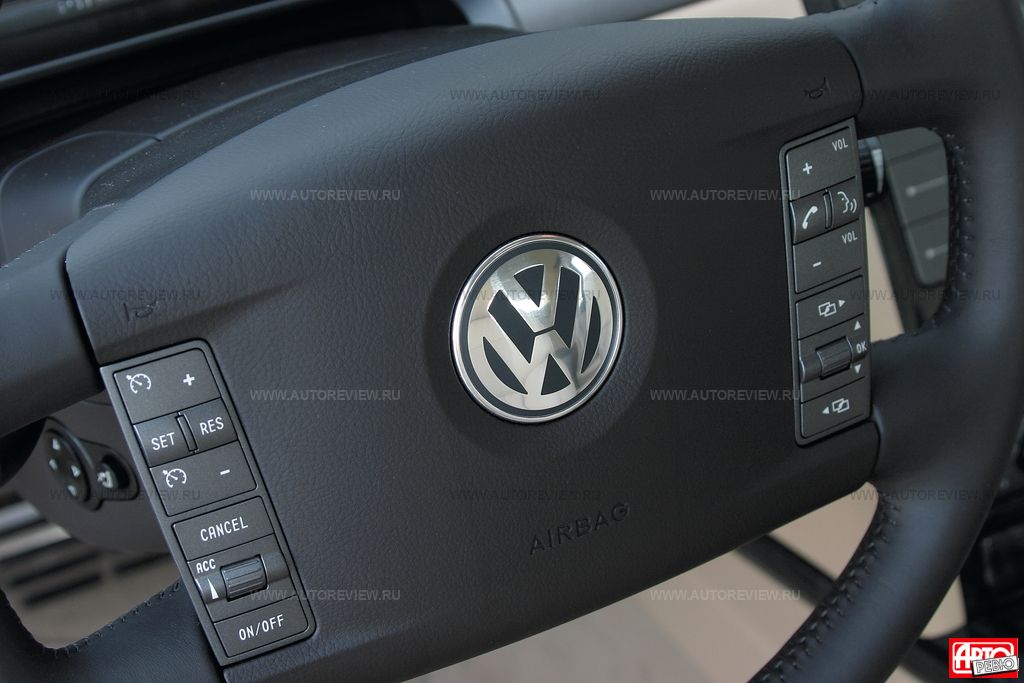 | 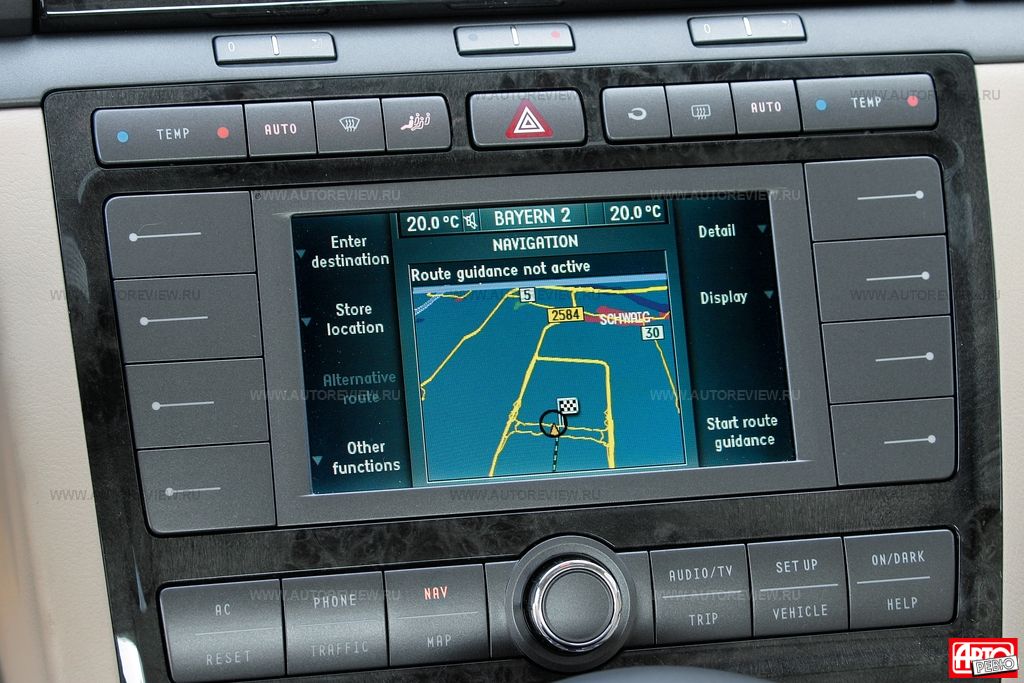 |
| The plate under the instruments and the side indicators for oil temperature and onboard voltage are perhaps the most superfluous elements in the Phaeton | The steering wheel conveniently controls the radar cruise control, which can now brake the car to a complete stop | The buttons, the 'live' handle, and the menu have become more refined, but they still don't reach the top level |
As the band 'Kolibri' sang — 'this is a complete failure.' They planned to produce 20–30 thousand luxury sedans annually, and for this purpose, in 2002, they built the pompous Glass Manufactory in Dresden... But within its transparent walls, only 6,000 Phaetons are assembled per year, with a third to half going to Germans.
The Phaeton is German. Very German. A five-meter all-wheel-drive tank with a nearly perfect interior. The plastic imitating leather looks even more natural than the real leather on the seats. The folding armrests with velvet lining inside are built to last. The seats are like in an office, a strict steering wheel with large flat buttons, conservative instruments with anti-glare glass and a funny chrome plastic plate reading PHAETON — so no one confuses it, God forbid, with a Mercedes or Audi... Ja-ja, das ist Phaeton. Das ist Fantastisch?
With the quiet murmur of the V-shaped 'eight', the long-wheelbase Phaeton 4.2 FSI smoothly but confidently picks up speed. At pre-autobahn speeds, the steering wheel is too light — you constantly have to watch the road, as the reactions of the heavy car are quick and precise. But as soon as the 'end of all restrictions' sign appears, within half a minute the needle touches the 260 km/h mark, the wheel fills with ideal 'heaviness,' and the Phaeton exemplarily handles long autobahn curves near Munich. A complete flight, not driving. Only the brakes bring you back to earth: with a stronger press on the pedal, the flagship Volkswagen noticeably dips its nose, and the ABS triggers suspiciously early. The tires could hum quieter, and aerodynamic noise could be less pronounced: at high speed, you can no longer talk to a rear passenger in a low voice.
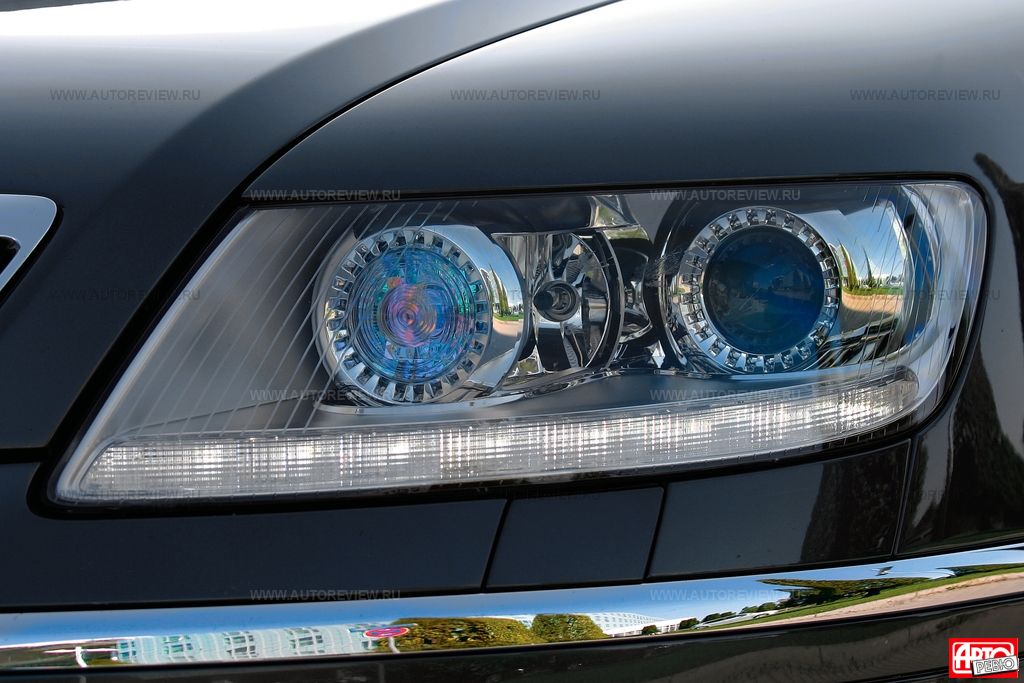 | 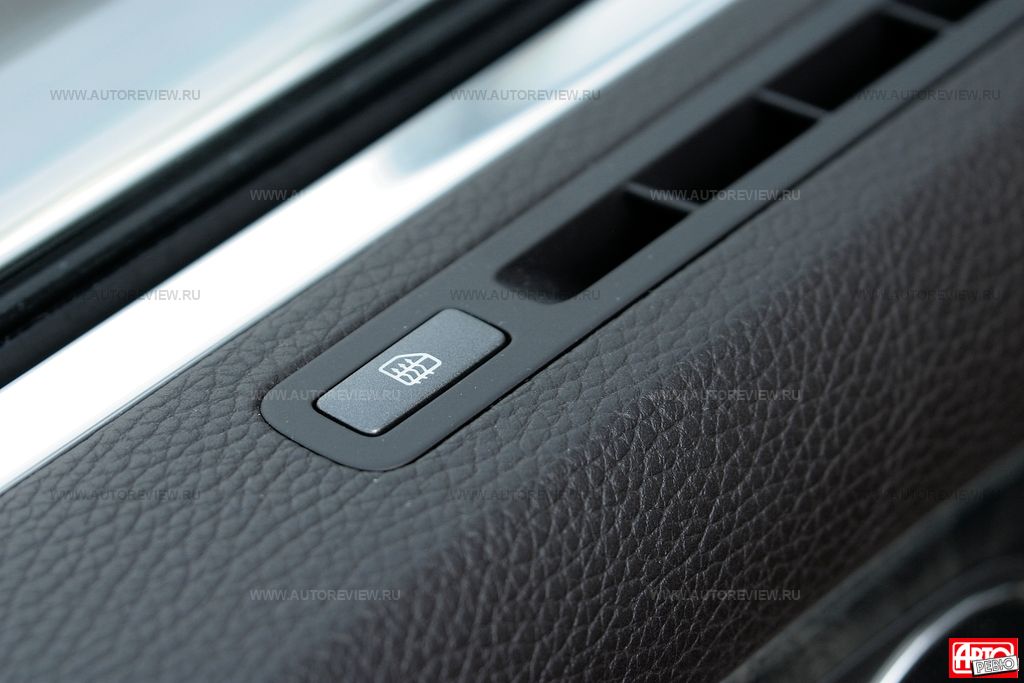 |
| Traces of the update — a chrome strip and LED 'daytime running lights' | The trim plastic is impeccable! And the anti-fog deflectors for the windows are a special pride of Volkswagen people |
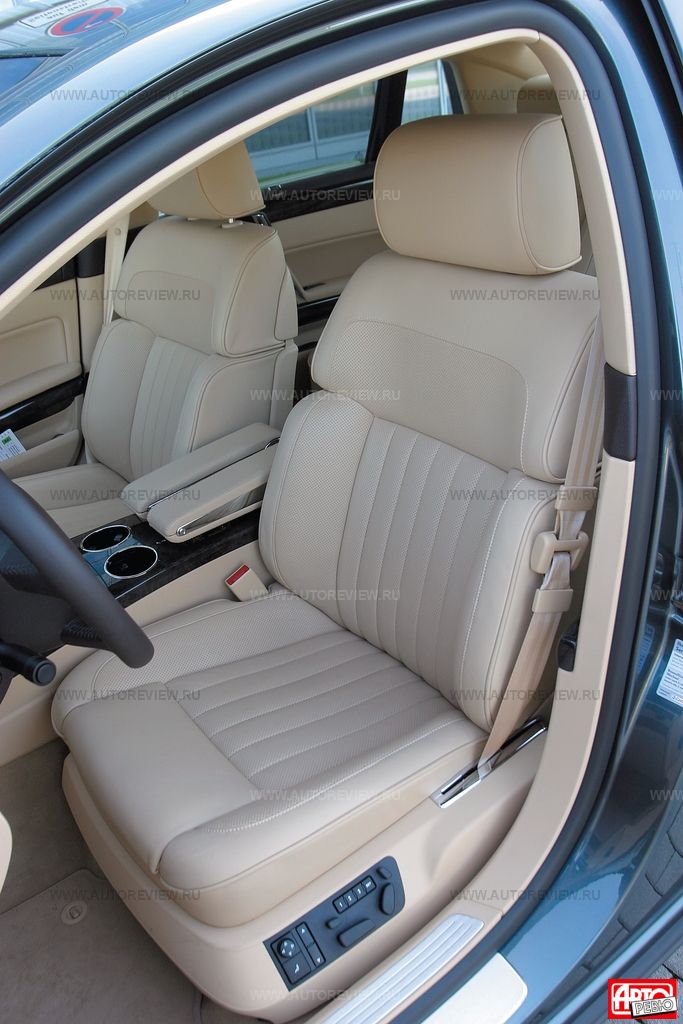 | 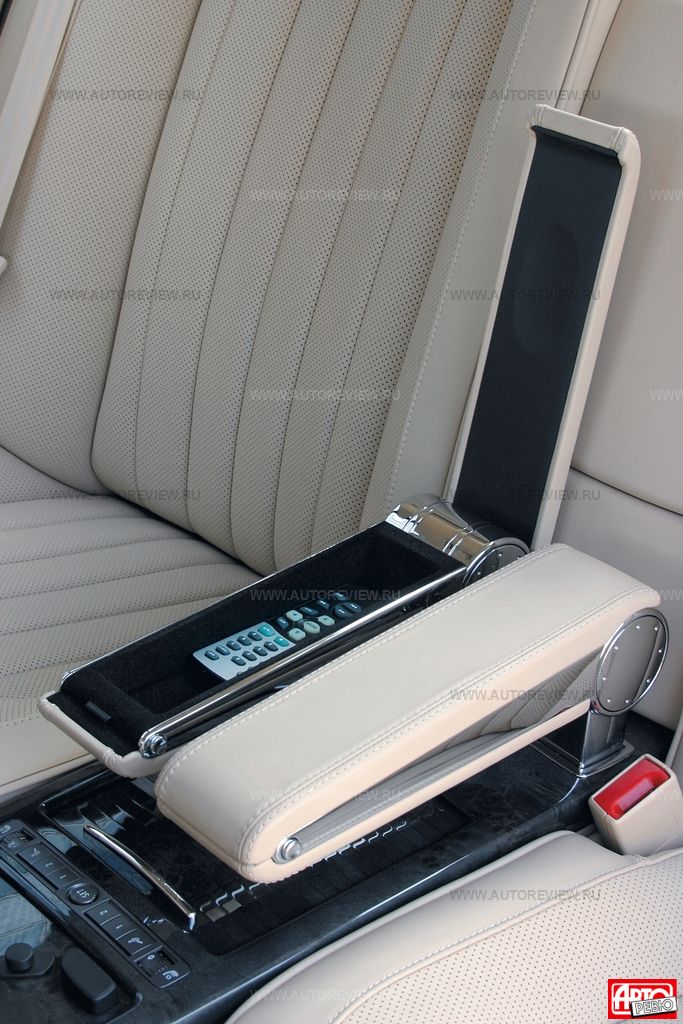 |
| The seats are monumental, and the built-in ventilation is effective even on the first speed | The folding armrests with hidden compartments inside are true high-end |
Yes, the Phaeton is not perfect. Even after the facelift. LED strips appeared under the headlights, constantly emitting bright 'daytime light,' Side Assist blind-spot radars are built into the mirror housings, and the radar cruise control can now surprisingly accurately brake behind the car ahead up to a complete stop (if the deceleration is no more than 0.4 g) and then move off again. In traffic jams — incredibly convenient! It works almost better than in the Mercedes S-Class. All this electronics will also be on Russian Phaetons — as will the full range of engines, including the modern 3.0 turbodiesel with 233 hp and clean Euro 5 emissions. Now all Phaetons are only all-wheel-drive and only with 'automatics.' The V10 TDI version will no longer be available, but the base petrol V6 3.2 has received direct injection and develops 255 hp instead of the previous 241.
And although the Phaeton 3.2 FSI costs the same as an Audi A6 quattro with the same engine, it should be compared with the Audi A8 or Mercedes S-Class... But can you put the primitive graphics of the Volkswagen screen next to the luxurious Mercedes animation? Or the Phaeton's ordinary audio system with the high-end Mark Levinson music in the Lexus LS?
The Volkswagen Phaeton is good. According to our tests, it even matches the Audi A8. But to win a place under the luxury sun, it needs its own 'gimmick.' What is it? Only in monumentality?
And the main problem is the emblem. Selling a car with the Volkswagen logo for $80–140 thousand, when Mercedes, BMW, Audi, Lexus, or Jaguar are albeit more expensive, but not by much... In the world of brands, at this vanity fair — this is an extremely difficult task that even the Volkswagen of America division could not solve. Americans are pragmatic people, they catch the price-quality ratio on the fly. But instead of the planned 10 thousand Phaetons in America, they sold just over three thousand — and not in a year, but in three and a half! A year ago, the Phaeton was quietly removed from the model lineup of North American Volkswagens. Germany, South Korea remained... And 'all other markets,' bit by bit.
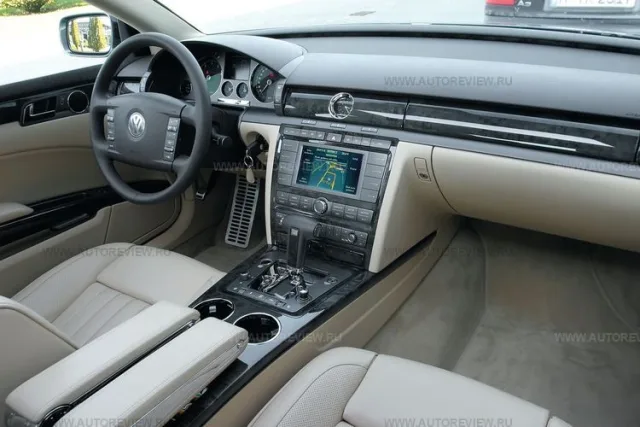
Prim, high-quality, old-fashioned... The wooden strip on the panel is the shutters of the air deflectors, which open depending on the ventilation mode
There is, of course, a politicized version — that Americans boycott German goods because of Germany's position on the Iraq issue. But BMWs, Mercedes, and Audis are bought in the States. And Volkswagens — Golfs, Jettas, Passats — too.
And is it even possible to sell such different cars under one brand as the Phaeton and Golf, not to mention the Polo or, God forgive, Gol/Pointer?
The more expensive the product, the more important its brand and everything that surrounds it. The atmosphere of stores and services, legends and myths, social clichés, advertising glamour, glamorous PR, direct marketing, crooked marketing, and other tinsel of life — meaningless but very profitable. Take Swiss watches: Tissot and Longines are in the same concern, often have the same ETA movement inside, but... A different case, a dial with the Longines emblem — and an item of almost the same cost is easily sold several times more expensive.
A direct analogy with the Phaeton and Bentley, isn't it?
After all, the Phaeton is a Bentley. Or rather, the opposite: the Continental GT coupe and the Flying Spur sedan are built on the D3 platform shared with the Phaeton and Audi A8 with a mass of common components, and the Flying Spur is also produced in parallel with the flagship Volkswagen at the same Glass Manufactory in Dresden. Similar filling, the same technologies, but different design and, most importantly, different brands. As a result, Volkswagen barely gathers 6,000 orders a year, while for the Bentley, which is three times more expensive, queues of millionaires form, and the annual production volume has already exceeded 9,000 cars!
And the question: did the wisest Ferdinand Piëch, the gray cardinal, the permanent secret and overt ruler of the Volkswagen/Audi/Porsche empire, not foresee this? What was he thinking when he first started the failed Passat W8 project, and then the Phaeton?
Remember the famous answer of the CPC Central Committee member Zhou Enlai to Henry Kissinger's question about the influence of the Great French Revolution on China? 'It is too early to judge the consequences,' — according to Kissinger, the wise Chinese communist said.
It's the same here. It is too early to judge the consequences.
Today, the Phaeton can be safely called a commercial failure. Volkswagen representatives openly admit that their demand forecasts were too optimistic, and they are now looking for ways to reduce losses. However, the Bentley project, which developed in parallel, is profitable — and that's already a plus. But the key reason, perhaps, is different: it's a struggle for survival with the Toyota concern. The Japanese giant has actually captured the domestic market, offering everything — from the little Yaris to the executive Celsior, which only recently began to be sold in the Isles under the Lexus LS brand. And at the top of the passenger lineup is the 12-cylinder Century limousine, 5.3 meters long, which is quite capable of competing with the Bentley Arnage.
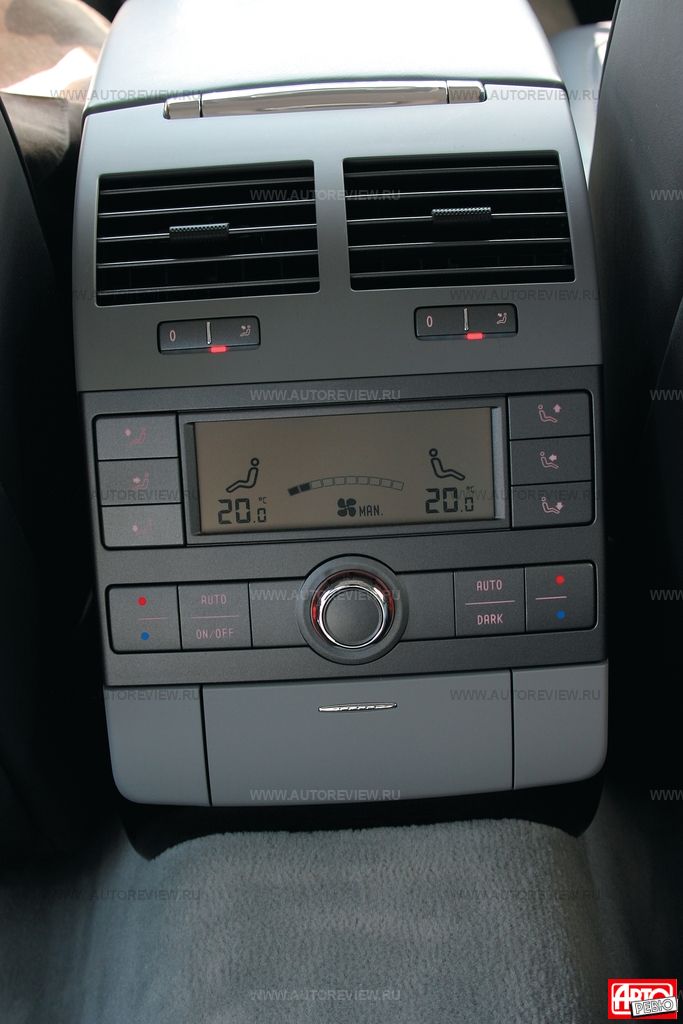 | 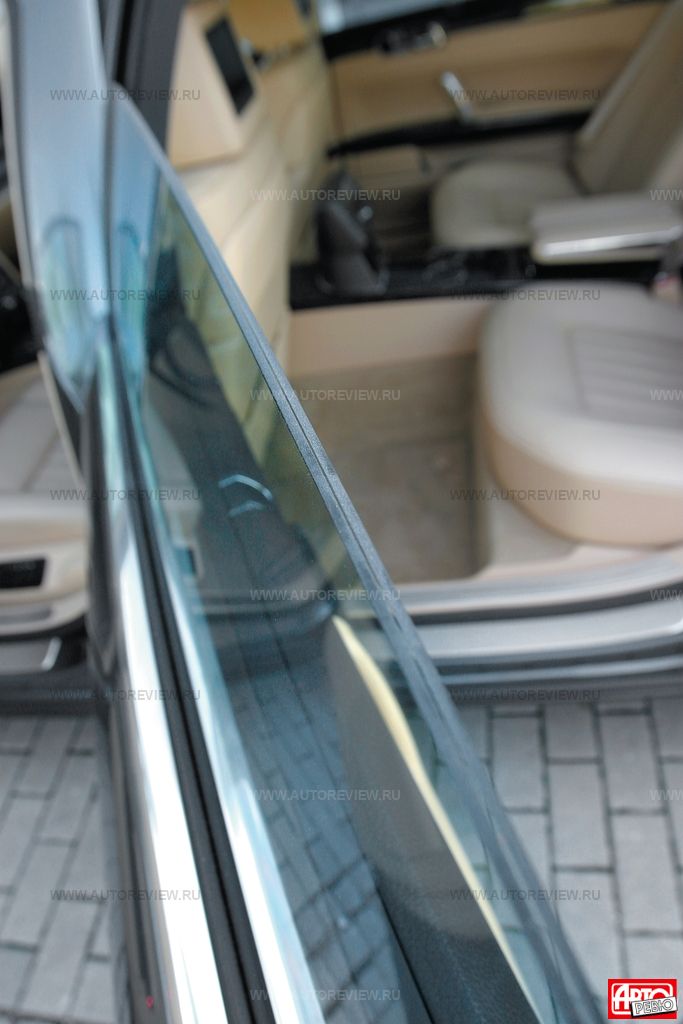 | 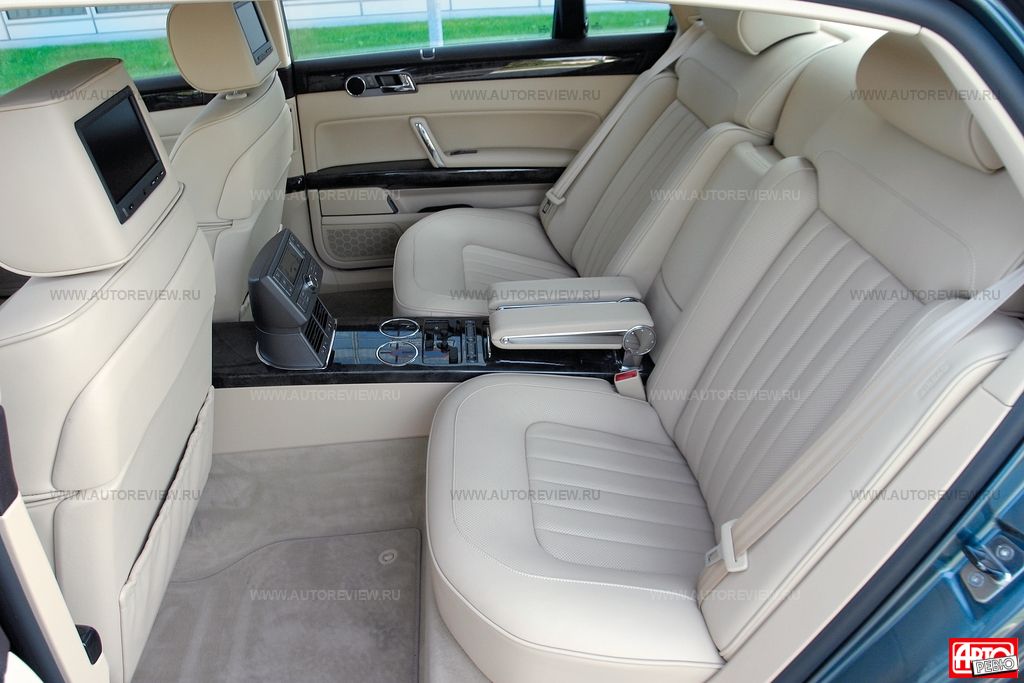 |
| This is what the rear climate control panel looks like in five-seat cars | The windows are double-glazed, but wind noise becomes intrusive from 140 km/h | Individual seats with power adjustments can be ordered in the "short" body as well, but this photo shows the interior of a long-wheelbase car. Only folding tables are missing |
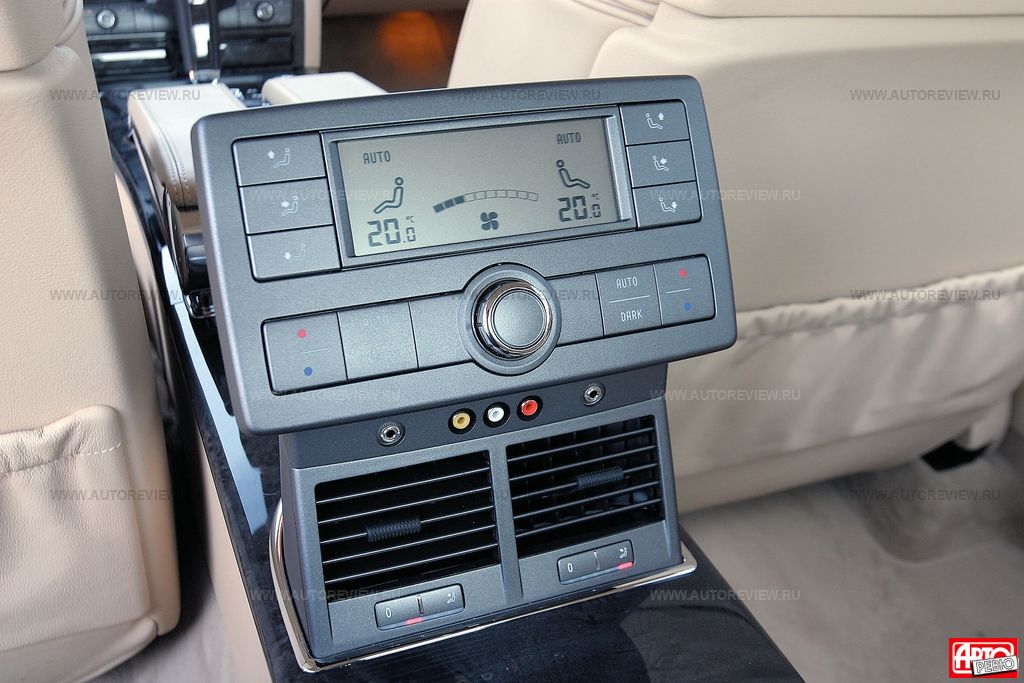 | 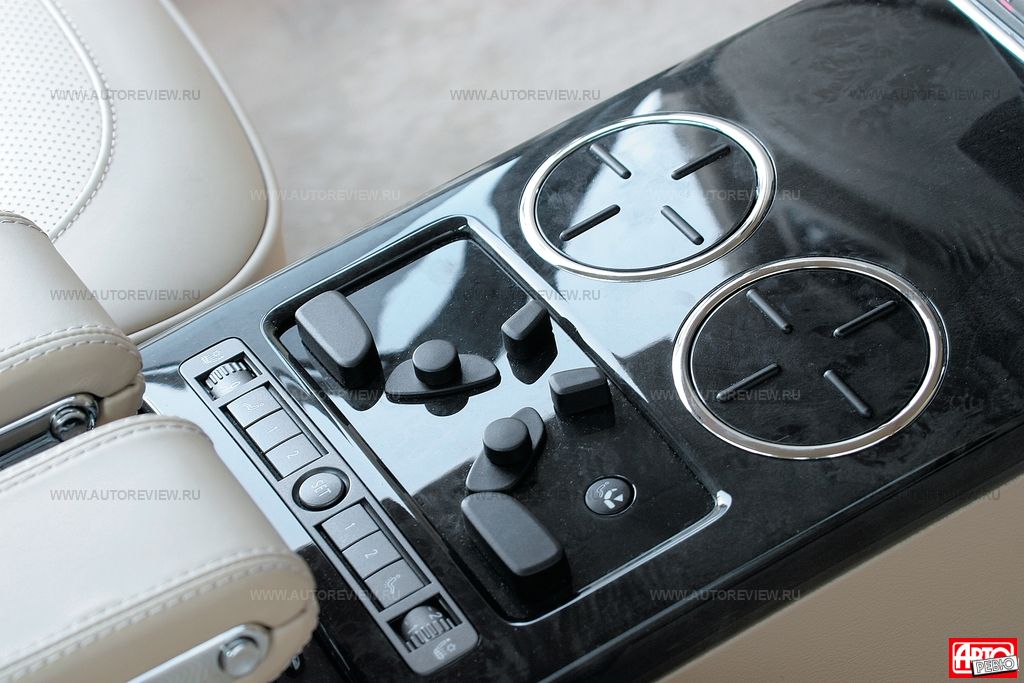 | |
| The sun visors have original "double-layer" mirrors — both regular and magnifying | The rear climate control panel in the four-seat car amusingly "grows" out of the center tunnel | In four-seat Phaetons, both front and rear have ventilation and massage |
A Toyota owner, in essence, has no need to switch brands throughout their life: over time, they simply move from one model to another, until they eventually end up in the back seat of a Century as the company's president.
Why can't Volkswagen offer the same?
This is exactly what Piech is striving for: to turn "people's" cars into a powerful, prestigious, and "all-encompassing" brand. And he has partially succeeded. After all, under a brand that half a century ago was associated only with cheap Beetles, twins of the Porsche Cayenne and Bentley are now produced. And the constant rotation of engineers between Volkswagen, Audi, Bentley, and even Bugatti noticeably raises the technical level of the entire concern. The one who yesterday was perfecting the Continental GT coupe will tomorrow be working on the Polo.
As for the Phaeton's failure... "Remember the Audi A8," they say at Volkswagen. "The first generation was also considered unsuccessful: Germans initially only glanced at it from the windows of their Mercedes and BMWs. But the second generation they started buying."
The first-generation Phaeton was doomed — just as the first stage of a launch vehicle is doomed. That is its task: to work, separate, and fall in the middle of the vast steppe, passing the baton to the second stage. Which, by the way, is also doomed to burn up in the dense layers of the atmosphere — as, perhaps, the second-generation Phaeton, which should be expected in about two years, will also "burn up."
But the main goal of the booster stages is to put a valuable payload into orbit. The VW logo.
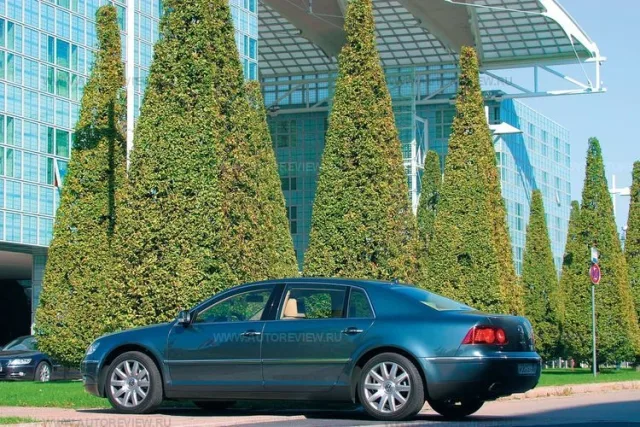
The long-wheelbase Phaeton, "stretched" by 120 mm (pictured), can be bought in Russia for $86,240 — that's the price of a five-seat car with a petrol V6 3.2 FSI engine. Prices for the "short" Phaeton start at $78,837. And the "long" four-seat sedan with a W12 engine will cost at least $141,000