

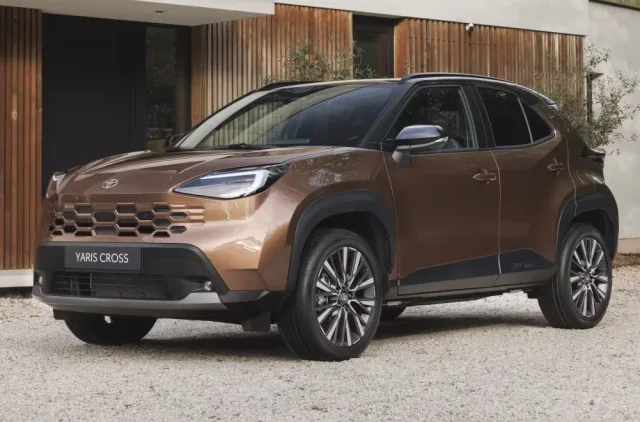
We evaluated the front-wheel-drive Toyota Yaris Cross Hybrid with a 1.5-liter petrol engine and a hybrid system with a total output of 114 hp. The main impressions are unexpectedly sufficient dynamics and consumption of about 4-5 l/100 km.
Toyota Yaris Cross interior: practical but simple
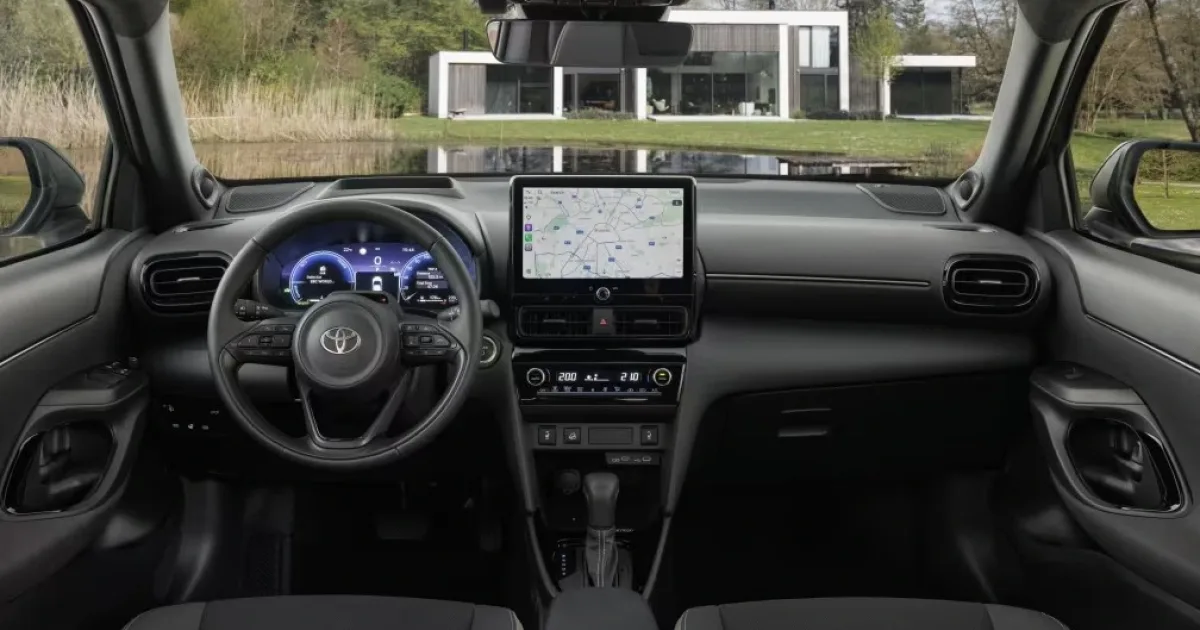
In the Toyota Yaris Cross interior, it is immediately noticeable where they saved money. Most door cards, the front panel and the center console are made of hard plastic. There are few soft inserts.
This does not affect convenience, but it creates the feeling of a more budget car. On uneven surfaces, plastic sounds sometimes come from various parts of the interior.
Ergonomics, however, are good. There are physical buttons, single-zone climate control, front seat heating, Auto Hold and an electronic parking brake.
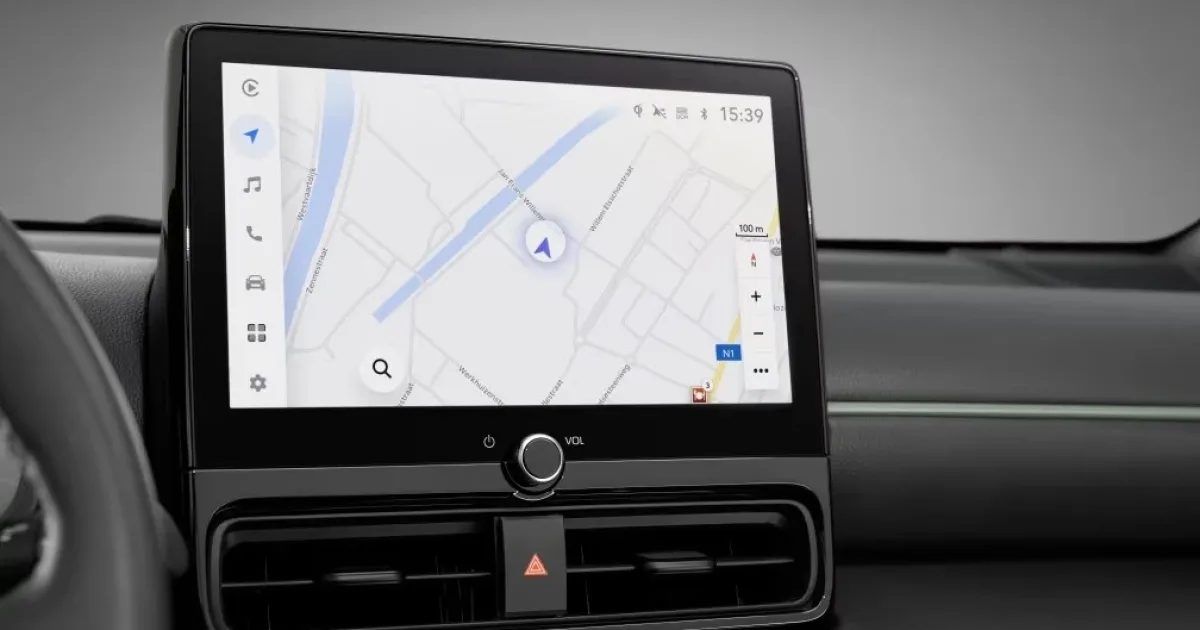
The multimedia system has physical buttons and supports Apple CarPlay via cable. In front of the driver is a combined instrument panel: analog gauges are supplemented by a central information display.
Driving the Toyota Yaris Cross hybrid
A traditional transmission selector was left on the center tunnel. In addition to the usual D mode, there is a B position, which increases deceleration and is useful, for example, on long descents.
Power and EV modes are also provided. The latter allows, under appropriate conditions, short-term driving solely on electric power.
Main control functions:
Power mode for a more active response from the powertrain;
EV Mode for driving on electric power;
B mode for more intensive deceleration.
The multifunction steering wheel received quite a few buttons. There is lane keeping and traffic sign recognition.
How much space is in the Toyota Yaris Cross
Behind the wheel, the compactness of the Toyota Yaris Cross hardly gets in the way. A driver about 182 cm tall can adjust the seat and steering wheel normally, although there is less width than in larger crossovers.
In the second row, the situation is different. If the front seat is adjusted for a driver 182 cm tall, his knees almost rest against the backrest.
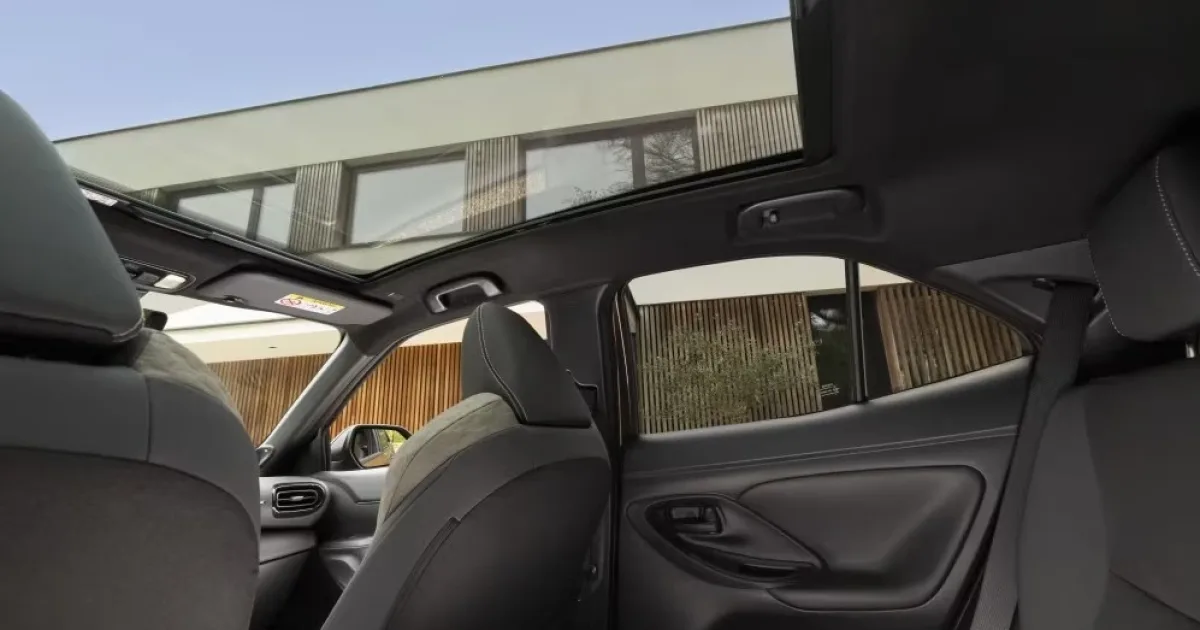
Therefore, the Toyota Yaris Cross is better suited for one or two adults or a family with small children. For regular long trips with four tall adults, the crossover is cramped.
There is also a lot of hard plastic in the rear, and the test car does not have pockets in the backs of the front seats.
The trunk is small
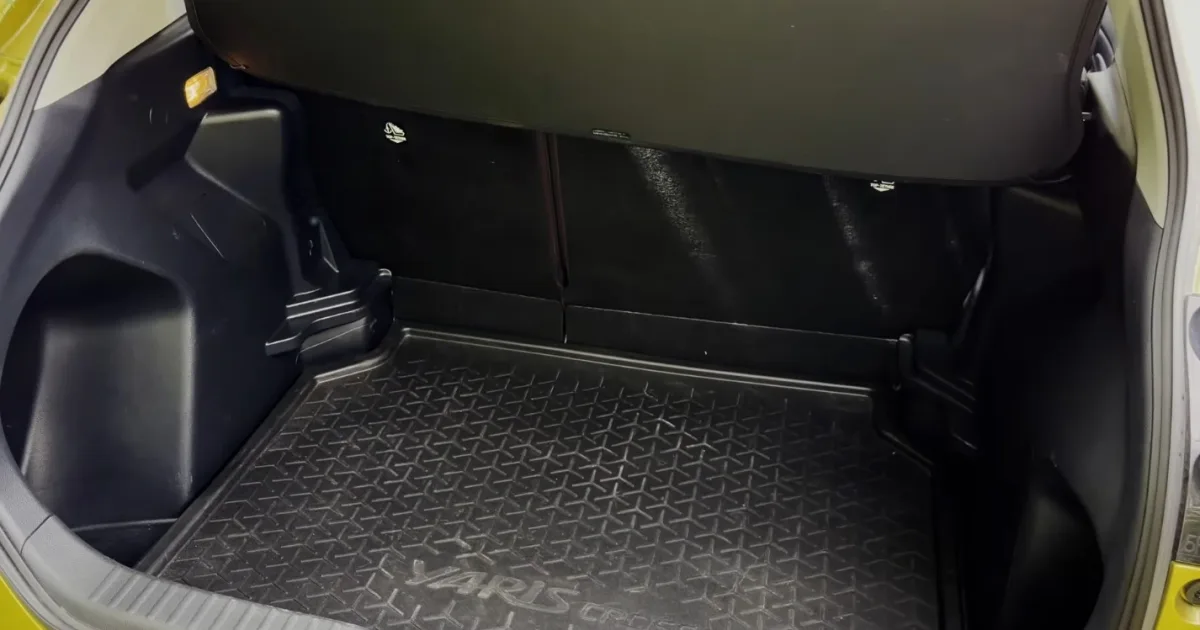
The Toyota Yaris Cross cargo compartment matches the car's compact dimensions. It is enough for everyday shopping, but on a family trip the space will have to be used rationally.
The test version does not have a spare wheel or temporary spare. Under the floor are a repair kit and a compressor.
There is also no power tailgate, although equipment depends on the specific trim level.
1.5-liter hybrid with 114 hp
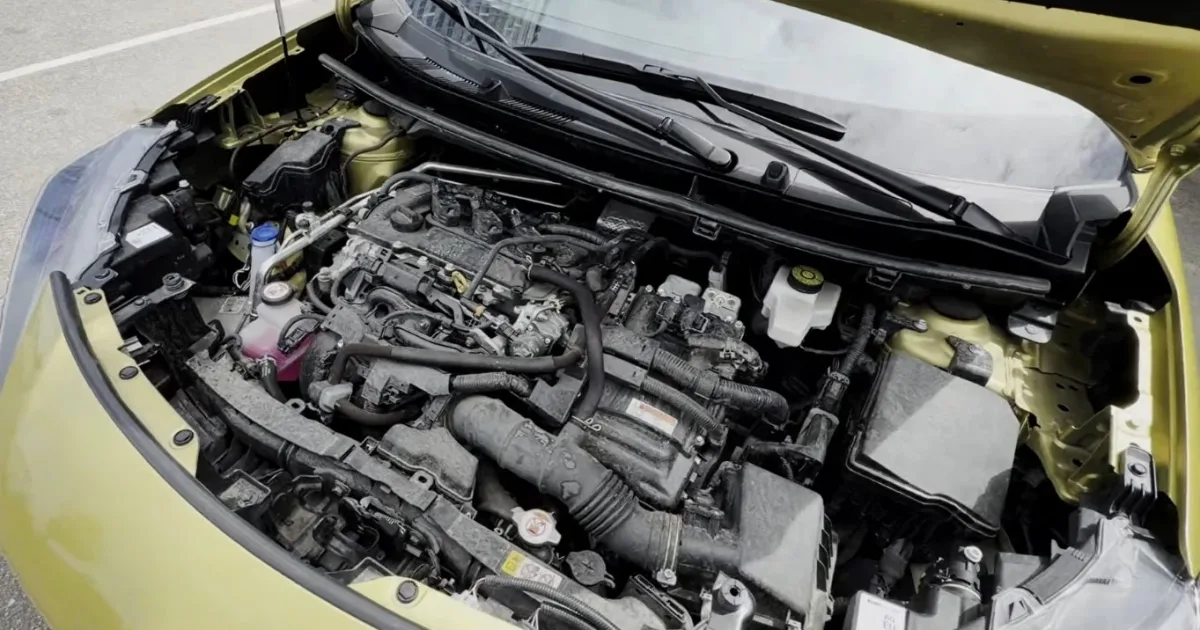
Under the hood is a 1.5-liter three-cylinder naturally aspirated engine, which works together with a hybrid system. The total output of the tested Toyota Yaris Cross is 114 hp.
The car is front-wheel drive. There are also all-wheel-drive AWD-i versions, where the rear axle is driven by a separate electric motor without a traditional driveshaft.
On paper, 114 hp seems like a modest figure, but the low weight of the Toyota Yaris Cross partly compensates for this.
How the Toyota Yaris Cross Hybrid drives
The first impression after larger crossovers is that the Toyota Yaris Cross is very light. The car responds quickly to the steering wheel and feels good on narrow streets, roundabouts and parking lots.
The suspension works more stiffly than in the Toyota RAV4. On the test car with a mileage of about 46,500 km, when going over some uneven surfaces, an extraneous creak from the rear could also be heard. Its exact source could not be determined during the test.
What surprised us most was the dynamics. From a 114-hp powertrain, one might expect sluggish responses, but in the city there is almost no sense of a lack of traction.
The Toyota Yaris Cross accelerates normally when pulling out onto a busy road and allows you to maintain city pace without problems. For a compact crossover, this amount of power is sufficient.
Real consumption of the Toyota Yaris Cross Hybrid
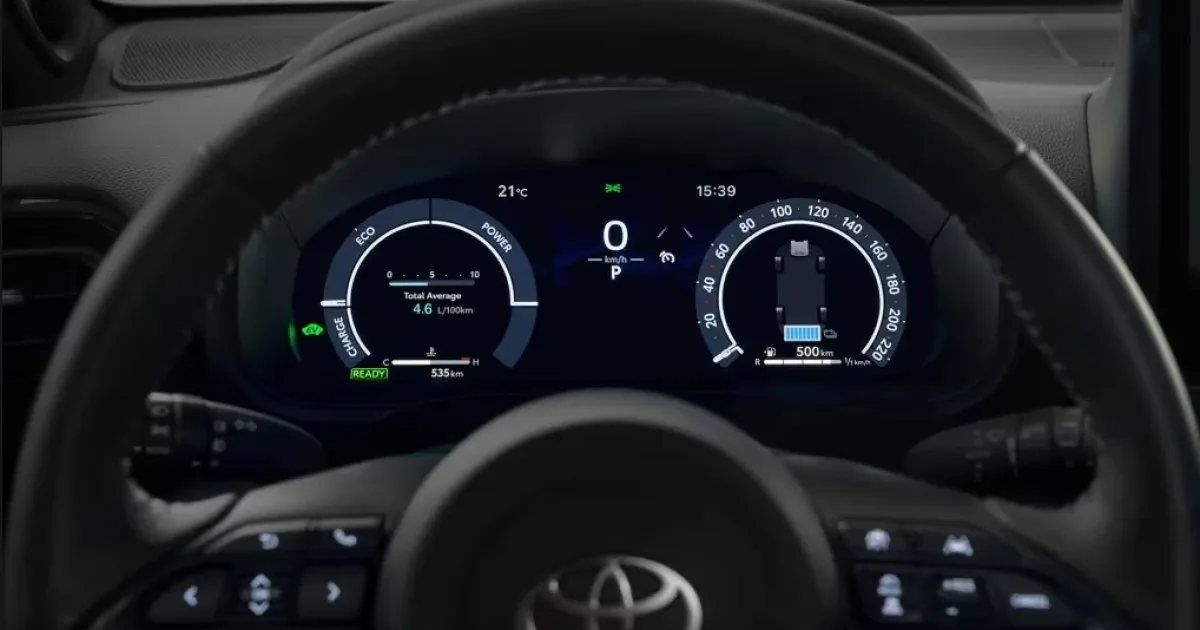
Efficiency is one of the model's main advantages. During city trips, the onboard computer showed approximately 3.8-5.0 l/100 km.
At the time of the test, 4.4 l/100 km could be seen on the display. The figure naturally increases during acceleration and driving uphill.
Key figures of the tested Toyota Yaris Cross:
1.5-liter three-cylinder hybrid - 114 hp;
front-wheel drive;
consumption during city trips - approximately 3.8-5.0 l/100 km.
For a car that will spend most of its time in the city, this is one of the main arguments in favor of the hybrid.
Equipment: there are noticeable savings
The tested Toyota Yaris Cross trim level is quite simple. There is a rear-view camera, but there are no front or rear parking sensors. Moreover, the camera guidelines are static and do not turn with the steering wheel.
The mirrors are adjusted electrically, but they must be folded manually. There is also no keyless entry: a regular key is used.
At the same time, the Toyota Yaris Cross has the necessary set of electronic assistants, including lane keeping and traffic sign recognition.
Sound insulation of the Toyota Yaris Cross
For a compact crossover, the level of sound insulation is acceptable. Street and tire noises do penetrate the interior, but they do not create critical discomfort.
At the same time, the large amount of hard plastic affects the acoustic perception of the interior. On uneven surfaces, it seems more "tinny" than in more expensive Toyota models.
Autoportal conclusion
The Toyota Yaris Cross Hybrid does not hide its more budget position in the model lineup. There is a lot of hard plastic here, little space in the second row and a small trunk. The tested trim level does not have parking sensors, automatic mirror folding or keyless entry.
Instead, the Toyota Yaris Cross performs well as a city car. Its compact dimensions make maneuvering easier, the 114-hp hybrid is enough for everyday driving, and consumption of about 4-5 l/100 km allows you to visit gas stations less often.
The advantages also include clear ergonomics, physical buttons and an easy-to-use hybrid system.
As a result, the Toyota Yaris Cross Hybrid is best suited for the city, one or two adults, or a young family with children. If, however, a spacious second row and a large trunk are regularly needed, the compactness of the Toyota Yaris Cross quickly turns from an advantage into a limitation.