
RAV 4
Powertrain: petrol VVT-i
Displacement — 1998 cc
Number of cylinders/valves — 4/16
Output — 152 hp at 6000 rpm
Peak torque — 194 Nm at 4000 rpm
Top speed — 175 km/h
Fuel consumption:
Urban cycle — 11 liters per 100 km
Highway — 7.4 liters per 100 km
Combined — 9 liters per 100 km
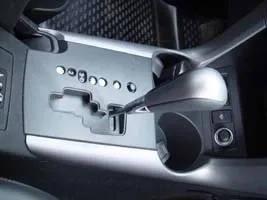
Transmission: classic 4-speed automatic.
Drive — plug-in all-wheel drive
External dimensions:
Length — 4395 mm
Width — 1815 mm
Height — 1685 mm
Maximum permissible weight: 2070 kg
Tires: 225/65 R17

Alfred, behind the wheel for 11 years.
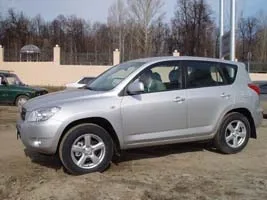
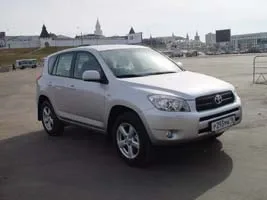
Hardly had the talk about the restyled Rav 4 died down, when Toyota rolls out another version of the crossover. For our latitudes and lifestyle, such a car is a real find. It is designed for those who cannot imagine themselves without conquering city curbs all year round, in summer — trips to nature, and in winter — parking in snowdrifts. If in the warm season you can still somehow manage with front-wheel drive and dream of a convertible, then with the first snowfall road passability drops, and therefore the demands on the car increase.
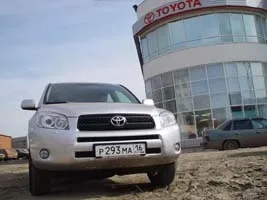
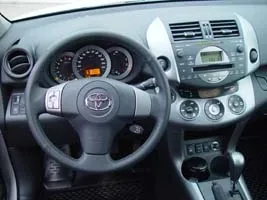
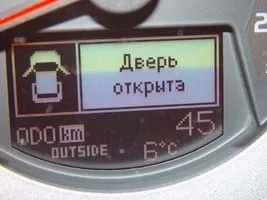
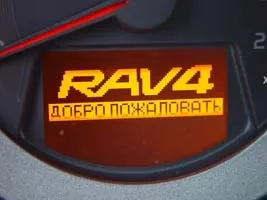
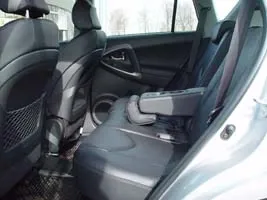
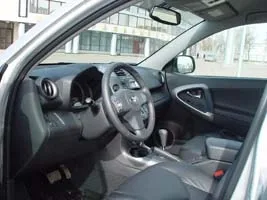
The fresh version of the "Rafik" looks quite attractive, but the main changes are inside. The interior has been thoroughly reworked, and finally the designers have moved away from unification. Those faceless "pull" handles that were installed on the Avensis, Corolla and the previous Rav 4 are gone. The front panel is now two-tier, with large climate control and vent buttons. Engine start is also via a button, with protection against accidental pressing: until you press the brake, the engine won't start. It's nice that the onboard computer understands Russian — that's pleasing. The leather trim is at a decent level, the seats with electric adjustments will fit any driver, and the lateral support holds the body well in corners.
This time I didn't put it off and immediately got behind the wheel. The three-spoke steering wheel with leather trim and music buttons is just a sight to behold. Inside the RAV 4 you feel surprisingly comfortable: it's not cramped, but not huge either, the seating is convenient, everything is thought out to the smallest detail. Buttons and levers are at hand, you can figure it out right while driving. The gearbox, although 4-speed, is perhaps the best "automatic" among its four-speed brethren. It transmits torque briskly, and the car starts off lively. No panic when pulling out of a secondary road or changing lanes in heavy traffic — confidence is guaranteed.

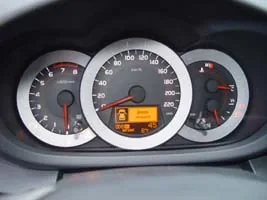
On the highway, the crossover doesn't let you down either. If you floor the pedal, the car squats like a runner at the start and sharply surges forward, even if the speedometer needle has already passed a hundred. Overtaking is no problem, but with a smooth press on the gas, the response is correspondingly smooth and calm. The suspension is a bit stiff: on tram tracks the car noticeably gets nervous, and any potholes are a tangible jolt. But for this stiffness you get density and excellent response to the steering wheel. In corners, the RAV 4 holds superbly and can give many sedans a run for their money. It feels like you're sitting in a compressed spring, ready for any surprises. The electronic assistants are good insurance for a beginner and a help for an experienced driver.
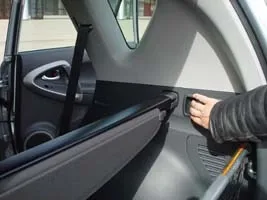
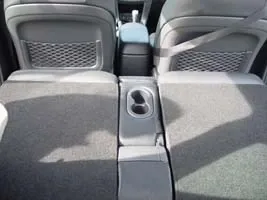
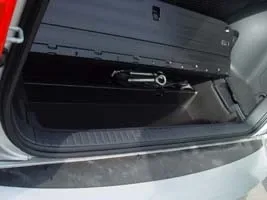
The trunk is a separate story. The organization of space here is top-notch: one movement of the handle — and the rear seats fold down by themselves. I haven't seen this in anyone else. Plus a convenient net so that small items don't fly around the trunk on bumps. Very practical. The bottom line is this: Toyota has taken a step towards design, but has not changed its technical principles in the class of soft-roaders.

Vadim, driving experience 8 years.
Drives a Toyota Avensis.
I first encountered the RAV4 at a presentation in the showroom. Externally, the car has become much more solid and now looks more masculine. Getting behind the wheel, I immediately realized — this is my size. And since I'm increasingly drawn to soft-roaders, I was looking forward to the test drive.
And here's a clean, shiny RAV4 driving out, easily jumping onto a high curb and freezing in anticipation — either of a feat or a party. Inside it's spacious and cozy. The new front panel looks unusual, but it's functional and adds charm. The interior now has a 2H-4H switch: now the crossover can be either front-wheel drive or all-wheel drive. Unlike its predecessor, the rear axle is engaged by an electronically controlled clutch only when necessary. The solution isn't new, but in my opinion, it's the most correct: combined with electronics (stability control, anti-slip), the car turns out predictable. The steering wheel has electric power steering.
Many, of course, prefer hydraulic power steering with variable effort, but the EPS here is a new generation. It works in conjunction with stability control, which not only monitors speed in corners, but literally tells the steering wheel which way to turn: in the right direction the wheel turns easier, in the wrong direction — harder. Handling is the main trump card of the RAV4, which can't be said about ride smoothness. On rails it shakes considerably, I haven't felt such "extreme" for a long time. Any pothole is a hard impact, and you involuntarily think: will the suspension hold up? A beginner is unlikely to notice in time that a strut is "leaking" — the car is stiff anyway. One can only hope for legendary Toyota reliability. By the way, the RAV4 of all generations, according to German TUV, is among the top ten most reliable cars. But what I categorically didn't like was the old 4-speed "automatic".
At a time when six-speed gearboxes have already become the norm, installing four speeds is a strange decision. Shifts are noticeable, and with a sharp press on the gas, the gearbox noticeably "thinks". However, if you press smoothly, the acceleration dynamics are quite normal. To be fair, I'll note: this is the best of all 4-speeds I've tried. Another nuance — under the hood is the same old familiar 1AZ-FE, a two-liter engine from the previous model. The power seems decent — 152 hp, but modern 1.8s from Opel and Honda are already breathing down its neck with their 140 hp. The torque is also good — 194 Nm at 4000 rpm, but Volkswagen's 2.0 has better — 200 Nm at 3500. Don't get me wrong: the engine is good, there's enough power, it has no childhood diseases, since it's been in production for a long time. But in a NEW car, you want something more modern…
I've reread what I wrote — and it might seem that I didn't like the RAV4. Not at all. The car is good, and the queue for it is proof of that. I met an acquaintance: he prefers comfort and drives a soft Camry, and his wife chose the RAV4. Yes, he confirmed — the car is stiff, but his wife likes it, and that's the main thing. Yes, the automatic is a bit old, but women in general aren't racers; what matters to them is the very fact of having an "automatic". It all makes sense. But men will surely appreciate the RAV4's excellent handling.