
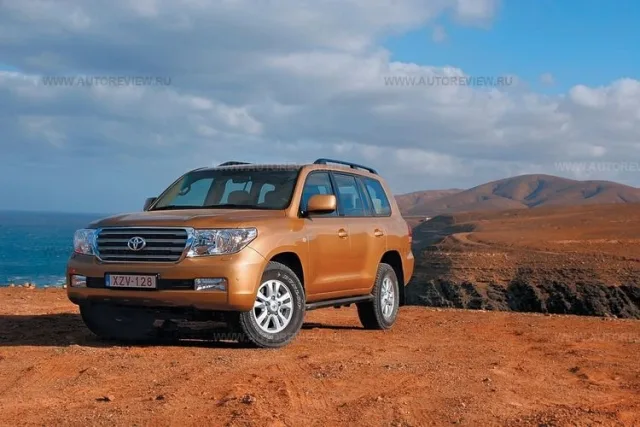
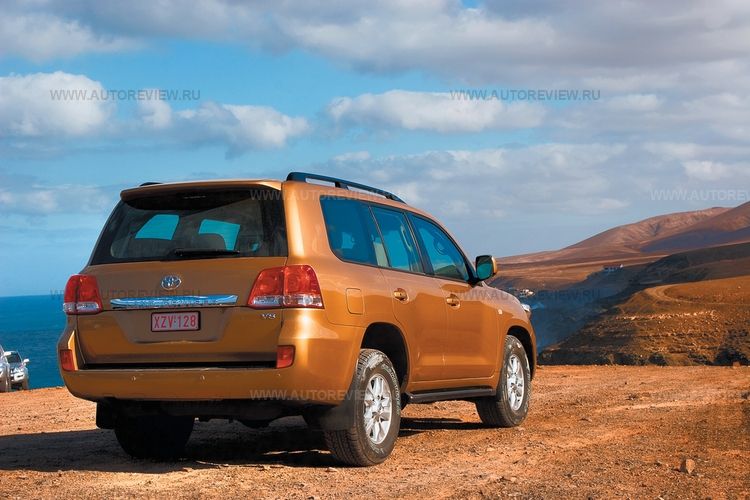
The huge wheels of the newest Toyota Land Cruiser 200 SUV eagerly crush the coastal pebbles on the Spanish island of Fuerteventura. Leaving the car on the beach for a photo shoot is not scary at all: if anything, it will get out on its own. After all, its predecessor, the Land Cruiser 100, was considered a true off-roader.
And the "two-hundredth" has gone even further: it is good both on the highway and where the asphalt ends.
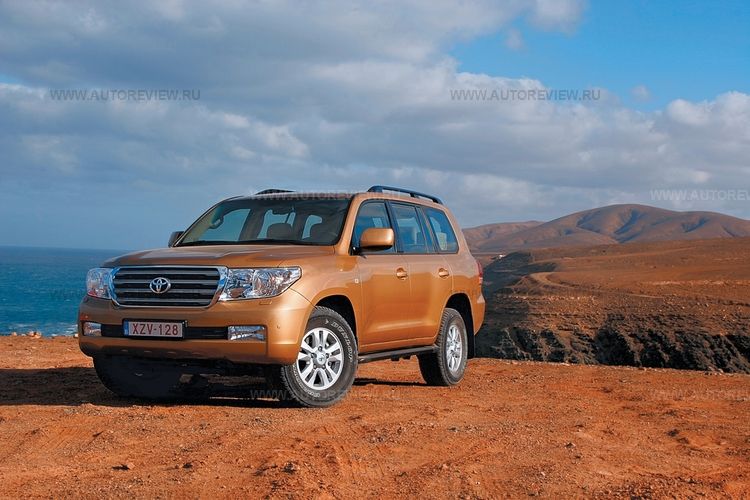
It is unlikely that the new Land Cruiser has become noticeably more attractive — it is like an enlarged Toyota RAV4. The design, by the way, is "100% Japanese" — it was created by stylists at Toyota's center in Aichi, guided by the corporate concept Vibrant Clarity, which prioritizes laconic forms without unnecessary decor. Indeed, there are not even moldings on the sides — everything is strict and clear. True, it is unlikely that anything here "vibrates".
What was unexpected was that I felt a bit cramped behind the wheel! The "two-hundredth" stretched in length by 6 cm compared to the previous "hundredth", and the interior, thanks to a more rational layout of the engine compartment, became more spacious by 13 cm. But all this increase, it seems, went to the rear passengers. On the third row, an adult can sit without much difficulty — except that the knees will have to be held high, like a grasshopper. And the middle sofa is a real expanse: there is its own two-zone climate control and heated seats.
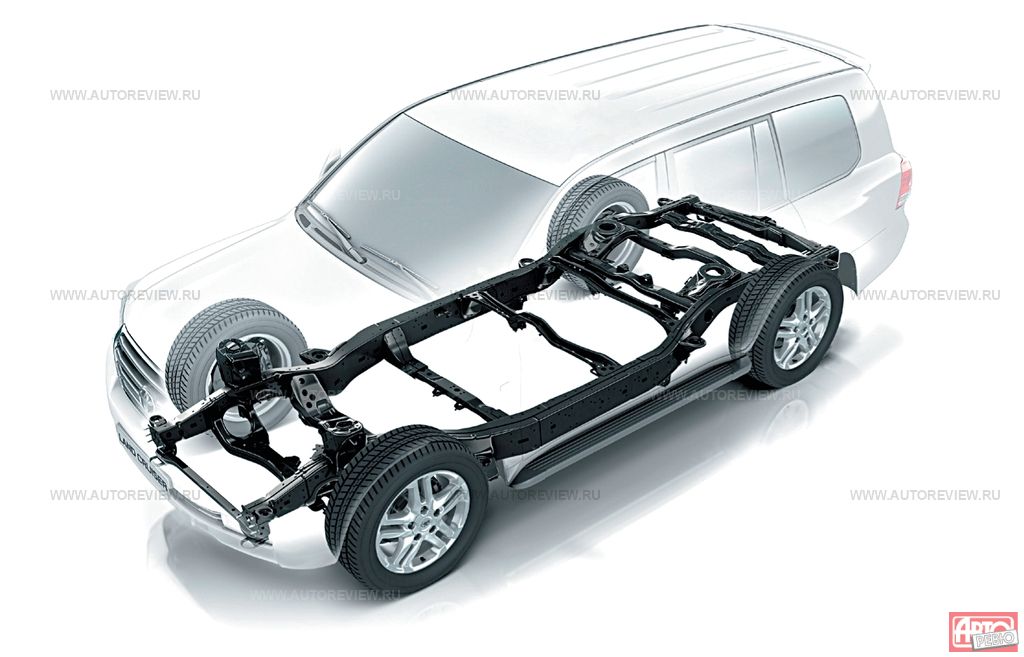 | 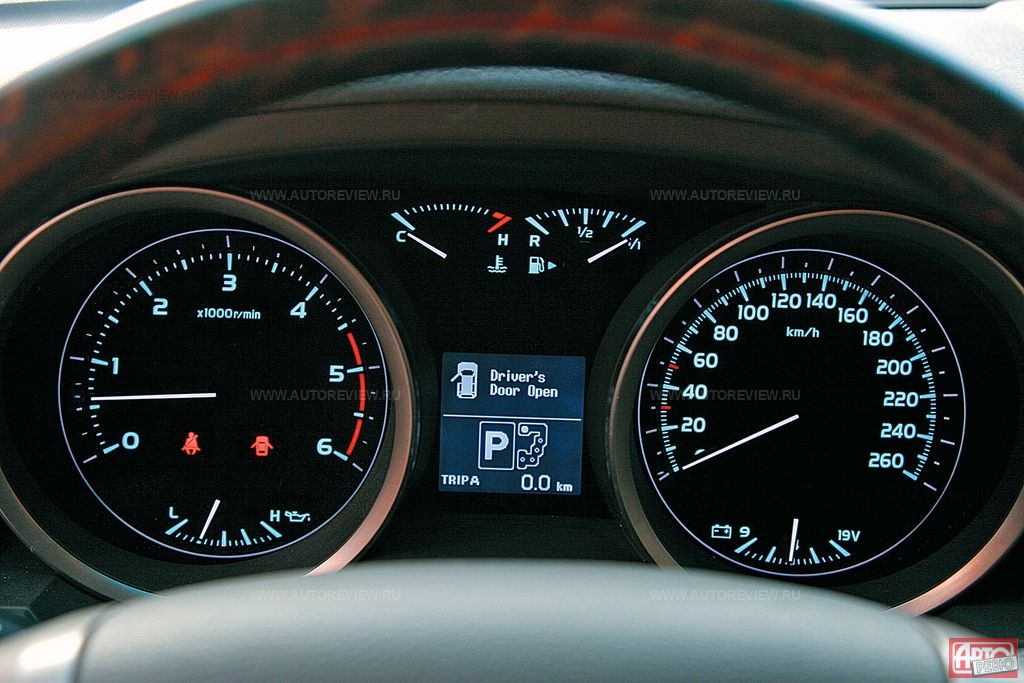 | 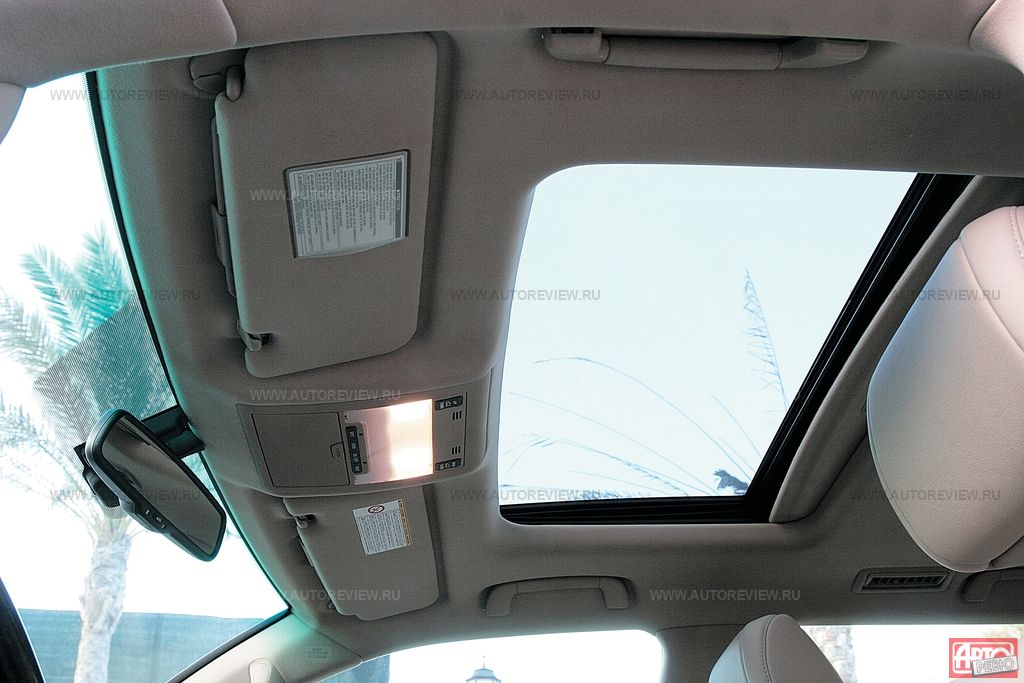 |
| The frame is welded from a wider and higher profile: torsional rigidity increased by 40%, and bending rigidity by 20% | The optitron scales of the speedometer and tachometer are now hidden in deep wells | Electric sunroof — already in the base configuration |
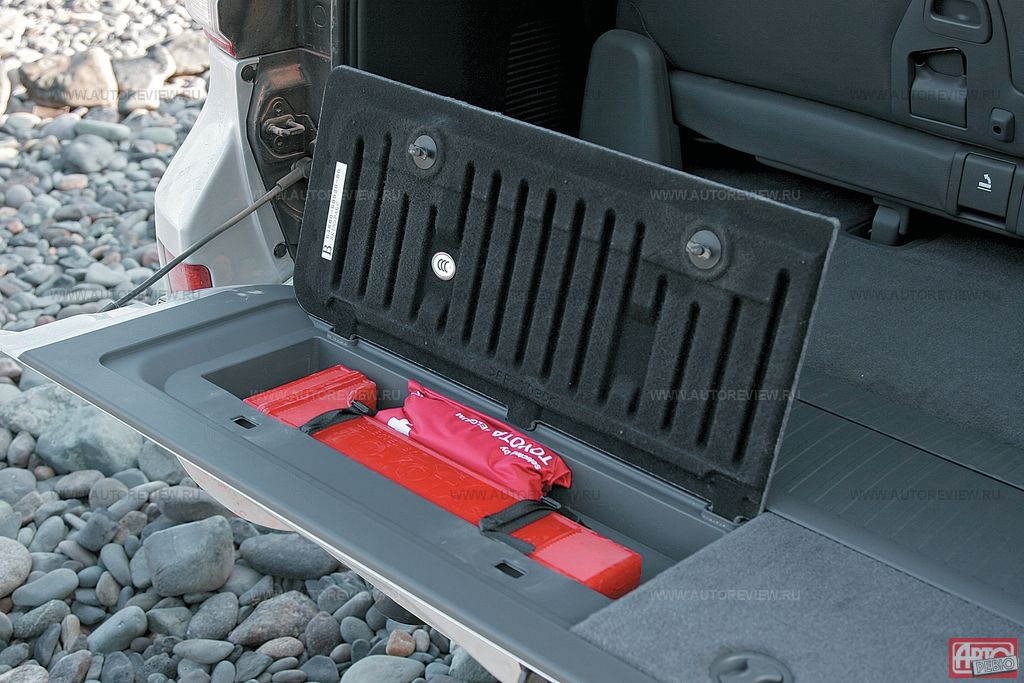 | 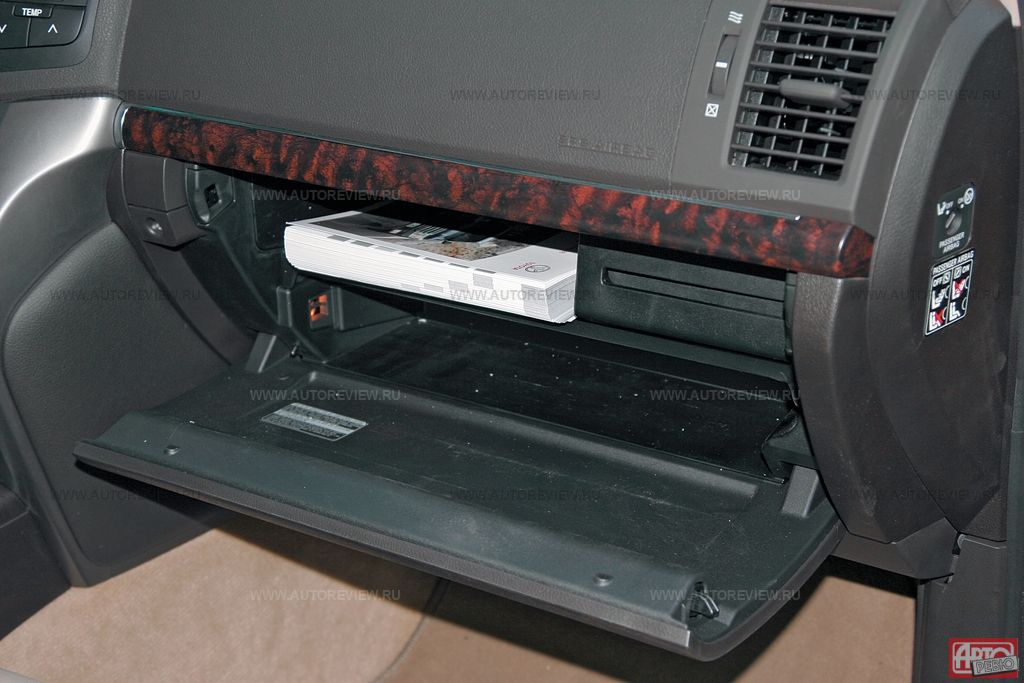 | 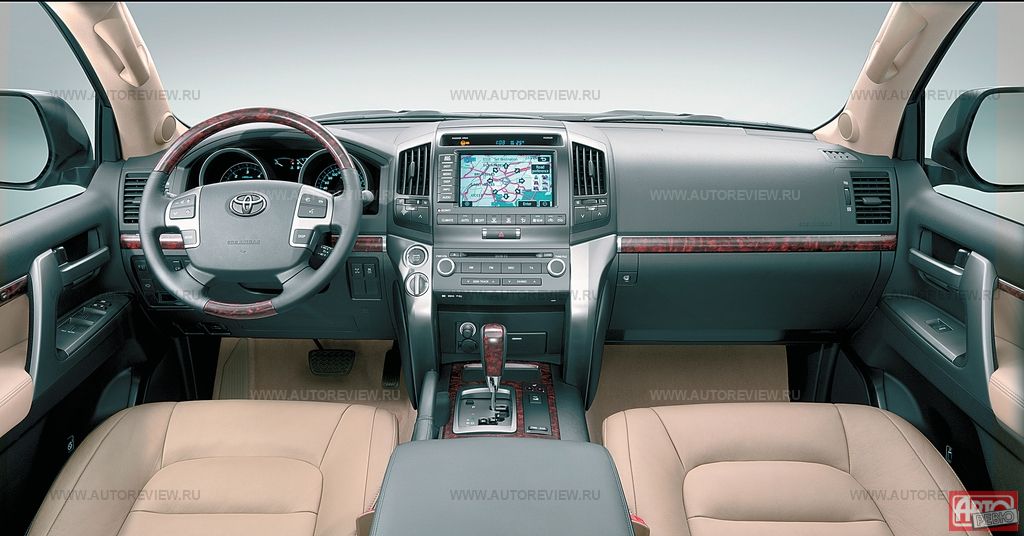 |
| The pockets of the folding side will fit both a first aid kit and a warning triangle | The glove box is not very spacious — a thick operating manual takes up almost a quarter of its volume | The interior of the new Cruiser is decorated with "wood" inserts and chrome details |
But for me, at my height of 190 cm, it turned out to be more difficult to get comfortable behind the wheel. I squeezed all the electric adjustments to the limit — and still my head almost touched the ceiling. Of course, about five centimeters of height was taken away by the electric sunroof, but it comes in the package configuration of all Russian cars — you can't refuse it. Nor can you refuse leather seats, ten airbags, a contactless transponder key...
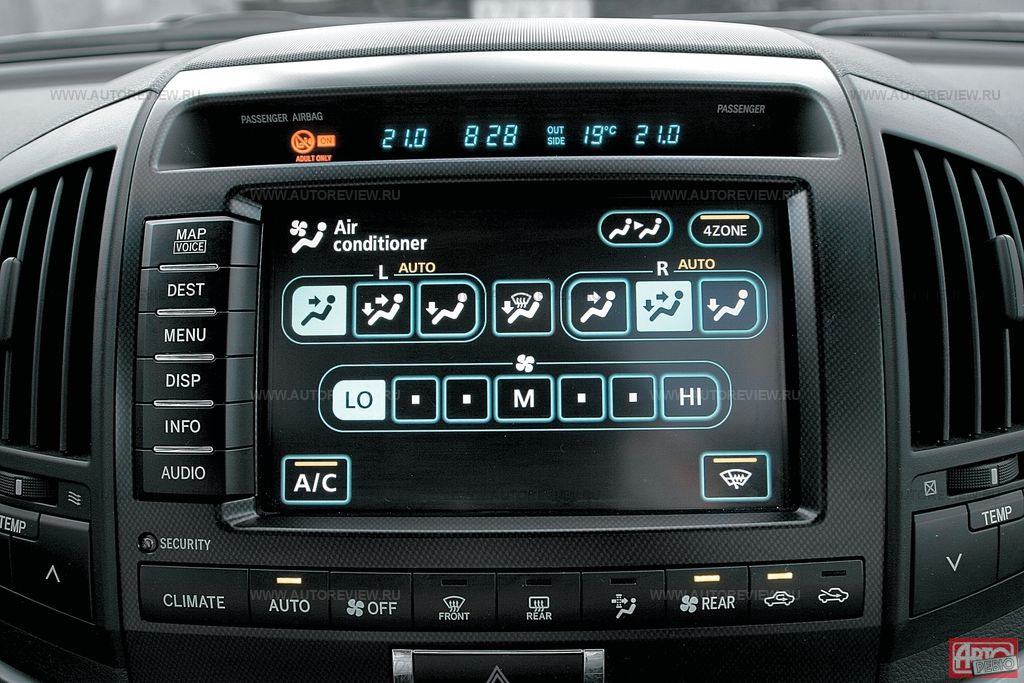
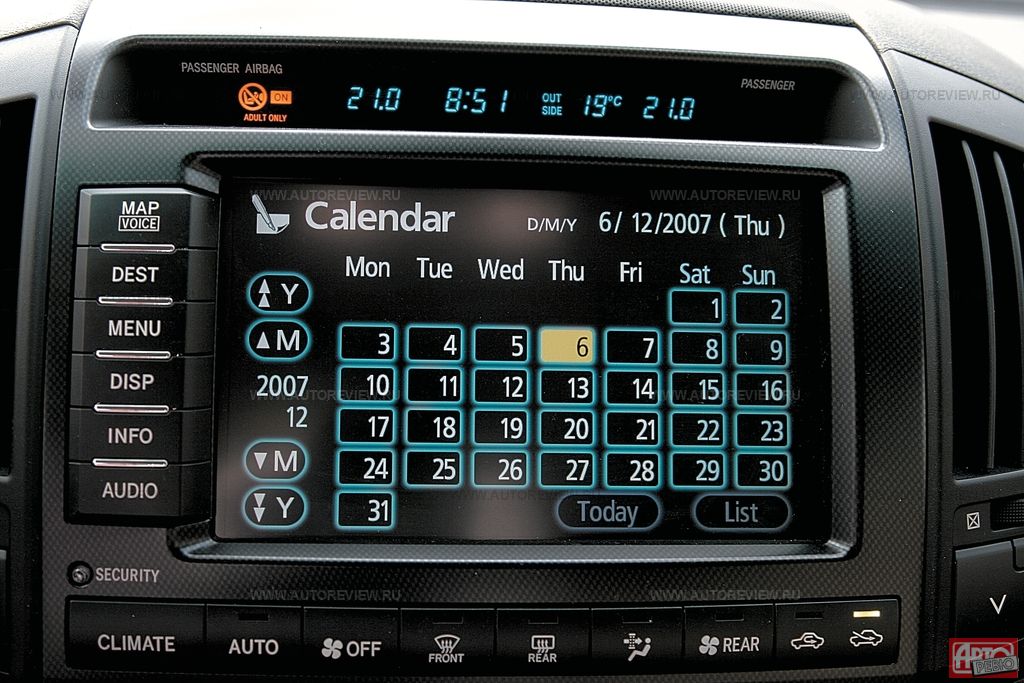
The equipment of Russian versions is generally generous: light and rain sensors, four-zone climate control, a cooler box between the front seats, electric adjustments for seats and steering wheel, a rear-view camera, a CD/DVD changer with a 9-inch touchscreen display. There is even navigation — it "speaks" in Russian, but, like in BMW, it writes on the screen in Latin. However, Toyota people promised to Russify both the navigation and the onboard computer in 2009. Otherwise, it would be a shame and disgrace: in Russia, as many Cruisers are sold as in the rest of Europe, and among the ten menu languages, Russian was not found!
But with engines, almost everything is in order: in Russia, in addition to the modernized gasoline "eight" with a volume of 4.7 liters (288 hp instead of the previous 238 hp), a fresh turbodiesel D-4D V8 with direct injection and a volume of 4.5 liters will appear. But if in Europe the diesel meets Euro 4 standards and produces 286 hp, then a version reduced to 235 hp and corresponding to Euro 3 will come to us. Toyota people are being cautious. Injection pressure of 1800 bar? For Russia with its diesel quality, that is too much — they had to reduce the pressure to 1300 bar and reconfigure the injection control program.
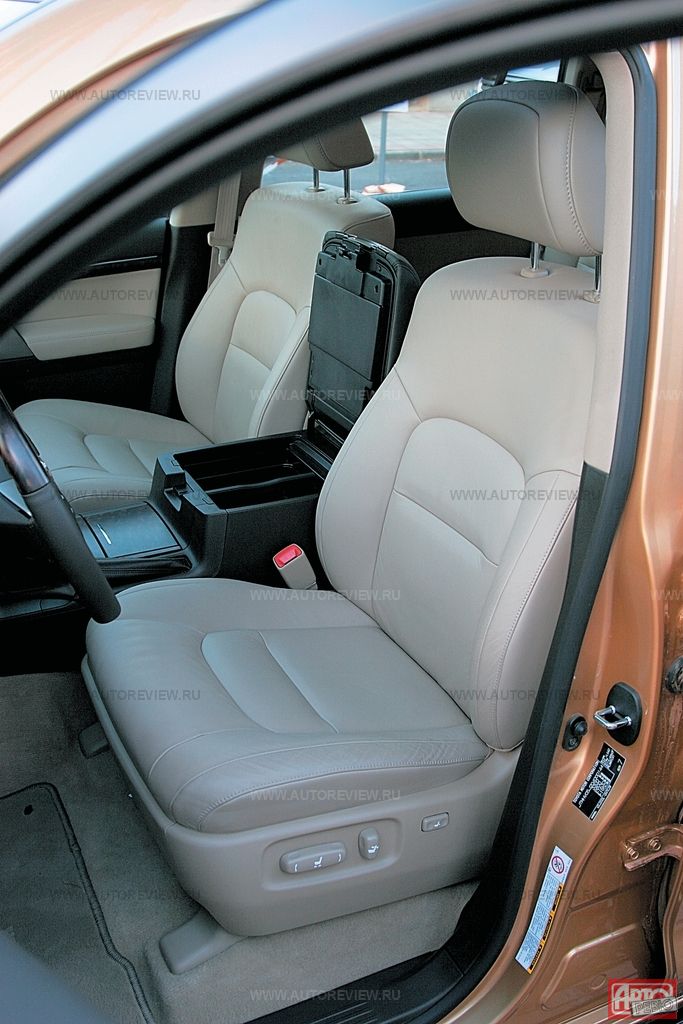 | |
| The Land Cruiser remembers three variants of settings for the steering column and driver's seat | Both front seats move electrically, but the lumbar support adjustment button is only available for the driver |
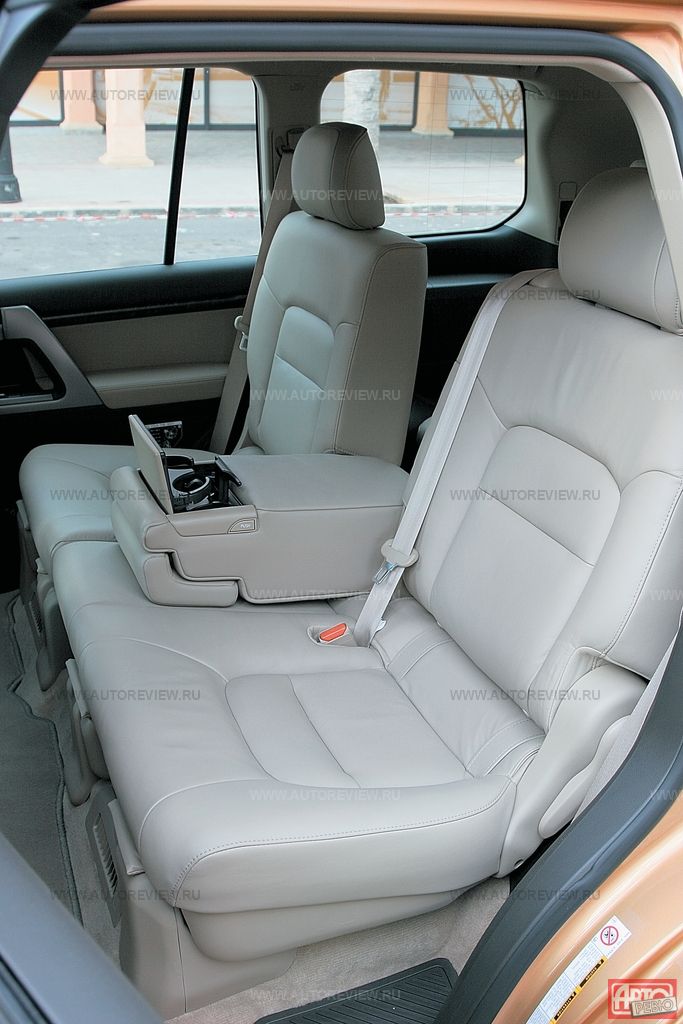 | 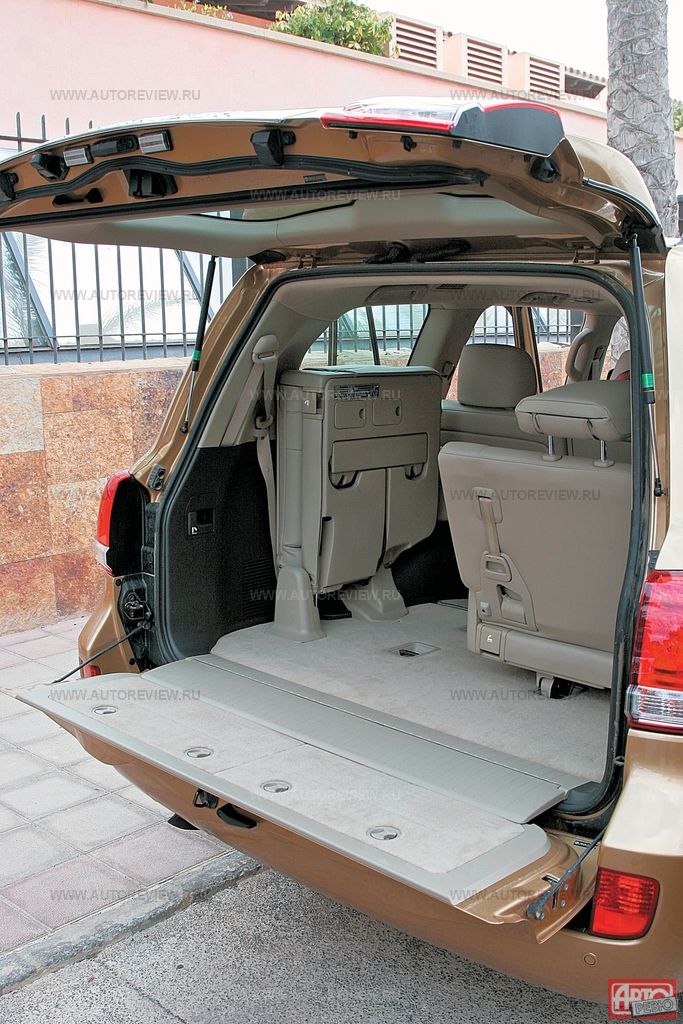 |
| The rear seat backrest folds in a 40:20:40 ratio, and the cushion in a 40:60 ratio | The third-row seats in the folded position, as before, are pressed against the sides of the body |
— Don't worry, — reassures the chief engineer of the project, Sadaeshi Koyari. — The diesel car in Russian specification has the same dynamics as the European one.
Is it possible that, having lost 50 hp, the Cruiser will drive just as briskly?
In reality, the Cruiser D-4D accelerates quite vigorously — even the "choked" diesel confidently pulls up to the maximum 4600 rpm. It is assisted by a new six-speed "automatic" — adaptive, with manual and sport modes. The shifts are smooth, moderately fast, and, most importantly, timely — for a full-size SUV, that is what is needed.
True, the diesel is a bit noisy. At idle, everything is fine, but as soon as you press the gas at least halfway, the cabin fills with a characteristic rumble that stands out noticeably against the general quiet background: after all, in everything else, the Land Cruiser is a very calm car!
The sound insulation of the "two-hundredth" can be fully appreciated with the gasoline engine — even during energetic acceleration, it is quiet in the cabin. But the gasoline Land Cruiser accelerates no faster than the diesel — which is most likely due to the five-speed "automatic". It is noticeably inferior to the six-speed both in shift speed and in operating logic. With calm driving, there are no problems, but as soon as you pick up the pace, the gearbox, even in sport mode, starts to "lag".
But the Land Cruiser is primarily an off-road vehicle. On asphalt, it never favored racing, and the new "two-hundredth", although it has become better, has retained the "moderate" philosophy of the chassis. It is still body-on-frame, but the steel "spine" has become stiffer. The suspension design has not fundamentally changed: at the rear, as before, a solid axle with a Panhard rod, at the front — independent suspension on transverse parallel arms (only now not torsion bar, but spring). And even with the "shortened" steering (from lock to lock, the wheel makes just over three turns), the Land Cruiser still drives like a classic SUV: low sensitivity, noticeable rolls, and poor directional stability — on an arc, you constantly have to correct the steering.
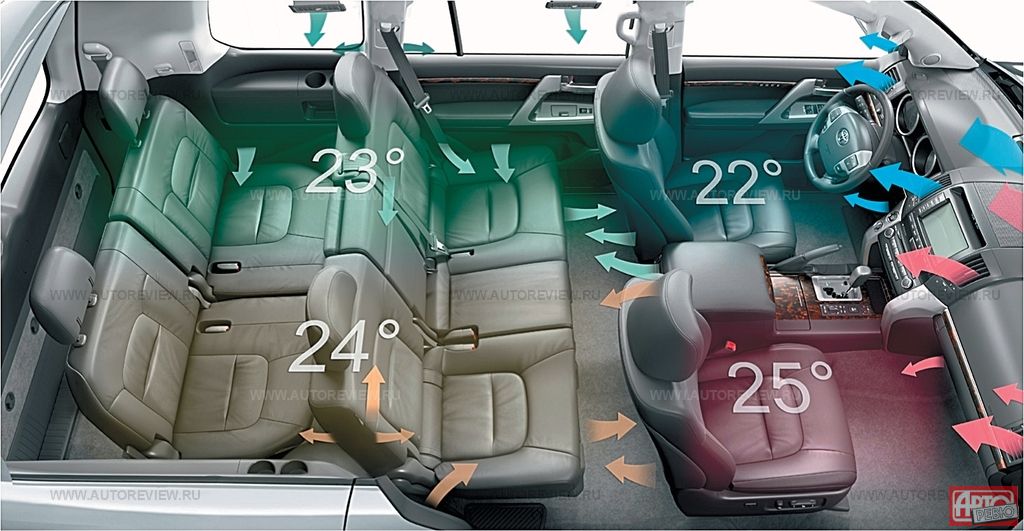 | 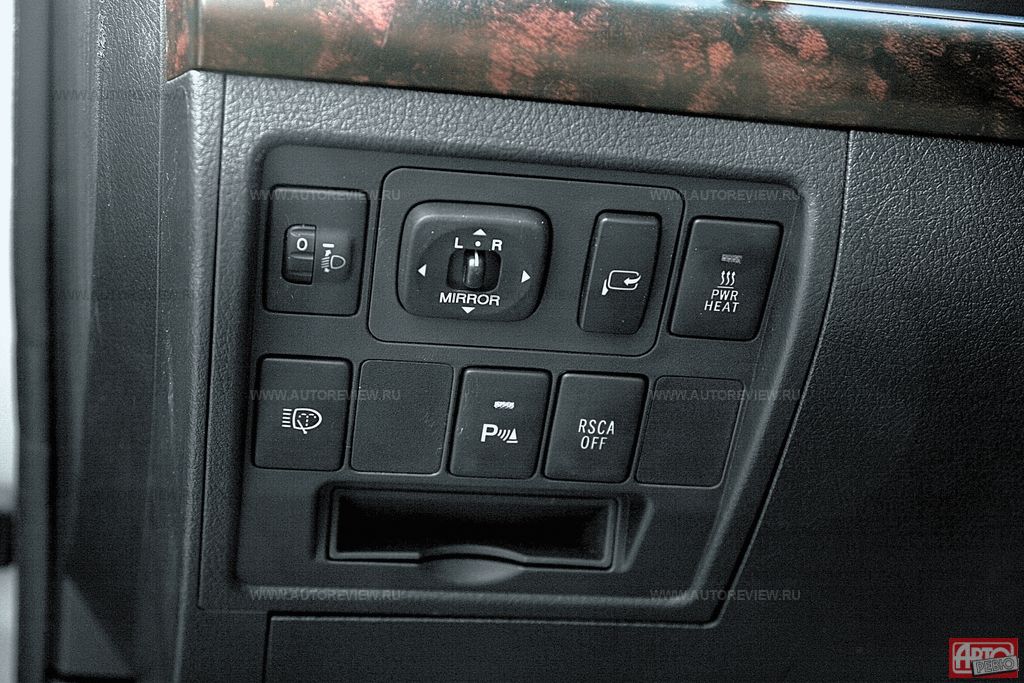 |
| Four-zone climate control has 14 air ducts in the front and rear parts of the cabin. The temperature for rear passengers can be set by both the driver and those sitting in the second row — they have their own microclimate control unit | The RSCA button disables the inflatable safety curtains — this should be done on steep slopes where the electronics may mistake a large body roll for a rollover danger and deploy the curtains |
No, this is far from a BMW X5 or a Porsche Cayenne: neither in handling nor in ride smoothness. And if in the first case Toyota hopelessly loses, then in the second — it is head and shoulders above both BMW and Porsche!
How the suspension swallows small irregularities, how imperturbably the Land Cruiser drives over "speed bumps"! On the sign — a 30 km/h limit? That is for passenger cars. But the Cruiser calmly passes these "bumps" at a speed of 60 km/h — the body is slightly tossed, but there are no hard impacts! Well, on a dirt road strewn with stones, the Land Cruiser is simply the king. Going through competitors, I could not recall a single one that even came close to the "two-hundredth" in ride smoothness.
And when it comes to off-road...
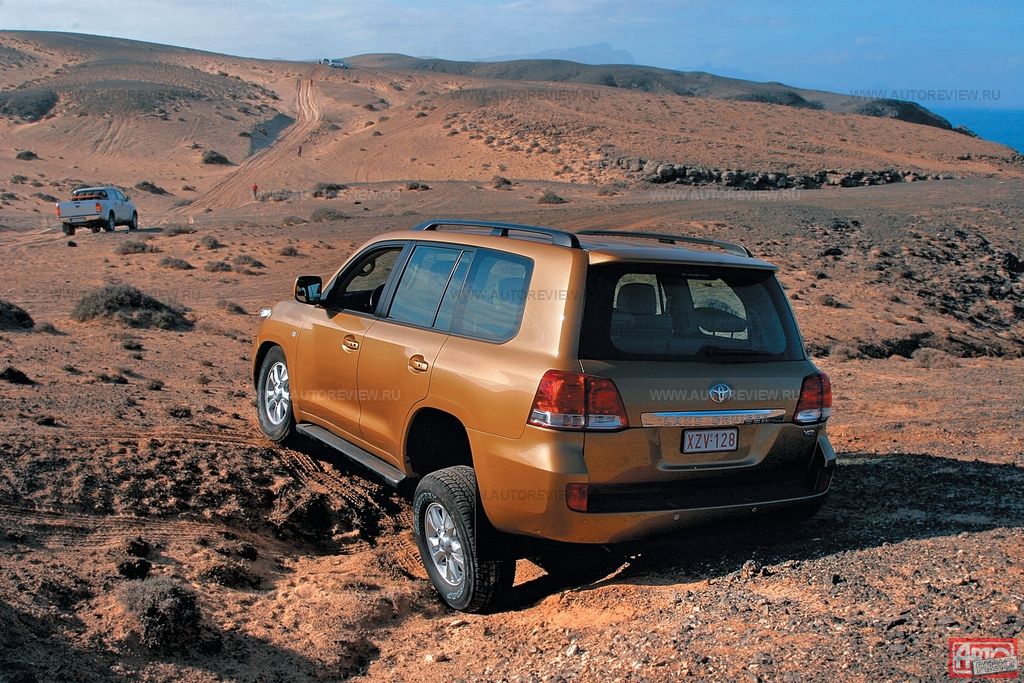 | 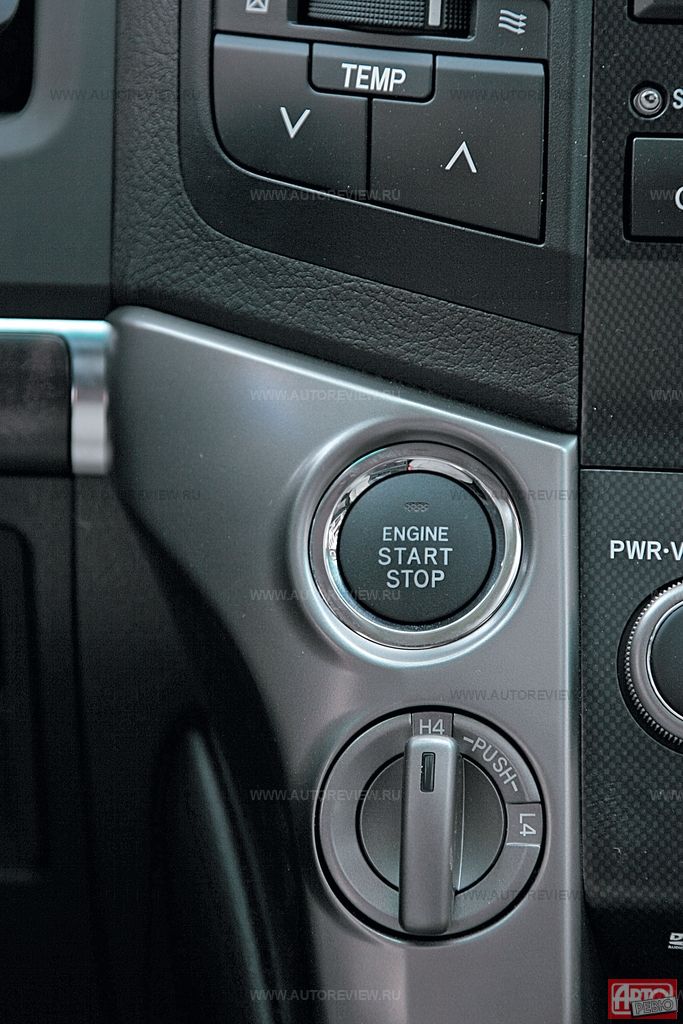 | |
| Disconnectable stabilizers allow overcoming such ditches without lifting the wheels off the ground: the suspension travel is enormous! | Under the engine start button there is a handle for engaging the low range — to use it, you need to stop and shift the automatic transmission selector to neutral | By choosing one of the positions of this lever, the driver sets the speed of the "creeping" cruise control Crawl Control — 1, 3 or 5 km/h |
The Japanese did not surprise with a revolution in the transmission and kept permanent all-wheel drive. However, instead of the previous symmetrical "open" center differential, a self-locking Torsen is now installed, which distributes torque between the axles in a 40:60 ratio. This solution is familiar from the latest generation of all-wheel-drive Audi quattro.
However, the Torsen here is primarily responsible for handling. For serious off-road driving, it can be forcibly locked — the button is in place, as before. The low range is now engaged not by a lever with a metallic clang, but by a rotary handle. Previously: you pulled the lever, heard a click of metal — and done. Now the algorithm is different: stop, shift the automatic transmission selector to neutral, turn the switch to position L4 and wait until the indicator stops flashing. When it lights up — you can storm the slopes.
The main trump card of the previous Cruiser off-road was the huge suspension travel. The "two-hundredth" surpassed it here as well. A new 4 WAHC & AVS system with hydropneumatics was developed for it, adjusting ground clearance and shock absorber stiffness. But in Russia, such Land Cruiser 200 will not be sold — this is the prerogative of the Lexus LX 570. It's a marketing decision: in Europe, the off-road Lexus will not be available, and on the Russian and Ukrainian markets, both models will be sold in parallel. To further differentiate the two similar cars, some luxury options were removed from the "two-hundredth" equipment, including this suspension. Yuri Vetrov, who has already tested the new Lexus, will tell about its operation in the upcoming issues of Autoreview.
 |  |
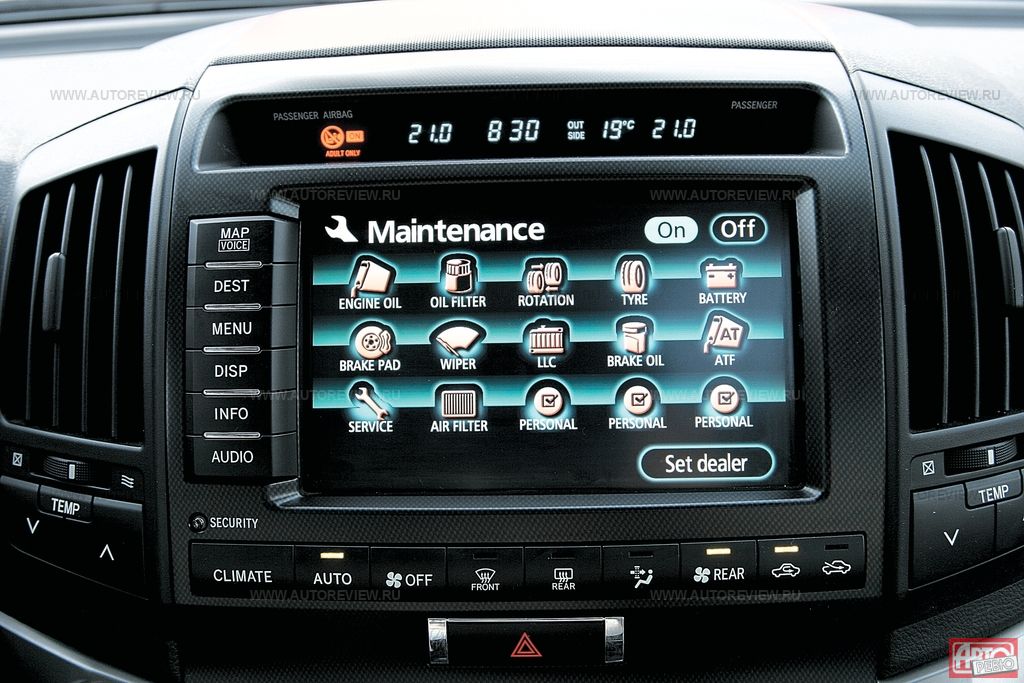 | 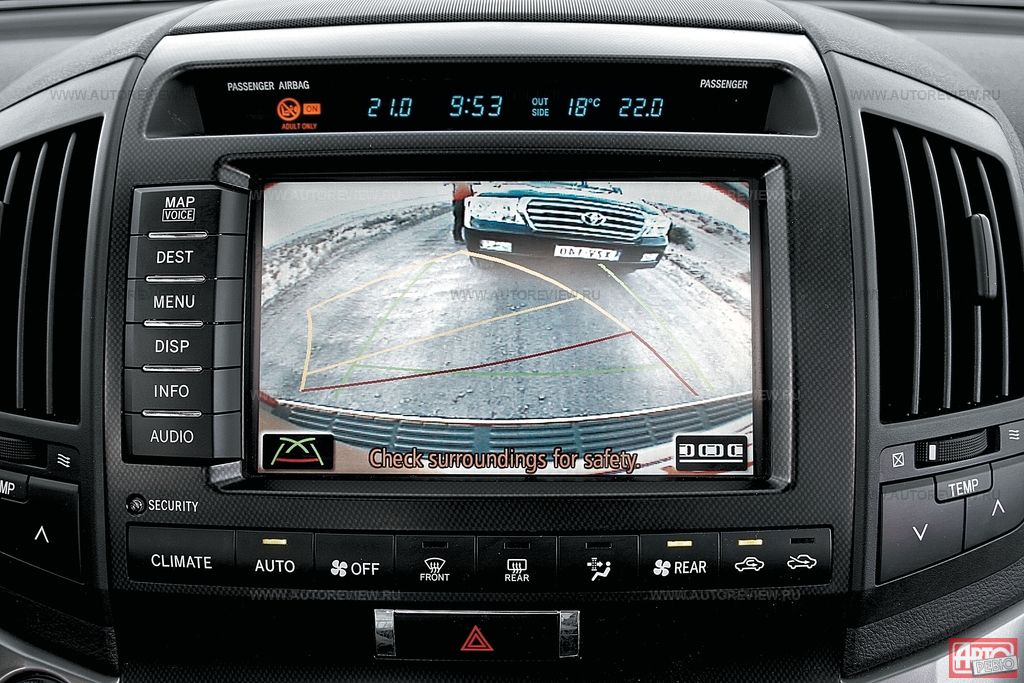 |
| The 9-inch interactive (touch-screen) display can show climate control settings, a calendar-organizer, and even a detailed service history with information about the last oil change, brake pads, or tires | The color rear-view camera has parking guidelines |
The "two-hundredth" got only disconnectable anti-roll bars. The idea is not new: the Nissan Patrol has a button that electromagnetically "uncouples" the rear stabilizer, increasing the axle articulation angle. But there is a risk that the driver will forget to return everything to place on asphalt. Toyota engineers took a different path — they created a "passive" hydraulic scheme. It itself disconnects both stabilizers when the axles begin to oscillate in antiphase off-road.
And here is a great place to test the off-road talents of the new Cruiser. A rocky climb of about thirty degrees, narrow. A normal person on a production car, even an all-wheel-drive one, would not go there. But the Japanese instructor confidently directs the Land Cruiser 200 up the hill. The car catches the bumpers on the ground, bounces on rocks, but confidently crawls up without losing traction.
The most curious thing is that the driver only steers. The electronic Crawl Control system itself manages the fuel supply and brakes the wheels that lose traction! True, on serious off-road, where you need to accelerate or brake in time, this electronics is powerless. But it can be turned off. And also disable the VSC stability system — it will automatically return to operation when the speed exceeds 50 km/h.
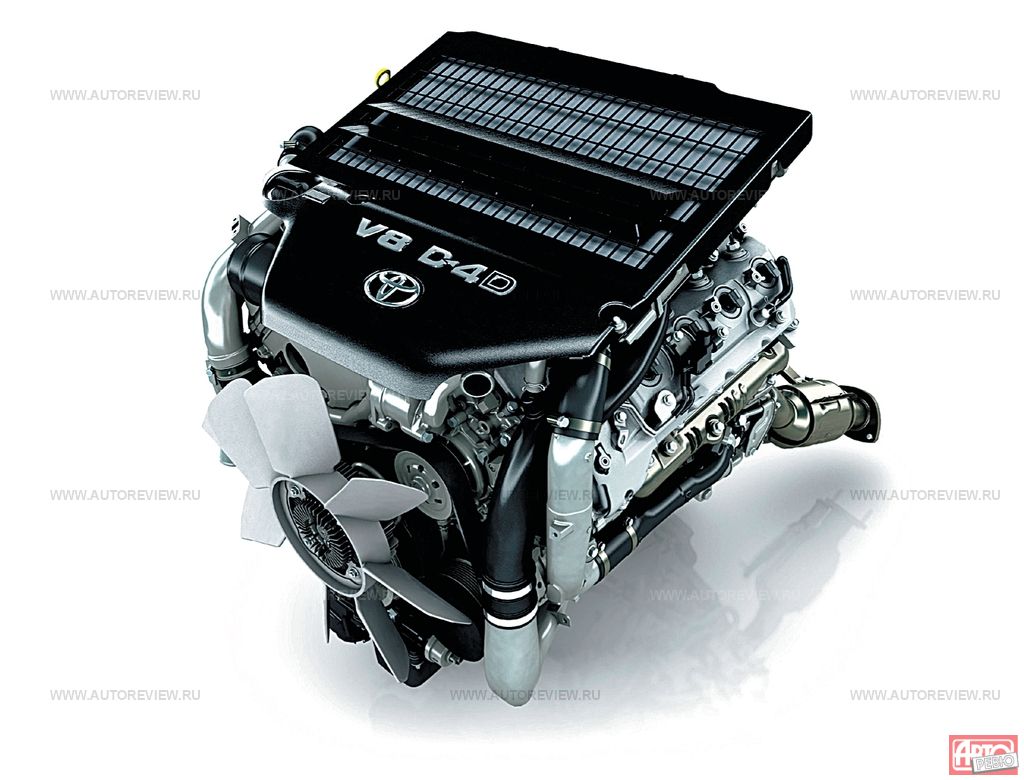 | 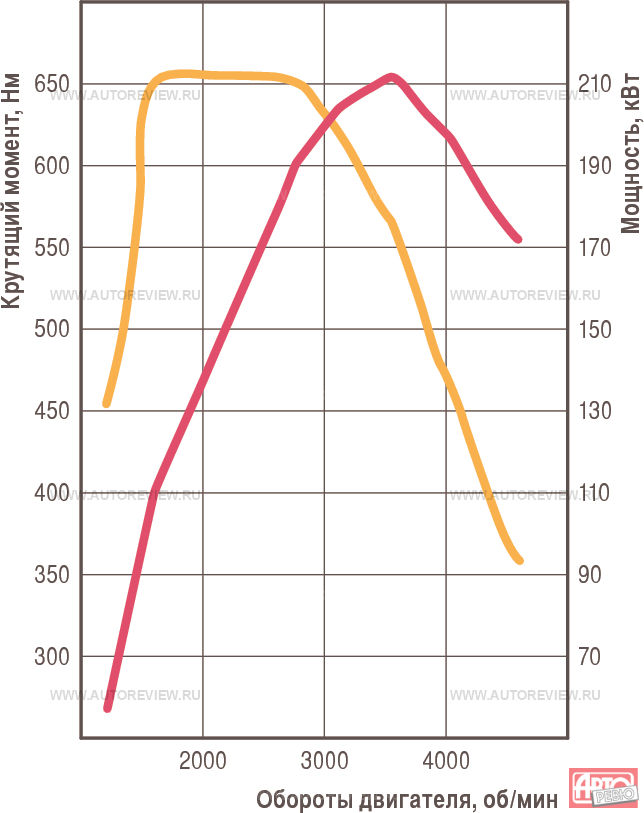 |
| Instead of the previous diesel "six", the Land Cruiser 200 is equipped with a new V8 D-4D engine: cast-iron block, non-divided combustion chambers, two turbochargers with variable geometry guide vanes. In European specification, this engine produces 286 hp and meets Euro 4 standards, but Russia will receive a version detuned to 235 hp, meeting Euro 3 standards | External speed characteristic of the V8 D-4D engine |
The only thing that alarmed me was the operation of the Hill Start Assist system. Instead of simply holding the car on an incline, allowing the driver to calmly move the foot from brake to gas, it for some reason allows the car to roll back a meter and a half and only then "anchors" it with the brakes. But the adaptive ABS works flawlessly. The electronics analyze engine speed, selected gear, acceleration, and wheel speed, determine the surface type, and adjust the ABS algorithm. Excellent! You brake hard on asphalt — ABS works standard. And on loose sand, the wheels go almost into a skid, digging in and effectively stopping the car.
In short, the Land Cruiser 200 has become even better — both on asphalt and off it. At the same time, importantly, it has retained excellent ride smoothness. But are all these improvements and rich equipment worth the $20,000 that the "two-hundredth" is more expensive than the previous eight-cylinder Cruiser? After all, if recently the Land Cruiser 100 could be bought for $70,000, now for the Land Cruiser 200 they ask 2 million 200 thousand rubles (about $90,000) for the petrol version or 12 thousand rubles more for the diesel.
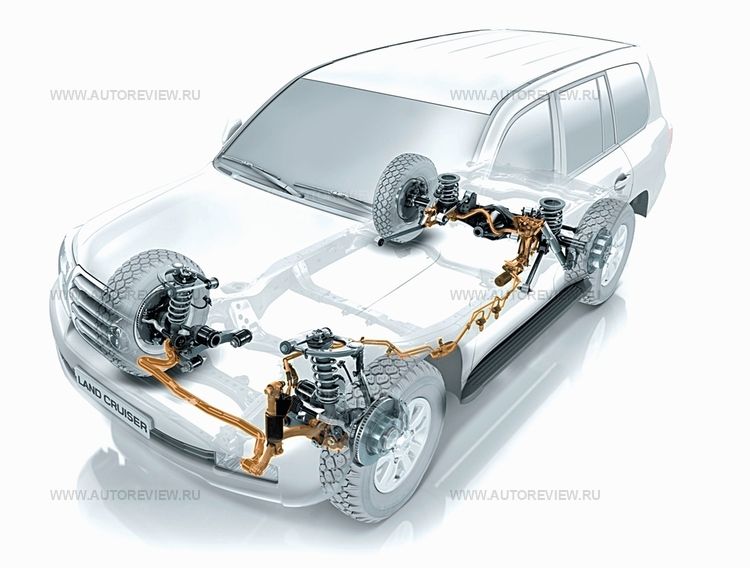
The spring suspension (double-wishbone front and solid axle with Panhard rod rear) is supplemented by hydraulic cylinders in both anti-roll bars, connected by a line to a valve block. When the front and rear stabilizers twist in the same direction during body roll in a corner or when driving on a slope — the line is closed. But when the stabilizers actively work in antiphase during axle articulation (which happens only off-road), the valves automatically open — and the stabilizers "relax", increasing the actual suspension travel
Apparently, it is worth it. After the European premiere at the St. Petersburg Auto Show, less than two months have passed, and 5,000 orders for the "two-hundredth" have already been collected from Russia. And this despite the fact that Toyota plans to sell only 19,500 Land Cruiser 200 SUVs in all of Europe next year.
However, a shortage of "two-hundredths" should not be expected — the total production program of the Cruiser at the plant in Japan has been increased from the previous 80 thousand to 100 thousand cars per year. Moreover, in the States, the Land Cruiser is not in demand: it is too small for Americans. But for Russians, it seems to be just right.
The first "Toyota" off-road vehicle appeared in January 1951 — it was a licensed Willys that the Japanese made by order of the American army. True, they abandoned the original engine: instead, they installed their own inline "six" with a volume of 3.4 liters, designed back in the 30s based on a Chevrolet engine. This unit had already worked on Toyota trucks and pickups, including army ones. Thanks to the more tractive engine, the low range was abandoned, leaving only a rigidly engaged front axle and permanent drive to the rear wheels.
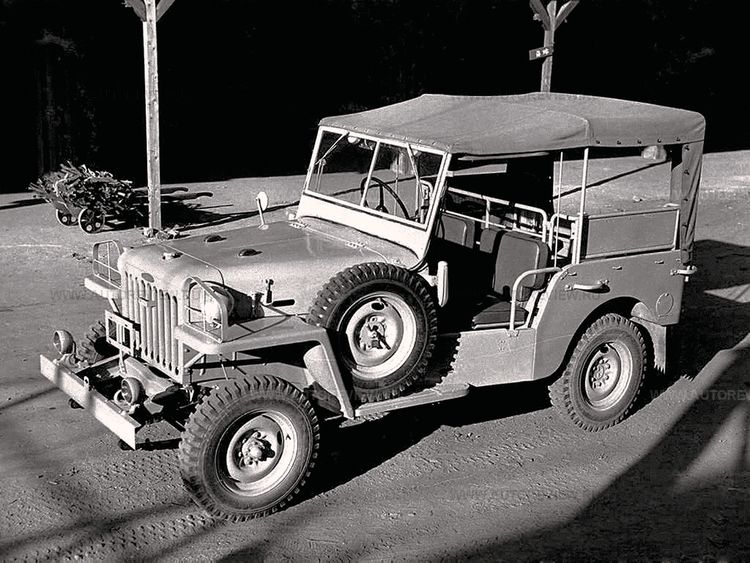
Toyota BJ (1951—1955)
Serial production began in 1953 under the name Toyota BJ, and a year later the car received the famous name Land Cruiser — thus the Japanese hinted at rivalry with Land Rover.
The success of the army version inspired engineers to create a civilian variant, and in 1955 the second-generation Land Cruiser — the 20 series — saw the light. The powertrain almost did not change: the same inline petrol "six" (3.9 L, 105 hp) with a four-speed manual gearbox. The only noticeable improvement was synchronizers on the third and fourth gears. Over time, the "twenty" acquired many variants: three different wheelbase sizes, rear or all-wheel drive, open or closed body. And in 1959, the first four-door "Cruiser" with three rows of seats appeared.
In 1960, the Japanese once again modernized their off-road vehicle, releasing the Land Cruiser 40 series. The engine became more powerful — 125 hp, but the main change was hidden in the transmission: a low-range gear finally appeared. The next significant update came only 12 years later, when a 3.6-liter naturally aspirated diesel six-cylinder (90 hp) was added to the lineup. Two years later, a more modest but economical diesel unit appeared — a 3.0-liter four-cylinder (85 hp). In Japan, production of the "forty" ended in 1984, but in Brazil, this venerable off-roader, under the name Toyota Bandeirante, was assembled until 2001!
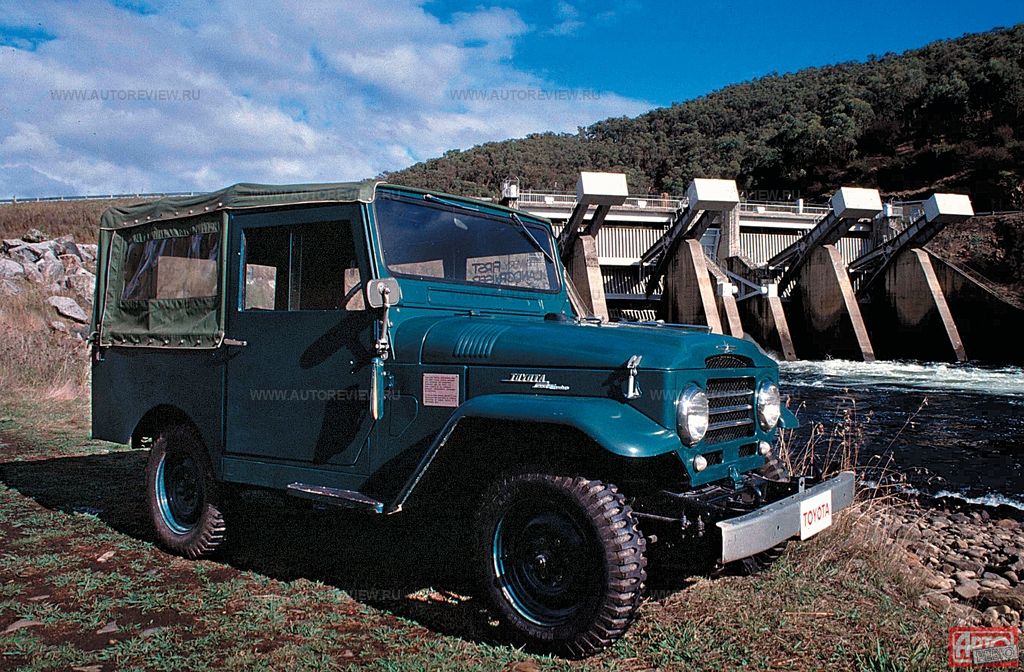 | 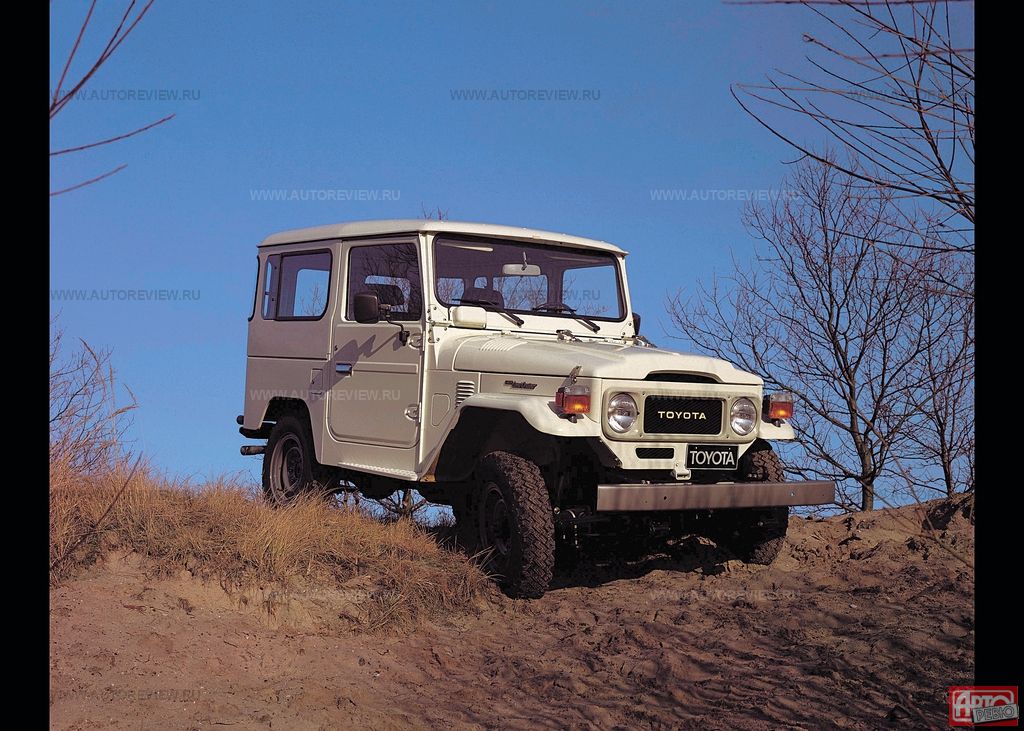 |
| Toyota Land Cruiser 20 series (1955—1960) | Toyota Land Cruiser 40 series (1960—1984) |
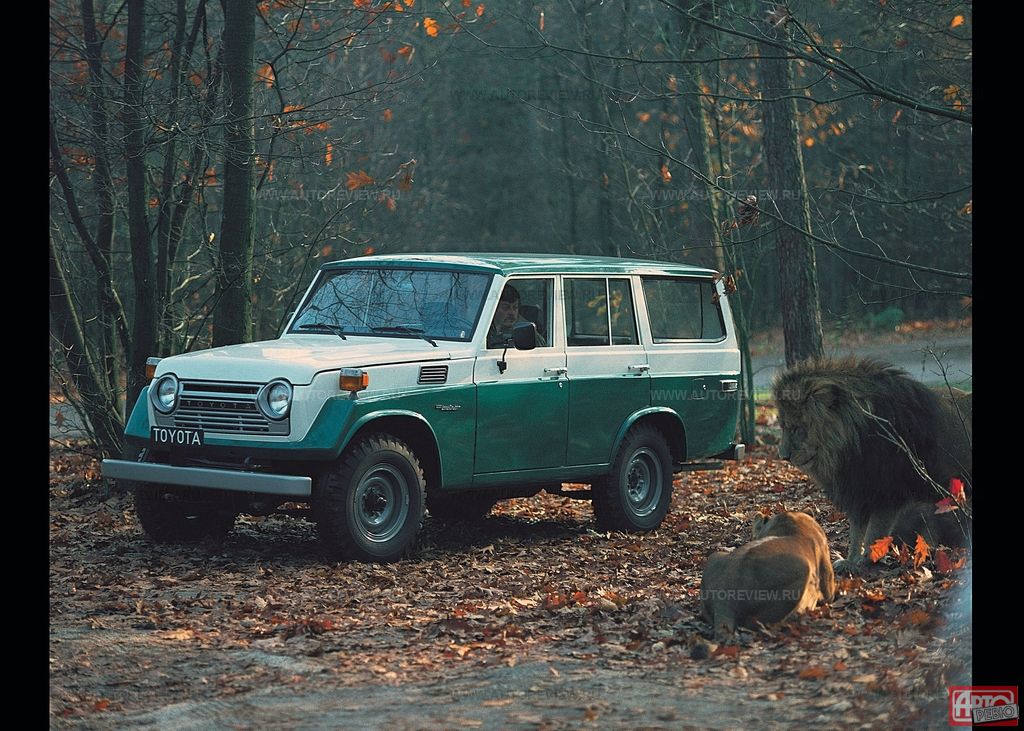 | 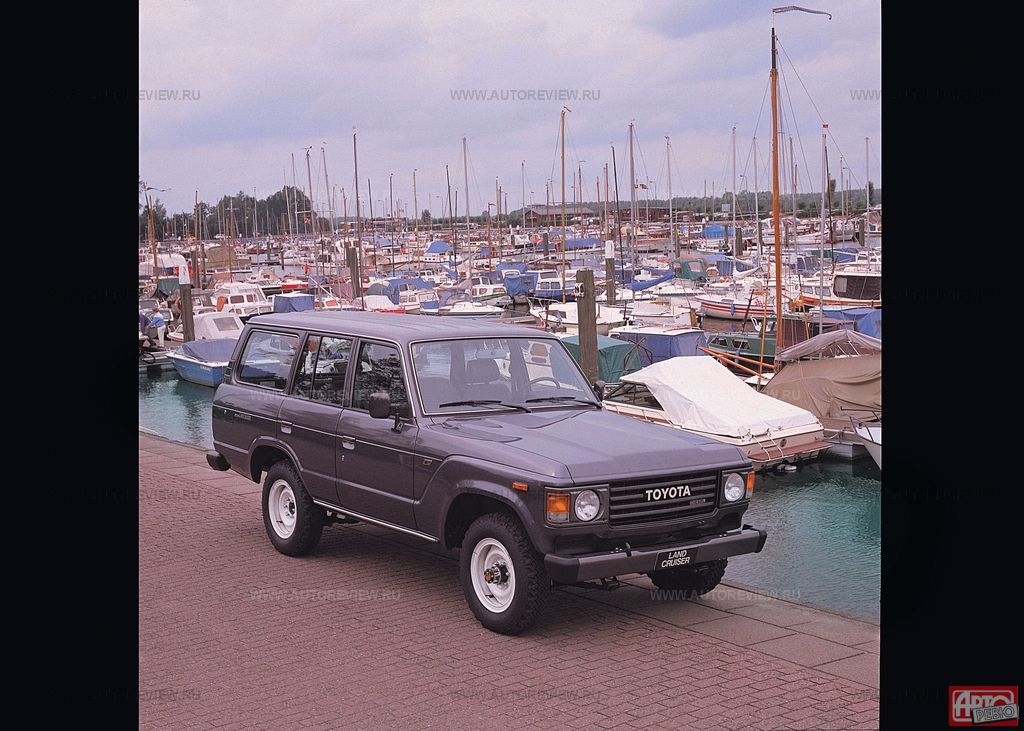 |
| Toyota Land Cruiser 50 series (1967—1980) | Toyota Land Cruiser 60 series (1980—1990) |
The "forty" was replaced in 1984 by the Land Cruiser 70 series — a legendary workhorse that, in updated form, is still produced today (though only for a few markets). The task was not easy: to preserve all the off-road qualities, practicality, and recognizable appearance of its predecessor. The model range immediately split into two directions: cargo-passenger versions with two-door bodies and different wheelbases, as well as "lighter" passenger modifications, which by the early 90s had separated into the Land Cruiser Prado family.
But let's return to the 60s: in the States, spacious and comfortable four-wheel-drive vehicles like the Jeep Wagoneer were gaining popularity. Toyota's answer in 1967 was the Land Cruiser 50 series with a five-door body. In essence, it was a deep modernization of the previous FJ45V model: the body, interior, and suspension were reworked, making it noticeably softer. The wheelbase was increased from 2650 to 2710 mm, and under the hood only gasoline engines were offered — first a 3.9-liter (125 hp), and from 1975, a 4.2-liter (135 hp).
The successor to the "fifty" in 1980 was the 60 series. A completely new body with a spacious and cozy interior was installed on a reinforced frame. The options list included air conditioning, a separate heater for rear passengers, an electric sunroof, and electric mirror adjustments. From 1984, the "sixty" could be ordered with a four-speed automatic transmission, and a year later a 135-hp turbodiesel appeared, which was installed on the most expensive version.
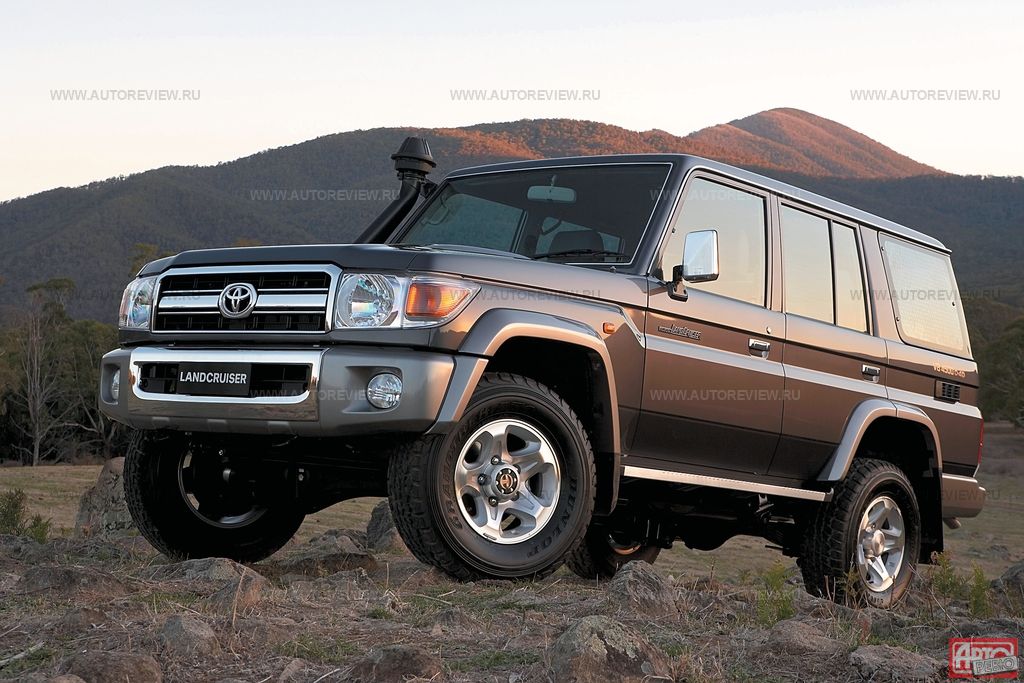 | |
| Toyota Land Cruiser 70 series (1984—2007) | Toyota Land Cruiser 70 series after 2007 modernization |
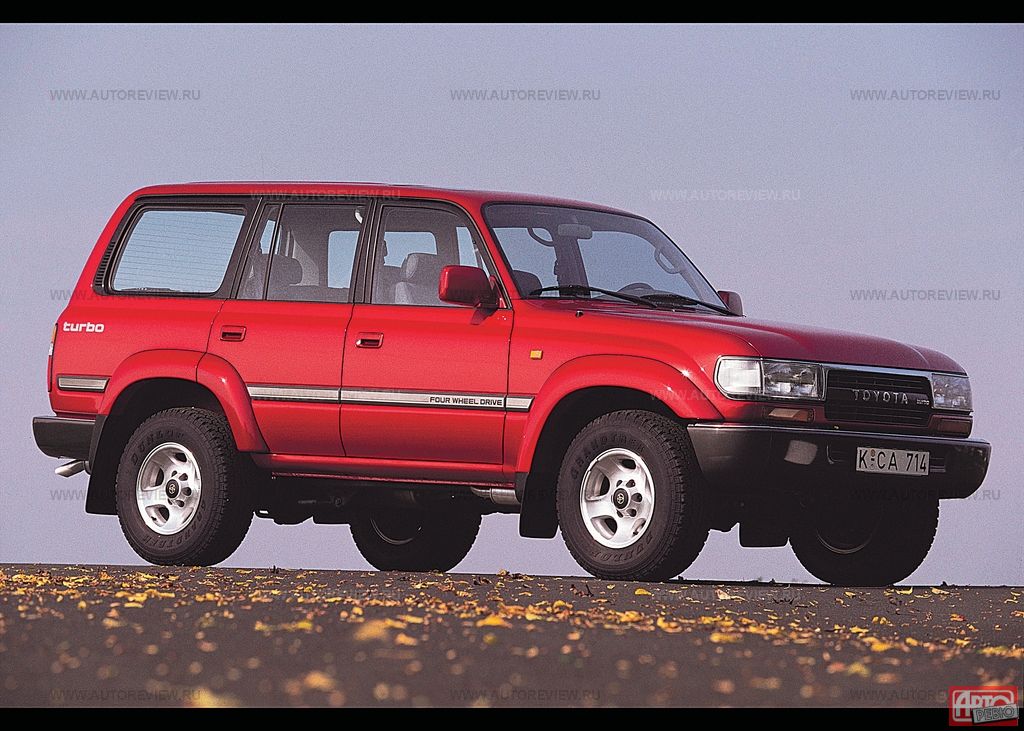 | |
| Toyota Land Cruiser 80 series (1990—1998) | Toyota Land Cruiser 100 series (1998—2007) |
The Land Cruiser 80 series, which debuted in 1990, was a real breakthrough. It already had permanent all-wheel drive with a locking center differential and coil spring suspension instead of leaf springs. Starting in 1995, the "eighties" received airbags and an anti-lock braking system. Three engines were offered, all inline six-cylinders: a gasoline (initially 4.2 liters with 167 hp, then 4.5 liters with 215 hp), a naturally aspirated diesel (4.2 liters, 125 hp), and a turbodiesel (4.2 liters, 165—170 hp).
In January 1998, the Toyota Land Cruiser 100 saw the light of day — the direct predecessor of the current "two-hundred". The car was built on a completely new chassis with independent front suspension. However, for a number of markets, a 105 series version was separately produced — it was based on the old frame. The main technical premiere was a 4.7-liter gasoline V8 producing 234 horsepower. For those who preferred diesel, a turbocharged 4.2-liter engine with 205 hp was offered. Over the nine years the "hundred" spent on the assembly line, it was only slightly updated once — and in that form it successfully survived to this day.