I witnessed a real frenzy. Nobody cared about the price — everyone wanted only one thing: to be the first to get a car from the showroom. In the evenings, they would eagerly study the official photos and count the minutes until the start of sales. They even tried to use my journalist's ID (it turned out to carry more weight than a deputy's in such matters) to get me to help "score" a car. And when they learned I was heading to Fuerteventura for the first test of the new model, the fanatics completely lost their peace. Poor things! What gets people so fired up about the Land Cruiser?!
Upon landing at Fuerteventura airport, I felt clumsy. In a warm black sweater, boots, and jeans, with a jacket over my shoulder, exhausted from the flight. People strolled past in shorts and bright T-shirts, and one fearless surfer with a board was even padding barefoot. Beautiful! Salty ocean air, plus 24, clear skies. Too bad only three days were allotted for the test.
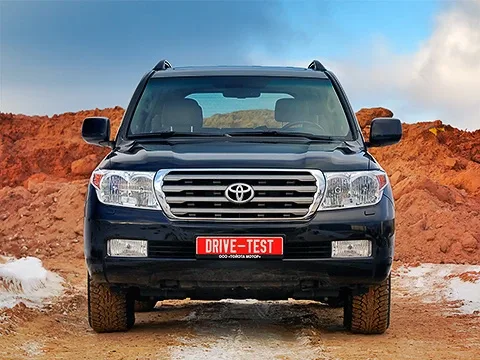
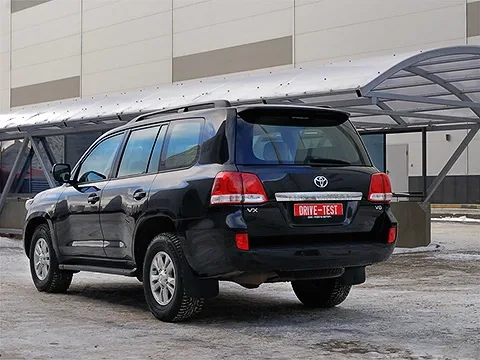
I first saw the Land Cruiser 200 at the evening press conference. I walked around the pedestal for a few minutes. No, it seems Toyota designers don't think about aesthetics at all when creating new models. At first, the new look seemed controversial to me. I especially disliked the rear: the low-set bridge between the taillights visually weighs down the car, and the shape of the lights raises questions. But at the same time, the Land Cruiser exudes confidence. You look at it — and subconsciously understand: this one definitely won't let you down. Not designers, but psychologists! And although the "two-hundredth" is only six centimeters longer than its predecessor, it seems much more massive! By the third day, I had gotten used to the simple surfaces of Vibrant Clarity and began to perceive the car differently. I recognized it as a worthy continuation of Land Cruiser traditions!
The interior is a clear step forward. The texture of the dashboard has improved, the "wood" plastic looks more "wooden" than before. And the "silver-painted" parts of the center console really do resemble polished metal. The "hundredth" probably never even heard of carbon fiber inserts. The centerpiece is the touchscreen with excellent graphics. The simple electronic clock in the upper part of the "beard" (a Japanese fetish?), traditional for Toyota and Lexus, is also in place. The car is densely packed with options: four-zone climate control, eight-way power front seats, folding third row, sunroof… It's become more spacious inside. For example, with my 190 cm, I easily climbed into the back row and settled in quite comfortably. In general, apart from the questionable "wood," "metal," and "carbon," there's nothing to fault inside.
No complaints about ergonomics or visibility. The mirrors are the size of a good frying pan, the optitronic instruments are perfectly readable, and navigating the systems via the monitor is clear without instructions. The front passenger can only be envied — they have not only plenty of space but also three whole "handles" for off-road situations, to avoid a concussion when tackling serious off-roading. I wonder how often Russian Land Cruiser owners actually do that?
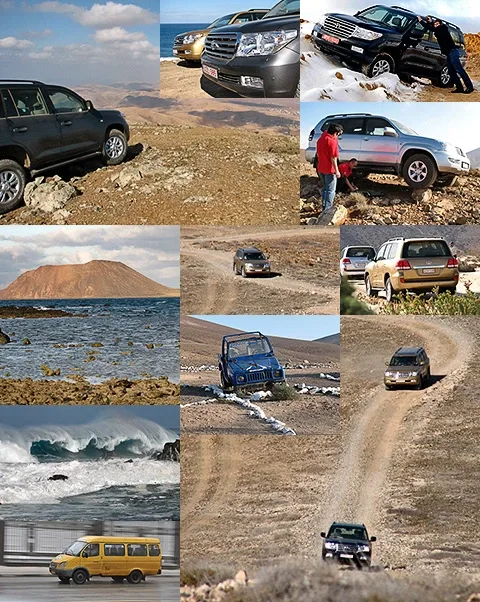
Fuerteventura is an island of volcanic origin, with a rocky surface and almost no vegetation. On the dirt road, the Land Cruiser flies like an arrow. Here, it's in its element. Potholes under the wheels, but incredible comfort in the cabin. You confidently press the gas, knowing the suspension will silently swallow any bumps and ruts, and you feel true freedom.
The first destination is a plateau on the coast, a tricky descent to the shore. In a regular car, you'd have to work hard, but the Land Cruiser now has the Crawl Control system — "off-road cruise control." When it's on, the car drives itself forward at 1, 2, or 5 km/h, with electronics metering traction and braking the wheels. All I have to do is steer. The instructor gives a signal, and I point the hood toward the rapidly descending rut. Low range is engaged, and the center differential is locked. I set the minimum speed — 1 km/h.
I release the brake pedal, and the Cruiser, creaking its brakes, begins to crawl down. At first, you don't trust the electronics, and you want to press the brake yourself. But the computer handles it, does everything on time, and by the middle of the descent, I'm already bored. I should have set a higher speed! Now — the climb up. I grip the wheel, the car slowly but confidently crawls, and in the windshield, there's only blue sky. Instead of dirt under the wheels, there are huge boulders, but for the "cruiser," it's a trifle. Too bad Crawl Control is only available on petrol versions. The Japanese explained: they couldn't make it work with the diesel — it operates at very low RPMs, and the twin-turbo diesel doesn't pull in that range.
However, it's not just Crawl Control, but also the differential lock with low range in the transmission that account for the amazing off-road capabilities. The huge suspension travel and axle articulation angle are also important.
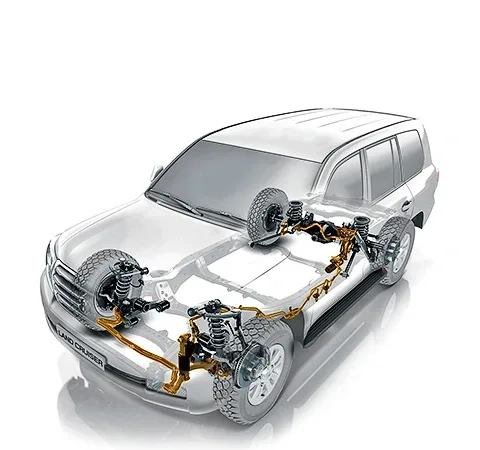
Toyota followed Land Rover's path and equipped the new model with the KDSS active stabilizer system. On the highway, they work as usual and combat body roll, while off-road they fully disconnect. There's also the 4 WAHC & AVS suspension with adjustable dampers that can change ground clearance. But it won't be on Russian cars — the option is reserved for the more prestigious Lexus LX 570.
Meanwhile, the road got harder, and sharp stones literally threw themselves under the wheels. And the very first meters of the new section ended in a puncture. My partner ran over one of them (it proved fatal for the tire sidewall). Fortunately, the organizers who arrived quickly solved the problem.
Closer to five in the evening, we climbed to one of the highest points on the island, offering a stunning view — several levels of mountain ridges, a curving horizon line, and the blue ocean. The roof of the world!
On the way back, my partner "killed" another wheel. I didn't wait for the "rescuers" and moved to my colleagues. I settled in the back and rode to the hotel as a passenger. The road turned into an asphalt serpentine, and the guys taking turns at the wheel turned out to be reckless drivers. It wasn't scary, but the thought of ten airbags as standard warmed the soul. And if not for the constant tests of my vestibular system, sitting in the back would have been just great: plenty of space, the backrest adjusts for recline, there's heating, separate climate control — everything for passenger happiness.
Besides the rocks, the island also has beautiful sandy areas with ocean views. In the sand, the Land Cruiser proved equally imperturbable. The main thing is not to lose speed and press the gas when you feel the car "digging in." On the sand, I tested the smart ABS: the Toyota folks taught it to recognize the surface type and work according to an optimal algorithm. The electronics, assessing engine RPM, wheel slip during acceleration, and speed, select the appropriate braking program. It works! The wheel lock moment lasts longer, and the braking distance is reduced. Upon returning to Moscow, I tested the ABS on snow and ice. Each time, the electronics chose its own algorithm: on ice — short slips, and on snow, as on sand — longer ones. The brake drive's informativeness is good, but during hard braking on dry asphalt, the car noses down and requires slight steering correction.
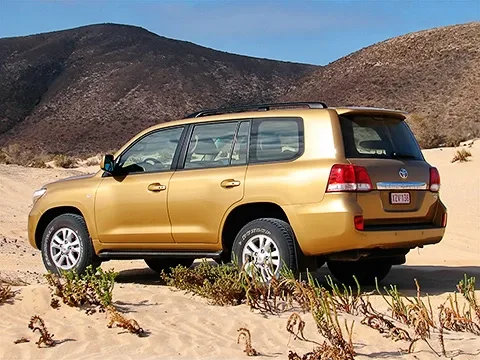
Of all the available shades, the golden one looked the most advantageous — in it, the huge SUV looks truly representative.
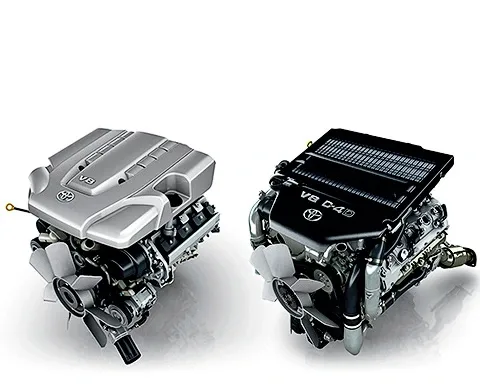
The final chord of the island tests was a high-speed drive on the highway. With the petrol V8, the Land Cruiser feels quite brisk: it accelerates to 180 km/h quickly and without visible effort. True, the five-speed automatic doesn't always keep up with the engine's torque.
The roads on Fuerteventura are simply a fairy tale. The surface is so ideal and with such clear markings that I haven't seen anything like it in any other country. The petrol modification races along it absolutely imperturbably, as if there are no unsprung masses at all. But where can we find such asphalt at home? That's why, immediately after returning to Moscow, a second encounter with the Land Cruiser awaited me — this time in diesel form.
The diesel tests started right with the arrival of light frosts. In the morning, I started the car, activated the rapid warm-up mode, set the climate control to auto, and turned on the maximum seat heating. Then I spent about ten minutes outside with a brush, clearing snow from the huge body. When I finally got into the cabin, I was surprised: it was still cold inside! A few more minutes passed before the air began to warm up. There's your Fuerteventura!..
But the diesel unit is far more interesting than the petrol one. Even in the version detuned for Russia — with reduced fuel rail pressure and Euro-3 standards, which cost it 50 hp compared to the European version. It pulls great, and the tachometer needle briskly heads toward the limiter. And the gearbox here is already six-speed, noticeably more responsive and nimble: it works more efficiently and understandably than the five-speed in the petrol "cruiser."
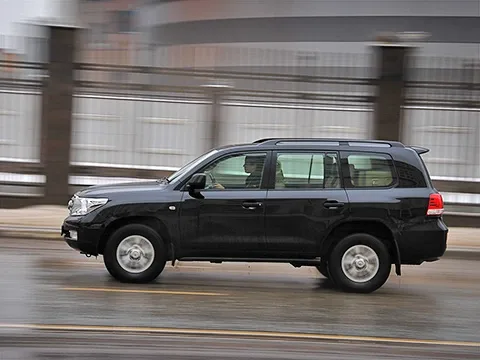
On the highway, the Land Cruiser behaves extremely comfortably: directional stability is excellent, and handling for a body-on-frame SUV is surprisingly decent.
The diesel outperforms the petrol version both in numbers and in feel. Acceleration to 100 km/h is a second faster, and the top speed is 10 km/h higher. And if you add fuel consumption — about 18 liters per 100 km in mixed cycle versus 23 for the petrol car — the choice suggests itself…
Externally, the more expensive modification gives nothing away, and only at idle does the diesel make itself known a little louder. But as soon as the revs rise, the D-4D, together with the exhaust system, starts to sound almost like a petrol engine — with a solid baritone.
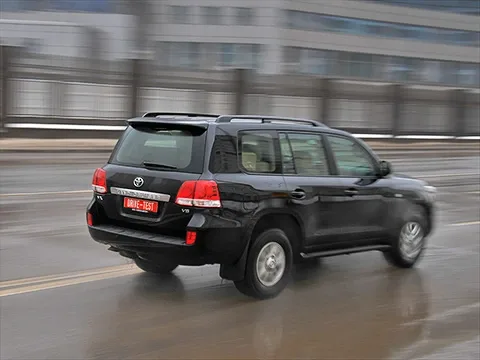
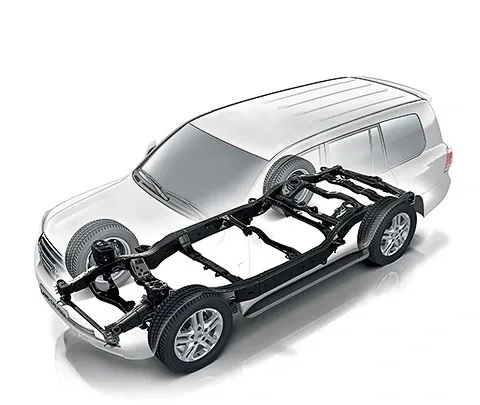
After driving around the city and region, I once again noted how smooth the new Land Cruiser's ride has become. The suspension copes excellently with unsprung masses at high speed — both in Russia and on the Canary Islands. And what happens if you drive fast and aggressively attack corners? Body roll, of course, makes itself known. But the steering remains informative, and you don't feel any disconnect between driver and car. In corners, you sometimes have to correct the trajectory, and on uneven roads — brake to dampen the vertical rocking of the massive body. When getting behind the wheel of the "200", you need to account for its mass, high center of gravity, ladder-frame construction, and high-profile tires. Then driving pleasure is guaranteed. Only it's not a sportsman's thrill, but the delight of a comfort connoisseur.
To test the upgraded all-wheel drive with the legendary Torsen differential in action, we headed to a snowy field. I disable VSC, ease off the throttle in a corner, and simultaneously add power with a slight tail slide. Currently, 60% of the torque goes to the rear wheels, and the car willingly drifts. You can even get a bit rowdy, trying to imitate something like rally driving. But this fun doesn't last long: after 50 km/h, the electronics wake up and decisively put an end to such antics.
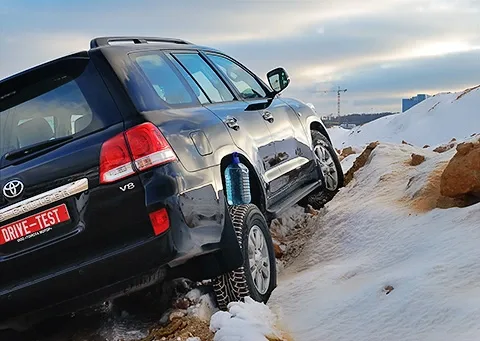
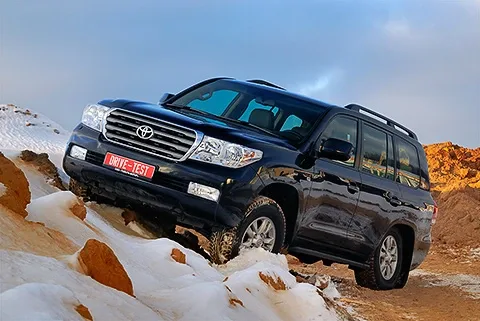
KDSS "loosened" the stabilizers, allowing the suspension to work through a huge travel. On the left, the car almost touched the ground with the edge of its bumper.
At the end of the double test, it was in Russia, sitting in a traffic jam behind the wheel of the "200" — as if on a throne — that I finally understood the whole essence. I understood those who hunted with burning eyes for the country's first "Cruiser".
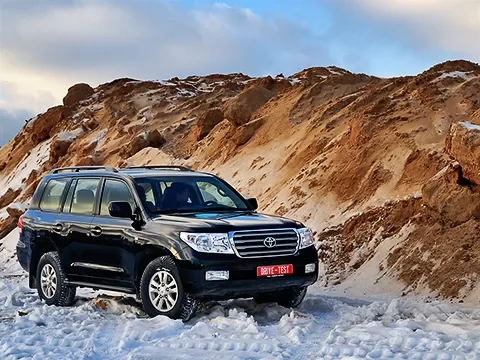
The Land Cruiser isn't just unafraid of virgin soil — it loves it. What's appealing is the generosity with which the suspension forgives the driver's mistakes in route choice.
It's all simple, after all! First, this car absolutely doesn't care where it goes — on the flawless asphalt of a Canary Island or on the broken roads near Moscow. And second, only in our country can you truly appreciate all the virtues of such a vehicle. When purchasing a Land Cruiser, the owner gets not just a car with broad talents, but also a significant bonus in the form of universal respect! He drives out of the showroom in a brand-new "200" — and enters an incredibly polite flow of traffic. All the Moscow driver arrogance instantly evaporates! The Land Cruiser not only boosts self-esteem but also makes life on the road cloudless. And that, you'll agree, is worth a lot!
ISOFIX child seat anchorsSeat belt pretensionersImmobilizer and alarmDouble door locking and auto-lockTilt and intrusion sensorsParking sensors with cameraNavigation, Bluetooth, microphone, and voice control
Options - Metallic — 22,500 rubles ($900)
Price of tested version - Petrol — 2,212,000 rubles ($89,260),
- diesel — 2,200,000 rubles ($88,700).
History
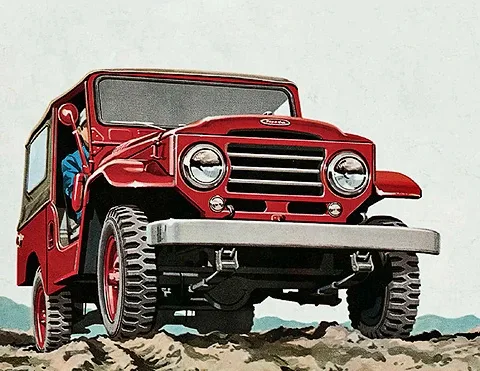
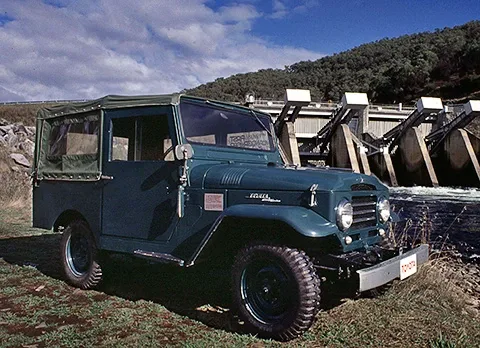
Oddly enough, the Land Cruiser has kinship with the Jeep. The first Toyota SUV was built on a Willys chassis and was intended for American military. Initially, they wanted to call it Toyota Jeep, but later decided otherwise and gave it the designation BJ. Here, B is the index of Toyota's six-cylinder inline engine with a displacement of 3.4 liters, and J is precisely Jeep. The drive was rear, and the front was engaged manually. Serial production began in 1953.
In 1955, the BJ was modernized — thus the first Land Cruiser 20 appeared. The military vehicle was converted for civilian needs. The engine was increased by 400 cubic centimeters, and power exceeded a hundred, becoming five "horses" higher. During its production, the 20 series was offered in several body types.
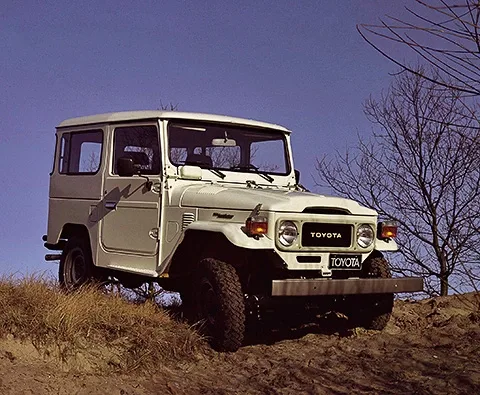
Land Cruiser 40 is already the 1960s. The car, like its predecessor, continued to develop the Willys platform. Over time, the "forty" received new elements: a low-range gear, a 3.9-liter petrol engine (125 hp), and two diesels — 3.6 liters (90 hp) and 3 liters (85 hp). The LC 40 turned out to be a true long-liver: it was produced until 1984.
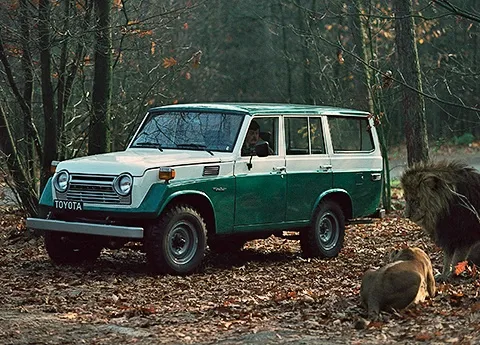
Even when the 40 series was still in production, in 1967 the Land Cruiser 50 appeared — another step in evolution. A five-door wagon, more comfortable suspension, and improved interior. Only petrol engines: 3.9 liters (125 hp) and 4.2 liters (135 hp). And still the same "round eyes" of Willys, with which the "fiftieth" looked at the world.
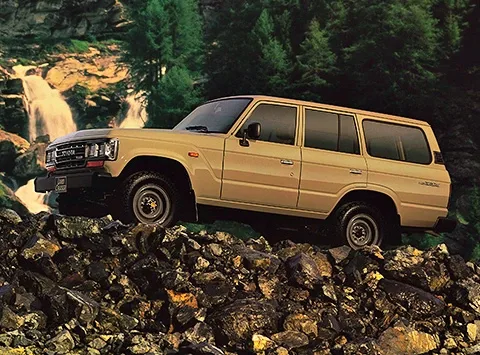
A real breakthrough happened in 1980. In the LC 60, the Japanese refined the frame and made a new body, thanks to which the cabin became spacious and comfortable. The equipment list includes a four-speed automatic transmission, air conditioning, and an electric sunroof.
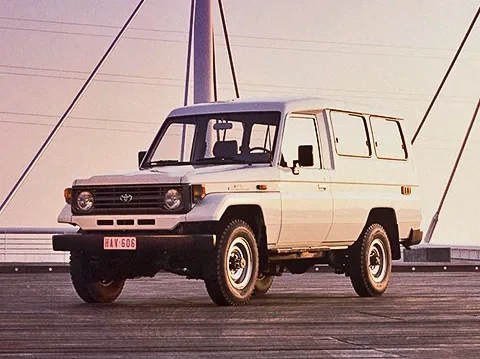
The Land Cruiser 70 series came out in 1984. Essentially, it was an updated version of the previous model, although such a word wasn't known then — the car was given a new index "70". It was made both as a pickup and a cargo-passenger variant.
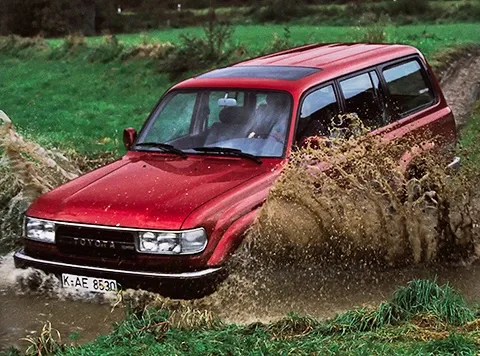
The modern history of the Land Cruiser begins with the 80 series. The appearance no longer reminded of the post-war past. A signature style appeared! And also — all-wheel drive with a locking center differential and coil springs instead of leaf springs. Safety was raised with ABS and front airbags. Various inline engines were installed on the "eighty".
Petrol: 4.2 liters (167 hp), 4.5 liters (215 hp).
Diesel: naturally aspirated 4.2 liters (125 hp) and turbocharged 4.2 liters (170 hp).
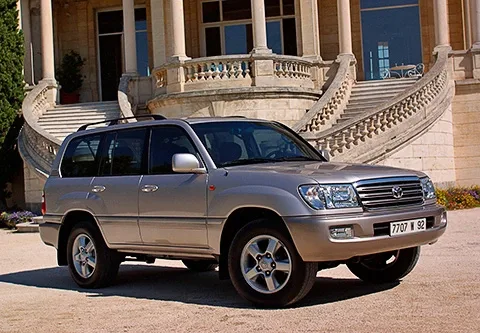
The Land Cruiser 100 appeared in 1998. Reinforced frame, new independent front suspension, petrol V8 4.7 liters (234 hp), and turbodiesel 4.2 liters (205 hp). The design turned out so successful that the car didn't even need a facelift.