
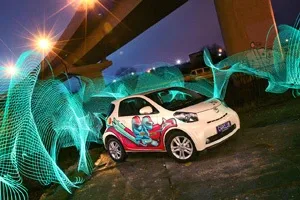
A smiling guy at the car wash, returning our gleaming car, asked: "Is it really called 'IQ'?" But in fact, the new Toyota is not a reference to intellect in the usual sense, but to emotions. It would be more logical to call it EQ — emotional quotient. After all, for happiness and success in the modern world, a high IQ alone is not enough: you also need emotional intelligence, the ability to recognize and understand your own feelings and the emotions of others.
With this little one, you really do experience vivid emotions — whether it's the reaction of passersby or night races around the city, when it feels like you're speeding through a racing simulator on the smooth neon tracks of Tokyo.
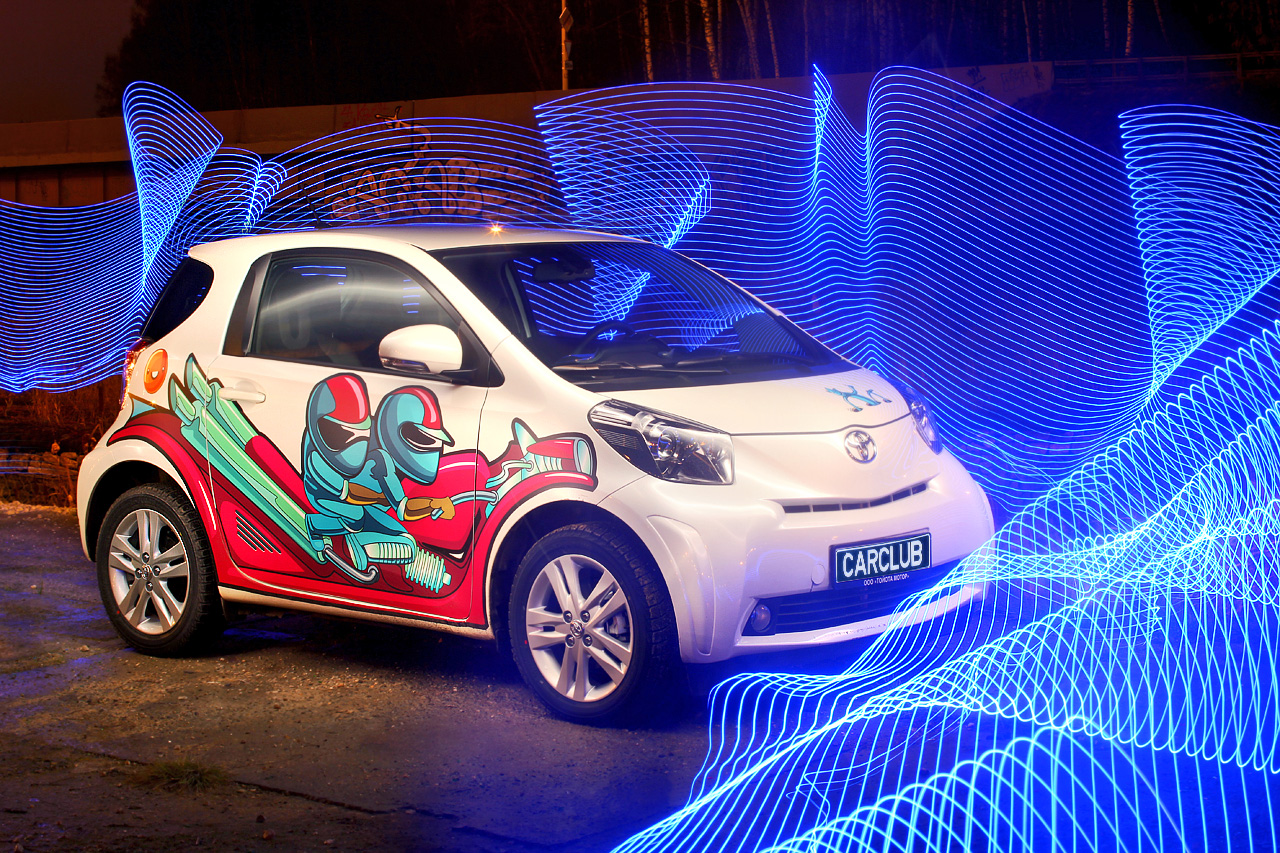 |
| You immediately imagine this snow-white cube in the glowing Tokyo jungle, among crazy characters and ultra-modern gadgets. We were very interested in how the little IQ would meet the harsh Russian reality. |
We first got acquainted with this trendy minicar at the autumn Russian presentation. The dazzling white cube on wheels fit perfectly into the atmosphere of the cosmically crazy capital of Japan, which was recreated as a technological marvel under the roof of Moscow's Gaudi Arena club. You immediately imagine it in the glowing Tokyo jungle, among crazy characters and ultra-modern gadgets.
And now we couldn't wait to test how the little 'IQ' would survive an encounter with Russian reality.
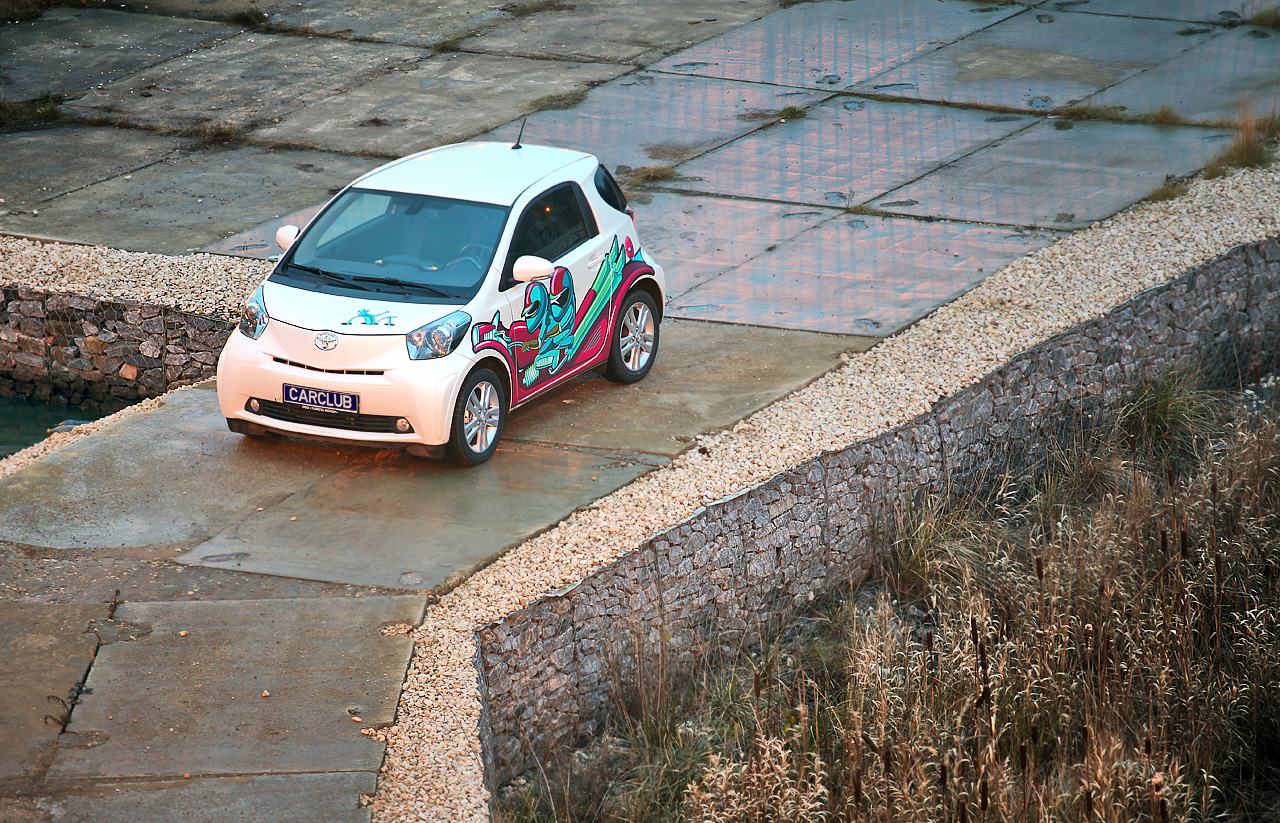 |
| The iQ certainly resembles the Smart — the pioneer of this genre, but the Japanese car has its own completely unique, incredibly attractive design. It's like a cube placed on adult 16-inch wheels. The look turned out stylish and lively: a wide self-assured "face," intricate edges of the headlights, a short, as if chopped-off hood, a spoiler above the third door, and huge wheels spread out at the corners. |
The iQ is a product of big cities. The Japanese car, of course, reminds one of the Smart, the pioneer of the genre, but its design is original and incredibly attractive. It looks like a cube on adult 16-inch wheels. And at the same time, the image is very stylish and radiates lively charm: a wide self-assured "face," complex edges of the headlights, a short, as if cut-off hood, a dashing spoiler above the third door, and huge wheels spread out at the corners.
When creating the iQ, Toyota was inspired by the philosophy of Vibrant Clarity. And not without reason — looking at the iQ, you constantly think of Tokyo — the exterior uses the so-called J-Factor, a reference to modern Japanese culture. When you see the 'IQ' on the street, people stop, turn around, give a thumbs up, and smile; drivers of other cars catch up and honk approvingly. This car is definitely not for those who want to blend into the gray flow!
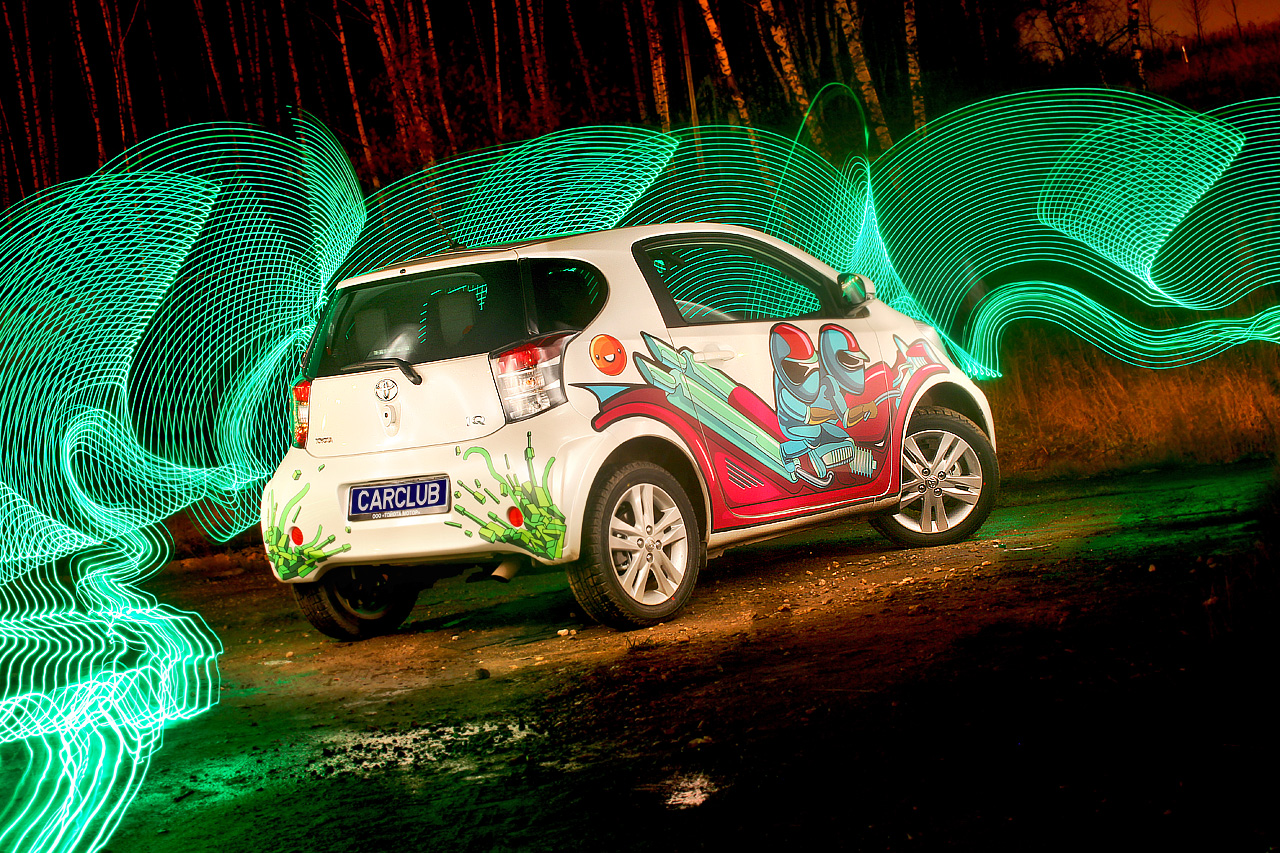 |
| This little car is not for those who like to blend into the gray flow! In addition, for iQ buyers, the Japanese developed a car personalization program — many options for bright body stickers. |
But even such visibility seemed not enough for the Japanese — for 'IQ' buyers, they prepared a personalization program, namely many options for bright body stickers. We, however, got a subcompact with a motorcycle with two riders along the entire side for testing, whose wheels are the actual wheels of the car itself.
Inside, the car feels significantly more spacious than it looks from the outside. Such spaciousness was achieved thanks to original engineering solutions: the differential is located in front of the engine, the steering mechanism has tie rods attached to the central part of the rack, and the flat fuel tank is located under the rear seats.
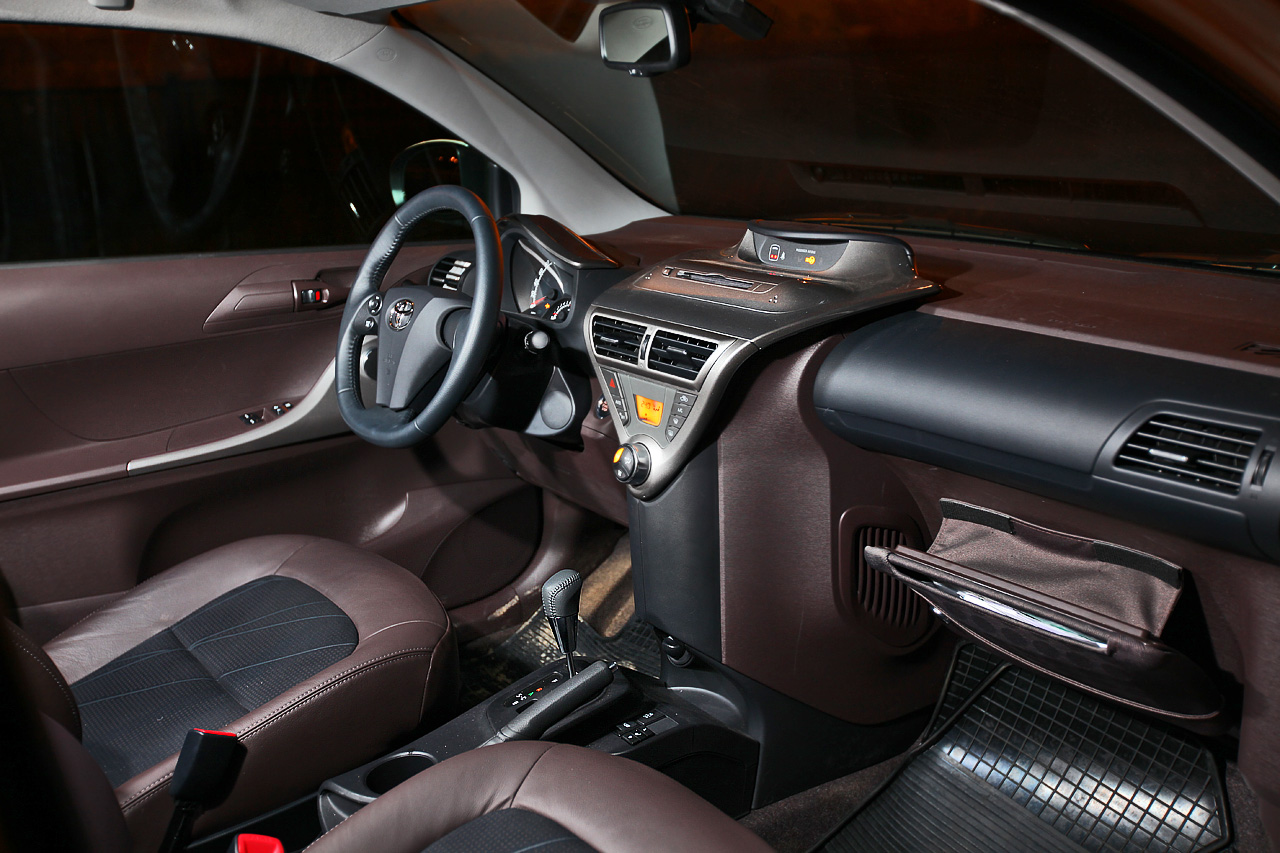 |
| Inside, the car unexpectedly seems larger than outside. The spaciousness was achieved through original engineering solutions. The central console is shifted toward the driver; instead of a glove box, there's a folder on Velcro, which provides more legroom for the front passenger. |
 |
 |
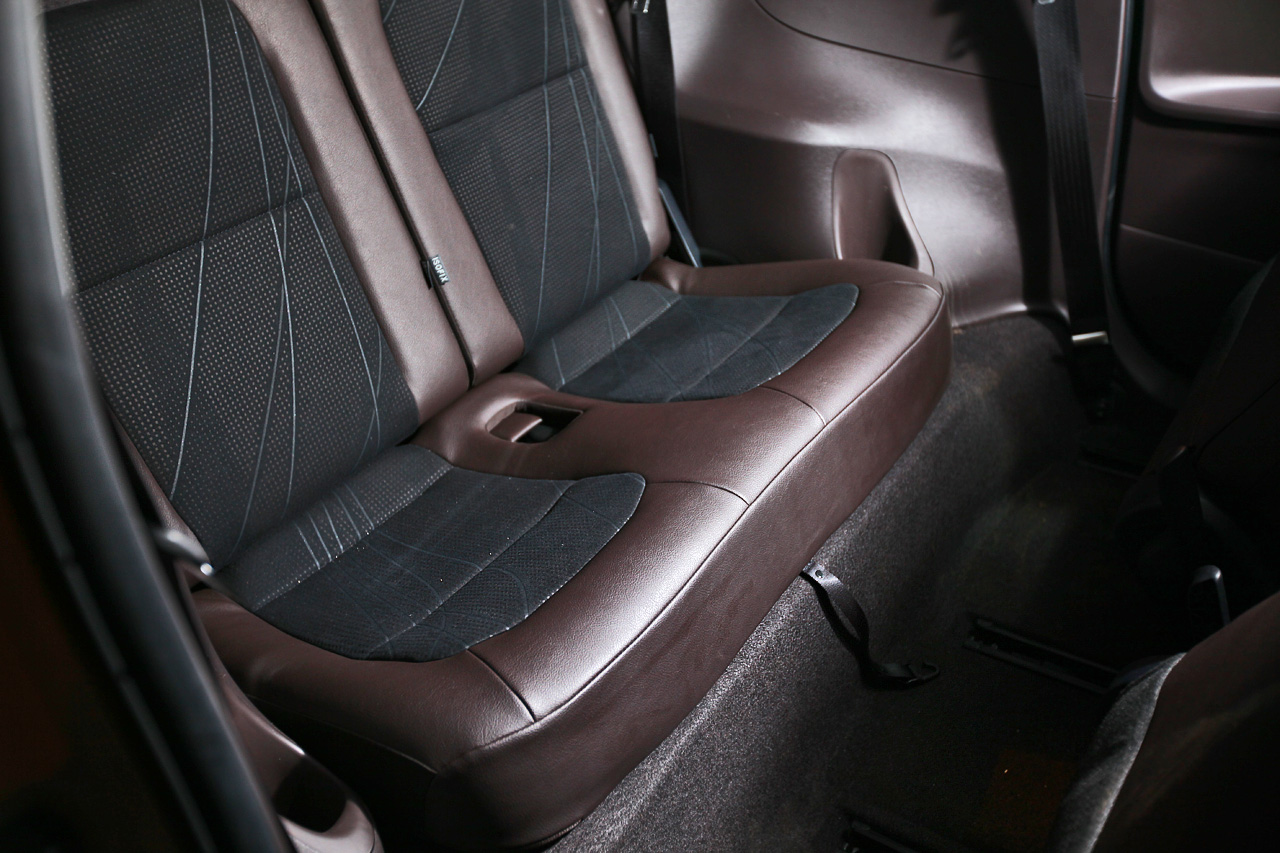
I don't know what four passengers the engineers were counting on, but in fact, the 'IQ' has only two full-fledged seats. There is a small bench in the back, but there's absolutely nowhere for even short passengers to put their legs. If the front passenger slides the seat forward (in the asymmetrical panel shifted toward the driver, there's a special niche for the front passenger's legs to save space), then one more person can sit in the back. But to fit the promised fourth person in the back, the driver would need to be a person about 150 cm tall. The optimal configuration is 3+1, where the fourth passenger is a child.
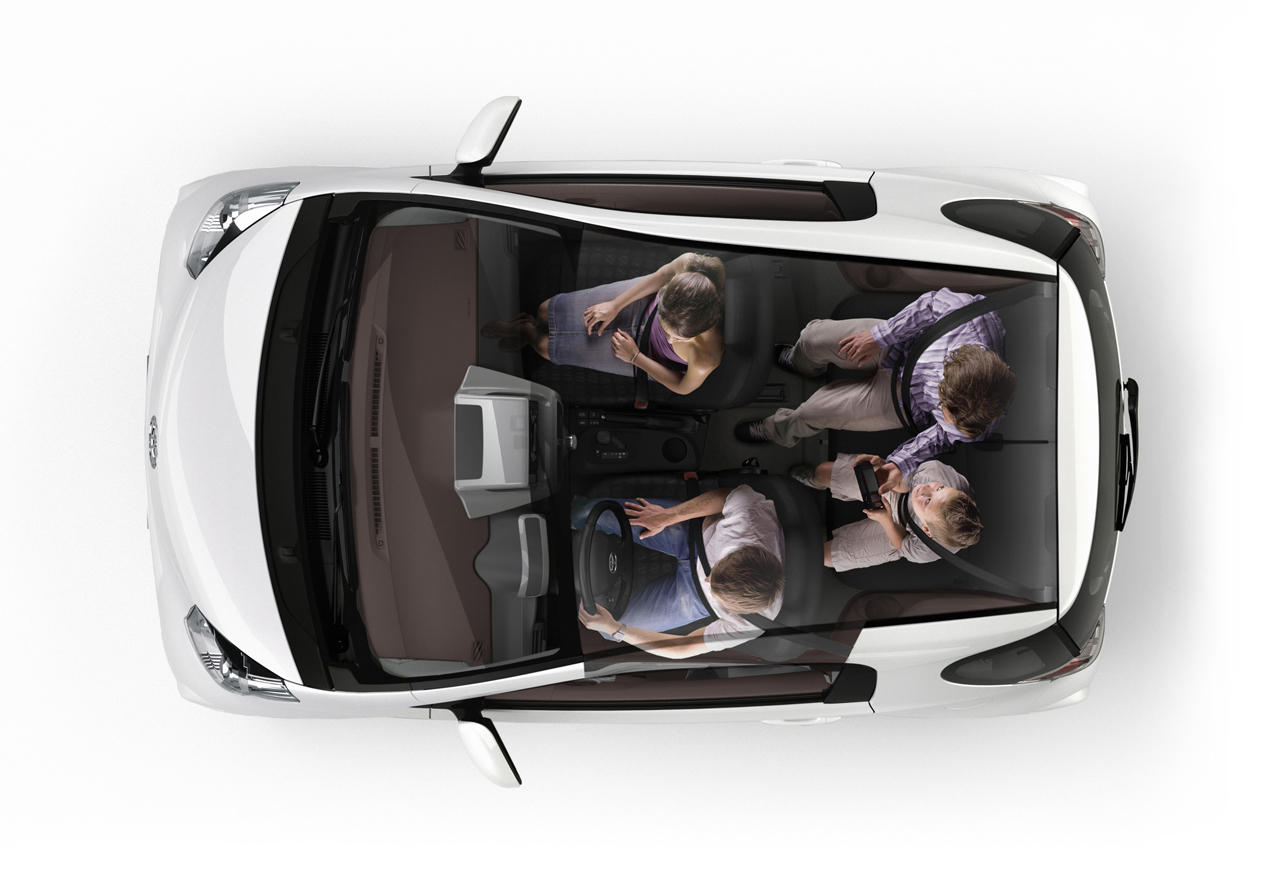 |
| The optimal configuration is 3+1, where the fourth passenger is a child sitting behind the driver |
However, we didn't expect the iQ to become an ideal transporter for large groups. Two (or three!) will feel great in the compact — plenty of shoulder room, headroom above, comfortable seats that are grippy with good lateral support and very comfortable. For complete happiness, only a central armrest is missing.
In any case, you can forget about the trunk in the iQ: with four occupied seats, there is simply no trunk — in the most literal sense, behind the backrest of the rear seat is immediately the third door. There is a small niche for things under the rear bench seats. The most optimal option, which will probably be the most popular for this car: driver, one passenger, and folded rear seats forming a small loading niche where you can at least put bags. With this arrangement, we managed to fit two large bags with tripods, two cameras, one large bag with various shooting accessories, and a lady's handbag into the little one.
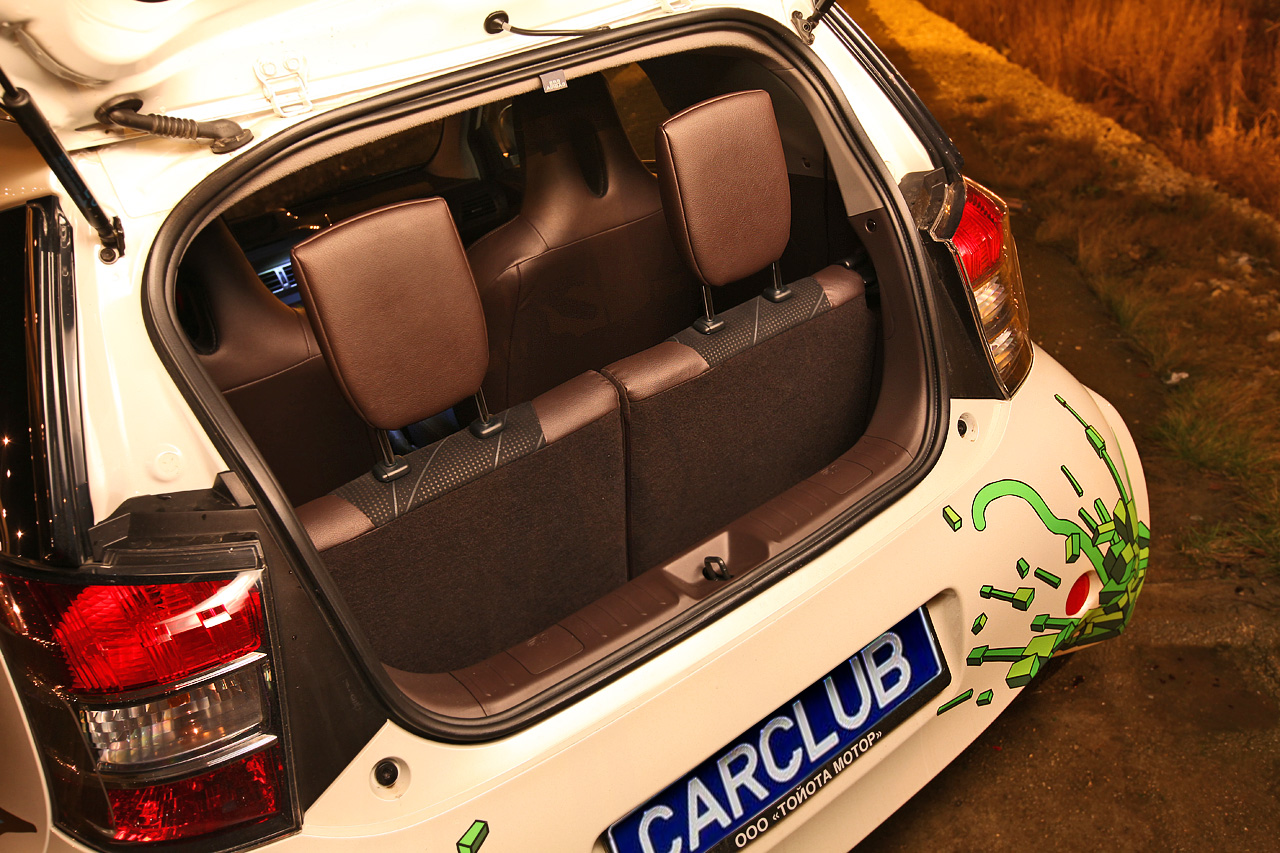 |
| In four-seat mode, the iQ simply has no trunk |
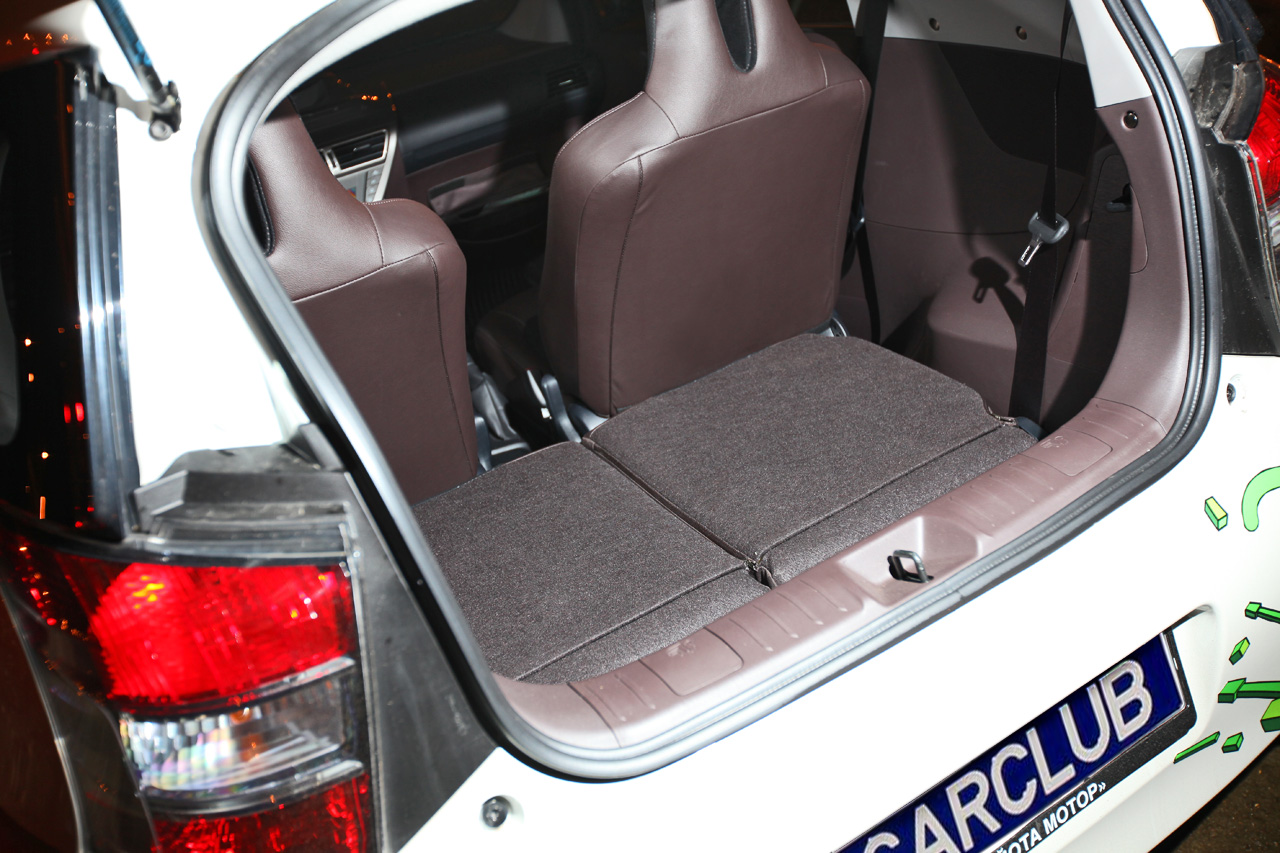 |
| By folding the rear bench, you can get a small loading space |
The driver's seat gives reason for complaints to Toyota engineers. The range of adjustment in length is huge; even a basketball player will fit. But two nuances mar the picture. First, the seat is not adjustable in height, so you have to sit a head higher than surrounding cars, and also as if on a stool. Although for the city, a high seating position is rather a plus. Second, the steering wheel is not adjustable for reach, so you have to choose one of two options: either move your knees toward the panel, or struggle to reach the steering wheel with your hands. However, you can adapt; it's a matter of a few days of habit.
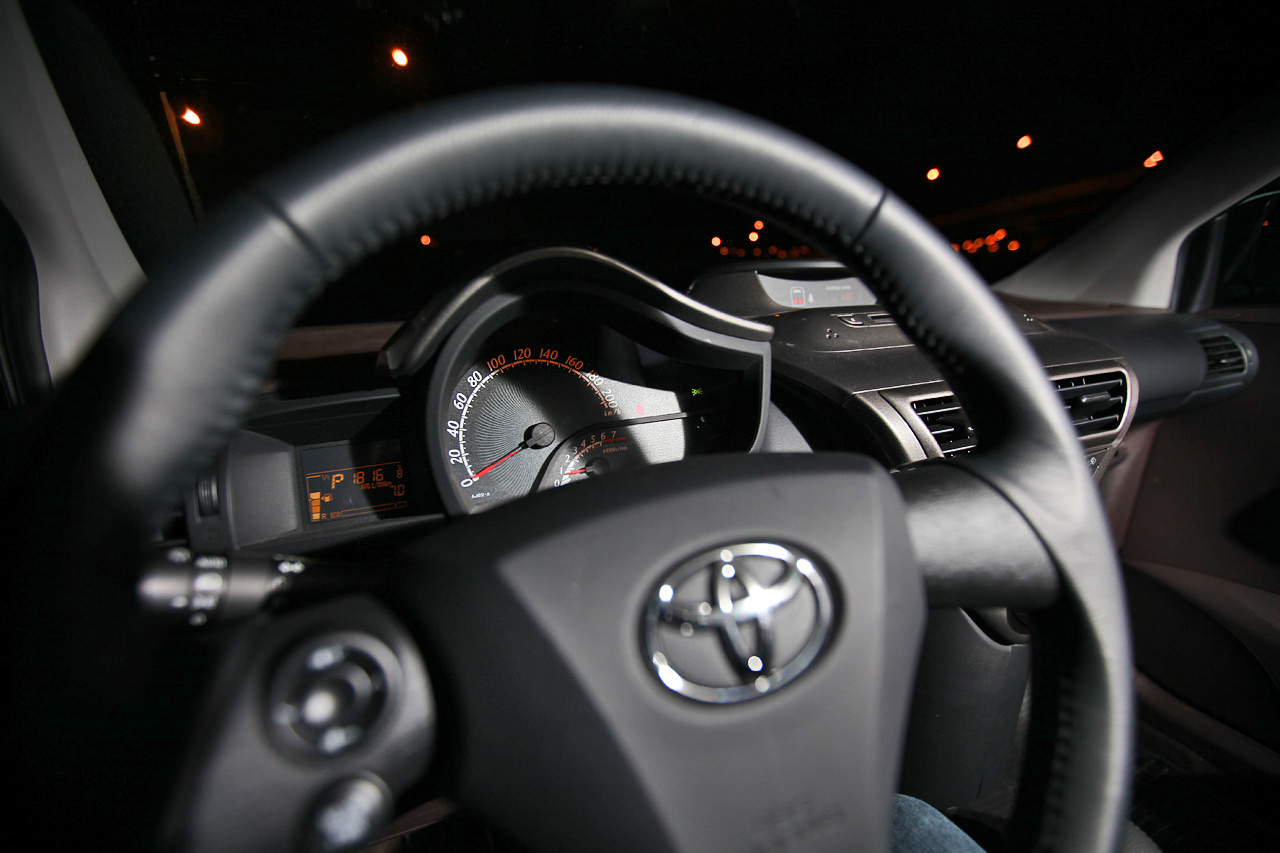
The interior, unlike the exterior, is met with mixed feelings: on the one hand, the conciseness and thoughtfulness please the eye, but on the other hand, the abundance of hard plastic in the presence of leather seats causes bewilderment. To save space, many buttons on the front panel have several functions at once, and the climate control unit here is indeed well done. But the central display is practically useless — it doesn't show the necessary information, while the radio readings, which could have been placed there, are hidden in the left corner of the instrument panel and mixed with the on-board computer data. Music control is only available from the steering wheel, but even here everything is limited to volume and switching tracks or stations — there's no talk of convenience. The instruments themselves, with their pleasant orange backlighting, are perfectly readable at any time of day or night.
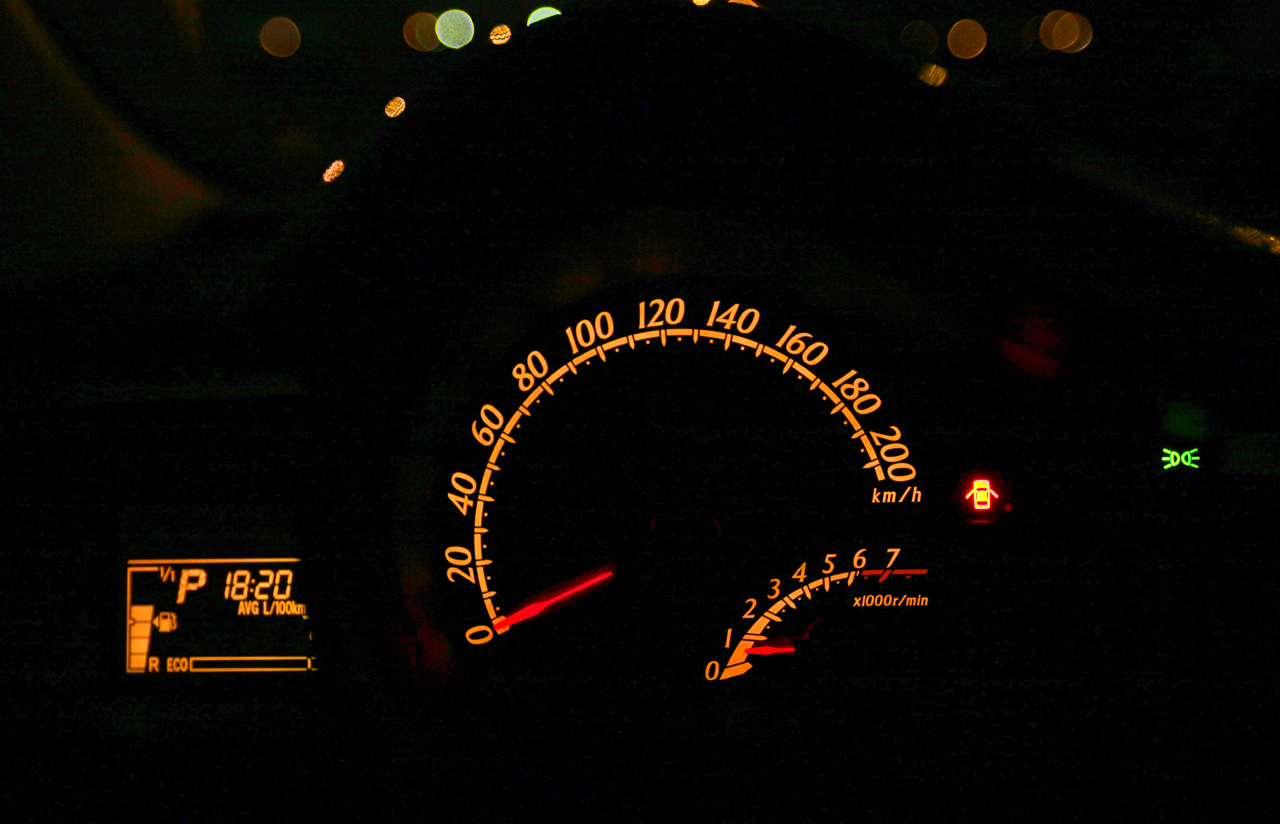 |
| Too many functions are "mixed" in the on-board computer window: fuel level readings, transmission mode, time, fuel consumption, radio data.... |
 <\/a><\/td><\/tr> <\/a><\/td><\/tr> |