

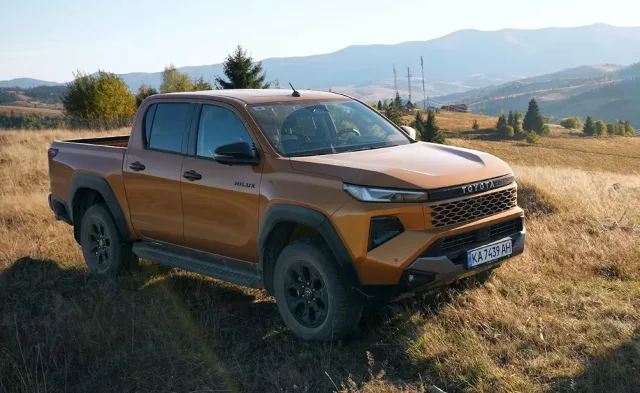
It is precisely this conservatism that has been one of the main advantages of the Toyota Hilux for decades. The model has been produced since 1968, and total production has exceeded 20 million vehicles. The new generation tries to combine this durability with the comfort of a modern SUV.
Toyota Hilux stayed on the old platform
Despite expectations, the Toyota Hilux has not switched to the modern TNGA-F frame platform used by the Toyota Land Cruiser Prado and other large models of the concern. The proven IMV architecture remains at its core.
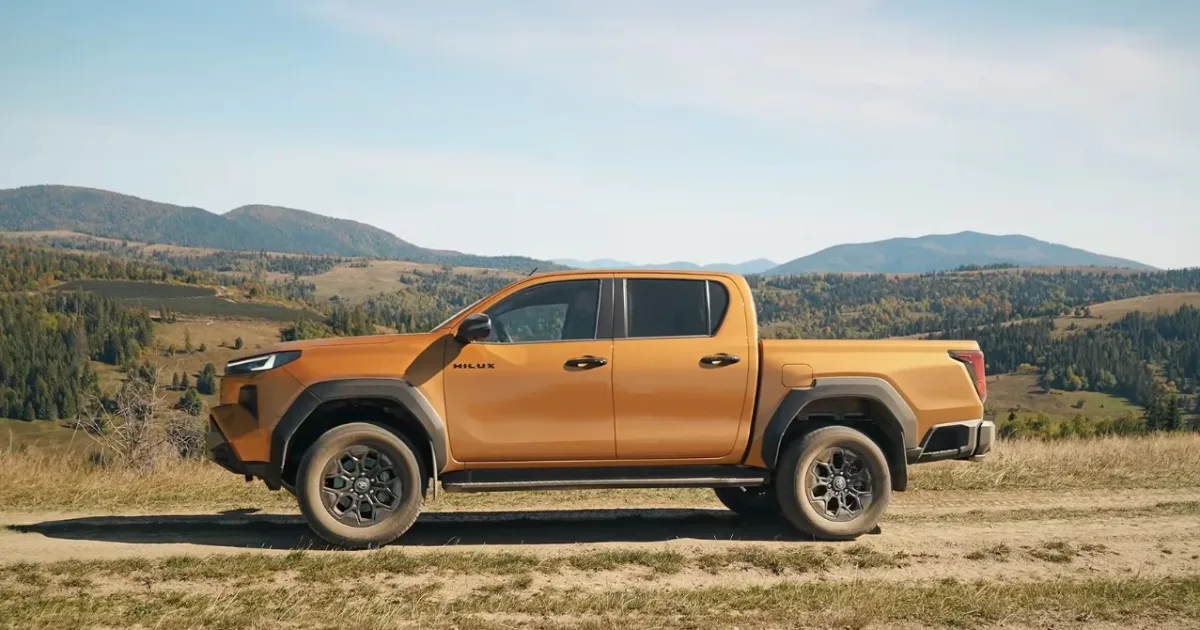
The frame, however, was modernized. The front crossmembers and longitudinal beams were reinforced, the number of welding points was increased, and the material of the body mounting cushions was changed to reduce vibrations.
One of the reasons for the modernization was the transition from hydraulic power steering to an electric steering rack. Thanks to it, the Toyota Hilux received modern Toyota Safety Sense systems, including the lane-keeping function.
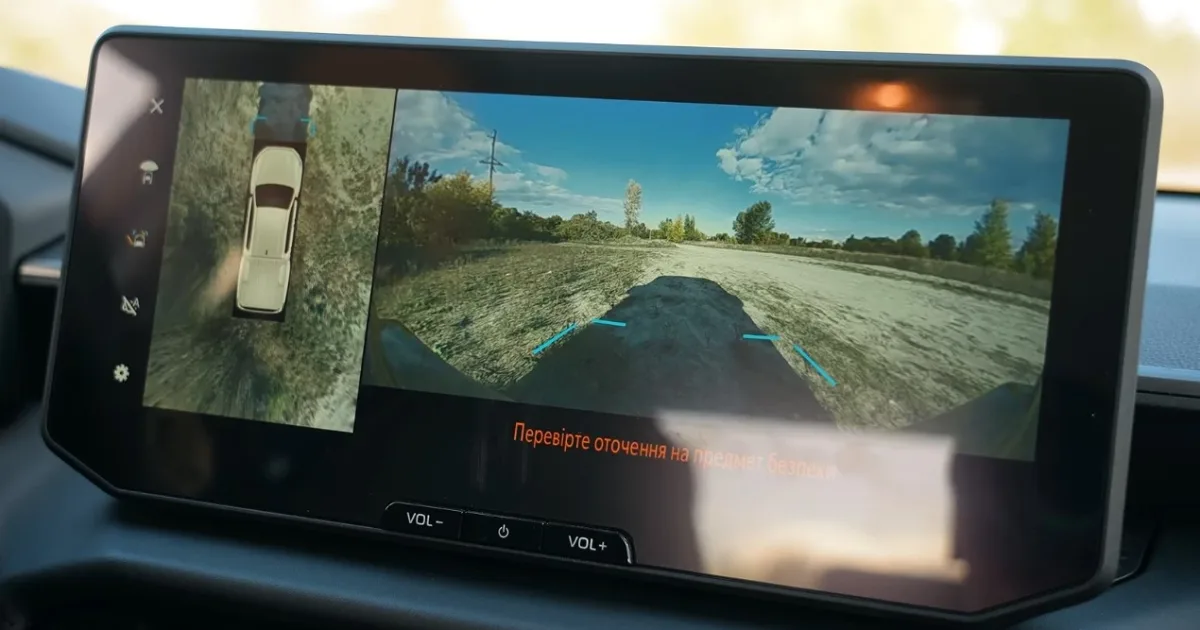
Main technical changes:
electric power steering instead of hydraulic;
reinforced frame and changed body mounts;
new electronic architecture;
digital panel and 12.3-inch display;
surround-view cameras.
The new Toyota Hilux has become more comfortable
The suspension design of the Toyota Hilux has not fundamentally changed. Double wishbones remain at the front, and a solid axle on leaf springs at the rear.
Engineers changed the shock absorber characteristics, the leaf spring settings, the shape of the front arms, and the bushing materials. The result is noticeable on broken roads: the Toyota Hilux absorbs strong impacts better and transmits fewer vibrations to the body.
Without a load, the rear still bounces - there is no escaping the characteristic behavior of a leaf-spring pickup. However, even on asphalt the Toyota Hilux confidently maintains high speed, and at 130-150 km/h driving does not create discomfort.
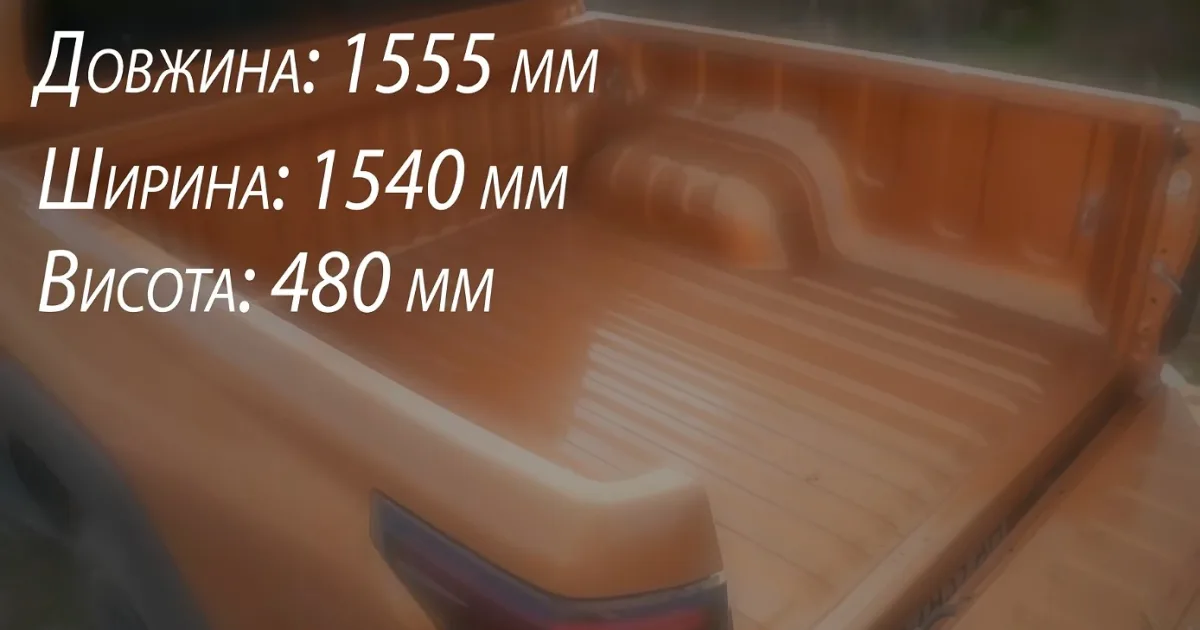
The ground clearance of the tested Toyota Hilux is 210 mm. The cargo bed is approximately 1.55 m long, 1.54 m wide, and 0.48 m deep.
Off-road capabilities of the Toyota Hilux
The Toyota Hilux has retained the classic all-wheel-drive layout with rigid front axle engagement. There is also a low-range gear and a rear differential lock.
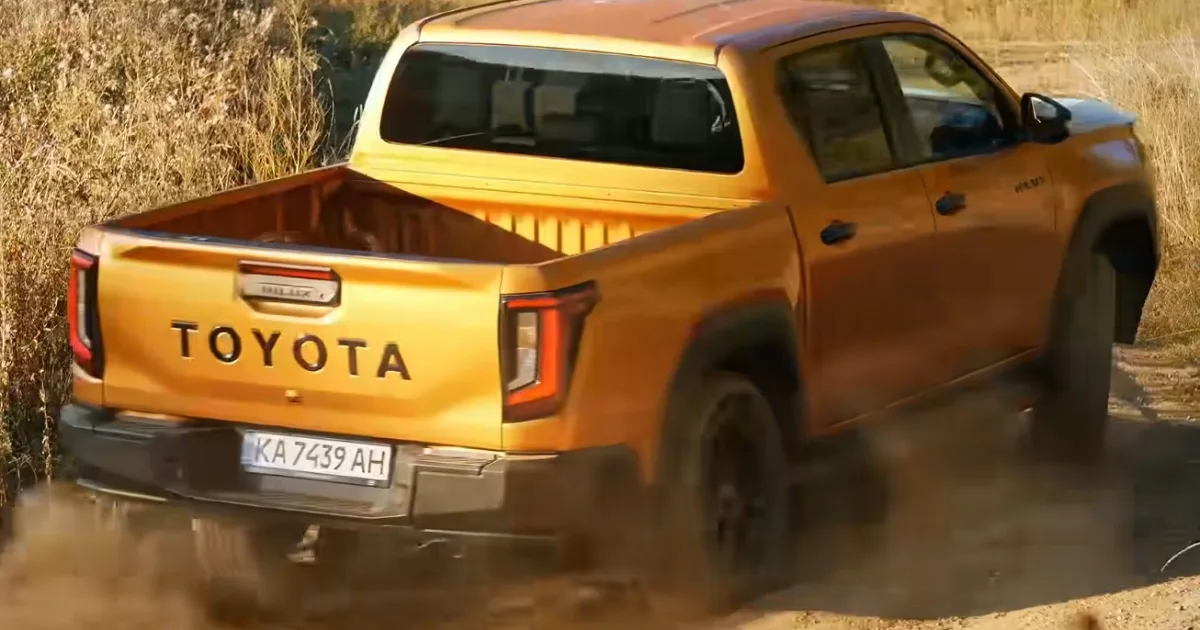
In all-wheel-drive mode, the driver gets several settings for different surfaces, and with the low-range gear, a Rock mode is added.
The off-road arsenal includes:
rigid front axle engagement;
low-range gear;
rear differential lock;
Auto, Gravel, Sand, Mud, Deep Snow, and Rock modes.
The main limitation of the Toyota Hilux is geometry. The long wheelbase and large rear overhang force a more careful choice of trajectory on difficult terrain. This is primarily a pickup, not a specialized vehicle for extreme off-roading.
The Toyota Hilux interior is no longer utilitarian
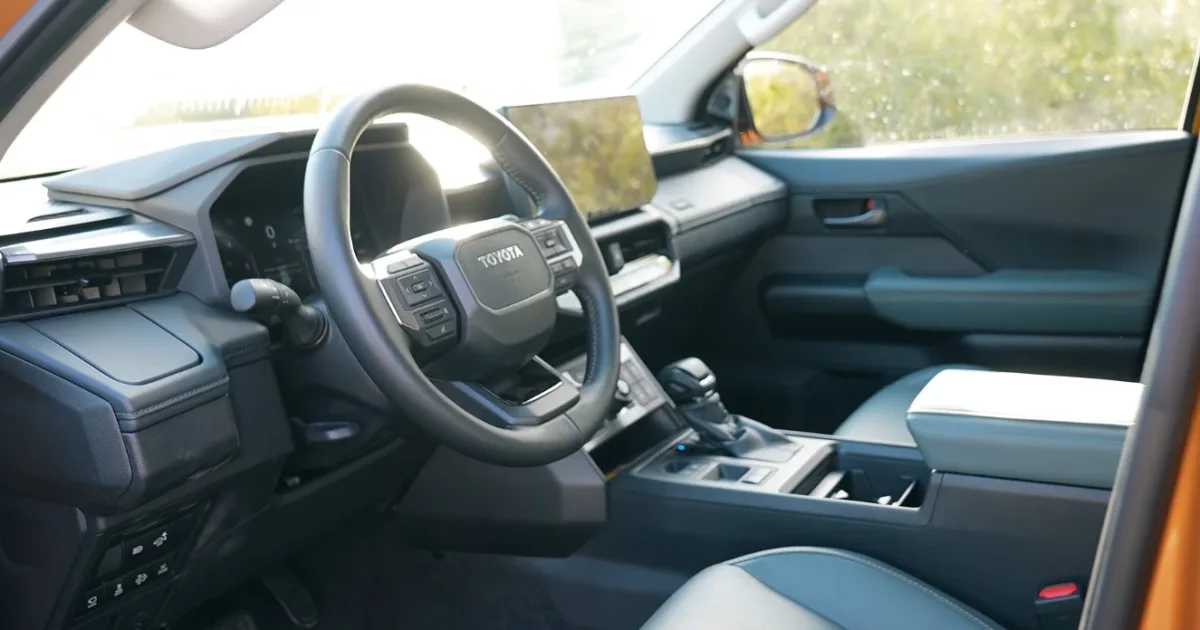
In the Legend trim, the Toyota Hilux has almost gotten rid of its former spartan atmosphere. Parts of the door cards and front panel are trimmed in soft vinyl, and the seats have leather upholstery and power adjustment.
Ergonomics remain as simple as possible. Large physical buttons are responsible for climate, drive modes, differential lock, and off-road functions. There is no need to search for the required function in the multimedia menu.
There is dual-zone climate control, heated seats and steering wheel, four USB-C ports, a 220 V outlet, several cup holders, and a cooled upper compartment in front of the passenger.
The surround-view cameras deserve special praise - the image is clear and contrasty. The JBL audio system also sounds unexpectedly good for a pickup.
The 2.8 diesel received a mild hybrid
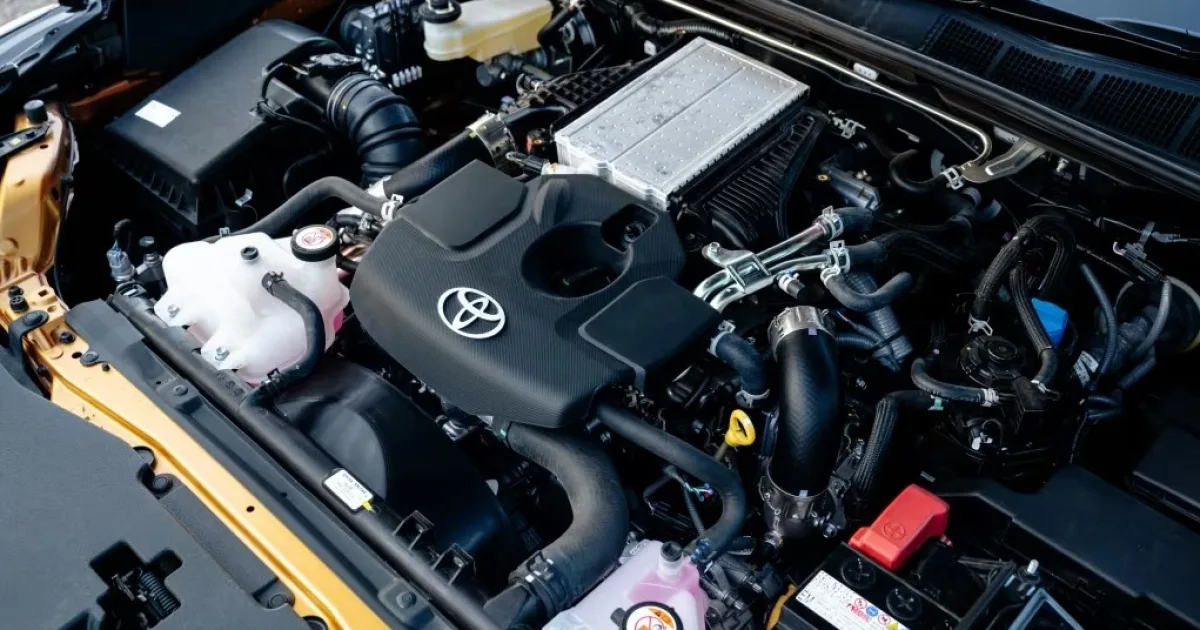
Under the hood of the Toyota Hilux, the familiar 2.8-liter 1GD-FTV turbo diesel remains. It develops 204 hp and 500 Nm and is now supplemented by a 48-volt mild hybrid system.
The electric motor-generator briefly adds about 16 hp and 65 Nm during startup, reducing the load on the diesel. According to the manufacturer, the system should also reduce fuel consumption by 5-10% and make throttle response faster.
In motion, the intervention of the electric part is almost imperceptible. The Toyota Hilux retained the same peak 204 hp and 500 Nm, so the mild hybrid here rather helps the diesel than changes the character of the car.
For the Ukrainian market, the Toyota Hilux 2026 is offered only with a six-speed automatic transmission.
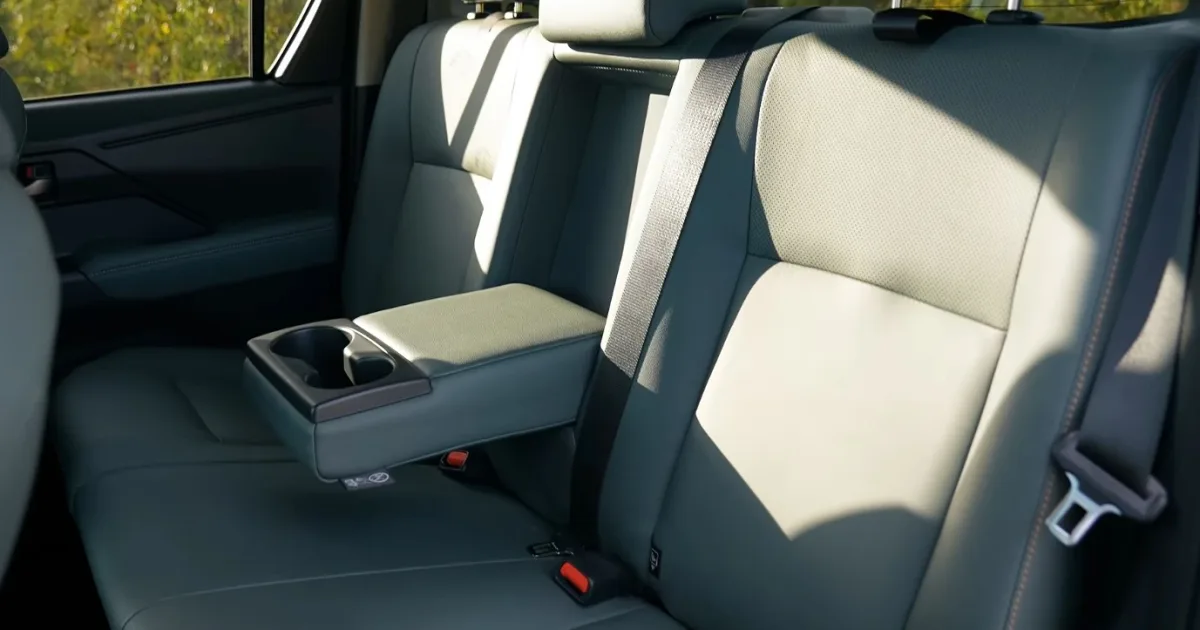
How the Toyota Hilux 2026 drives
204 hp and especially 500 Nm are quite enough for the Toyota Hilux. The diesel confidently pulls the heavy pickup, allows easy acceleration, and does not force you to plan every overtake in advance.
The most noticeable change is the handling. The electric power steering made the Toyota Hilux more pleasant on asphalt, and the modernized suspension controls the body better on bad roads.
At low speed, the Toyota Hilux cabin is quite quiet, and diesel vibrations are well isolated. On dirt roads, the suspension allows maintaining a high pace without strong impacts to the body.
Real fuel consumption of the Toyota Hilux
There is no point in expecting a noticeable revolution from the 48-volt hybrid. During the test, the Toyota Hilux consumed approximately 9.8 l/100 km on the highway at a speed of 110-130 km/h.
In the city, the figure stayed around 10.0-10.2 l/100 km. For a frame pickup with a 2.8-liter diesel and all-wheel drive, the result looks quite acceptable.
Main figures of the Toyota Hilux:
2.8-liter turbo diesel - 204 hp and 500 Nm;
mild hybrid - briefly about 16 hp and 65 Nm of assistance;
real consumption - about 9.8-10.2 l/100 km.
Toyota Hilux prices in Ukraine
The new generation has become noticeably more expensive. According to the test, the Toyota Hilux is offered in Ukraine in four trims - Base, Comfort, Premium, and Legend.
The starting version costs about UAH 2.3 million. The Toyota Hilux Comfort is priced at approximately UAH 2.557 million, Premium at UAH 2.732 million, and the top-end Legend at UAH 2.845 million.
This places the Toyota Hilux in the more expensive part of the segment. The Mitsubishi L200 costs noticeably less, while the Ford Ranger is closer to the Toyota in price and characteristics.
Autoportal conclusion
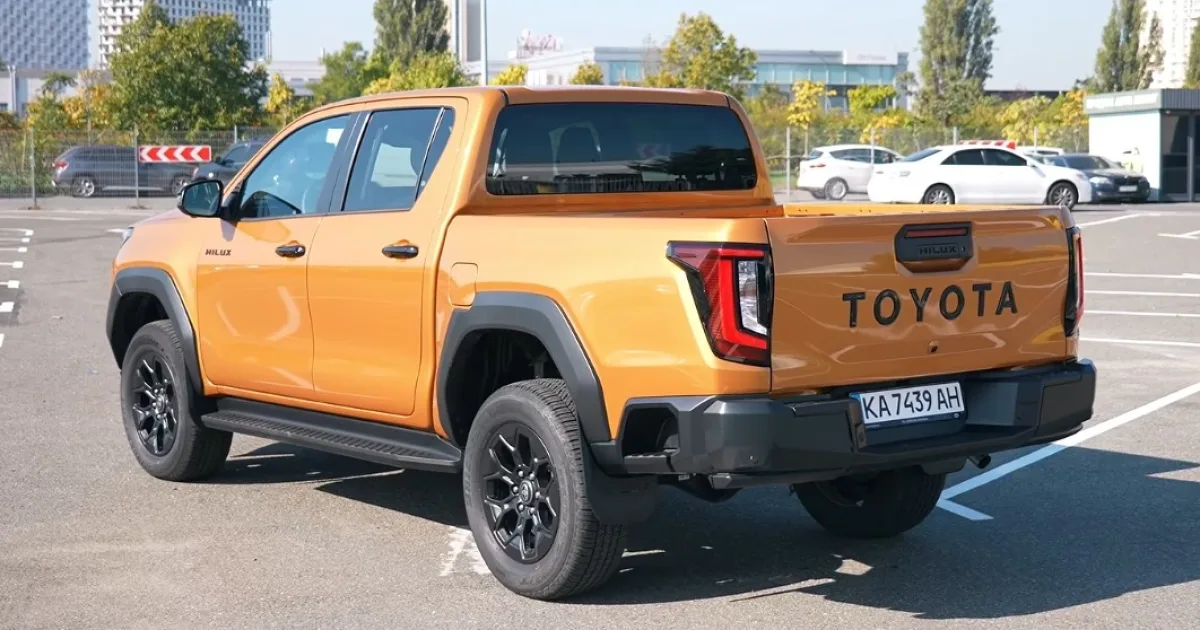
The Toyota Hilux 2026 has changed just enough to meet modern requirements but not lose its own character. It received electric power steering, new electronics, a modern interior, a 48-volt hybrid, and a more comfortable suspension.
At the same time, the foundation remained traditional: the IMV frame, 2.8-liter diesel, solid rear axle with leaf springs, rigid front axle engagement, and low-range gear.
The mild hybrid did not turn the Toyota Hilux into a fundamentally different car. The real 9.8-10.2 l/100 km looks decent, but the main advantages remain 500 Nm of torque, durable construction, and the ability to comfortably drive where normal asphalt ends.
That is why the ninth generation Toyota Hilux can be called an evolution, not a revolution. The pickup has become more modern and comfortable, but it has remained the same Hilux - and for its buyers, that is probably the most important thing.