
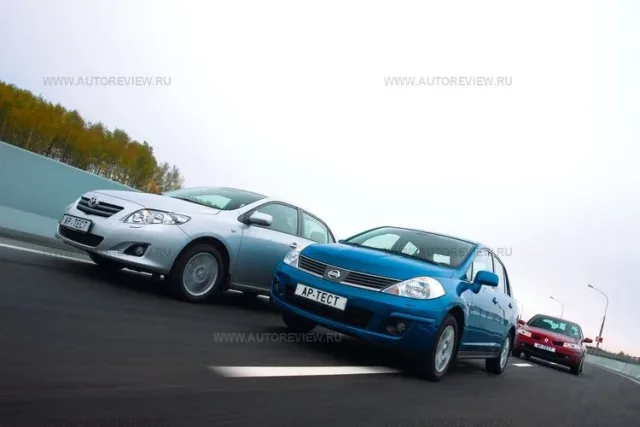
— "A Chinese car"?
The gas station attendant nods knowingly. But, noticing the Nissan emblem on the trunk lid, he corrects himself:
— Ah, a "Japanese car"…
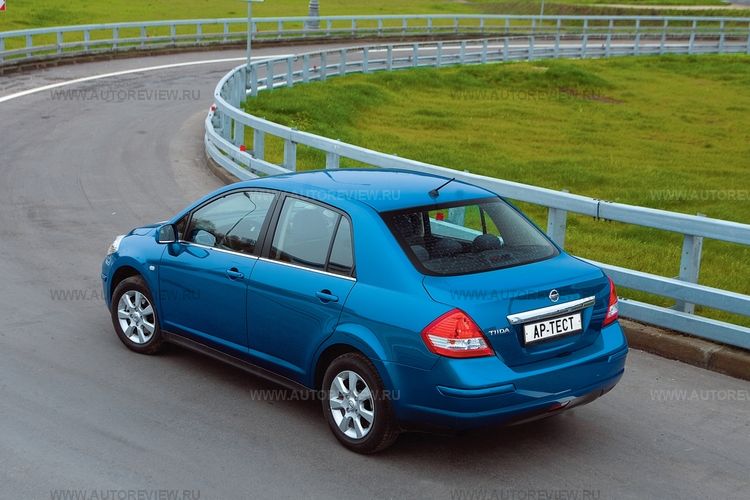
In fact, the Nissan Tiida sedan for the Russian market is made in Mexico. But it debuted in Japan in 2004, and in America it's sold as the Nissan Versa. And it sells well, by the way — despite its awkward looks, which indeed make the Nissan easy to mistake for a "Chinese car."
Maybe the Tiida has a host of hidden virtues? Let's try to figure it out. And our competitors will help us — the Toyota Corolla and Renault Megane sedans with 1600cc engines.
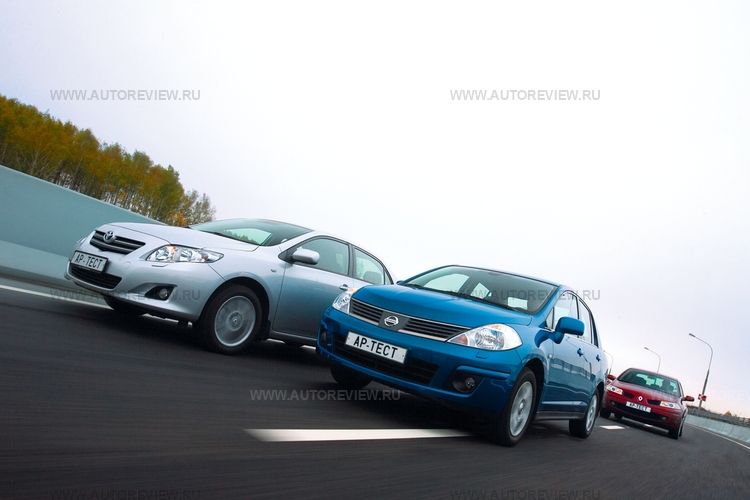
Agreed, the looks are not the Tiida's strong suit. But the rear row… In terms of legroom and seating comfort, the Tiida in the golf class is roughly what the Renault Logan is in the "lower" B segment: phenomenal! Even the longer-wheelbase Renault Megane sedan isn't as spacious "for the legs." And the Corolla seems like an outsider altogether, although it's quite competitive in the C class.
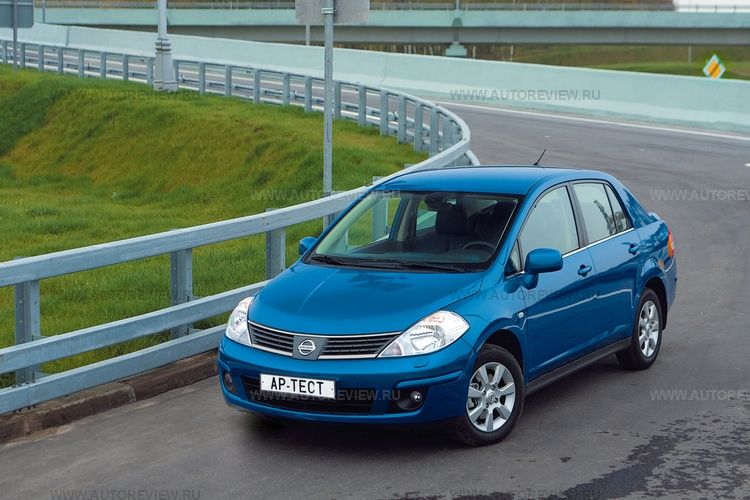
But against the stubby Tiida, even the Asian Corolla looks like a beauty. The Megane against them is a paragon of style and refinement: you'd never mistake it for a "Chinese car."
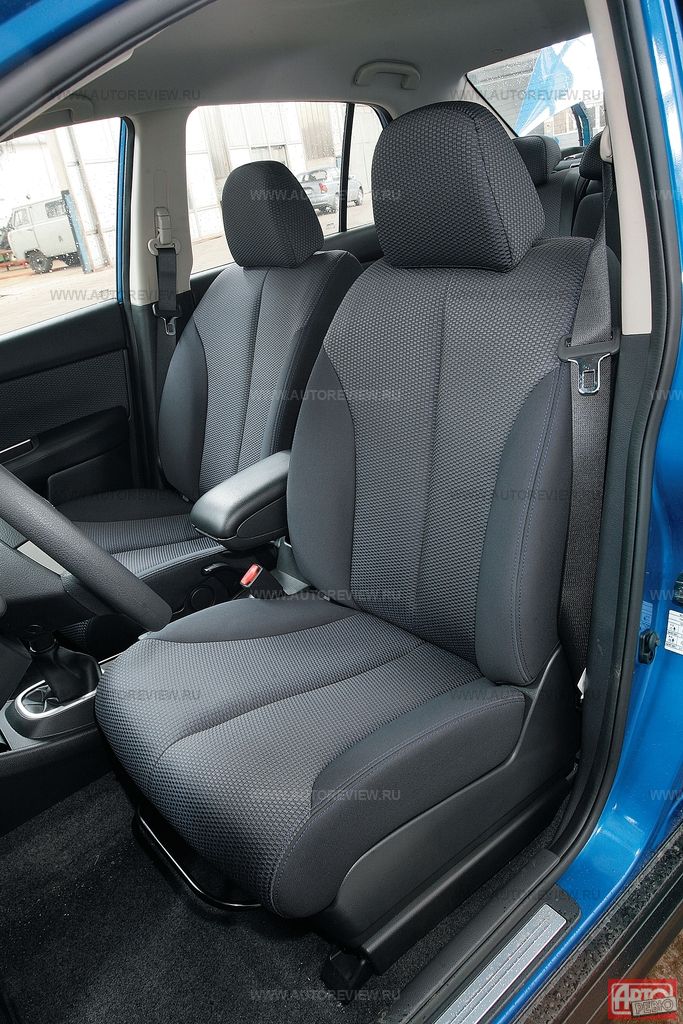 | 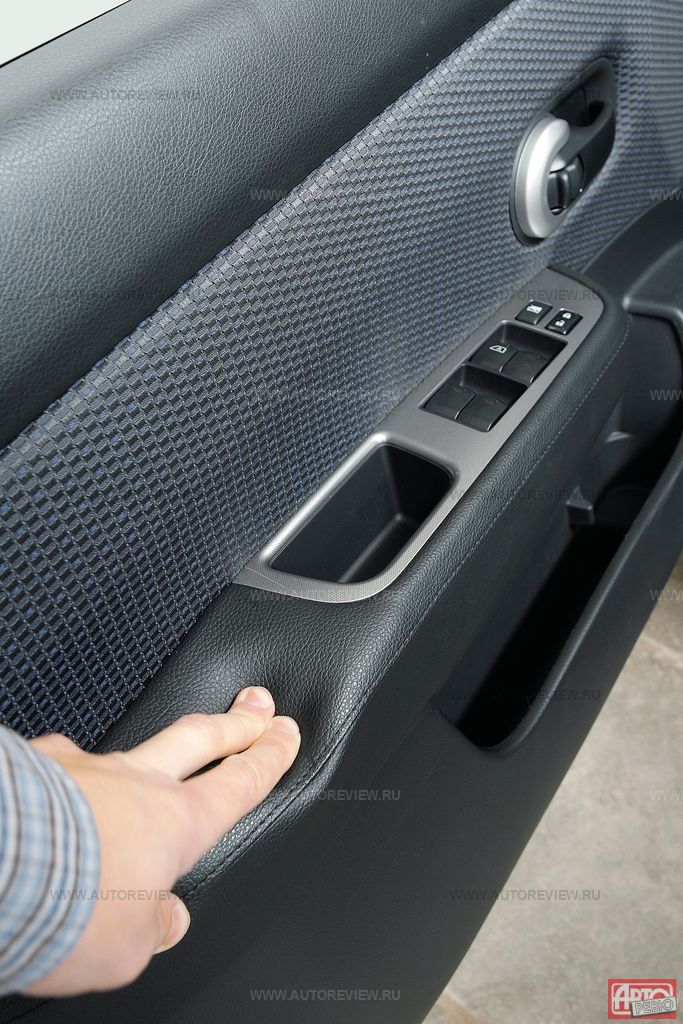 | 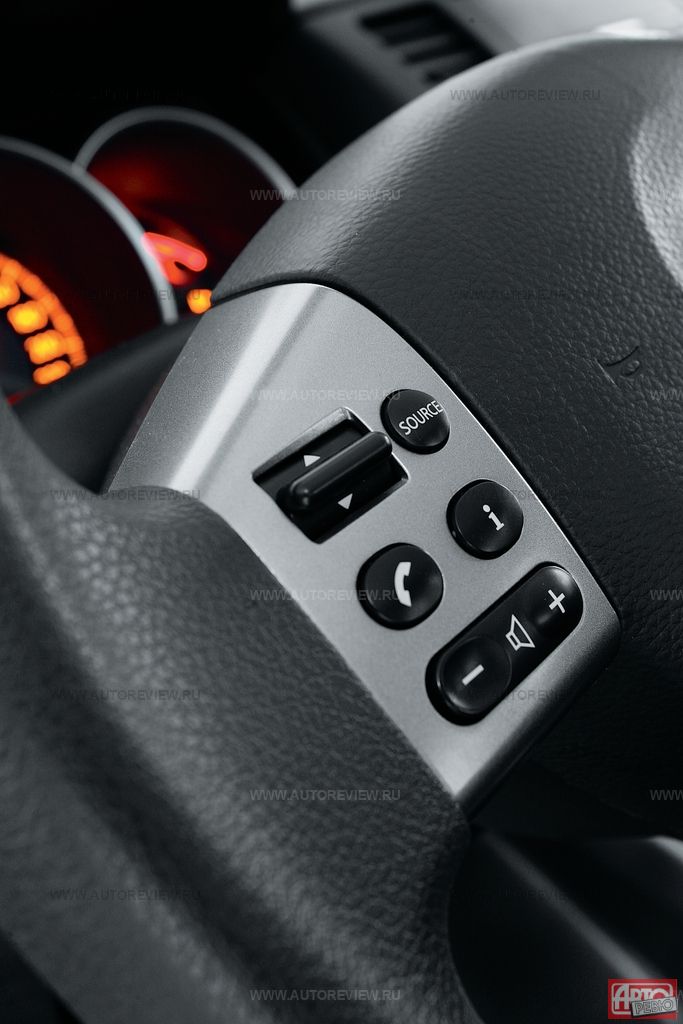 |
| The Nissan seat distributes loads evenly, but holds poorly in corners. The flimsy adjustment levers are on the inner side of the cushion | The armrests in the Tiida are softer than in a Maybach! | The buttons on the steering wheel are inconvenient — to change the audio volume, you have to bend your arm |
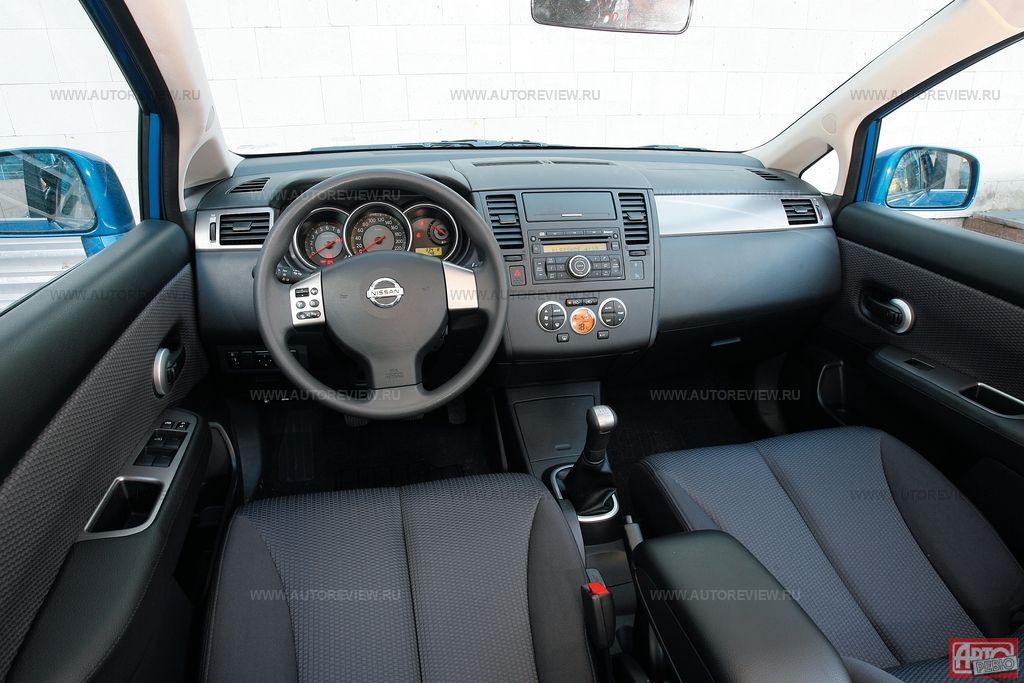 | ||
| The Tiida's interior is well-made, but without pretensions to high style. The steering column adjusts only for height, and the wheel itself is noticeably "tilted" forward | The contactless key on the Nissan is an option. The engine is started with a plastic knob located in place of the ignition switch. To turn it to the "all off" position, you have to press an inconveniently placed button |
Inside, the Tiida, alas, doesn't shine with beauty either: modern but a bit dull. Behind the wheel, you feel like in a minivan: the seating position is high and not the most comfortable, and there are small windows at the front pillars. But you can't fault the quality of the interior — everything is made and assembled conscientiously. So, not all Mexicans are having a siesta!
| Nissan Tiida | Renault Megane | Toyota Corolla |
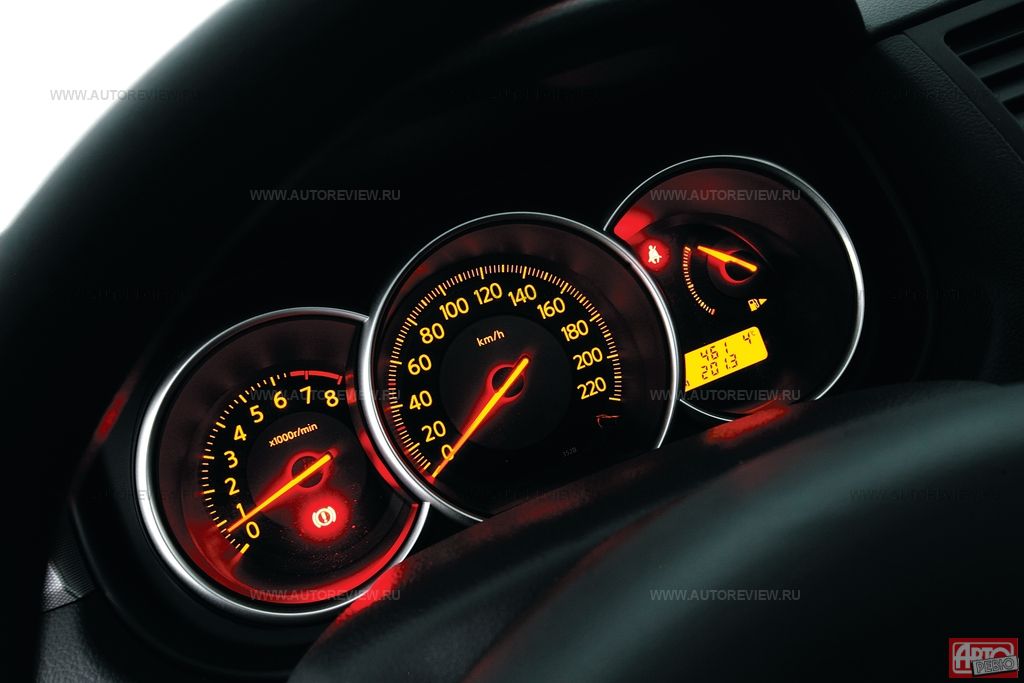 | 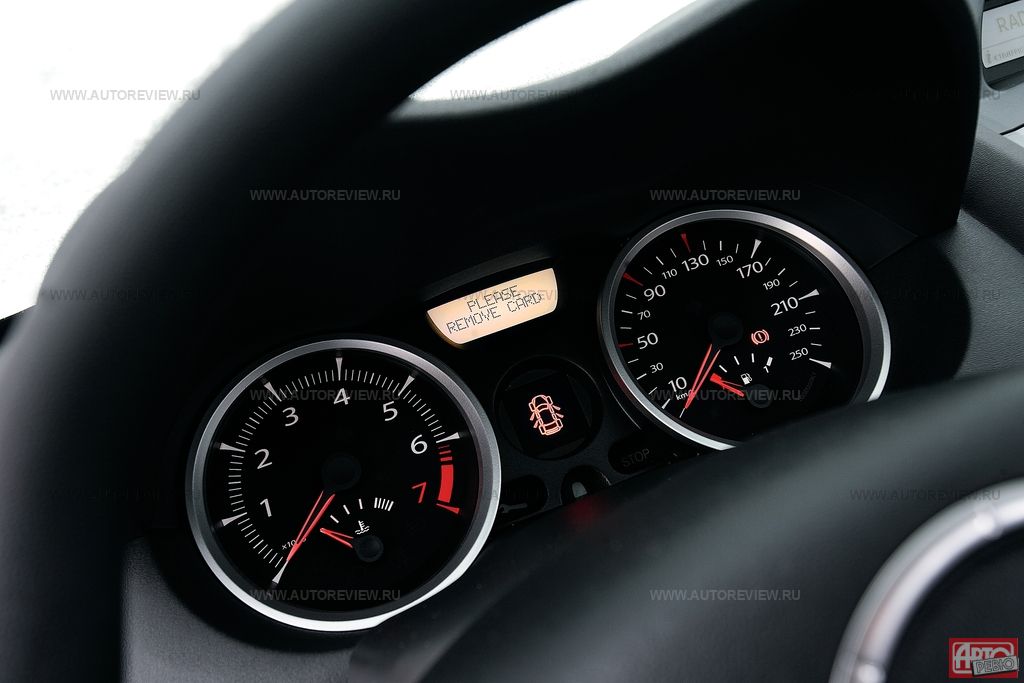 | 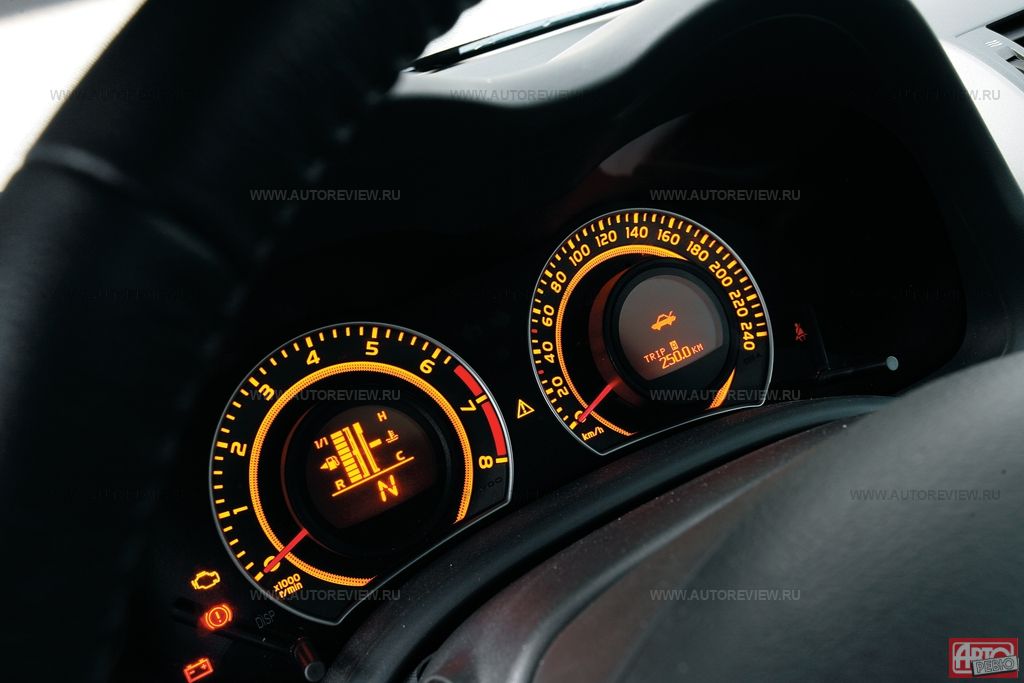 |
| The Nissan's instruments are informative, but the engine temperature gauge is replaced by warning lights for underheating and overheating. The Renault's cluster looks good and reads well, though the odd numbering of the speedometer scale takes getting used to. Dimming the "garish" scales in the Toyota is only possible through the onboard computer menu | ||
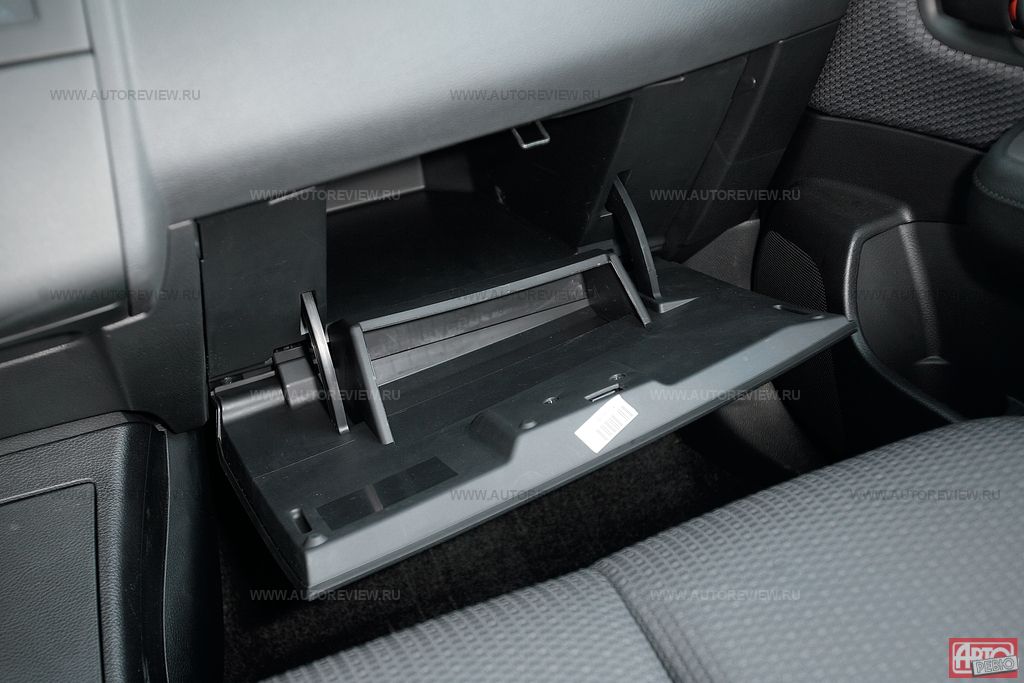 | 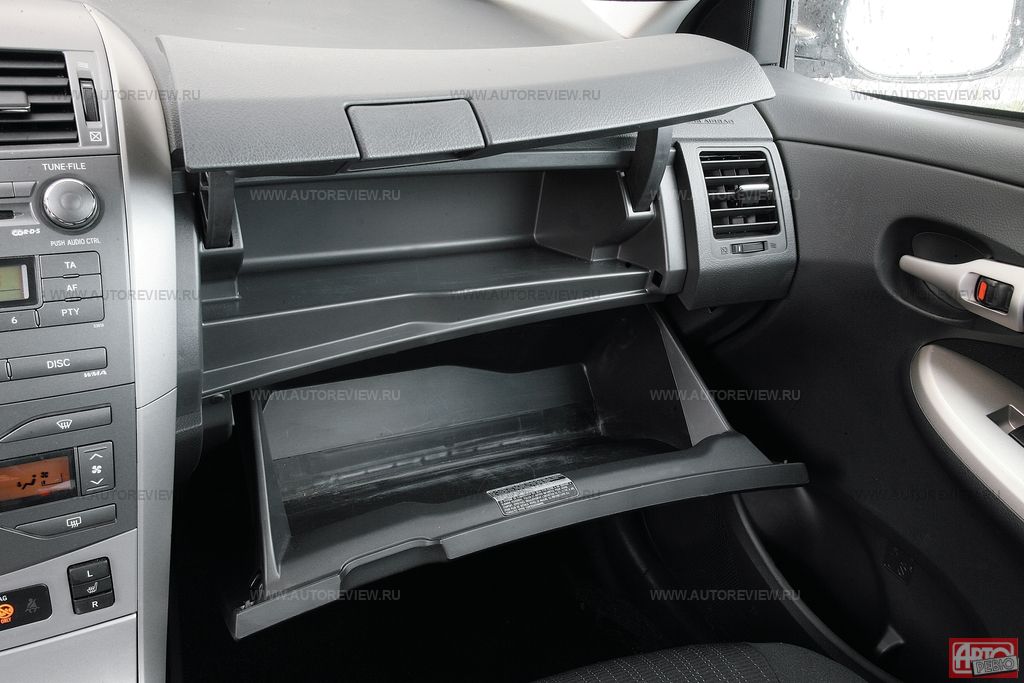 | |
| The glovebox in the Tiida is narrow. An A4 folder won't fit into it, just like in the Megane's glovebox. You'll have to fold it in the Toyota too, although its lower compartment is the largest | ||
The Toyota's interior is also high-quality (by the way, the Corolla is assembled in Turkey), but here there's an idea, there's style — an elegant console, as if flowing from the dashboard and smoothly transitioning into the tunnel, sets a dynamic mood. The driver sits low and comfortably, and only the garish yellow instruments can distract him from admiring Japanese "correctness."
But the Renault also has a "designer" interior: not a single "plain button," and even the switches for the four automatic window regulators are drawn with graceful curves. It's a pity that in terms of trim material quality, the Renault is slightly inferior to the "Japanese": the hard, frankly plastic steering wheel and gear lever are depressing. But the Megane has the most comfortable seat and the most intuitive climate control unit.
| Nissan Tiida | Renault Megane | Toyota Corolla |
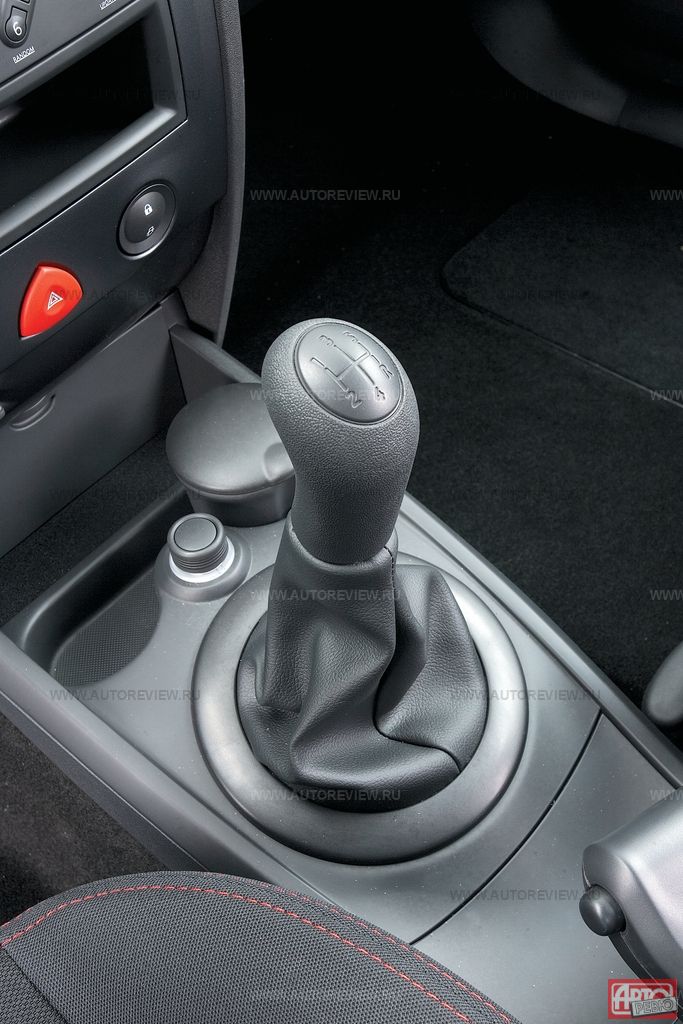 | 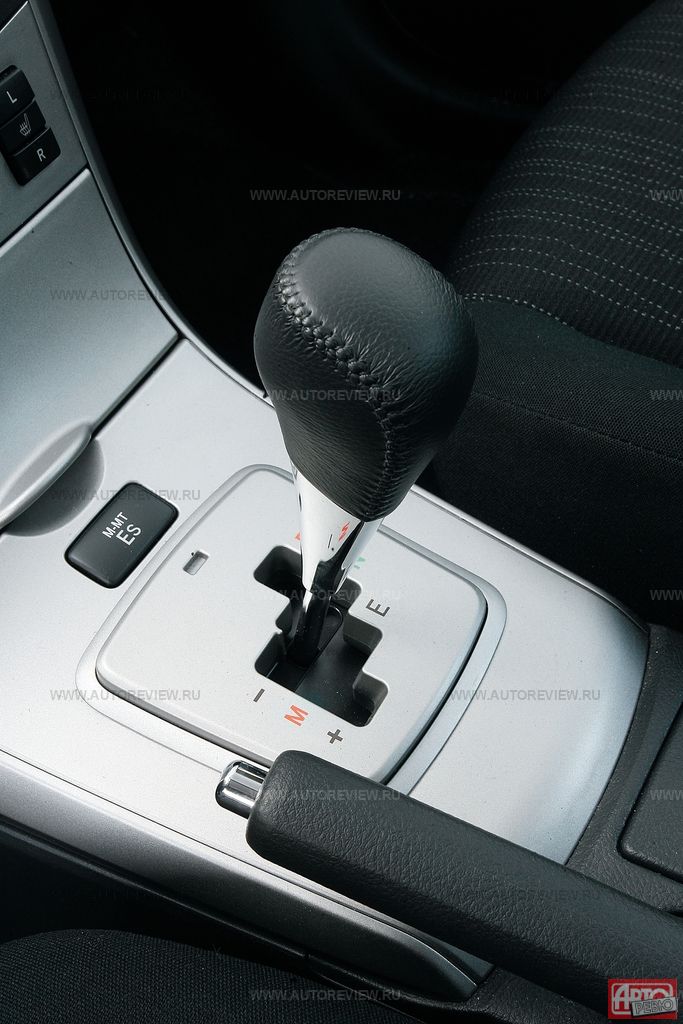 | |
| In the Nissan, the gear lever begs to be held, but the stiff "step" when engaging gears is off-putting. In the Renault, the shift mechanism doesn't provoke errors, but the lever travel is longer. The selector of the robotic gearbox in the Toyota raises no complaints — unlike the "robot" itself | ||
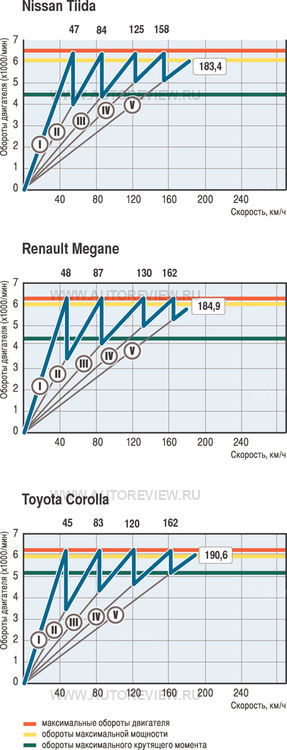
The 1600cc engines are enough for all three in the city and on the highway. But the Tiida's 110-horsepower engine has the most spirited character: it revs energetically up to the limit of 6800 rpm. As a result, in acceleration tests, the Tiida is the leader, despite having the "stretched" transmission. If only it had shorter gears — then fifth would pull the car from 60 km/h. But as it is, it doesn't. And starting off would be more convenient too — currently, the overly light gas pedal and not very informative clutch drive require some getting used to.
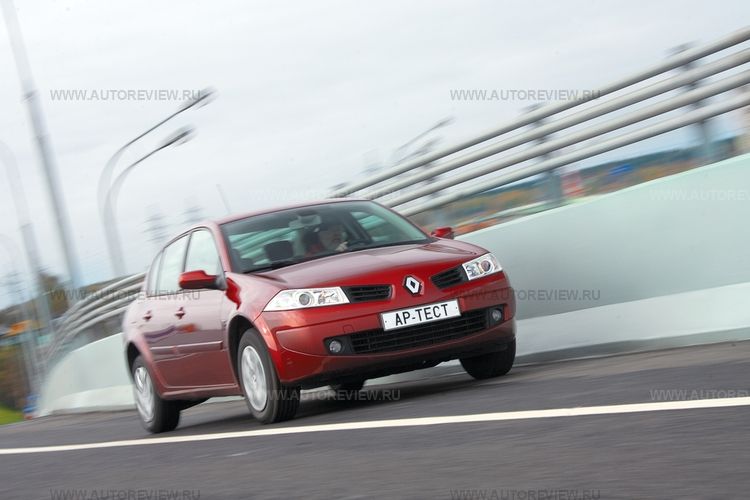
A smooth start is also not easy in the Renault — the not-so-clear clutch drive is paired with a damped accelerator pedal. Moreover, gear changes are less precise. Because of all this, the Megane seems even slower. And indeed, "by the numbers" in acceleration to 100 km/h, it loses to the Nissan by 0.8 seconds. Additionally, the French engine shows its agility in a narrow range — from 2500 to 4500 rpm.
| Nissan Tiida | Renault Megane | Toyota Corolla |
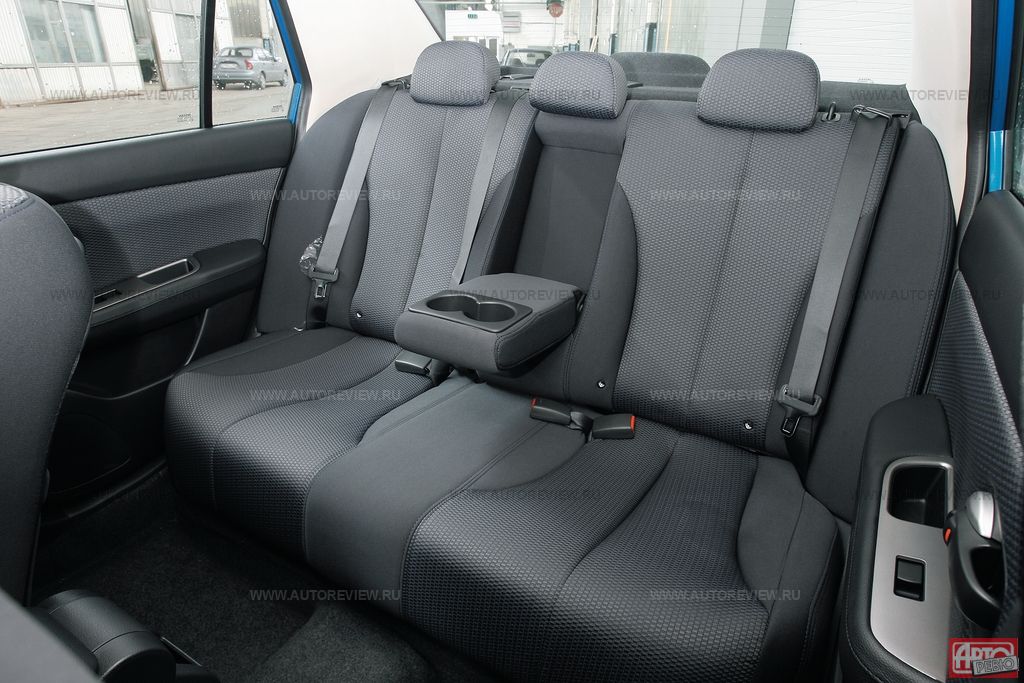 | 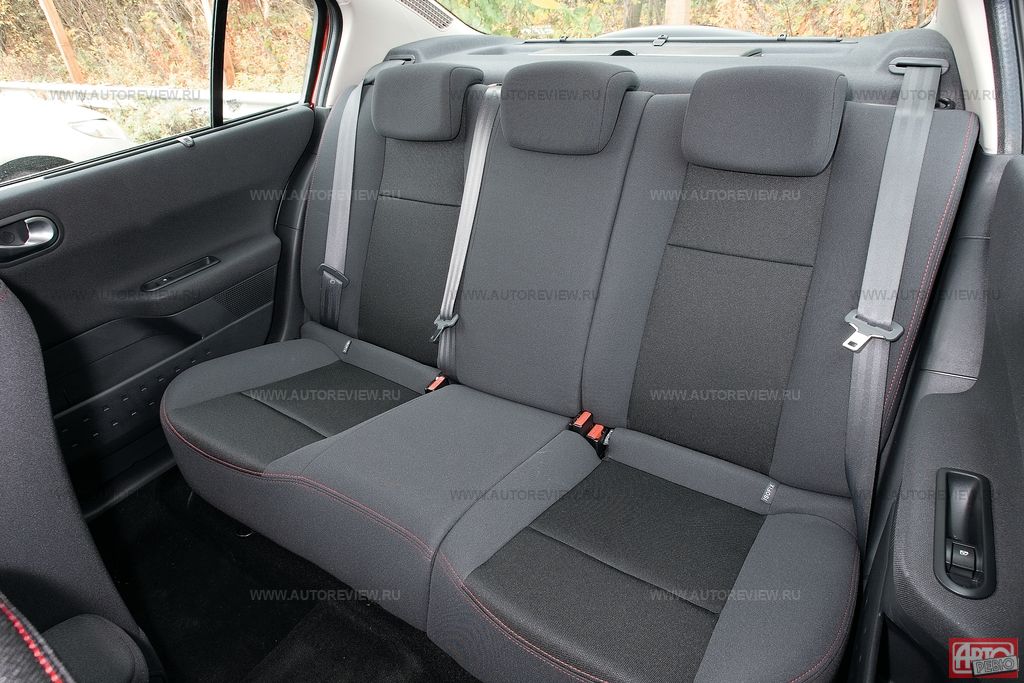 | 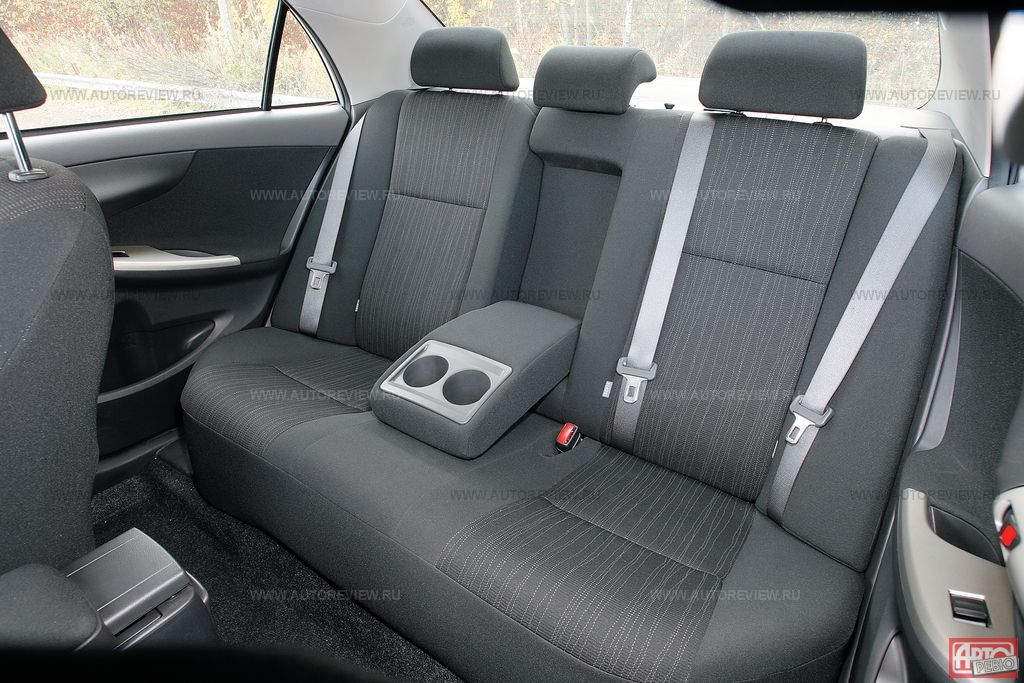 |
| At first, it seems the Nissan was made for rear passengers — no car in the C class can match its legroom. But the rear seatback is too reclined, and three passengers will be cramped in the shoulders. For a long trip, it's better to take the Renault, which has a comfortable and wide sofa. The Toyota disappointed with the tightest rear seating | ||
The Toyota came to us with an automated (and, alas, "jerky") MultiMode gearbox, so we decided not to consider its operation algorithm when assessing acceleration dynamics. The "robotized" Corolla accelerates a bit slower than the Megane with a "manual" — despite having the most powerful engine. And in elasticity tests, that is, the ability to gain speed on a fixed gear, in two speed ranges, the Corolla ended up in last place. But the Toyota has the most understandable gas pedal response and a "smooth" torque characteristic.
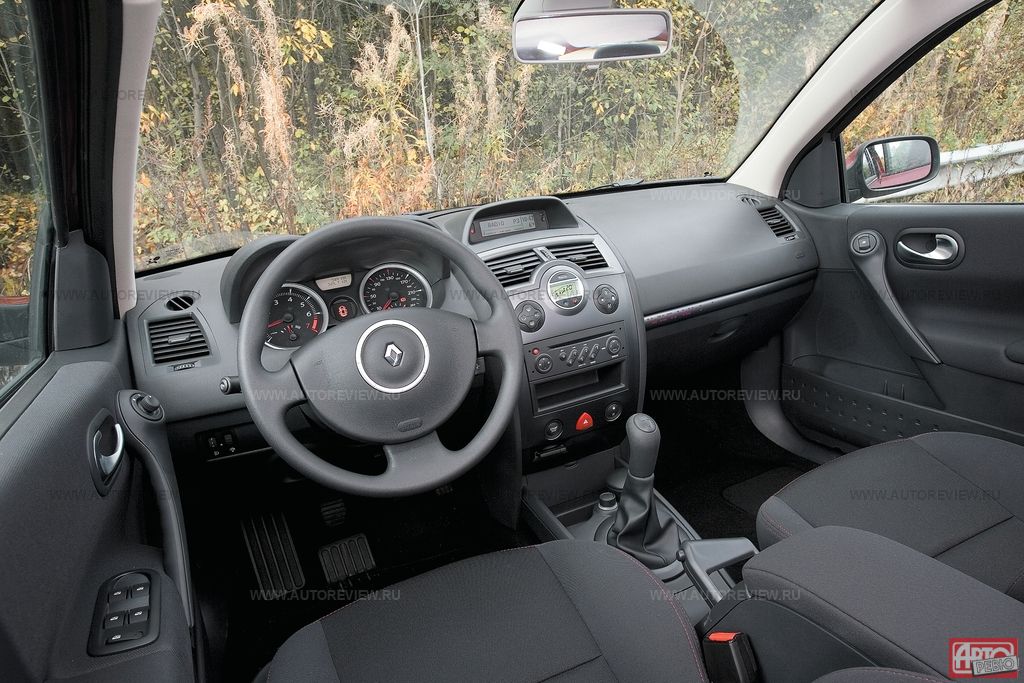 | 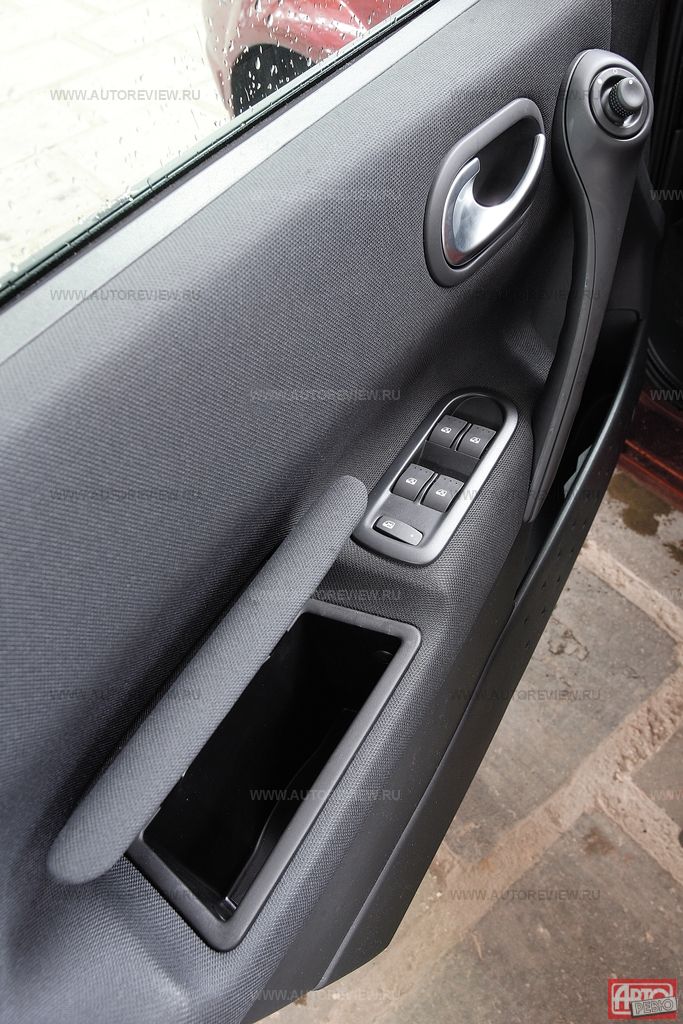 | 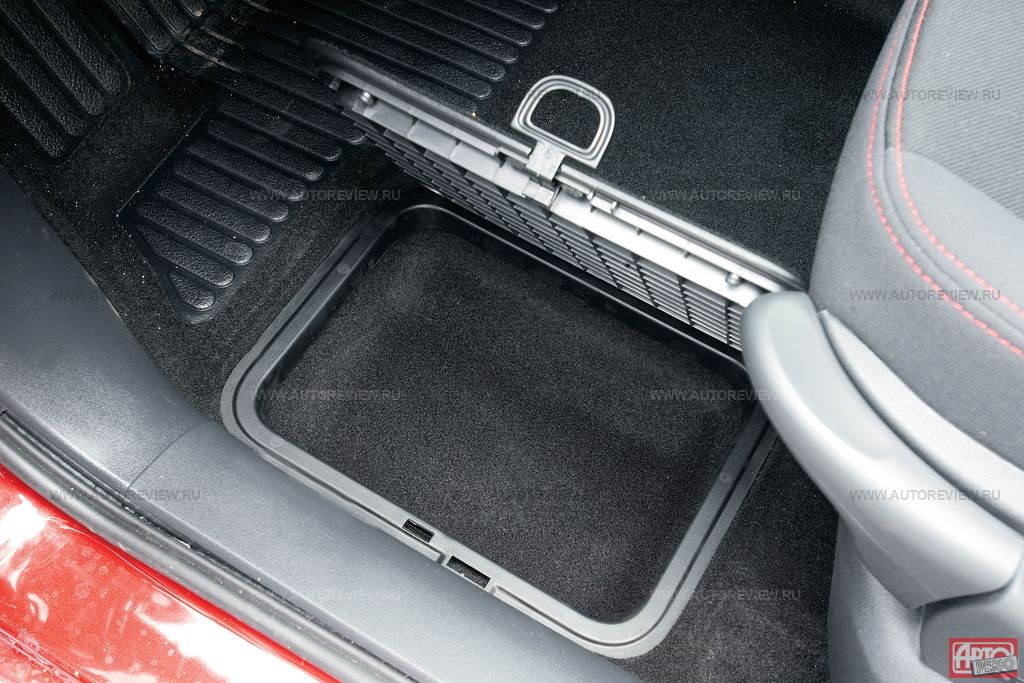 |
| The Renault interior has not lost its harmony or originality in five years, but the cheap plastic on the steering wheel and gearshift lever is already frankly annoying | In terms of the number of compartments for small items, the Megane can rival minivans: closing boxes are not only in the armrests, but also under the mats at the feet of front passengers, as well as on the rear shelf | |
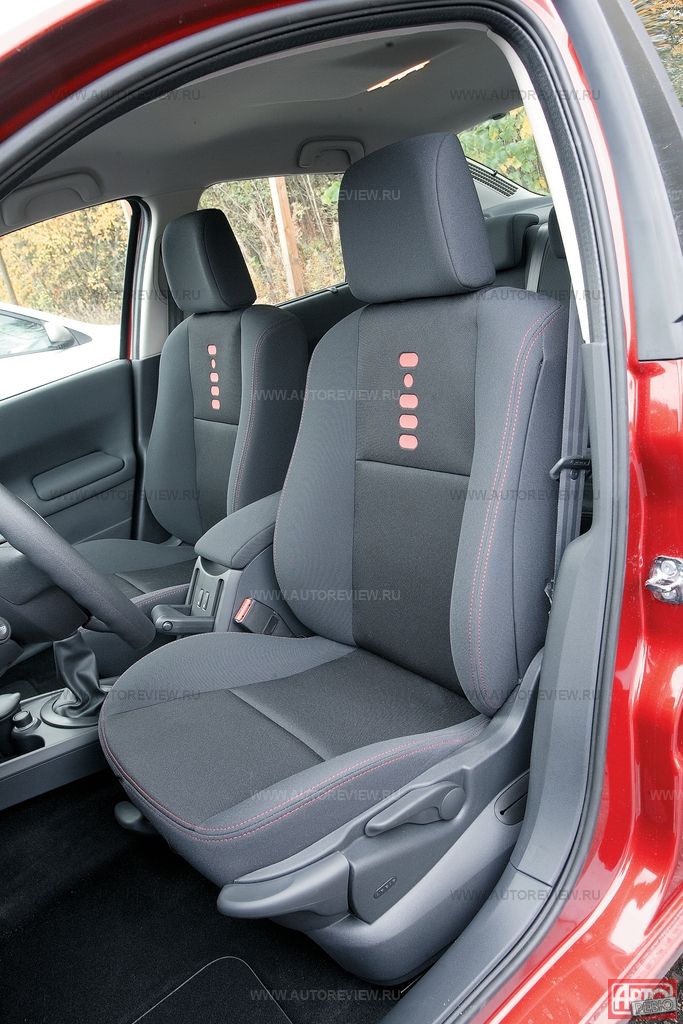 | 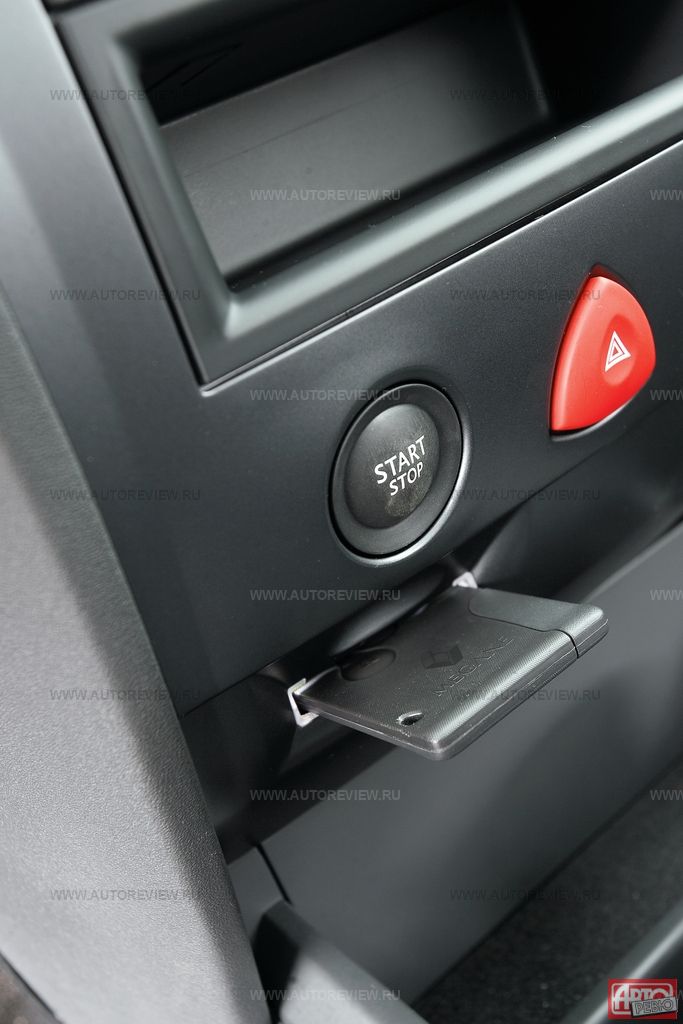 | 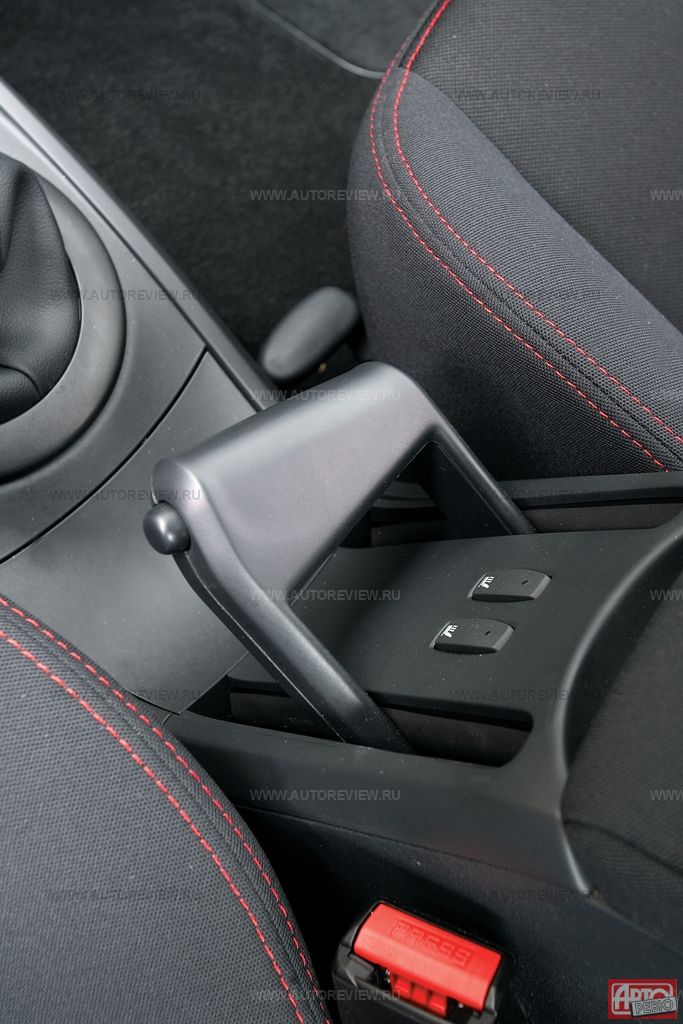 |
| The side bolsters in the Megane hold the driver in place quite well, although the French seat can hardly be called firm | The key card is already included in the basic equipment of the Megane, but it does not provide keyless access | The loop-shaped handbrake lever is convenient to use, but the tactile sensations from it are not the most pleasant |
The brakes on the Corolla are also excellent. You only need to go through a small amount of free travel, and the pedal becomes elastic and begins to respond clearly to pressure. Emergency braking also causes no complaints: the ABS keeps the car on course even on surfaces with different grip.
The Nissan, on the other hand, pulls slightly toward the more grippy surface when braking, and the Tiida's anti-lock braking system engages earlier. In addition, in normal modes, it is more difficult to modulate deceleration than in the Corolla — the pedal is not as informative.
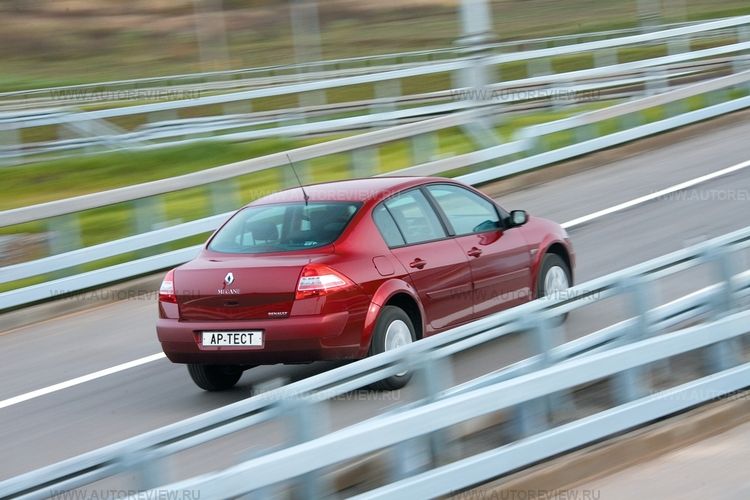
However, in the Megane with its typically French hypersensitive pedal, braking is even less comfortable. And the steering wheel of the Renault is too light — for the sixth year now we have been criticizing the Megane for its power steering settings, and it remains unchanged. On straight high-speed sections everything is fine, but in corners, mutual understanding with the car disappears. The Megane starts to roll early, and at high speed it unpleasantly turns into the arc. Even quick lane changes are performed in two steps, with a mandatory "additional turn." At least the Renault enters sharp turns willingly. But it describes the arc inaccurately, forcing constant steering corrections. And diagonal rocking on a wavy road in a turn is the most noticeable in it.
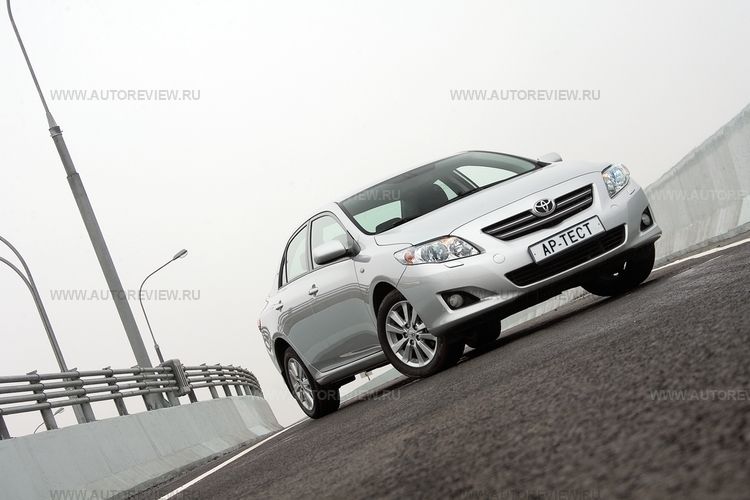
The Nissan Tiida behaves more pleasantly. The "zero" is clearly felt on the steering wheel, and the reactive force is more understandable than in the Renault — although even here there are no claims to naturalness. The Tiida reacts sharply to lane changes, but with a sharp turn of the wheel, the reaction seems to split. First, the Nissan unexpectedly quickly moves into the adjacent lane, and then seems to freeze — the steering wheel is already straight, but the car is still leaning on the outer wheels, hinting at understeer. When entering a sharp turn, the Tiida first demonstrates understeer, but after a short pause it confidently settles into the arc, and the tendency to oversteer here is minimal.
But the desire to attack each next turn faster than the previous one arises only in the Toyota. It has the best chassis and the most informative steering wheel. Moreover, the steering here is the sharpest, and at high speed even too much. On a straight line, the Corolla wanders slightly, but it enters sharp turns clearly, instantly responding to steering inputs. However, if you try to take a turn faster, the front wheels frankly wash out.
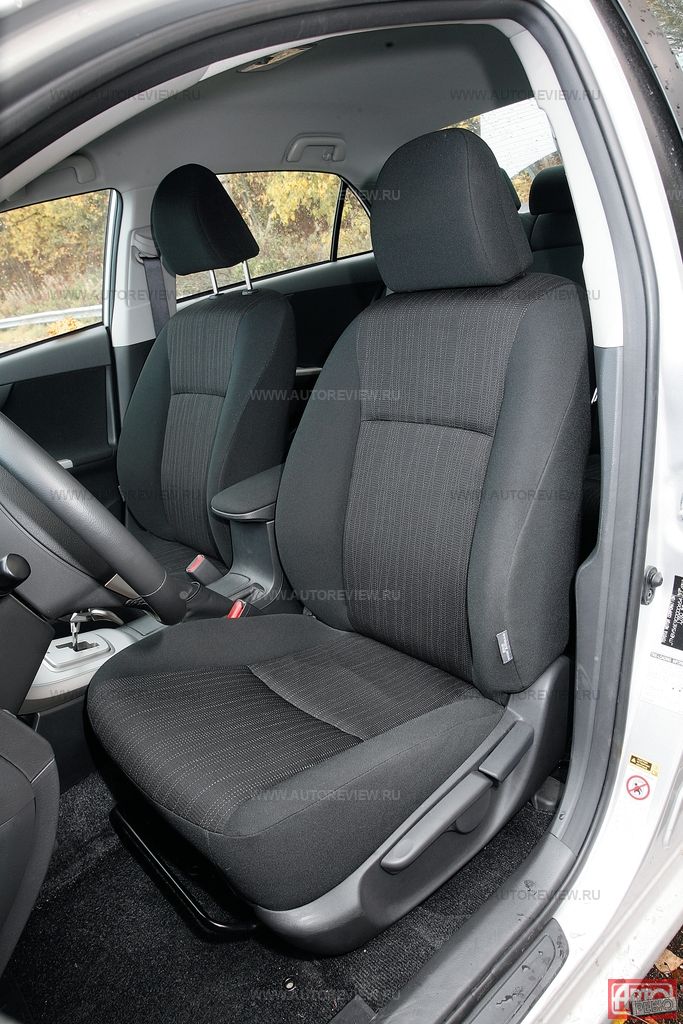 | 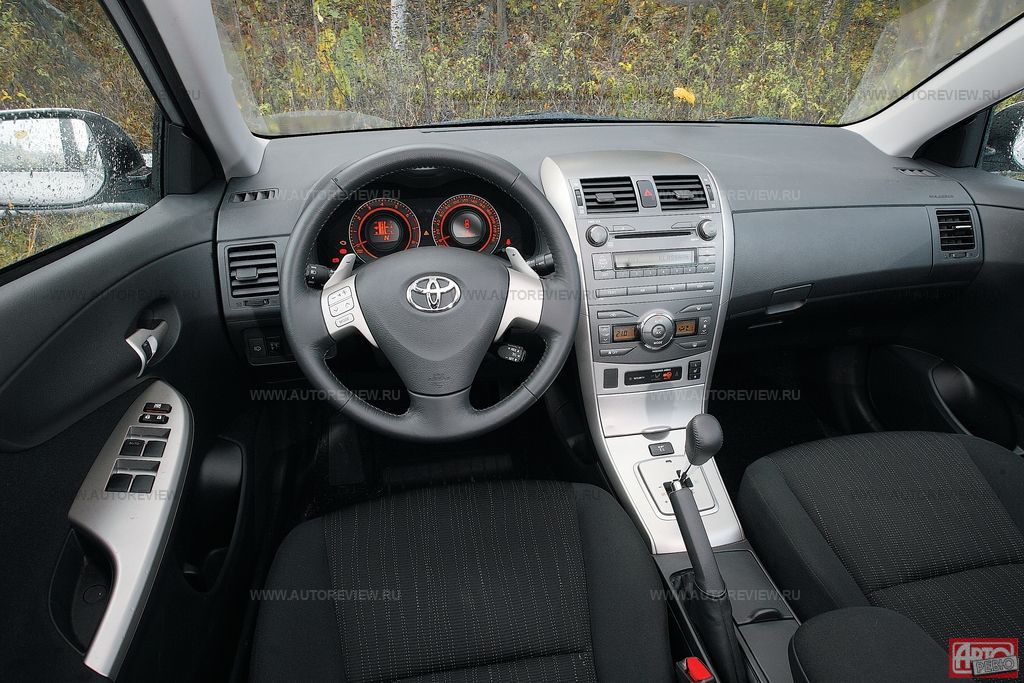 |
| The seat in the Corolla is slightly firmer than in the Megane | The Toyota interior looks the most modern, although there are few notable details in it |
We liked the Corolla's chassis during our first acquaintance (see AR No. 8, 2007). But then the Toyota had winter tires, now it has standard summer Yokohama Advan A460. Apparently, they are to blame for the Corolla "poking" passengers harder on road waves and bumps, and lateral rocking sometimes reaches unpleasant values. But large potholes are "swallowed" by the suspension with reserve, without allowing repeated body oscillations.
The Renault's suspension is softer and more comfortable — it perfectly dampens gentle waves, and the body does not repeat the road profile. True, as soon as the wave becomes steeper or the speed increases, repeated oscillations and a feeling of looseness appear. At the same time, the Megane, like the stiffer Corolla, transmits all the road small stuff, seams, and cracks into the cabin.
| Nissan Tiida | Renault Megane | Toyota Corolla |
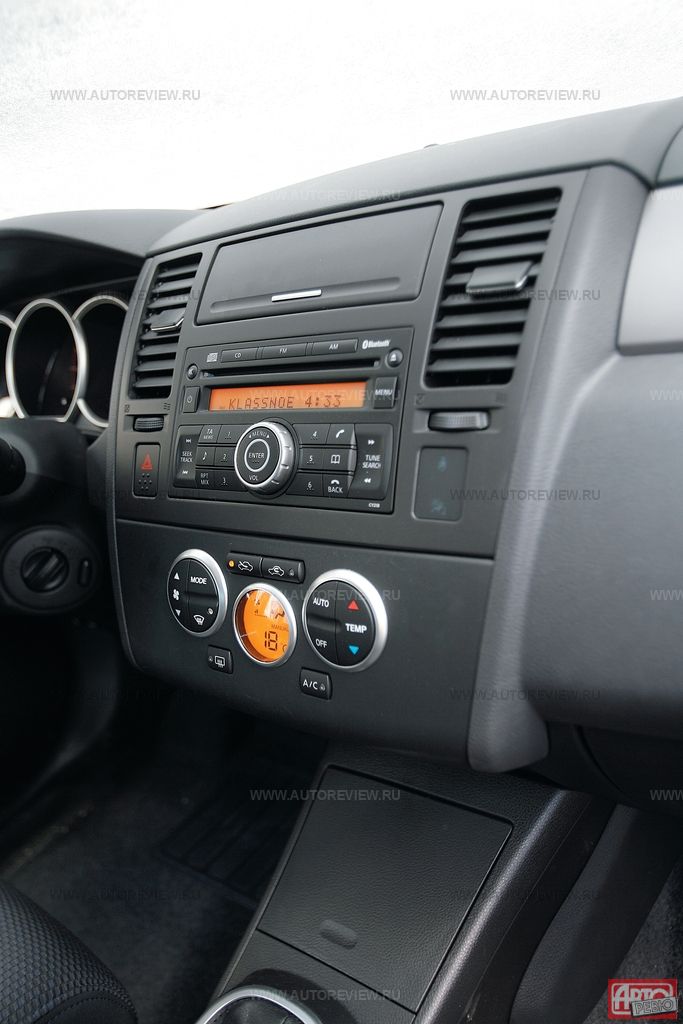 | 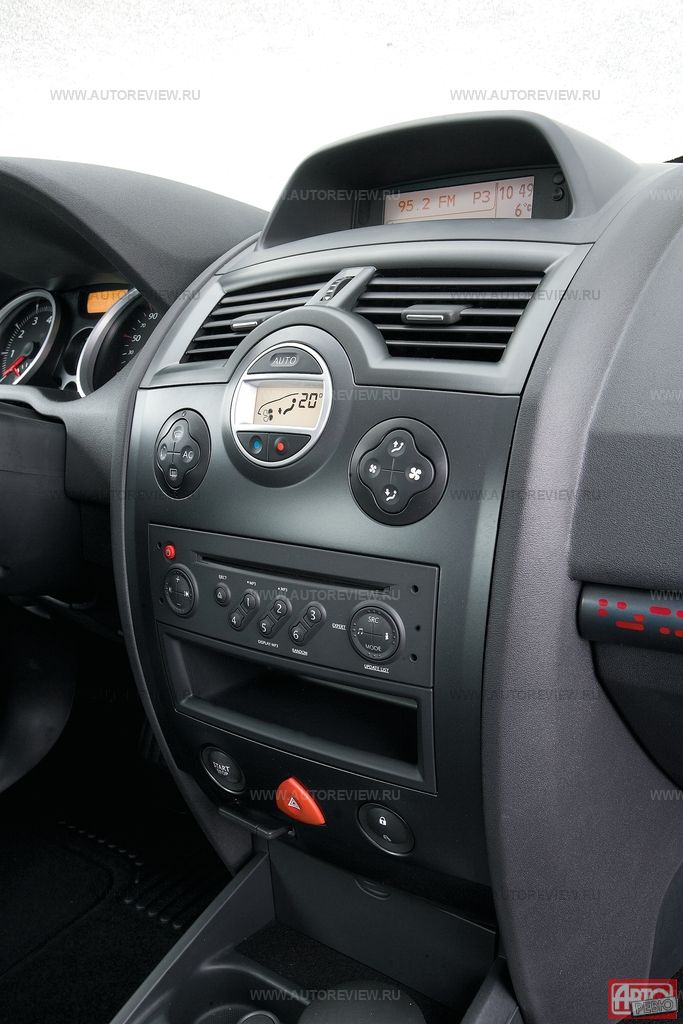 | 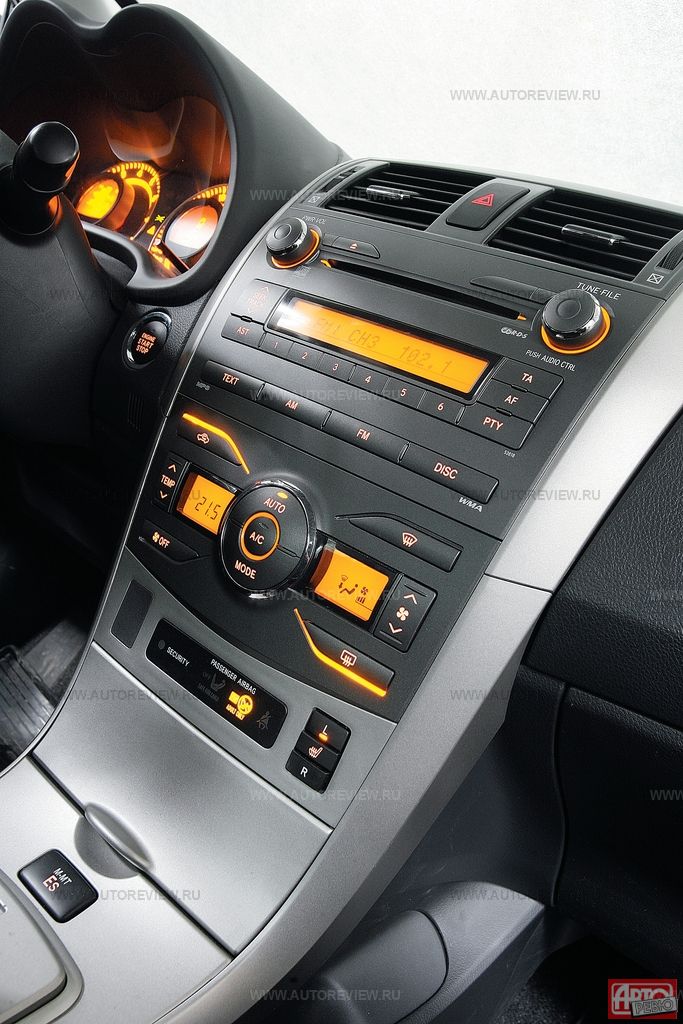 |
| The convex glass of the Tiida's climate control display glares, and selecting the air flow direction requires repeated presses of one button. But the recirculation button is easy to find by touch | The stylish "cookies" of the Renault climate control are convenient, although the recirculation key would be better placed separately | On the Toyota console, the yellow lamp of the activated passenger airbag constantly catches the eye. Climate control management is simple, but the recirculation button is the most convenient |
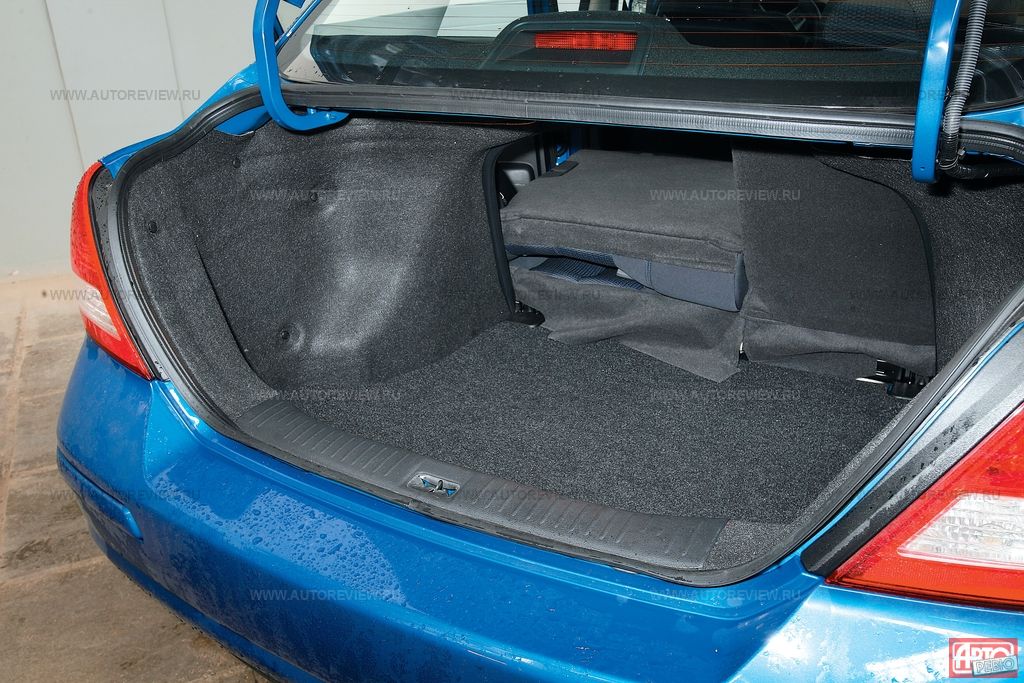 | 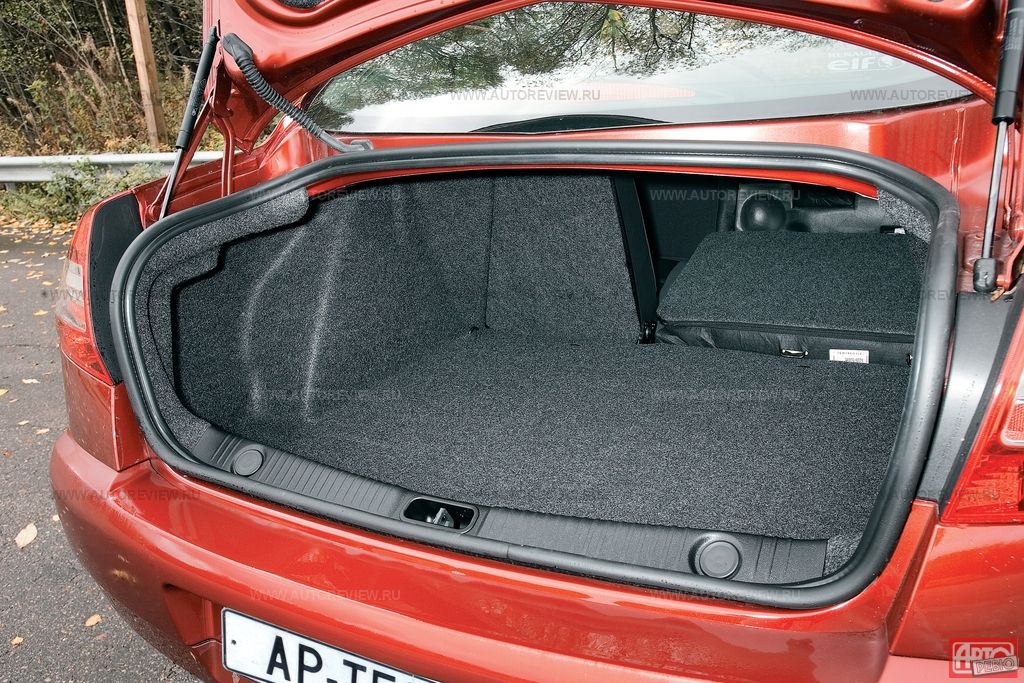 | 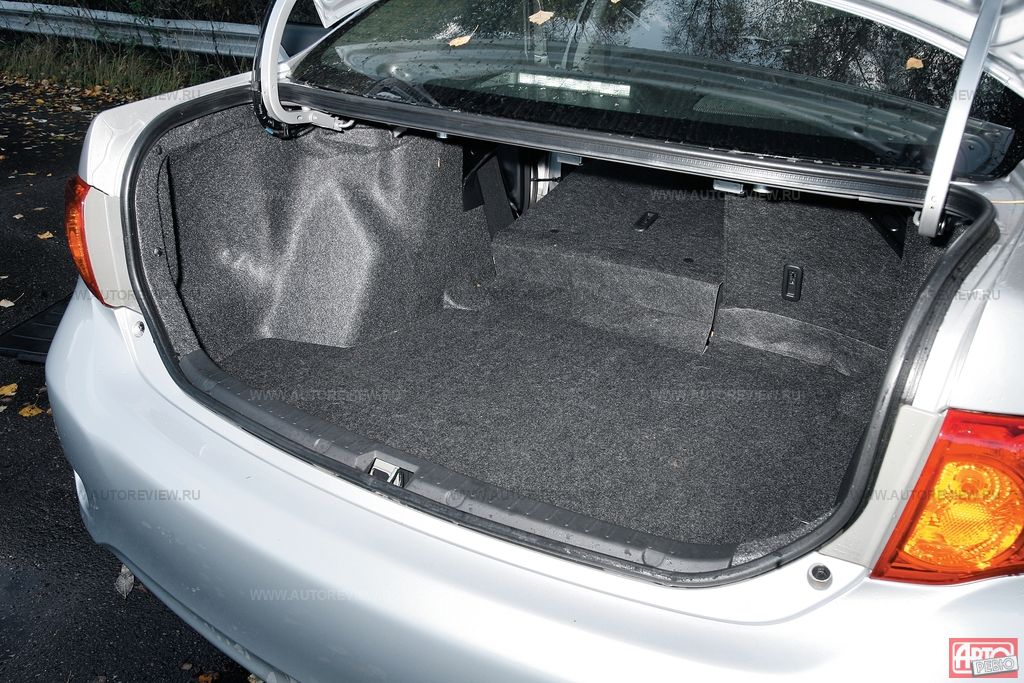 |
| The Megane's trunk is the best: it is the most spacious, and the lid hinges are placed outside. True, the opening is smaller than that of competitors. The Corolla's cargo area is stretched in length, while the Tiida's carelessly finished trunk is stretched in height. Only in the Renault do not only the backrests fold, but also the cushions of the rear seat. But in the Nissan, you can fold down the front passenger seat back for transporting long items — but the step between the cabin and the trunk is the largest there | ||
The Nissan is in the middle in terms of ride smoothness. The suspension is quite stiff — no rocking, but also no uncomfortable impacts on large bumps. At the same time, at high speeds, the Nissan, unlike the Renault, does not "soften."
In terms of noise, the Tiida does not shine: both the tires and the engine hum. The Toyota's engine runs a little quieter, but the tires make more noise. But in the Renault, the engine does not rage, and the tire hum is muffled.
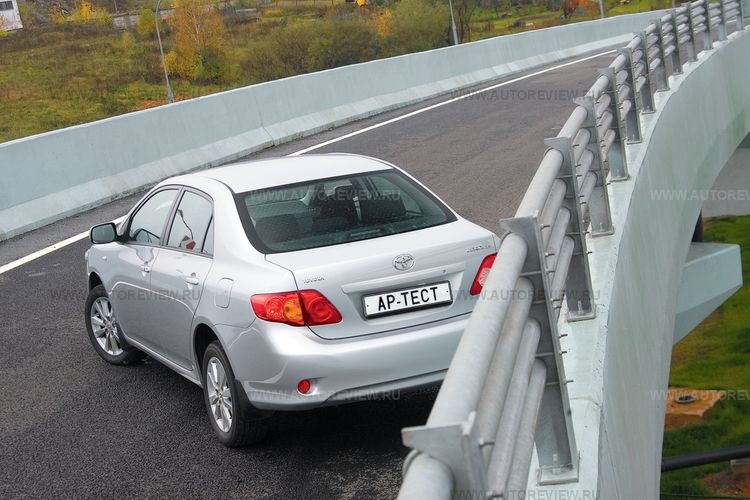
Having weighed all the pros and cons, we come to the following conclusion. The strengths of the Nissan Tiida sedan are the spacious rear row, peppy engine, and rich equipment: Bluetooth phone connectivity and a CD player are already in the base version. And the picture is spoiled by the boring design, poor sound insulation, controversial handling, mediocre ride smoothness — and the price. By the way, in the USA, the Tiida's twin — the Nissan Versa sedan with a 1.8 engine in the base configuration — sells for $12,630, which is 15% cheaper than the previous-generation Toyota Corolla, which is still sold in the States. And in Russia, the Tiida 1.6 "in base" costs only 5% less than a similarly equipped Corolla, and the Corolla is new, which is better balanced in consumer qualities than the Nissan and delivers more driving pleasure.
And the leader of this test was the old-timer Renault Megane — the "internal competitor" of the Tiida in the Renault-Nissan alliance. Like the Tiida, it is spacious and also does not shine with refined handling, but it is more stylish, better adapted for transporting luggage, and pleases with ride smoothness.
Luminous intensity
To understand whose headlights work better, we went out on a night road and filmed the illumination from one point without touching the camera settings. The shots showed: with low beam, the calmest driving is in the Renault Megane — only its optics allow you to see a person on the roadside at 80 meters. The Toyota driver will have to peer into the darkness noticeably more carefully, and the Nissan's low beam is almost useless: the illuminated area stretches no further than 30 meters (cones are placed every 8 meters). With high beam, the Tiida also has trouble — the light spot, or rather, a small spot, is comparable to the Megane's low beam. But the Corolla and Renault's high beam raise no complaints.
During the measurements, only the driver was in the cars, and the headlight adjusters were in the zero position.
| Nissan Tiida | |
| Renault Megane | |
| Toyota Corolla | |
| Low beam. Pedestrian standing on the roadside 80 m from the car | High beam. Pedestrian standing in the middle of the road 160 m from the car |

| Specifications | |||
| Parameters | Cars | ||
| Nissan Tiida | Renault Megane | Toyota Corolla | |
| Body type | 4-door sedan | 4-door sedan | 4-door sedan |
| Number of seats | 5 | 5 | 5 |
| Trunk volume, l | 467 | 520 | 450 |
| Curb weight, kg | 1193 | 1200 | 1245 |
| Gross weight, kg | 1715 | 1750 | 1760 |
| Engine | petrol, with distributed injection | ||
| Location | front, transverse | ||
| Number and arrangement of cylinders | 4, in-line | 4, in-line | 4, in-line |
| Displacement, cm³ | 1598 | 1598 | 1598 |
| Cylinder bore/piston stroke, mm | 78.0/83.6 | 79.5/80.5 | 80.5/78.5 |
| Compression ratio | 10.7:1 | 10.0:1 | 10.2:1 |
| Number of valves | 16 | 16 | 16 |
| Max. power, hp/kW/rpm | 110/81/6000 | 112/82/6000 | 124/91/6000 |
| Max. torque, Nm/rpm | 153/4400 | 151/4250 | 157/5200 |
| Gearbox | manual, 5-speed | manual, robotic, 5-speed | |
| Gear ratios | |||
| I | 3.73 | 3.73 | 3.55 |
| II | 2.05 | 2.05 | 1.90 |
| III | 1.39 | 1.39 | 1.31 |
| IV | 1.03 | 1.10 | 0.97 |
| V | 0.82 | 0.89 | 0.82 |
| reverse | 3.55 | 3.55 | 3.25 |
| final drive | 4.07 | 4.07 | 4.31 |
| Drive | front | front | front |
| Front suspension | independent, spring, McPherson | ||
| Rear suspension | semi-independent, spring | semi-independent, spring | |
| Front brakes | disc, ventilated | disc, ventilated | |
| Rear brakes | disc | disc | disc |
| Tires | 195/65 R15 | 195/65 R15 | 205/55 R16 |
| Maximum speed, km/h | 186 | 193 | 195 |
| Acceleration time 0—100 km/h, s | 11.1 | 11.1 | 12.1 |
| Fuel consumption, l/100 km | |||
| urban cycle | 8.9 | 8.8 | 8.4 |
| extra-urban cycle | 5.7 | 5.7 | 5.7 |
| combined cycle | 6.9 | 6.8 | 6.7 |
| Fuel tank capacity, l | 52 | 60 | 55 |
| Fuel | petrol AI-95 | petrol AI-95 | petrol AI-95 |
Safety
The most meager arsenal of active and passive protection went to the Renault Megane in the base Authentique version: a pair of front airbags, ABS, and brake force distribution. There are not even belt pretensioners and Isofix mounts! All this appears only in the Authentique+ trim, and side airbags and curtains — only in the Expression version. The Nissan Tiida and Toyota Corolla have all the above (except curtains) already in the base equipment. Curtains are available in more expensive versions, and on the Corolla, along with them, a driver's knee airbag is also installed. The stability control system can be ordered exclusively for the Renault Megane 2.0 — the surcharge will be 17,400 rubles ($700).
Under the EuroNCAP program, only two of the three cars were tested. The Renault Megane hatchback in 2002 became the first in the golf class to receive five stars. The model with six airbags and belt pretensioners confidently survived the frontal impact and side collisions. It is noteworthy that the Megane's driver's seat can "weigh" the occupant and weaken the airbag deployment for fragile drivers. With the protection of small passengers, everything is in order, but pedestrians can only count on an average level — two stars out of four.
The Toyota Corolla showed an even better result, but that was already in 2007, five years later. The driver's knee airbag played its role, which, according to the manufacturer, protects the legs of people of any height and with any seating position. Child protection is rated four stars out of five. Pedestrians were also luckier — the pliable hood brought three stars out of four.
The Nissan Tiida hatchback was tested in Japan using the JNCAP method with two frontal crash tests: impact against a concrete wall at 55 km/h and impact with the driver's side into a deformable barrier with 40% overlap at 64 km/h. The side impact under Japanese rules is carried out at a right angle, as in Europe, but the trolley travels faster — 55 km/h versus 50 km/h. Result: the Tiida performed well, protecting the dummies, although in a number of disciplines the safety margin could have been greater. Pedestrians are protected above average.
| Nissan Tiida* | |
| Overall driver protection rating | 92% |
| Overall passenger protection rating | 86% |
| Driver protection in frontal impact without overlap | 89% |
| Passenger protection in frontal impact without overlap | 72% |
| Driver protection in frontal impact with overlap | 87% |
| Passenger protection in frontal impact with overlap | 85% |
| Driver protection in side impact | 100% |
| Curb weight | 1140 kg |
| * Tests were conducted according to the JNCAP method | |
| Renault Megane* | ★★★★★ |
| Overall rating | 33 points |
| Frontal crash test | 14 (88%) |
| Side crash tests | 18 (100%) |
| SBR** | 1 |
| Child passenger protection | — |
| Pedestrian protection | 11 (31%) |
| Curb weight | 1175 kg |
| * Tests were conducted according to the EuroNCAP method | |
| ** SBR — presence of seat belt reminder | |
| Toyota Corolla* | ★★★★★ |
| Overall rating | 34 points |
| Frontal crash test | 15 (94%) |
| Side crash tests | 17 (94%) |
| SBR** | 2 |
| Child passenger protection | 39 (80%) |
| Pedestrian protection | 23 (64%) |
| Curb weight | 1290 kg |
| * Tests were conducted according to the EuroNCAP method | |
| ** SBR — presence of seat belt reminder | |
Autoreview final ratings
Before this comparative test, we invited visitors to our website to vote for a favorite among the three participants — Nissan Tiida, Renault Megane, and Toyota Corolla.
The votes were distributed as follows:
Nissan Tiida 16.61%
Renault Megane 20.38%
Toyota Corolla 63.01%
A total of 10,956 people took part in the poll.
Judging by the results, the public had predetermined the winner. But the final verdict is made not by voting, but by our measurements and subjective driving impressions.
The comparative equipment table shows that even in the base version, all three cars have front airbags, ABS, and power steering. But then differences begin. For instance, the Tiida in its base version pleases with heated front seats, Bluetooth, and electric windows on all doors. The Megane is more modestly equipped, but it has engine start button and metal engine protection. The Corolla is the most expensive in base (529,500 rubles), but for that money you get side airbags, a driver's knee airbag, and split-folding rear seat. However, you'll have to pay extra for automatic transmission — it's a robotic manual, not a classic automatic.
The prices of the tested cars naturally differ: the most affordable is the Megane (525,350 rubles), the mid-priced Tiida (539,900), while the Corolla in our trim turned out to be noticeably more expensive — 661,000 rubles. This is explained by rich equipment: climate control, leather steering wheel, xenon, light and rain sensors — competitors either lack these or charge extra for them.
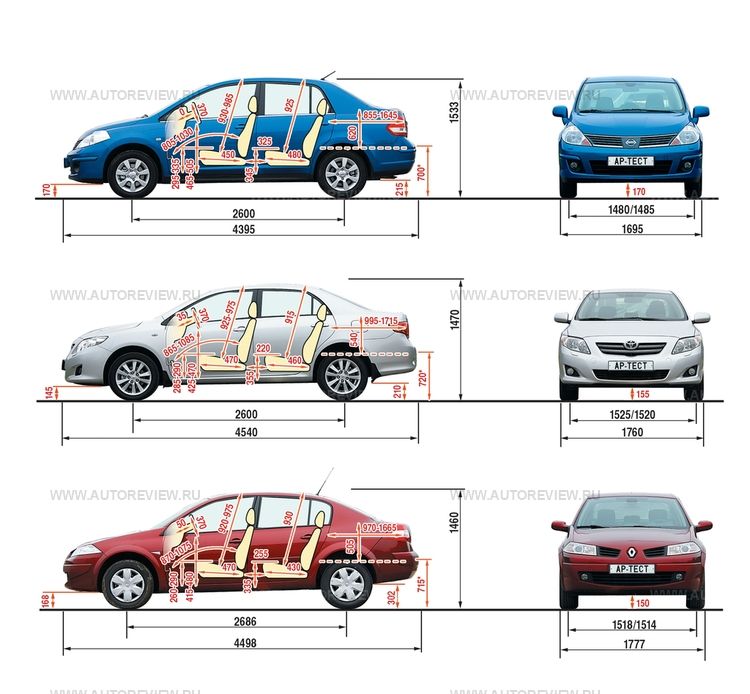
Black indicates manufacturer data, red — Autoreview measurement results
* Loading height
Some Autoreview measurement results
Speedometer accuracy measurements revealed an old ailment of all three brands: the instruments noticeably exaggerate speed. The Tiida "lies" the most — at 100 km/h on the speedometer, the actual speed is only 94 km/h. The Megane is slightly more accurate (94 km/h), and the most honest speedometer is in the Corolla — 97 km/h at the same readings.

| Speedometer accuracy | ||||||||
| Cars | Speedometer readings, km/h | |||||||
| 40 | 60 | 80 | 100 | 120 | 140 | 160 | 180 | |
| True speed, km/h | ||||||||
| Nissan Tiida | 37 | 56 | 74 | 94 | 113 | 132 | 151 | 170 |
| Renault Megane | 39 | 57 | 76 | 94 | 114 | 133 | 152 | 171 |
| Toyota Corolla | 38 | 58 | 78 | 97 | 117 | 136 | 155 | 175 |
Autoreview expert assessments
| Autoreview expert assessments | ||||
| Assessed parameters | Max score | Cars | ||
| Nissan Tiida | Renault Megane | Toyota Corolla | ||
| Design | 160 | 120 | 135 | 135 |
| Exterior | 80 | 60 | 70 | 65 |
| Interior | 80 | 60 | 65 | 70 |
| Ergonomics | 160 | 130 | 135 | 130 |
| Driver's workplace | 80 | 65 | 70 | 70 |
| Visibility | 80 | 65 | 65 | 60 |
| Dynamics | 280 | 230 | 220 | 235 |
| Acceleration dynamics | 90 | 75 | 70 | 70 |
| Braking dynamics | 100 | 85 | 85 | 90 |
| Handling | 90 | 70 | 65 | 75 |
| Ride comfort | 200 | 160 | 170 | 160 |
| Ride smoothness, vibration protection | 70 | 60 | 60 | 55 |
| Acoustic comfort | 70 | 50 | 60 | 55 |
| Microclimate | 60 | 50 | 50 | 50 |
| Interior comfort | 200 | 140 | 150 | 125 |
| Passenger seats | 70 | 55 | 50 | 45 |
| Trunk | 70 | 45 | 55 | 45 |
| Interior transformation | 60 | 40 | 45 | 35 |
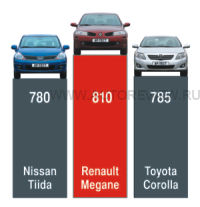
| Total score | 1000 | 780 | 810 | 785 |
The final figures put everything in its place. The Megane scores 810 points and confidently wins, the Corolla — 785, and the Tiida — 780. Surprisingly, the favorite of the online vote, the Corolla, failed to confirm its status in real tests. The Megane turned out to be better in design, ergonomics, and ride comfort. The Corolla made up ground in dynamics and handling, but its interior is the most uncomfortable — 125 points for interior comfort. The Tiida lost mainly due to weak acoustic comfort — only 50 points, and a cramped trunk.
Personally, I liked the Megane the most: it has the coziest interior, excellent sound insulation, and pleasant-to-touch materials. It's not the fastest, but it rides softly and smoothly, which is ideal for the city. The Corolla is good on the highway, where its driver-oriented character is felt, but in the city it seems stiff and noisy. The Tiida is a compromise: it's the most spacious in the back, but the trunk is small, and the engine starts to hum loudly at high revs.
If I were choosing a car for everyday driving, I'd look toward the Megane. It's the best balanced: convenient in the city and won't disappoint on the highway. The Corolla is for those who value driving excitement and are willing to put up with a stiff suspension and noise. The Tiida is a practical choice for a family, but with reservations.
Visibility
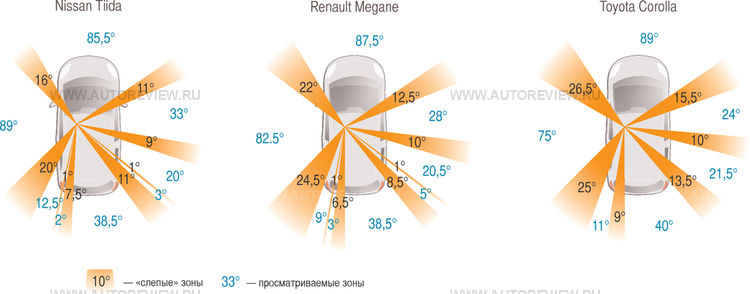
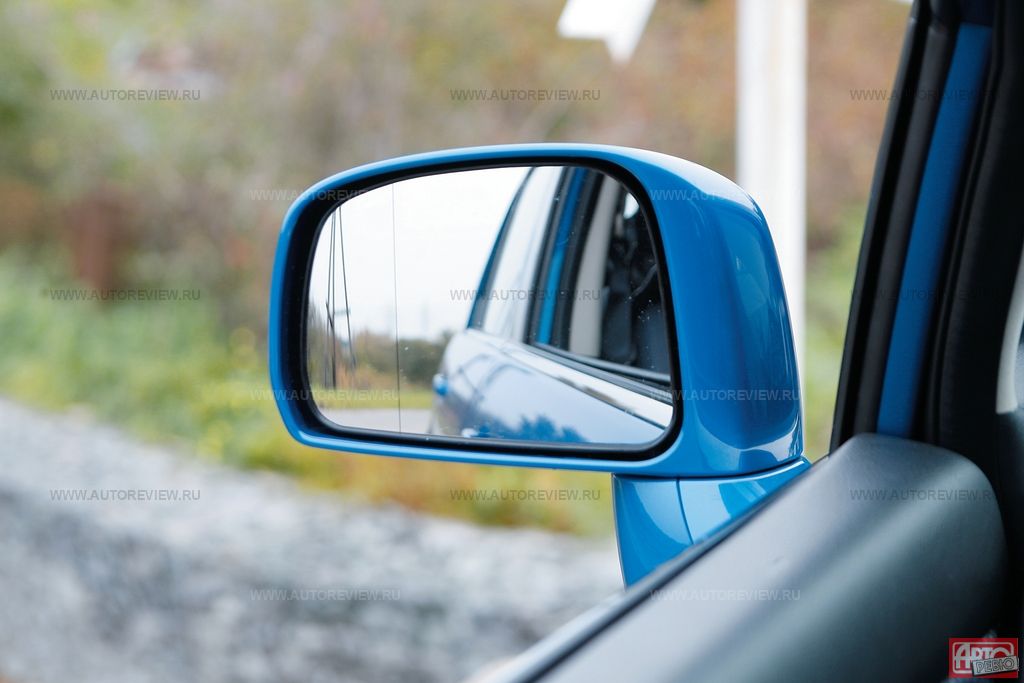
The largest total viewing angle was recorded for the Nissan Tiida sedan, although while driving the Renault Megane, it subjectively seems that visibility there is no worse. But in the Toyota Corolla, a tall driver will likely notice the noticeably raked front pillars, which can obstruct the view, and headrests constantly loom through the rear window. In terms of convenience, the side mirrors are roughly the same on all three cars, but the Tiida's are larger due to greater height.
| Nissan Tiida | Renault Megane | Toyota Corolla |
 |
| Car | Total viewing angle, deg. | Total "blind" zone angle, deg. |
| Nissan Tiida | 283.5 | 76.5 |
| Renault Megane | 274.0 | 86 |
| Toyota Corolla | 260.5 | 99.5 |
Upstarts
 |
 |
 |
 |
 |
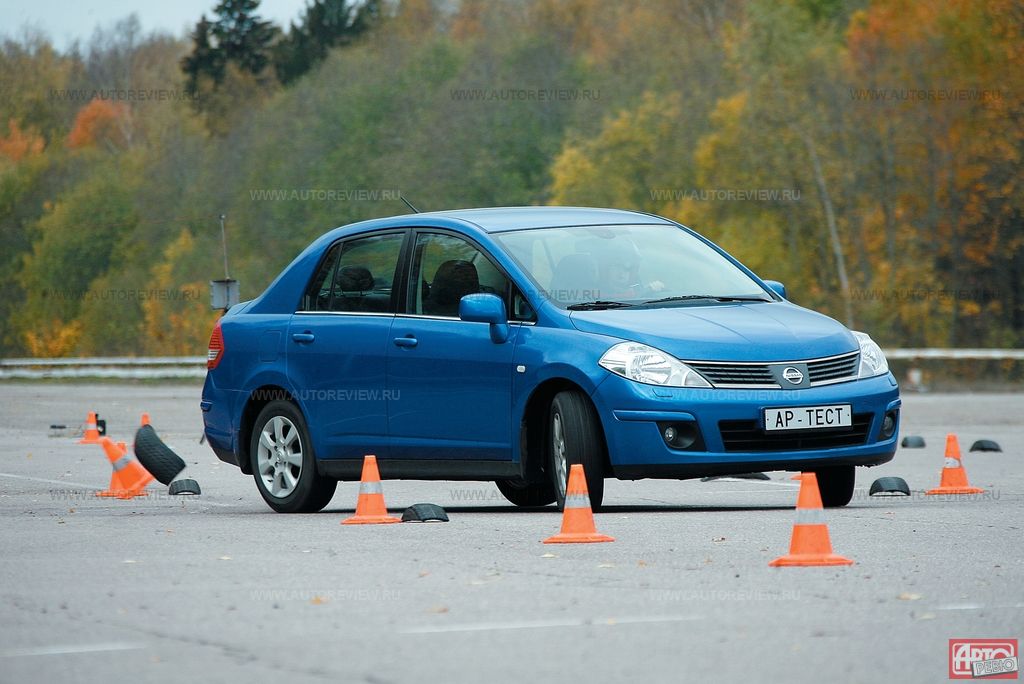 |
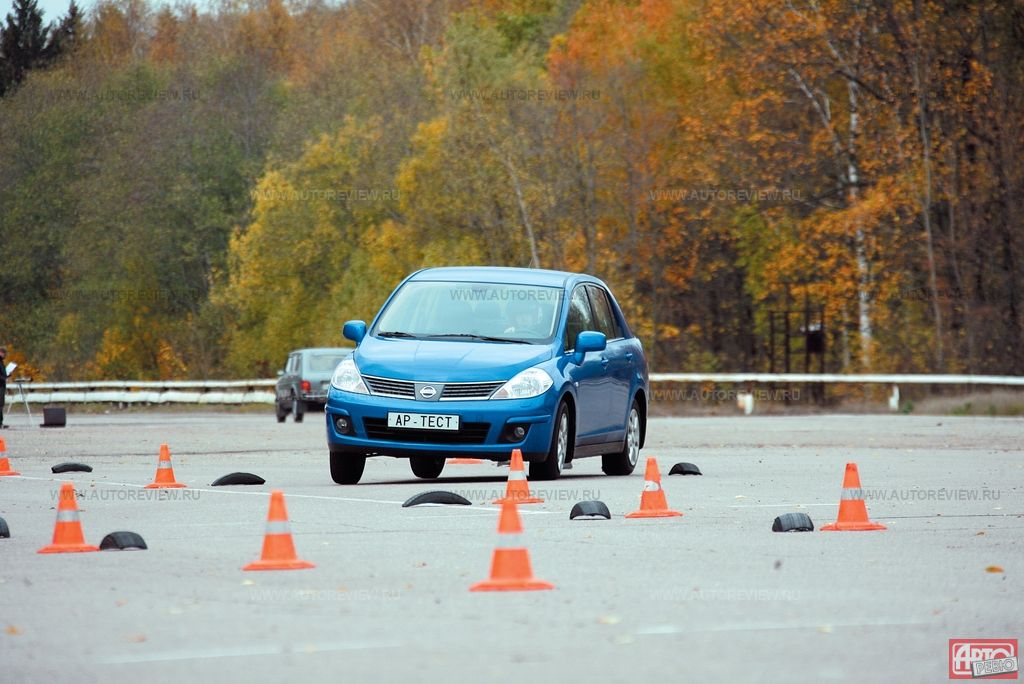
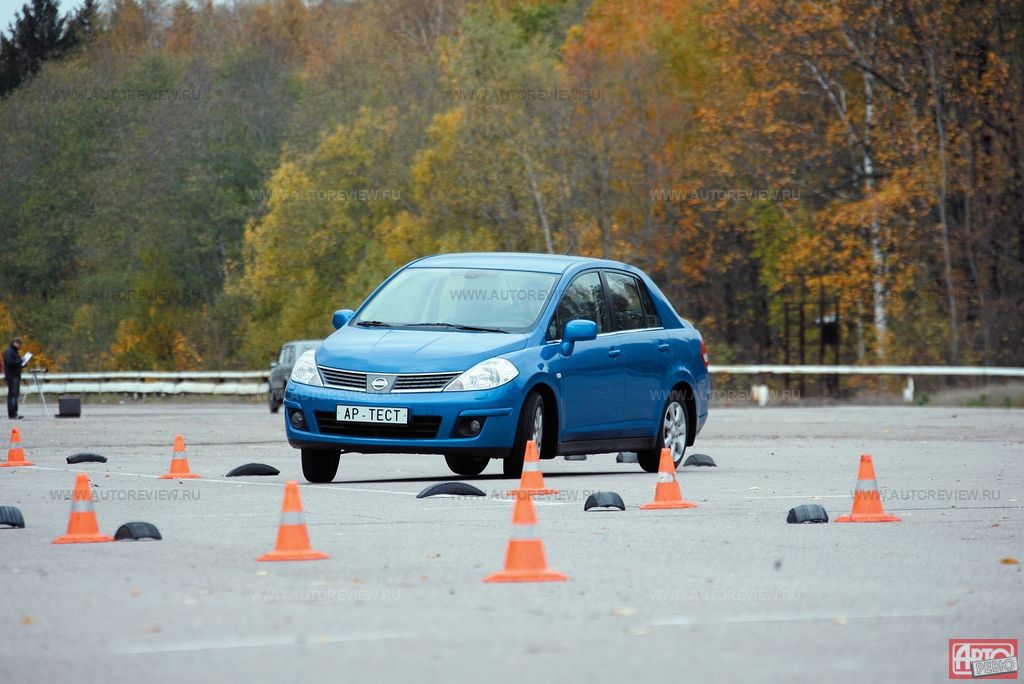
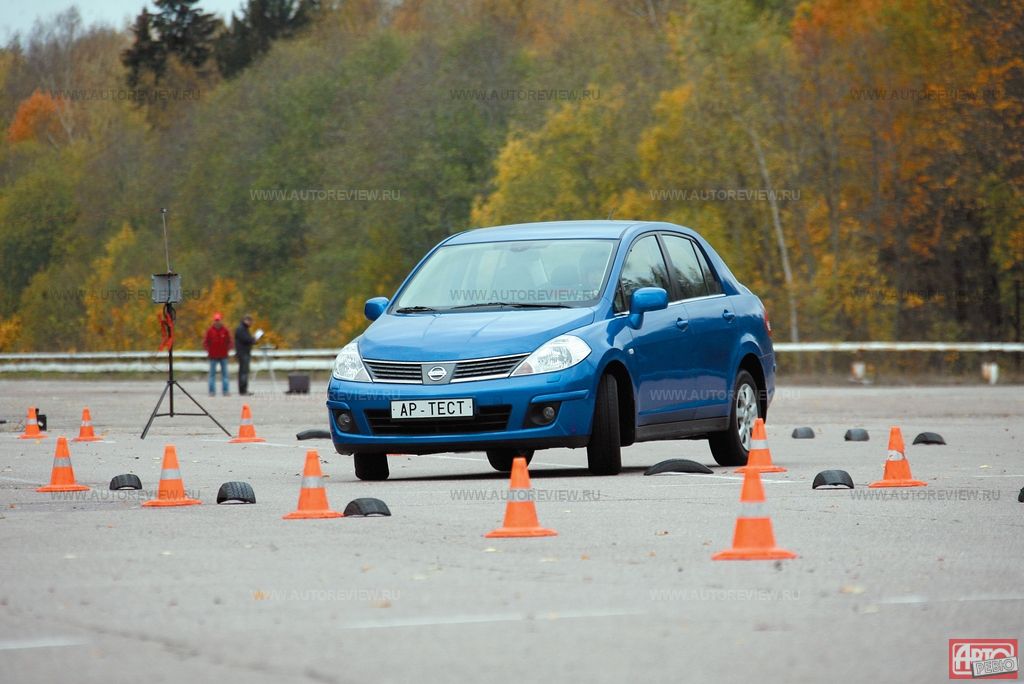
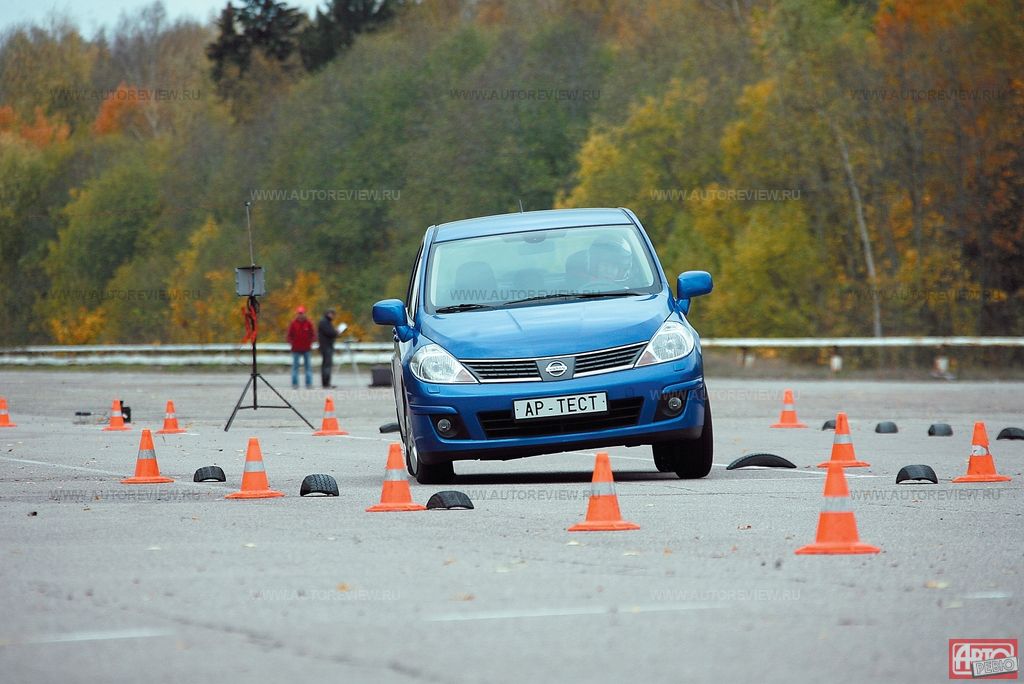
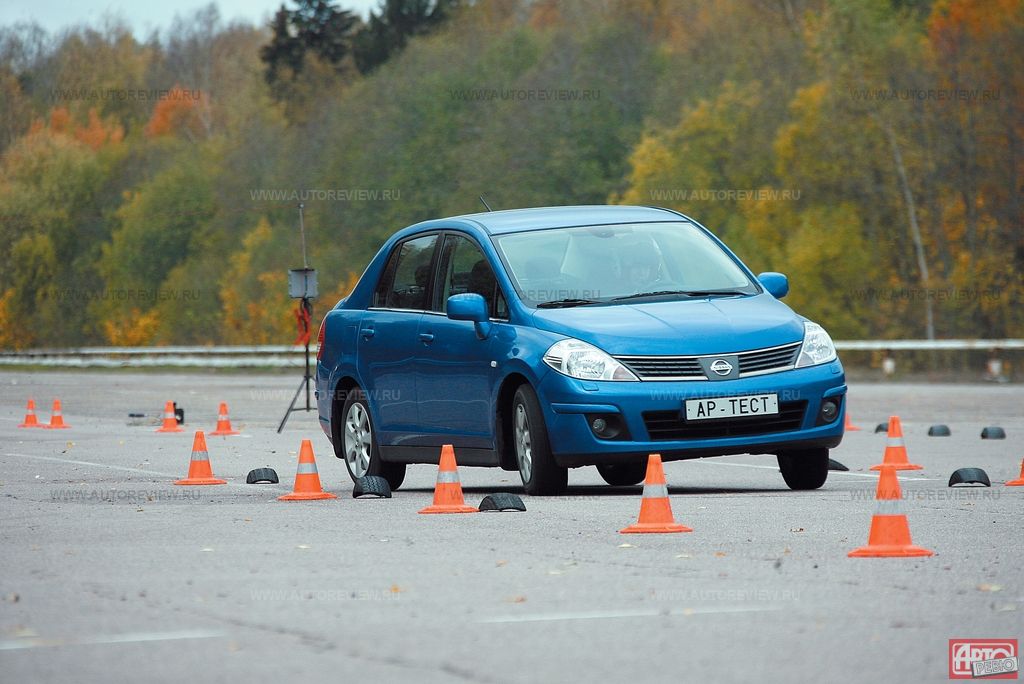
| All three cars performed such "dances" at the test site |
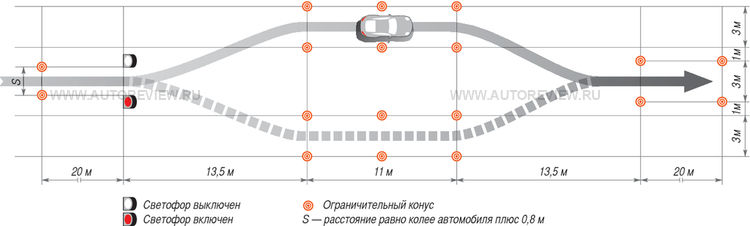
We conducted the simulation of avoiding a suddenly appearing obstacle, as always, in two stages. First, five drivers, already familiar with the cars in normal road modes, had to avoid the "moose" on the first and only attempt at a speed of 65 km/h. Let me remind you that this test has an element of surprise — traffic lights that at the last moment indicate which side to avoid the obstacle from: right or left. After that, the expert determined the maximum speed at which the maneuver could still be performed through a series of runs.
Surprises began already with the first "sighting" run: at a speed of about 65 km/h, the Nissan broke into rhythmic skidding, which even our expert could not extinguish. Further, it turned out that all three cars demonstrate too low directional stability — skids and course oscillations constantly plagued them. The maneuver often ended in a spin, although the asphalt was dry and the wheels had summer tires with the pressure recommended by the manufacturer.
As a result, Nissan and Toyota showed ridiculously low results in the moose test — just over 70 km/h. Only on the Renault did the tester manage to squeeze out 73.4 km/h, and even then he had to contend with two skids — both when avoiding the obstacle and when returning to his lane.
Drivers faced the same problems in the "random" runs at a fixed speed of 65 km/h. Even those who managed to complete the maneuver complained of sudden and deep slides. Only on the Nissan did three manage to avoid an accident, although their complaints were the same as on the Renault Megane, which "yielded" to only one driver. The common problem of these two cars is too low steering sensitivity and large delays in response to steering input. The driver has to "over-rotate" the wheel, which only provokes skids.
The Toyota Corolla has a "sharper" steering and quick reactions. But even with smooth steering inputs, the Corolla still broke into a sharp skid followed by yaw oscillations of such high frequency that it was very difficult to control. The result — only one "moose" saved out of five.
It is not often that our moose test ends so disastrously. Perhaps the low air temperature played a role — during the runs it was only 6-7 degrees Celsius. And this is another reason to remind that in late autumn and winter you need to be doubly careful behind the wheel!
Or maybe the chassis of these cars is tuned for operation only with the stability control system? But it is available only for the Renault, and even then as an option — for cars with the two-liter engine...
| Moose test on the first attempt at 65 km/h | |
| Cars | Completed the maneuver |
| Nissan Tiida | 3 drivers out of 5 |
| Renault Megane | 1 driver out of 5 |
| Toyota Corolla | 1 driver out of 5 |
| Maximum speed of completing the moose test, km/h | |
| Cars | Speed |
| Nissan Tiida | 70.2 |
| Renault Megane | 73.4 |
| Toyota Corolla | 70.5 |
What's the price?
The Renault Megane sedan in the base Authentique trim with the 1.4 engine (100 hp) is sold for 428,850 rubles ($17,430)* — the base includes two airbags, ABS, front electric windows, power steering, and keyless start with a chip card. A similar car with the 1.6 engine (115 hp) costs 446,900 rubles ($18,166). However, you will have to pay an extra 28,400 rubles ($1,150) for air conditioning. The sedan in the Expression trim for 507,550 rubles ($20,630) already comes with six airbags, a CD player, full electric package, and heated mirrors. The special Extreme version (climate control, light and rain sensors, fog lights, heated front seats, CD/mp3 player) will cost 252,350 rubles ($21,355) — it was this car, painted in "metallic" for an extra 8,750 rubles ($370), that we had in our hands. At the top of the sedan range is the Renault Megane Privilege with a two-liter engine (135 hp), fabric-leather interior trim, alloy wheels, parking sensors, cruise control, and a price tag from 670,100 rubles ($27,240). The surcharge for the four-speed automatic for versions with 1.6 and 2.0 engines is 30,950 rubles ($1,260). Cars are available at dealers, and an ordered car will be delivered within three months.
Warranty — two years without mileage limit. Renault cars are sold by 95 dealers in 61 Russian cities.
Toyota Corolla costs noticeably more than the French sedan — for the initial Comfort modification with the 1.4 engine (97 hp) they ask 494 thousand rubles ($20,080). However, the Japanese car has a richer equipment: four airbags, ABS, air conditioning, power steering, front electric windows, heated front seats, radio with CD/mp3 support, and mirrors with electric drive and heating. The Corolla 1.6 (124 hp) with similar equipment costs 529,500 rubles ($21,524), and for 27,500 rubles ($1,120) you can order the MultiMode robotic transmission. The Elegance version for 603 thousand rubles ($24,510) additionally gets curtain airbags and a "knee" airbag for the driver, climate control, rear electric windows, and fog lights. The top Prestige trim for 653 thousand rubles ($26,540) features cruise control, light and rain sensors, alloy wheels, and keyless start. You will have to wait in line for the Corolla — the waiting period reaches a year, although some dealers promise to fit into two to three months.
Warranty on the car — three years or 100,000 km. The Toyota sales network includes 55 dealerships in 39 Russian cities.
The Nissan Tiida sedan even in the base version is equipped with a 1.6-liter engine (110 hp). The initial Comfort trim includes four airbags, ABS, air conditioning, power steering, full electric package, CD player, heated front seats and mirrors. The price is 499,900 rubles ($20,320), which is 29,600 rubles ($1,200) less than the similar Corolla. The Tiida in the Elegance version for 539,900 rubles ($21,950) adds curtain airbags, climate control, light and rain sensors, keyless start, alloy wheels, and fog lights. The same sedan with the 1.8 engine (126 hp) costs 565,900 rubles ($23,000). The four-speed automatic is available only with the 1.6 engine — the surcharge for it is 31 thousand rubles ($1,260). The maximum Tekna trim with cruise control, CD changer, and automatic will cost 600,900 rubles ($24,430), while the version with the 1.8 engine and manual will be 5,000 rubles ($200) cheaper. The Tiida is available at dealers; when ordering, the car will be delivered in one to three months.
Warranty — 3 years or 100,000 km. Nissan sales are handled by 44 dealers in 29 Russian cities.
* At the exchange rate of $1 = 24.6 rubles.
| Cost of scheduled maintenance with consumables and parts, rubles | ||||
| Scheduled service | Cars | |||
| Nissan Tiida | Renault Megane | Toyota Corolla | ||
| Cost of standard hour | 1350 | 1375 | 1600 | |
| Mileage, km | 10000 | — | — | 5000 |
| 15000 | 6150 | 7100 | — | |
| 20000 | — | — | 8100 | |
| 30000 | 14360 | 7100 | 5000 | |
| 40000 | — | — | 14200 | |
| 45000 | 6300 | 7100 | — | |
| 50000 | — | — | 5000 | |
| 60000 | 14360 | 17000 | 8100 | |
| 70000 | — | — | 5000 | |
| 75000 | 6300 | 7100 | — | |
| 80000 | — | — | 19000 | |
| 90000 | 17600 | 12000 | 5000 | |
| Total | 65070 | 57400 | 74400 | |
| Approximate prices for original parts at dealers in Moscow, rubles | |||
| Parts | Cars | ||
| Nissan Tiida | Renault Megane | Toyota Corolla | |
| Oil filter | 320 | 211 | 296 |
| Fuel filter | — | 480 | — |
| Air filter | 870 | 620 | 533 |
| Cabin filter | 1473 | 950 | 1332 |
| Spark plug | 642 | 192 | 681 |
| Front brake pads | 5160 | 3300 | 3168 |
| Rear brake pads | 1995 | 2700 | 1865 |
| Front shock absorber | 7890 | 3804 | 3676 |
| Rear shock absorber | 2470 | 3804 | 1756 |
| Front headlight | 9400 | 8493 | 7466 |
| Rear light | 6058 | 3479 | 2766 |
| Front fender | 7565 | 8189 | 6153 |
| Front bumper | 7345 | 12260 | 8720 |
| Hood | 13000 | 10008 | 10410 |
| Windshield | 25155 | 9107 | 9205 |
What else?
When choosing a golf-class sedan with a 1.5-1.8 liter engine and a price tag from 400 to 500 thousand rubles, it makes sense to consider other options.
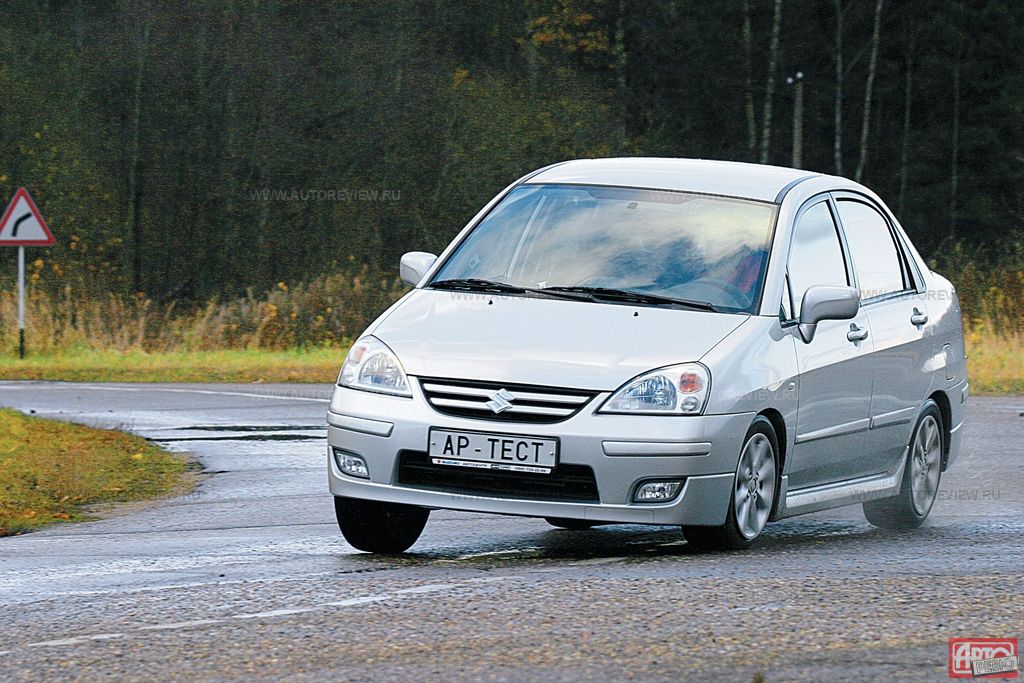
Take, for example, the not-so-new Suzuki Liana (1.6 L, 106 hp) — it costs from 398,520 rubles ($16,200)*, and the version with a four-speed automatic will be 59,040 rubles ($2,400) more expensive. The outwardly modest sedan has all-wheel-drive versions and a spacious trunk, but rear passengers are a bit cramped. More details — in AR No. 21, 2004.
Recently, the successor to the Liana, the Suzuki SX4 Sedan, appeared on the market. The new model costs noticeably more: the starting price is 485,850 rubles ($19,750*), the surcharge for the automatic is 28,290 rubles ($1,150). Experts from Autoreview have already driven the SX4 hatchback (see AR No. 17, 2006): the chassis is well-tuned, but the cabin is a bit noisy, and the suspension is somewhat stiff.
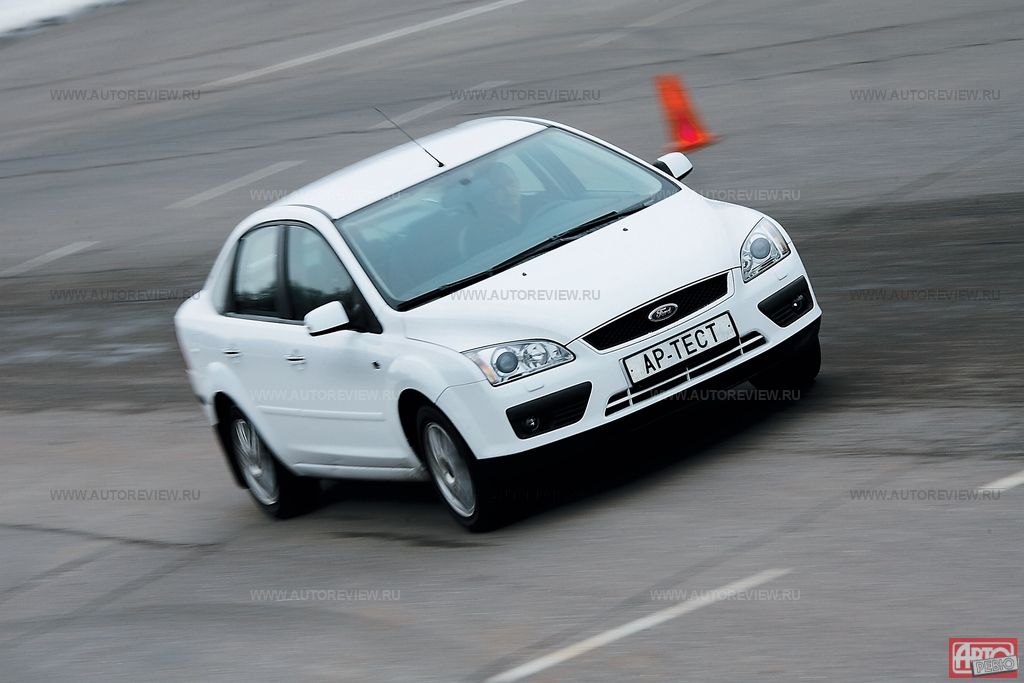
The Ford Focus sedan with a 1.6 engine (100 hp) and a manual gearbox costs 423 thousand rubles ($17,200), with an automatic — 33 thousand rubles ($1,340) more. The version with a 115 hp engine is available from 435 thousand rubles ($17,680), and the Focus 1.8 (125 hp) — at least 444 thousand rubles ($18,050). The Focus's strengths are convenient ergonomics, a spacious rear bench, and a huge trunk. Details — in AR No. 8, 2007.
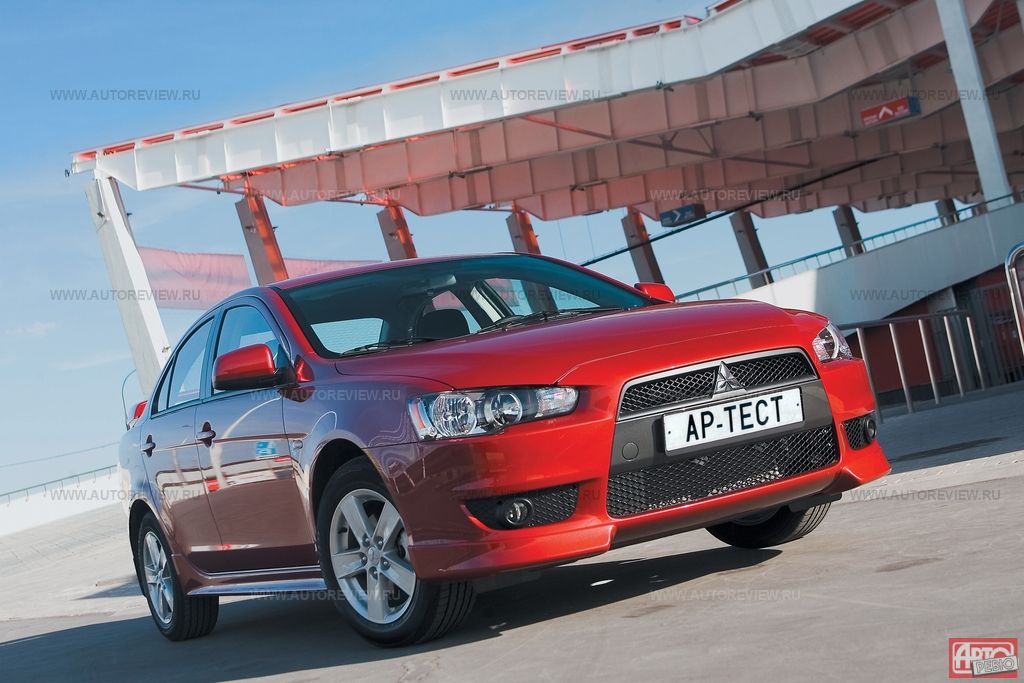
| Ford Focus | Mitsubishi Lancer |
 |  |
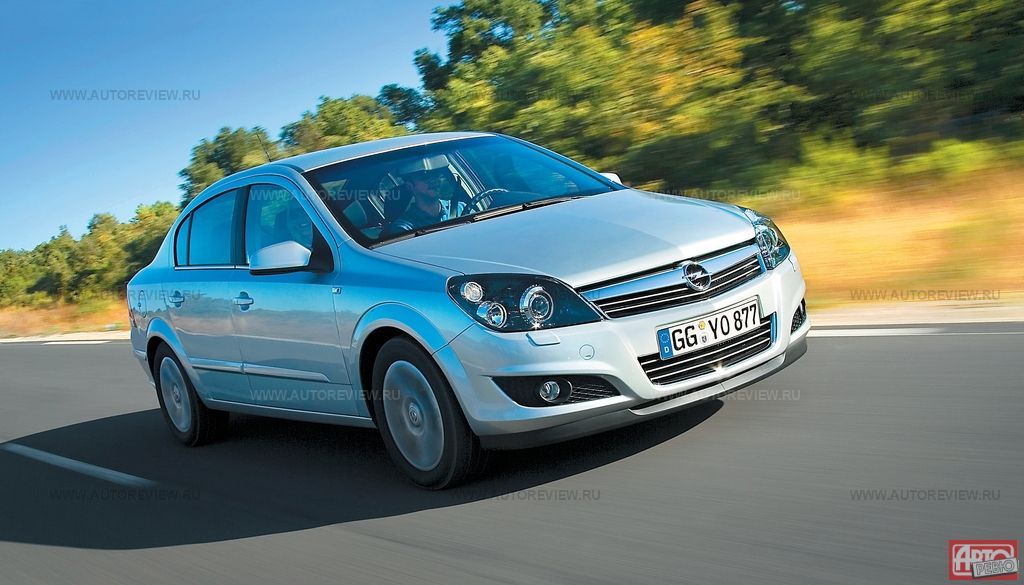
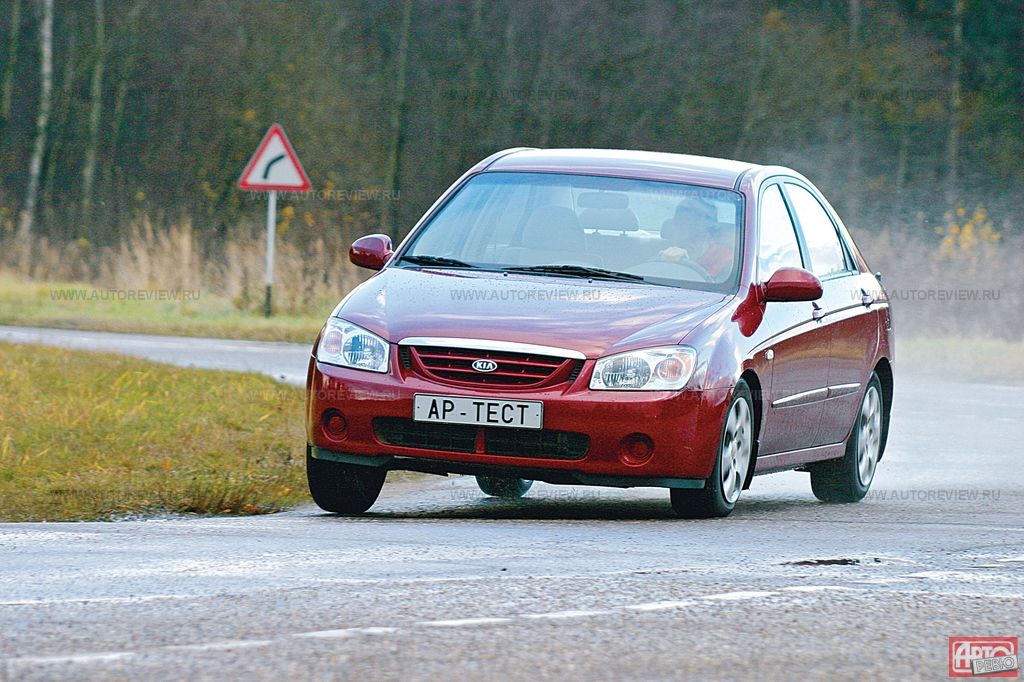
| Opel Astra | Kia Cerato |
 |  |
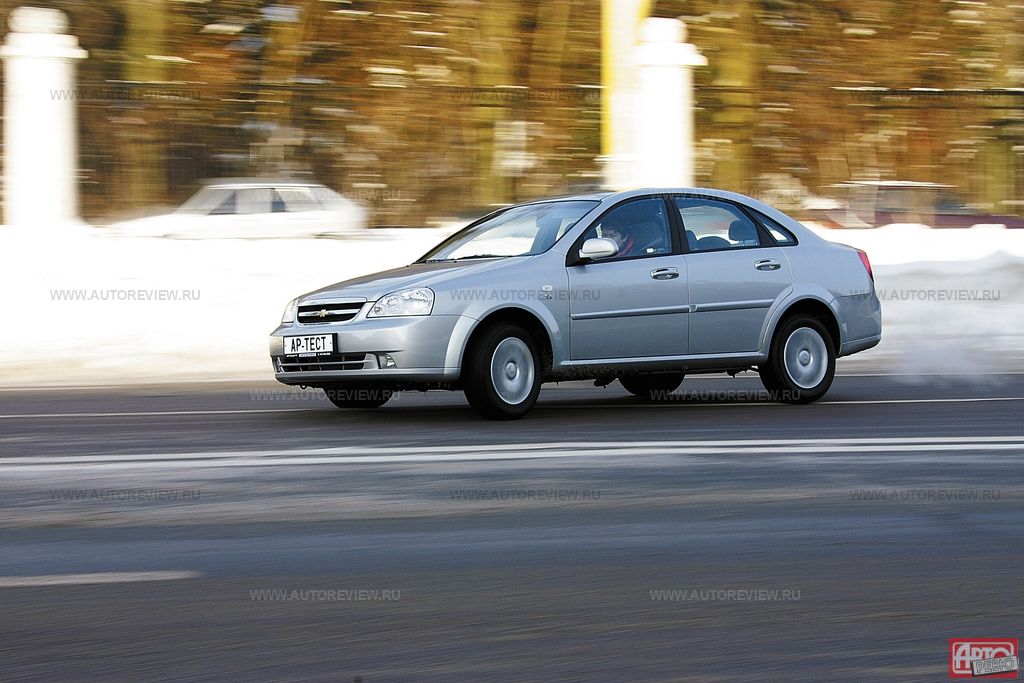
The Chevrolet Lacetti sedan with a 1.6 engine (109 hp) is sold for 430,700 rubles ($17,510). The version with a 1.8 engine (122 hp) will cost 505,900 rubles ($20,570). An automatic gearbox in both cases will require an extra payment of 36,500 rubles ($1,480). The Lacetti is a solid car created with the participation of the Pininfarina studio. Details — in AR No. 3, 2005.
The Kia Cerato with a 1.6 engine (105 hp) starts from 439 thousand rubles ($17,850). For an automatic, you will have to pay another 30 thousand rubles ($1,220). The car pleases with a neatly assembled interior with thoughtful ergonomics and a spacious rear bench. More details — in AR No. 21, 2004.
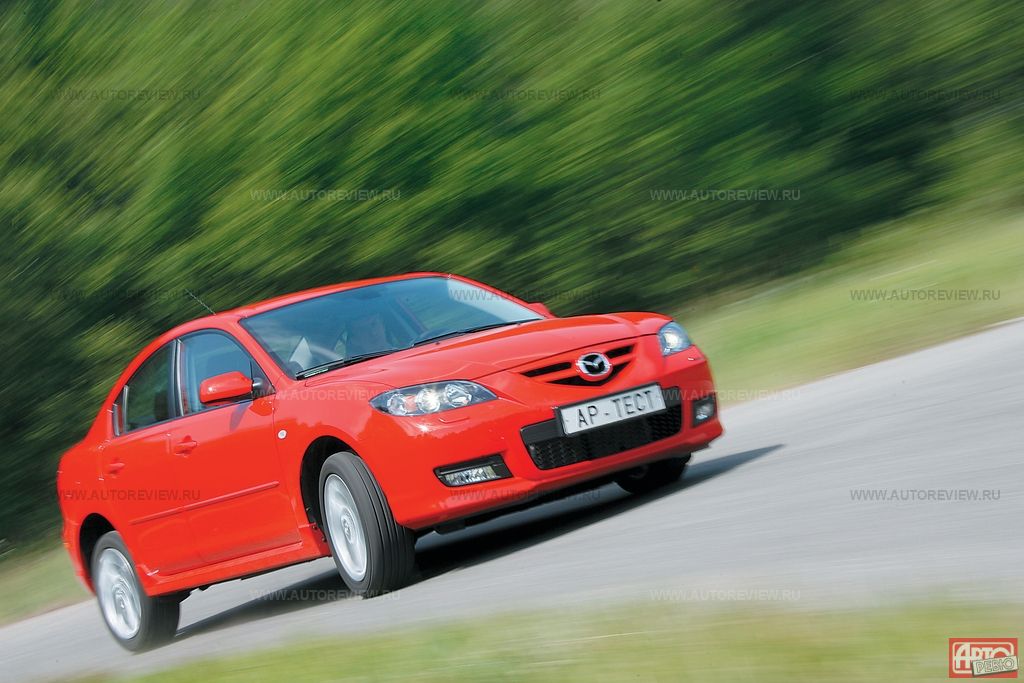
The Mazda 3 sedan with a 1.6 engine (105 hp) costs from 465 thousand rubles ($18,900). The modification with an automatic will cost at least 554 thousand rubles ($22,520). The stylish interior of the "three" has sporty notes and excellent ergonomics, and the rear bench is convenient for seating. Details — in AR No. 7, 2004 and AR No. 13—14, 2007.
The Mitsubishi Lancer with a 1.5 engine (109 hp) costs 482,130 rubles ($19,600). The extra charge for a four-speed automatic is 35,110 rubles ($1,430). The Lancer's interior looks solid, and there is enough space in the back seat. Details — in AR No. 13—14, 2007.
The Hyundai Elantra in the base version with a 1.6-liter engine (122 hp) costs 489,900 rubles ($19,910). The sedan with an automatic gearbox — from 549,900 rubles ($22,350). The Elantra's rear bench is spacious, but the front seats are not very comfortable. Details — in AR No. 8, 2007.
| Chevrolet Lacetti | Mazda 3 |
 |  |
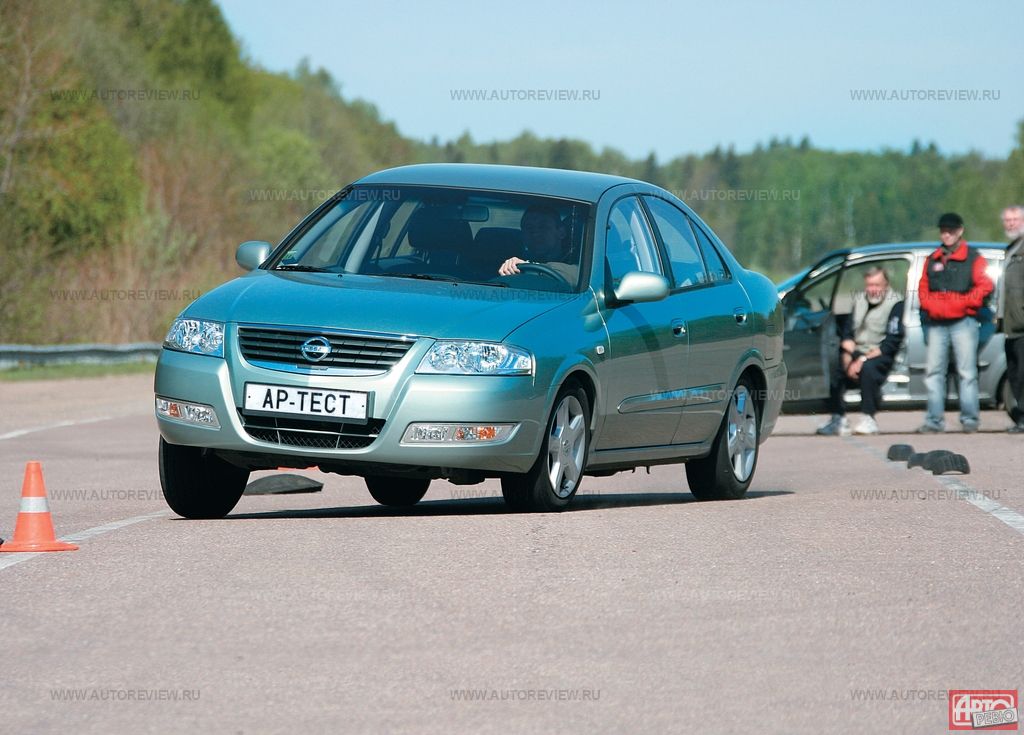
| Nissan Almera Classic | Suzuki Liana |
 |  |
The Opel Astra sedan, equipped with a base 1.6-liter engine (115 hp), is priced at 497 thousand rubles, equivalent to $20,200. If you choose the version with a 1.8 engine (140 hp), the price rises to 558 thousand rubles ($22,680). For an Astra with the "robotic" Easytronic gearbox, you will have to pay 548 thousand rubles ($22,280), while for the 1.8 engine a classic automatic is provided, and such a car costs at least 598 thousand rubles ($24,310). The Astra's interior looks stylish, and passengers in the second row do not have to complain about a lack of space. More details can be found in AR No. 20 for 2007.
The Honda Civic sedan with a 1.8-liter engine (140 hp) is sold for 507 thousand rubles ($20,610). The modification with an automatic transmission will cost the buyer at least 581 thousand rubles ($23,620). The Civic's interior is made in a futuristic style, but remains practical; there is enough space on the rear bench, although it is not easy to get comfortable there. Read details in AR No. 13—14 for 2007.
In addition, the Nissan Almera Classic sedan (1.6 L, 107 hp) continues to be present on the market — a direct predecessor and, in fact, an internal rival to the Tiida. The initial configuration of the "Korean" Almera costs 382,100 rubles ($15,530), while the top SE version will cost 473,800 rubles ($19,260). Interestingly, this is 26,100 rubles ($1,060) cheaper than the base Nissan Tiida sedan with a comparable set of options. True, the Almera's interior is noticeably more cramped than the Tiida's. Details — in AR No. 11 for 2006.
* Prices are given at the exchange rate of $1 = 24.6 rubles.