
Toyota Avensis

Third generation
Engine — 1.8 L
Max power — 147 hp/6400 rpm
Max torque — 180 Nm/4000 rpm
Max speed (km/h) — 200
Acceleration 0-100 km/h — 10.4 sec
Fuel consumption:
combined — 6.7
city — 8.6
highway — 5.6
Multidrive S CVT
Curb weight — 1580 kg
Length — 4695
Width — 1810
Height — 1480
Tires
«Elegance Plus» trim
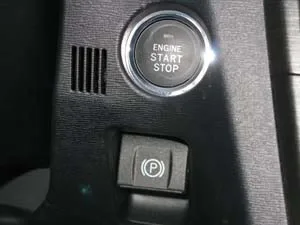
Dual-zone climate control, leather multifunction steering wheel, rain and light sensors, smart entry and start system, electronic parking brake, seatback hatch, 4 power windows, front fog lights, rear parking sensors, AUX audio input, audio system with 6 speakers CD/MP3/WMA + Bluetooth, 7 airbags including knee, active headrests, emergency braking signal, VSC+, TRC, ABS, EBD, BA.
Service interval: 10,000 km
Service 1 — $236 (1,884 UAH)
Service 2 — $258 (2,062 UAH)
Service 3 — $236 (1,884 UAH)
Service 4 — $398 (3,184 UAH)
Service 5 — $236 (1,884 UAH)
Service 6 — $258 (2,062 UAH)
Service 7 — $236 (1,884 UAH)
Service 8 — $398 (3,184 UAH)
Service 9 — $236 (1,884 UAH)
Service 10 — $258 (2,062 UAH)
Warranty — 3 years or 100,000 km.
Price — $35,944 (287,550 UAH)
Base — $27,659 (221,266 UAH)
Competitors: Mazda 6, Honda Accord, Mitsubishi Galant, Volkswagen Passat, Opel Vectra, Nissan Teana.

Marat Makhmutov
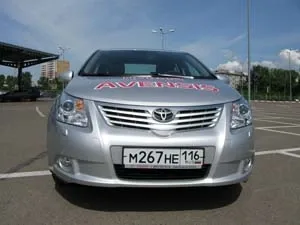
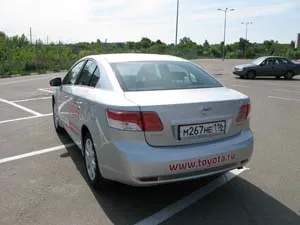
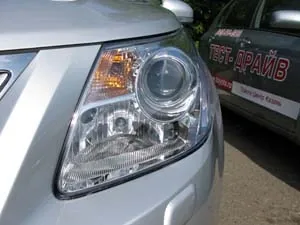
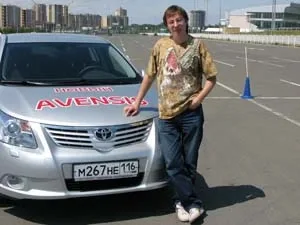
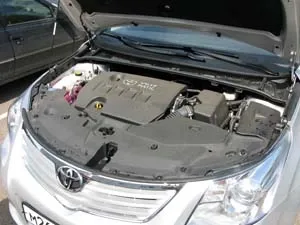
Finally, we got our hands on the most anticipated “hot” premiere of this year — the third-generation Toyota Avensis. The first Avensis debuted back in 1997, and the current one arrived exactly 12 years later. Although official sales of the new model started back in April, dealers had no test cars — only now we were given a silver sedan in the traditional test Toyota color, and after completing the paperwork, we take it for a while. What immediately catches the eye is the unchanged silhouette and increased dimensions (more on that later), and the fact that the hood is held up by a simple steel prop. Where are the promised gas struts? After all, this is a solid family sedan whose previous generation became a bestseller in our class. Or is it “good enough”? But it seems the savings ended with the little things — in everything else, the third Avensis truly impresses. It has something to boast about: it has become 50 mm longer and wider, the front pillars are moved forward by 110 mm, and the rear ones backward by 50 mm, giving more space to all passengers. The tunnel that used to bother the middle rear passenger has also disappeared — the floor is now almost flat, like in a minivan, which is rare for sedans. The exterior follows the corporate style, maintaining continuity with the second generation but adding sportiness thanks to a more dynamic profile. This is emphasized by characteristic stampings on the sides and lower parts of the doors. The large headlights resemble the flagship Lexus LS, the hood is like a SAAB's, and the taillights with LED spiral: beautiful, stylish, solid, and in line with modern trends.
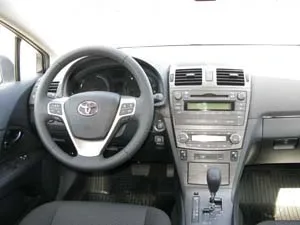
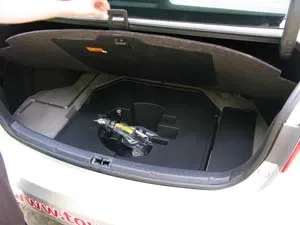
Our test car was not in top trim: no leather interior or multimedia with color screen and hard-drive navigation. But even in base, there are seven airbags, including a driver's knee airbag, and the interior pleased with material quality. The dashboard plastic and door trim have a pleasant texture and are soft to the touch, and the front seats with many adjustments are comfortable. I especially note the black inserts made of Japanese bamboo charcoal — “takesumi” — they harmonize with the plastic and look striking, unlike standard “wood” trim. The “optitron” instrument panel with orange backlighting, and the numbers on the speedometer and tachometer are additionally highlighted in white for better readability. Instead of the usual dials for temperature and fuel gauges, there are vertical bar graphs that, although small, do not hinder perception. The front seat heating knobs are placed on the dashboard under the climate control unit. The steering wheel has a pleasant thickness and adjusts for both reach and tilt. Rear passengers are comfortable, but tall ones may lack headroom: the sporty look is achieved partly by a strong slope of the rear roof. The 509-liter trunk will carry everything needed in most cases.
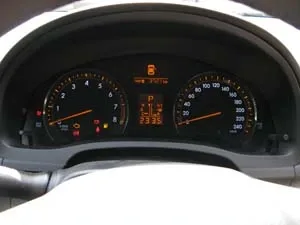
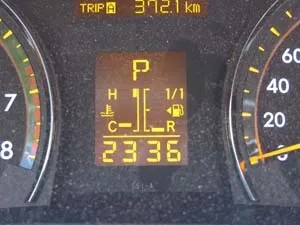
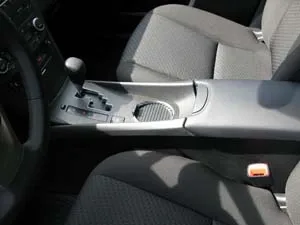
Now about what is hidden from view during an external inspection — the main thing in the new generation is inside, in the technology. First of all, these are the new Valvematic gasoline engines. Diesels available in Europe are still banned here. In gasoline engines, not only valve timing changes, but also the lift height of intake valves, which improves combustion, increases power, and reduces fuel consumption and toxicity. The test car has just such a 1.8-liter engine with 147 hp and 180 Nm, paired with a Multidrive-S CVT with seven fixed steps that are shifted by the selector, and the gear number is shown on the instrument panel. My first impression of the ride I got as a rear passenger. Sitting is comfortable, with a decent gap between my legs and the front seatback. The hatch to the trunk and the armrest with cupholders set the mood for calm driving. In this mode, you don't particularly feel the power characteristics, but the suspension stiffness is felt in direct proportion to the road quality.
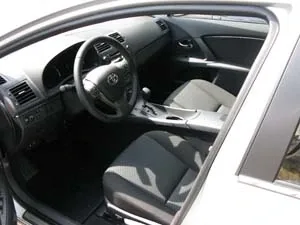
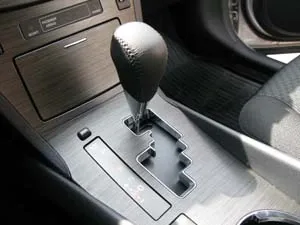
Tires 215/55 on seventeen-inch wheels seem excessive on roads of dubious quality — higher-profile wheels of smaller diameter would be more appropriate here. Looking ahead, I'll say: 17 inches is the optimal choice for lovers of active but not extreme driving on good roads. Along the way, I note excellent sound insulation, decent sound from the stock audio system, which can be controlled via steering wheel buttons, and a Russian-language onboard computer. Climate control in cooling mode works perfectly: after the hot July sun, the cabin cools down very quickly, only lacking air ducts on the middle pillars. I got behind the wheel outside the city, which contradicts our tradition of starting tests in the city. But where else can you feel the increased performance of the new engine, if not on a high-speed highway? And I felt it! In normal mode with the selector in “D”, the car accelerates quickly and confidently, but without a zest. At the same time, there is no tedious whine typical of conventional CVTs — by noise, it's a typical modern fast automatic. Pressing the “Sport” button next to the selector transforms the dynamics as if the car itself pushes you to drive actively. It seems to egg you on: “Come on!” Instant throttle response, excellent acceleration — and this is a family sedan with a small engine? Here it is, proof of modern Japanese technology! And the extra cost for the two-liter engine, which is only 6 hp more powerful but falls under noticeably higher taxes, seems questionable.
The final stage of the test took place on a site where they usually practice the “slalom” and “lane change”. And here the new Avensis showed itself from the most advantageous side. The previous body roll and inexpressive steering are a thing of the past. On the “slalom”, the car held confidently, without noticeable leans even at speeds around 80 km/h (of course, according to the speedometer), the electric power steering filled with pleasant heaviness and seemed to guide the car onto the desired trajectory itself, and the VSC+ stability control worked correctly and unobtrusively. It seems this is the benchmark for handling for a modern family sedan. For such behavior, I'm ready to forgive it the suspension, which at first seems a bit stiff, because this is the first truly driver-oriented golf-class car from Toyota. Of course, there are more interesting cars in this regard, but they mostly belong to the premium segment and cost completely different money. But to its compatriots from other brands, the third-generation Avensis is perhaps capable of giving a serious head start.

Vadim Sadykov,
“Autoclub-Kazan”
Being an owner of a second-generation Avensis, I awaited the new model with great interest. The main question was whether Toyota's engineers managed to make a leap in technology, materials, and comfort level. I'll start with the inspection. I won't dwell on the exterior — there's no accounting for taste, and everyone sees beauty in their own way. I'll only note that automotive fashion does exist: some exterior elements have already been seen on other fresh models.
So, I got my hands on a car with a 1.8 engine (147 hp), a CVT, and the “Elegance+” trim. I get behind the wheel and first of all note the excellent steering wheel. I’ll say right away that both in appearance and settings it’s noticeably better than on my Avensis2, where the wheel feels a bit empty. I was about to use the electric seat adjustment, but found that here the drive is mechanical. Adjusting the backrest tilt even caused a delay: I had to call a manager for help. It turned out you need to pull the lever up and lean the backrest with your own weight. The previous method with a few clicks of the lever is more familiar to me; it allows you to select the position more precisely. The plastic has become better quality and more pleasant to the touch. But the fuel filler flap release button is now hidden deep down under the steering wheel. At the gas station, I had to fumble around quite a bit to find it. In my Avensis2, this button is located on the door under the armrest, which is much more convenient. Moreover, next to it, also down there, is the stability control off button! How you can press it while driving without taking your eyes off the road is beyond me. For comparison, on the Avensis2, the traction control off switch is placed near the steering wheel, and you can find it blindly without risking a miss.
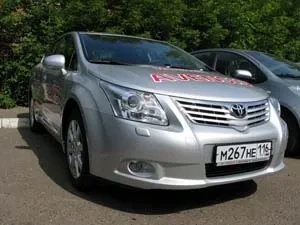

Let me briefly digress from the inspection and compare the functionality of these buttons. On the Avensis2, the traction control off works constantly until you turn off the engine or trigger the ESP. On the Avensis3, the ESP off works only up to a speed of 40 km/h.
Let’s return to the interior. The rearview mirrors have become neater and narrower. True, visibility has suffered a bit because of this. Sometimes you have to rock back and forth to fully assess the situation behind. I remember how my wife and I took a long time to get used to the narrow mirrors on the Corsa D after the big “burdocks” on the Corsa C. I believe that safety on the road depends much more on how well you see everything around you and can anticipate other drivers’ maneuvers than on virtuoso steering control. Another disappointing moment is that the pop-out cup holder near the air vent is gone. It’s a pity; in summer I often put water there to keep it cool. Of course, some managed to flood the radio by tipping over an open cup during a sharp maneuver. But the problem was easily solved with a closed bottle. And it’s completely unclear why the glove box isn’t cooled. I thought that was already standard for the D-class.
I move to the back row. There’s noticeably more space here. Plus, the central tunnel has disappeared — the floor is now completely flat. True, for the sake of a beautiful silhouette, the rear glass area had to be sacrificed, and it has become smaller. In the trunk, there’s also a change: the side niches for small items are gone. The audio system, in my opinion, plays decently for a stock one, but slightly weaker than in the Avensis2. Perhaps it’s a matter of the number of speakers — there are two fewer. Or maybe it just seemed that way to me. Although in the new Camry with the same six speakers, the sound is definitely worse.
Sound insulation is top-notch. Even at 150 km/h, it’s quiet in the cabin (apparently, those narrow mirrors help).
Now about the suspension. The car was on 215/55/17 tires (the Elegance trim comes with 205/60/16). The suspension is very stiff, especially at low speeds — at 70 km/h, bumps are passed more softly. But in return, excellent handling. Perhaps, on the “snake,” the Avensis2 was worse and rolled more. In terms of road behavior, the Avensis3, I think, is the best in the D-class (I specifically paid attention to this during all tests). But they probably overdid the stiffness. On 16-inch wheels, it will be more comfortable.
The CVT. Overall, I liked it. Unlike others, it doesn’t hang at 6000 rpm (an outdated algorithm) and doesn’t imitate an eight-speed automatic (modern settings). Here it’s some kind of average but quite decent option. More details about the differences in CVT behavior can be read in an article on the “Autoclub-Kazan” website. Drive mode is clearly tuned for economy (like the Accord, Fiesta, Corsa): with a sharp press on the gas, there’s a delay and some sluggishness, but at speed the car drives easily. Subjectively, it accelerates from a standstill harder than my Avensis2 (1.8, 129 hp) with a manual. Sport mode transforms the car — it becomes a real lively one. I really liked this duality: economy in Drive and aggression in Sport. Based on our test results (city, highway, test site), the average fuel consumption was 11.5 l/100 km, which is not close to the claimed 8.5 l in the city cycle.
Overall, after the test drive, I liked the Avensis much more than before. A worthy car.
Alfred Mardanov,
“Autoclub-Kazan”
Here’s another new product that was tested in our newspaper. The Avensis is perhaps one of the most anticipated and timely new products from Toyota. While the Rafik managed to be updated three times, and the fundamentally new Corolla and Camry appeared, the Avensis had to make do with only modest cosmetic facelifts. But the current generation, it seems, has nothing in common with its predecessor. A completely new design, a fresh engine, a new transmission, and, thank God, the idea of the car has remained the same, even despite the fact that it has become more “Europeanized,” but more on that later. This model was developed in Nice, and this naturally affected both the appearance and the chassis settings. It was destined to become more presentable and solid, especially since all cars in the world are growing in size. The new Avensis has added 50 mm in length and the same in width. But thanks to a somewhat different body architecture, it looks larger, and the interior has actually become more spacious. The secret is that the front and rear pillars have been moved apart by 160 mm. The seats have become noticeably lower, which has increased headroom, but in the back you sit somewhat deep, and the window line seems higher than it actually is.
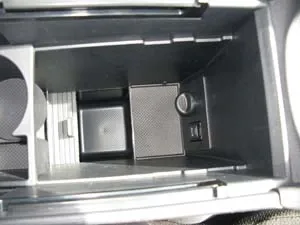
The feeling of getting into the new Avensis will be twofold. Some will appreciate the sense of security and coziness that appears when you sit deep inside the car. Others may feel like they’re in a confined space, and this will cause discomfort. But rear passengers now have access to an armrest with cup holders, and under it is hidden a hatch through which you can carry long items, such as skis. The front part of the cabin has also become more spacious, and the seat itself, in my opinion, has become noticeably more comfortable. The steering wheel deserves special mention — I think I’m not the only one who liked it. It has become thicker, fits more pleasantly in the palms, and when it fills with heaviness at speed, holding it is a real pleasure. I can’t ignore the quality of the trim materials — here the car can safely be given the highest score. The soft plastic of the panel is pleasant to the touch, but what I liked most was the front panel. I admit, I don’t know exactly what this finish is called, but it looks very impressive: an original rough texture in dark tones, resembling something woody in texture. With this arrangement, the more “senior” Camry no longer looks so advantageous. And in price, it will likely yield: some Avensis trims will be cheaper. Why Japanese management makes such marketing decisions is a mystery; apparently, you need to be imbued with their philosophy. I also had questions about the exterior. Who borrowed the characteristic semicircular hood line from whom — Nissan from the Tiida or still Toyota? Apparently, the market works on the principle of “first come, first served.” Since the Tiida appeared earlier, the primacy remains with it. I didn’t like this hood shape there, and I don’t like it here, as well as the whole front end in general. It turned out to be overloaded with details, and the overhanging, big-browed hood gives the look severity and strictness.
But in profile and from the rear, the new Avensis looks very decent. Thanks to the greater angle of the front pillars and the sloping roof that smoothly transitions into the high trunk lid line, the silhouette looks, I would say, dynamic and even sporty. By the way, Toyota engineers do not hide their pride in aerodynamics: the drag coefficient of the car is only 0.28 (for comparison, the Honda Accord has 0.26). Safety is also a point of pride. The body frame and crumple zones have been improved, a pedestrian-friendly hood, active headrests, and seven airbags are used, including a driver's knee airbag, and this is already in the base trim. There is no need to mention the electronic assistants, although one is worth mentioning. This is the VSC+ stability control system, which, in addition to its direct tasks, also tells the driver which way to turn the steering wheel. I did not feel this function myself. It would seem that the 'slalom' exercise is an ideal case for testing, but no. However, the car itself showed a truly fighting spirit in the slalom. Such a solid car with a colonel's rank should not run around like a sergeant. It should, with a slight beer belly burdened by military experience and a barely noticeable contemptuous smile, watch the privates, rather than show by its own example how to overcome an obstacle course. But here you go! Disabling VSC+, as expected, only pushes its activation threshold into a more extreme steering zone, rather than completely turning off the system. A reasonable solution for a family car. So, returning to the 'European' idea I mentioned at the beginning, let me explain. European cars, as a rule, are distinguished not only by meticulous attention to trim materials, but also by a more tenacious, stiffer, and more controllable chassis. Our Avensis 'sins' with this. It has become noticeably stiffer (hence its excellent handling), but I would prefer a slightly calmer character — Russia, unfortunately, is not Europe yet. But the interior trim is frankly pleasing, and here I am ready to count myself among the Europeans. That is why Camry loses to Avensis in this matter — it is not sold in Europe.