
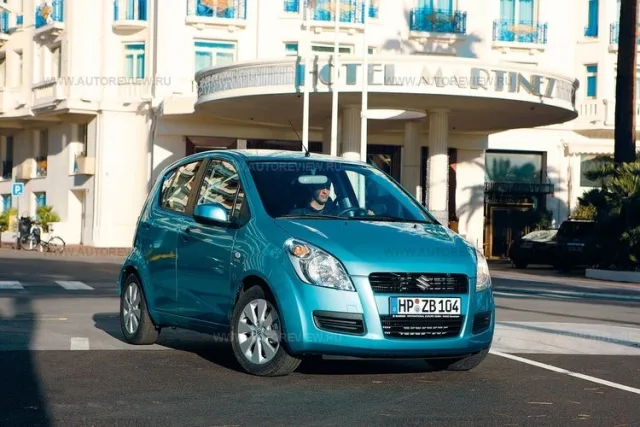
“What's in a name?” — this question from a classic poem is quite apt here. The name Suzuki Splash, which translates as “Splash,” is full of optimism. It evokes the quiet lapping of waves, the ringing drops from spring puddles, and even the cheerful bubbling in a glass of something festive…
And the car itself looks quite attractive. But will it find its buyers in Russia?
Imagine life in an old Soviet panel building — a typical one-room apartment with low ceilings, where the main achievement of civilization is a separate bathroom. Would you want that for your family?
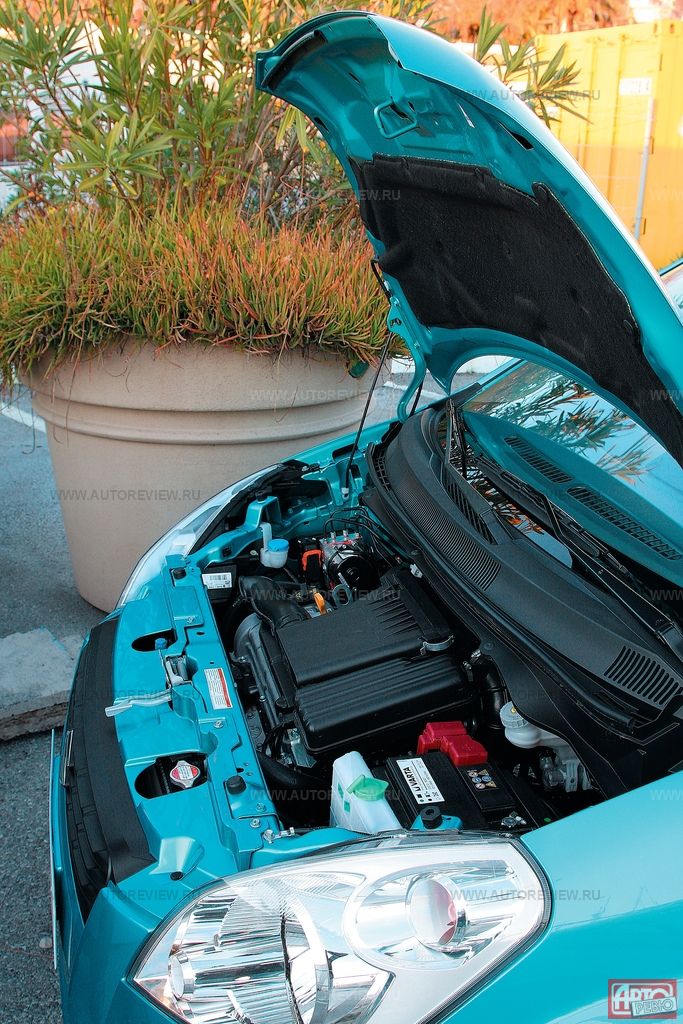 |
| The 1.2-liter engine sounds unusually quiet for Suzuki — and can work with a full-fledged “automatic” |
But if you don't have your own housing, then even a Khrushchev-era apartment is a blessing. You can freshen up the walls with paint, replace the windows with modern double-glazed units, pop into IKEA for stylish furniture… And the cramped space? You can come to terms with that.
It's much the same with the Suzuki Splash: it's a tiny one-room apartment, but with quality European-style renovation. It's modest, but quite sufficient. No reach adjustment for the steering column? That's fine — it's enough that the steering wheel from the Suzuki SX4 moves up and down on a long arm, the pedals are positioned comfortably, and your hand naturally finds the gearshift lever on the protrusion of the center console. The rear bench lacks a center armrest, and the role of door handles is played by recesses in simple plastic protrusions? That's not a problem either: the Splash sits on the platform of the Suzuki Swift hatchback, but the seats here are raised 5 cm higher, and this seating position allowed an “adult behind an adult” — albeit closely, with knees touching the backs of the front seats, but without a feeling of crampedness.
However, the trunk is disappointing — only two hundred liters, and that includes the narrow and deep “underfloor” area. You can't slide the rear bench like in the Toyota Yaris or Renault Modus — the Splash doesn't have that capability. At the same time, Suzuki positions the Splash as a “stylish mini-MPV with a spacious interior.” MPV stands for Multi-Purpose Vehicle, meaning “multifunctional car.” But in reality, the Splash differs from its platform sibling, the Swift, only by a couple of centimeters of extra headroom and legroom for rear passengers. And as for signs of multifunctionality — there's just the rear bench that folds flat with the floor.
That's a bit too little…
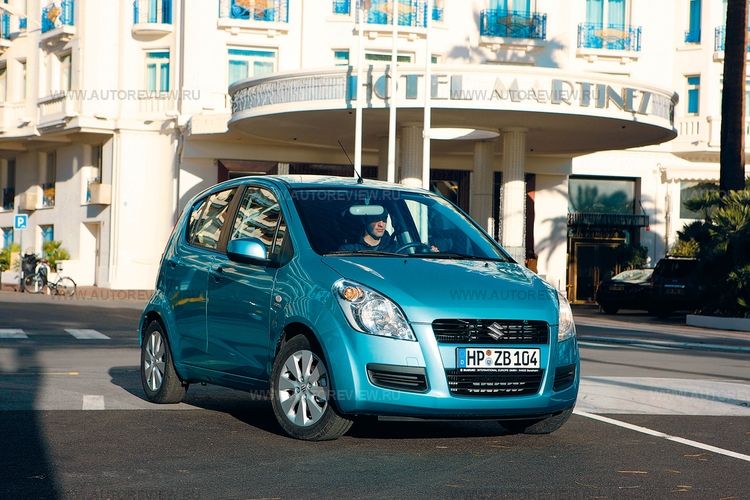
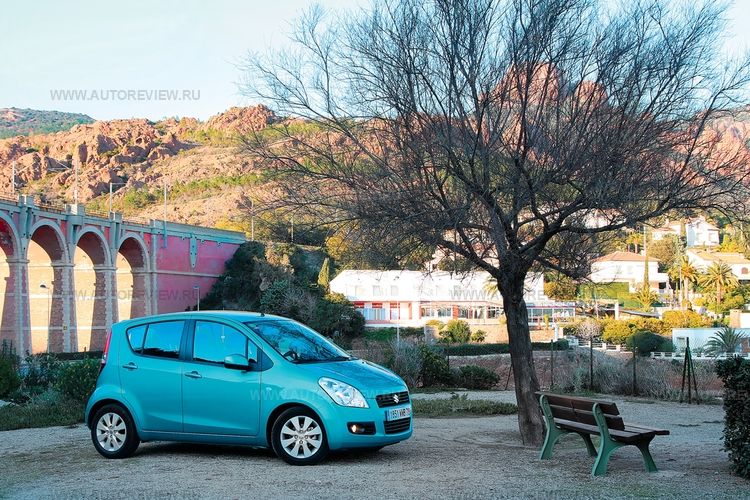
The main difference is the appearance. If the Swift is a kind of “Japanese Mini,” then the Splash resembles a budget version of the Mercedes A-Class: primarily due to the tall body and the characteristic kink of the rear pillars with integrated large optics. But sporty touches are present too: a three-spoke steering wheel and an aggressive trapezoid of the false radiator grille with energetic stampings on the short hood.
Suzuki's motorcycle spirit?
By the way, I know about the “Suzuki spirit” firsthand — I spent six months driving the all-wheel-drive mini-crossover Suzuki SX4 with a manual. No wonder our Divakov fell in love with that car! Yes, it's noisy and rattly, and the 1600cc engine doesn't shine with torque. But how fun the SX4 is through corners, how honestly and well the chassis is tuned!
So I expected the same from the Splash — a lively character, like a morning pensioner doing exercises.
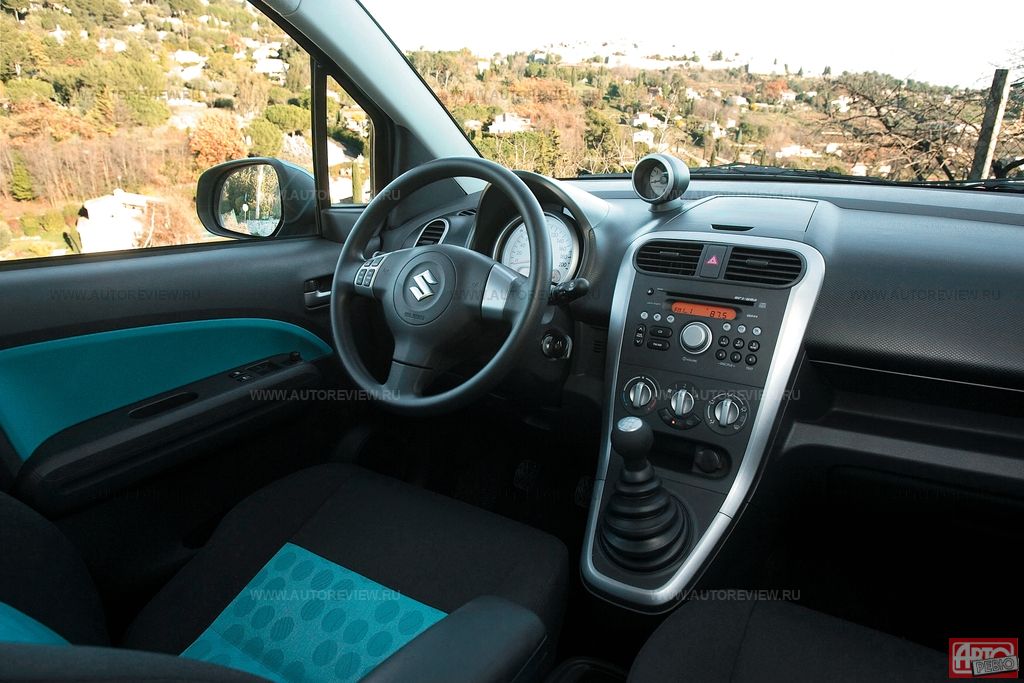 | 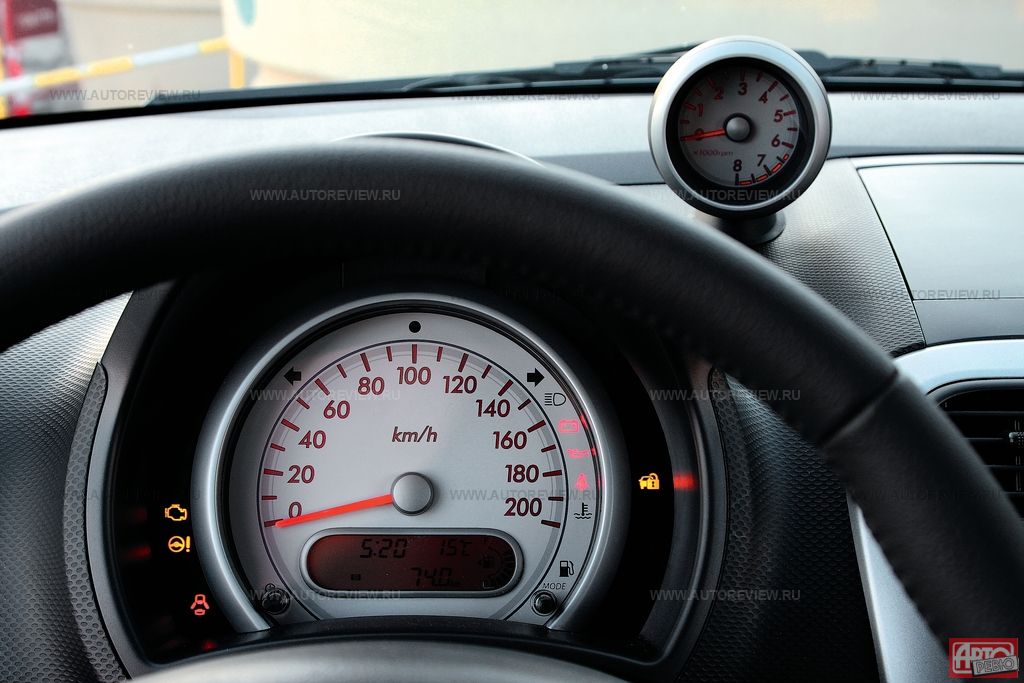 |
| Interior: simple and neat, but without frills and made of inexpensive plastic. The steering wheel and seat height adjustments are enough for a comfortable driving position, but after an hour behind the wheel my lower back started to ache — the seat profile is too “flat”… | The funny saucer-shaped speedometer is easy to read, but the fuel level indicator in the corner of the display — alas, not very. A comical tachometer on a stalk — for an extra charge |
 | 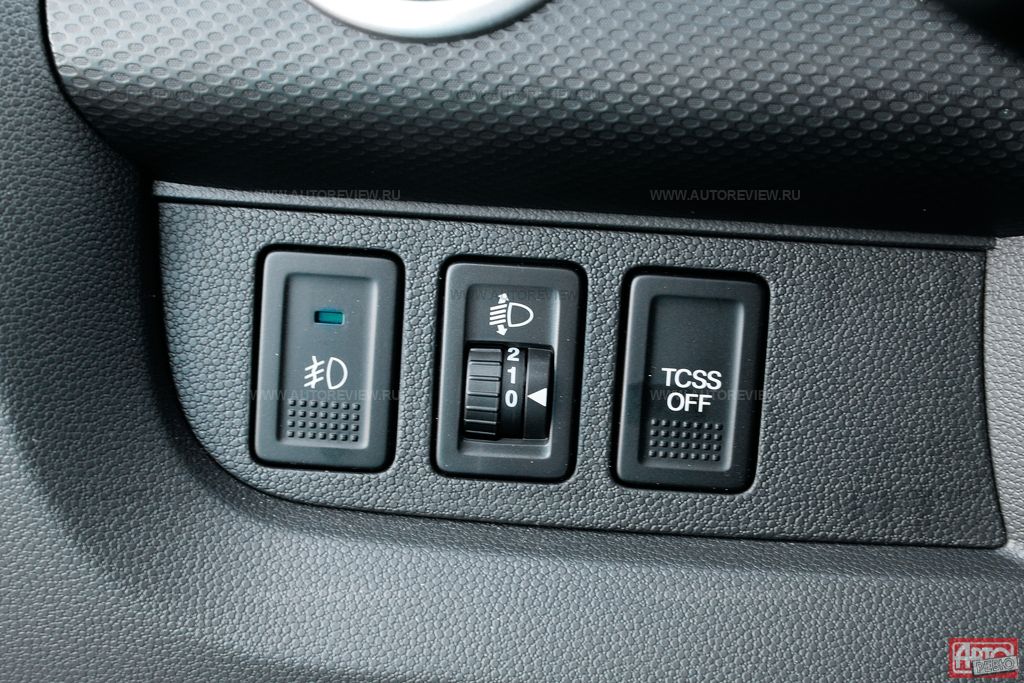 |
| The spacious glovebox with a shelf is complemented by an opening compartment on the panel. To the left of the steering wheel is the traction control off button | |
The start is accompanied by the growl of the 1200cc engine. For Suzuki, the engine is unusually quiet — in the new sixteen-valve K12B, the air conditioning compressor is bolted rigidly to the block to increase rigidity and reduce vibrations, and a common aluminum oil pan connects the crankcases of the engine and transmission. As for torque? If you think sensibly, 86 hp and 114 Nm for a car with a curb weight of about a ton is quite good. True, the engine pulls well only in the range of 2000–5000 rpm — perhaps the “environmental” restrictions like intensive exhaust gas recirculation, which helped obtain the Euro-4 certificate, are to blame. There's a lack of “bottom end,” which, combined with the short-throw clutch pedal, forces you to rev up when starting. And there's no point in revving the engine above 5000 rpm — it “wilts.”
However, on the French highway, the Splash 1.2, even with three passengers on board, can push the needle of the funny saucer-shaped speedometer to the “180” mark. And on the mountain road winding along the Côte d'Azur coast near Nice, the little Splash is in its element: it growls with its engine, with the TCSS button pressed, it spins the front unloaded wheel on exits from corners… The abbreviation TCSS stands for Traction Control and Stability Support: the Japanese wanted to use the usual abbreviation ESP for the stability system, but stumbled upon the Mercedes patent and came up with their own abbreviation. The system here is non-switchable — pressing the button only loosens the reins of the traction control. But TCSS works carefully, interrupting the skid after the start of sliding and not significantly reducing speed.
It's a pity that the chassis is tuned worse than the SX4's. On one hand, there's a hint of sportiness — the suspension is firm, causing the Splash to shudder heavily on the rare imperfections of French asphalt (what will it be like on Russian roads?), and the steering is “heavy” even when parking. But the electromechanical power steering causes “sticking” of the steering wheel during rapid rotation. And the desire to tune the suspension to reduce understeer and make the car easier to enter corners backfires at speeds above 120 km/h — the Splash becomes nervous. You barely touch the wheel — and it darts to the side, with a dip in effort on the steering. Once the transient processes end and the Suzuki settles into the arc, the steering “heavies up” again. But this sharpness, not backed by proper feedback, at high speed makes you grip the Suzuki's steering wheel rim with double force.
It seems to me that the Swift, with its lower center of gravity and more powerful engines, drives more interestingly than the Splash...
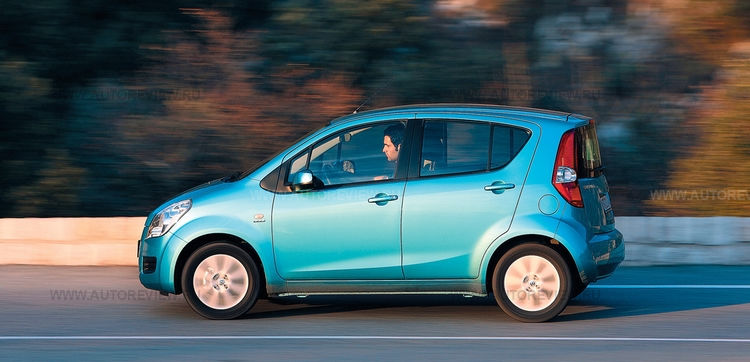
So why is the Splash needed?
Previously, in its place, the touchingly angular Suzuki Wagon R+ was produced: short (only 3.5 m in length), tall (170 cm), but with a 300-liter trunk. Now the Wagon R+ has been taken off the production line at the plant in Hungarian Esztergom, and its place has been taken by the Splash. Did the Japanese miscalculate with such a replacement — for a more stylish but less functional car? And with them, the Opel folks too — because the Splash, like the Wagon R+ before, has a twin called the Opel Agila, differing only in styling. Will the Suzuki Splash repeat the fate of its classmate — the small one-box Renault Modus? Even for Europeans, the Modus turned out to be a bit cramped and required a “supplement” in the form of the “stretched” Grand Modus version — with a four-meter body and a 300-liter trunk. And in Russia, it wasn't needed at all — because the Nissan Note, at a similar price, is much more spacious.
We're not ready yet to overpay for compactness. After all, it's logical: why buy a one-room Khrushchev-era apartment, even with European-style renovation, if for the same money you can move into a panel new building with an “improved layout”?
However, no one says that the Splash was created for Russia. The modest volume of 60 thousand cars that will be produced annually in Esztergom will find its buyers — Suzuki is loved in the Old World, especially in Southern and Eastern Europe (in Hungary, Suzuki has 18% of the market). In Japan, where the Splash will be produced under a different name (which is still kept secret), small cars are also in demand. And in India…
In India, Suzuki is like our VAZ. Until recently, Maruti Suzuki, in which the Japanese have a 54.21% stake, held 70% of the market, and the small hatchbacks Maruti 800 and Suzuki Alto are for Indians what Zhiguli is for Russians. Of course, changes are coming to the Indian market now — Renault-Nissan is eyeing it, and Tata with its super-cheap Nano… But even with Suzuki's market share dropping to 50%, it still means undisputed leadership. And the excellent profits (about $800 million last year) are largely due to its position in India — where about 700 thousand of the total 2.2 million cars produced are sold.
By the way, there are plenty of diesel passenger cars in India. For the Splash, Suzuki, in addition to the 1.0 and 1.2-liter petrol engines, offers an excellent 1.3 DDiS turbodiesel. Essentially, this is the well-known Fiat 1.3 Multijet engine, which is assembled at the Suzuki plant near Delhi under a licensing agreement with the Italians. And what about Russia? Here we can only throw up our hands — apparently, Suzuki doesn't favor us. Last year, the company's sales reached an impressive mark — over 28 thousand cars. And one can only guess how much more successful the Japanese brand's business would have been if the quotas for the SX4 mini-crossover, so popular here, weren't so meager. And in general, what is there to talk about if Suzuki imports to Russia are still handled by only six major dealers from the capital, and the brand itself operates here not directly, but through the Japanese trading house Itochu? In the wild nineties, many did this, but times have changed. The console looks nice, the manual gearbox lever shifts quite clearly. But the audio system sounds dull, and climate control is not provided at all. And in the back, it's still a bit cramped: both an adult passenger and a child in a child seat (Isofix anchors are present) will sit right up against the backs of the front seats. Although, if you think about it, we're still lucky: in Brazil, another "brick" in the foundation of BRIC (Brazil—Russia—India—China), Suzuki cars are not sold at all. There simply aren't enough production capacities for all markets! Having started late (in the 50s, Hamamatsu was just mastering the production of mopeds) and having earned a reputation on simple, inexpensive, reliable, and economical models like the Alto and Samurai, Suzuki managed to avoid those growth problems and painful crises that Nissan, Mitsubishi, or Mazda went through. Now Suzuki's positions are strong precisely where it has a future — in developing countries and in the segment of compact cars with low CO₂ emissions. And if many auto giants are forced to cut production and reduce staff, Suzuki has the opposite — there aren't enough factories! Therefore, the Hungarian plant in Esztergom will increase assembly volumes from last year's 232 thousand cars to 300 thousand, and the list of Suzuki production sites in the world will also include an enterprise in Shushary. True, they will produce not the Splash there, but the larger and more in-demand SX4 and Grand Vitara. And the Splash… It will appear here closer to autumn — and is unlikely to cost noticeably cheaper than the Swift (from 390 thousand rubles, that is, about $16000 for the base version with a 1.3 engine, manual transmission, and air conditioning). At the same time, the Splash has neither climate control nor rain and light sensors — unlike such stylish little cars as the Nissan Micra, Ford Fiesta, or Opel Corsa. The trunk volume is from 178 to 202 liters depending on the version. Under the floor — a narrow compartment and a space-saver spare wheel. And for a family car, the Splash is still a bit cramped. Like that one-room apartment — when the person you share living space with is close to you, so to speak, with geometric inevitability. You move your elbow a little to the side — and there he is, dear… Is paradise in a hut sweet with the beloved? **Specifications** | Parameters | Suzuki Splash 1.0 | Suzuki Splash 1.2 | Suzuki Splash 1.3 DDiS | |---|---|---|---| | Body type | 5-door hatchback | 5-door hatchback | 5-door hatchback | | Number of seats | 5 | 5 | 5 | | Dimensions, mm (length/width/height) | 3715/1680/1590 | 3715/1680/1590 | 3715/1680/1590 | | Wheelbase, mm | 2360 | 2360 | 2360 | | Track front/rear, mm | 1460/1470 | 1460/1470 | 1460/1470 | | Trunk volume, l | 178—1050* | 178—1050* | 178—1050* | | Curb weight, kg | 975 | 990 (1040)** | 1085 | | Gross weight, kg | 1485 | 1485 | 1530 | | Engine | petrol, with distributed injection | petrol, with distributed injection | diesel, turbocharged | | Location | front, transverse | front, transverse | front, transverse | | Number and arrangement of cylinders | 3, in-line | 4, in-line | 4, in-line | | Displacement, cm³ | 996 | 1242 | 1248 | | Cylinder bore/piston stroke, mm | 73.0/79.4 | 73.0/74.2 | 69.6/82.0 | | Compression ratio | 11.0:1 | 11.0:1 | 17.6:1 | | Number of valves | 12 | 16 | 16 | | Max power, hp/kW/rpm | 65/48/6000 | 86/63/5500 | 75/55/4000 | | Max torque, Nm/rpm | 90/4800 | 114/4400 | 190/1750—2250 | | Gearbox | manual, 5-speed | manual, 5-speed (automatic, 4-speed) | manual, 5-speed | | Drive | front | front | front | | Front suspension | independent, spring, McPherson | independent, spring, McPherson | independent, spring, McPherson | | Rear suspension | semi-independent, spring | semi-independent, spring | semi-independent, spring | | Front brakes | disc, ventilated | disc, ventilated | disc, ventilated | | Rear brakes | drum | drum | drum | | Tires | 165/70 R14 or 185/60 R15 | 165/70 R14 or 185/60 R15 | 165/70 R14 or 185/60 R15 | | Maximum speed, km/h | 160 | 175 (170) | 165 | | Acceleration 0—100 km/h, s | 14.7 | 12.3 (14.9) | 13.9 | | Fuel consumption, l/100 km (urban cycle) | 5.9 | 6.9 (7.8) | 5.5 | | Fuel consumption, l/100 km (extra-urban cycle) | 4.4 | 4.7 (4.9) | 4.0 | | Fuel consumption, l/100 km (combined cycle) | 5.0 | 5.5 (5.9) | 4.5 | | Fuel tank capacity, l | 45 | 45 | 45 | | Fuel | petrol AI-95 | petrol AI-95 | diesel fuel | * With rear seats folded ** In parentheses — data for the version with automatic transmission