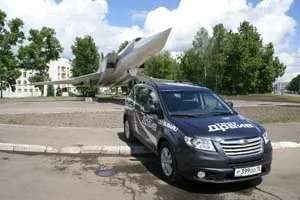
Subaru Tribeca
Teleportation behind the wheel
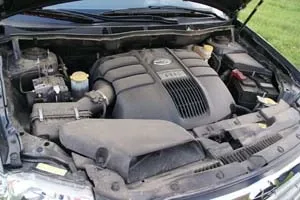
Boxer engine with a displacement of 3.6 liters
Peak output — 258 hp at 6000 rpm
Maximum torque — 350 Nm at 4000 rpm
Top speed — 207 km/h
Sprint from standstill to 100 km/h — 8.9 seconds
Fuel consumption (liters per 100 km):
in the city — 16.2
on the highway — 9
in combined cycle — 11.6
Transmission — 5-speed automatic
Permanent all-wheel drive Symmetrical AWD
Ground clearance — 210 mm
Body length — 4865 mm
Width — 1880 mm
Height — 1720 mm
Curb weight — 1908 kg
Tires 255/55R18
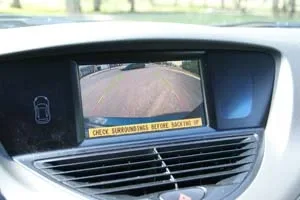
Equipment: dual-zone climate control, ABS+EBD, VDC, 6 airbags, color rear-view camera, alloy wheels, electronic package, DVD for rear passengers
Price of the test vehicle — $60,693 (485,542 UAH), starting configuration — $57,781 (462,241 UAH)

The company's history begins in 1917, when young engineer Chikuhei Nakajima founded the Aviation Research Laboratory in the town of Nakagame. In those days, aircraft manufacturing in Japan was considered a hopeless endeavor — the country simply had no aviation of its own. However, Nakajima's talent eventually found its application: after the reorganization in 1931, Nakajima Aircraft Co. Ltd. appeared, and the company actively worked for the military might of the Japanese Air Force, receiving orders from them until 1945. In the militarized economy of imperial Japan, the military was the main customer for aircraft manufacturers, so it is not surprising that Nakajima Aircraft's products managed to see combat — Pearl Harbor, Midway, Guadalcanal, the Solomon Islands, the Philippines, and Okinawa long remembered the silver aircraft with red circles on their wings. After the surrender, the company was renamed Fuji Sangyo Limited. Since defeated Japan was forbidden to have an army, the enterprise had to reorient itself to civilian products: motorboats, railway cars, gasoline engines, and buses. There was no real automobile production at that time. After working without much success in various directions, in 1950 the diversified production split into twelve independent firms, which nearly buried Fuji Sangyo Limited. But already in July 1953, six of the strongest divisions reunited and created Fuji Heavy Industries. The first president of the corporation, Kenji Kita, had a firm conviction: "If you make cars, make perfect ones. A Japanese car must bear a Japanese name." When the first prototype of the passenger car R-1 was built in 1954, Kita announced a competition for a name. However, no proposal seemed successful. Then the president himself chose the name — Subaru. The corporation then developed rapidly: high technology, engineering foresight, and commercial acumen brought the company forward. Later, the lineup included diesel buses, Rabbit scooters, chainsaws, and even jet aircraft.
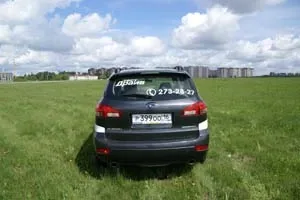
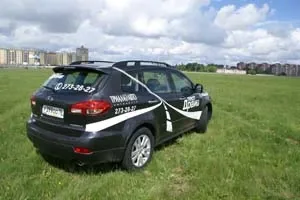
The public premiere of the Subaru B9 Tribeca took place in January 2005 at the North American International Auto Show, where the model was presented by the brand's American division. The Tribeca is positioned as a new-generation SUV in the crossover concept. At its core is symmetrical all-wheel drive AWD, an automatic transmission, and a 3.6 DOHC boxer engine. With a ground clearance of 210 mm, the car retains all the advantages of an SUV while remaining maneuverable and stable. The exterior was designed with energetic drivers in mind. The interior comfortably accommodates seven adults, and the three rows of seats can be flexibly reconfigured. In addition, a DVD system and thoughtful lighting make the trip comfortable for all passengers. The Tribeca is the flagship of the Subaru model lineup.

Marat Salimulin, Commercial Director of OJSC "INOX"
Subaru cars have long attracted my attention, but in the brand's lineup there was no suitable option for me — I was not satisfied with the dimensions. I prefer large cars. And now, finally, listening to customers, Subaru has expanded its range with a large model — the "Subaru-Tribeca."
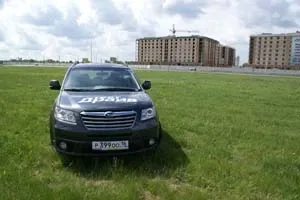
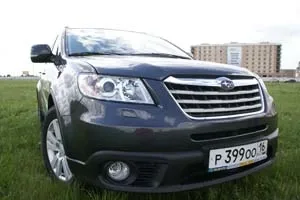
When I was offered to take a ride in this car, I agreed without hesitation. A clear sunny May morning, near the "Trial-auto" showroom stands a brand-new "Tribeca." Light tweaks in the design made the car's "face" more pleasant. The exterior does not try to be revolutionary, but you cannot call it outdated either — although for Subaru, the main thing has always been not the design, but the technology, handling, and dynamics.
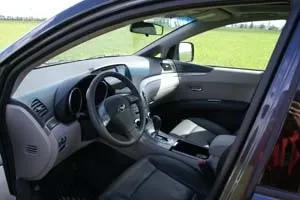
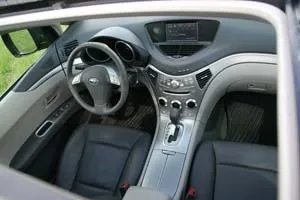
The first thing you notice is that the interior is done in a truly "Japanese" style. The driver's seat and front passenger seat resemble a "sports car" cockpit, which is quite expected. Some buttons of the climate control system look controversial, but additional options:

DVD entertainment for the rear row with the ability to display the picture on the front screen, and most importantly — a large touchscreen display and an intelligent color rear-view camera — more than compensate for individual design flaws. The driver is comfortable: the instruments are easy to read, everything is done in the spirit of "high-tech." Analog needles remain only on the speedometer and tachometer, while other indicators are displayed as clear pictograms.
The onboard computer screen also controls the six-disc CD player, and all control functions are obvious — you simply touch the monitor.

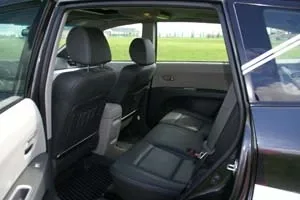
For rear passengers, as I mentioned, there is an autonomous "DVD system" with headphones and comfortable seats that can be folded into a sleeping place if desired. Sound insulation is decent, but some external sounds still penetrate into the cabin.
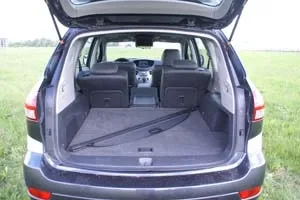
The trunk is spacious and roomy.
Enough about the design, let's move on to the main thing — the sensations behind the wheel!
The car handles incredibly easily: you get the impression that it does not accelerate, but, as in a science fiction movie, — teleports. Without the slightest strain or "growling" from under the hood, the car carries you and your family to any point in the Universe, easily overtaking columns of "space trucks" and "other starships."
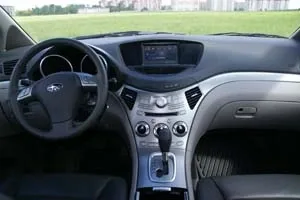
The suspension is quite soft — equally well suited for both the highway and the city. The automatic transmission modes allow you to drive in standard mode or switch to "Sport." Sport mode is a separate story: the engine holds high revs longer than usual, which provides more torque and accelerates the car more energetically. In corners, the car feels at home: no rolls, no drifts. I currently own a "Volvo XC90" with a 3.2 engine, and previously drove a "Lexus RX 350." I can confidently say: the "Subaru Tribeca" is not inferior to both rivals in characteristics, but in spirit and dynamics, it is closer to the "Lexus RX 350" than the "Volvo XC90." So the choice is yours.

Alfred Mardanov, newspaper "Autoclub-Kazan"
Saturday morning met me with a fierce reluctance to wake up. The alarm showed nine in the morning, and although on weekdays I am already on my feet for a couple of hours at this time, the weekend is sacred. The body persistently demanded to continue watching dreams, and only the thought of the upcoming meeting with the updated Subaru B9 Tribeca forced me to get out of bed. On the way, I caught myself thinking that if my car were automatic, I would definitely doze off behind the wheel. Fortunately, the car was given to us without delay, and we could get down to business. I admit, I still blame myself for not taking the Tribeca for a test as soon as it went on sale. Okay, we will make up for lost time.
The previous Tribeca looked, let's say, big-headed and provocative — with a kind of angry squint. The new version is already a calm, even solid car. The changes affected not only the nose but also the rear: sharp edges gave way to softer, smoother lines. But the interior remained the same — with all its advantages and disadvantages. The engineers decided not to touch either the engine or the chassis, leaving them in their original form. The most surprising thing is this contrast: externally the car looks almost conservative, but inside — real futurism.
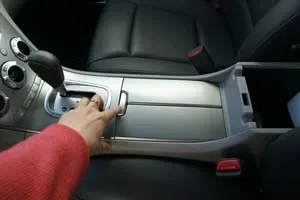
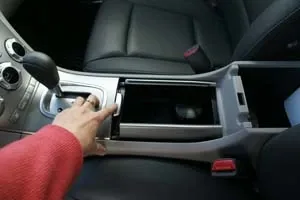
The center console is something fantastic: a fancifully curved panel, studded with buttons, with a color screen that can work both as a DVD display and as a rear-view camera monitor. The screen, by the way, is touch-sensitive, but while driving, touch control is disabled — only the buttons on the steering wheel remain. Logical and safe. I'll separately note the climate control unit: three rotary knobs, like many Japanese cars, but they work not by turning, but by push-pull, and inside each is a temperature indicator. The seats could be profiled a bit deeper, especially in the lateral support area — the contour is somewhat blurred. But the range of adjustments is huge, so anyone can get comfortable. I didn't even touch the steering wheel — I immediately found a comfortable position. Everything, of course, is power-adjustable — that goes without saying. The day turned out to be capricious: sometimes drizzling rain, sometimes the sun peeked out. And here's what's pleasant: the screen doesn't glare in the sun, and the instrument panel doesn't reflect in the windshield.
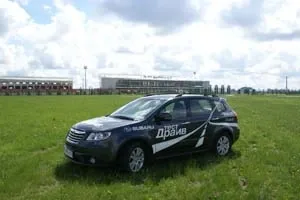
First of all, I wanted to test the car on a winding road, and we headed to the hippodrome. Breaking my own habits, I immediately got behind the wheel. And here I was as if replaced: the car turned out to be so lively that drowsiness vanished, my mood soared, and vigor appeared. It's like an ad for some energy drink, not a car. The character of the engine and automatic transmission pair is clear from the first meters. Even with the pedal to the metal, the engine doesn't strain — it clearly has enough power to easily haul these two and a half tons to a hundred. Though, that's just an assumption for now — we'll check on the highway. At the hippodrome, I accidentally came across a training slalom and set up an impromptu moose test for myself. The result is predictable: Subaru, despite recently paying more attention to civilian versions, hasn't forgotten its main thing — handling is in its blood. Then I gladly moved to the passenger seat, and we drove straight through some construction site with its natural terrain. And again, a reason for thought: what's the secret? The car isn't "stiff," but it handles excellently. It swallows small potholes and bumps easily, and absorbs more serious irregularities without excessive rocking.
The long front overhang is, of course, intimidating, but the 21-centimeter ground clearance and unpainted plastic of the sills and bumpers hint that light off-roading is within its capabilities. And if you remember the signature all-wheel drive, you just want to go where usually only tractors roam. But we won't do that. Let's look at the car through the eyes of an American buyer — after all, it was for him that this Subaru was created. Essentially, it's a large family car on which you can go to the forest, the field, or the dacha. When we got onto the bypass road, that's when the full charm of the engine and transmission work was revealed. Marat, who was driving, casually accelerated the car to 160 km/h, and I, as a passenger, not seeing the speedometer, would have guessed no more than a hundred. By the way, the speedometer is recessed into a deep well, so only the driver can see it. I was interested in studying the automatic's behavior, and when I got behind the wheel again, I went through all the modes. I liked the sport mode the most. But even in it, the engine doesn't feel strained: there's plenty of power, and overtaking happens without delays. The pleasant, broadband engine sound penetrates the cabin only at high revs, closer to the red zone. In manual mode, the engine willingly revs to the limiter, pauses for a moment, and the transmission forcibly upshifts — classic foolproofing. In general, the 3.6-liter engine and automatic transmission work quickly, even in forced mode, shifts are crisp and without hesitation. But the fuel consumption pleasantly surprised: we didn't hesitate to press the gas, and the average was only 16.4 liters. Now about passenger comfort. Due to the curved design of the front panel, some space is stolen from the left knee of the front passenger and the right knee of the driver. The driver doesn't notice this, as they're busy with the pedals, but a large passenger will feel cramped. However, this is compensated by the large longitudinal seat adjustment, without compromising rear passengers. They, by the way, have their own rails and backrest angle adjustment, and the seat itself is full-size, with a long cushion — legs don't dangle. There's plenty of space both in width and height. The trunk is huge, and if you fold the rear row, you get an almost flat floor. Theoretically, a third row of seats could be installed there — such a version is already sold in Russia. There's also a "basement" with compartments for small items.
Now I'll try to unravel the secret of how the Tribeca combines excellent handling with a relatively soft character. A significant credit for the car's ability to handle bumps goes to the wheels — they're R18 here. Well, everything else is the work of Subaru engineers. We have a winding road where we usually test cars. So, the Tribeca set a speed record there for cornering without extreme. The Mazda6 started to "float" at 100 km/h on this section, the Mazda2 and Bravo at 120. But the Tribeca went at almost 130 km/h, and if my colleague Vadim had been with us, he would surely have squeezed out even more. And keep in mind: this monster is bigger, longer, and generally shouldn't drive like that. In conclusion: if you're tired of wallowing and rough SUVs, or choked city crossovers with cramped interiors, and you want something special — the Tribeca is for you. It's a kind of cocktail of excitement, practicality, and reliability.
(C) "Autoclub-Kazan"