

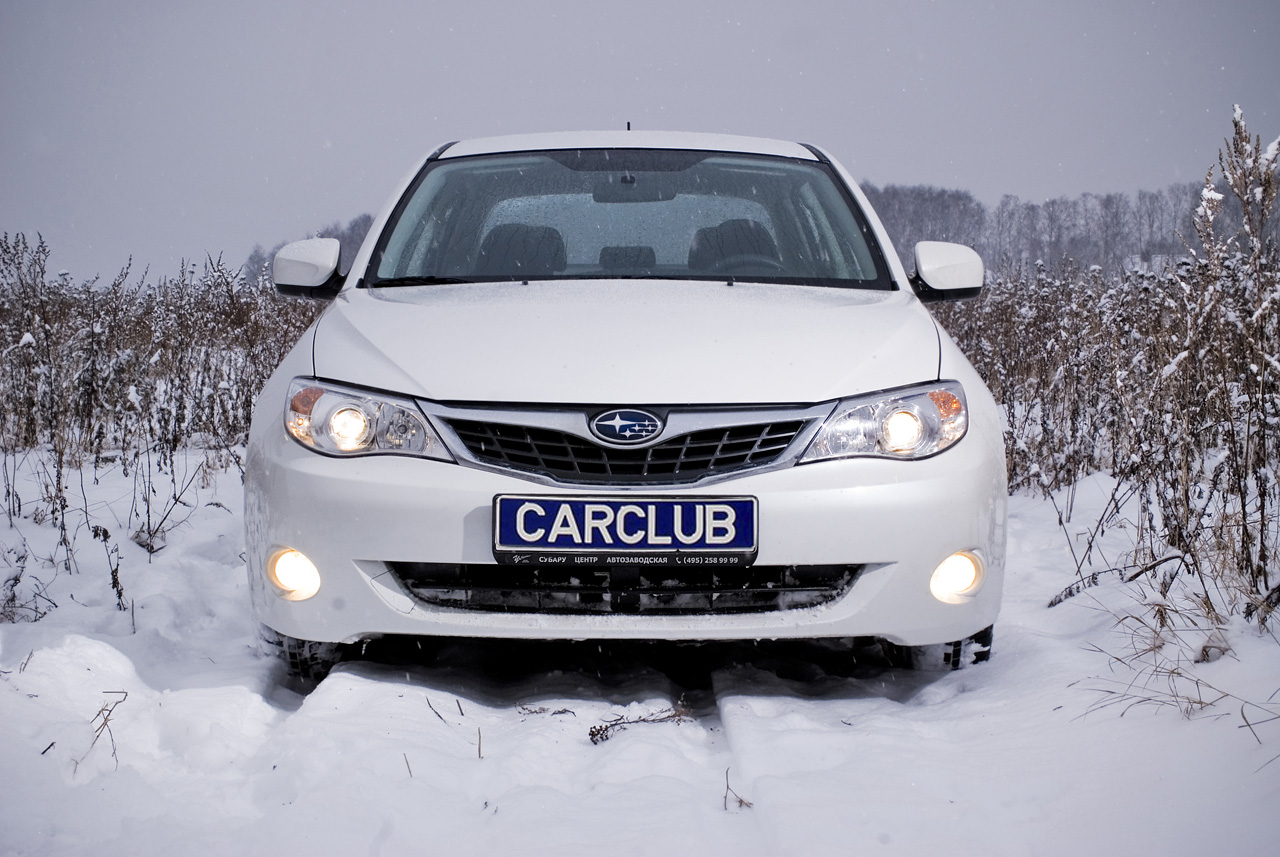
 In April 2007, at the New York International Auto Show, the premiere of the third generation Subaru Impreza took place, which became a completely new milestone in the model's history.Comments (13)
When you hear the word Subaru, most people immediately recall motorsport, turbocharged engines, all-wheel drive, and power. This is fair — it's hard to overestimate the Japanese achievements in racing. Cars with the star emblem on the hood have always stood out for their boxer engines, precise handling, and honest all-wheel drive. Engineers managed to transfer these qualities, albeit in a calmer form, to regular production models so that anyone could touch this special world called Subaru.
 |
| In April 2007, at the New York International Auto Show, the premiere of the third generation Subaru Impreza in a hatchback body took place. The new model received a completely new exterior and interior design. |
The debut of the first generation Impreza happened in 1992. The car was built on a modified Legacy platform, and within a year it replaced its predecessor in the World Rally Championship. After a series of victories in 1994, the company launched the WRX STi version into production, technically as close as possible to the factory team's combat vehicles of the Subaru World Rally Team.
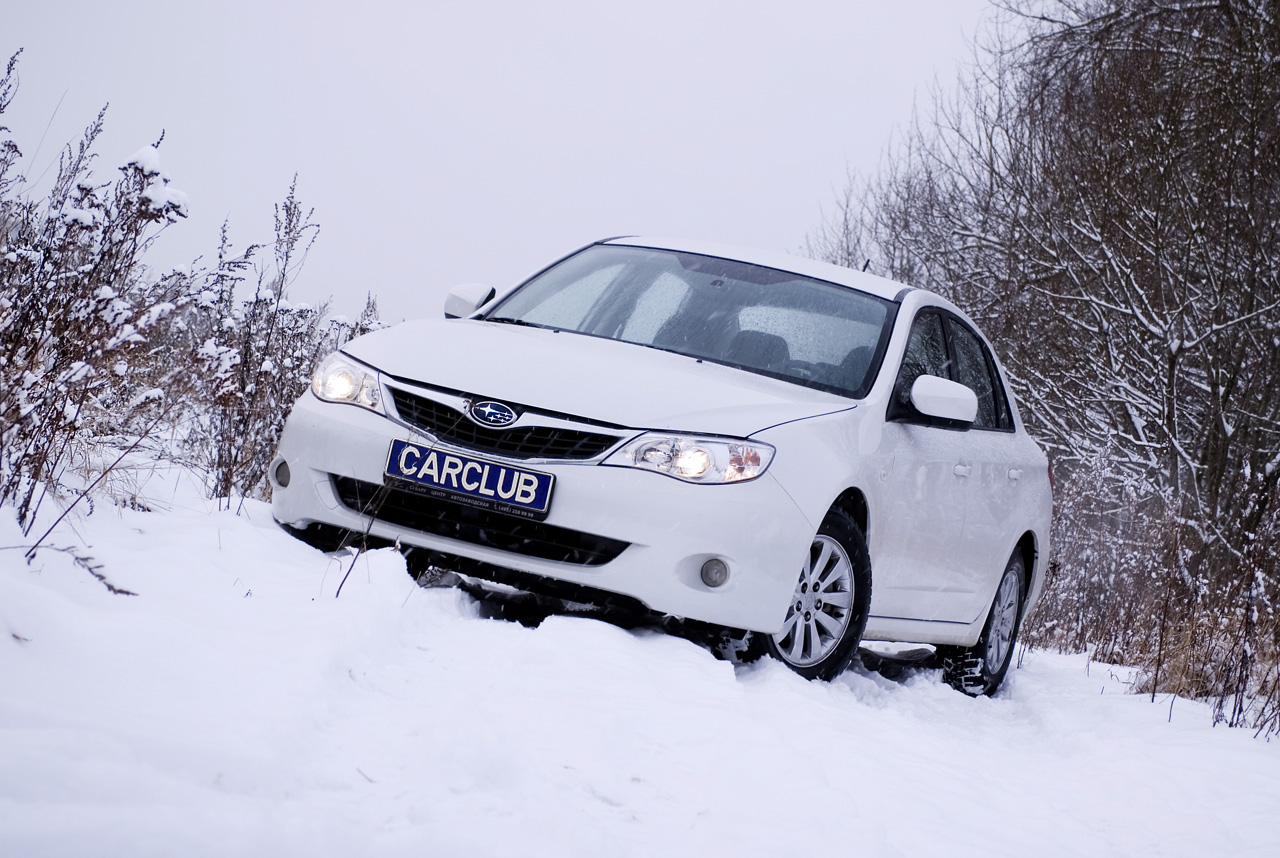
The third generation Impreza was shown in New York in April 2007 — and this became a new stage in the model's fate. The most noticeable change is the appearance of a hatchback body, while the station wagon was completely removed from the lineup. In addition, the car received a completely fresh exterior and a new interior. The Russian premiere of the sedan took place a year and a half later at the Moscow Motor Show. Compared to the second-generation car, the 2008 sedan stretched by 115 mm, and the wheelbase grew by 95 mm. The frameless doors, familiar from previous versions, had to be removed for safety reasons.
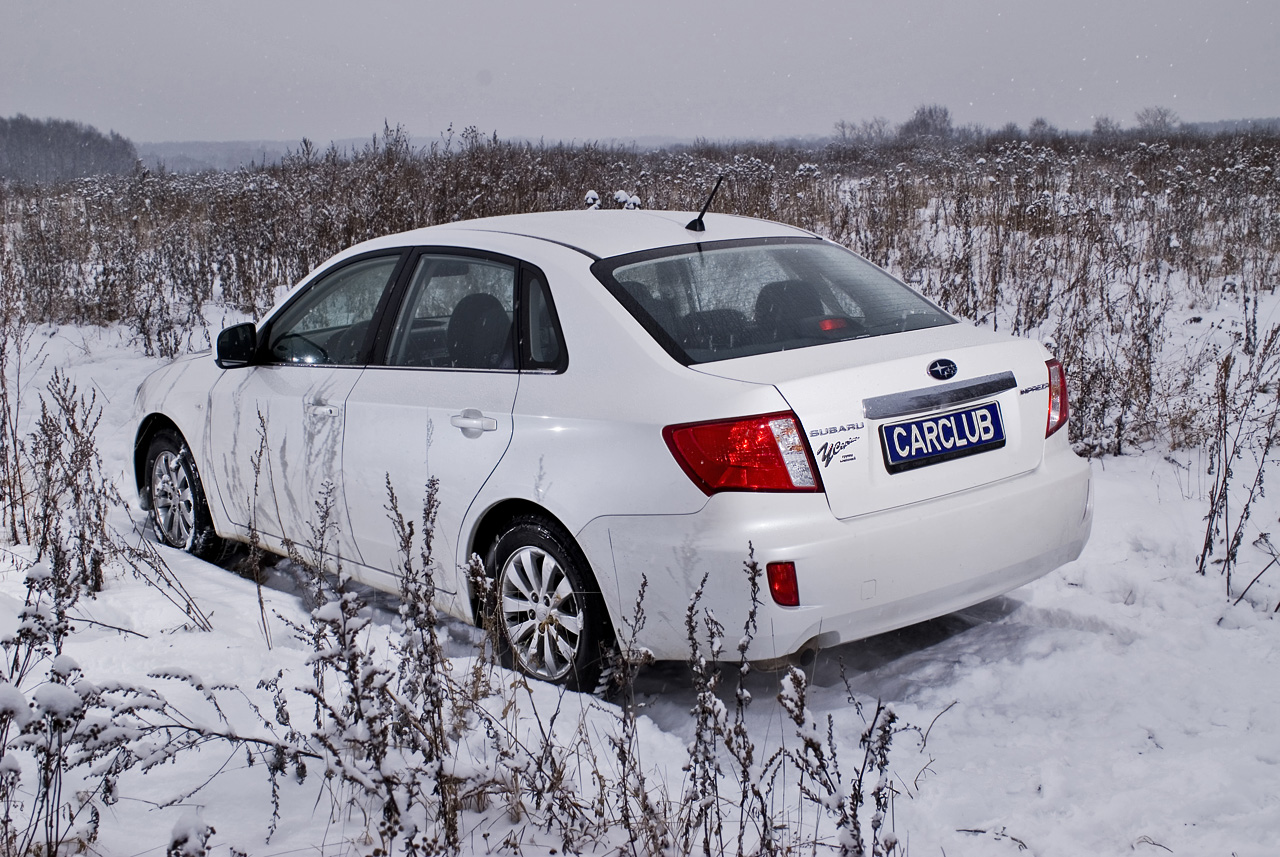 |
| A year and a half later, at the Moscow Motor Show, the Russian premiere of the Subaru Impreza in a sedan body took place. Compared to the second generation, the 2008 Impreza became 115 mm longer, and the wheelbase grew by 95 mm. For safety reasons, frameless doors had to be abandoned. |
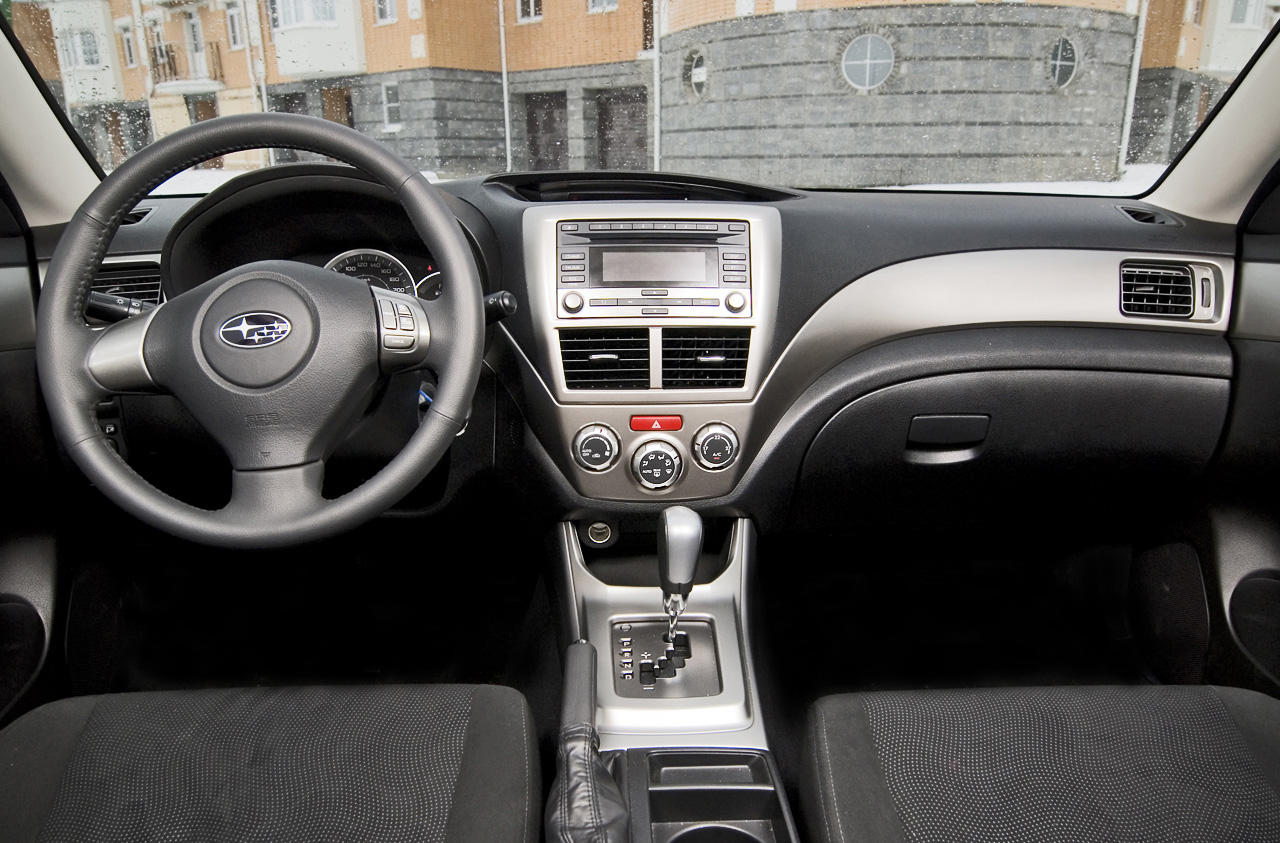 |
| Build quality is excellent, but on uneven surfaces the panel plastic "plays" and slight creaks are heard from within - an unforgivable luxury for a car with an odometer reading of 1,500 km. |
Given Subaru's reputation as a brand for racers and the popularity of "hot" modifications, we deliberately went the opposite way and took the calmest version for a test — a sedan with a 1.5-liter engine and an automatic transmission. In this form, the Impreza looks like the most ordinary and unremarkable sedan. No sporty body kit, no 17-inch wheels, no hood scoop needed to cool the turbo. Everything is modest but neat.
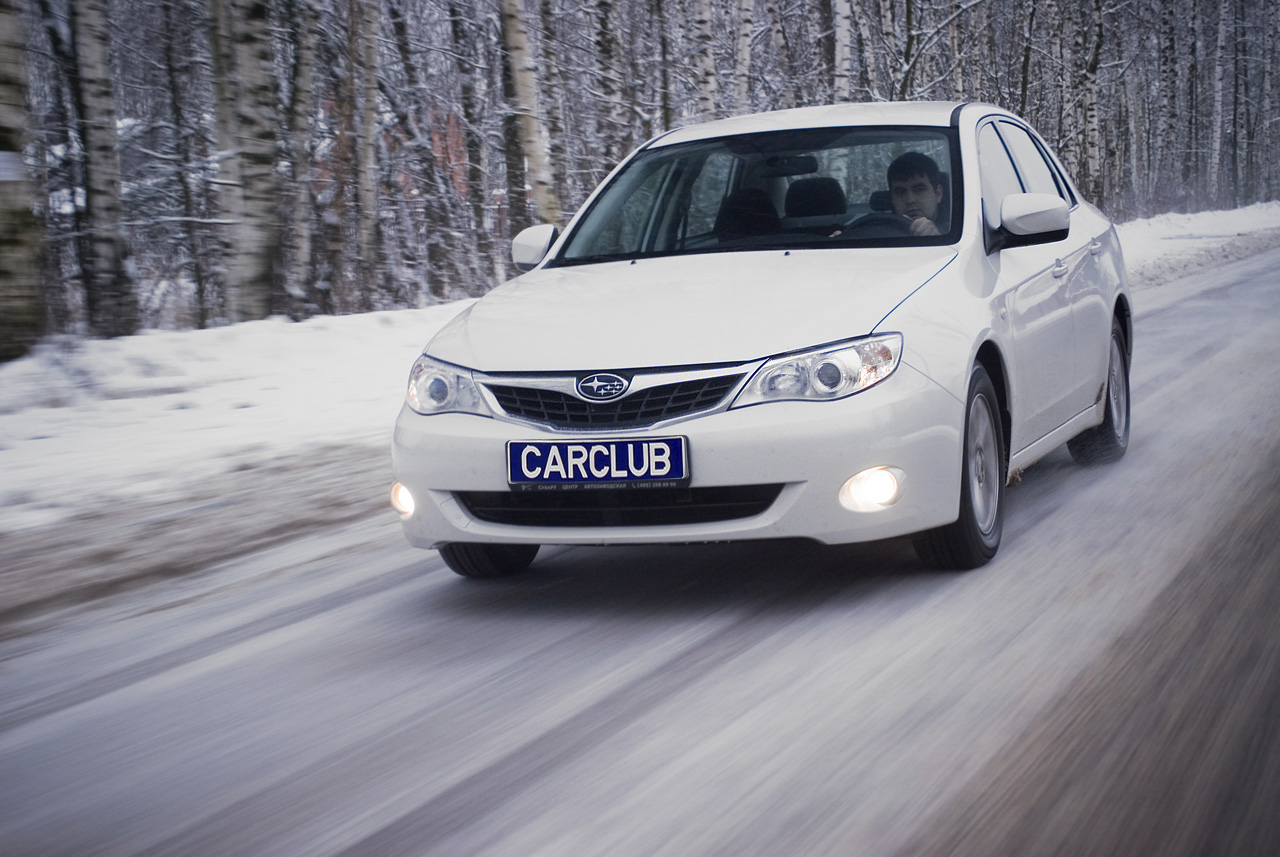 |
| The "civilian" 1.5-liter Impreza is a good option for the city - average consumption (in calm mode) of 9.0 liters per "hundred" and "real" all-wheel drive. |
Inside, there's no special excitement: gray hard plastic on the front panel, simple climate and audio system units. However, the new design has clearly refreshed the interior. The "titanium-look" inserts on the dashboard and door cards look especially nice. No complaints about the instrument cluster — everything reads easily and logically. The assembly is done well, but once you hit an uneven surface, the panel plastic starts to "play," and creaks come from somewhere inside. For a car with only 1,500 km on the odometer, such behavior is unforgivable negligence. But the comfortable steering wheel with adjustment in two directions and the location of all buttons at hand partially compensate for the lack of bright design. The front seats are comfortable but without frills. Among ergonomic miscalculations, I'll note the small and inconvenient front armrest.
In the back, three adults can sit if desired, unless the front seats are too high. But for everyone to be truly comfortable, it's better to drop one passenger. If the trunk, which is already quite large, turns out to be full, you can fold the rear seat backs in a 60:40 ratio — special handles are provided for this.
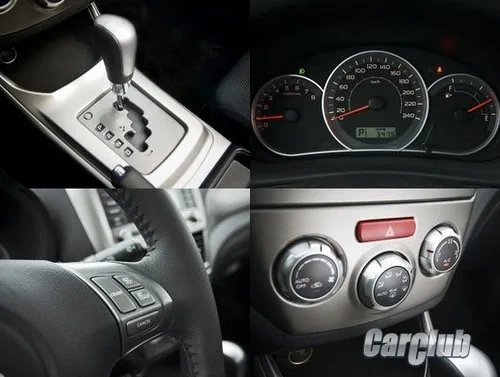 |
| You can't fault the instrument panel – everything is clear, understandable, and in its place. Climate control is managed using three simple knobs made of cheap plastic. In our trim, the steering wheel only had cruise control buttons - you have to reach for the audio system. The 4-speed automatic Sportshift has decent responsiveness and smooth shifts, but the 1.5-liter engine is clearly too weak for it. |
The 1.5-liter boxer engine producing 107 hp, paired with a 4-speed automatic Sportshift, clearly doesn't promise brisk acceleration. In reality, everything turned out even sadder. With a sharp press on the gas — a noticeable pause, and only then the car starts moving. I remember that on the 230-horsepower Forester with the same automatic, there was no such delay, so the reason is clearly the weak engine.
In normal mode, the gearbox shifts smoothly and on time. But for overtaking, there's not enough power, and any maneuver has to be planned in advance. Switching to sport mode slightly changes the picture: the transmission holds the gear to the limit, but the engine makes more noise than it actually accelerates. On the other hand, the base version wasn't created for racing — its element is measured city driving. And here the Impreza feels great. Fuel consumption also pleased: in a calm pace, it didn't exceed 9.0 liters per hundred.
Up front, the suspension remained the same — time-tested struts. The rear was redesigned, and although the manufacturer calls it double-wishbone, it's essentially a modern multi-link. The travel increased, which caused body roll and slight pitching in corners. But the Impreza seems not to notice small road defects, and it swallows more serious bumps with reserve.
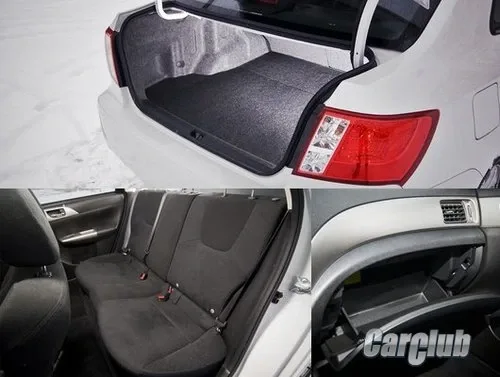 |
| A spacious trunk, room in the back, and a large glove box make the Subaru Impreza sedan a fairly practical car. |
Even with comfortable suspension settings and 15-inch wheels in the base, the Impreza remains very composed in handling. It writes trajectories almost perfectly. No one has canceled the proprietary symmetrical all-wheel drive even on the weakest version. If the car starts to drift on corner entry, just add a bit of gas — and the outer rear wheel will itself correct the car onto the desired arc. Ride smoothness is also top-notch: the Impreza handles cobblestones and rails with comfort comparable to luxury crossovers. The steering is Subaru-sharp and precise, with excellent feedback — the road is transmitted to the driver's hands without distortion. No complaints about the brakes.
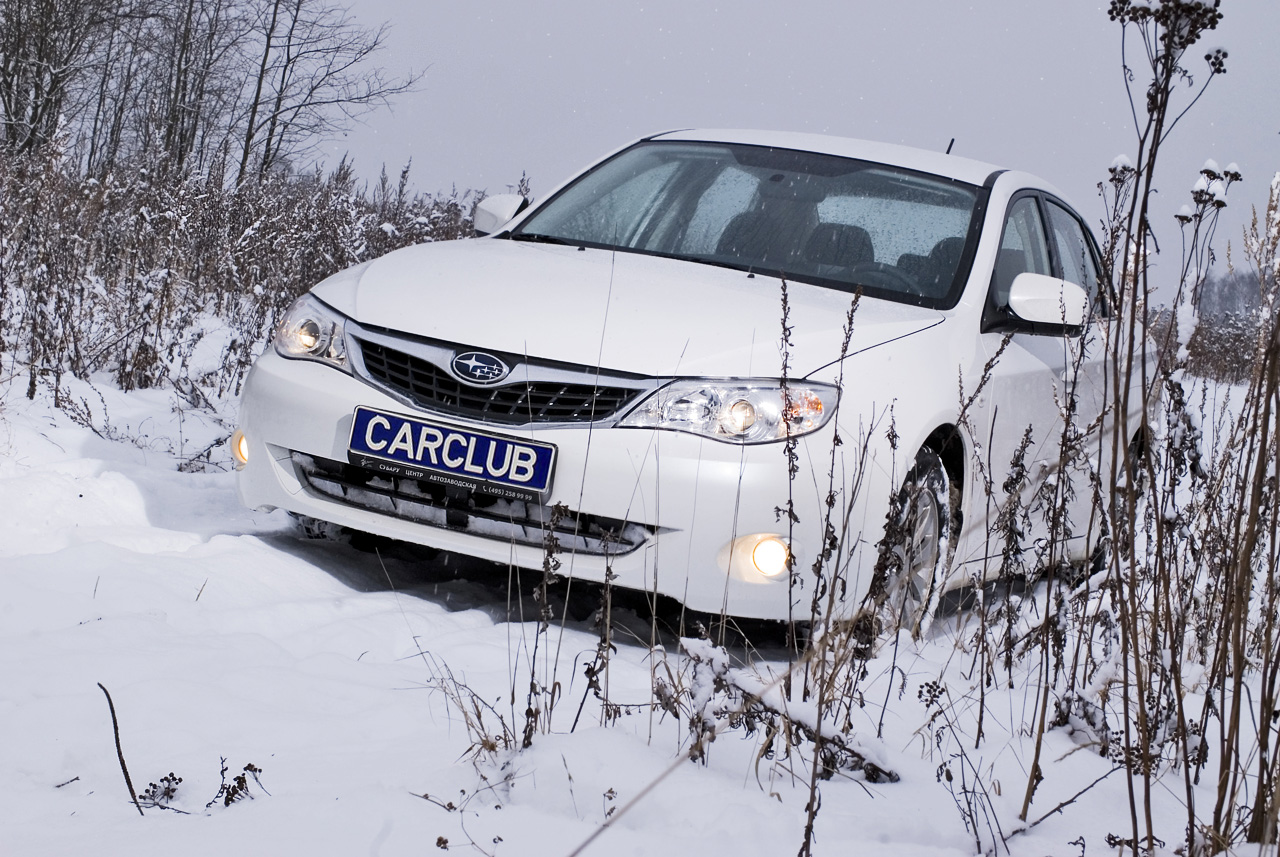 |
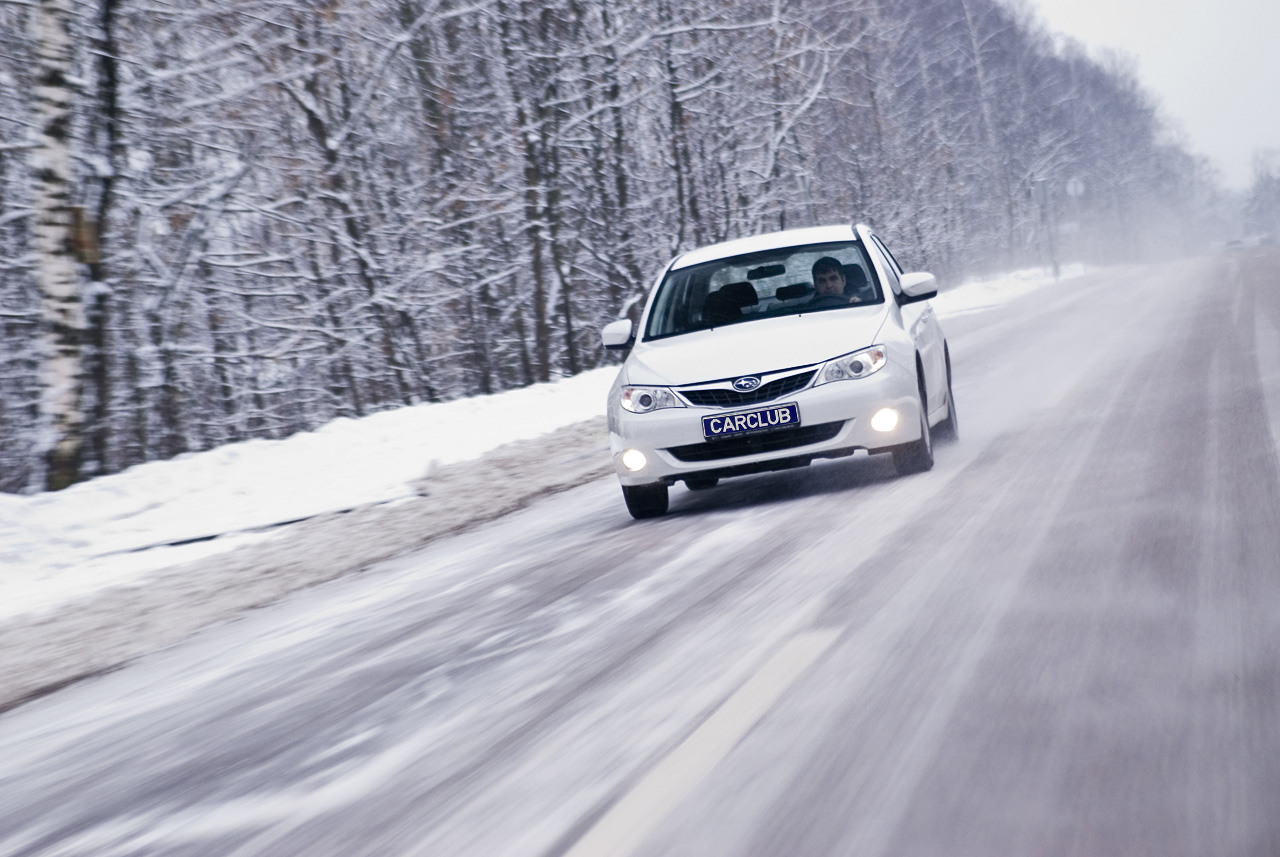
| Even in the base version, symmetrical all-wheel drive and precise steering with excellent feedback give the Impreza an advantage in corners and on slippery roads. One cannot fail to note the excellent ride smoothness – the Impreza handles cobblestones and tram tracks like a luxury crossover. |
 |
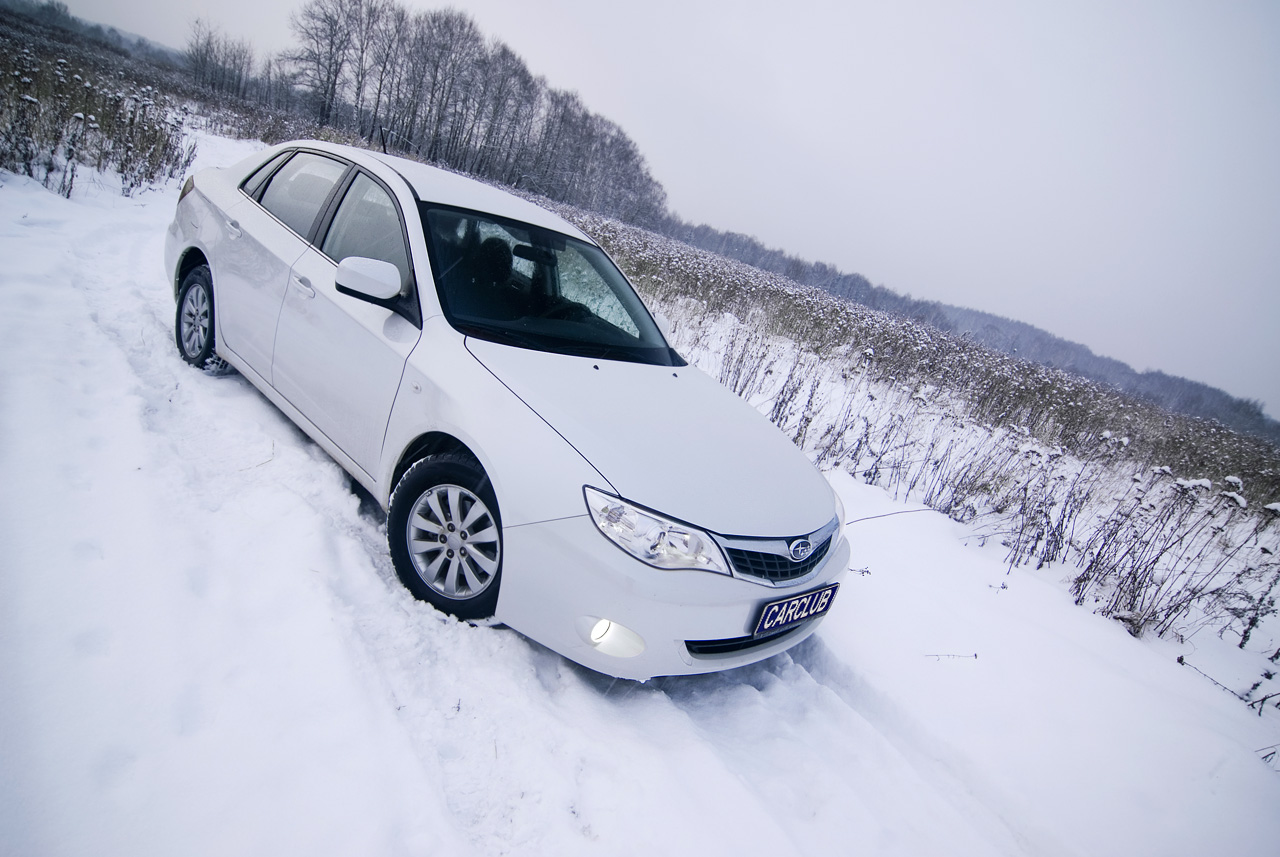
| Suspension travel has increased, which has also increased body roll in corners and caused some pitching. But the Impreza simply ignores minor road imperfections, while larger bumps are absorbed with plenty of reserve. |
 |
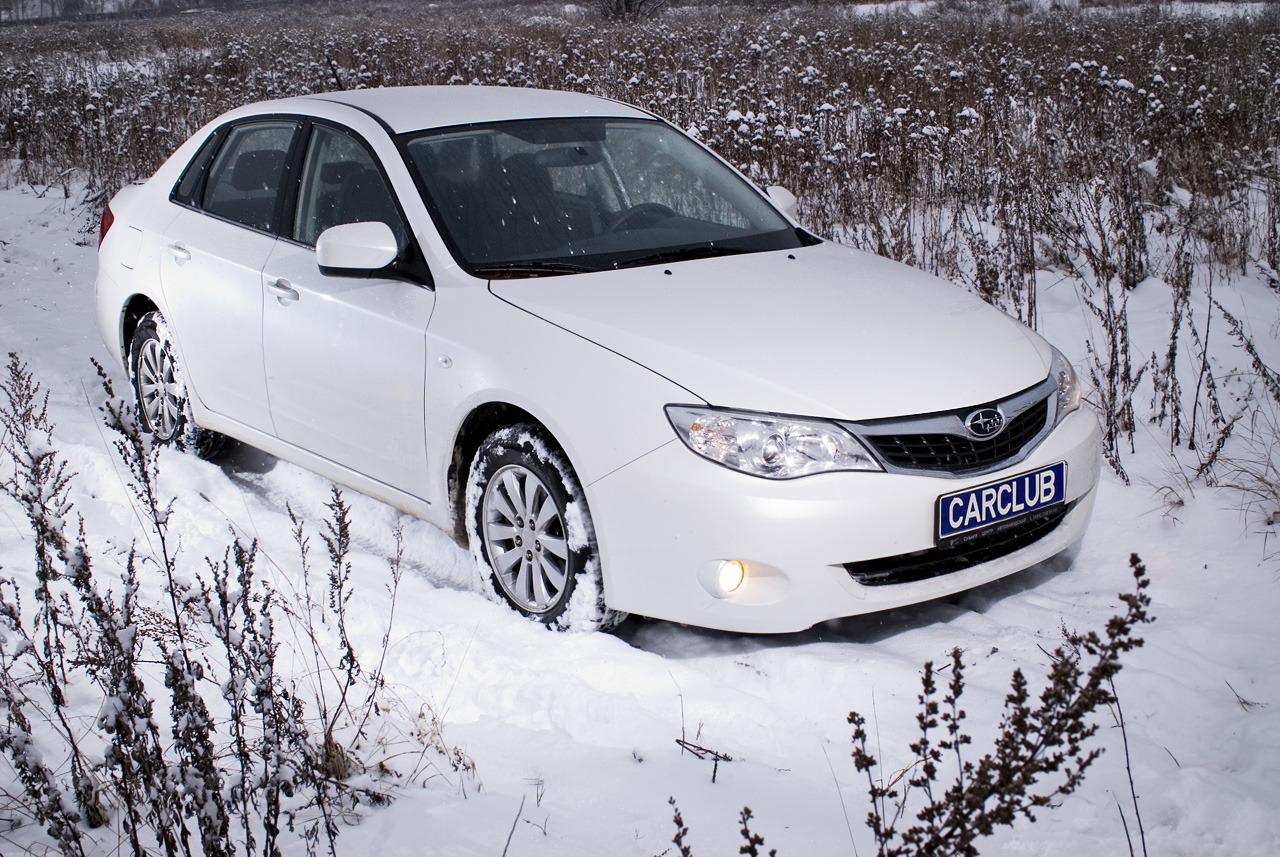 |
| The front suspension with a proven strut design remains unchanged. The rear has been redesigned, although the manufacturer prefers to call its scheme double-wishbone; in essence, it is a modern multi-link setup. |