|
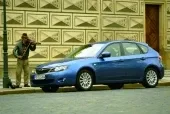 About twenty new Subaru Impreza cars were brought for the test — these were the 1.5R, 2.0R and 2.0R Sport modifications. Now for the European market, the Impreza is made only as a hatchback: the sedan is intended for America, and station wagons have disappeared altogether. Marketers found that young people under forty most often choose compact but spacious cars with a hatchback body. It is precisely this audience that the "civilian" Impreza is aimed at. But the rally heritage has completely remained with the WRX and STI versions, which, by the way, are not supplied to Europe — they can only be bought in Russia. About twenty new Subaru Impreza cars were brought for the test — these were the 1.5R, 2.0R and 2.0R Sport modifications. Now for the European market, the Impreza is made only as a hatchback: the sedan is intended for America, and station wagons have disappeared altogether. Marketers found that young people under forty most often choose compact but spacious cars with a hatchback body. It is precisely this audience that the "civilian" Impreza is aimed at. But the rally heritage has completely remained with the WRX and STI versions, which, by the way, are not supplied to Europe — they can only be bought in Russia. |
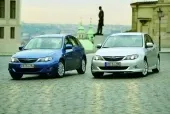
 The Japanese set themselves the goal of doubling European sales, so they bet on all-wheel drive, comfort and a moderate price, adding a sporty character and excellent handling. Not every manufacturer manages to find such a combination of qualities in this price segment. The Japanese set themselves the goal of doubling European sales, so they bet on all-wheel drive, comfort and a moderate price, adding a sporty character and excellent handling. Not every manufacturer manages to find such a combination of qualities in this price segment. |
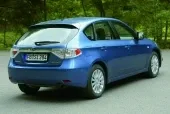
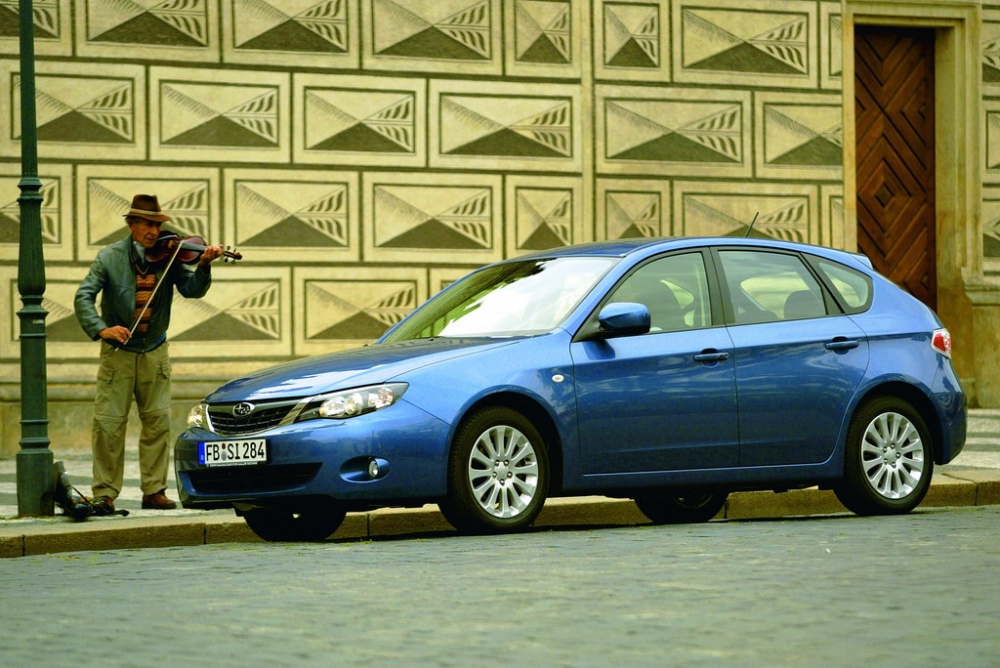
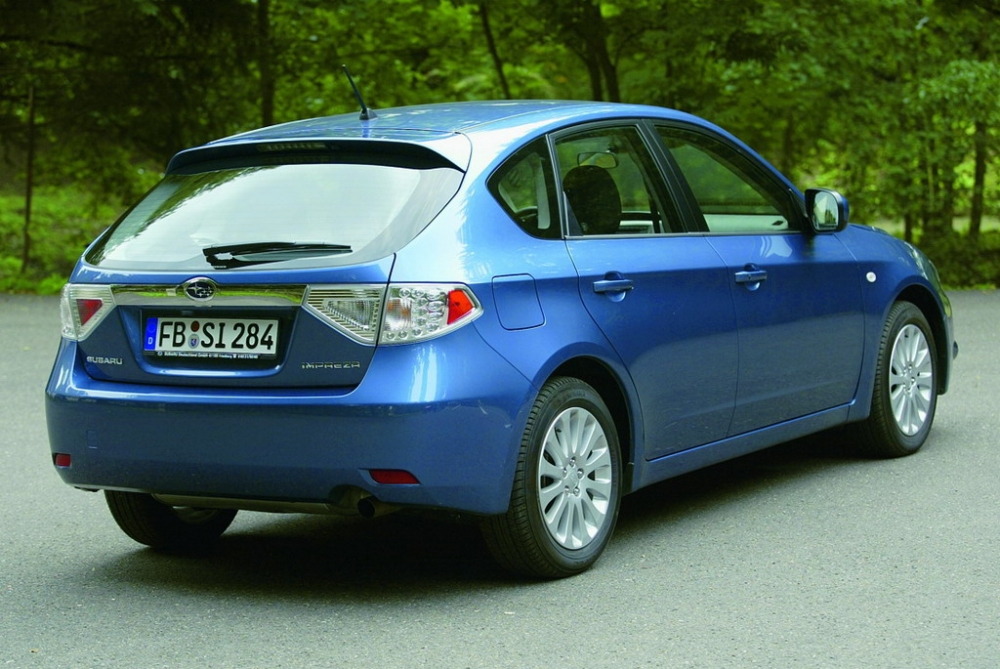
 However, little remains of the former sporty image that regular Imprezas could boast of before. The body has become more streamlined and smoothed, and the appearance hints at several brands at once: the deep stamping on the sides refers to the BMW 1 Series, and the sloping rear resembles the Ford Focus. As a result, it turned out no worse, but no better than many competitors. I will separately note the rear part: thin LED lights smoothly transitioning into embossed side panels, and an oval rear window — it really looks nice. The front also pleases the eye. However, little remains of the former sporty image that regular Imprezas could boast of before. The body has become more streamlined and smoothed, and the appearance hints at several brands at once: the deep stamping on the sides refers to the BMW 1 Series, and the sloping rear resembles the Ford Focus. As a result, it turned out no worse, but no better than many competitors. I will separately note the rear part: thin LED lights smoothly transitioning into embossed side panels, and an oval rear window — it really looks nice. The front also pleases the eye. |
 The door openings have become wider, and the doors themselves open easily and almost at a right angle — a full 90 degrees. Even a large person who is fond of beer and donuts can easily fit inside. The doors are now equipped with window frames, which, according to the manufacturer, increases body rigidity and safety. The seating position is deep and comfortable, the lateral support is made in the European spirit — it holds securely but does not press. Later, especially on a steep serpentine, I more than once remembered these seats with a kind word. The door openings have become wider, and the doors themselves open easily and almost at a right angle — a full 90 degrees. Even a large person who is fond of beer and donuts can easily fit inside. The doors are now equipped with window frames, which, according to the manufacturer, increases body rigidity and safety. The seating position is deep and comfortable, the lateral support is made in the European spirit — it holds securely but does not press. Later, especially on a steep serpentine, I more than once remembered these seats with a kind word. |
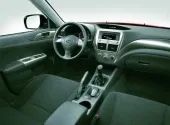 Inside, the spaciousness is striking — it's hard to believe this is a compact car. The ceiling is high, and above my head (with a height of 183 cm) there is about ten centimeters of reserve, so on bumps you don't have to worry about your hairstyle. I check the rear row: I set the seat for myself, move over. By lengthening the wheelbase by a few centimeters, Subaru achieved greater comfort and smoothness, and the legroom for rear passengers increased by 8.5 cm compared to the previous Impreza. When I sit "behind myself," my knees touch the back of the driver's seat, but only slightly. There is also enough width: three men of average build fit without arguing. The steering wheel adjusts both in height and reach, and the three-spoke steering wheel with leather and thickenings in the "10 and 14 o'clock" zone appealed to me. Inside, the spaciousness is striking — it's hard to believe this is a compact car. The ceiling is high, and above my head (with a height of 183 cm) there is about ten centimeters of reserve, so on bumps you don't have to worry about your hairstyle. I check the rear row: I set the seat for myself, move over. By lengthening the wheelbase by a few centimeters, Subaru achieved greater comfort and smoothness, and the legroom for rear passengers increased by 8.5 cm compared to the previous Impreza. When I sit "behind myself," my knees touch the back of the driver's seat, but only slightly. There is also enough width: three men of average build fit without arguing. The steering wheel adjusts both in height and reach, and the three-spoke steering wheel with leather and thickenings in the "10 and 14 o'clock" zone appealed to me. |
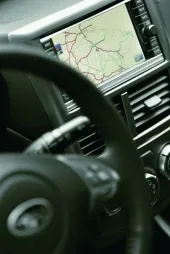 The instrument panel is calm, easy to read, without unnecessary buttons and indicators. The design is modern, reminiscent of the Subaru Trebica, but the plastic is cheaper. In the center of the console there is a large touchscreen display for navigation, and it's not difficult to figure out the controls. The quality of the finish is at a decent level: the materials are inexpensive, but all joints are perfectly fitted, so you won't expect squeaks and creaks for a long time. There are many pockets and niches, although some of them will remain unused. The instrument panel is calm, easy to read, without unnecessary buttons and indicators. The design is modern, reminiscent of the Subaru Trebica, but the plastic is cheaper. In the center of the console there is a large touchscreen display for navigation, and it's not difficult to figure out the controls. The quality of the finish is at a decent level: the materials are inexpensive, but all joints are perfectly fitted, so you won't expect squeaks and creaks for a long time. There are many pockets and niches, although some of them will remain unused. |
The car starts with a button that is installed optionally. Ahead is a long route on regular roads and closed sections where the Impreza can be properly pushed. Under the hood of our example is a two-liter naturally aspirated engine with 150 horsepower, paired with a four-speed automatic transmission.
This boxer engine is not new; it, like the gearbox, moved to the new model from its predecessor. The engine is proven, with an excellent reputation, and the manufacturer reasonably decided not to change what already works well. Acceleration is confident, traction quickly picks up from the very bottom and reaches its peak already at 3200 rpm. During calm acceleration, the gearbox shifts around 6500 rpm. It works smoothly. Attempts to confuse it with sharp and chaotic presses on the gas pedal led to nothing. The automatic, although it has only four steps, clicks gears quickly, does not fall into thoughtfulness, and reacts to provocations almost instantly. It also knows how to engage neutral by itself, which helps save fuel when standing in traffic jams.
The power is quite enough. At high speed in sharp turns, you immediately feel how willingly the new Impreza obeys the steering wheel and how accurately it holds the given trajectory. Real sports genes! Even the calmest version can please a sophisticated driver with its character. No serious rolls or suspension breakdowns — only clear and fast reactions. Perhaps in this class, the Subaru Impreza is one of the most driver-oriented cars. Symmetrical all-wheel drive combined with phenomenal handling causes real admiration. The new rear suspension with two arms of the third generation at Subaru has clearly succeeded. Interestingly, during its development, engineers primarily thought about comfort, not handling, and refused computer modeling.
The suspension is mounted on a separate subframe and attached to the body through four cushions. Thanks to this, road noise and vibrations transmitted to the body are damped much better. But the main thing is that feeling of unity with the car that any at least somewhat prepared driver dreams of.
To lower the center of gravity and reduce rolls, the boxer engine was lowered by 22 mm in the front and 10 mm on the side of the center differential. The ground clearance of 155 mm seems quite sufficient both for the city and for trips on country roads.
The version with a five-speed manual transmission is even more interesting. It is much more convenient to control traction, and the dynamics are noticeably better. During acceleration and on serpentine climbs, the capabilities of the two-liter naturally aspirated engine are enough with a reserve. For driving on loose ground, on descents, or when towing, the manual has a low gear that is engaged with a separate lever near the gearbox lever. A very useful thing. Our colleagues, using it, easily dragged a stalled old Skoda up a steep slope, which brought its elderly owner into complete delight.
The gear lever travel of the manual transmission is a bit long, but the shifts themselves are precise and soft. The clutch pedal has a shortened travel, but engagement occurs at a convenient height and without jerks, even if you release the pedal sharply. The brakes are excellent. The Impreza has a booster with spacer studs that prevent the frame from expanding when pressure is created in the system. The effect is obvious. The effort is easy to dose, the efficiency is maximum.
Having switched to the Impreza with a 1.5-liter engine, we were a little upset. The difference in dynamics is felt immediately: 107 forces are clearly not enough for energetic driving. Acceleration is sluggish, even a small climb on the serpentine forced shifting to a lower gear. The same applies to overtaking — you need to either gain speed in advance or shift down and rev the engine to the red zone. Euro 4 standards affected this engine more than its older brothers. Otherwise, the budget Impreza almost does not differ from the versions with a two-liter engine. The same fantastic precision and clarity of control, the same comfort and energy intensity of the suspension, the same symmetrical all-wheel drive with a center differential and a viscous coupling, the same gearbox with a low gear. And if you like calm and confident driving, without sharp jerks and speed adventures, one and a half liters is quite enough, while the overall comfort will not seem small at all. In its price category, the new Subaru Impreza is the best offer.
PRICES AND TRIM LEVELS
For the Subaru Impreza with a 1.5-liter engine and a 5-speed manual transmission, dealers ask from 577,700 to 612,400 rubles depending on the configuration. With a 4-speed automatic, such an Impreza costs from 618,500 to 653,200 rubles. With a two-liter engine and a manual transmission, the Impreza will cost from 730,800 to 799,100 rubles, and with an automatic — from 771,600 to 839,900 rubles. The Impreza 2.0 Sport version with a manual transmission will cost from 805,900 to 848,000 rubles, with an automatic — from 846,700 to 888,800 rubles. The Impreza 2.0R Sport comes with 17-inch wheels and an aerodynamic body kit, which includes front, side and rear spoilers, as well as chrome exhaust tips.
Optionally, you can order leather trim for the steering wheel and gear lever, side mirrors and door handles in body color, an engine start button, cruise control, side airbags, automatic air conditioning, a multi-channel audio system unit and navigation. The most powerful version, the 2.5-turbo WRX, will be sold in a single configuration with a full set of airbags, a 5-speed manual transmission, 17-inch wheels, climate and cruise control, an audio system with 6 CDs, VDC, xenon and an aerodynamic body kit.
Photo: Alexander Goryunov

 About twenty new Subaru Impreza cars were brought for the test — these were the 1.5R, 2.0R and 2.0R Sport modifications. Now for the European market, the Impreza is made only as a hatchback: the sedan is intended for America, and station wagons have disappeared altogether. Marketers found that young people under forty most often choose compact but spacious cars with a hatchback body. It is precisely this audience that the "civilian" Impreza is aimed at. But the rally heritage has completely remained with the WRX and STI versions, which, by the way, are not supplied to Europe — they can only be bought in Russia.
 The Japanese set themselves the goal of doubling European sales, so they bet on all-wheel drive, comfort and a moderate price, adding a sporty character and excellent handling. Not every manufacturer manages to find such a combination of qualities in this price segment.
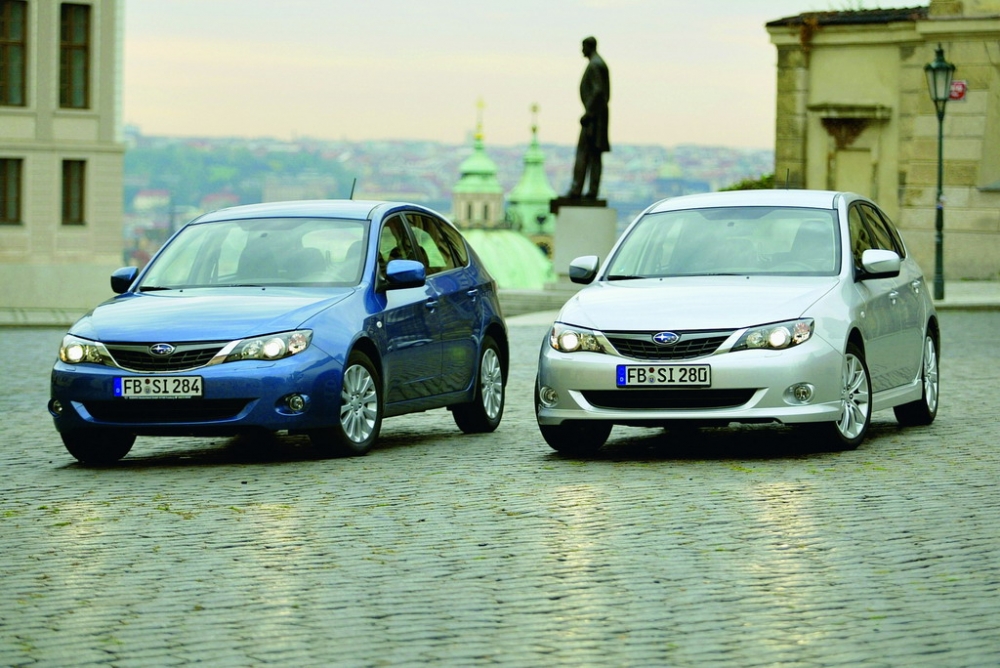 However, little remains of the former sporty image that regular Imprezas could boast of before. The body has become more streamlined and smoothed, and the appearance hints at several brands at once: the deep stamping on the sides refers to the BMW 1 Series, and the sloping rear resembles the Ford Focus. As a result, it turned out no worse, but no better than many competitors. I will separately note the rear part: thin LED lights smoothly transitioning into embossed side panels, and an oval rear window — it really looks nice. The front also pleases the eye.
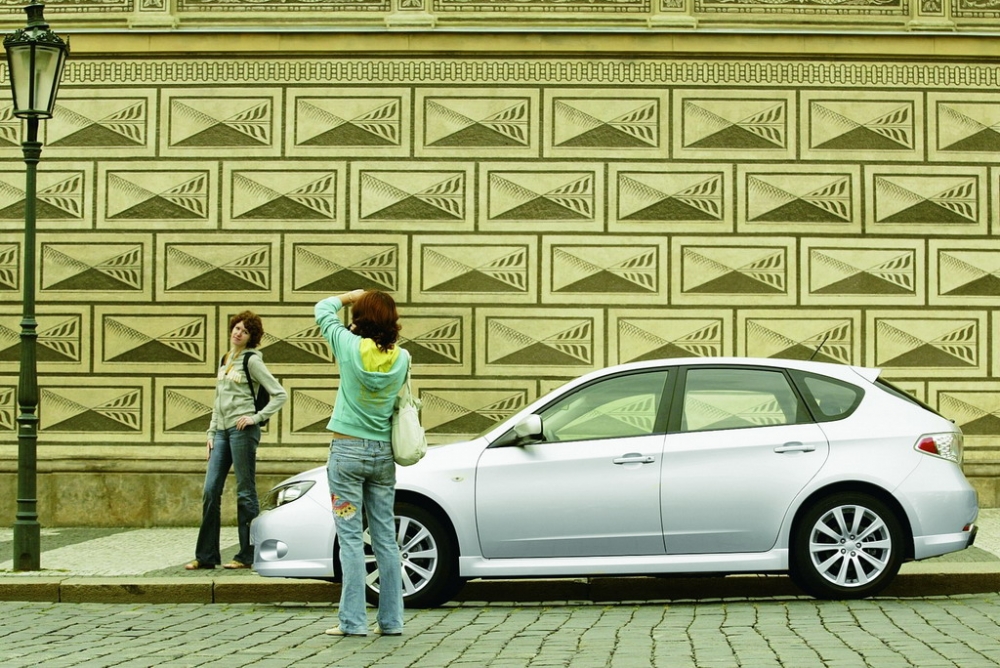 The door openings have become wider, and the doors themselves open easily and almost at a right angle — a full 90 degrees. Even a large person who is fond of beer and donuts can easily fit inside. The doors are now equipped with window frames, which, according to the manufacturer, increases body rigidity and safety. The seating position is deep and comfortable, the lateral support is made in the European spirit — it holds securely but does not press. Later, especially on a steep serpentine, I more than once remembered these seats with a kind word.
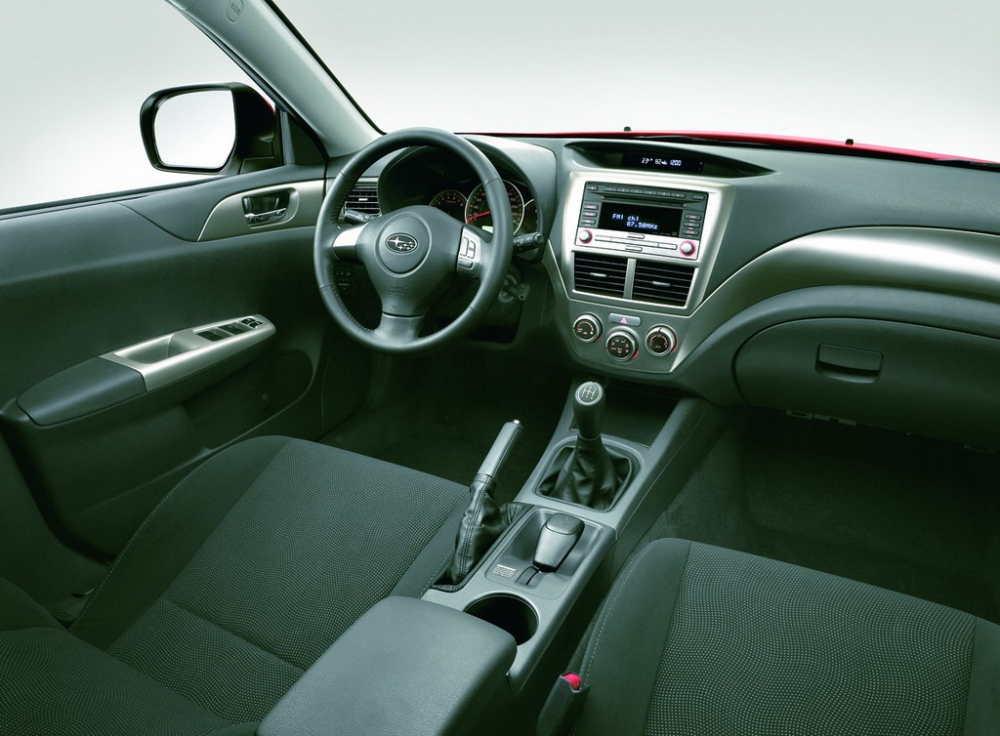 Inside, the spaciousness is striking — it's hard to believe this is a compact car. The ceiling is high, and above my head (with a height of 183 cm) there is about ten centimeters of reserve, so on bumps you don't have to worry about your hairstyle. I check the rear row: I set the seat for myself, move over. By lengthening the wheelbase by a few centimeters, Subaru achieved greater comfort and smoothness, and the legroom for rear passengers increased by 8.5 cm compared to the previous Impreza. When I sit "behind myself," my knees touch the back of the driver's seat, but only slightly. There is also enough width: three men of average build fit without arguing. The steering wheel adjusts both in height and reach, and the three-spoke steering wheel with leather and thickenings in the "10 and 14 o'clock" zone appealed to me.
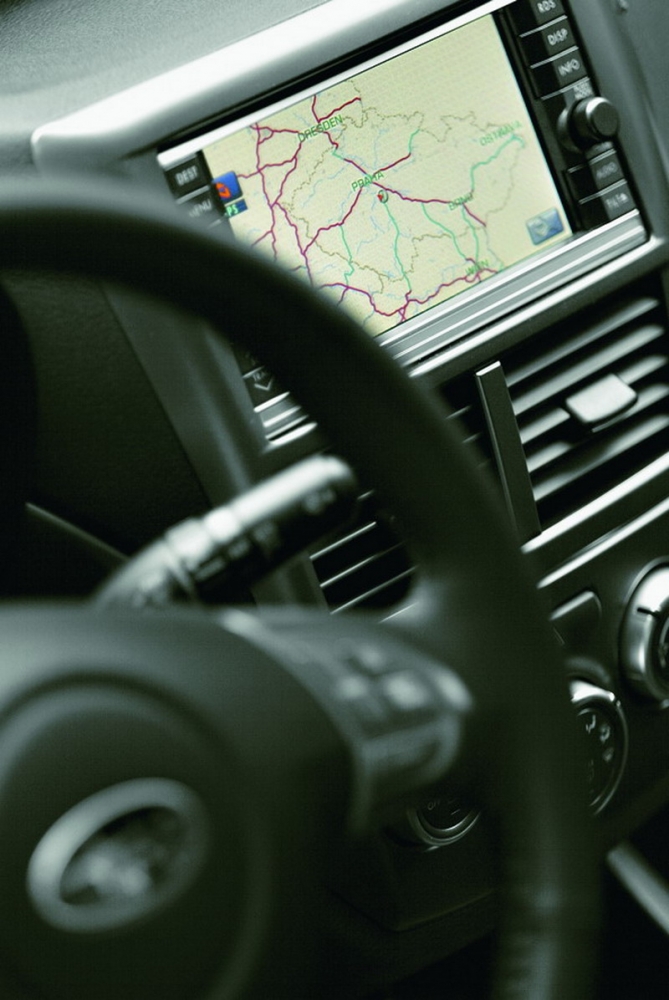 The instrument panel is calm, easy to read, without unnecessary buttons and indicators. The design is modern, reminiscent of the Subaru Trebica, but the plastic is cheaper. In the center of the console there is a large touchscreen display for navigation, and it's not difficult to figure out the controls. The quality of the finish is at a decent level: the materials are inexpensive, but all joints are perfectly fitted, so you won't expect squeaks and creaks for a long time. There are many pockets and niches, although some of them will remain unused.