
Let's be honest. After all, we value the Impreza not for its "symmetrical all-wheel drive," not for its boxer engines, and certainly not for its looks! What we cherish is the moment when the turbo kicks in, and the reputation associated with it — here these things are inseparable. When at 3500 rpm the supercharger comes alive and presses you into the seat back, you imagine yourself as fearless McRae, lanky Burns, or Solberg shining in the snow. We admire these racers — and we admire ourselves behind the wheel of a Subaru.
So. For those who at least partly consider themselves part of this "we," let me give you a friendly piece of advice: skip this material, it's not about you! I wouldn't read it myself if I weren't obliged to write it! The new Impreza is not for devoted brand fans. Quite the opposite: it's for those who previously never even thought about buying a Subaru.
Too unusual? Too driver-focused? Forget about that.
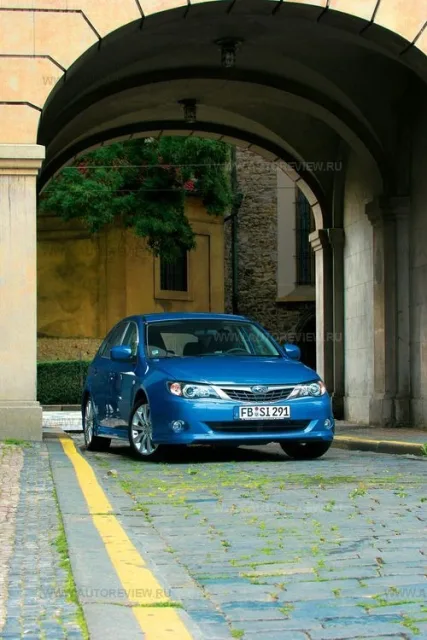
Did you know that 85 percent of Imprezas sold in Russia have naturally aspirated engines? I had no idea. I didn't know because I didn't want to: I firmly believed that a real Impreza must be turbocharged. But in reality, the true Impreza is, of course, the one that sells best, that is, with a modest 105-horsepower engine of one and a half liters. You can't argue with statistics. And this trend is not unique to Russia. Therefore, building the model's image on turbo variants is a dead end. So the Japanese decided to step away from the heroic aura and focus on naturally aspirated versions: at Subaru, they say they want to bring them out of the shadow of their more charismatic relatives with rally roots.
Instead of a disheveled guy in a stained overalls — an ordinary European aged 40-45, instead of a sedan with a wagon — a pragmatic hatchback...
Fortunately, they haven't completely abandoned turbo engines: a 230-horsepower Impreza 2.5 WRX will appear soon. However, they didn't bring such a car to the European presentation in Prague — so it wouldn't distract. Why open expensive champagne when those around you are drinking plain water?
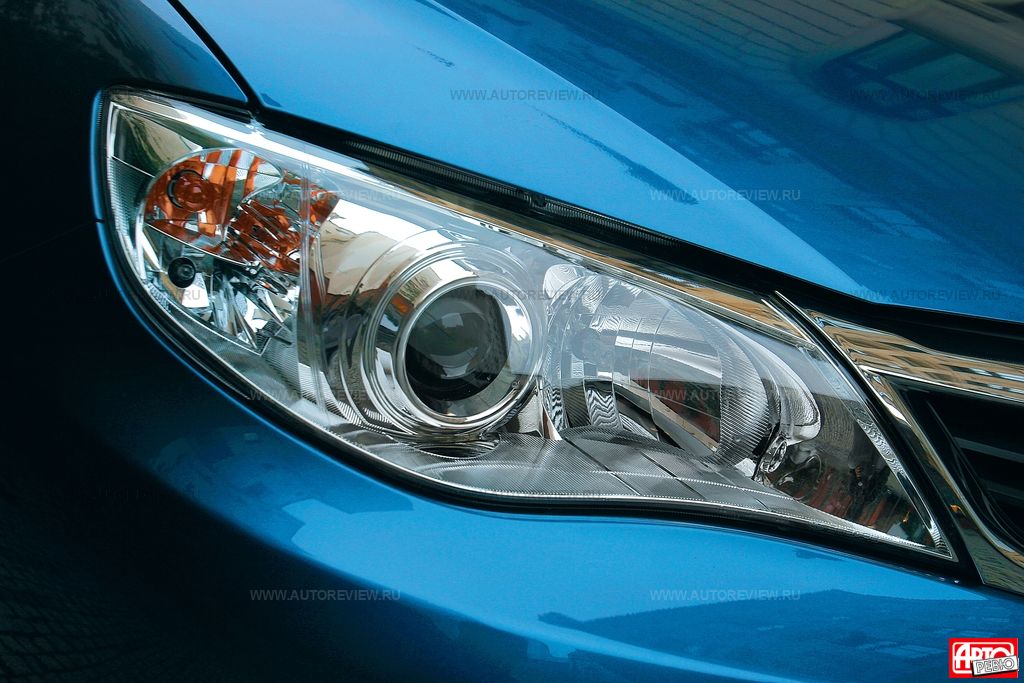 | 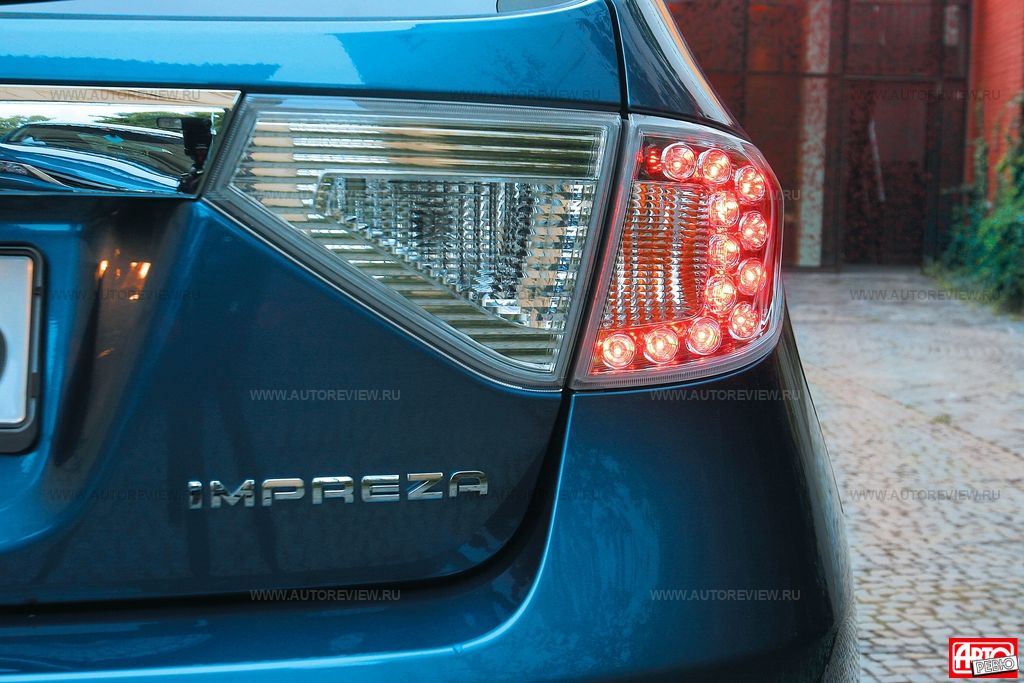 |
| The Japanese deny that former chief designer Andreas Zapatinas participated in the work on the new Impreza, although his handwriting is obvious | The angular plastic of the futuristic rear lights finds no support in the other elements of the exterior |
And it's not easy to look at the Impreza soberly. After all, what did the hierarchy of consumer qualities of the Impreza look like before? Dynamics and the advantages of all-wheel drive dominated, practicality was a bit lower, and appearance was last. Now everything has turned upside down (the Japanese showed us a corresponding diagram): design is at the forefront, and at the very bottom are driving qualities, where smoothness was given primary importance.
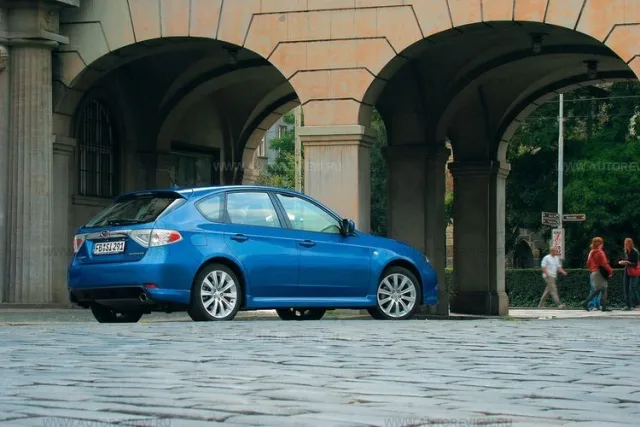
But the new style doesn't even qualify for the main role! The Impreza has turned into an ordinary hatchback. And all the charm is only in individual details. The headlights are good individually, but with the chrome grille, the front looks meaningless, with closely set eyes. The rear LED lights are memorable but look like bead embroidery on jeans — tuning. In profile, the Impreza is associated with something different for everyone. For me, for example, it reminded me of the Mazda 3, although the Japanese reject outside influence: they assure that the project is already six years old, and the design at least four.
Six years? Why was the car prepared for so long? After all, the only fundamental innovation in the technology is the rear multi-link suspension, which marketers dubbed double-wishbone — supposedly, it sounds sportier. The powertrains are the same, the front suspension, which remained without a subframe for safety's sake, is also the same. The front engine mount is lowered by 22 mm, and the gearbox housing by 10 mm. The shorter steering mechanism with hydraulic power steering has a different mounting, the 1.5-liter versions got rear disc brakes... Not much.
 | ||
| And here's the "Toyota heritage": the Impreza has the same engine start button as Toyota and Lexus cars, but it's located not on the right, but on the left of the steering wheel | Despite the new disc mechanisms, the brakes of the 1.5-liter version overheated after the first "combat" pass along the mountain road. The 2.0-liter gave up after the third... | For rich trim levels — a transponder key-fob |
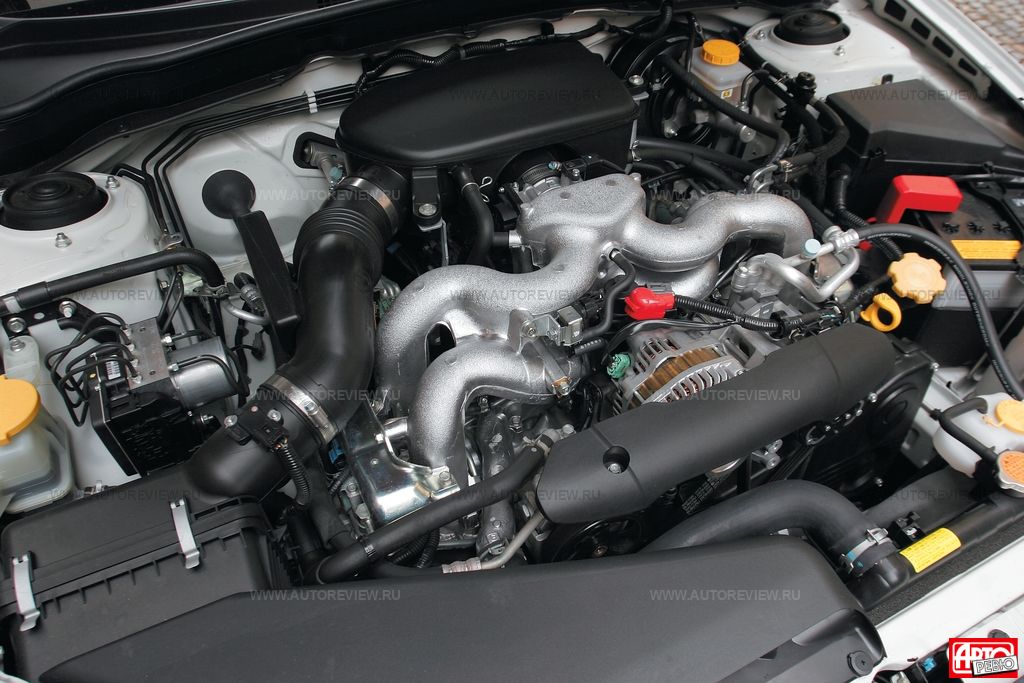 | 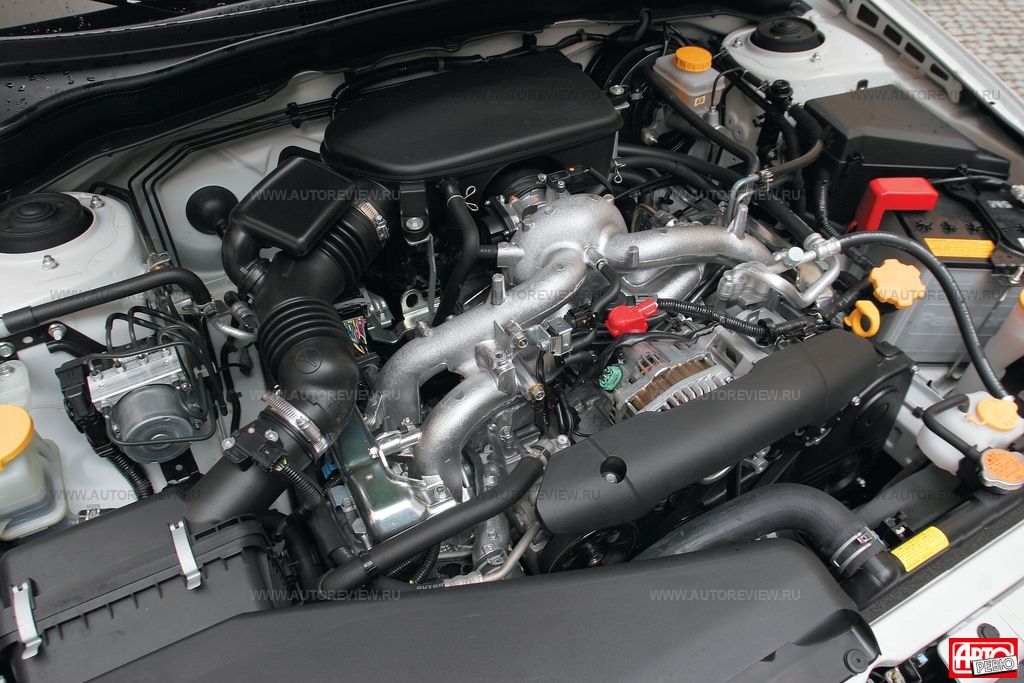 | |
| Externally, the 150-horsepower 2.0-liter boxer "four" differs from the 107-horsepower 1.5-liter (right) only in the shape of the intake manifold. The diameter of the pipes is an excellent illustration of dynamic capabilities. But what a sound! | ||
And there's not much to say about the interior: it just became more modern. It would seem that continuity is not bad. But we're used to the fact that nowadays in Japan everyone seeks a design embodiment of functionality, but here — bare functionality without any embodiment! Yes, it has become more spacious, especially in the back, because the wheelbase has grown by 95 mm. But from an aesthetic point of view, the interior has lagged behind Japanese competitors for years! If not for the tightly fitted panels, this could be some Korean or, God forgive me, Chinese car.
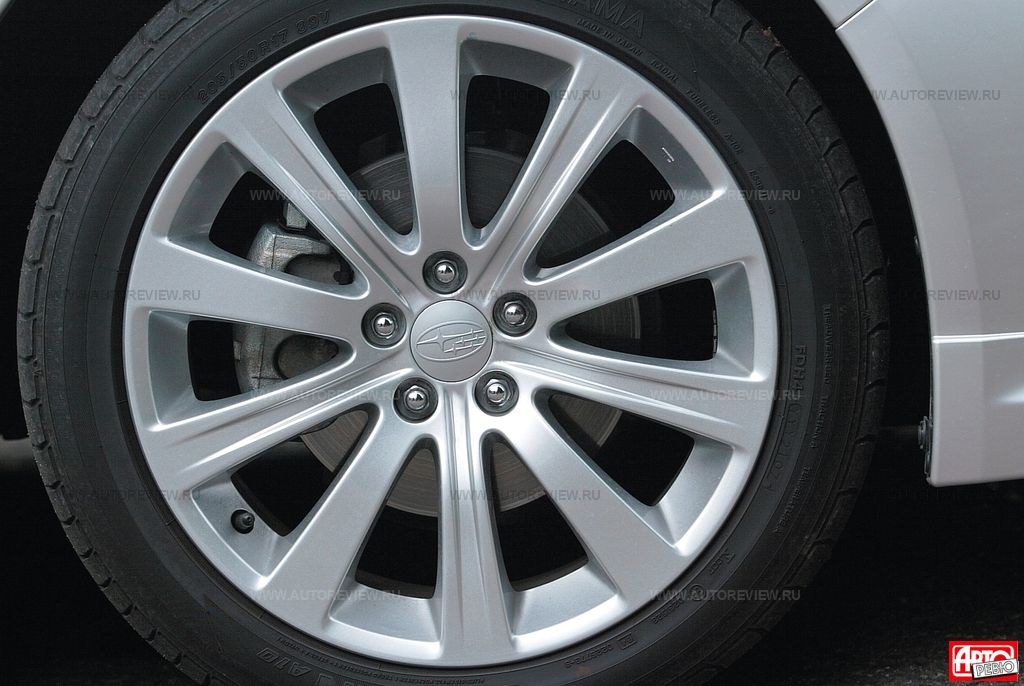
For about 50 thousand rubles, the interior can be enlivened with sports seats, and the exterior with 17-inch wheels and decorative body kits. Such an Impreza is called Sport. But the chassis settings are the same, so there's no hint of sport here.
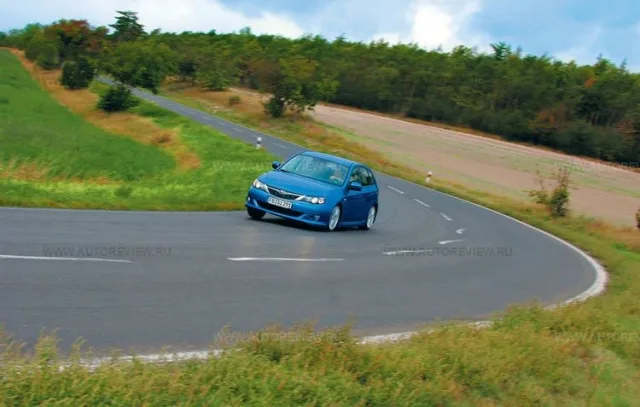
The chassis settings do not encourage active driving: large rolls, diagonal rocking in extreme modes...
Previously, the last thing you thought about in an Impreza was the liver and intestines. If you remembered your insides, it means either you're a passenger, or the car is heading into a pole. But in the new Impreza, it's already useful to listen to yourself: the engineers paid special attention to suspension vibrations that cause resonance of internal organs — this is important for the subjective feeling of ride smoothness and vibration protection. Here it is, the main trump card of the new Impreza! And this was stated not by some cunning marketer, but by engineer Midori Kubota!
The new Impreza is indeed a very comfortable car. It ignores small road defects, transmits medium irregularities with weak vibrations, and handles large potholes decently. True, softer springs allow rocking, but on Czech roads there wasn't a wave that could throw the Impreza off balance. They say the suspension travel has also increased.
And it's quiet in the cabin — like in the deepest sleep of the Mazda 3! True, like most Japanese manufacturers, Subaru doesn't care too much about soundproofing the wheel arches: you can hear both the tires and the sand drumming on the metal. But on smooth asphalt — acoustic paradise. If not for the engine. It would seem a sin to complain about the menacing roar that brings smiles even to passersby. But the voice of the "boxer" is not some electric screwdriver, but a jackhammer, and in a short trip around the city it can drill more than one hole in your head...
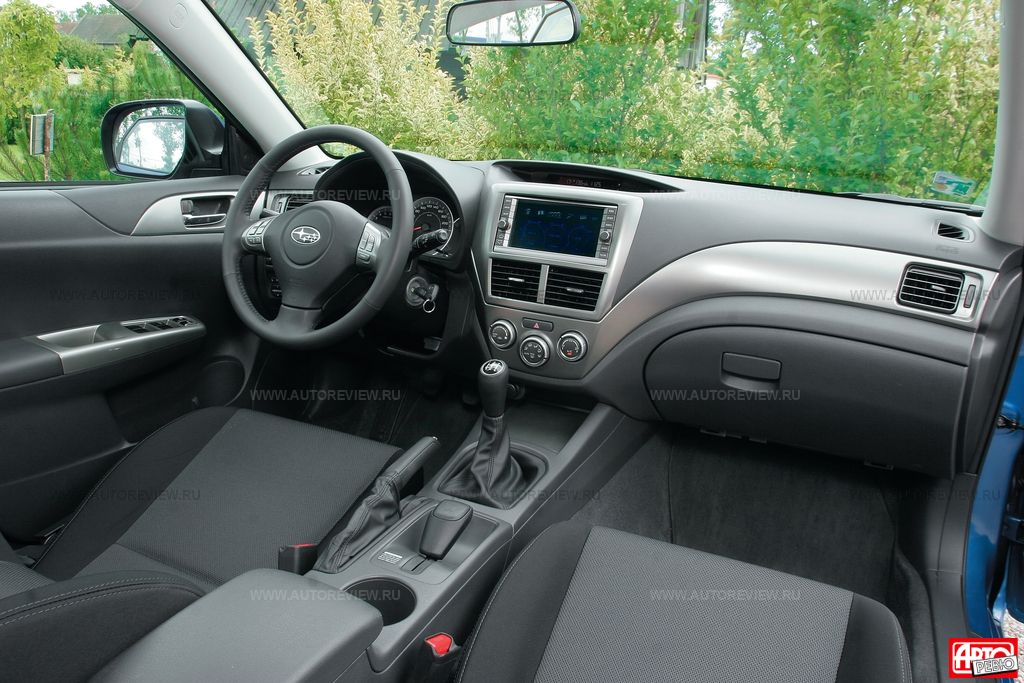 | 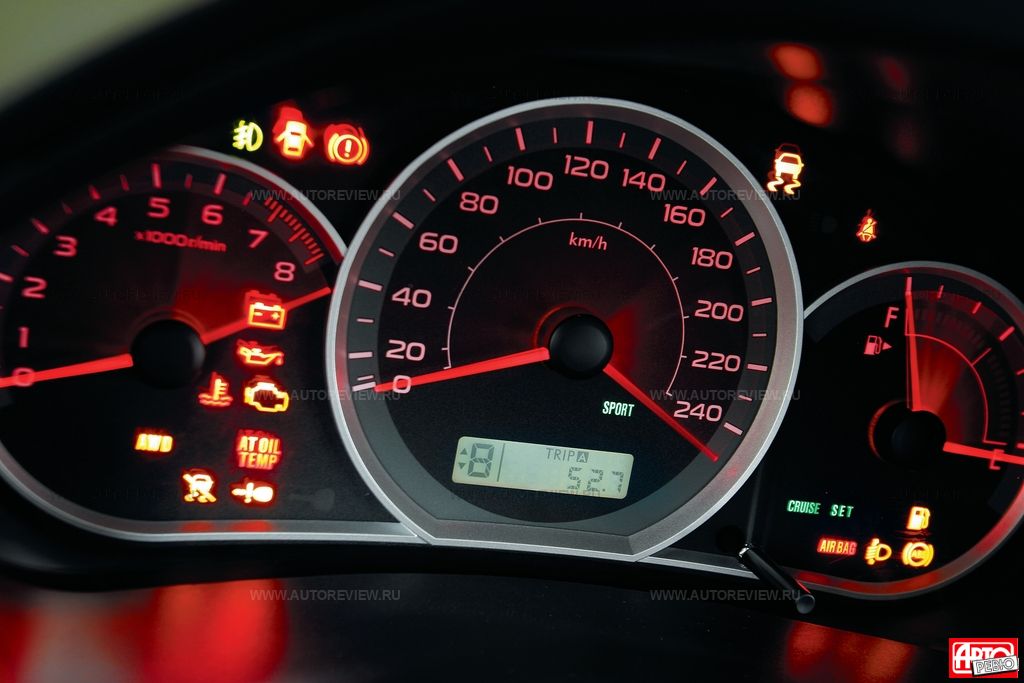 | 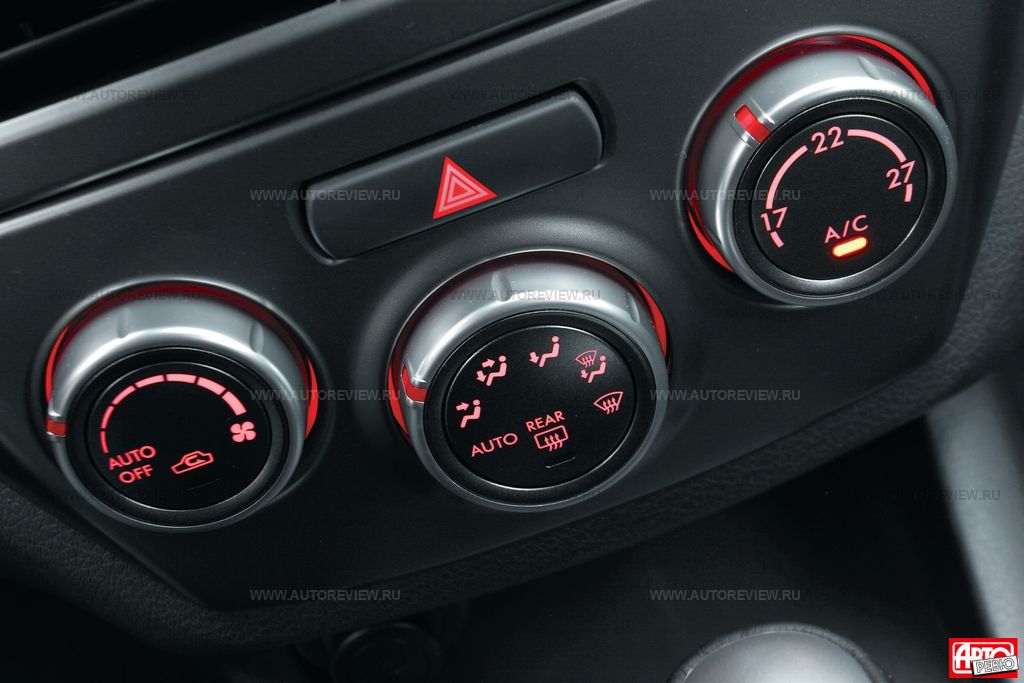 |
| The Impreza interior evolves. Without haste | When the ignition is turned on, the instrument needles describe a "lap of honor" | Climate control is managed by three laconic knobs |
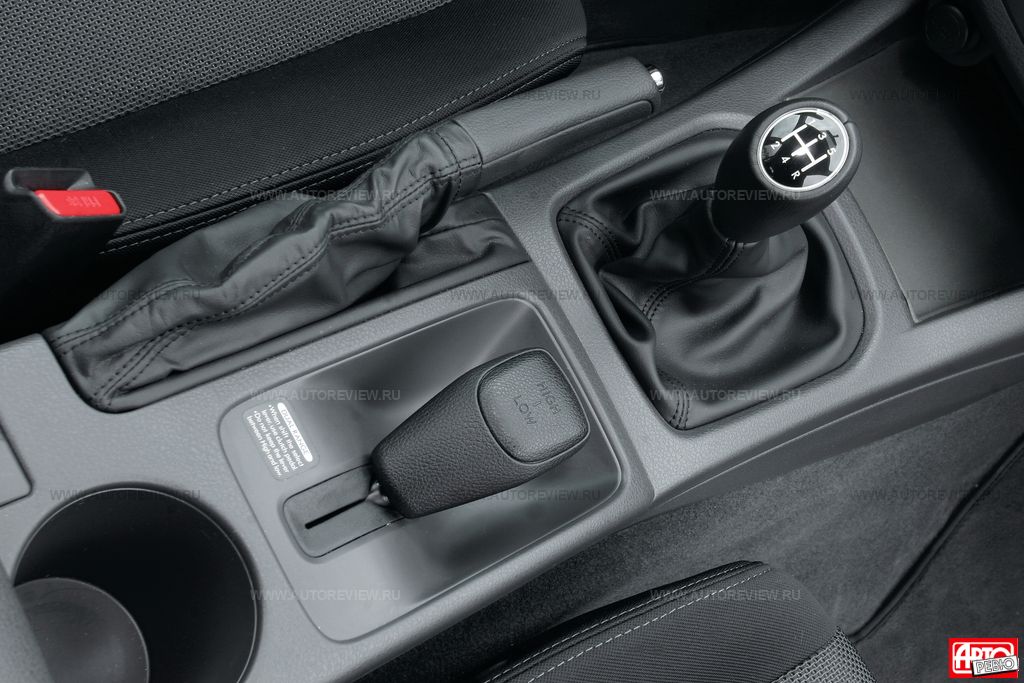 | 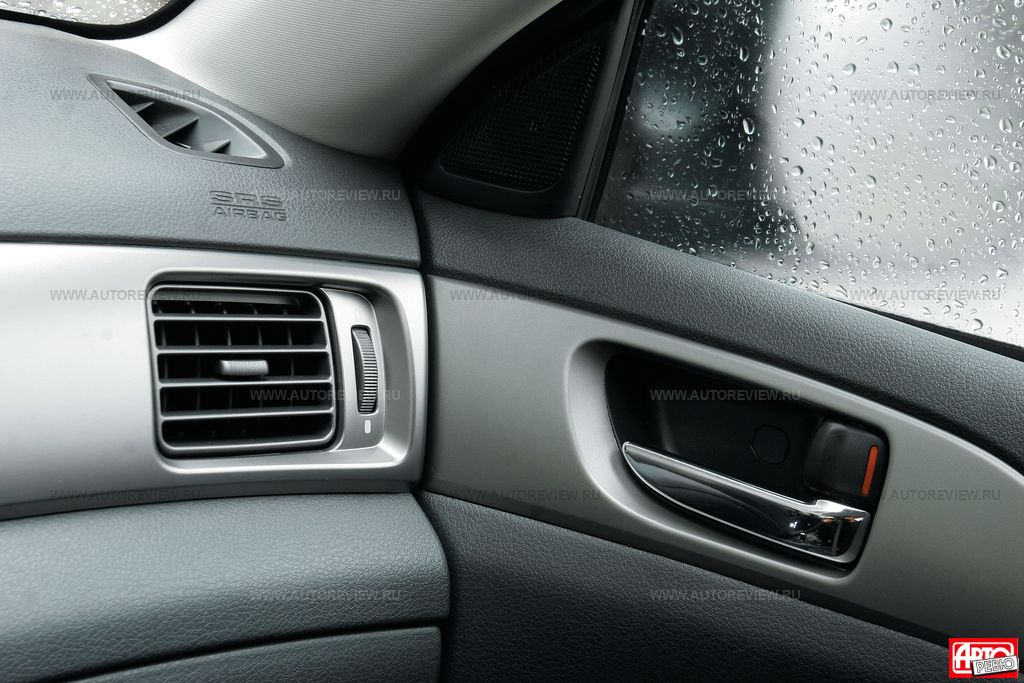 | |
| Europeans can't understand why the Impreza needs a low range in the transmission, but in Russia this useful function is appreciated, and now it's available for all hatchbacks with a manual | On cars with a four-speed automatic, the drive to the rear wheels is via an electronically controlled multi-disc clutch | The build quality surpasses the aesthetic value of the interior |
What a pity that the sound of the engine promises more than the car can actually deliver! The car obediently responds to a sharp release of the clutch with a short travel, but that's where its enthusiasm ends. By feel, the two-liter Impreza doesn't pull like its 150 horses at all — that's exactly how many my usual Mazda 3 has. Only with the Mazda engine does a second wind start after four thousand rpm, but here — time ticks, noise grows, and the speedometer needle isn't in a hurry to glide over the red markings. First gear exhausts itself somewhere around sixty kilometers per hour, second barely reaches a hundred. Then another move of the long lever, third — up to 140 km/h, and complete calm! Without a turbo, only emotional emptiness remains.
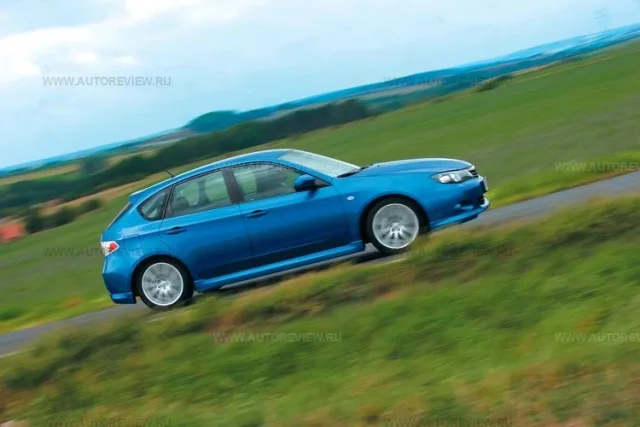
The expensive 2.0R Sport version pleases with sporty accessories, but the chassis remains unchanged
Factory data confirms: the fresh Impreza loses to the previous one in dynamics. Only the one-and-a-half-liter modification with an automatic gearbox gained momentum, while the manual versions lost from 0.3 to 0.8 seconds! All because Japanese engineers prioritized fuel efficiency and environmental care. The car indeed started consuming less fuel — almost a liter per hundred kilometers, but the engine's output also dropped: by lowering the compression ratio, the designers cut a whole 10 hp from the two-liter "four." True, in return they added low-end torque — plus 10 Nm.
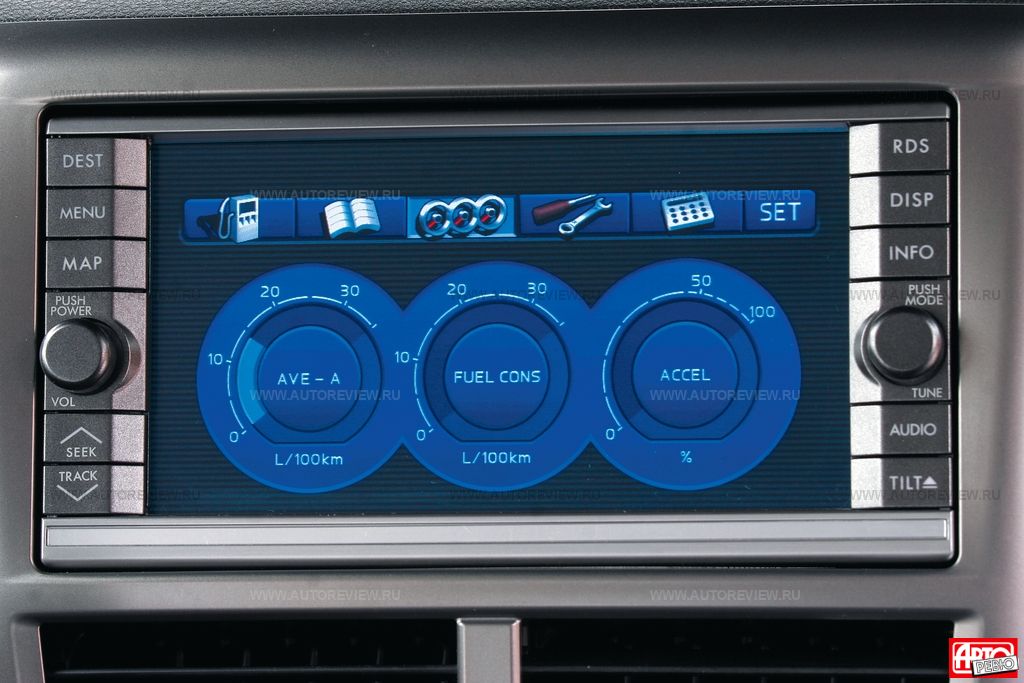 | 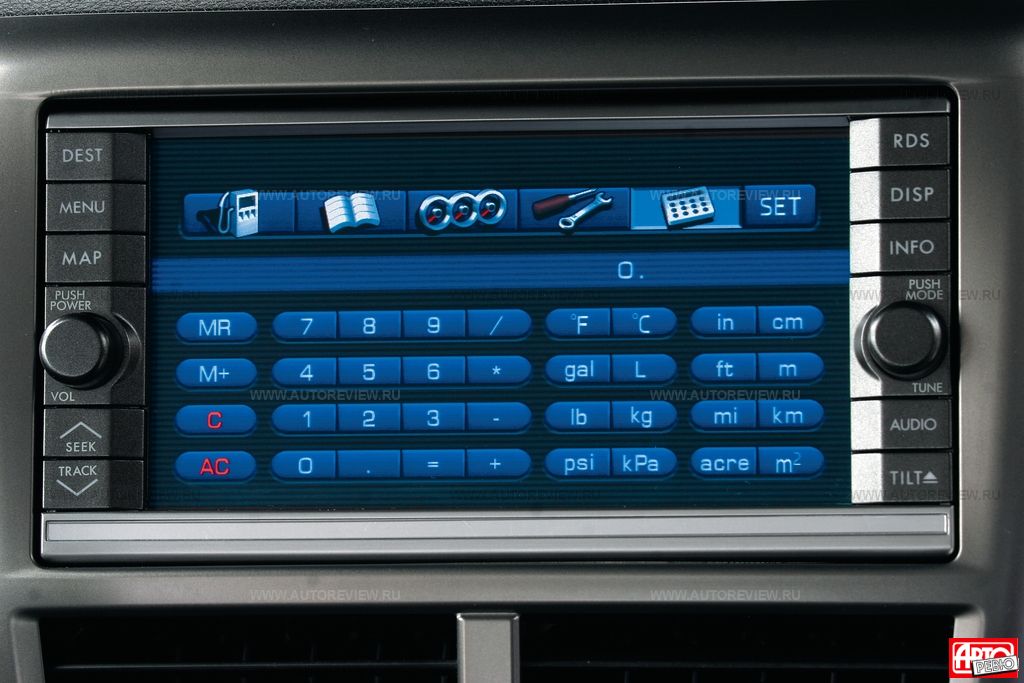 |
| The Kenwood multimedia center combines a DVD navigator, a decent audio system, and an onboard computer that displays not only average and instantaneous fuel consumption but also the throttle position... | ...and if necessary, via the touchscreen, you can convert liters with kilometers into gallons and miles using the built-in calculator-converter |
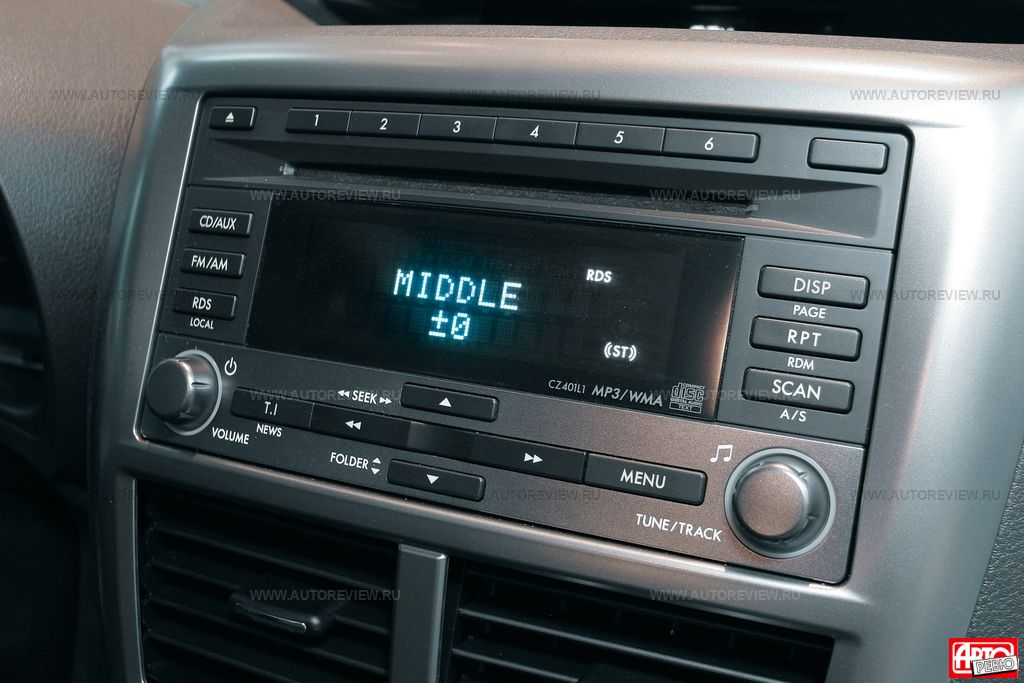 | 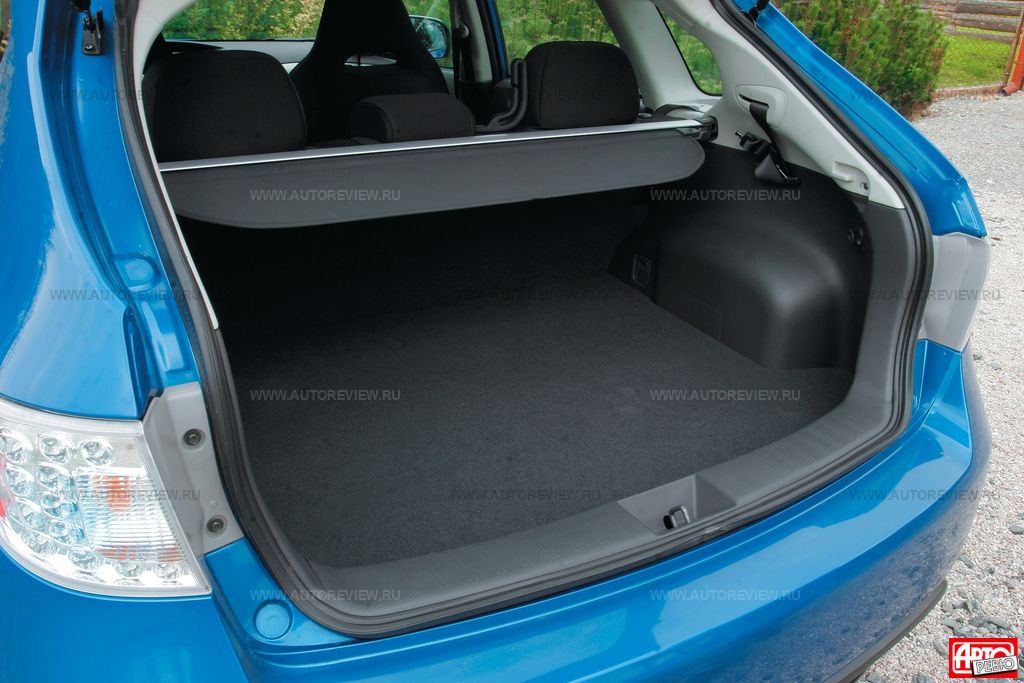 |
| But in Russia, instead of it, they'll install a regular double-DIN audio system | The 538-liter trunk is wide and flat. The photo shows the European version; Russian cars have a higher floor due to the full-size spare tire |
And handling? You can't call it sporty or even memorable. Body roll, responses are quick but sluggish, the steering wheel gives almost no feedback at small angles. In sharp turns, the front end pushes and tends to understeer if you carry too much speed at the entry. But on a straight line, the car is indifferent to light steering wheel wobbles. Boring, not thrilling.
When I returned to the office, colleagues vied to ask: "So how is it?" — expecting enthusiastic stories. And all I could do was shrug.
It's no longer important who's to blame for Subaru becoming mainstream — Toyota or, as Subaru fans insist, themselves. The Impreza has turned into an ordinary car. And there are plenty of such ordinary cars on the market without it, and they cost less.
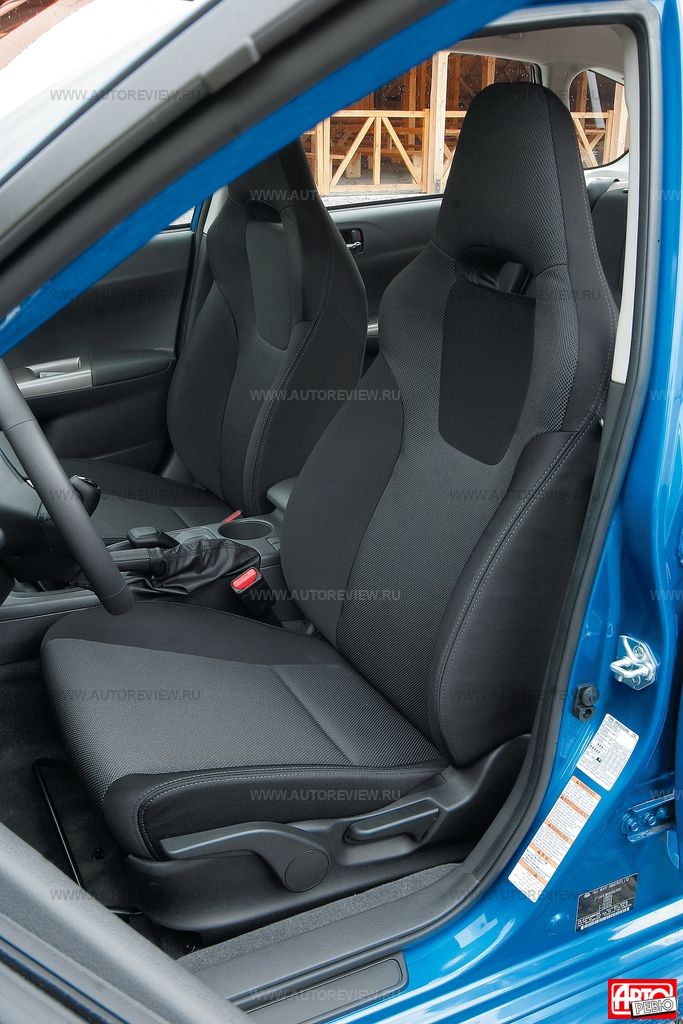 | 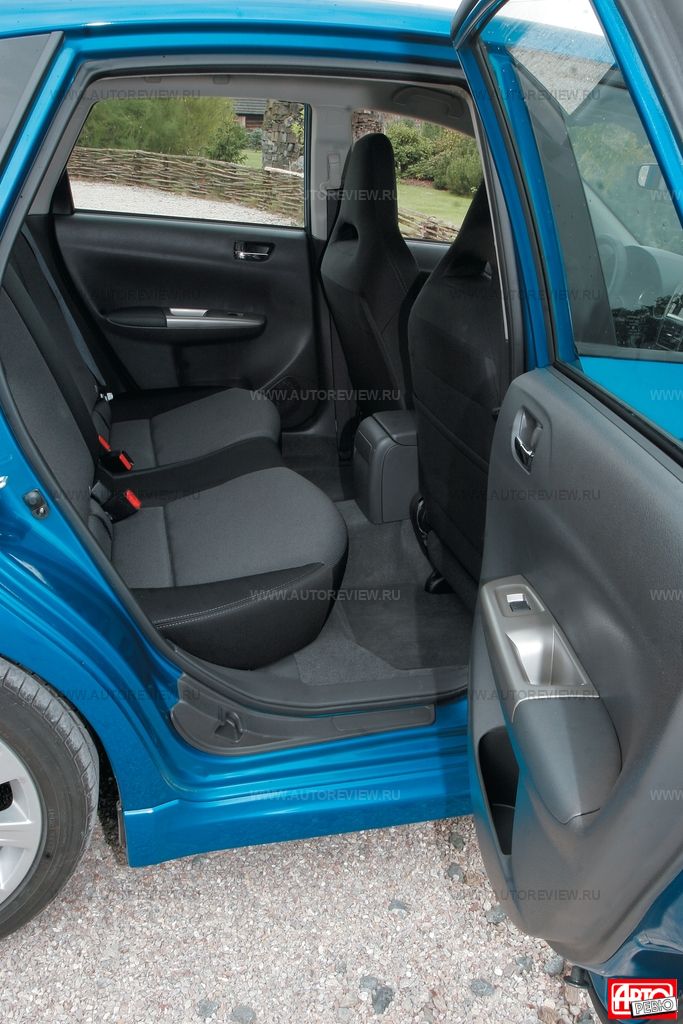 | 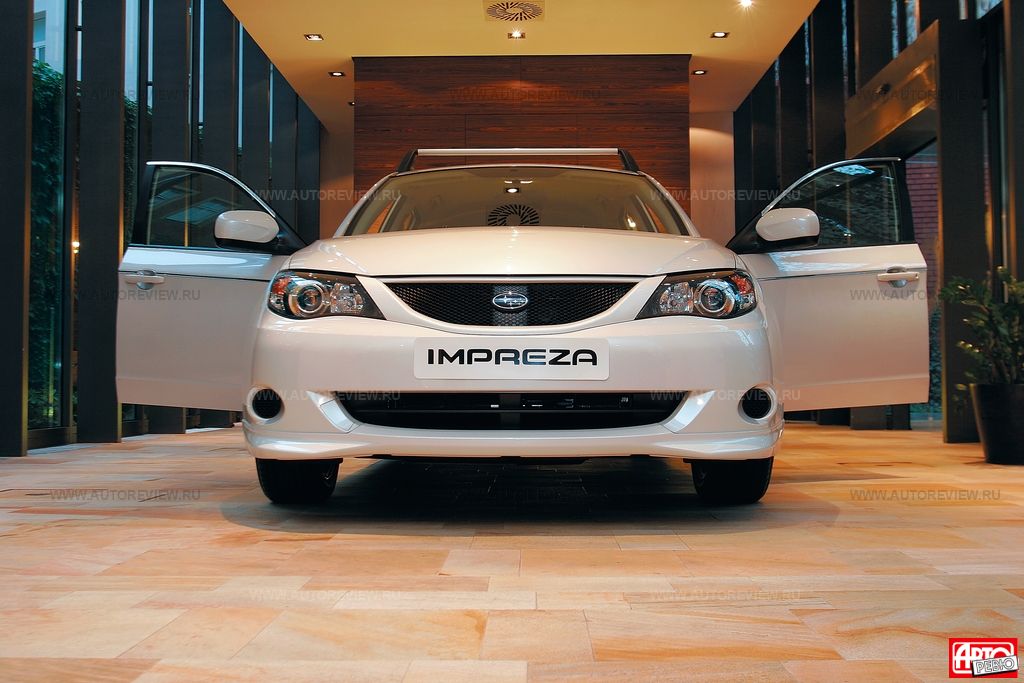 |
| Comfortable "buckets" with developed lateral support are a privilege of the 2.0R Sport version | In the back, it's really spacious, and the doors open almost at a right angle — very convenient! | Among dealer options, besides tasteless chrome moldings and handle overlays, there's also a nice faux radiator grille that livens up the dull face of the Impreza |
The one-and-a-half-liter all-wheel-drive Impreza in base trim with two airbags, climate control, and heating for everything except seats will cost 577,700 rubles (about $22,500). The version with a two-liter engine and four additional airbags costs 730,800 rubles — that's $28,500. The top trim with leather interior, xenon, cruise control, and stability control will set you back 799,100 rubles ($31,250). An automatic gearbox — another 40 thousand extra. You'll agree, you'd have to be a brand fanatic or not imagine life without all-wheel drive to not take a closer look at more stylish, quicker, and more affordable rivals.
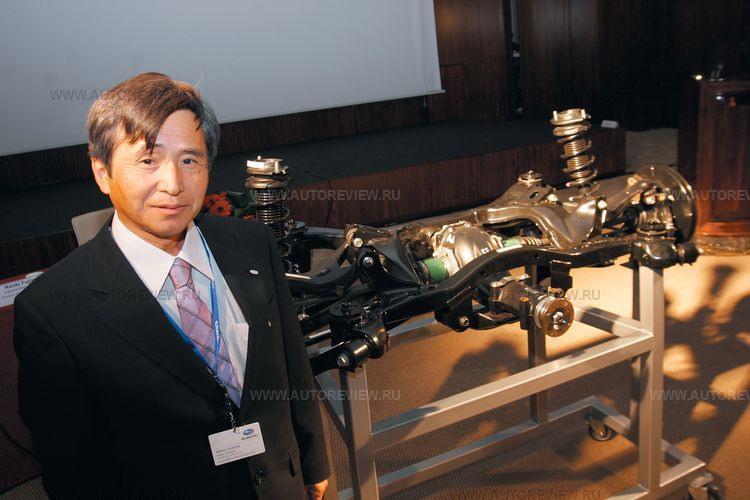 | 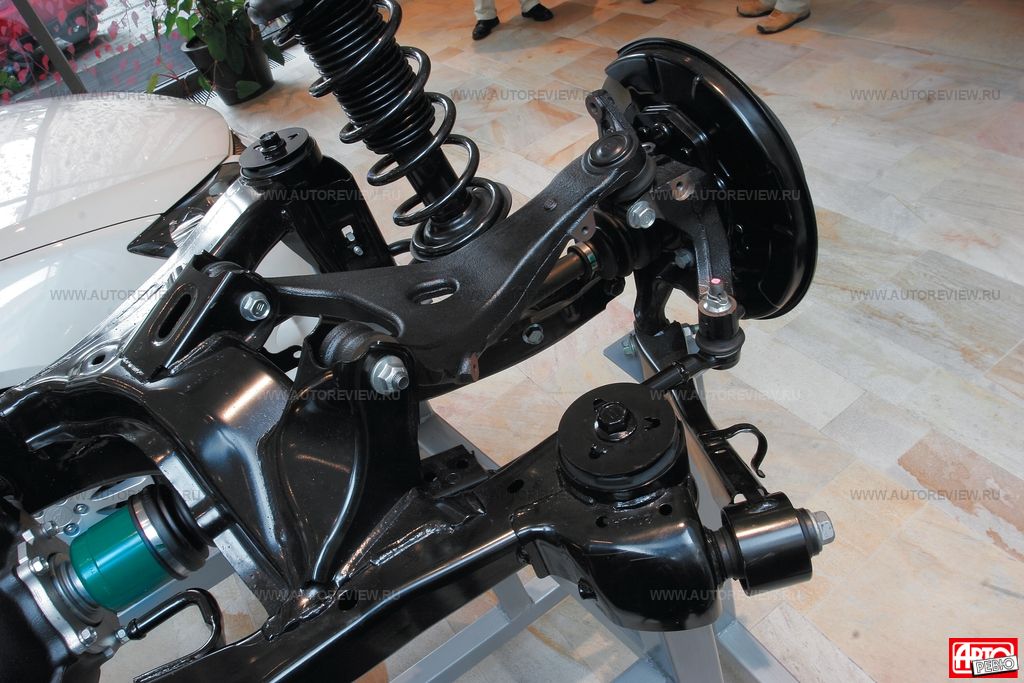 | 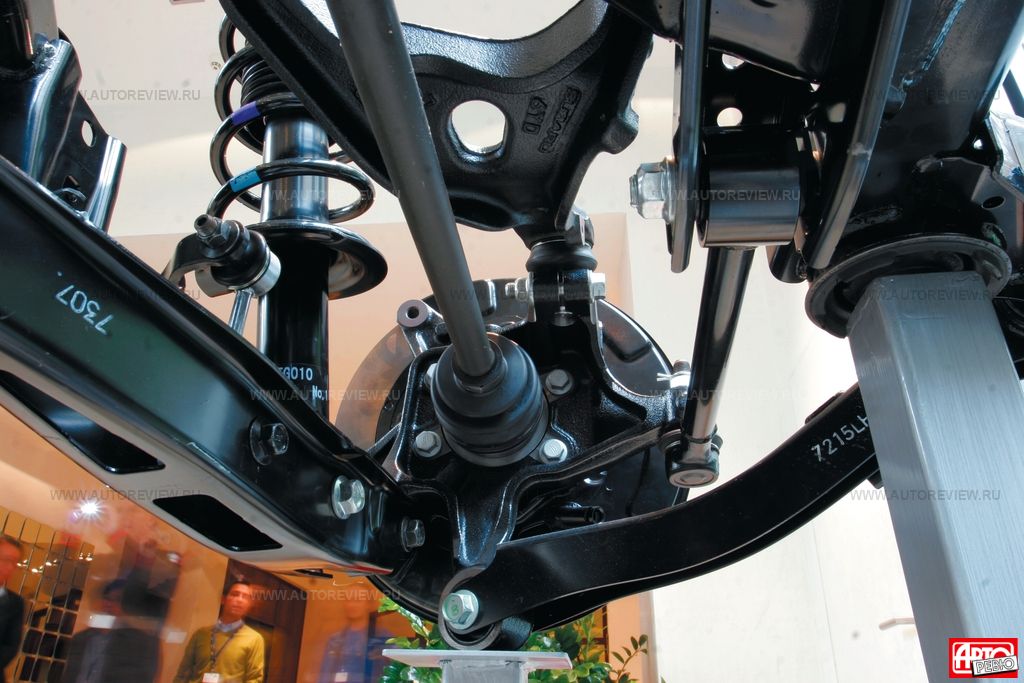 |
| Engineer Midori Kubota is one of the creators of the new Impreza, author of the rear suspension, which attaches to the body via a subframe with elastic mounts | On atmospheric versions, all suspension arms are steel, and for the characteristic A-shape of the upper arm, the Japanese nicknamed this scheme "double wishbone suspension"... | ...but if you look from below, it's an ordinary "multi-link," and with a kinematic steering effect |
And what about the new Impreza 2.5 WRX hatchback with a 230-horsepower turbo engine? Whether it's good or bad, I haven't figured out yet. But I know for sure that the WRX will be sold only in top trim for 1,107,500 rubles ($43,150) — that's slightly more expensive than the current WRX sedan, but cheaper than the wagon. Plus, the Russian Subaru office is considering supplying adapted American sedans.
Here, perhaps, one could raise a glass of champagne. Or would you still prefer still water?
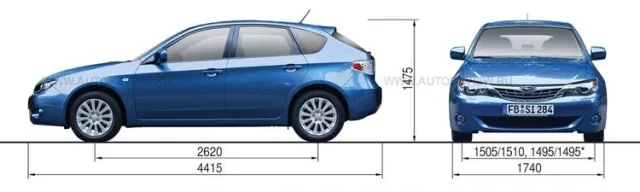
* For the 2.0R version
| Car sales | ||
| Subaru Impreza in Russia in the first half of 2007* | ||
| Total | units | % |
| 1393 | 100 | |
| With atmospheric engines | 1195 | 85.8 |
| Impreza 1.5R | 820 | 58.7 |
| Impreza 2.0R | 375 | 26.9 |
| With turbo engines | 198 | 14.2 |
| Impreza WRX | 137 | 9.8 |
| Impreza WRX STI | 61 | 4.4 |
| Total with "automatics" | 503 | 36.1 |
| * According to the Association of European Businesses | ||
| Production and sales volume of Fuji Heavy Industries (FHI) in 2006*, units | ||
| FHI production | 592656 | |
| FHI global sales | 601773 | |
| Subaru sales in Europe | 57572 | |
| Subaru Impreza cars produced | 114927 | |
| Sales volume of Subaru Impreza cars | in Europe | 12704 |
| in America | 47325 | |
| in Japan | 26039 | |
| * According to Automotive News’2007 Global Market Data Book | ||
| Passport data | ||||
| Parameters | Automobile | |||
| Subaru Impreza | ||||
| Modification | 1.5R | 2.0R | WRX | |
| Body type | 5-door hatchback | 5-door hatchback | 5-door hatchback | |
| Number of seats | 5 | 5 | 5 | |
| Trunk volume, l | 538—1257* | 538—1257* | 301—1216* | |
| Curb weight, kg | 1310 (1325)** | 1345 (1360) | 1395 | |
| Gross weight, kg | 1850 | 1890 | 1920 | |
| Engine | petrol, with distributed injection | petrol, with distributed injection | petrol, with distributed injection and turbocharging | |
| Location | front, longitudinal | front, longitudinal | front, longitudinal | |
| Number and arrangement of cylinders | 4, opposed | 4, opposed | 4, opposed | |
| Displacement, cm³ | 1498 | 1994 | 2457 | |
| Cylinder bore/piston stroke, mm | 77.7/79.0 | 92.0/75.0 | 99.5/79.0 | |
| Compression ratio | 10.1:1 | 10.2:1 | 8.4:1 | |
| Number of valves | 16 | 16 | 16 | |
| Max. power, hp/kW/rpm | 107/79/6000 | 150/110/6400 | 230/169/5200 | |
| Max. torque, Nm/rpm | 142/3200 | 196/3200 | 320/2800 | |
| Gearbox | manual, 5-speed (automatic, 4-speed) | manual, 5-speed (automatic, 4-speed) | manual, 5-speed | |
| Gear ratios | I | 3.45 (2.79) | 3.45 (2.79) | 3.17 |
| II | 1.95 (1.55) | 2.06 (1.55) | 1.88 | |
| III | 1.30 (1.00) | 1.45 (1.00) | 1.30 | |
| IV | 0.97 (0.69) | 1.09 (0.69) | 0.97 | |
| V | 0.78 (—) | 0.83 (—) | 0.74 | |
| reverse | 3.33 (2.72) | 3.33 (2.72) | 3.33 | |
| final drive | 4.44 | 4.11 | 4.44 | |
| Drive | permanent all-wheel (plug-in all-wheel) | permanent all-wheel (plug-in all-wheel) | permanent all-wheel | |
| Front suspension | independent, spring, McPherson | independent, spring, McPherson | independent, spring, McPherson | |
| Rear suspension | independent, spring, multi-link | independent, spring, multi-link | independent, spring, multi-link | |
| Front brakes | disc, ventilated | disc, ventilated | disc, ventilated | |
| Rear brakes | disc | disc | disc, ventilated | |
| Tires | 195/65 R15 | 205/55 R16 | 205/50 R17 | |
| Maximum speed, km/h | 175 (167) | 193 (182) | 209 | |
| Acceleration time 0—100 km/h, s | 14.0 (15.1) | 9.6 (11.6) | 6.5 | |
| Fuel consumption, l/100 km | urban cycle | 9.6 (9.8) | 11.1 (11.1) | 14.3 |
| suburban cycle | 6.3 (6.2) | 6.9 (6.5) | 8.2 | |
| combined cycle | 7.5 (7.5) | 8.4 (8.2) | 10.4 | |
| Fuel tank capacity, l | 60 | 60 | 60 | |
| * With folded rear seats | ||||
| ** In parentheses — data for modification with automatic transmission | ||||
Fifteen years
Igor VLADIMIRSKYThe first-generation Subaru Impreza, built on a shortened Legacy platform, debuted in Japan in November 1992. Formally, it replaced the outdated Leone, but in dimensions it exactly fit into the golf class. Since then, the transmission has retained almost unchanged permanent all-wheel drive with a reduction gear. The base engines were opposed "fours" of 1.6 L (90 hp), 1.8 L (103 hp) and 2.0 L (115 hp), and the weakest versions could be ordered with single-axle drive. Gearboxes — five-speed manual or four-speed automatic. Later, a 2.2 L engine (135 hp) appeared for the US market. Frameless doors became a hallmark of the model, as did the Legacy.
In parallel with the "civilian" cars, the WRX debuted with a turbocharged two-liter engine producing 240 hp. However, such versions were intended exclusively for the domestic Japanese market. Europe and America received the Impreza GT (in some countries — Impreza Turbo) with a 211 hp engine. But there you could order a station wagon — there were almost no competitors in this class, except for the Audi S2 Avant with a 220-horsepower engine.
In 1993, the Impreza replaced the Legacy in the World Rally Championship, and in January 1994, the "hot" WRX STi, created with the participation of Subaru Tecnica International, went on sale. Lightweight body, 250 hp engine, reinforced brakes — all this was available to buyers. Later, power increased to 280 hp, which became the ceiling due to Japanese restrictions.
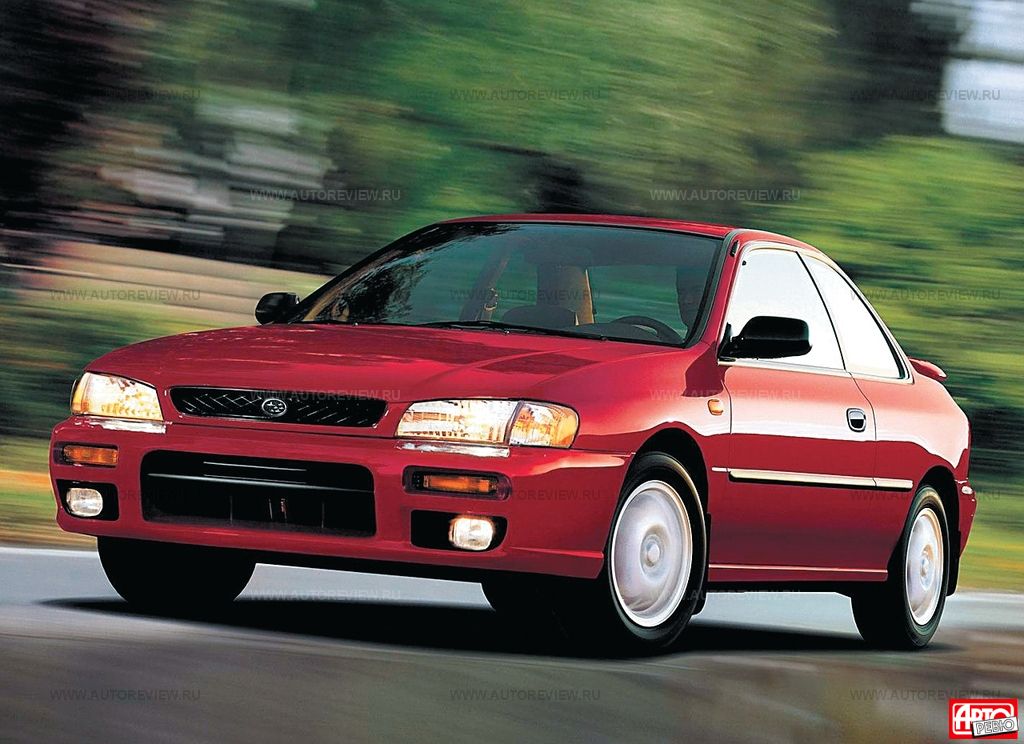 | 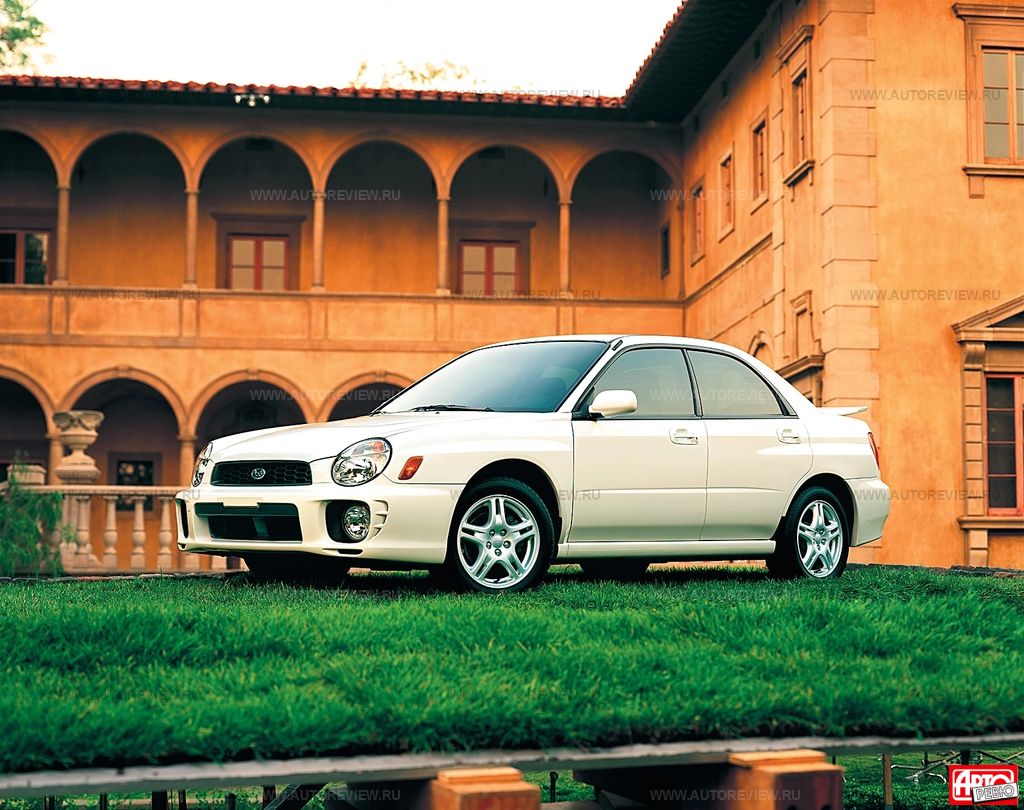 |
| The first-generation Impreza coupe was produced from 1994, but only for the US market (where it was called Impreza Coupe) and Japan, where it bore the name Retna | The "bug-eyed" second-generation Impreza appeared at the turn of the century and received the loud name New Age Impreza, although technically it was a deep modernization of its predecessor |
At the end of 1994, the Japanese were offered a coupe, which was called Retna in Japan and Impreza Coupe in the US. It was on the basis of the two-door that rally cars were later built. There was also an attempt to make a convertible — the Subaru Operetta concept was shown in Tokyo in 1995, but the public did not appreciate it, and the car did not go into production.
In 1996, the Impreza received a light restyling, and front-wheel-drive versions disappeared from the European and American lineup. A year later, the interior was updated, and a modification with a naturally aspirated 2.5 L engine producing 165 hp appeared in the US.
The second generation of the Impreza was shown in Japan on August 23, 2000, and in October of the same year, the car reached Europe, debuting at the Birmingham Motor Show. The main changes were in the exterior, while the technology remained the same. The coupe was dropped from the lineup. Europeans were offered opposed engines of 1.6 L (95 hp) and 2.0 L (125 hp), and the cult WRX badge moved to turbo versions with 218 hp (250 hp for Japan). Later, the top version WRX STi appeared with 265–280 hp depending on the market, with a different suspension, electronically controlled center differential (initially only for Japan) and rear limited-slip differential.
At the end of 2002, the "second" Impreza was updated — just a couple of years after its debut. A rare case: many changes to the design and construction were made at the request of the factory rally team Subaru World Rally Team. The new front end improved aerodynamics and cooling of the engine compartment of rally cars. The European WRX became more powerful — 225 hp.
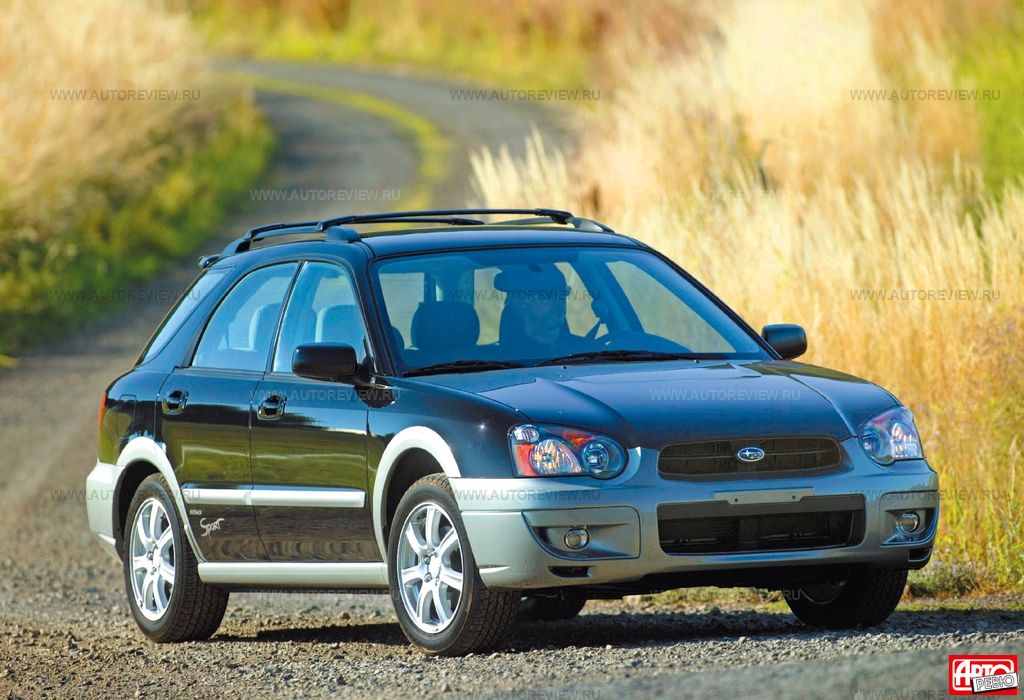 | 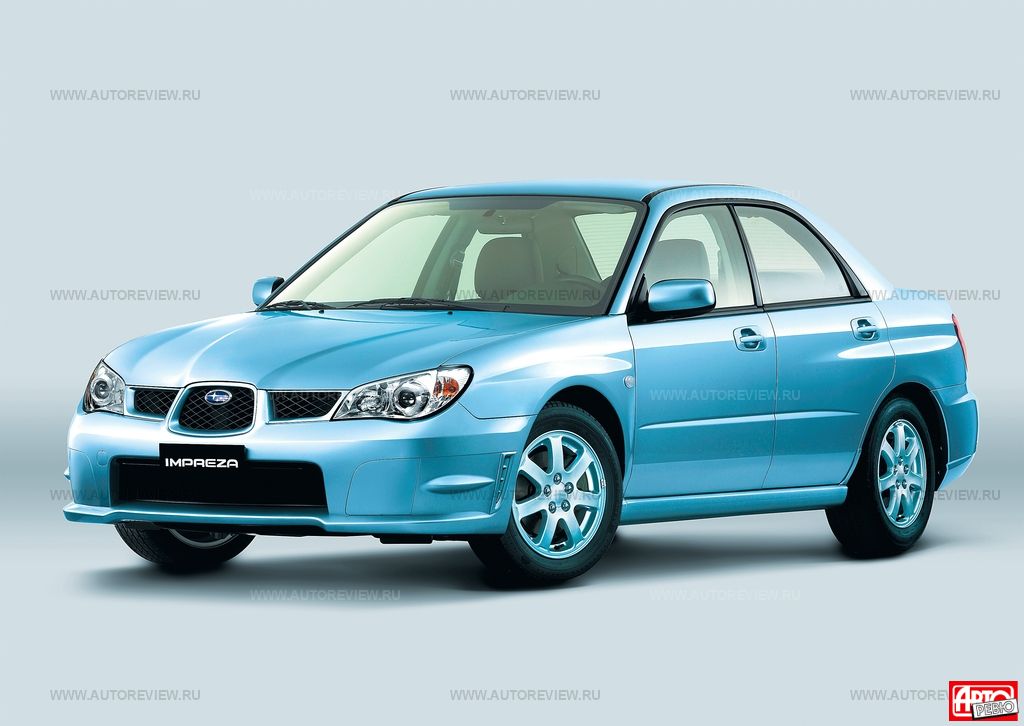 |
| In 2002, the "second" Impreza underwent its first restyling. The photo shows the Subaru Outback Sport station wagon for the American market, which differed from the regular Impreza in increased ground clearance, additional roof rails and two-tone paint | The second-generation Subaru Impreza in its last iteration appeared in 2005 — the car's design was changed taking into account the new corporate style of the brand, previously tested on the Subaru B9 Tribeca crossover |
The formidable reputation of a rally fighter did not help sales much. The public frowned at the controversial appearance, and this was a constant source of criticism. Therefore, in 2005, the Japanese again took up the scalpel: this time they entrusted the operation to Andreas Zapatinas, a newly minted chief designer who was lured away from Alfa Romeo. The engine lineup was also shaken up: the 1.6-liter unit was retired, the "two-liter" gained power to 160 hp, and the WRX began to be equipped with a 2.5-liter engine with an output of 230 hp. And from mid-2006, a 1.5-liter variant (105 hp) appeared for Europeans, which was previously available only on the domestic Japanese market.
It is noteworthy that over its relatively short life, the Impreza has acquired a huge number of limited series. The most famous are from S201 to S204, as well as the 22B, V-Limited, and RB320, dedicated to the memory of rally driver Richard Burns. Each differed in its own styling, engine tuning, and other suspension settings. A separate story is the Type RA and Spec C, which were homologated according to Group N rules for international rally racing. And the final chord was a batch of 400 WRX GB270 cars for the British market: with an aerodynamic body kit and a 270 hp engine.
And so, in April 2007, at the New York Auto Show, the third generation debuted: old wine poured into a new bottle. The wagon disappeared from the lineup, the sedan was kept only for Americans, and everyone else got a hatchback.