
SsangYong Kyron. Two in One
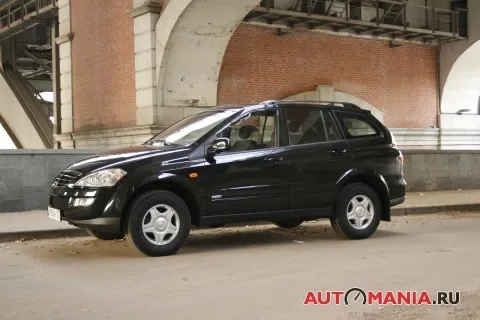
How to survive in the face of fierce competition in the automotive market? The answer is obvious — reduce production costs. In the late nineties of the last century, Ferdinand Piëch, who then headed the Volkswagen concern, found a solution to this difficult task by proposing the concept of a "unified platform." Its widespread implementation helped automakers reduce the cost of producing cars and at least somewhat curb price growth, and buyers got many cars that were almost identical from a technical point of view. However, as the well-known saying goes, every rule has its exceptions. It seems that competition does not scare everyone — otherwise, how can one explain the fact that cars that are as alike as two peas appear in the model lineup of a single brand?
Let us recall at least Hyundai. For several years, the first-generation Tucson and Santa Fe coexisted and competed side by side in the Korean manufacturer's model range. With the advent of the restyled version of the latter, this dual power ended, but another Korean brand, SsangYong, immediately picked up the baton. The company decided to release another SUV called Kyron as a pair to the already established Rexton. It is clear that after the update of both brands' models, the rivalry not only did not subside but became even more fierce. Hyundai representatives at one time explained their policy by saying that their models were designed for different categories of buyers: the Tucson was intended for young people, and the Santa Fe for older drivers. It was believed that in this case, the competition between them would be purely nominal, and both cars would enjoy stable demand. It seems that a similar thought visited SsangYong's marketers, who assigned the Kyron the role of the "younger brother" paired with the Rexton.
The new SUV was supposed to attract buyers primarily with its unusual appearance: the traditional "off-road" body silhouette was combined with a front end in the style of the Ford Focus and wide "ribs" curving onto the tailgate. Overall, the picture would have looked quite decent if not for the innate tendency of SsangYong designers toward extravagance. Many probably remember the previous Musso, which received the nickname "sneaker" from motorists for its non-standard appearance. Approximately the same story happened with the first Kyron. For example, the rear lights, which resembled medieval knight's shields in shape, did not fit into the overall style of the car at all. In short, despite the relatively fresh exterior, it remained alien and unusual for the mass consumer. However, when working on the updated version, the Koreans took into account previous mistakes and more or less brought the SUV's appearance to generally accepted canons. In particular, those very controversial rear lights turned into quite standard lighting elements. And although there were no radical changes in the Kyron's appearance, its image clearly gained solidity, and therefore there was a chance for greater success with the public.
The interior, however, remained unchanged, although there were no complaints about it in the previous version either. Moreover, the cabin of this SUV was and remains one of its main trump cards — strict lines, clear angles, and geometrically verified shapes please the eye. The circles scattered around the cockpit also look original, the largest of which is located next to the gearbox selector. The only thing one can find fault with is the quality of finishing materials. The plastic itself is not bad, but for a car of this status and price, one would like the panel and buttons to be made of more textured materials.
It is noteworthy that the avant-garde interior design of the Kyron had almost no effect on ergonomics. The adjustments of the driver's seat and steering column are quite sufficient for a person of almost any build to sit comfortably behind the wheel. The soft seats are equipped with decent lateral support and are quite comfortable. The seating position — whether high, traditional for SUVs, or relaxed "passenger car" style — can be chosen by the driver to their liking, and this will not affect either the ease of control or visibility. But there were drawbacks: the left edge of the central console constantly presses on the right shin, and this feeling is, to put it mildly, unpleasant.
As for passenger capacity, the "Korean" is in perfect order: at the rear there is a full-size sofa on which three people can freely sit — there is plenty of room for legs, above heads, and in the shoulders, and the sofa backrest can be adjusted for incline. This means that even a long trip with a large company will be quite comfortable. As for luggage, you can take quite a lot of it, and if you fold the rear sofa, the trunk volume will increase to at least one and a half cubic meters. However, loading heavy and bulky items there is inconvenient — the high sill gets in the way. Another ergonomic miscalculation is the mounting of the spare wheel. If a puncture happens on the road, the Kyron driver will have to crawl under the car, since this SUV does not have a mechanism that would lower the "spare" from the luggage compartment.
Now about how the Kyron behaves on the move. Although it is positioned as a full-fledged "off-road conqueror," the Koreans clearly tried to adapt it primarily for asphalt. Body roll in corners is significantly less than one might expect, the steering is distinguished by excellent informativeness, and stability at high speeds is simply exemplary — the car's design ensures it with a reserve. True, for this, the engineers had to sacrifice ride smoothness: with almost complete absence of pitching on uneven surfaces, the car begins to "buck," and it passes transverse obstacles like bridge joints or "speed bumps" very harshly. Passengers in the back row suffer the most from this, constantly risking hitting their heads on the headrests of the front seats. So on the rear sofa of the Kyron, it is better to buckle up.
And what about under the hood? After the "Korean" finally settled at the "Severstal" plant in Naberezhnye Chelny, the once base and, in fact, only 140-horsepower Xdi turbodiesel with a volume of two liters disappeared from the list of available engines. Now, instead of it, buyers are offered the old proven "Mercedes" unit of 2.3 liters, producing 150 horsepower. And this is a pity: the new turbodiesel on such a relatively compact car worked very well. However, what is done is done, and the gasoline engine provides the Kyron with quite decent dynamics. True, confident acceleration is accompanied by quite strong noise, although the engine is not even revved to the limit yet. Simply put, much ado about nothing. However, the stubborn electronics do not care about the safety of passengers' ears — the "automatic" persistently continues to rev the engine up. Manual gear shifting could save the situation. After all, for the turbodiesel Kyron, as an alternative to standard mechanics, a licensed 5-speed "Mercedes" T-Tronic was offered, but now with the gasoline engine only a 4-speed automatic transmission works, so it is difficult to call this an advantage.
Of course, one cannot end the conversation without mentioning the off-road capabilities of the SsangYong. Since there are no inter-wheel locks here, the "Korean" is not capable of serious off-roading, but driving off the asphalt and going along a dirt road is not a problem for it. The Kyron is equipped with a standard Part Time all-wheel drive system: under normal conditions, torque is transmitted to the rear wheels, and the front axle is connected rigidly only at the driver's will — by turning a knob on the central console. True, this can only be done in "neutral," so it is better to take care of engaging the front wheels in advance. The same applies to the low range.
And finally, about the price. The base Kyron with a 5-speed manual transmission can be bought today for 802,000 rubles, and the most fully equipped version will cost 997,000 rubles. At the same time, it is worth keeping in mind that the difference between them is only in the leather interior, electric drives, stability control system, and automatic transmission.
Technical characteristics:
Before us is not just an SUV, but a real "working tool" for those who are used to choosing between price and practicality. This car is clearly not created for social life, but off-road it can give a head start to many more famous rivals.
Appearance and Construction
The exterior of the car is made in a strict, utilitarian style. Rectangular body shapes, short overhangs, and a high ground clearance of 200 mm immediately reveal a "professional" of off-road. The suspension here is built according to the classic scheme for such vehicles — a solid rear axle, which ensures maximum endurance on dirt roads and rocky trails.
The interior also does not indulge in excesses, but there is a certain logic in this. Simple materials, clear layout of instruments, and the absence of complex electronics — all this simplifies life for the owner far from civilization. The cabin is spacious, and the seating position is high, which provides excellent visibility.
Technical Characteristics
Under the hood is a gasoline unit with a volume of 2.3 liters, producing 150 horsepower. Torque of 214 Nm is available already at 3500 rpm, which allows you to feel confident at low speeds. However, the dynamics are not impressive: acceleration to a hundred takes 14.5 seconds, and the maximum speed is limited to 164 km/h. Fuel consumption in the combined cycle is stated at 11.6 liters per hundred, but on rough terrain, the appetite increases noticeably.
Driving Impressions
Behind the wheel, you immediately feel that the car is designed with a priority on load capacity and off-road capability, rather than comfort. The suspension is stiff, and on asphalt it transmits all joints and bumps into the cabin. But off-road, this same energy intensity allows you to move quickly and without fear of breakdowns. The steering is not sharp, and the brakes require getting used to, but for this class of vehicles, such behavior is absolutely normal.
The price of this car ranges from 802,000 to 977,000 rubles depending on the trim level. For this money, the buyer gets an honest and reliable SUV that is not ashamed to park in the garage next to an expensive foreign car, but it should be used for its intended purpose.