
About the Skoda brand
Czechia founded in 1895 Model range
General Information
Skoda Automobilova A.S. is a Czech manufacturer. It produces passenger cars, trucks, buses, aircraft engines, and agricultural machinery. The headquarters is located in the city of Mladá Boleslav. The company is part of the Volkswagen Group.
Corporate History
The brand's history begins at the end of 1895. Mechanic Václav Laurin and accountant Václav Klement, both motorcycle enthusiasts, started producing their own bicycles under the name "Slavia." By 1899, their company Laurin & Klement Co. had mastered motorcycle production. The company's racers achieved their first victories in international competitions. At the turn of the century, the company set a course for automobile production.
The Skoda company was founded in 1925 on the basis of Laurin & Klement. The appearance of the logo is associated with the name of Emil Škoda, who in 1866 became the chief engineer of the mechanical workshops in Plzeň, owned by Arnošt Waldstein. According to contemporaries' recollections, during a trip to America, Emil Škoda was accompanied by a faithful Indian, whose profile hung in his office. Based on this portrait, a relief image 25 cm in diameter was created, which was placed in the offices of several company executives. The winged arrow became a symbol of speed and efficiency thanks to Skoda locomotives, on which the public first saw the new trademark. Over time, Skoda products gained worldwide fame.
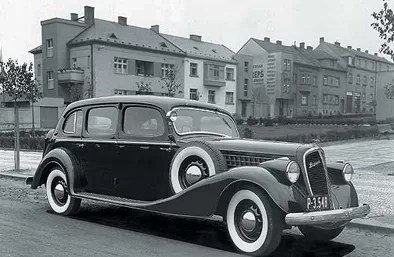
The first new car was the Skoda 4R. In the early 1930s, after the global industrial crisis, development began on a fundamentally new model, the Skoda 420. It was designed for four seats, had two doors, and a trunk that could be opened from the outside — a rarity at the time. During World War II, Skoda's workshops, under the control of Nazi Germany, produced military equipment and gas-generator trucks, with only a few passenger cars.
From 1945, after the communist government came to power in Czechoslovakia, the Skoda Popular 1101 — a restyling of the pre-war model — was put on the assembly line. It went down in history under the name Tudor (from "Two door"), and this name was retained even after the appearance of a four-door modification. The first truly new post-war car was the Skoda 420, released in 1953 and popularly named "Spartak." The chassis was traditional for Skoda — a backbone frame. In the late 1950s, the front suspension was replaced: instead of a transverse leaf spring, springs and telescopic shock absorbers were installed, while the rear transverse leaf spring remained. This modification was considered a new model and was named Octavia.
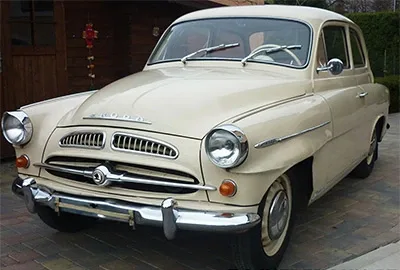
The model proved successful and was produced until 1971. From the early 1970s, a new era began: designers created a sports coupe 2+2 — the Skoda 110R, which became the prototype for the Skoda 130RS. This car could compete on sports tracks. The Skoda 130RS participated in rallies and circuit races. Its greatest success came in 1981 on the circuit, winning the European Championship title for factory teams, even surpassing BMW.
In the 1980s, Czech automakers created the Skoda Favorit, which was intended to be the leading car of the socialist community and compete with the Soviet "Zhiguli." However, after the Velvet Revolution of 1989, the plant faced difficulties: Western European cars flooded the market, and production faltered. The government decided to sell the plant to a foreign investor. Out of 24 candidates, including BMW, GM, and Renault, Volkswagen offered the best terms. It maintained Favorit production while improving its quality.
The secret of Skoda's popularity lies in the combination of price and quality. German designers corrected the Favorit's shortcomings, transforming it in 1994 into the elegant Felicia, which in characteristics and design resembled Western European counterparts rather than a car from the socialist camp. True success came with the release of the fundamentally new Octavia. It was first shown in September 1996 at the Paris Motor Show. The Octavia's appearance brought it closer to Western Volkswagen models. The Octavia tested the new Golf IV platform, and both models found their buyers. By that time, Skoda was fully owned by the Volkswagen Group.
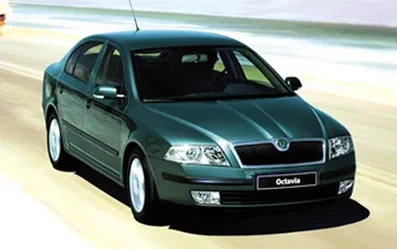
In March 1998, updated versions of the Skoda Felicia and Felicia Combi, as well as the Octavia Combi estate, were presented. At the end of 1999, the Fabia model appeared — a stylistically completely new car that retained Skoda's brand features. By 2000, Skoda became the only company to increase sales in Germany. The Fabia limousine and compact Fabia Combi were particularly popular. In 2001, the updated Skoda Superb was introduced, which was a success. In 2006, the world saw the Skoda Roomster, opening a new page in the brand's history.
Skoda in Ukraine
The official Skoda dealer in Ukraine is the company "Eurocar." In 2001, Eurocar began construction of a plant in the Zakarpattia region. In the winter of that year, the first batch of cars was produced and sent to the plant in Mladá Boleslav to confirm production quality. Since 2002, the Ukrainian plant has been assembling the Skoda Octavia in all modifications (except 4x4) and the Skoda Fabia. Eurocar has a large dealer network certified by Skoda Automobilova A.S. throughout Ukraine.