
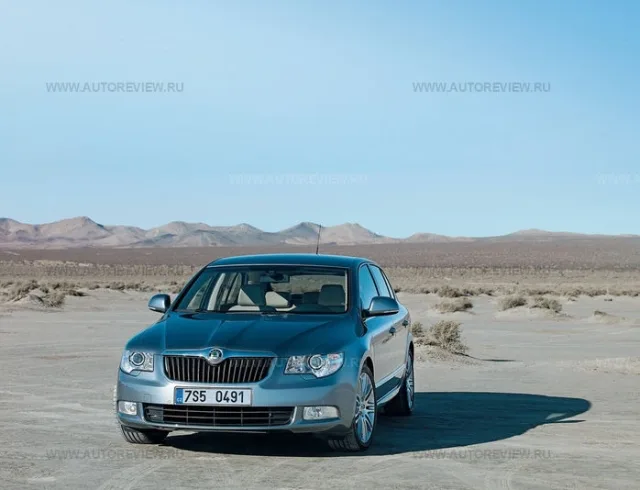
An ordinary journalist, having received the keys to a new car, would immediately get behind the wheel. But I did otherwise — I headed to the rear. After all, the Skoda Superb is a world pioneer in the “sedback” class, a kind of hybrid of a classic sedan and a practical hatchback!
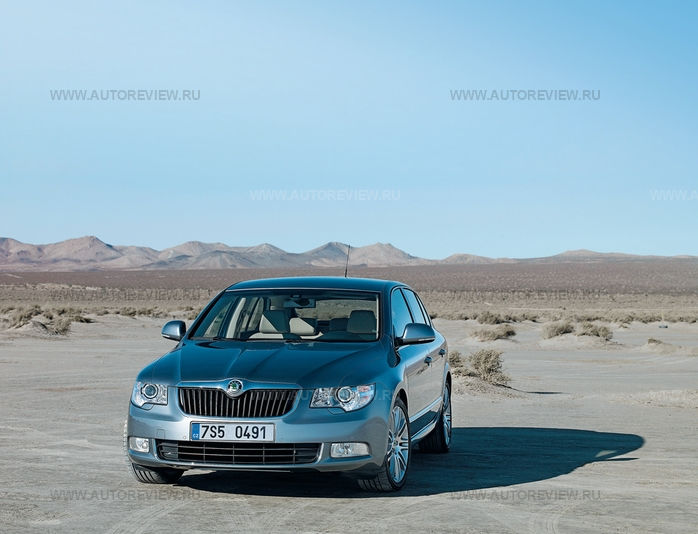
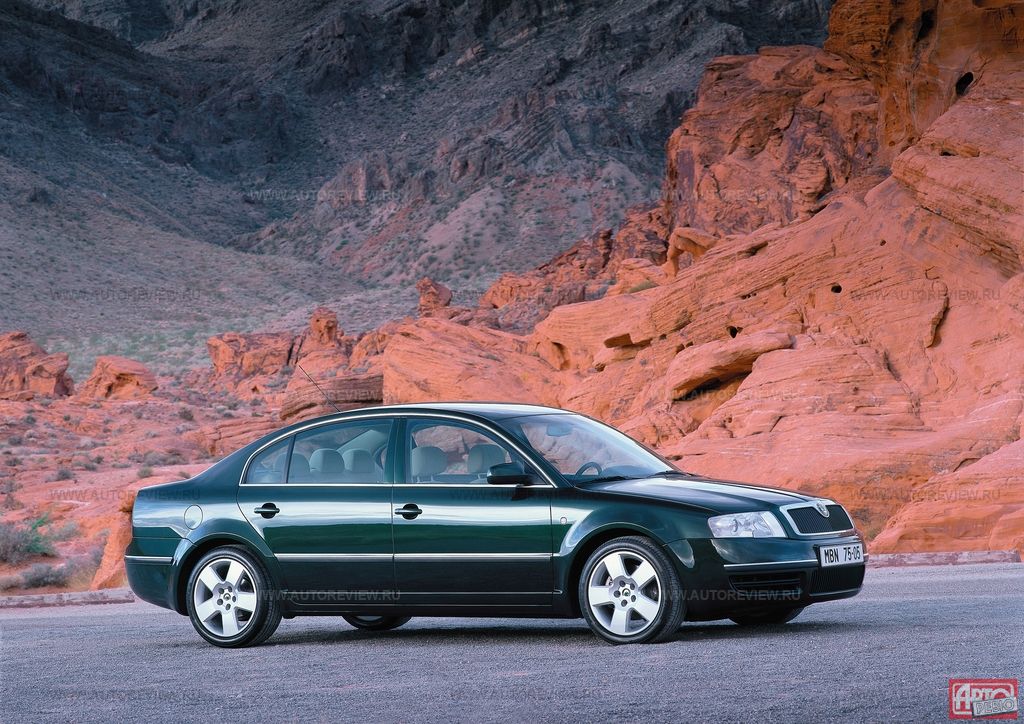
How does the domestic car enthusiast perceive the Skoda Superb? Pre-war large Skodas were almost never seen here, and the modern Superb is nothing more than a fifth-generation Passat stretched by ten centimeters. A car that doesn't draw attention, and if people did look at it, it was only to make sure that in front of you was indeed a Skoda, not a Volkswagen! And even though 126 thousand such cars have been sold worldwide in the seven years since its debut, Russian buyers treated the “Passat for China” (it was for the PRC that the “real” Passat was stretched) rather coolly. Last year, for every Superb sold in Russia, there were about fourteen Passats.
 |
|
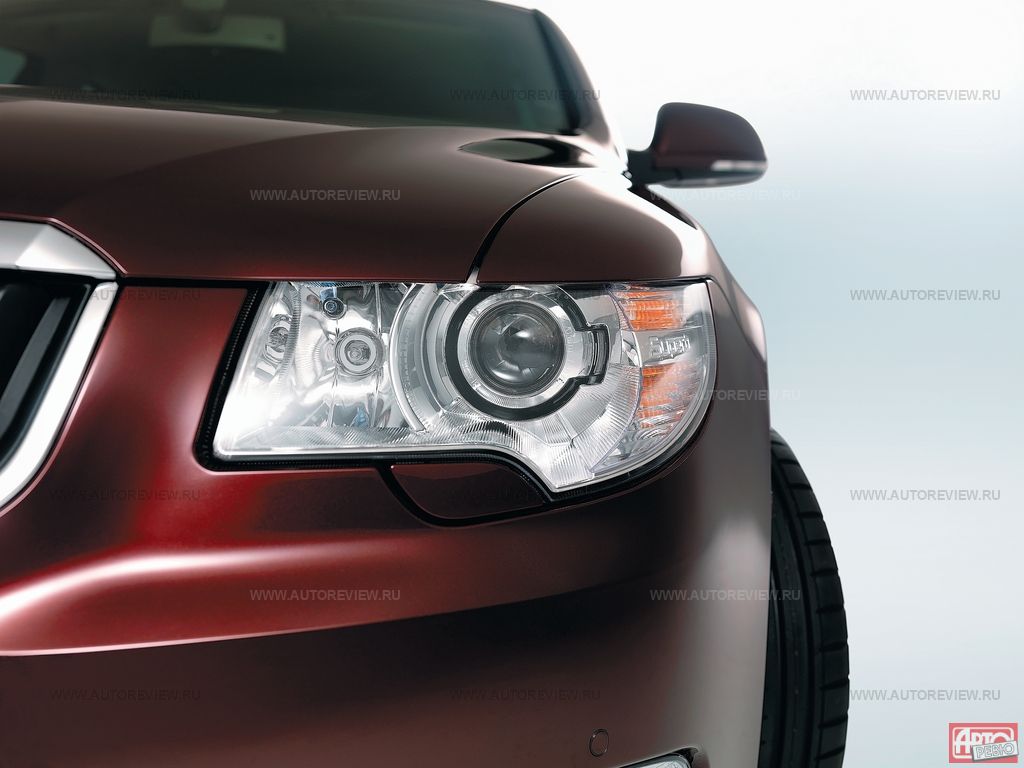
| The Superb became the first Volkswagen Group model to receive the adaptive headlight system AFS. At speeds from 15 to 50 km/h, the low beam widens, capturing the roadside. In “highway” mode, after 90 km/h, the low beam is directed higher, and the high beam more actively illuminates the left lane. In rainy weather at speeds up to 70 km/h, the beams lower and spread apart to avoid blinding the driver with reflections from droplets | The model name will eventually appear in the headlights of all new Skodas |
The new Superb is an independent car. No, Skoda hasn't separated from the Volkswagen Group. And the Superb hasn't abandoned its Passat genes. From the sixth-generation Passat — the “cart” of the rear multi-link suspension and engines. The front suspension also came from the “sixth” Passat, but not four-link, but simpler — on McPherson struts. But the floor panel is its own, original development.
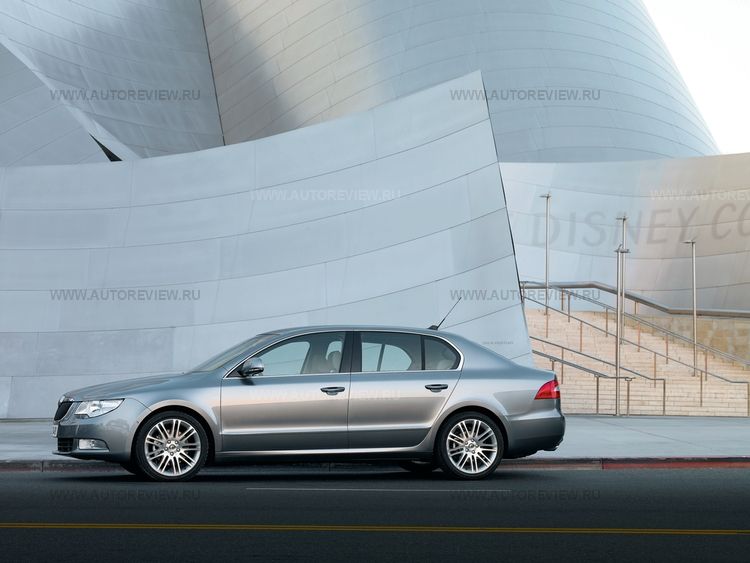
The “gloomy retro” of the current design is also an innovation. But the massive rear pillar again references Volkswagen, though this time — to the Phaeton.
The interior is done more familiarly, but it also has a “gloomy” detail — the steering wheel hub. Style. Individual elements, such as the climate control unit and the navigation system with a 30 GB hard drive, are of course familiar from other models of the concern, but the trim is its own.
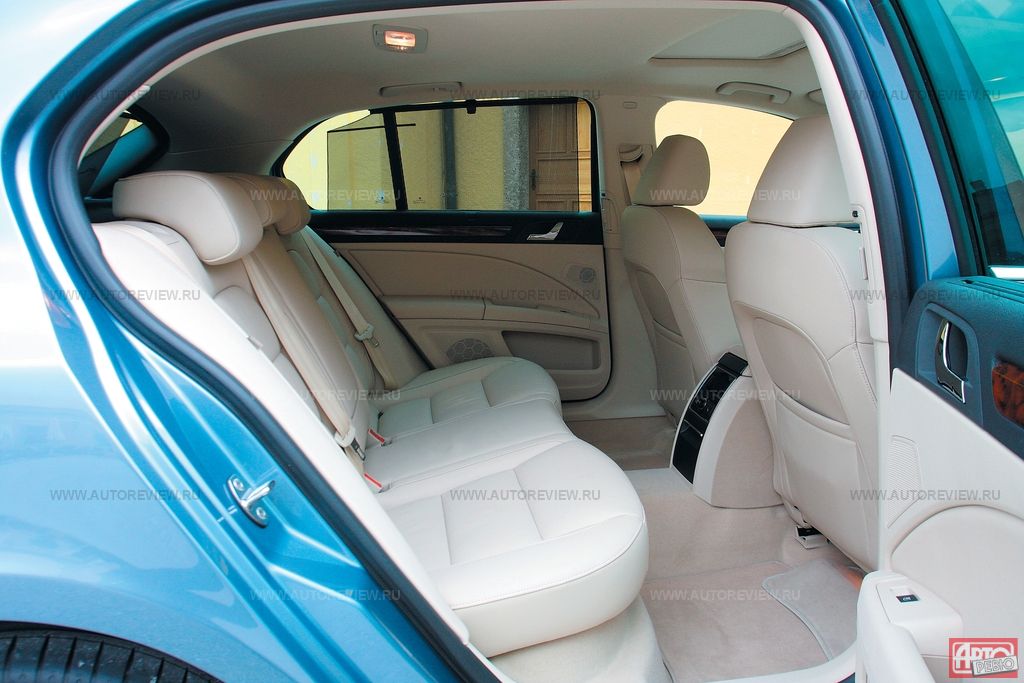
The first-generation Superb pleased primarily rear passengers: there was no less space than in E-class sedans. The wheelbase of the new car became shorter by 44 mm, but still 50 mm longer than that of the current Passat. And due to the transition from longitudinal to transverse engine placement, rear passengers got another 19 mm of additional length compared to the old Superb.
 |
|
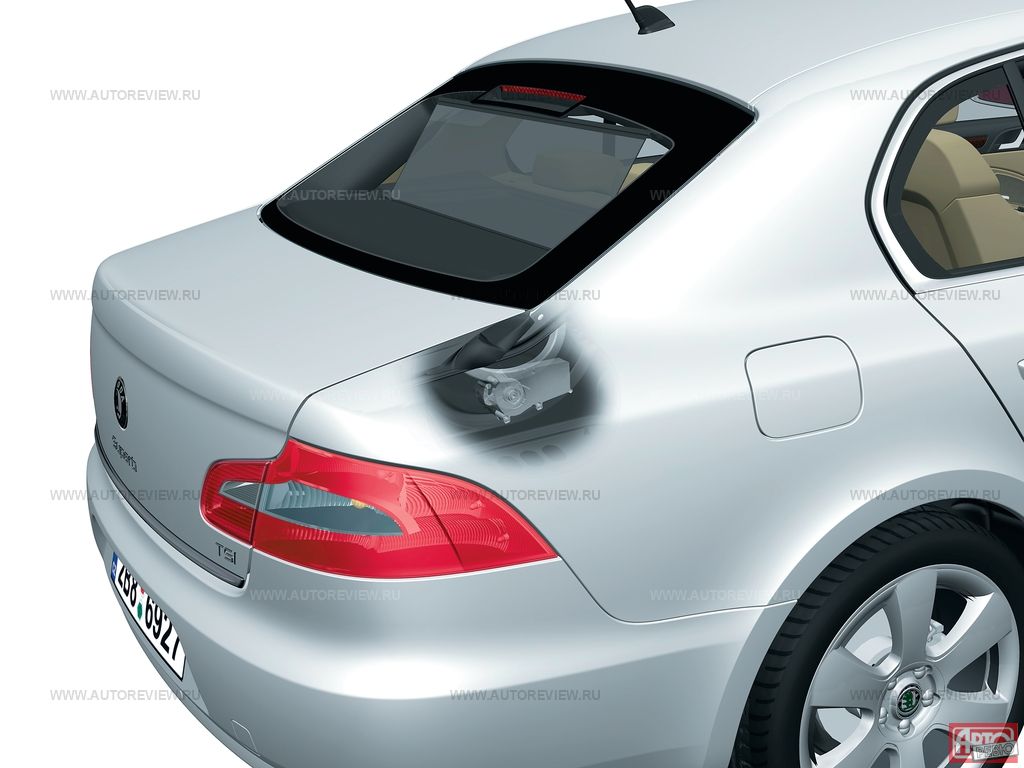
| The connection of the two parts of the trunk lid is controlled by compact electric drives. There's no need to close the lid with force — there's a soft-close mechanism |
The right button allows you to rigidly “couple” the halves of the lid |
 |
 |
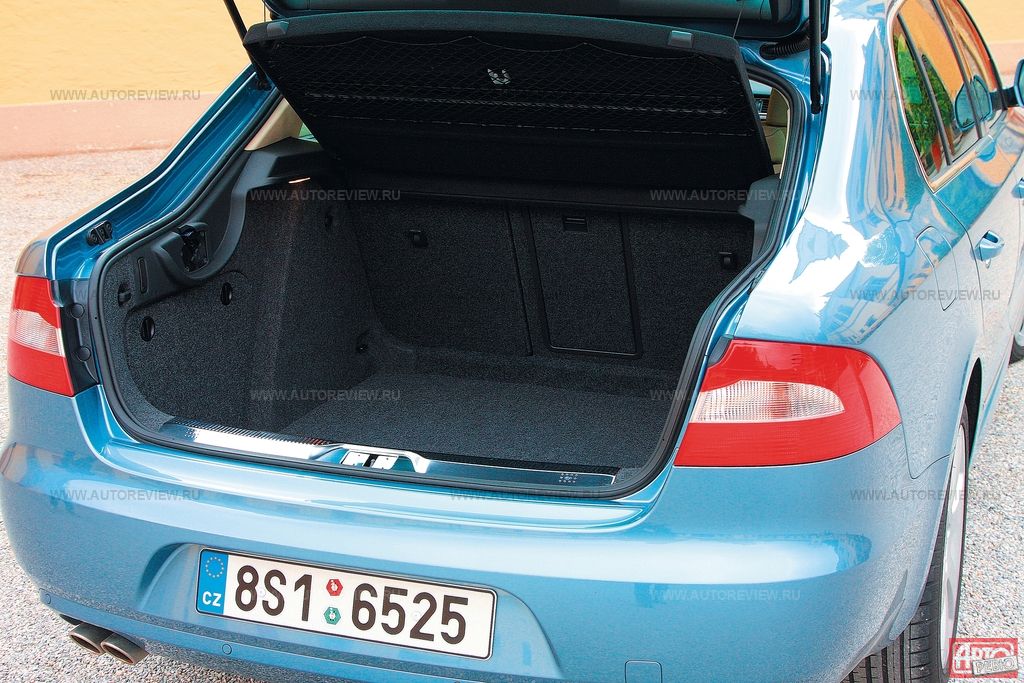
| In addition to the “main” 565 liters of the trunk, you can use the spacious niches in the walls and under the floor |
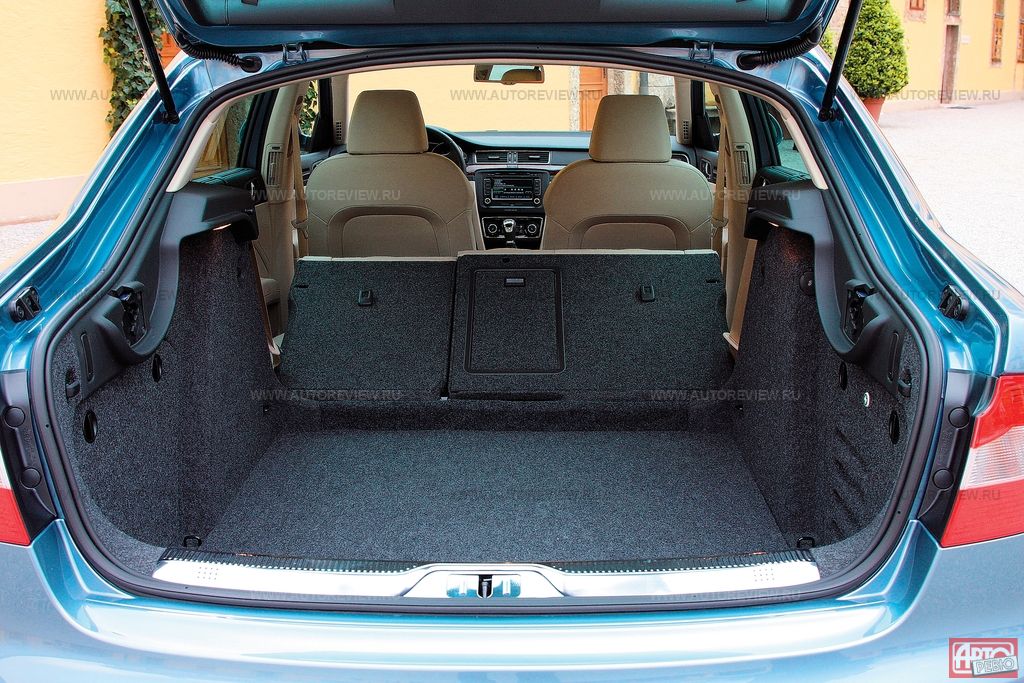
The trunk volume with the rear seat backs folded is an impressive 1670 liters. But transporting bulky cargo is inconvenient — you don't get a flat loading floor |
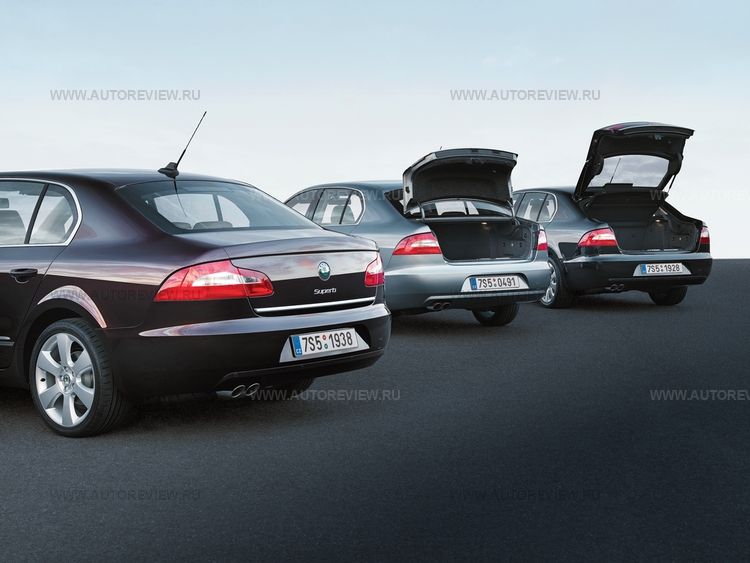
A budget “large sedan”? No, it's a sedback — a bit of a sedan and a bit of a hatchback. The trunk lid can be opened either entirely — together with the rear window, or, like a sedan, — only the lower part. By default, the trunk button works in sedan mode. But to the right there is a second button that switches the door to hatchback mode: electric motors release the locks at the edges, a short flash of the LED brake light signals readiness — and now I'm opening not the trunk, but the fifth door.
The hinges connecting the parts of the lid don't eat up trunk space at all: compared to a sedan, its volume even increased by 100 liters — to 565 L. And although the Czechs don't officially confirm this, the same “double door” Twindoor will almost certainly appear on the next Octavia, and possibly on the upcoming Skoda B+ class, which should fill the niche between the Fabia and Octavia.
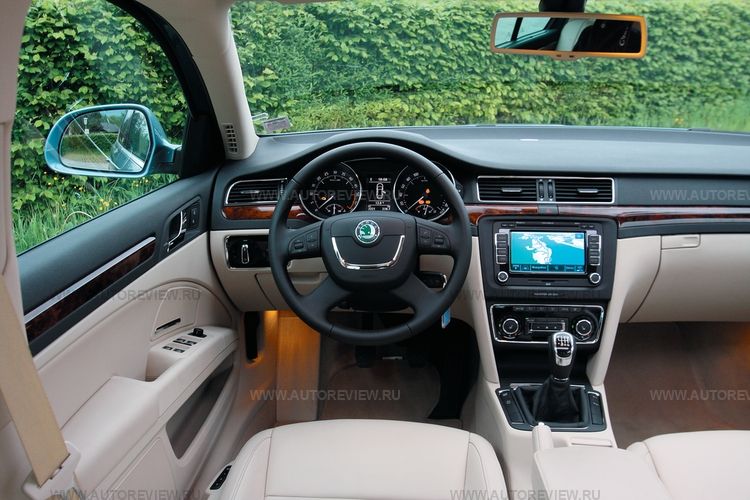
It seems like a Volkswagen — and yet it doesn't… But the quality of the trim is excellent!
Perhaps there this system will gain practical meaning, but the Superb… It's still not suitable for transporting any large cargo. The rear seat backs fold onto a non-removable cushion, remaining at an angle of 25 degrees to the horizontal. Between the cabin and the trunk there remains a threshold about 10 centimeters high, and the loading height is also a bit high. If I were an owner, I'd probably prefer to transport a refrigerator in some other car. But as a marketing “gimmick,” Twindoor is a great find.
And now — behind the wheel. The familiar somewhat firm seat with a good profile, the long-travel clutch pedal, the floor-mounted accelerator, the wide adjustment ranges of the seat and steering column… Excellent! The operation of all the levers and buttons, the efforts on the pedals and steering wheel, the responses... Pure Passat!
The only revelation is the new 1.4-liter turbo engine. Well, almost new. In essence, it's the same 170-horsepower unit that, with turbocharging and a mechanical supercharger, so briskly accelerates the Golf GT, but here only the turbo was left from it, which is why the power dropped to 125 hp. However, the engine seems to have forgotten that it was deprived of one supercharger: it pulls magnificently! To 100 km/h — in 10.5 seconds! The torque plateau extends from 1500 to 4000 rpm, so there's no need to constantly fiddle with the gear lever. And when the tiny motor confidently pulls the one-and-a-half-ton Superb uphill in sixth gear at 1200 rpm, and the on-board computer display pleases with an average consumption of 8 liters per 100 kilometers... A dream!
 |
 |
 |
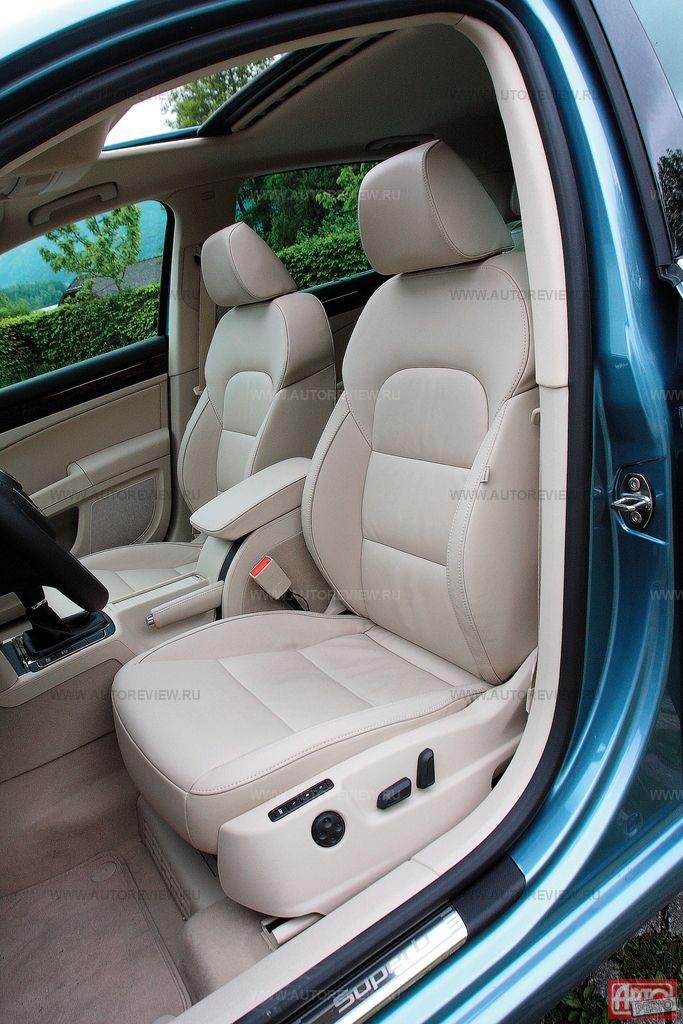
| Firm front seats — with a comfortable shape |
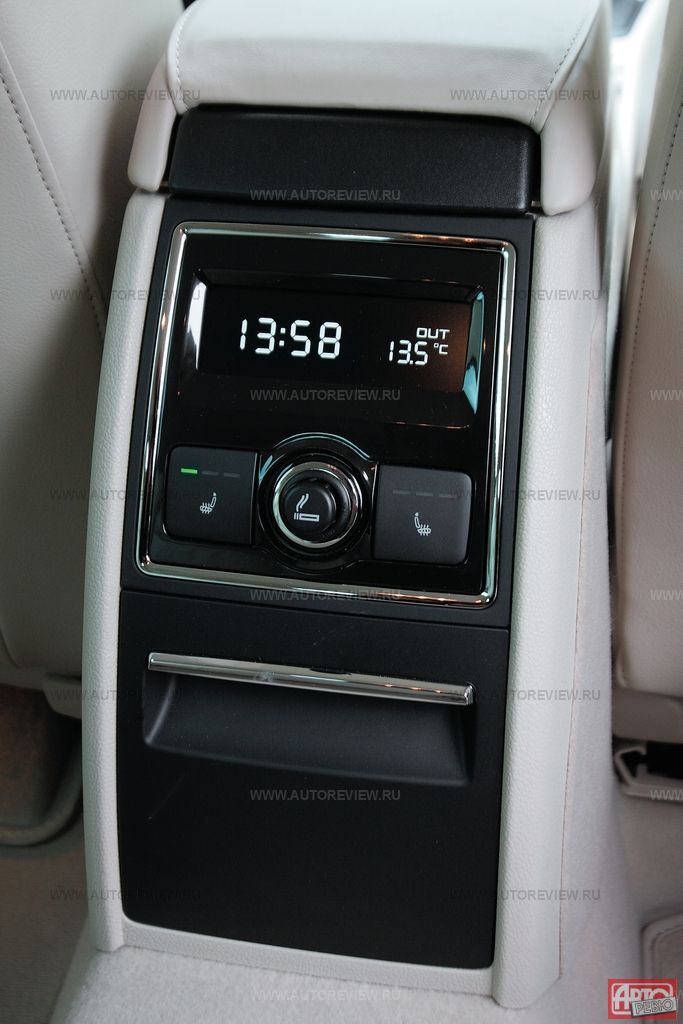
Scandinavian-strict clock and outside thermometer for rear passengers — already in the base |
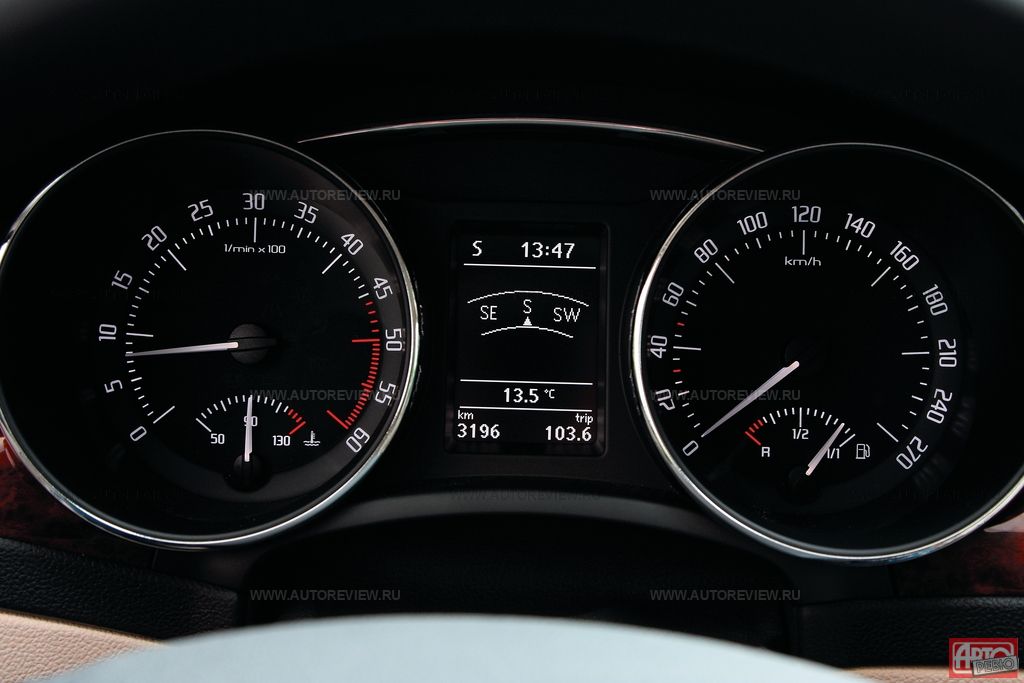
Following Skoda tradition, the numbers on the instrument scales are arranged around the circumference. A warning light for the low beam has been added |
 |
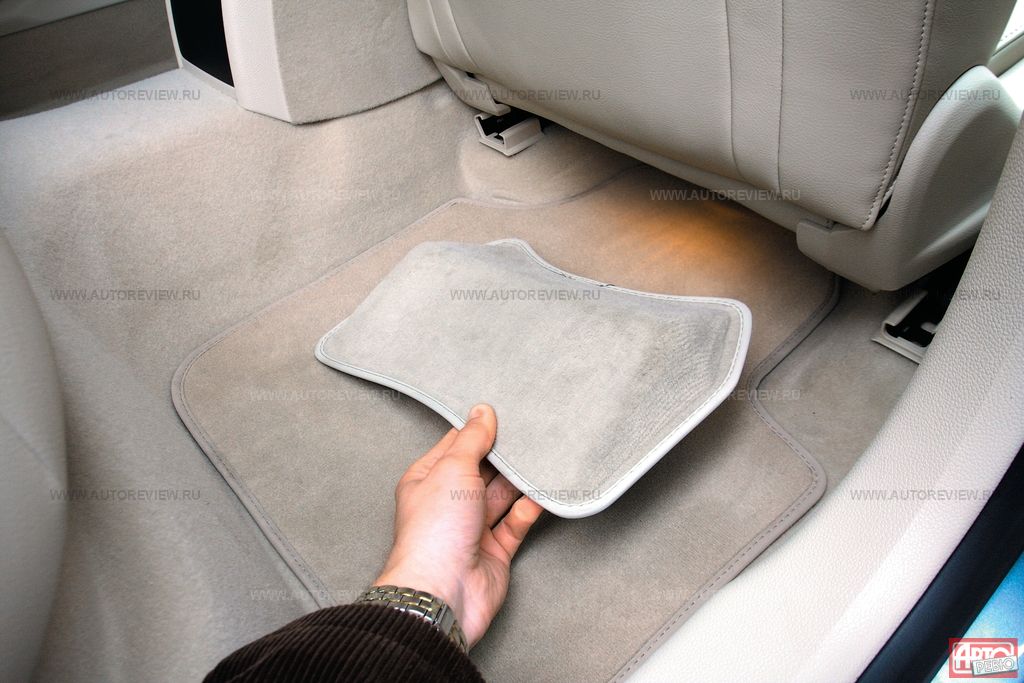 |
 |
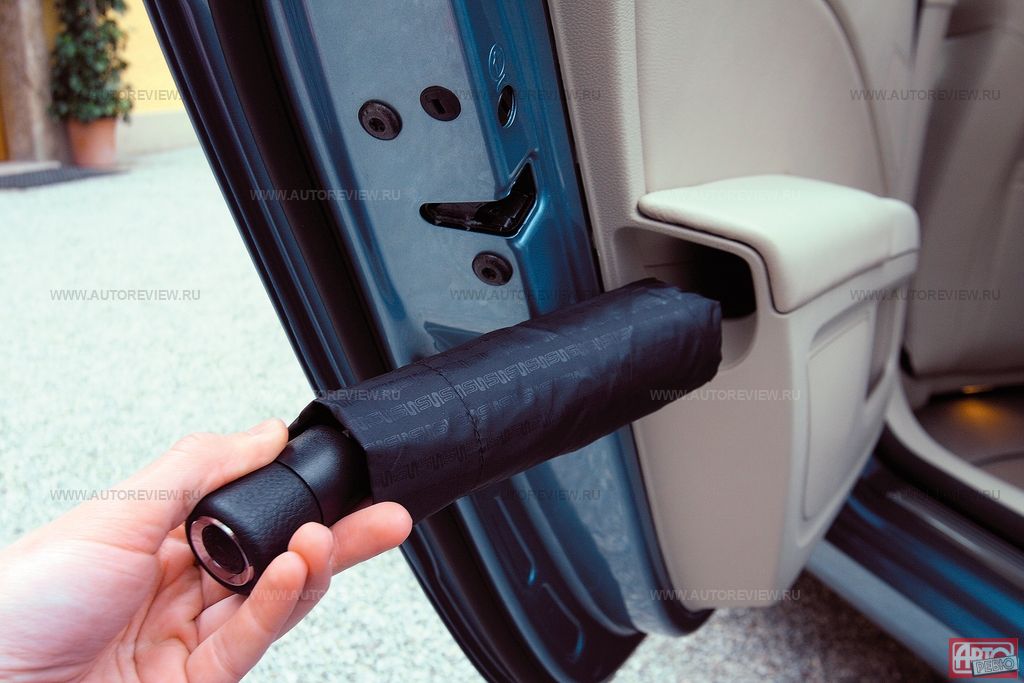
| The compartment for a compact umbrella is not ventilated, but has drainage |
“Adjustable foot support” | No classmate can boast such legroom! True, there's not much space above the head |
And that's why I easily forgive the slightly “thoughtful” reactions to pressing the gas pedal at low revs. Especially since they are also characteristic of the 160-horsepower 1.8 TSI turbo engine, which, of course, will be chosen by most buyers of large Skodas.
 |
|
| It's from such little things as rubber pads on the back of the door handles that the feeling of quality is built |
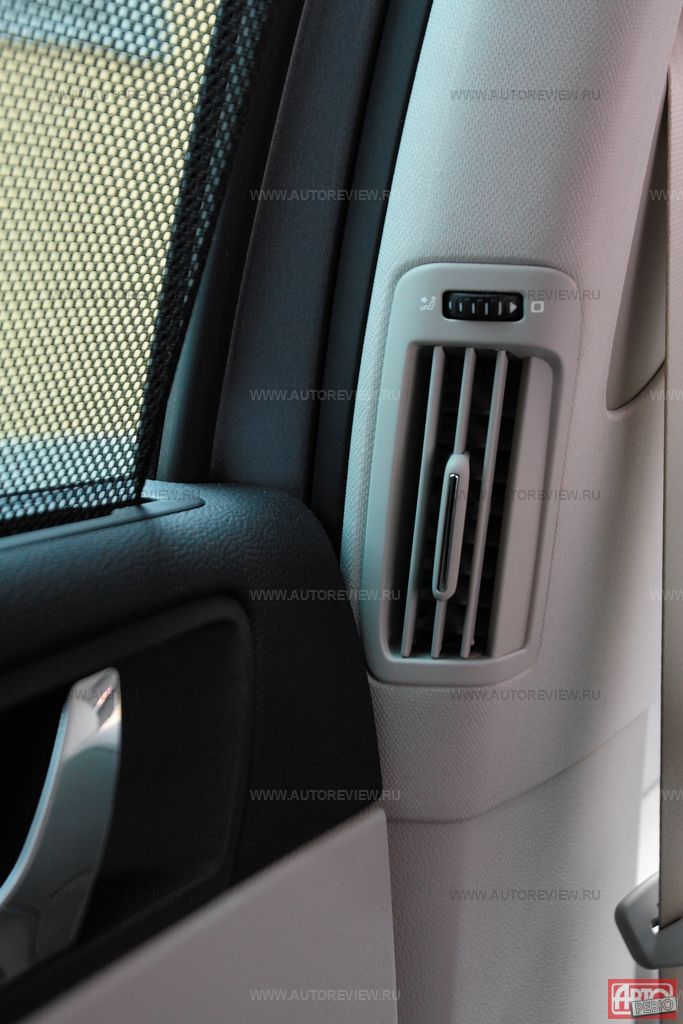
For rear passengers — personal air vents on the pillars |
Another petrol unit in the lineup is a V6. Displacement is 3.6 liters, output is 260 horsepower. This engine is paired exclusively with a DSG robotic gearbox and all-wheel drive. The power reserve is certainly impressive: such a Superb reaches 100 km/h in 6.5 seconds. But all this potential is concentrated in the upper rev range, and a significant part of the torque increase is "eaten up" by the increased mass — the 3.6 FSI version is 240 kg heavier than the base modification with 125 hp!
 |
|
| The switch from a longitudinal to a transverse engine layout freed up more cabin space. But all-wheel-drive versions (available with 160 hp and 260 hp petrol engines, as well as the most powerful diesel) got a fourth-generation Haldex coupling instead of a Torsen center differential |
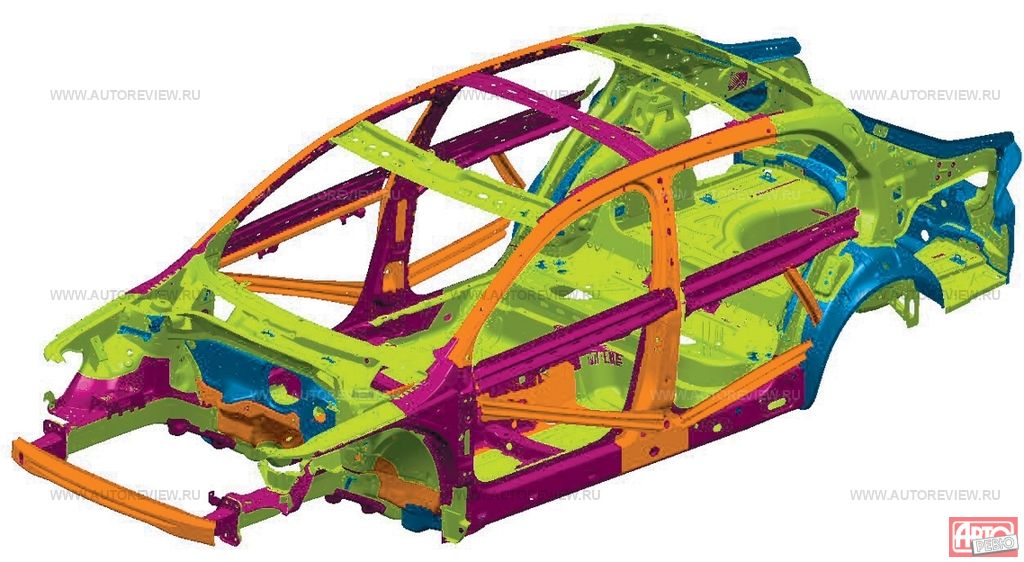
The trunk opening has become noticeably larger, and the body rigidity has increased by 10-15 percent compared to its predecessor. True, the Czechs do not disclose exact values |
It is also 170 kg heavier than the liftback, under the hood of which is a new 170-horsepower common rail turbodiesel (such cars will also be brought to Russia). The diesel's torque is the same 350 Nm as the V6. However, stalling when starting off is easier than easy. But once you get going, once the tachometer needle passes 1700 rpm — that's when the Superb starts to drive as it should.
True, this engine cannot be called quiet — the diesel rumble disappears only at high speeds. Or perhaps the unit simply stands out against the excellent sound insulation — for its sake, for example, the front side windows were made thicker, up to 4.85 mm.
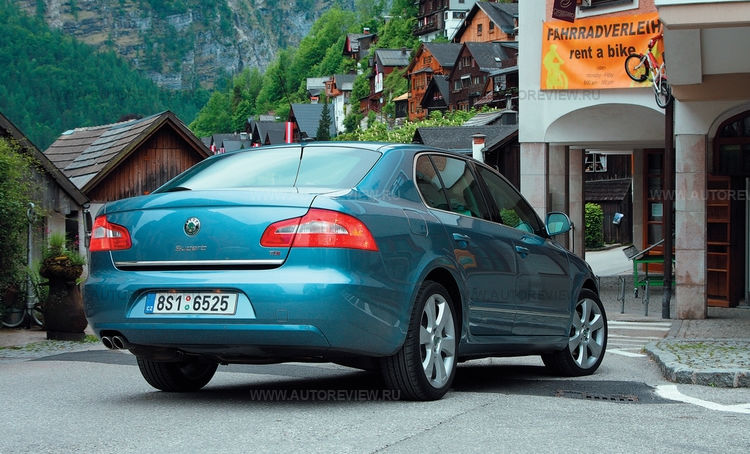
The suspension is taut. Small irregularities are transmitted to the cabin in detail, but — interestingly! — the more serious the potholes, the more respect the chassis begins to command. Energy intensity is excellent, no pitching — a benchmark for the Austrian outback. But how will all this work in our conditions? Maybe it's still wiser to choose the "bad roads package," which is now optional for the big Skoda? We'll find out in the fall, after the Moscow Auto Show.
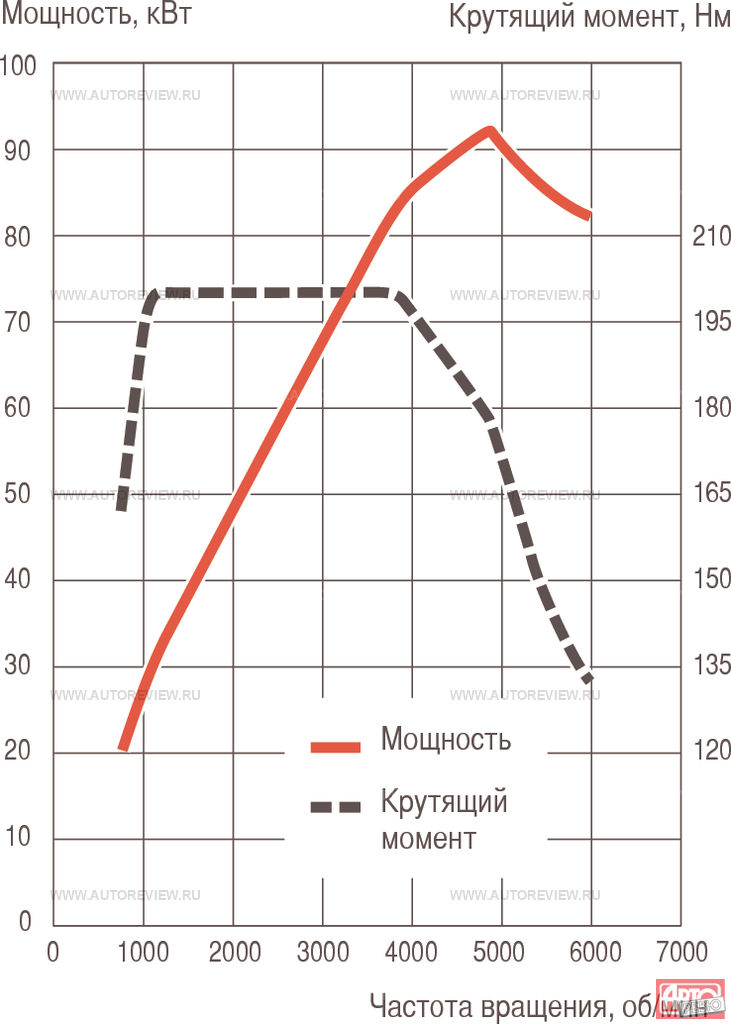 |
The 1.4-liter turbo unit, like the other two petrol engines, is equipped with direct injection |
Having matured and gained more independence, the Skoda Superb risks losing one of its main trump cards — attractive prices. Of the three trim levels — Comfort, Ambition, and Elegance — only the two senior ones will be brought to us. The most affordable option, the Skoda Superb Ambition 1.4 TSI, costs 790 thousand rubles — 71 thousand more than the previous-generation Skoda Superb in the base Classic trim with a 150-horsepower turbo engine. And 65 thousand more expensive than the current Volkswagen Passat Trendline with a 1.4-liter engine... But can you, sitting in the back row of a Passat, cross your legs? Or surprise friends with the double rear door?
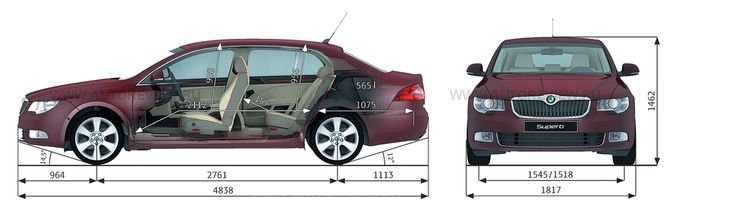
The dimensions of the big Skoda have hardly changed: length increased by 35 mm, width by 52 mm, but height decreased by 8 mm
| Specifications | ||||
| Parameters | Vehicle | |||
| Skoda Superb | ||||
| Modification | 1.4 TSI | 1.8 TSI | 3.6 FSI | 2.0 TDI |
| Body type | four-door sedan | four-door sedan | four-door sedan | four-door sedan |
| Number of seats | 5 | 5 | 5 | 5 |
| Trunk volume, l | 565—1670 | 565—1670 | 565—1670 | 565—1670 |
| Curb weight, kg | 1425 | 1454 (1471)* | 1665 | 1498 (1515)* |
| Gross weight, kg | 2045 | 2074 (2091) | 2285 | 2118 (2135) |
| Engine | petrol, direct injection, turbocharged with intercooler | petrol, direct injection, turbocharged with intercooler | petrol, direct injection | diesel, common rail, turbocharged with intercooler |
| Layout | front, transverse | front, transverse | front, transverse | front, transverse |
| Number and arrangement of cylinders | 4, in-line | 4, in-line | 6, V-shaped | 4, in-line |
| Displacement, cm³ | 1390 | 1798 | 3580 | 1968 |
| Cylinder bore/piston stroke, mm | 76.5/75.6 | 82.5/84.2 | 89.0/95.9 | 81.0/95.5 |
| Number of valves | 16 | 16 | 24 | 16 |
| Compression ratio | 10.0:1 | 9.6:1 | 11.4:1 | 16.5:1 |
| Max power, hp/kW/rpm | 125/92/5000 | 160/118/5000—6200 | 260/191/6600 | 170/125/4200 |
| Max torque, Nm/rpm | 200/1500—4000 | 250/1500—4200 | 350/2500—5000 | 350/1750—2500 |
| Emission class | Euro-4 | Euro-4 | Euro-4 | Euro-4 |
| Gearbox | manual, 6-speed | manual, 6-speed (automated manual, 7-speed) | automated manual, 6-speed | manual, 6-speed (automated manual, 6-speed) |
| Drive | front | front | all-wheel | front |
| Front suspension | independent, coil spring, McPherson | independent, coil spring, McPherson | independent, coil spring, McPherson | independent, coil spring, McPherson |
| Rear suspension | independent, coil spring, multi-link | independent, coil spring, multi-link | independent, coil spring, multi-link | independent, coil spring, multi-link |
| Tires | 205/55 R16 | 205/55 R16 | 225/45 R17 | 205/55 R16 |
| Top speed, km/h | 201 | 220 | 250 | 222 (220) |
| Acceleration 0—100 km/h, s | 10.5 | 8.6 (8.5) | 6.5 | 8.8 (9.0) |
| Fuel consumption, l/100 km | ||||
| urban cycle | 8.6 | 10.4 (10.0) | 14.3 | 7.8 (7.8) |
| combined cycle | 6.6 | 7.6 (7.6) | 10.0 | 6.0 (6.7) |
| extra-urban cycle | 5.5 | 6.0 (6.1) | 7.5 | 4.6 (4.8) |
| CO₂ emissions, g/km, combined cycle | 157 | 180 (180) | 238 | 159 (169) |
| Fuel tank capacity, l | 60 | 60 | 60 | 60 |
| Fuel | petrol AI-91 | petrol AI-91 | petrol AI-95 | diesel fuel |
| * Data in parentheses for vehicles with automated manual transmission | ||||
Green Line
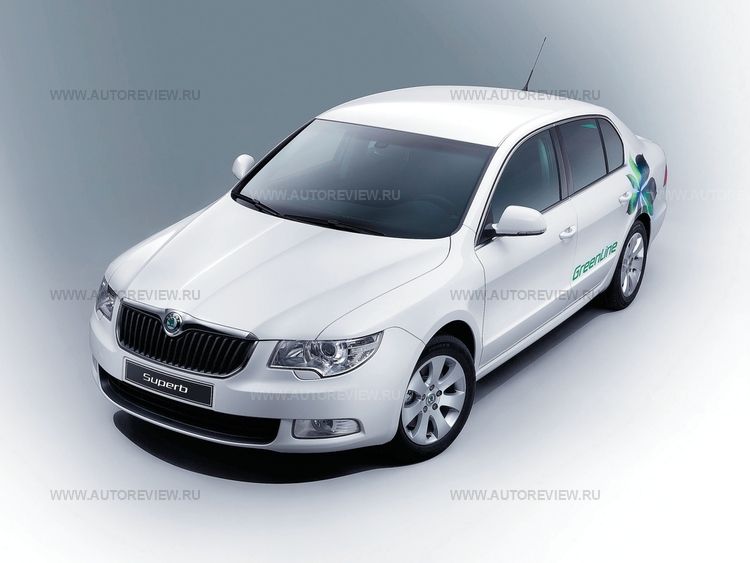
The Skoda Superb, like its "younger" siblings Fabia and Octavia, is also available on the European market in the "green" Greenline version. For the basis of this version, engineers took the most modest power modification — a 1.9 TDI diesel with 105 hp. This car has a transmission with increased gear ratios and a recalibrated engine control unit. To reduce weight, the Superb Greenline was stripped of its spare wheel, and tires with reduced rolling resistance were fitted. However, as the developers claim, the main contribution to fuel economy was made by aerodynamics: the body was lowered by 15 mm, the front-end airflow was reworked, and a small spoiler was added to the trunk lid.
Thanks to this, the Skoda Superb Greenline became the first and so far the only car in its class with CO₂ emissions of just 136 grams per kilometer. This fits within the 140 g/km threshold, which in many countries serves as the boundary for tax calculations. Fuel consumption in the combined cycle was reduced from 5.7 L to 5.1 L per 100 kilometers. However, the manufacturer modestly remains silent about how the dynamics of the "green" Skoda have changed…
Legacy of the pre-war era
Igor VLADIMIRSKY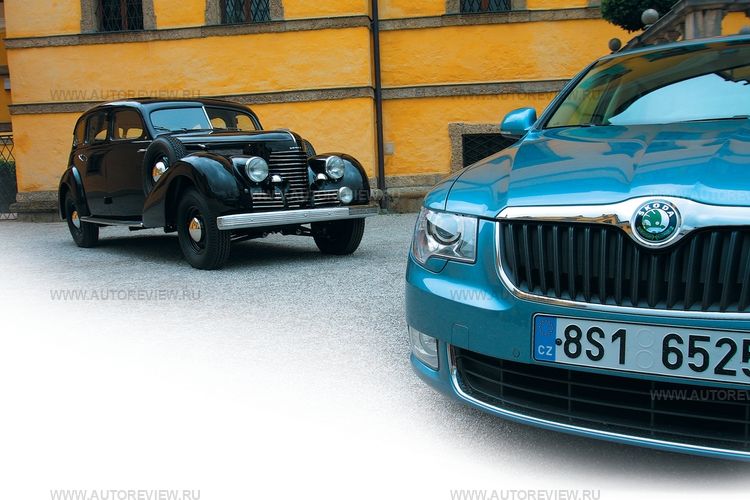
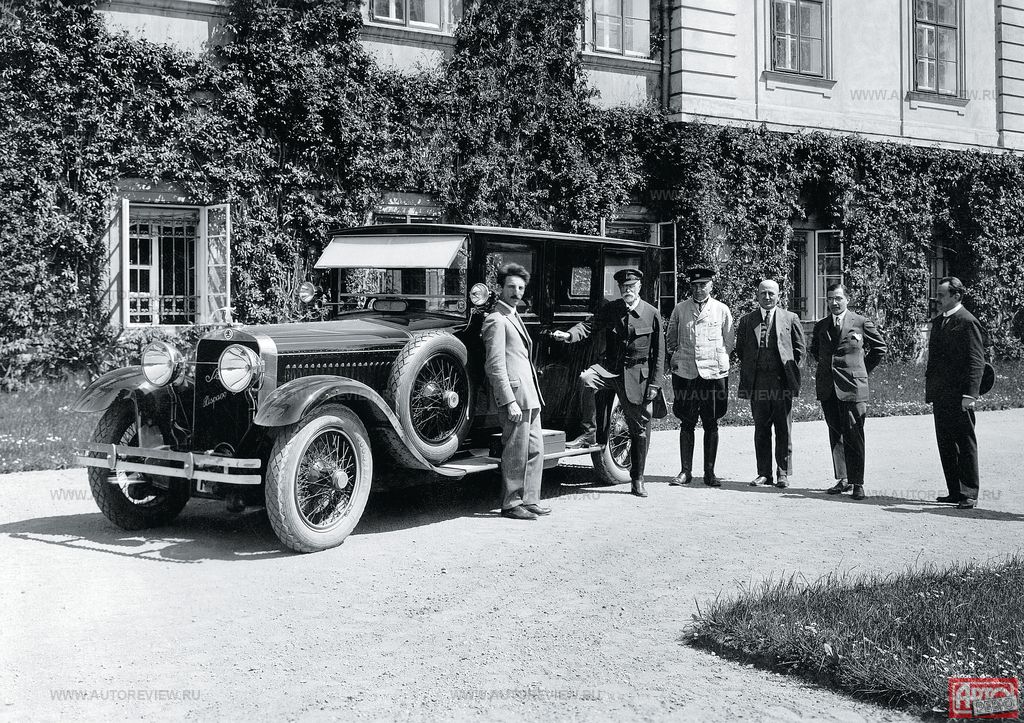
The history of the most representative Skoda began with the fact that the first model of this class, like the current "new wave" Superb, was not developed from scratch. The basis of the 25/100 car was the Spanish Hispano Suiza H6B. Licensed production of the limousine with a six-cylinder engine producing 135 horsepower started in 1925 — almost simultaneously with Skoda acquiring the Laurin&Klement factory. Over five years, only 101 units of the Czech-Spanish car were assembled.
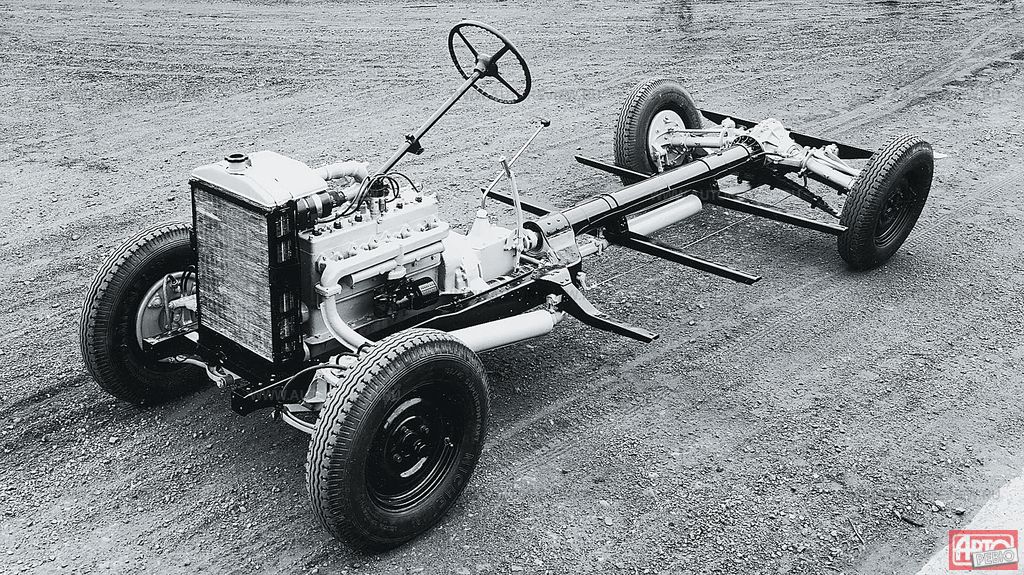
The name Superb first appeared in the Czech brand's lineup in 1934. It was a simpler but still large car, built on an extended backbone frame from the Skoda 637 model. Under the hood was an inline six-cylinder engine with side valves, displacing 2.5 liters and producing 55 hp. Buyers were offered three variants of combined (wood and metal) bodies: sedan, limousine, and two-door convertible. It was also possible to order a bare chassis with the engine and give it to an external coachbuilder — there were plenty of such workshops in Czechoslovakia at the time. The car had independent suspension on all wheels, and the brakes were hydraulically actuated.
 |
 |
| One of the Skoda-Hispano Suiza 25/100 limousines was used for ten years by the first Czech president, Tomáš Masaryk |
The very first Skoda Superb of 1934 (Type 640) was equipped with an adapted engine from a light truck... |
 |
 |
| ...and was built on an extended backbone frame from the 637 model |
The first-generation Skoda Superb spent seven years on the assembly line |
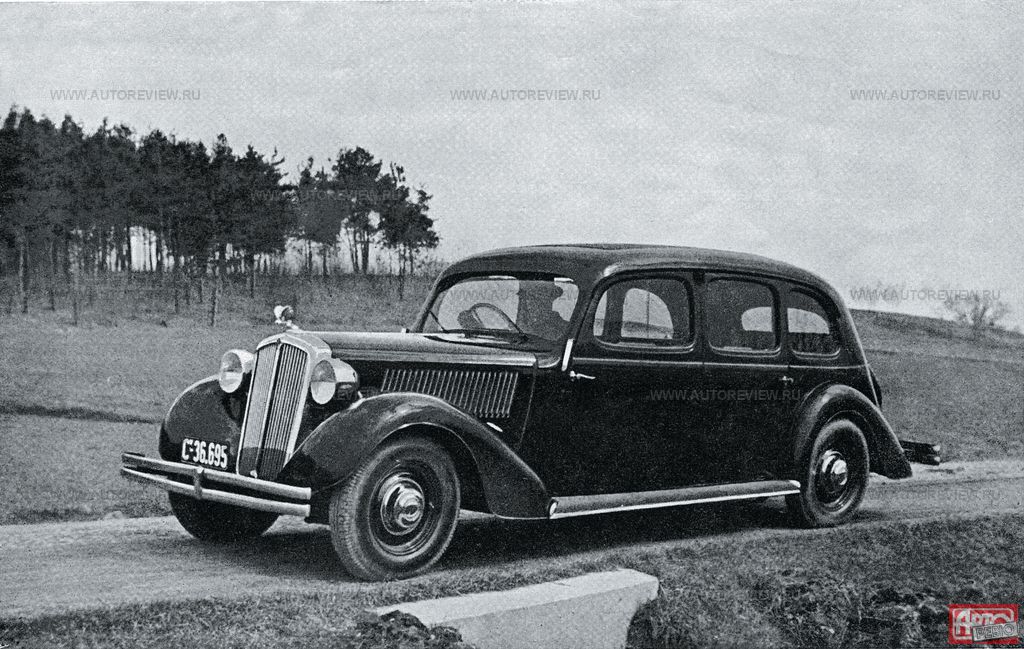
In 1936, the engine displacement grew to 2.9 liters, and power to 65 hp. Two years later, the Skoda Superb debuted with an updated body and a new engine: an overhead-valve six-cylinder with a displacement of 3.1 liters developed 85 hp and had a side camshaft. Next was supposed to be a V8 (4.0 L, 96 hp), but plans were interrupted by World War II. During those years, command and staff vehicles for the Wehrmacht and SS were assembled on the basis of the flagship Skoda's components. After the war, the Superb with a more modern American-style body (photo above) was produced in small batches until 1949. In total, over 15 years, 889 such cars were produced.
In the following decades, the plant in Mladá Boleslav made only inexpensive small cars. But in 1991, the Czech company came under the wing of the Volkswagen Group, and the brand's history took a new turn. Exactly ten years later, the Skoda Superb again became the flagship of the model range. True, the new model was merely a rebadged stretched fifth-generation Volkswagen Passat, which is still assembled in China at the Shanghai Volkswagen joint venture. The car was equipped with petrol and diesel engines ranging from 1.8 to 2.8 liters, with power from 101 to 193 hp. In 2006, the Superb underwent a light facelift.