
 Comments (9)
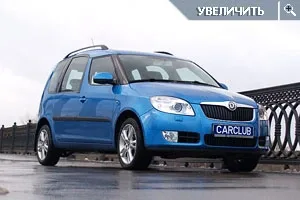
Due to the specifics of my work, I often have to listen to marketing tales that fall apart as soon as you get behind the wheel and drive at least a couple of kilometers. Some promise a sports car, but in reality it handles like a horse-drawn cart; others describe a spacious cabin where neighbors in the row actually elbow each other. Against this background, Skoda Roomster pleasantly surprised me because the advertising promises matched the real content. When you move from the front seat to the rear, you really get the feeling that you are moving to another car — or even to another room of an apartment.
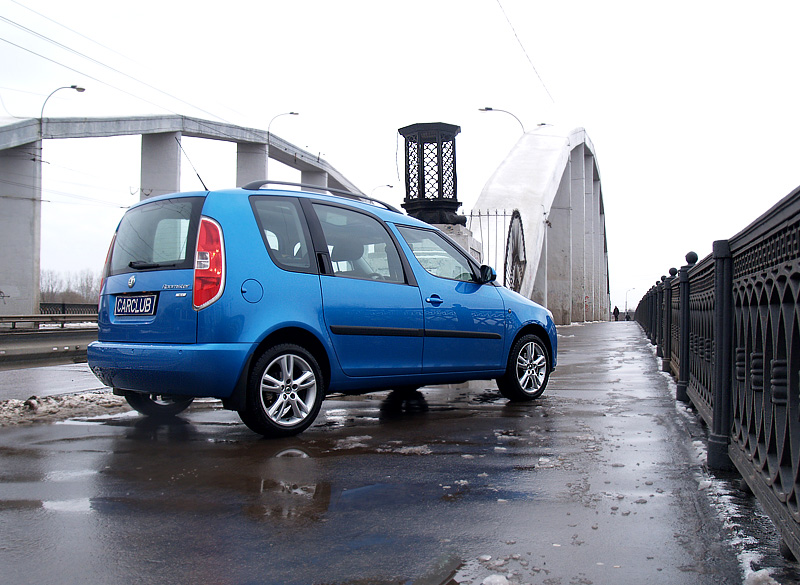
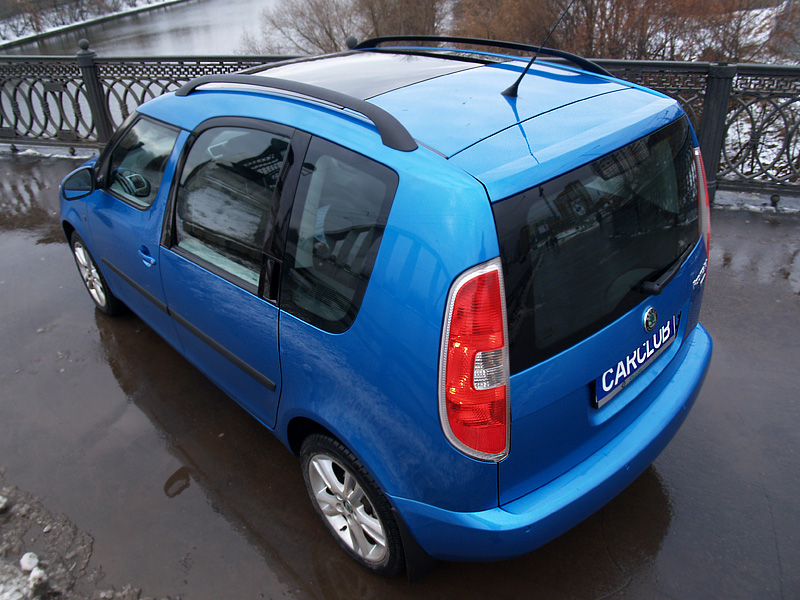
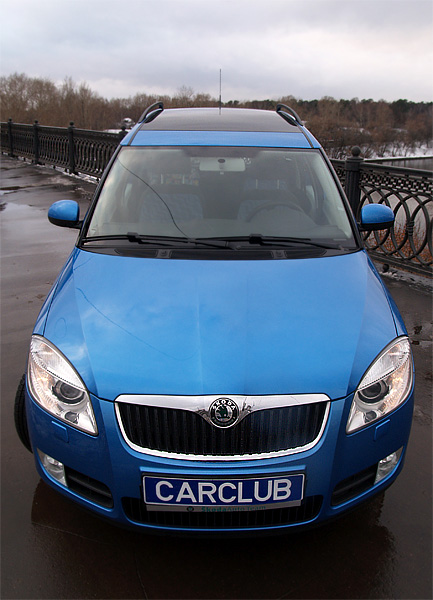
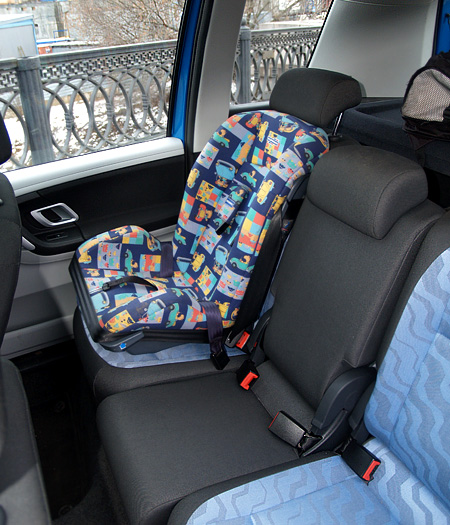
The high window line around the driver and front passenger, smoothly rounded side windows — all this unobtrusively reminds of an airplane cockpit, and similar emotions I experienced only in Saab cars. At the same time, visibility here is excellent: the front pillars are thin, and the low edge of the rear window and large exterior mirrors allow you to feel confident both in traffic and when maneuvering in a parking lot. At the rear, the picture is completely different: huge side windows with low sills are noticeably higher than the front ones, and in combination with the optional sunroof in the roof, which our car was equipped with, the Roomster turns into a real aquarium. This is one of the rare models where a four-year-old child in a car seat can see everything around perfectly — not only the road and landscapes, but even the sky above. Of course, it would be ideal if this glass panorama could open, allowing you to ventilate the cabin while parked or simply stick your head out, but for now these are just dreams.
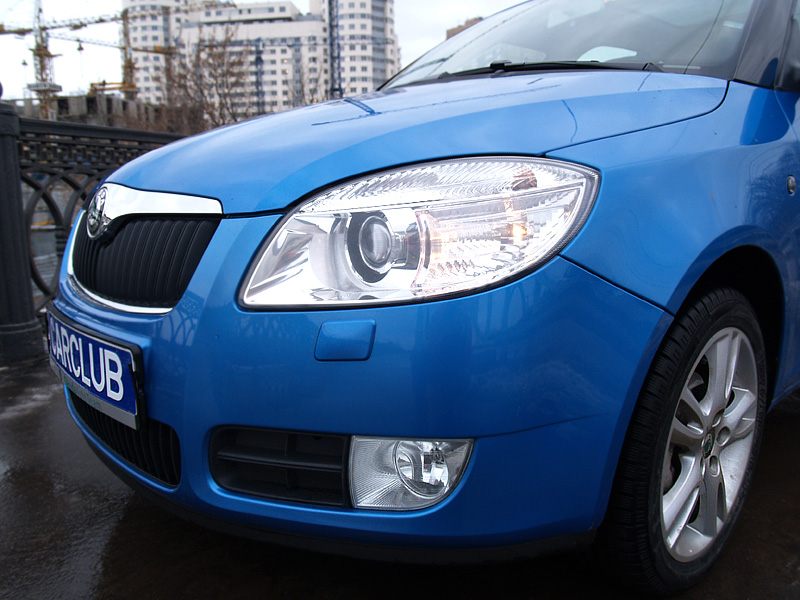
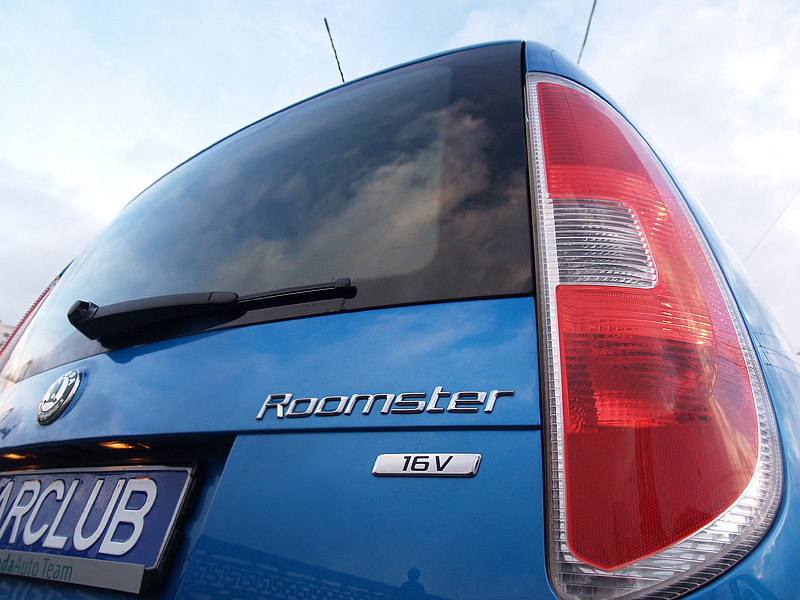
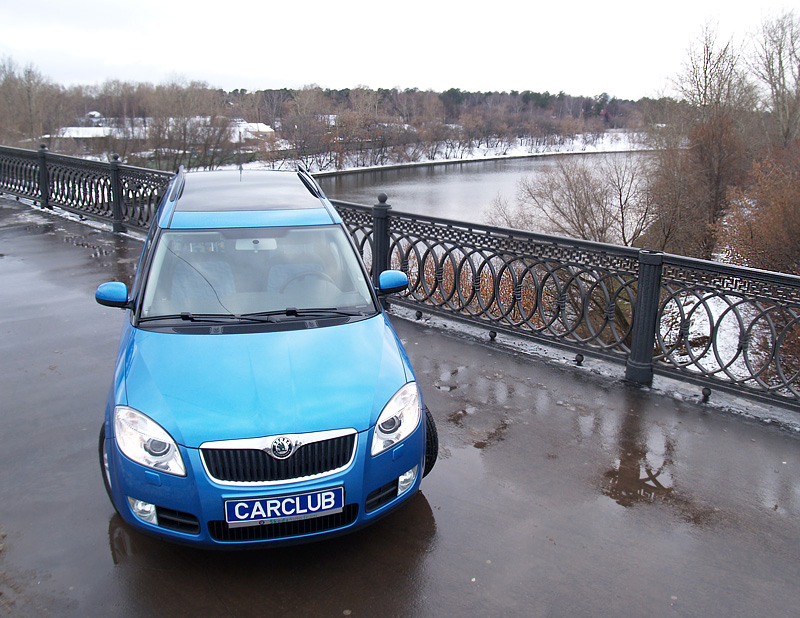 Perhaps the only drawback of such a “two-room” layout is the exterior appearance. The broken window line creates the impression that the car is assembled from two halves: at the front — a passenger Saab, and at the rear — a Renault Kangoo. But, as they say, there is no accounting for taste.
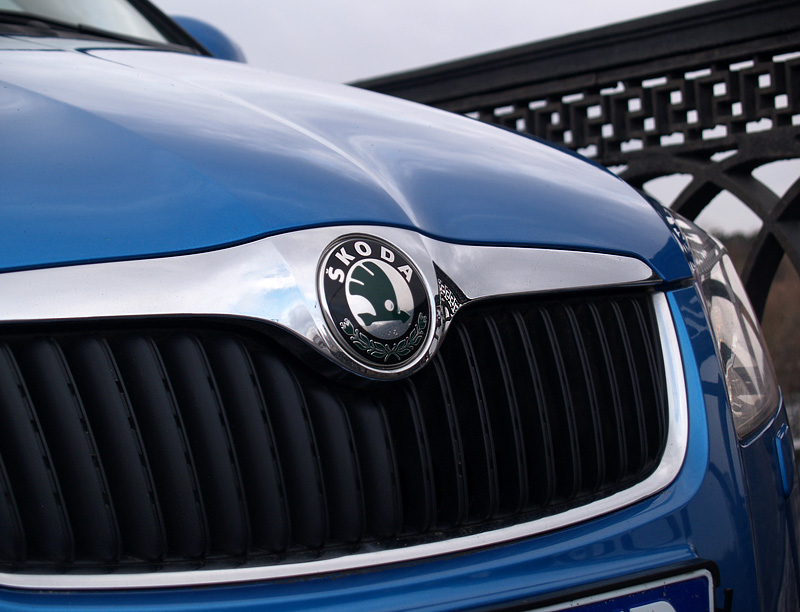
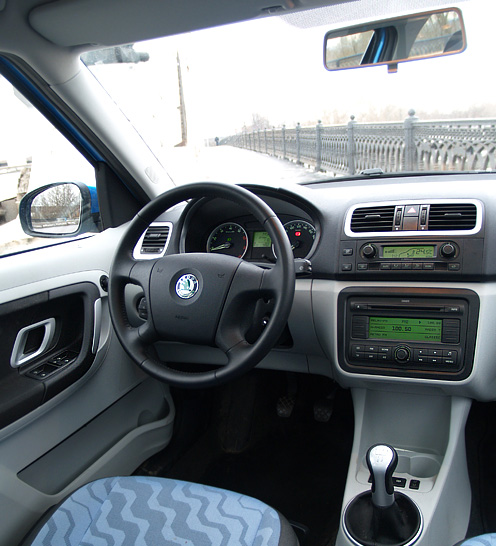
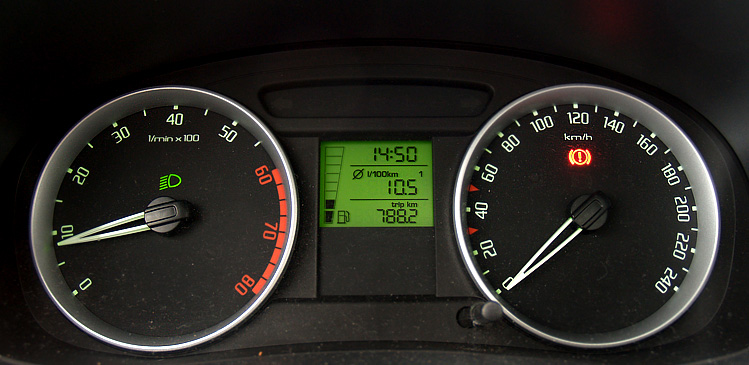
The cabin assembly is at the German level, but the plastic itself is average. Soft material is used only for a narrow strip in the upper part of the front panel. The light lower part and the trim near the windshield are hard, although they feel quite pleasant to the touch. There are two glove boxes on the front panel, but both are small: even an A4 folder with documents was not easy to stuff in there. The familiar layout of the instrument cluster with two large scales of speedometer and tachometer, surrounded by markings, requires some time to adapt. Between the dials there is a display that shows data from the on-board computer, odometer, and fuel level. The temperature sensor was replaced by warning lamps — apparently to save on cost.
 The seats, despite being firm, turned out to be comfortable, and there are more than enough adjustments, so a driver of almost any height can sit comfortably behind the wheel. There is always a decent supply of air and light above the head. But you need to get used to the sensations in the Roomster cabin, although the seating position is in the German spirit — comfortable, allowing you to spend many hours behind the wheel in a row, which is especially valuable for a family car that, by the way, does not shine with dynamics. There are complaints about the steering wheel: it is certainly comfortable, but its boring design clearly loses to the stylish door handles and nice arrows on the instrument panel.
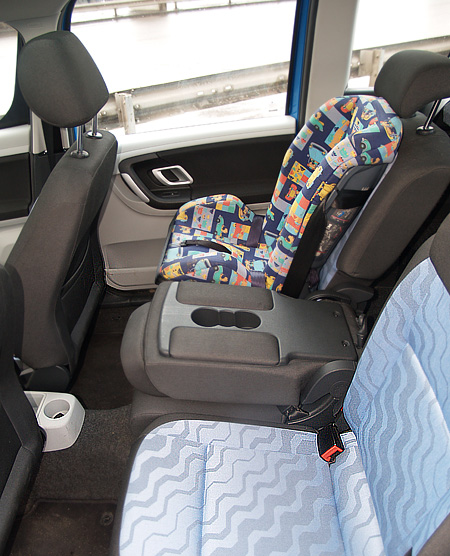
Rear passengers found themselves in an even more advantageous position — their visibility is not limited by anything. Since the rear sofa is raised higher than the front, those sitting behind can look over the heads of the driver and front passenger, admire the views on the sides, or watch the sun and stars through the panoramic roof. The sofa is divided into three independent seats, each of which can be moved forward and backward and the backrest angle changed. If a third passenger is not planned, the backrest of the middle seat is folded, turning it into a table with cup holders. You can even remove it from the car entirely, and move the side seats closer to the center, although there is enough space in width and length anyway. If necessary, all rear seats fold or are removed entirely, increasing the trunk from 450 to an impressive 1780 liters.
From the 1.4-liter engine with 87 hp, one could not expect miracles of dynamics, but it turned out to be quite interesting. If you are in no hurry, the Roomster can drive in fifth gear even at a speed of 40 km/h and slowly pick up speed. At the same time, the engine does not annoy with vibrations and groans, although as the revs rise, the acceleration pace almost does not increase. Up to 3000 rpm the traction is modest, but the motor endures all hardships without complaint and almost silently.
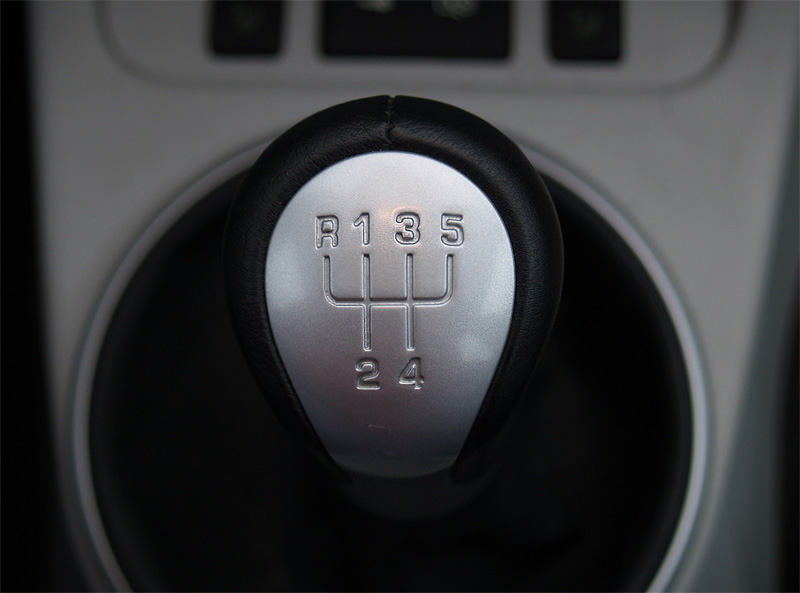
 The engine behaves most briskly in the range from 3500 to 5000 rpm, after which its traction declines, and there is no point in revving the engine to the cutoff. On the first three gears, the car accelerates briskly to a hundred. The shifts are Volkswagen-clear, the gearbox allows you to click gears quickly and with pleasure. But with further acceleration, it is better not to rush, recalling the proverb “the slower you go, the further you will be.” On the highway, I managed to squeeze out only 150 km/h, after which the engine's capabilities equaled the aerodynamic drag of the tall body.
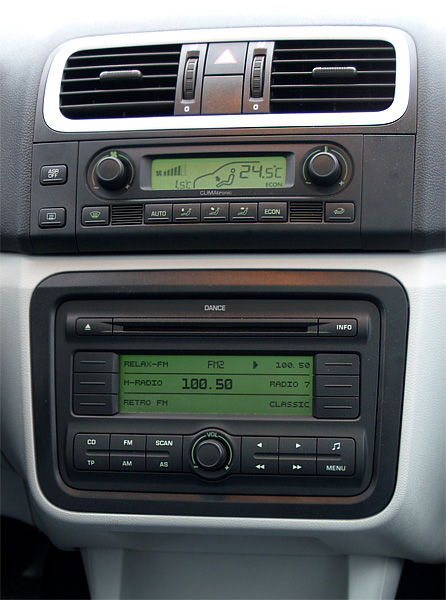
At idle, the engine is almost inaudible, but already after 3000 rpm its hum becomes annoying. In the city with active driving and frequent shifting, the engine pleases with sporty growling notes. However, on the highway, when the needle goes over 120 km/h, you can only talk in the cabin in raised tones. The advanced stereo with automatic volume adjustment according to speed was supposed to fight the noise, but the result is the opposite: at speed it is so noisy in the car that it is easier to turn off the music and reduce conversations to the necessary minimum.
To give 25 thousand dollars (approximately how much the tested Roomster, equipped with almost all options, cost) for a family car with such modest dynamics is perhaps overkill, and the appearance is not too inspiring. Although the happy eyes of a child who said that this is the best car in the world because you can see the sky from it made me think. Perhaps it is worth looking at the 102-horsepower version with a 1.6-liter engine — its maximum speed reaches 184 km/h. In Sport or Comfort trims with air conditioning, power package, two airbags, 16-inch alloy wheels, central locking with remote control and heated seats, such a 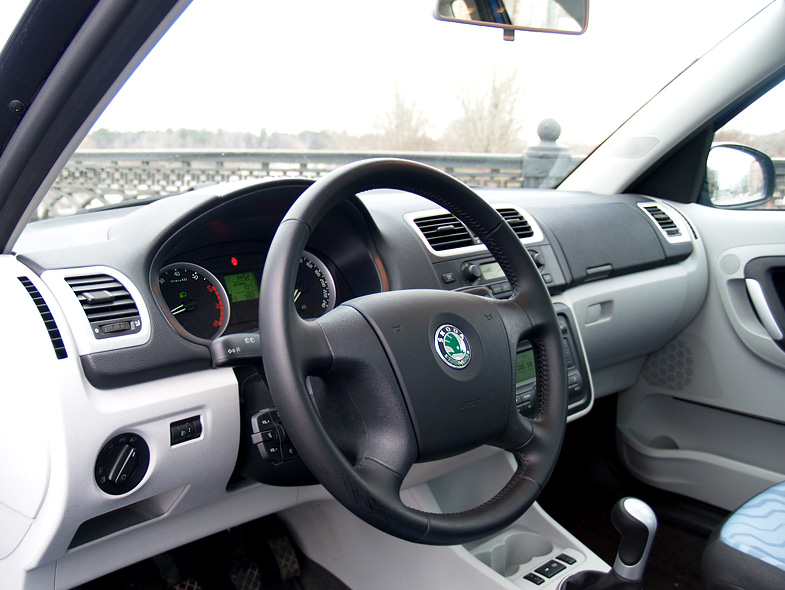 Roomster costs 19,990 dollars, which is only 700 dollars more than the version with the 1.4-liter engine. The 1.6 with automatic transmission will cost 21,290 dollars — a quite adequate price for a simple but still compact van. For comparison, the Renault Scenic with a 1.6-liter engine in the minimum configuration costs 21,550 dollars. For the Roomster, you will have to pay an additional 800 dollars for the glass roof — the most necessary element, and other options like parking sensors and a good stereo can be installed later, because they do not affect the comfort of the cabin and visibility.
Formally, for long trips, the 1.9 TDI turbodiesel with 105 hp is ideal, which is not inferior in dynamics to its gasoline counterpart, but should be noticeably more economical. However, the price of such a Roomster starts from 24,890 dollars, which, given current fuel prices and the dubious quality of Russian diesel, makes the idea of saving very doubtful.
If your goal is maximum savings, it is worth looking at the initial modification of the Skoda Roomster with a 1.2-liter engine producing 65 horsepower. The price for such a car starts from 15,490 dollars, but for this money you will get only an anti-lock braking system and a driver's airbag. For air conditioning and other additional options, you will have to pay separately. I even find it hard to imagine how nimble such a car will be, especially considering that on the highway its appetite will most likely be quite noticeable. But for those who desperately need a spacious and inexpensive car for the city, which can be turned into a delivery van if necessary, this configuration will be a good purchase, and after all, Skoda is essentially Volkswagen.
Leonid Pavlov