
 After the restyling, the Skoda Fabia has noticeably increased in price and may well lose its status as a "budget Volkswagen." The question is whether such a price tag is justified.Comments (1)
The second-generation Skoda Fabia debuted at the Geneva Motor Show in spring 2007. Currently, only the hatchback has undergone a facelift, while the Fabia Sedan and Combi are still produced in the previous body. The new Fabia looks almost nothing like its predecessor, but what lies behind the fresh design? To find out, we took the Skoda Fabia 1.4 in the top Sport trim for a test.
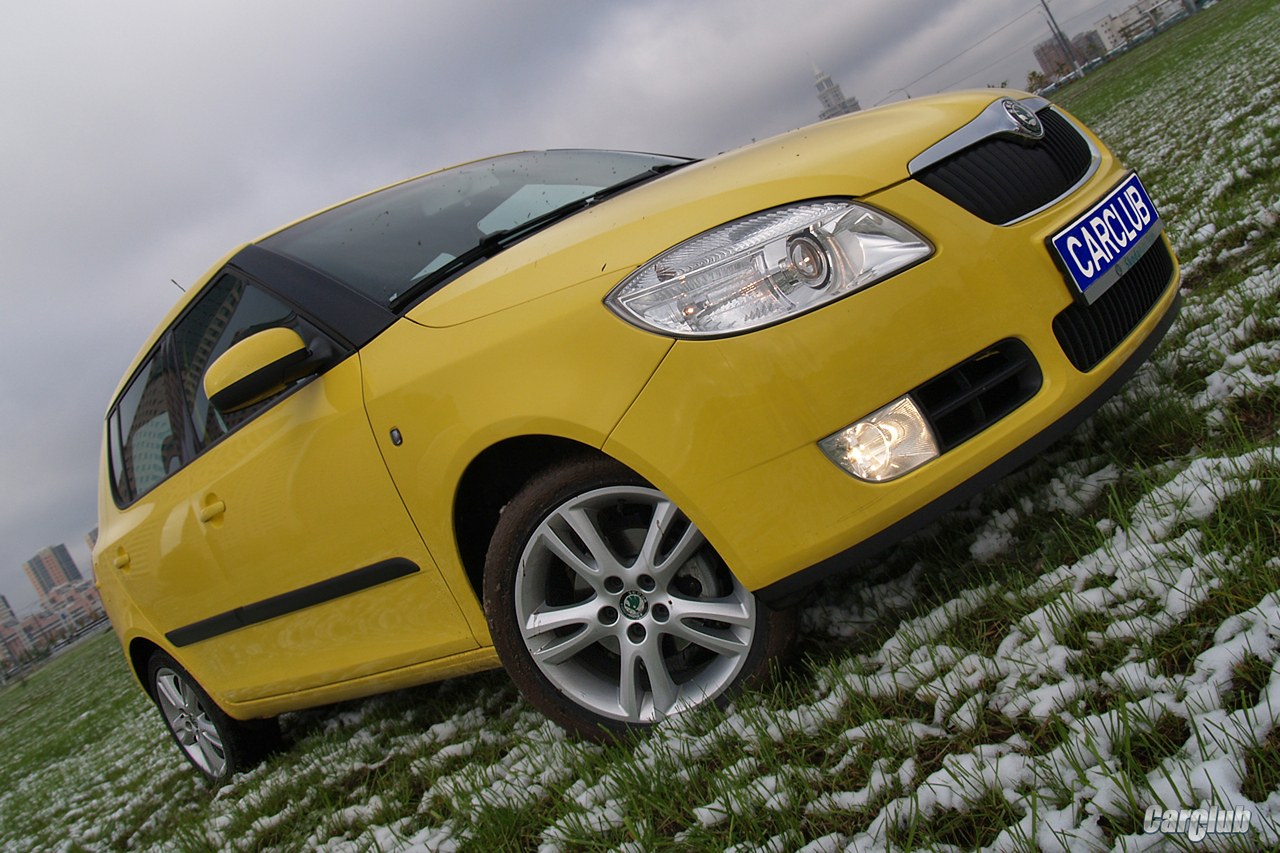
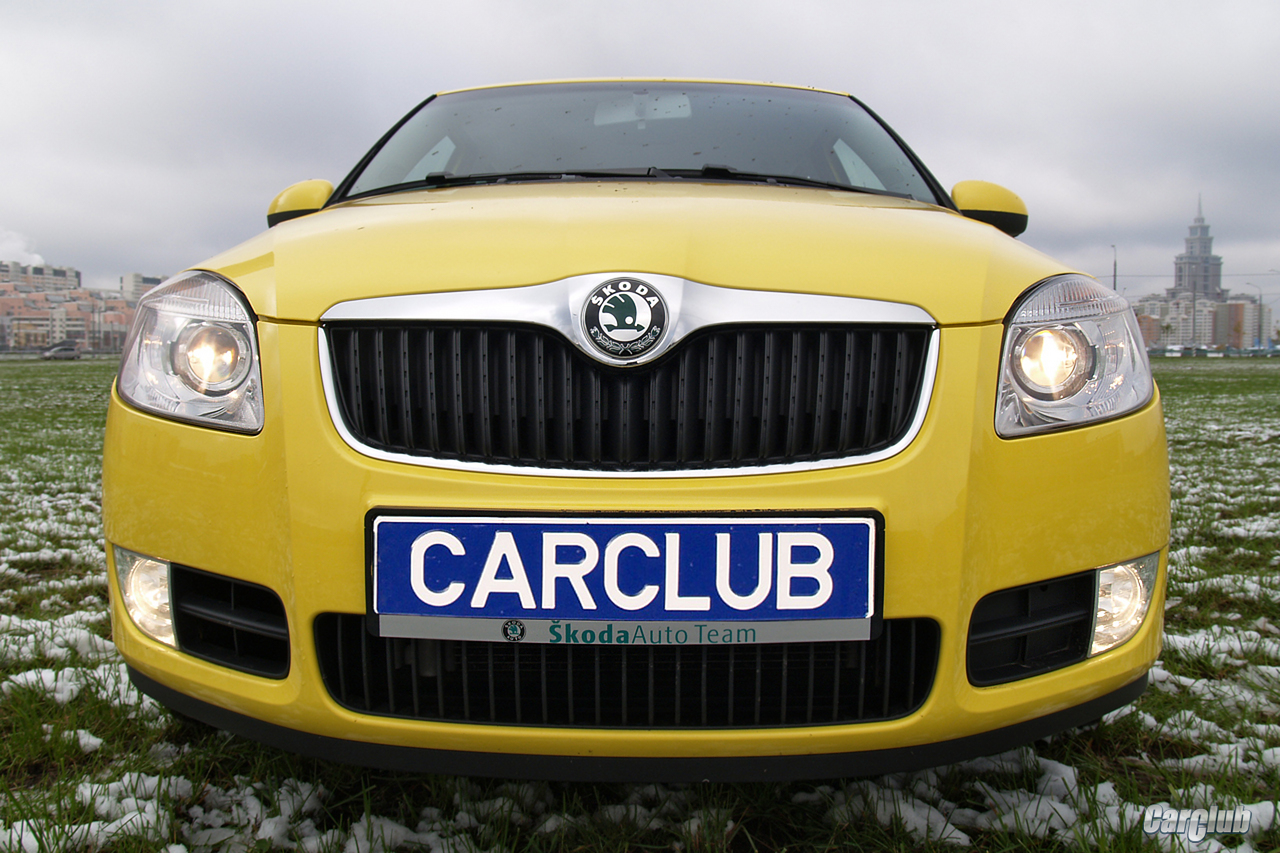
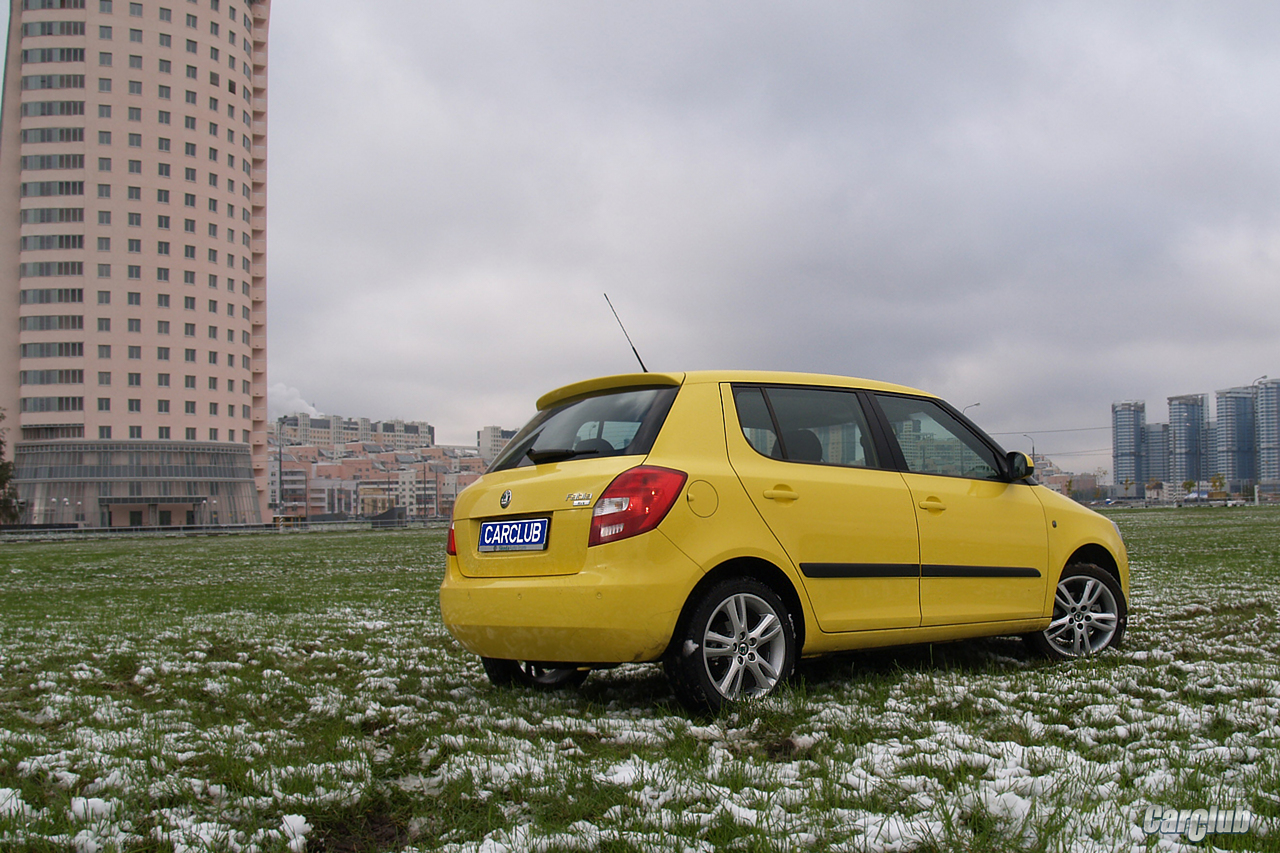 It's a well-known truth: small city cars suit juicy, bright colors. A cheerful yellow spot amid dirty melting snow — that's how the new Fabia is perceived at first acquaintance. The cleverly shaped headlights, as if from the Roomster, black roof pillars that visually dissolve like on a MINI Cooper... It seems designers also glanced toward the Suzuki Swift. But despite obvious borrowings, the car looks fresh and stylish. The hatchback has become 22 mm longer and 48 mm taller. As it turned out, it wasn't just about dimensions...
When you learn the price, you want to ask again: how much, excuse me?! $24,500?! Yes, our Fabia with a 1.4 engine and manual gearbox, along with additional equipment, reached a sum for which you could buy a well-equipped golf-class car! Moreover, Mazda3 or Opel Astra will offer a similar set of options: alloy wheels, stability control, power windows, cruise control (why is it even here?), parking sensors, an MP3 stereo, climate control, and even adaptive headlights. All this is wonderful, but the Fabia still remains a little car with a modest engine, and its price is astronomical. And there's nothing sporty about it except for the leather three-spoke steering wheel and seats with lateral support.
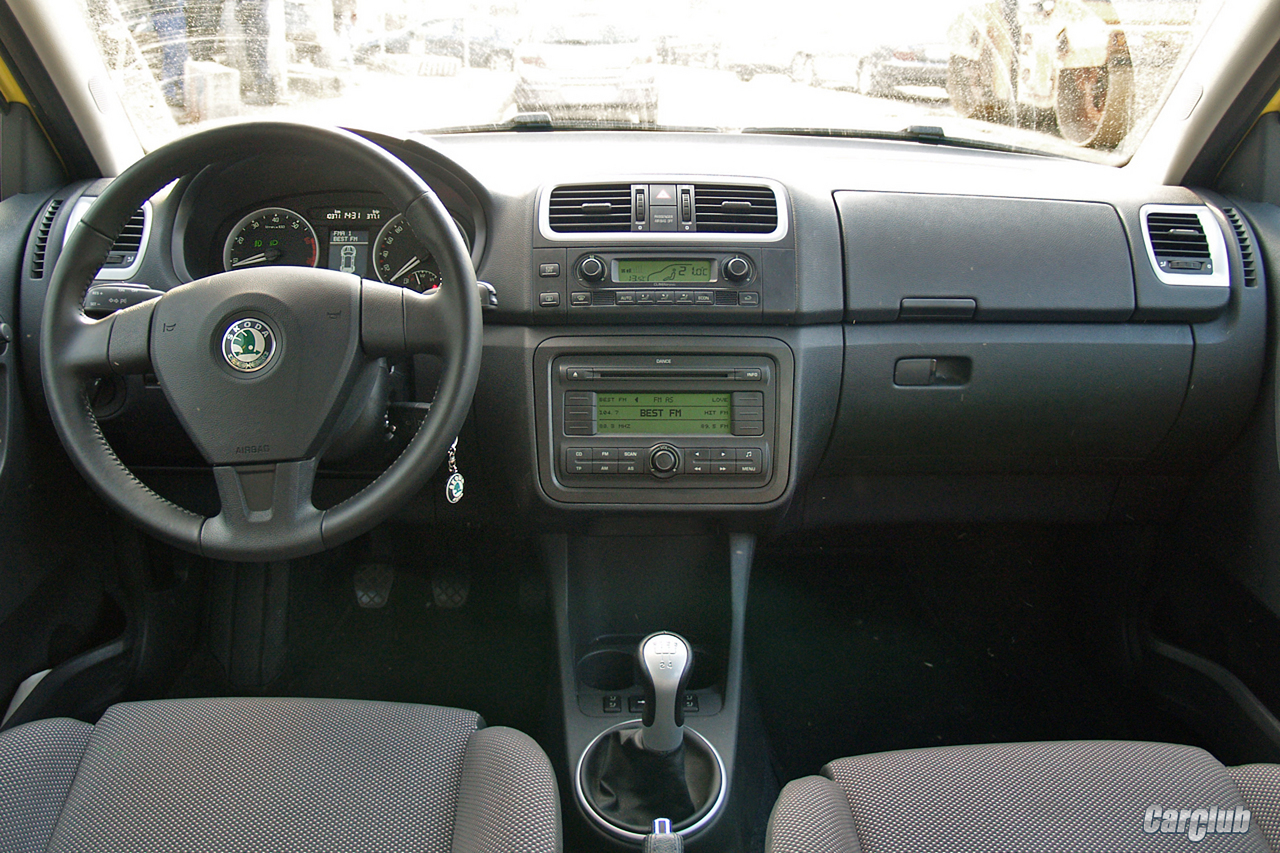
But the seats are top-notch! Getting comfortable and adjusting the seating position to suit yourself is a breeze; there's even height adjustment. The steering wheel adjusts in two directions with a wide range, but the horizontal mirror joystick didn't impress — it's hard to find the right position with the finicky roller. The steering column stalks are overloaded: on the "paddles," besides the usual functions, live the trip computer and cruise control controls — this is typical for the entire Volkswagen Group. The plastic, as expected, is hard. Only once did a "cricket" start somewhere, but, embarrassed by its inappropriateness in a solid German interior, it quickly fell silent. It's clear that the Fabia is aimed at a female audience, but why then is there no makeup mirror under the driver's sun visor — saving money at such a price? Good that at least a spacious glasses case between the visors wasn't forgotten. There are two glove boxes, but both are small; however, the lower one is cooled.
The main ergonomic complaint is the armrest between the front seats. It interferes with releasing the handbrake, although it folds back to a vertical position. Next to the handbrake there's an iPod connector, but the stereo itself, with all its settings, sounds mediocre, which in principle matches the car's class but not its price.
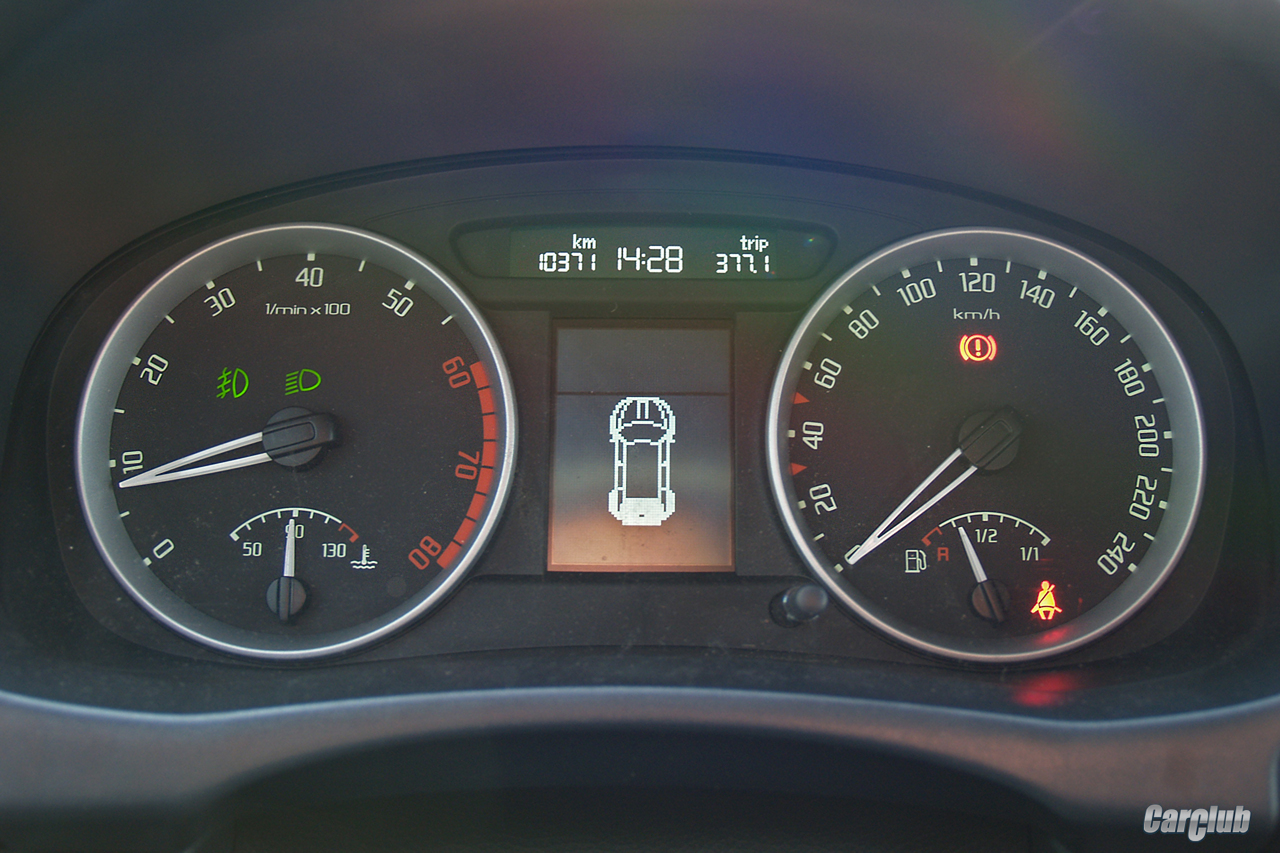
Okay, time to merge into city traffic and brighten up the gray roads with yellow! The retractable "fang" key, in Volkswagen style, brings the 1.4-liter 86-hp engine to life. Our start was in reverse — here the optional parking sensors proved excellent: besides audible signals, they display a distance diagram on the stereo screen and indicate the side of the threat. However, even without them, visibility is good, and the car's dimensions are less than four meters, so parking is not difficult.
The accelerator pedal is almost weightless; at first you even doubt it exists. The gearshift lever is equally light, with short and precise throws. It will appeal even to men with driving inclinations, if they ever find themselves behind the wheel of a Fabia.
The brakes are also tuned delicately — a careless press can be a surprise both for passengers and for those behind.
The engine, strangled by Euro-4 norms, pulls sluggishly at low revs, but after 3000 rpm it comes alive and, with a growl that sound insulation doesn't muffle, cheerfully hauls the light car forward. The mirrors with yellow trim not only please the eye in rainy weather but also provide excellent visibility. The suspension is stiff in a European way, but thanks to the low weight, speed bumps and even tram tracks are handled surprisingly softly. Comfort can be added by choosing more suitable 15-inch wheels instead of the optional low-profile 16-inch ones. The Fabia's handling is sharp, yet safe. Steering responses are instantaneous, but sending the Skoda into a slide is almost impossible even with stability control off: the car tends toward pronounced understeer.
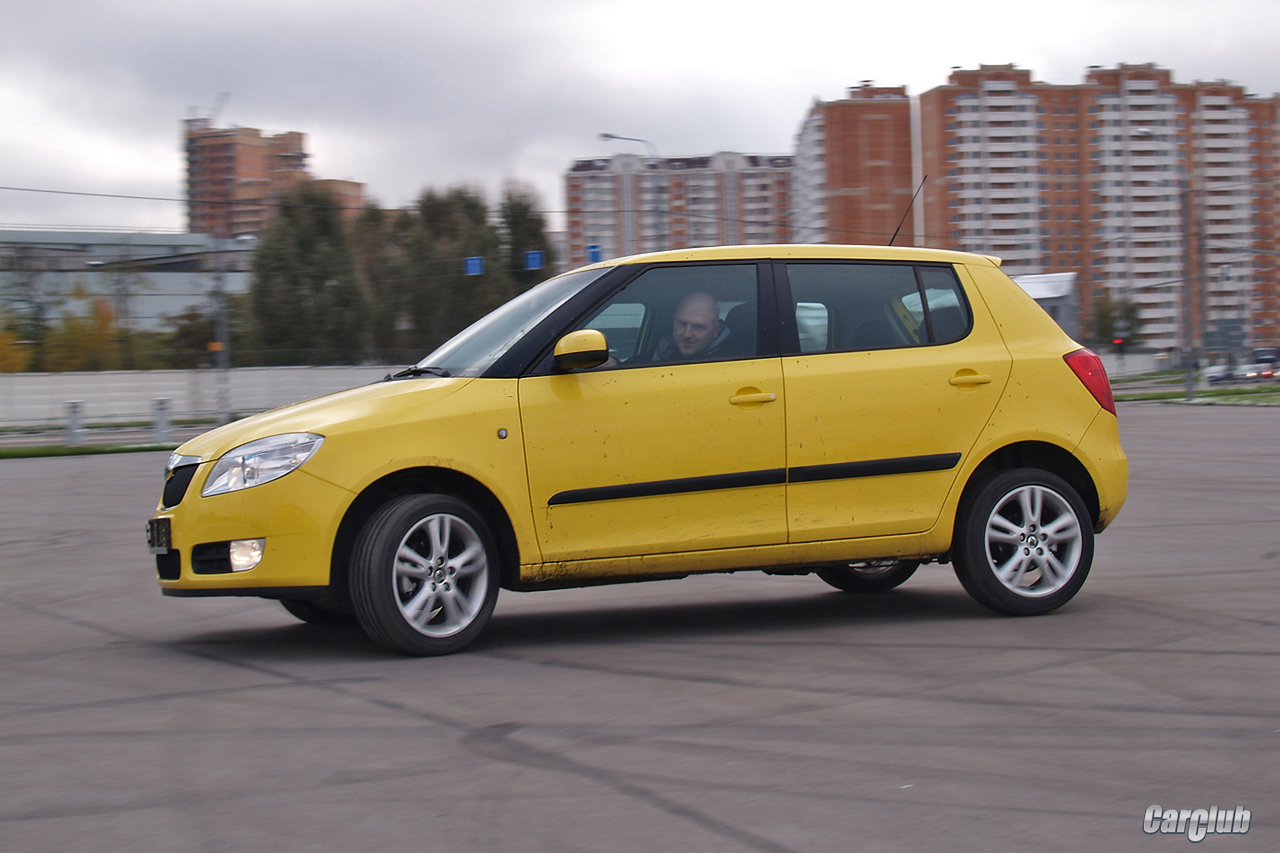

On the highway, the Fabia also feels good — the suspension is suitable for long trips, but such loads are hard on the engine: after 130 km/h fuel consumption starts to rise rapidly, and overtaking at such speeds is best forgotten. In a calm rhythm, the car is economical — in the city you easily stay within 8 liters per 100 km, but driving slowly in a car with such sharp steering and bright paint is boring. As soon as you start being active, consumption jumps to 10–12 liters. Of course, there's no talk of driving ambitions for the 1.4-liter engine, but the driving experience is quite dynamic, and the nimble little car catches interested glances from other drivers.
The trunk has grown compared to the previous generation from 260 to 300 liters, and with the seats folded, up to 1163 liters. Under the floor, by the way, there's not a "space-saver" but a full-size spare wheel. Three people can fit in the back, though they're unlikely to be comfortable — it's cramped. But two, if they're not under two meters tall, will be fine.
Of course, to buy a new Skoda you don't have to shell out $21,499 (171,990 UAH): the base version with a 1.2-liter 70-hp engine and 5-speed manual starts from 339,000 rubles. True, for that money you get only one airbag and power steering. The Ambiente version, which is 40,000 rubles more expensive, adds ABS, a trip computer, heated front seats, and a second airbag. Air conditioning and audio will have to be ordered separately. The "automatic" is available only with the 1.6-liter engine and exclusively in the Elegance trim. The price is steep — from 543,000 rubles. But the Sport, which we tested, for some reason was equipped only with a modest 1.4-liter engine. Such a car without extras will cost $15,154 (121,231 UAH).
So those who want a Fabia in decent trim and with an "automatic" will have to fork out. Such prices finally strip the Fabia of its former position — "affordable Volkswagen." By updating the model range, Skoda risks losing the remaining customers. If in the era of the "Felicia" and the first generations of the "Octavia" and "Fabia," the Czechs could fight for sales leadership, now the brand is stuck in the second ten and no growth is visible. What Spanish SEAT dealers ask money for is clear — for design; German Volkswagen promises quality, Audi — status, but what to pay Skoda dealers for is decidedly unclear...
Text: Svetlana Aleeva.