
Yuri VETROV, photos by the author and Skoda company
Nine years ago, Volkswagen made a truly royal gesture to the Czech brand — the first Skoda Fabia, built on the platform of the newest Polo, appeared even before its German relative. Since then, the small car Fabia has become the main source of income for the plant in Mlada Boleslav — it accounts for exactly half of the total production volume. Now the second-generation Fabia takes the stage. For now, we are only talking about the hatchback — the estate should be expected in autumn.
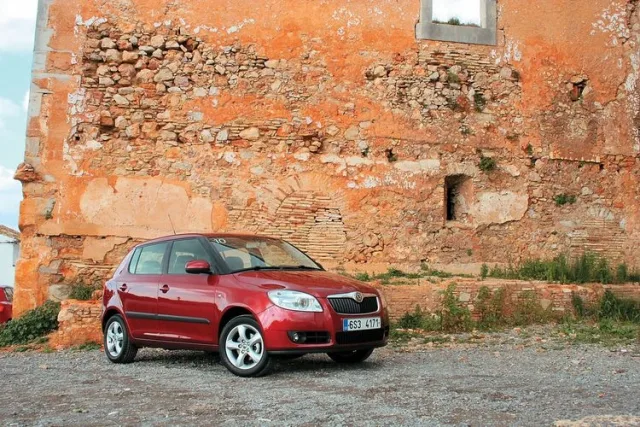
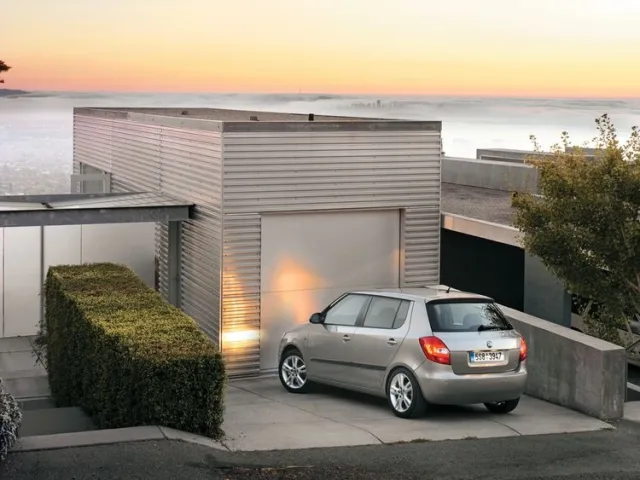
Last year, the unconventional Roomster hinted at what the new Fabia would be like: its front module is taken from the new hatchback. To protect pedestrians and get five EuroNCAP stars, the hood was raised by 30 mm, and the front overhang was increased by 14 mm. If the old Fabia looked too strict and boring for the B-class, the current one resembles a good-natured village simpleton staring at the world in surprise. Still, it seemed to me that a cohesive image was not achieved, although each detail individually is a true design masterpiece. Crystal taillights at the rear, huge eye-shaped headlights, a "cap" on the roof, a vertical windshield in the spirit of the Mini, a massive two-tier radiator grille…
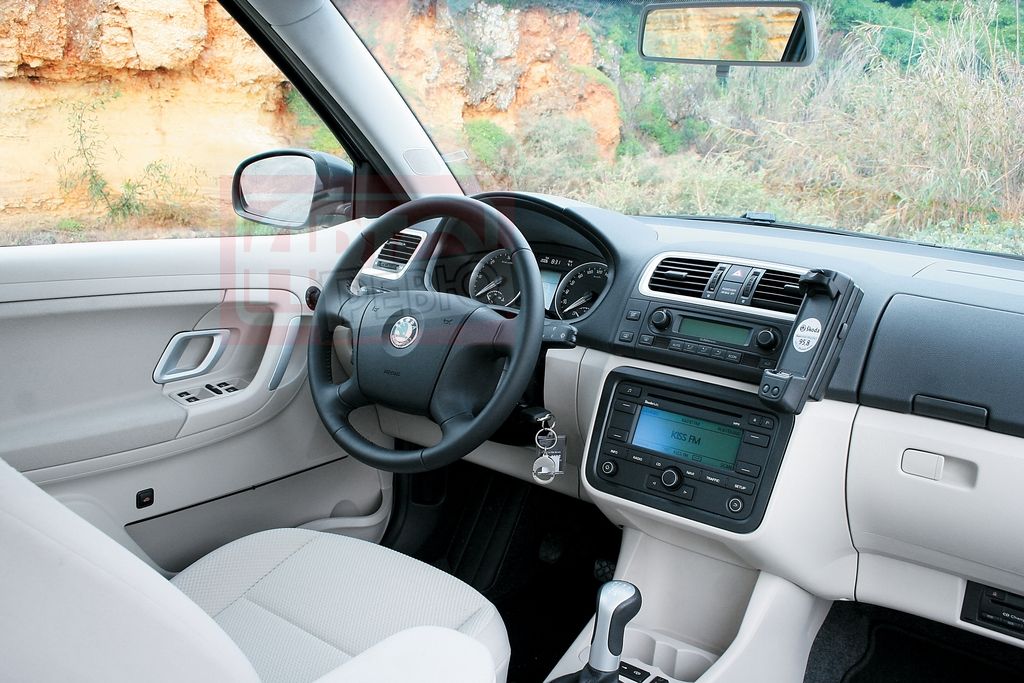
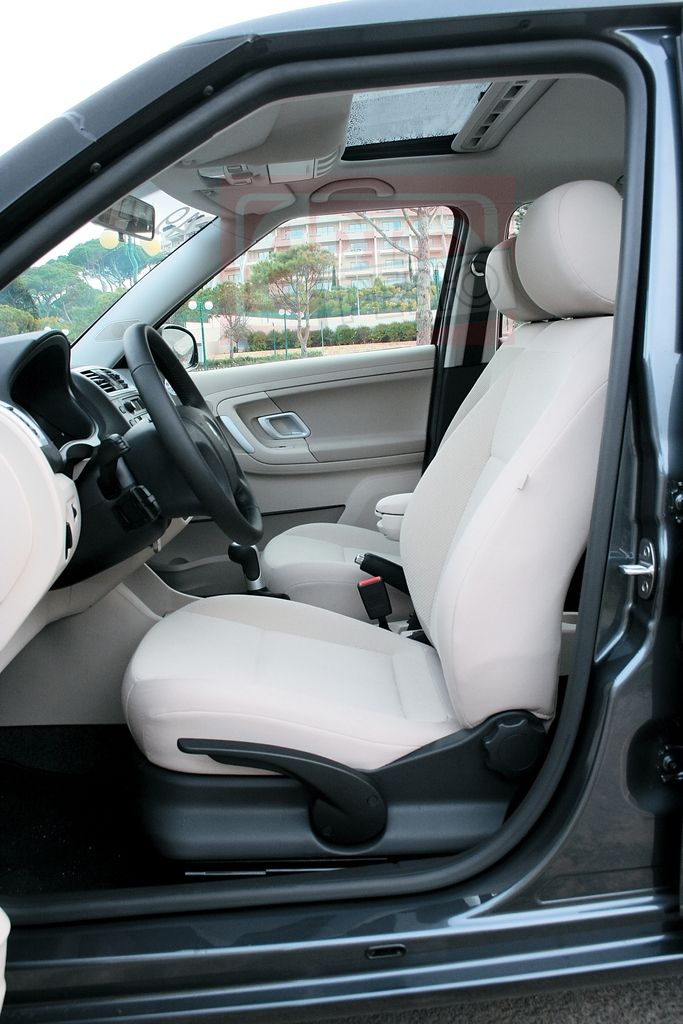
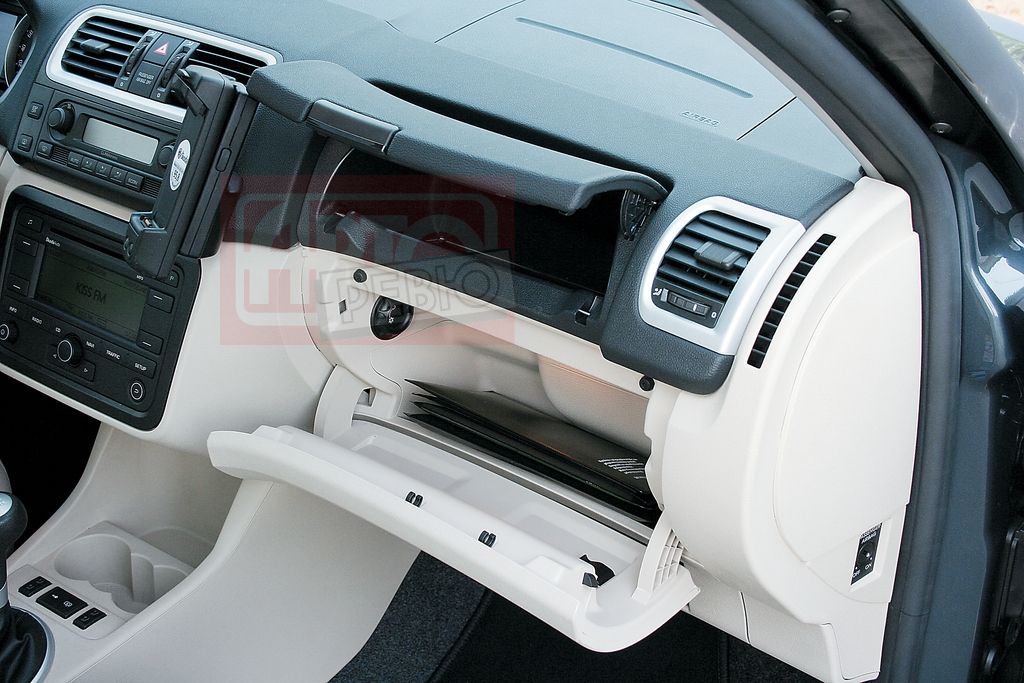
And what about inside? Up to the B-pillar, it is a spitting image of the Roomster. The same strict and practical front panel with two glove boxes, the same simple and clear instruments, the same excellent steering wheel and seats that adjust over a very wide range in height and length, the same magnificent mirrors. The ideal Czech-German ergonomics might be spoiled only by the stiff climate control knobs in versions with a simple heater.
 |
 |
| The interior is a copy of the Skoda Roomster. Strict, stylish, and high-quality |
The good seat lacks only lumbar support adjustment |
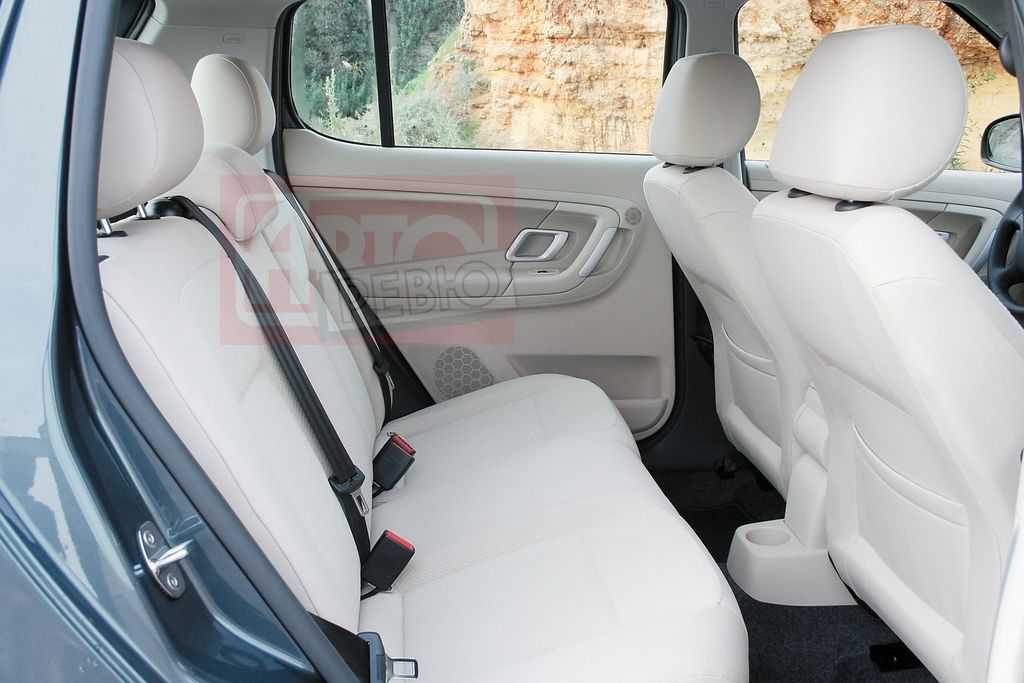
In the back, of course, it is not as spacious as in the Roomster — the wheelbase is 150 mm shorter (2462 mm, same as the previous Fabia). But by B-class standards, the comfort is simply royal: sitting "behind myself," I left a gap of ten centimeters between my knees and the back of the front seat. The secret is in the upright seating: the new Fabia has become 47 mm taller. The trunk has grown to an impressive 300 liters (plus 40 liters), although the rear overhang has increased by only 18 mm. In general, considering that the platform remained the same, the packaging engineers did an excellent job.
No new engines appeared: four petrol engines ranging from 1.2 to 1.6 liters and three diesels of 1.4—1.9 liters. But all of them will be available in Russia. However, the "hot" Fabia RS will appear no earlier than in a year.
First, I got behind the wheel of the version most popular among Russians: three cylinders, 1.2 liters, 12 valves, and 69 hp. The car started uphill effortlessly, calmly "pulled" from 1500 rpm in second… And the engine is not "weak" at all! The short gears are perfectly matched: second revs up to 75 km/h, third up to 115 km/h. And after 3500 rpm, a cheerful surge begins under the loud "motorcycle-like" roar of the engine.
 |
 |
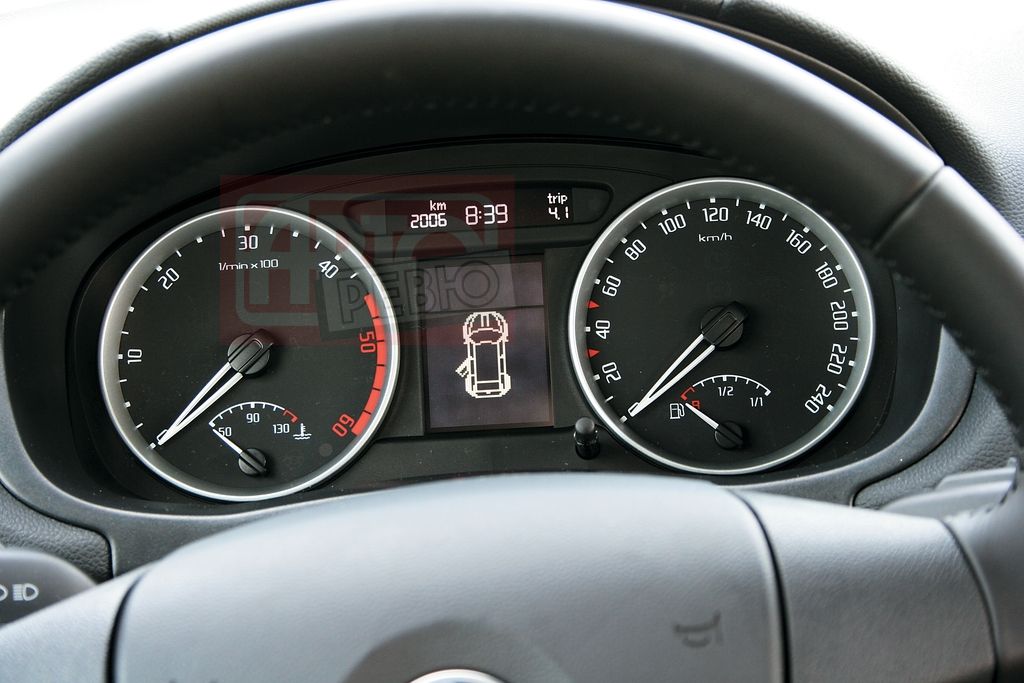
| Beautiful, informative, laconic — ideal instruments |
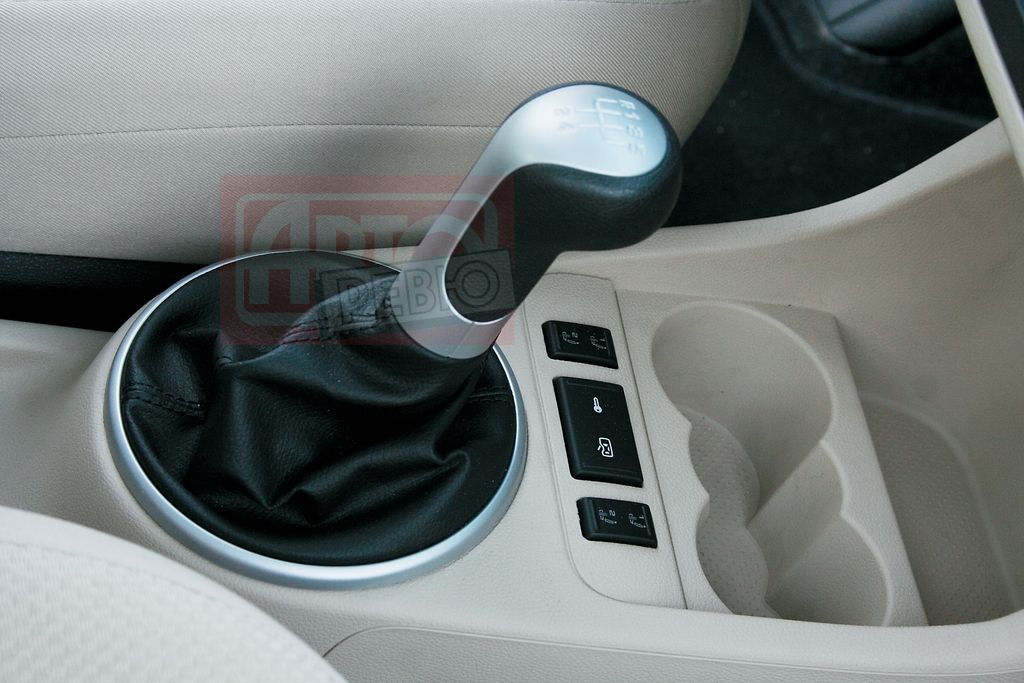
The gear lever is a bit short, and the throws are a bit long |
 |
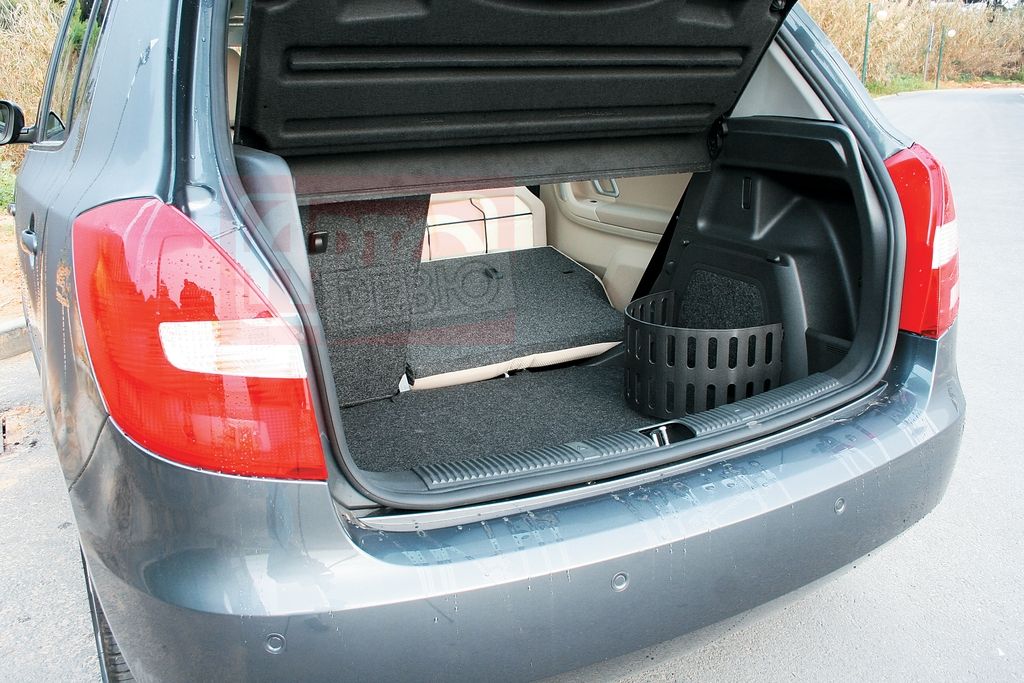 |
| Very spacious in the back — like in a Jetta! | Spacious and neat trunk — a housewife's dream |
The 1.4-liter engine has become 11 hp more powerful. But by feel, with it, the Fabia does not accelerate but simply gains speed. Dull, boring, bland.
Approximately the same character is in the 1.6 engine (105 hp), which the Volkswagen Golf shared with the Fabia: a smooth rev-up from 1500 to 6000 rpm is accompanied by a quiet hum. On the other hand, 10 seconds to 100 km/h is a quite convincing indicator. However, my average fuel consumption turned out to be considerable: 11 liters per 100 not-so-dynamic kilometers.
But the diesel is a completely different matter! I have known for a long time that the good old 1.9 TDI is excellent. So let me take a car with the newest three-cylinder engine of 1.4 liters and 80 hp. I drove — and again rejoiced at the three cylinders! The engine pulls without jerks from 1200 rpm, and a real flow of acceleration begins at 1700 rpm and fades by four thousand. But the noise and vibrations… A tractor!
The brakes on all versions pleased: excellent deceleration, great feedback. Although the ABS engages slightly early.
In a straight line, the Skoda Fabia drives with German confidence. The electric power steering fills the wheel with clear reactive force at the slightest deviation. And on corners, the car holds up well: reactions are predictably fast, precise, but without "kart-like" sharpness. And ESP engages timely, although somewhat roughly.
 |
|
| You can release the "handbrake" only with the armrest folded down |
The number of "glove boxes" does not compensate for their modest volume |
The price for good handling is mediocre ride comfort. However, it was the same before, which did not prevent the Fabia from selling worldwide in a run of 1.6 million units. It seems there will be no problems with selling the new Fabia either, and that is 250 thousand cars a year. But the Czechs are unlikely to have to urgently increase production capacity, as happened with the super-successful Roomster (last year they planned to sell 10 thousand cars, but it turned out to be 14.5).
Sales will begin in March, right after the premiere at the Geneva Motor Show. But this applies only to priority markets — the Czech Republic and Germany. And in Russia, the new Fabia will appear in April and will become about 5—10% more expensive (currently the bare Fabia 1.2 Junior costs $12,390). We are waiting!
| Specifications | |||||||
| Parameter | Model | ||||||
| Skoda Fabia | |||||||
| Version | 1.2 HTP 8V | 1.2 HTP 12V | 1.4 16V | 1.6 16V | 1.4 TDI | 1.4 TDI | 1.9 TDI |
| Body | five-door hatchback | ||||||
| Capacity | 5 | 5 | 5 | 5 | 5 | 5 | 5 |
| Length, mm | 3992 | 3992 | 3992 | 3992 | 3992 | 3992 | 3992 |
| Width, mm | 1642 | 1642 | 1642 | 1642 | 1642 | 1642 | 1642 |
| Height, mm | 1498 | 1498 | 1498 | 1498 | 1498 | 1498 | 1498 |
| Wheelbase, mm | 2462 | 2462 | 2462 | 2462 | 2462 | 2462 | 2462 |
| Track front/rear, mm | 1436/1426 | 1436/1426 | 1436/1426 | 1432/1422 | 1436/1426 | 1436/1426 | 1420/1410 |
| Trunk, l | 300—1163 | 300—1163 | 300—1163 | 300—1163 | 300—1163 | 300—1163 | 300—1163 |
| Curb weight, kg | 1040 | 1050 | 1060 | 1070 (1115)* | 1125 | 1130 | 1170 |
| Gross weight, kg | 1555 | 1565 | 1575 | 1585 (1630) | 1640 | 1645 | 1685 |
| Engine | petrol, multi-point injection | diesel, turbocharged | |||||
| Location | front, transverse | ||||||
| Cylinders | 3, inline | 3, inline | 4, inline | 4, inline | 3, inline | 3, inline | 4, inline |
| Bore/stroke, mm | 76.5/86.9 | 76.5/86.9 | 76.5/75.6 | 76.5/86.9 | 79.5/95.5 | 79.5/95.5 | 79.5/95.5 |
| Displacement, cc | 1198 | 1198 | 1390 | 1598 | 1422 | 1422 | 1896 |
| Compression ratio | 10.3:1 | 10.5:1 | 10.5:1 | 10.5:1 | 19.5:1 | 19.5:1 | 19.0:1 |
| Valves | 8 | 12 | 16 | 16 | 6 | 6 | 8 |
| Power, hp/kW/rpm | 60/44/5200 | 69/51/5400 | 86/63/5000 | 105/77/5600 | 69/51/4000 | 80/59/4000 | 105/77/4000 |
| Torque, Nm/rpm | 108/3000 | 112/3000 | 132/3800 | 153/3800 | 155/1600—2800 | 195/2200 | 240/1800 |
| Transmission | manual, 5-speed | manual, 5-speed (automatic, 6-speed) | manual, 5-speed | ||||
| Drive | front | ||||||
| Front suspension | independent, coil spring, McPherson | ||||||
| Rear suspension | semi-independent, coil spring | ||||||
| Front brakes | disc, ventilated | ||||||
| Rear brakes | drum | ||||||
| Tires | 165/70 R14 | 165/70 R14 | 165/70 R14 | 185/60 R14 | 165/70 R14 | 165/70 R14 | 195/55 R15 |
| Maximum speed, km/h | 155 | 163 | 174 | 190 (185) | 163 | 172 | 190 |
| Acceleration 0—100 km/h, s | 16.5 | 14.9 | 12.3 | 10.1 (11.5) | 14.8 | 13.2 | 10.8 |
| Fuel consumption, l/100 km | |||||||
| city | 7.8 | 7.7 | 8.6 | 9.3 (10.2) | 6.0 | 5.7 | 6.4 |
| highway | 4.8 | 4.9 | 5.3 | 5.5 (6.1) | 4.2 | 4.0 | 4.1 |
| combined | 5.9 | 5.9 | 6.5 | 6.9 (7.6) | 4.8 | 4.6 | 4.9 |
| Tank, l | 45 | 45 | 45 | 45 | 45 | 45 | 45 |
| Fuel | petrol AI-91—95 | diesel | diesel | ||||
| * In parentheses — data for versions with automatic transmission | |||||||