
Ivan SHADRICHEV, photos by the author and Skoda
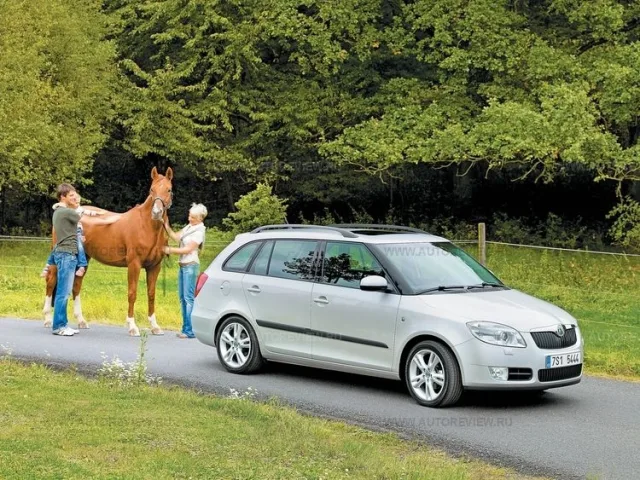
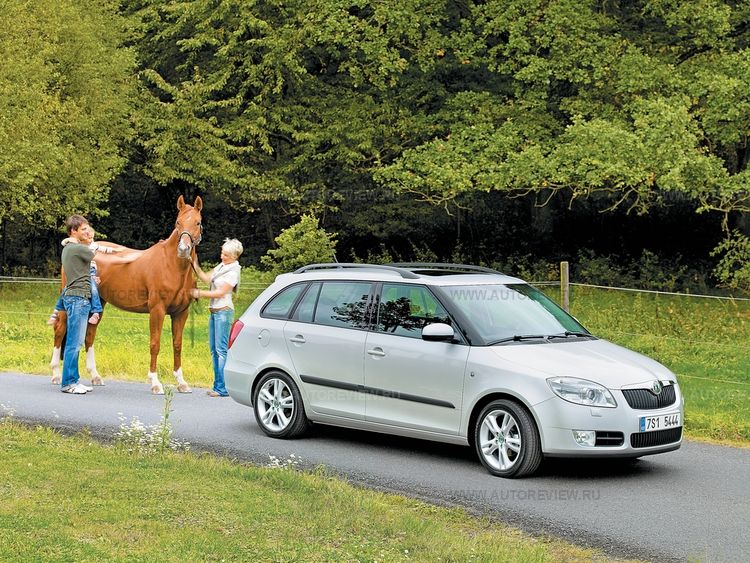
Station wagon — a word that many associate with the huge Volga "barge". However, the Skoda Fabia Combi is a compact station wagon. It has cargo capabilities, but within reasonable limits. How modest are they? I sought the answer to this question in Croatia, on the Adriatic coast, where the new model was being showcased.
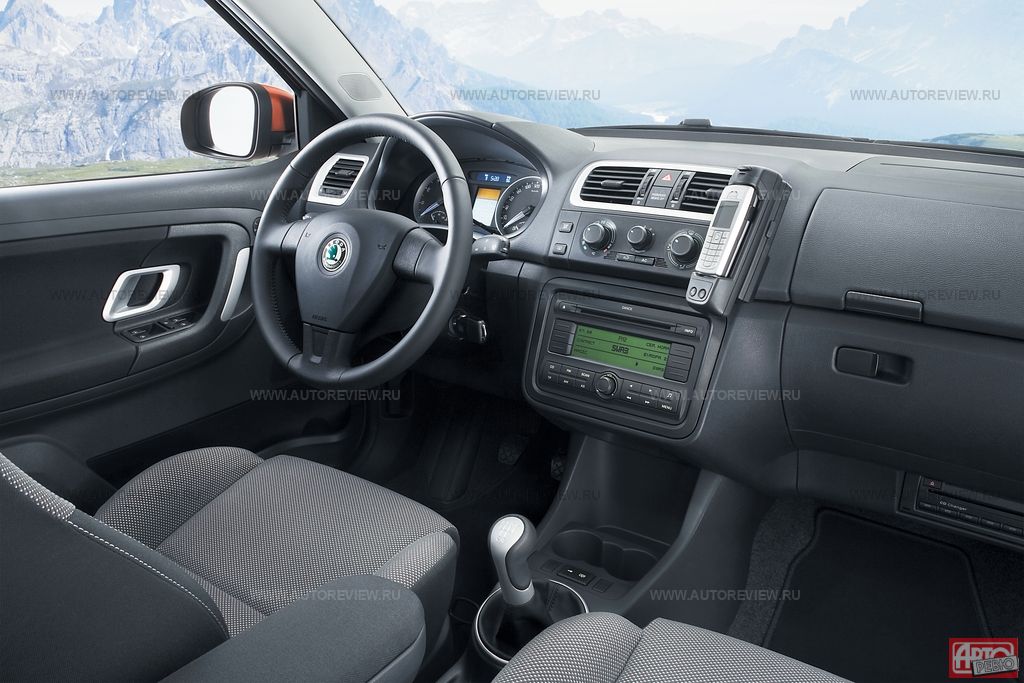 |
| The station wagon's interior completely mirrors the hatchback. The three-spoke sporty steering wheel is an extra-cost option |
Fans of classic compact cargo-passenger cars currently have almost no choice: Peugeot 207 SW, Renault Clio Estate, and Skoda Fabia Combi. The market is increasingly focused on transporting people, so manufacturers are increasingly replacing small station wagons with compact MPVs built on the same B-class platforms. Among them are the Nissan Note, Opel Meriva, Ford Fusion, and Renault Modus. The Czechs are not lagging behind either: the "heel" Roomster turned out to be successful. So why do they also need the Fabia Combi station wagon, whose rear is a quarter meter longer than the hatchback's?
The answer is simple: the previous generation Fabia Combi sold well — at least by station wagon standards. In the second half of last year, 40,000 such cars were sold versus 14,500 Roomsters! The reason for this popularity is purely economic. The Roomster is more expensive not only to buy. It is larger — ten centimeters taller and four centimeters wider. But that means it needs a bigger garage and more fuel. For example, on the highway, the Roomster 1.2 consumes almost a liter more per hundred kilometers than the Fabia Combi with the same engine. The difference is roughly the same in the city: the Fabia Combi, although 20 kilograms heavier than the hatchback, is a full 80 kilograms lighter than the Roomster.
In my opinion, the design of the new station wagon turned out well. Due to the sloping rear, the Fabia Combi looks even more dynamic than the slightly clumsy hatchback. And the roof rails add practicality.
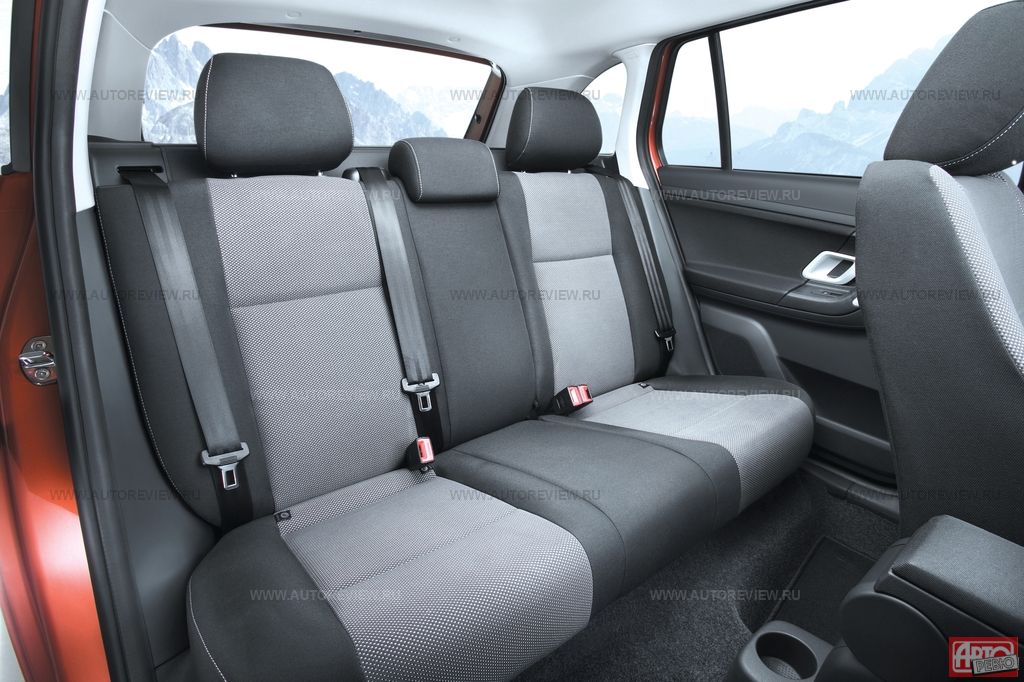 | 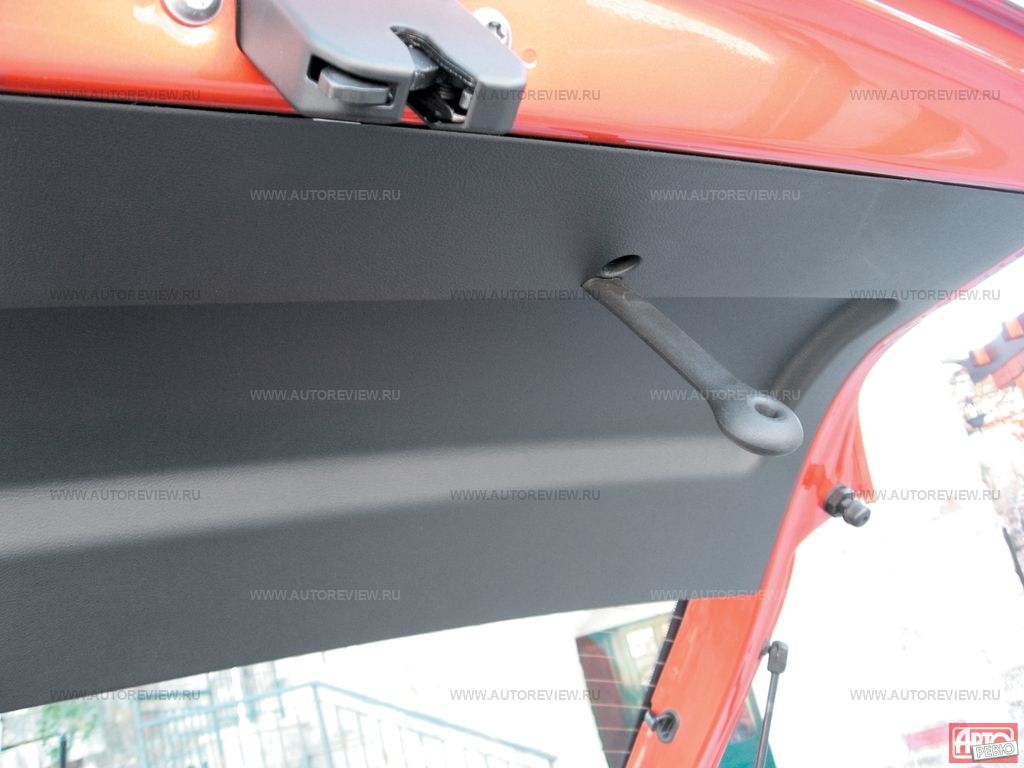 |
| Passengers in the station wagon are not more spacious than in the hatchback | Convenient rubber pull-handle for closing the door |
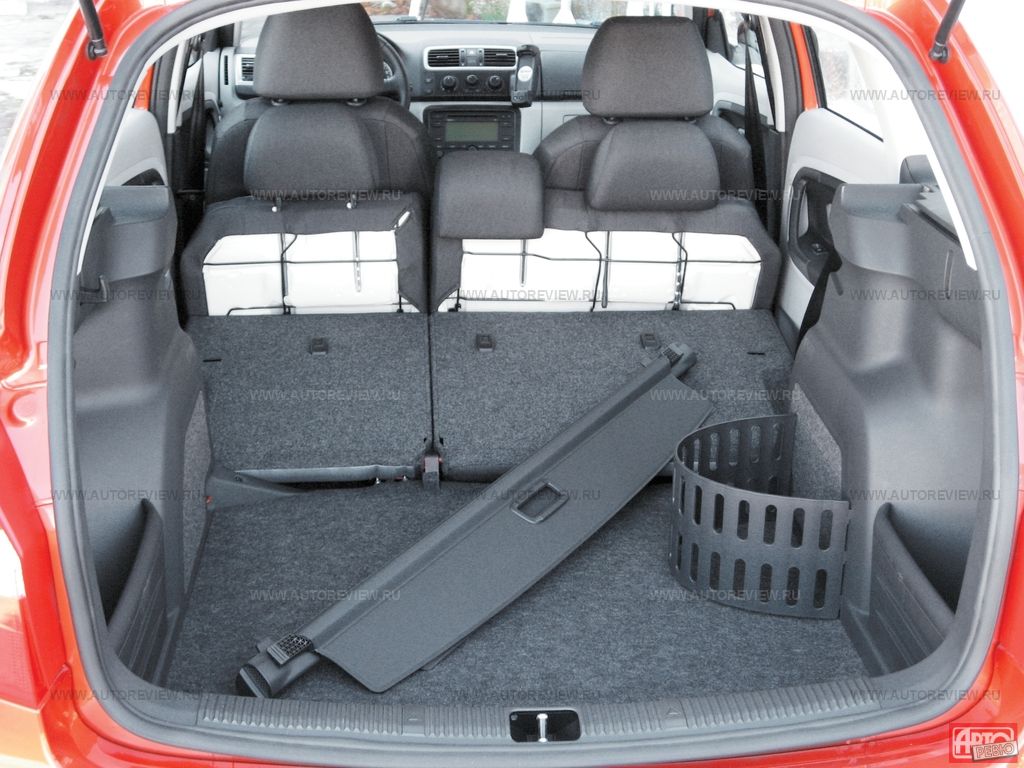 | 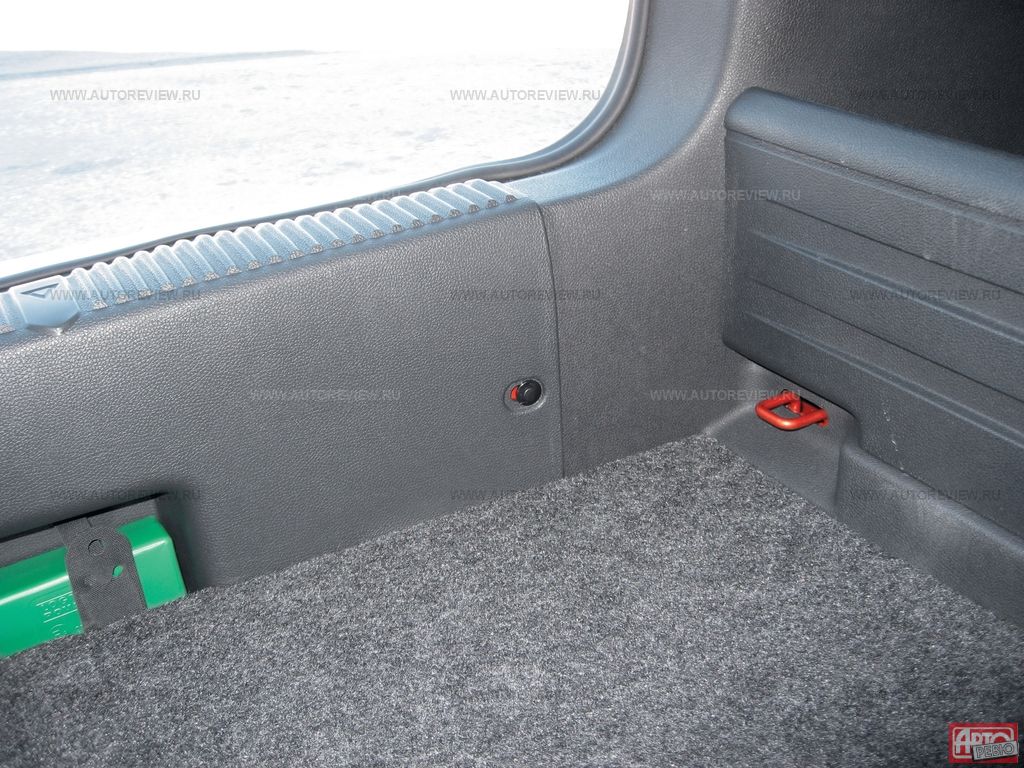 |
| The trunk opening is decent, with pockets and a "bucket" for small items on the sides, but the "threshold" could be lower — loading heavy items is inconvenient | |
But when it comes to capacity, especially for passengers, the comparison with the Roomster is not in the Fabia's favor. True, at the presentation, two tall men sat one behind the other and smilingly told how comfortable they were. But it's hard to believe: at my height of 170 centimeters, I fit "behind myself" "without strain," but there's no talk of spare room. Moreover, unlike the Roomster, the rear seats here do not slide. And they only come out halfway: the wire "legs" of the cushions shift sideways and come out of the brackets. I also tried to remove the backrest by turning the lock with a key at the axle. But no such luck — a seat belt is bolted to the back of the backrest... "Such a transformation option is not provided," the Skoda folks replied. The standard transformation is simple: cushions — "to vertical," backrests — "to horizontal." However, you need to remove the headrests and insert them into the holes in the cushions, and releasing the backrest locks is inconvenient — the hand movement is unnatural.
But the Fabia Combi handles small loads excellently: pockets, a "bucket" for odds and ends. The trunk is huge — 480 liters, almost like C-class station wagons. It's thirty liters more than the Roomster's and 56 liters more than its predecessor's, even though the new Fabia Combi is only seven millimeters longer than the old one!
The inertia of the heavier rear hardly spoiled the Fabia's driving character. The car holds a straight line perfectly, and with a faster entry into a corner, the rear slightly kicks out on throttle lift-off, but within reasonable limits: I used this technique with pleasure.
But the suspension is not tuned for passengers, or if it is, then only with good roads in mind: good energy capacity is combined with considerable vertical stiffness. In our case, the effect was amplified by optional 16-inch wheels with minimal tire profile!
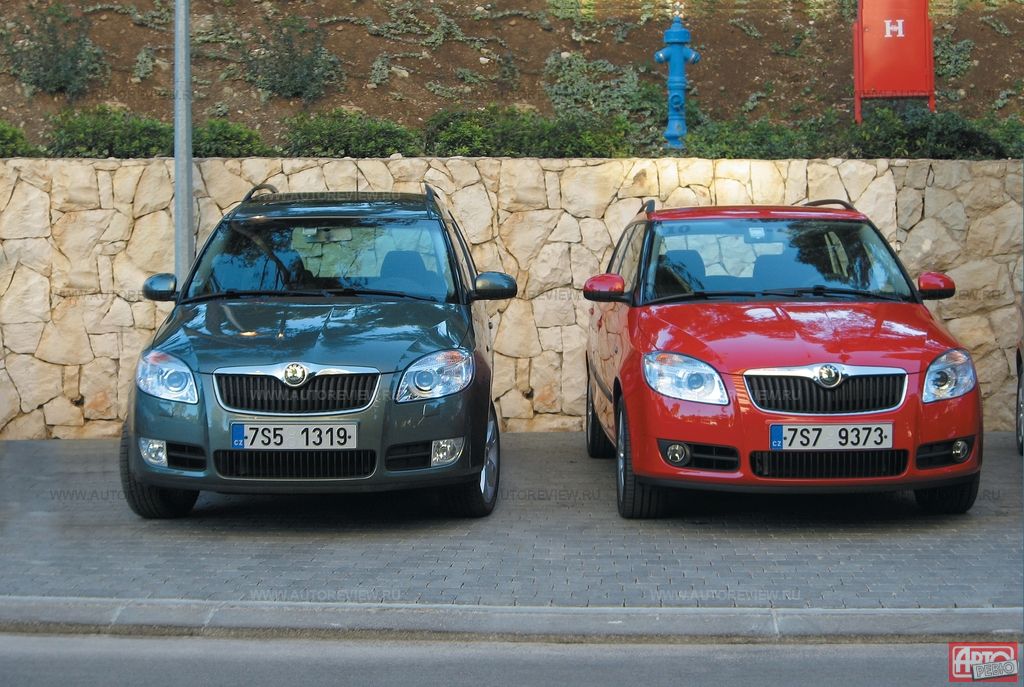 | 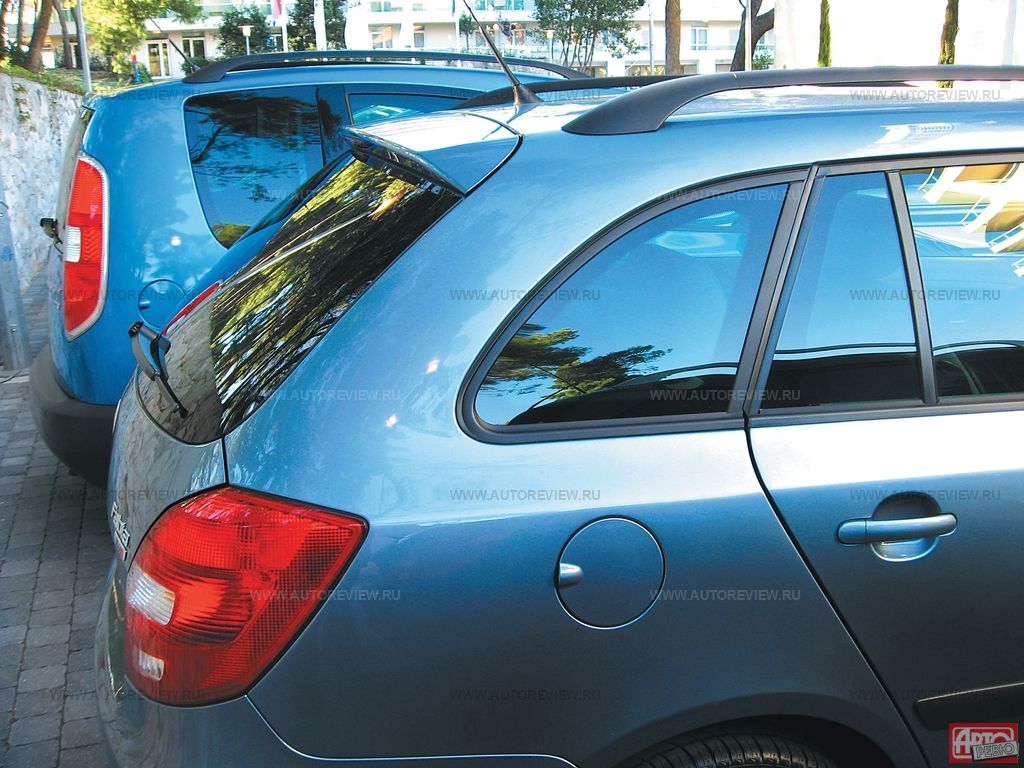 |
| Roomster (left) and Fabia Combi (right): feel the difference | |
As for engines, there are two pieces of news — good and bad. The good news for Europeans: the station wagon gets all the same powertrains as the hatchback. The bad news is for Russians: the excellent Volkswagen Group diesels are not yet available to us. And the previous Fabia on heavy fuel can no longer be ordered in Moscow.
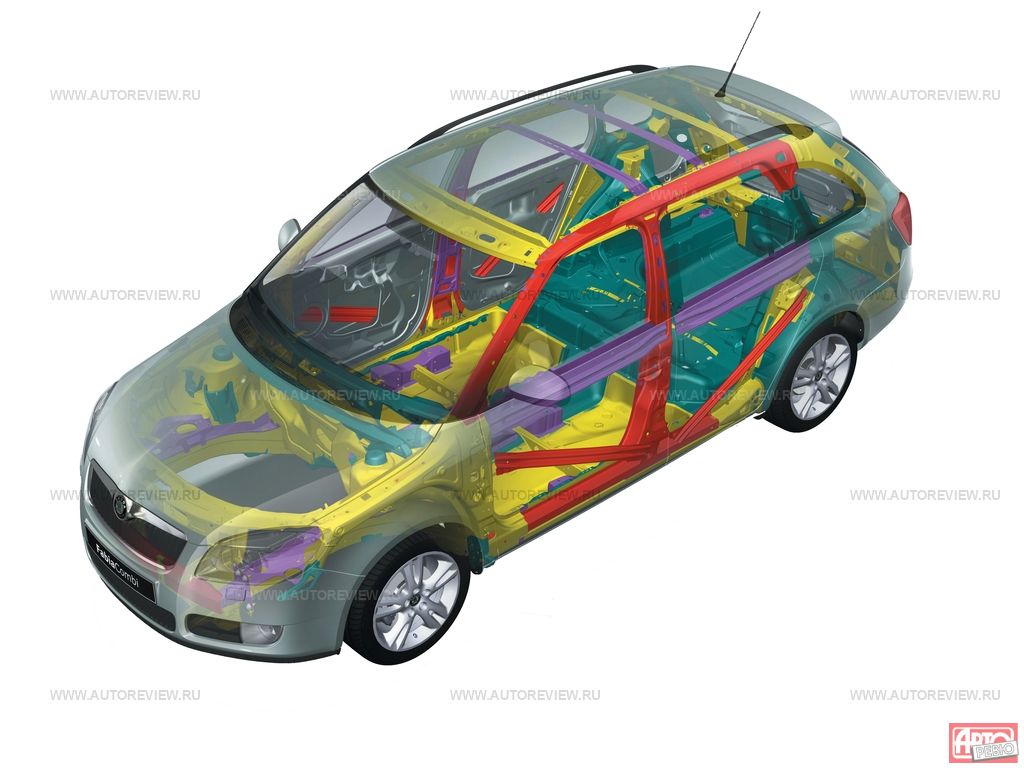 |
| Reinforcements made of ultra-high-strength steel (red) significantly increase the rigidity of the passenger "cage" in frontal and side impacts |
Of the three gasoline engines I tried, the "middle" one, with a displacement of 1.4 liters, seemed optimal for the station wagon, and among gearboxes, the manual. Gears shift with the traditional Skoda ease and precision. The engine is both torquey and revs quite briskly.
The 1600 cc unit, which I got with an automatic that constantly shuffles its six gears, did not provide noticeably better dynamics. But with the little three-cylinder 1.2-liter engine, which vibrates discontentedly, the Fabia Combi accelerates sluggishly. And revving it is useless: it doesn't want to conquer the six-thousand marks on the tachometer. The only pleasing thing is the pleasant-to-the-ear rumble of the engine.
Honestly, the Skoda Fabia is noisy with any engine. And at high speed, even the vocal engines are drowned out by the whistling wind — you have to raise your voice to talk to passengers.
But the little station wagon turned out good, much more spacious than the popular predecessor, of which 640,000 units were sold worldwide — that's every third Fabia. Even in our market, the Combi version accounted for a fifth of sales, although the station wagon is 10% more expensive than the hatchback.
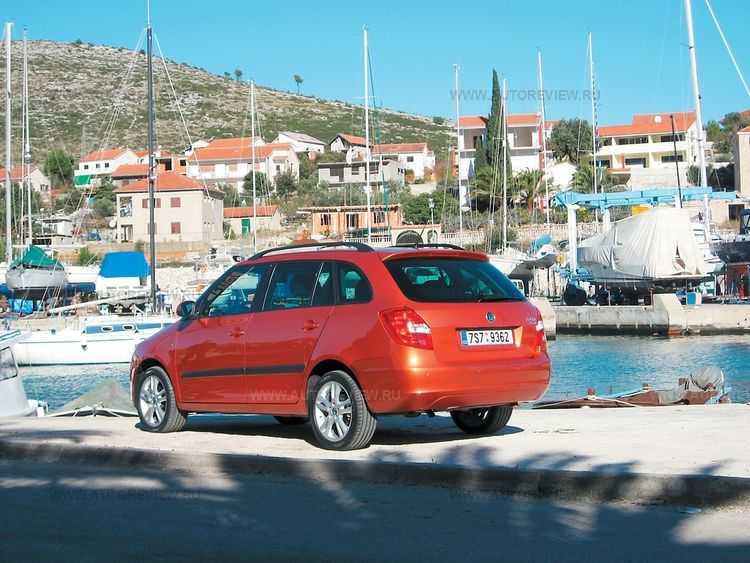
They promise that this same markup will be maintained in the future, although price lists for the new model have not yet been determined. If you add these percentages to the 369,000 rubles ($15,185) that the Fabia 1.4 Ambiente costs, the price of the new model will be 406,000 rubles ($16,700). A bit pricey. The bestseller Ford Fusion 1.4 is more affordable by 36,000 rubles ($1,500). Yes, the Ford's trunk is 120 liters smaller, but are those liters worth that much money? By the way, the Skoda Roomster 1.4 is even more expensive — by 50,000 rubles.
And the Fabia Combi 1.6 could cost around 480,000 rubles altogether. That turns out to be even more expensive than more passenger-friendly C-class station wagons: for example, the Ford Focus 1.6 costs 440,000 rubles, and the Chevrolet Lacetti 1.6 — even 410,000 rubles.
As for the new model, you should wait until April — the Czechs want to coincide the start of sales in Russia with the opening of the dacha season.
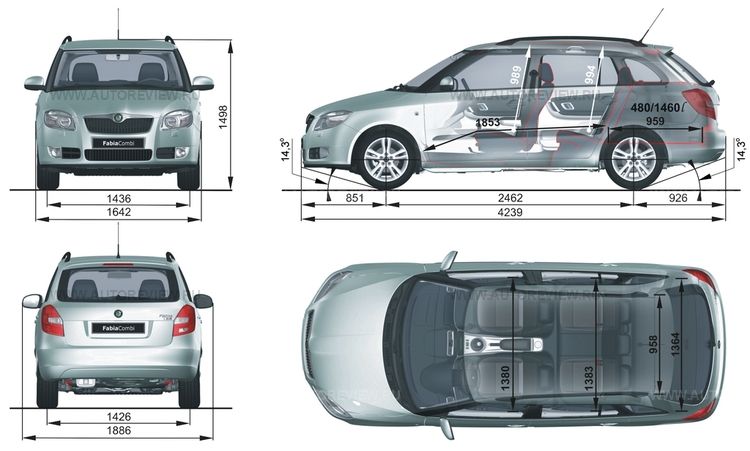
| Specifications | |||
| Parameters | Vehicle | ||
| Skoda Fabia Combi | |||
| Version | 1.2 | 1.4 | 1.6 |
| Body | station wagon, 5 doors | ||
| Trunk, l | 480—1460 | 480—1460 | 480—1460 |
| Curb weight, kg | 1070 | 1075 | 1090 (1135)* |
| Gross weight, kg | 1585 | 1590 | 1605 (1650) |
| Engine | petrol, multipoint injection | ||
| Layout | front, transverse | ||
| Cylinders | 3, inline | 4, inline | 4, inline |
| Bore/stroke, mm | 76.5/86.9 | 76.5/75.6 | 76.5/86.9 |
| Displacement, cm³ | 1198 | 1390 | 1598 |
| Compression ratio | 10.5:1 | 10.5:1 | 10.5:1 |
| Valves | 12 | 16 | 16 |
| Max power, hp/kW/rpm | 69/51/5400 | 86/63/5000 | 105/77/5600 |
| Max torque, Nm/rpm | 112/3000 | 132/3800 | 153/3800 |
| Transmission | manual, 5-speed | manual, 5-speed (automatic, 6-speed) | |
| Drive | front | front | front |
| Front suspension | independent, coil spring, McPherson | ||
| Rear suspension | semi-independent, coil spring | ||
| Front brakes | disc, ventilated | ||
| Rear brakes | drum | drum | drum (disc) |
| Tires | 165/70 R14 | 165/70 R14 | 185/60 R14 |
| Maximum speed, km/h | 164 | 175 | 192 (186) |
| Acceleration 0—100 km/h, s | 15.1 | 12.7 | 10.4 (11.8) |
| Fuel consumption, l/100 km | |||
| city | 7.7 | 8.6 | 9.1 (10.2) |
| highway | 4.9 | 5.3 | 5.6 (6.0) |
| combined | 5.9 | 6.5 | 6.9 (7.5) |
| Fuel tank, l | 45 | 45 | 45 |
| Fuel | AI-91—95 | ||
| * In parentheses — for versions with automatic transmission | |||