The new Ibiza once again confirms the long-standing strategy of the Volkswagen Group: on one platform (here, the base intended for the upcoming Polo) with the same engines, several models are produced at once. Externally, they can differ as much as they like, fall into the budget or premium segment — in general, match the spirit of a particular German brand. If it's SEAT, then, as usual, "with a spark," aimed at the young and dynamic. In contrast — pragmatic Skoda, democratic Volkswagen, and "rich" Audi. The Spanish model is already 24 years old, about four million cars have spread around the world, and still it seems as if the Ibiza every time has to prove that it deserves a place among competitors. Although why? It has always been fine.
LONGER, BUT IN MODERATION
With the change of generations, the body stretched by 7 cm, the track front and rear widened by 3 cm. But records for capacity are not to be expected: the wheelbase increased by only 7 mm. So, as with most classmates-hatchbacks, only the front passenger can really settle in comfort — especially if the owner did not spare money for adjusting the right seat height and the central armrest. An armrest would not hurt in the back either (however, it is not even available as an option), because two adults in the back are noticeably more comfortable than three. Although there is enough legroom. The situation with the trunk is twofold: its volume, judging by the number of tennis balls that fit, is unexpectedly large — 300 L (for the Fiat Grande Punto, for example, 282 L, and for the Ford Fiesta — 261 L). But a stroller (in tests for moms we always use the same one), which fit into the trunks of microcars, this time did not fit. The compartment is deep, but the shape is not the most successful, and the transformation possibilities are minimal: the rear seat backrest folds in a 1/1 or 1/3 ratio depending on the trim. And that's it! There is no longitudinal adjustment or at least a change in the backrest angle.
CHANGE OF PRIORITIES
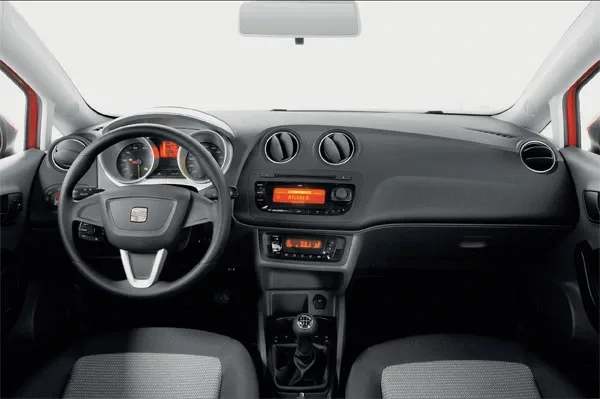
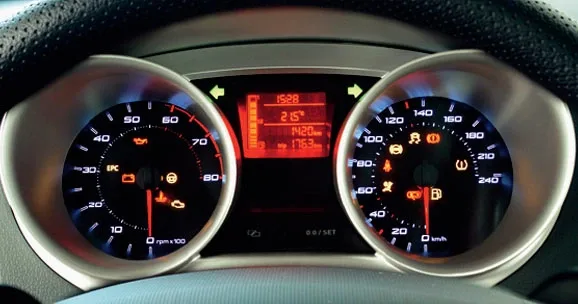
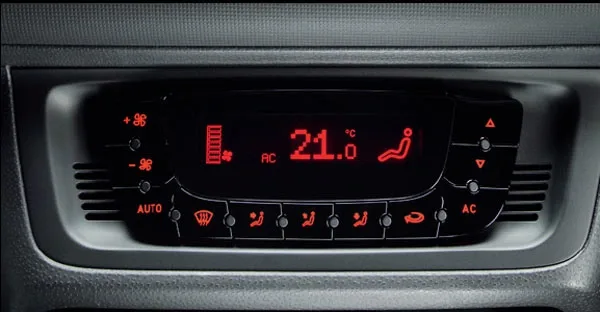
Well, okay, strollers can be more compact, and you often drive together. Let's return to the interior. Previously, the console was one whole with the instrument panel, clearly marking the boundary of the driver's domain. Both music and climate were subordinate to him. Now the panel is on its own, the console is on its own. Moreover, the latter is united by a common line with the "navigator's" zone, as if emphasizing: the driver should steer, not choose tracks and set the temperature. Especially since finding the desired radio station can take a while: the audio system has no quick tuning buttons, frequencies are remembered only through the menu. Better to program them in advance, as well as the climate control. There are no complaints about its operation, but the buttons are a bit small. The hazard light button is optimal in size, but placing it in front of the gear lever is, in our opinion, a controversial decision. Reaching for it far down is inconvenient.
LET'S FEEL THE DIFFERENCE
We have two cars with different engines. One has a 1.4 L petrol. This is the best choice for the Ibiza, since the 1.2 L is boring, and the 1.6 L adds excitement to driving but makes it a bit jerky. The second example is with a 1.9 L turbodiesel. First, we tested the petrol version. The four-cylinder engine is almost inaudible at low and medium speeds. Power — 85 hp, torque — 132 Nm at 3800 rpm. Not much, but the VW Group has long known how to effectively use what is available. The recipe is simple — well-chosen gear ratios of the gearbox. If you skillfully operate the lever, acceleration to a hundred will not take much time. One bad thing — active city driving tires with frequent shifts. And outside the city, the engine's innate weakness forces you to shift more often than usual. Otherwise, on fifth gear from 70 to 120 km/h, you will accelerate for more than half a minute.
After this, it is hard to shake the feeling that the hatchback is unreasonably voracious. Confirmation — measurements of the test center: per 100 km in the urban cycle, the Ibiza spends almost 10 L. In the combined cycle, including suburban highway and expressway, per 100 km it consumes on average 8.3 L. In the range test, the Ibiza 1.4 L stops earlier than others, although it is worth noting that the Peugeot 207 and Opel Corsa of the same displacement will go not much further.
The Ibiza with the 1.9 L TDI turbodiesel is a completely different story.
The engine works noisily, but the dynamics are encouraging: acceleration from standstill to 100 km/h takes 10.8 s — better than any classmate, and to accelerate on fifth gear from 70 to 120 km/h took 20 seconds — not a record, but quite decent. In the normal driving rhythm, a slight inertia of the engine at low revs is noticeable. But as soon as the crankshaft spins up a bit, traction appears, sufficient to tow a similar car. And the appetite is more than moderate! At a speed of 90 km/h, about 3.5 L per hundred is consumed. On the highway, fuel consumption is 7.6 L/100 km, outside the city — 5.4 L, and in the city a little over six liters!
These figures sound especially convincing if you remember that common rail, which Volkswagen is urgently switching to (Euro 5 is not far off), is irrelevant here. Excellent indicators are provided by the old familiar design with pump-injectors. True, slightly modernized — a particulate filter has appeared. The latter, by the way, not only protects the environment from harmful emissions, but is also the main stumbling block in the issue of supplying this engine for the Ibiza to Russia.
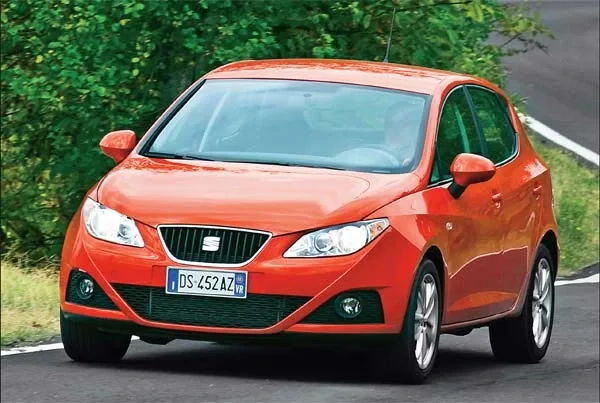
1.4 L, petrol
■ 1390 cm3
■ 85 hp/63 kW
■ 4 cylinders,
inline
■ from $ 14,510 (116,074 UAH)
DILIGENT NEWCOMER
The best of the best was decided to be determined in greenhouse conditions. For this, cars were selected in identical trims (Stylance), on identical 16-inch wheels (option) with low-profile tires sized 215/45. The result was expected. The good old diesel, used even on the concern's minibuses and vans, is clearly too heavy for a small hatchback. Because of this, the weight distribution suffers first of all: the front axle is overloaded more than usual. The petrol version is significantly lighter, thanks to which it is, albeit slightly, more obedient and maneuverable in handling tests.
It is commendable that on both hatchbacks, almost sporty composure did not become a sentence for comfort. Passengers noticeably complained only when driving over speed bumps, and on the diesel version also over drainage gutters. As for the dynamics test, whether acceleration or braking, the diesel version is ahead. So in the braking section, it showed the best results. Everything is explained quite simply: the aforementioned overload of its front axle is more than compensated by the front brake discs of increased diameter — 288 mm versus 256 mm on petrol versions. The rear disc mechanisms are the same on all modifications.
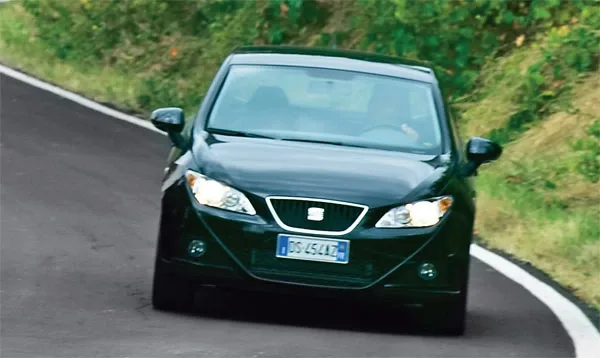
■ 1896 cm3
■ 105 hp/77 kW
■ 4 cylinders,
inline
■ from 16,741 euros (in Europe)
TO TAKE OR TO WAIT?
What can I say, the new SEAT is good regardless of which engine is under the hood. The petrol 1.4 L runs quietly, has a lively character, and suits the chassis better. The 1.9 TDI version, due to the greater load on the front axle, behaves a bit more inertly in corners. The characteristic timbre is heard not only at idle, but the traction, also inherent to the turbodiesel, is felt almost from the very bottom. It is only a pity that the assertiveness and modest appetite of this unit in Russia cannot be appreciated yet. The fate of the 1.9 TDI supplies is still in question. In Europe, meanwhile, a 1.4 L diesel has already arrived.