
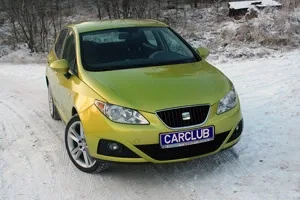
Why do they know so little about Seat in Russia? The Spanish brand is already trying for the second time to win its share of the Russian market, but so far potential buyers are put off by the unfamiliar name and rather high prices. Last year, the brand became a real discovery for Russia: sales growth amounted to an incredible 780% (!). The volumes, however, are still modest, but the Spaniards managed to effectively enter a new market — largely thanks to the new Ibiza…
Ibiza is perhaps the most famous youth resort in the world, famous for crazy parties, iconic clubs, and fantastic masquerades. It is not for nothing that the island is called the "Island of Bes". At the same time, Ibiza remains a resort affordable for not-too-wealthy young people. Judging by the fact that the main share of Seat brand sales falls on the Ibiza, the Spaniards made the right bet on this model.
Perhaps that is why they hesitated for so long to replace the outdated third generation, released back in 2001. But the Bocanegra concept, which became the prototype of the new Ibiza, was received by the public at the Geneva Motor Show in 2008 exactly as needed: it shocked and delighted. The production version did not delay in production — already in the summer, the new model with rich body colors and aggressive lines entered the European market. In Russia, the New Ibiza appeared after the premiere at the Moscow Auto Show in September.
The new Ibiza is built on the Volkswagen PQ25 platform, and this is its advantage: German practicality wrapped in Spanish hot rhythms. The car has matured and grown: length increased from 3.97 m to 4.05 m, width — 1.69 m, height — 1.44 m. The design of the new Ibiza was developed by Luc Donckerwolke, the author of the stunning Lamborghini Murcielago and Gallardo. He clearly wanted to embody passion, hot emotions, "devilry" in metal — and he succeeded. Compared to the previous generation, the Ibiza has become bolder: despite belonging to the B-class, it does not look like a plump, safe lady's toy.
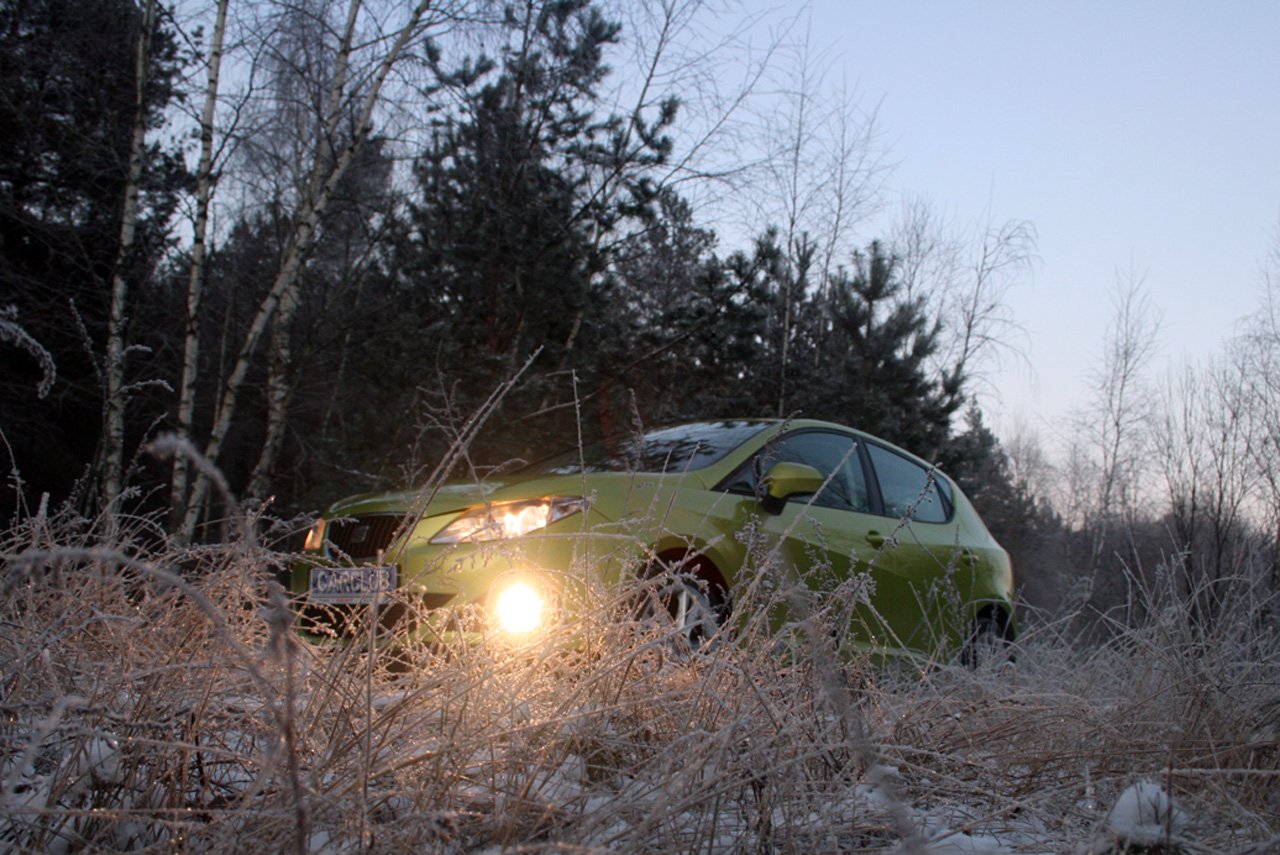
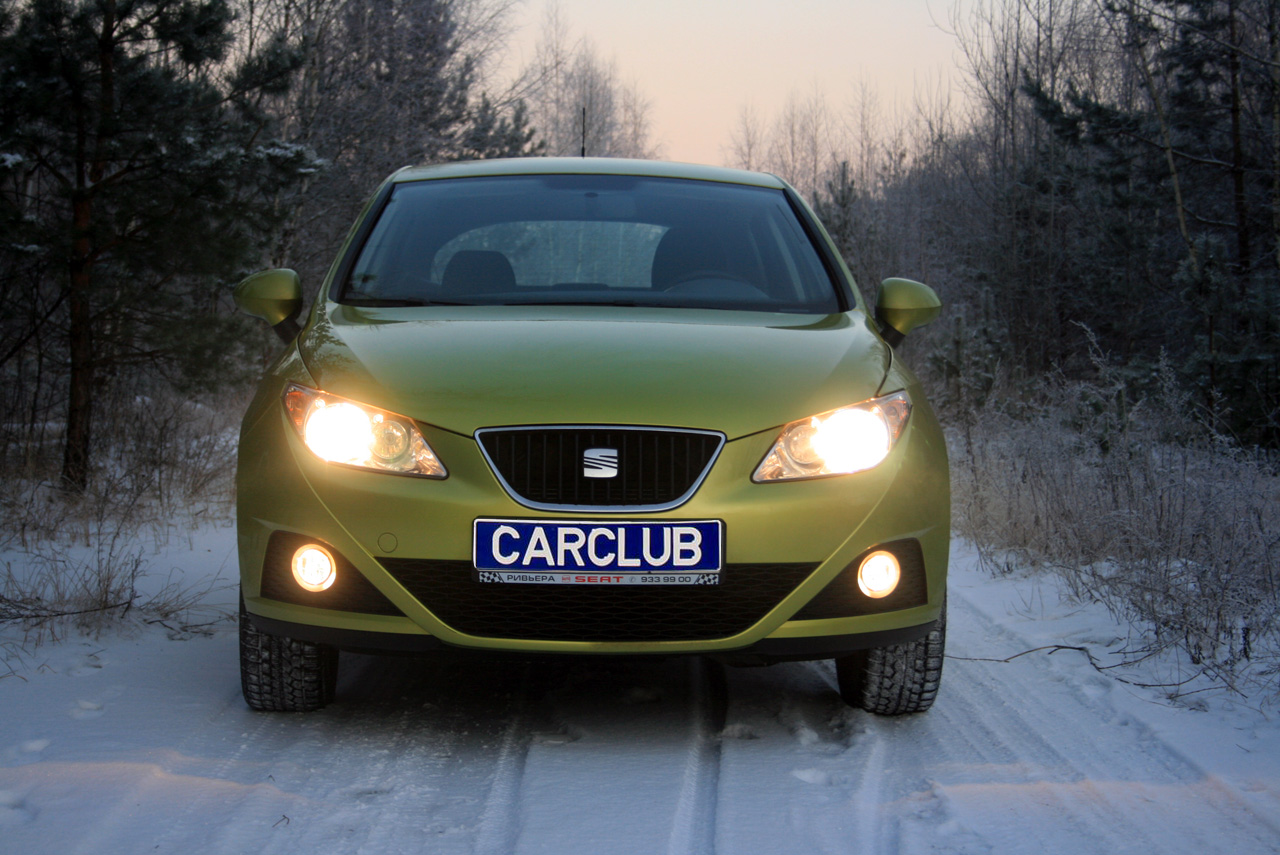
Of course, in the design you can notice echoes with the images of the Mazda2, Peugeot 207, Opel Corsa, and Ford Fiesta. But the Spanish hatchback cannot be accused of lacking originality: just look at the sharp diamond-shaped headlights or the "boomerang-crescents" in the taillights. And that frowning look… The hatchback really suits the huge 17-inch wheels with low-profile tires for this class. The main thing is the show-off, and the narrow non-studded tires, which turned out to be dangerous in the unexpectedly snowy Moscow winter, are secondary… And the color — poisonous green, reminiscent of a juicy apple! You can fall in love with the car just for this unreal paint.
The wheelbase, thanks to the new platform, has increased by 7 mm, as have the front and rear tracks. The interior has become a bit more spacious, but it is still comfortable only for front passengers — rear passengers, even if there are two of them, will soon start complaining about numb legs. Three people cannot be seated here at all! But there is plenty of headroom. The trunk volume has increased by 25 liters and reached 292 liters. Of course, such small cars are not meant to carry desks, although sooner or later everyone faces the question of transporting something larger than a gym bag. In this case, the ability to fold the rear seat and slightly increase the loading space can help.
The glove box is also not very spacious, and it lacks illumination.
The interior design is again a dispute between Spanish "spiritedness" and German practicality, and in the new Ibiza, Volkswagen, alas, has completely crushed Seat… The panel, slightly turned towards the driver, is finished in a two-tone contrasting solution, the plastics are quite soft and pleasant to look at, the red instrument lighting, the S logo crossed out with red lines on the steering wheel — nothing superfluous. The instruments with white numbers, hidden in sporty "wells", are magnificent. The climate control pleased with sensible airflow direction settings, but the small buttons for adjusting temperature and fan speed are a fail. The same complaint applies to the audio system control buttons, although there is a remote control on the steering wheel.
The ergonomics of the driver's seat deserve the highest praise, with only one serious flaw inherited from the Skoda Fabia — the uncomfortable armrest. No matter what height you set it to, it will not be good: either your hand is uncomfortable reaching for the gear lever, or the armrest completely blocks access to the handbrake.
The perfect Audi steering wheel fits your hands like a glove, the gear lever clearly engages first gear — and the Seat starts off easily. The car we got for the test was equipped with a 1.4-liter 85-horsepower engine, but thanks to the light weight, the Ibiza extracts the maximum from it. In second gear, the car accelerates to 60 km/h, the lever travel is short, and the shift clarity is top-notch.
The Ibiza behaves quite impulsively on the road: it dives into corners by itself, brakes with jerks, and reacts sharply to every surface imperfection. But if you put wheels with 15-inch rims, which suit it better in size, the Seat's temperament will surely become more balanced. The combination of a manual gearbox, a lively engine, and responsive steering literally provokes you to weave between sedans cruising sedately and big black SUVs — the compactness and agility convince you that you can squeeze through any gap. True, you should be careful here: the car has a pronounced tendency to oversteer, and with too sharp a steering movement, it is easy to send it into a skid. The Spaniards are clearly targeting the young and hasty — such a driver will love this car, because crawling in one lane on it is boring. But constant maneuvering is also tiring: the steering wheel is not very informative, and this spoiled the driving experience. You almost immediately forget about such a concept as ride smoothness behind the wheel of the Ibiza — so violently, in a Spanish way, the car reacts to potholes and tram tracks.
 |
The body pillars slightly obstruct the view — apparently, they were sacrificed to design and safety concerns. But the side mirrors deserve only praise: they have a non-standard shape, a large viewing area, and since the mirror element itself is recessed into the plastic housing, they are difficult to dirty even in slush. When parking, the small turning radius and light steering wheel help out.
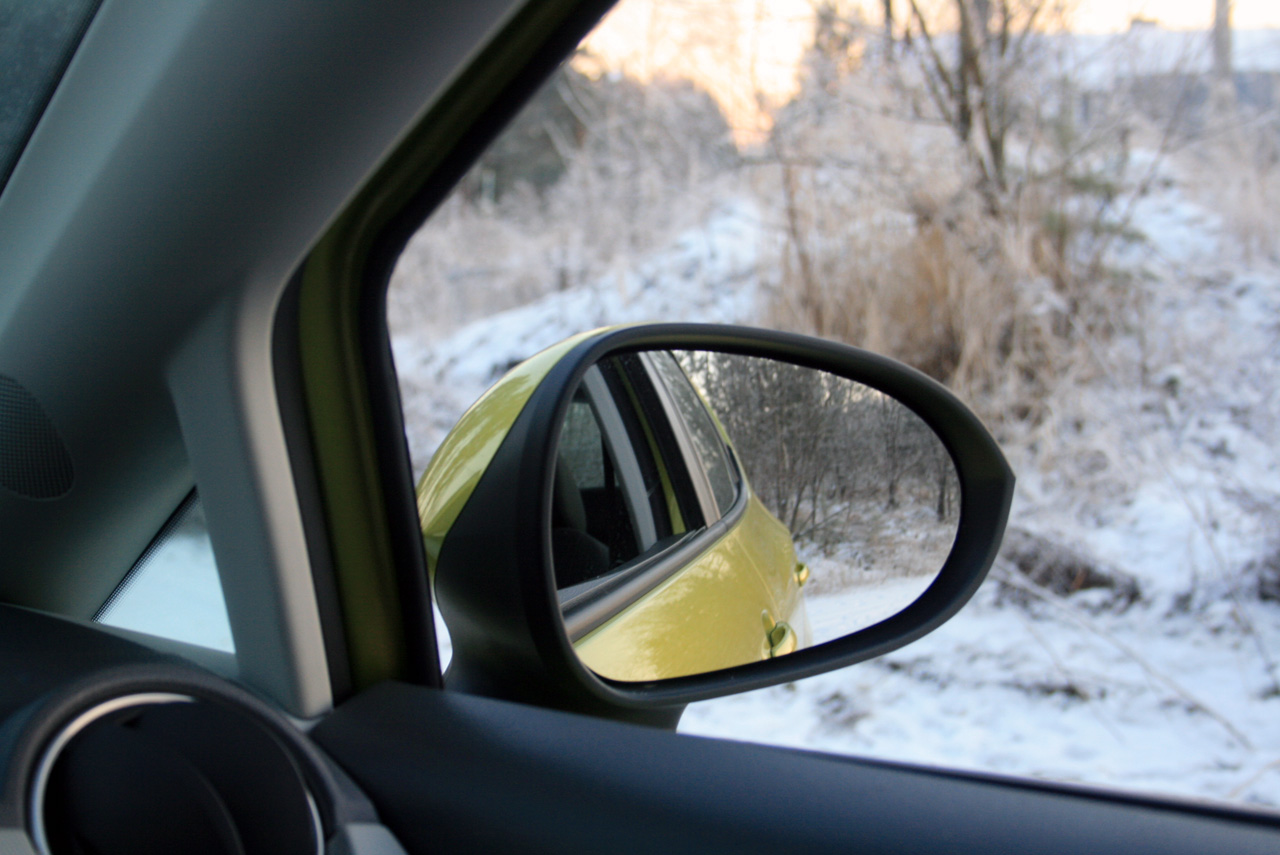 |
| The mirrors cozy up to hide from dirt |
 |
Thanks to the Volkswagen platform, the Spanish hatchback turned out to be one of the most reliable and safe in its segment. In terms of price, it does not stand out from the general range: the starting version with a 1.2-liter engine producing 70 hp costs from 409,900 rubles. If you choose the more suitable 1.4-liter unit with 85 hp and a manual gearbox, you will have to pay at least 429,900 rubles. The basic trim is already well equipped: it has ABS, engine protection, four airbags, electric power steering, steering wheel adjustment for both height and reach, as well as front power windows. For air conditioning, a radio, fog lights, and heated mirrors, you need to pay extra. The test car ultimately crossed the 550,000 ruble mark.
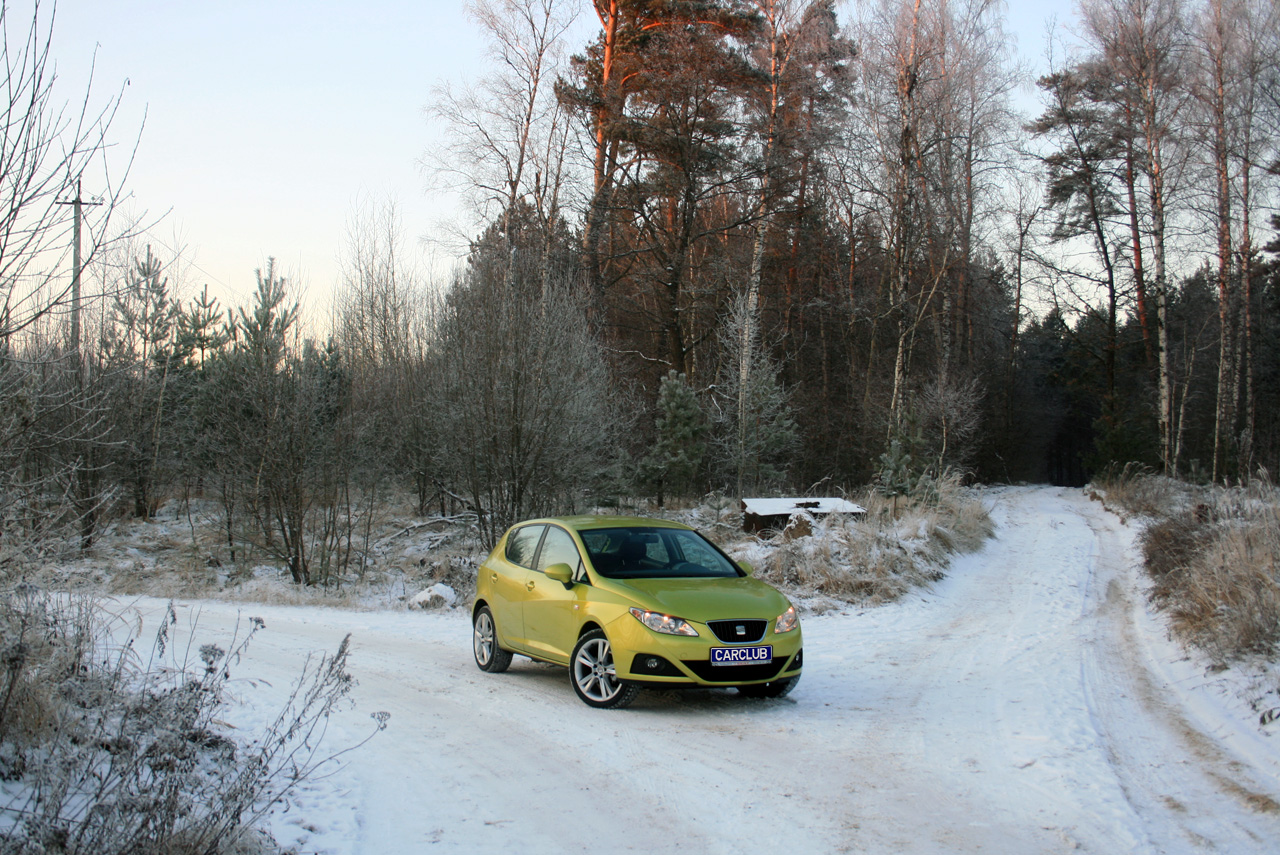 |
| In this color, Seat looks like a juicy apple. An apple in the snow. |
We are already used to compact cars costing a lot: taking into account the price increase since the beginning of 2009, the Mazda2 with the only 1.5-liter engine producing 103 hp will cost at least 489,500 rubles, and with air conditioning — already from 508,000. The version with an "automatic" in the most affordable configuration costs 523,500 rubles, but without air conditioning. The maximum price goes far beyond 600,000. The weak point of the Mazda2 is only one available engine. But the Opel Corsa can boast a wide range of engines — from 1.0 to 1.6 liters with turbocharging. And its price range is wider: from 353,900 rubles for the most modest version to 655,000. The average trim with a 1.4-liter engine and manual transmission will cost about 480,000 rubles, and for an "automatic" you will have to pay another 20-30 thousand. The new Fiesta from Ford is equipped with engines from 1.2 to 1.6 liters, including a 1.6 diesel. Prices start from 413,400 rubles for the base version and go up to 500,000 and above. The average trim will cost 467,400 rubles, and an automatic transmission will add another 30,000. Finally, the Peugeot 207: from 448,800 rubles for a car with a 1.4-liter engine, air conditioning, and an audio system (an "automatic" will add about 30 thousand to the price) up to the same 600,000. The cheapest option is the Skoda Fabia with a 1.2-liter engine — from 319,000 rubles. Average trims fall in the range of 350,000–500,000 rubles.
The weaknesses of these cars are obvious: cramped interiors, small trunks — and the same prices, prices... Small cars have long ceased to be affordable. «Superminis» realized that in overcrowded megacities, maneuverability in traffic and ease of parking are becoming increasingly important. Look at how they have transformed: they sparkle with bright, rich colors, have stylish wheels, and have become bold, swift, and fashionable. In my taste, the Mazda2 looks good in dark green, the Fiesta in blue or dark crimson, and the Ibiza looks best in acid green. For girls, this is a win-win option — we are ready to fall in love with just a color and redo our entire wardrobe for it. But men are also increasingly switching to compacts…
Svetlana Aleeva